Talk about freedom going to the dogs…

In a 9-0 decision in Florida v. Harris, the U.S. Supreme Court has declared that police may use drug-sniffing dogs to carry out warrantless searches during routine traffic stops, despite the fact that published scientific studies show that drug dog alerts are wrong as much as 56% of the time, and are heavily influenced by the biases of the dog’s handler.

This ruling undercuts the entire basis of the Fourth Amendment, which was designed to protect us from unreasonable searches and seizures. When dog sniffs, which have proven to be unreliable, are considered probable cause for police to search your property without a warrant—whether it’s your home, your car or your person—then none of our rights are secure.

As CBS News points out, “The irony in this case, Florida v. Harris, is that the trained narcotics dog (named Aldo) did not find the drugs he was trained to find when he prompted an officer to search Clayton Harris’ truck.”

The case began in June 2006, when a Florida county sheriff stopped a vehicle driven by Clayton Harris for an expired license tag. When Harris refused the sheriff’s request for consent to search his vehicle, a drug-detection dog was deployed and conducted a “free air sniff” of the exterior of the vehicle. When the dog alerted to the door handle on the driver’s side, the officer conducted a warrantless search of the interior of the vehicle. Although the search didn’t turn up anything the dog was trained to find, the officer reportedly found pseudoephedrine and materials used for making methamphetamine.

Harris was arrested and charged.

Two months later, Harris was once again pulled over in his vehicle by the same police officer and drug-sniffing dog. Once again the dog “alerted,” and once again the search failed to turn up anything for which the dog was trained to find. Only this time, nothing of interest was found whatsoever.

In court, Harris’ attorneys moved to suppress the evidence found as a result of the search of his vehicle, asserting that the search violated the Fourth Amendment. The trial court denied the motion to suppress. The Florida Supreme Court granted the motion on appeal, however, ruling that the state’s claim that the dog was trained and certified to detect narcotics, standing alone, is not sufficient to establish the dog’s reliability for purposes of determining probable cause. The court held that the state has the burden of showing the officer had a reasonable basis for believing the dog was reliable by presenting evidence on matters such as training field performance records.

In asking the U.S. Supreme Court to affirm the lower court’s ruling, The Rutherford Institute documented empirical research showing dog alerts are not inherently reliable. One recent study at the University of California—Davis, showed that in a test where handlers were told drugs might be found at the test site, but no drugs were present, dogs gave false positive alerts an astonishing 85% of the time. The U.S. Supreme Court has yet to rule on a related case, Florida v. Jardines, which challenges the use of drug-sniffing dogs by police to carry out warrantless searches of private homes. The Rutherford Institute also filed an amicus brief in Florida v. Jardines. — John W. Whitehead

“If you’re not loyal to your fellow man, you’re an animal.”—Pike, The Wild Bunch

“America doesn’t have many myths. The one myth we have is the Western.”—film director John Carpenter

As long as there are movies, there will be Westerns. A love letter to a time in America when heroes loomed large and men (and women) lived and died by a strict code of ethics, the Western genre never seems to wear out its welcome, re-appearing in the box office in one form or another every few years. Sometimes it’s a remake of a classic, as was the case with the Coen brothers’ 2010 nod to True Grit. Sometimes it’s a comic send-up to the best of the Wild West, as offered up by Mel Brooks in Blazing Saddles or the animated Rango. And then there are the movies that disguise themselves as sci-fi or horror but are Westerns at heart, such as the Star Wars epics and many of the films of John Carpenter, an avowed fan of the Western whose influence can be seen in everything from his The Thing to Vampires.

Clearly, the Western is here to stay. Even this year’s crop of Oscar nominees includes a Western, Django Unchaineddirected by Quentin Tarantino. Unlike Django, however, some of the best Westerns to hit the big screen were passed over by the Academy Awards. So as a tribute to the classic Western, the ones that stay with you long after the credits have faded and tell a tale that, at the end of the day, resonates because it speaks to the things most people care about at a visceral level—family, honor, truth, values, loyalty—here are ten of my favorite Western classics:

My Darling Clementine (1946). Recounting the events leading up to and including the gunfight at the OK Corral, this is one of the best Westerns ever made. Directed by the legendary John Ford and with Henry Fonda as Wyatt Earp, the film has plenty of true grit and old-fashioned values. Great cast, including Victor Mature and Walter Brennan. No Academy Awards.


Red River (1948). This classic Howard Hawks film is an epic that focuses on a grueling cattle drive which foments a battle of wills between father (John Wayne) and son (Montgomery Clift). A great film and cast, including Walter Brennan. Wayne should have won the Oscar for best actor hands down. No Academy Awards.


Shane (1953). A retired gunfighter (Alan Ladd) helps a homestead family. Considered by some to be the best Western ever made, Ladd’s performance was Oscar worthy (he wasn’t even nominated). Great supporting cast, including Jack Palance and Van Heflin. Remade by Clint Eastwood in 1985 as Pale Rider. One Oscar for cinematography.


The Searchers (1956). Another great John Ford film starring John Wayne as a hard-driving man who pursues his niece who has been kidnapped by the Indians. A much-imitated film and remade in various forms such as Paul Schrader’s Hardcore (1979). Another great performance by John Wayne, with Jeffrey Hunter strong in support. No Academy Awards.


Rio Bravo (1959). This revered and much-imitated Howard Hawks film centers on a sheriff (John Wayne) who takes a murderer into custody and faces a siege of the jail by a powerful cattle baron. Great acting, especially by Walter Brennan. A fine moment in the film is the duet by Ricky Nelson and Dean Martin. A favorite of Quentin Tarantino and remade in different forms over the years, most notably by John Carpenter in 1976 with Assault on Precinct 13. No Academy Awards.


The Magnificent Seven (1960). This epic Western is a remake of Akira Kurosawa’s classic The Seven Samurai (1954). Mexican villagers hire gunmen to protect them from bandits who ravage their homes. Most of the actors, who at the time were unknown, became film legends—Steve McQueen, James Coburn and Charles Bronson. This film is replete with interesting characters, including Coburn as a knife-wielding cowboy. No Academy Awards.


The Man Who Shot Liberty Valance (1962). A tough cowboy (John Wayne) and an idealistic lawyer (James Stewart) join forces to battle a vicious outlaw (Lee Marvin) and his gang. At heart a love story, this is the last great Western by John Ford. Strong on values and sacrifice. Oscar-worthy performance by Lee Marvin. No Academy Awards.


The Professionals (1966). This precursor to The Wild Bunch is an action-packed ride. Four mercenaries are hired by a cattle baron to rescue his young wife from Mexican kidnappers. An amazing cast of Lee Marvin, Burt Lancaster, Jack Palance and Robert Ryan, but Woody Strode steals many scenes as a bow-and-arrow-wielding sharpshooter. No Academy Awards.


The Wild Bunch (1969). One of the most influential films ever made. A group of aging outlaws, being true to their code, take on a Mexican gang that greatly outnumbers them in order to save a comrade. Highly influential and much-analyzed film that helped open the door to realistic violence in movies. Another great cast, including William Holden, Ernest Borgnine and Warren Oates, among others. This assured director Sam Peckinpah a place in film history. Remade by Walter Hill in 1980 as The Long Riders. No Academy Awards.


Open Range (2003). Kevin Costner, as director and actor, revives the glory of the classic Western. Two cowboys peacefully graze their cattle on the open range until they run up against a land-grabbing cattle baron. Old-fashioned values and a love for the Western genre make this the best modern adaptation of Western genre. Fine cast, including Robert Duvall and Annette Bening. No Academy Awards.


“There’s things that gnaw at a man worse than dying,” declares Costner’s character, Charley Waite, in Open Range. And really, that’s what the Western is all about: knowing what’s worth living and dying for, and then taking your stand. Certainly in our day and age of few heroes, and even fewer individuals who would sacrifice it all rather than forfeit their values or their freedoms, and where those who do take a stand (whether it be for principle, honor, freedom or the right to hold onto one’s property) are rarely commended, the Western is a powerful reminder that once we were such a people. Time alone will tell if we can ever regain that intrepid, indomitable, heroic spirit that conquered the Wild West and has become the stuff of legends. — John W. Whitehead


“Much of our foreign policy now depends on the hope of benevolent dictators and philosopher kings. The law can’t help. The law is what the kings say it is.”—Ta-Nehisi Coateswriting for The Atlantic

“If George Bush had done this, it would have been stopped.”—Joe Scarborough, former Republican congressman and current MSNBC pundit

When Barack Obama ascended to the presidency in 2008, there was a sense, at least among those who voted for him, that the country might change for the better. Those who watched in awe as President Bush chipped away at our civil liberties over the course of his two terms as president thought that maybe this young, charismatic Senator from Illinois would reverse course and put an end to some of the Bush administration’s worst transgressions—the indefinite detention of suspected terrorists, the torture, the black site prisons, and the never-ending wars that have drained our resources, to name just a few.

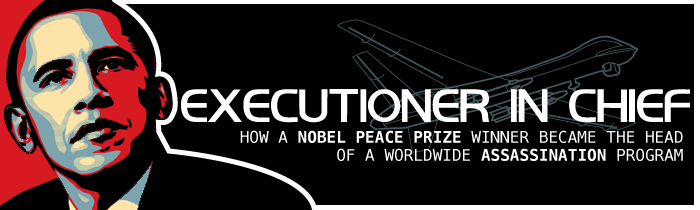
A few short years later, that fantasy has proven to be just that: a fantasy. Indeed, Barack Obama has not only carried on the Bush legacy, but has taken it to its logical conclusion. As president, Obama has gone beyond Guantanamo Bay, gone beyond spying on Americans’ emails and phone calls, and gone beyond bombing countries without Congressional authorization. He now claims, as revealed in a leaked Department of Justice memo, the right to murder any American citizen the world over, so long as he has a feeling that they might, at some point in the future, pose a threat to the United States.

Let that sink in. The President of the United States of America believes he has the absolute right to kill you based upon secret “evidence” that you might be a terrorist. Not only does he think he can kill you, but he believes he has the right to do so in secret, without formally charging you of any crime and providing you with an opportunity to defend yourself in a court of law. To top it all off, the memo asserts that these decisions about whom to kill are not subject to any judicial review whatsoever.

The President of the United States of America believes he has the absolute right to kill you based upon secret “evidence” that you might be a terrorist. Not only does he think he can kill you, but he believes he has the right to do so in secret, without formally charging you of any crime and providing you with an opportunity to defend yourself in a court of law. To top it all off, the memo asserts that these decisions about whom to kill are not subject to any judicial review whatsoever. This is what one would call Mafia-style justice, when one powerful overlord—in this case, the president—gets to decide whether you live or die based solely on his own peculiar understanding of right and wrong. This is how far we have fallen in the twelve years since 9/11, through our negligence and our failure to hold our leaders in both political parties accountable to the principles enshrined in the Constitution.

This is what one would call Mafia-style justice, when one powerful overlord—in this case, the president—gets to decide whether you live or die based solely on his own peculiar understanding of right and wrong. This is how far we have fallen in the twelve years since 9/11, through our negligence and our failure to hold our leaders in both political parties accountable to the principles enshrined in the Constitution.

According to the leaked Department of Justice memo, there are certain “conditions” under which it is acceptable for the president to kill a U.S. citizen without the basic trappings of American justice, i.e., a lawyer and a fair hearing before a neutral judge.

First, you have to be suspected of being a “senior operational leader” of al-Qaeda or an “associated force.” Of course, neither of these terms is defined. Making matters worse, the government doesn’t actually have to prove that you’re an “operational leader.” It simply has to suspect that you are. (Of course, if all it takes for the government to pull the trigger and kill a U.S. citizen is a hunch, then the rest of the conditions set out in the memo are moot.)

Second, capturing you has to be “infeasible.” Easy enough, since “infeasibility of capture” includes being unable to capture someone without putting American troops in harm’s way.

Third, you must pose “an imminent threat of violent attack against the United States,” whether or not you can actually execute an attack on our soil. Before you breathe a sigh of relief that perhaps your neck is safe now, keep in mind that the imminence requirement “does not require the United States to have clear evidence that a specific attack on U.S. persons and interests will take place in the immediate future.” The Bush administration should get some credit here, since it was their creative parsing of the “imminent” threat posed by Saddam Hussein and his so-called weapons of mass destruction that inspired the Obama lawyers to play footloose with the laws on killing American citizens.

In short, by simply asserting that an American citizen is an enemy of the United States, the Obama administration has given itself the authority to murder that individual. This pales in comparison to George W. Bush’s assertion that he could detain an American citizen indefinitely simply by labeling him an enemy combatant.

Compounding this travesty, the Obama administration also insists that the power to target a U.S. citizen for murder applies to any “informed, high-level official of the U.S. government,” not just the president. Therefore, any bureaucrat or politician, if appointed to a high enough position, can target an American for execution by way of drone strikes.

It’s been done before. Without proving that they were “senior operational leaders” of any terrorist organization, the Obama administration used drone strikes to assassinate Anwar al-Awlaki and his 16-year-old son, Abdulrahman, both American citizens.

So now we find ourselves at this strange, surreal juncture where clear-cut definitions of right and wrong and the rule of law have been upended by legal parsing, government corruption, corporate greed, partisan games, and politicians with questionable morals and little-to-no loyalty to the American people.

It’s a short skip and a jump from a scenario where the president authorizes drone strikes on American citizens abroad to one in which a high-level bureaucrat authorizes a drone strike on American citizens here in the United States. It’s only a matter of time. Obama has already opened the door to drones flying in American skies—an estimated 30,000 by 2015, and a $30 billion per year industry to boot.

Yet no matter how much legislation we pass to protect ourselves from these aerial threats being used against us domestically, either to monitor our activities or force us into compliance, as long as the president is allowed to unilaterally determine who is a threat and who deserves to die by way of a drone strike, we are all in danger.

This is surely the beginning of the end of the republic. Not only are we upending the rule of law, but killing people across the globe without accountability seriously undermines America’s long term relationships with other nations. The use of drones to kill American citizens demonstrates just how out of control the so-called “war on terror” has become. A war that by definition cannot be won has expanded to encompass the entire globe. This confirms the fears of those who have been watching as the American drone program has slowly expanded from targeting members of al-Qaeda and the Taliban in Afghanistan and Pakistan to include any person the president cares to see eliminated, not to mention the countless civilians killed along the way.

Retired general Stanley McChrystal has said that drone strikes are “hated on a visceral level” and feed into a “perception of American arrogance.” By attacking small time jihadists, as well as innocent civilians, the American government further inflames populations where terrorist groups are embedded, exciting anti-American sentiment among those who may have previously been an asset to America’s relationship with Muslim countries. In fact, McChrystal and former CIA director Michael Hayden have both expressed concern that American drone strikes are “targeting low-level militants who do not pose a direct threat to the United States.”

For example, Salem Ahmed bin Ali Jaber, a Muslim cleric in Yemen gave a long sermon in August 2012 denouncing Al-Qaeda. A few days later, three members of Al-Qaeda showed up to his neighborhood, saying they wanted to talk with Jaber. Jaber agreed, bringing along his cousin Waleed Abdullah, a police officer, for protection. In the middle of the conversation, a hail of American missiles rained down upon the men, killing them all.

Incidents such as these are the exact reason that America cannot seem to bring an end to its myriad military commitments abroad.  By undermining our potential allies, we simply further endanger American lives. According to Naji al Zaydi, an opponent of Al-Qaeda and former governor of Marib province in Yemen, “some of these young guys getting killed have just been recruited and barely known what terrorism means.” In direct opposition to the stated goal of the “war on terror,” we are creating enemies abroad who will gladly look forward to the day when the United States falls in on itself, like the Roman Empire before it.

Unfortunately, there seems to be no exit from this situation. Too many high-level officials, both Democrats and Republicans, either don’t care, or actively champion the murder of American citizens and innocent civilians alike by the president. As journalist Amy Goodman put it, “the recent excesses of U.S. presidential power are not transient aberrations, but the creation of a frightening new normal, where drone strikes, warrantless surveillance, assassination and indefinite detention are conducted with arrogance and impunity, shielded by secrecy and beyond the reach of law.” — John W. Whitehead

Two interesting perspectives in the news today on the revelation about Obama’s justification for using drones to kill American citizens.

The first comes from Charles P. Pierce over at Esquire. He writes:

There are two stories in the mix that define the perilously strange (and perilously vast) boundaries that we have come to set for the powers of the president of the United States who, at the moment, is Barack Obama of Illinois, but who, one day, could be Marco Rubio of Florida, or Chris Christie of New Jersey, or some nameless child born over the weekend in San Antonio, or Denver, or on the Pine Ridge reservation in South Dakota… So this is where we stand in 2013, in the second month of the second term of this administration — the president does not have the power to convince us fully to stop killing each other, but he has the full power to do it himself.

The second, “When liberals ignore injustice,” comes from Joan Walsh over at Salon.

Last year Brown University’s Michael Tesler released a fascinating study showing that Americans inclined to racially blinkered views wound up opposing policies they would otherwise support, once they learned those policies were endorsed by President Obama. Their prejudice extended to the breed of the president’s dog, Bo: They were much more likely to say they liked Portuguese water dogs when told Ted Kennedy owned one than when they learned Obama did.

But Tesler found that the Obama effect worked the opposite way, too: African-Americans and white liberals who supported Obama became more likely to support policies once they learned the president did.

More than once I’ve worried that might carry over to bad policies that Obama has flirted with embracing, that liberals have traditionally opposed: raising the age for Medicare and Social Security or cutting those programs’ benefits. Or hawkish national security policies that liberals shrieked about when carried out by President Bush, from rendition to warrantless spying. Or even worse, policies that Bush stopped short of, like targeted assassination of U.S. citizens loyal to al-Qaida (or “affiliates”) who were (broadly) deemed (likely) to threaten the U.S. with (possible) violence (some day)… I think people who care about justice have hearts and minds big enough to be concerned about all forms of injustice, and potential injustice. Late last year I admitted I looked away from some of the more disturbing national security policies of the Obama administration before the election because I knew President Romney would almost certainly pursue worse ones. But in the president’s last term, I think it’s incumbent on people who care about civil liberties to care about these policies. It would be a shame if Obama’s popularity made people who once cared about such issues care less.

Taken together, the two articles shed provide some insight into the dangerous powers being amassed by the Imperial President, a.k.a. the Executive Branch, regardless of which party is in office and with little opposition from the very groups and individuals who have historically stood against injustice, oppression and wrongdoing. — John W. Whitehead

The Obama administration’s unapologetic rationale for using drones to kill U.S. citizens sends a clear and urgent message about the need to limit the government’s use of these devices domestically. We cannot afford to be lulled into a sense of complacency by legislation placing temporary moratoriums on drones. As with other weapons of war which have become routine weapons of compliance domestically, such as tasers and sound cannons, once drones are unleashed on the American people, there will be no limiting their use by government agencies.

To this end, The Rutherford Institute has called on government officials at the local, state, and federal level to do their part to safeguard Americans against the use of drones by police. Rutherford Institute attorneys have drafted and made available to the public language that can be adopted at all levels of government in order to address concerns being raised about the threats posed by drones to citizens’ privacy.

As a resident of Charlottesville, Va., the head of a national civil liberties organization based in Virginia, and a citizen of the United States, I am very familiar with the challenges involved in balancing local priorities with national concerns. However, I do not believe that one precludes the other. Indeed, I have always subscribed to the idea that we must think nationally, but act locally. If our freedoms are to be protected, let alone restored, taking action at the local level must be the starting point.

Government representatives are not only charged with addressing our needs at the community level but they also have a duty to relay our concerns as residents and citizens to state and federal branches of government when appropriate. Just as federal and state policies trickle down and impact us at the local level, we must ensure that our concerns and needs trickle up. Therefore, when either state or national governmental entities overstep constitutional bounds, it is imperative that our local government address these issues.

The concept of taking a stand at the local level in order to voice concerns about issues of national importance is as old as America itself. It was in the homes and town halls of the American colonies that concepts of liberty and freedom from British tyranny were first discussed, before any program of a national scale could be set in motion. The Raleigh Tavern in Williamsburg was one such meeting spot, where men such as Patrick Henry and Thomas Jefferson created the first Committee of Correspondence in Virginia, a local group concerned with the mounting oppression at the hands of the British experienced throughout the colonies. The establishment of Committees of Correspondence throughout the colonies eventually led to a Continental Congress, where the Declaration of Independence was adopted and America’s slow march toward freedom began.

Getting back to the Obama administration’s so-called “legal case” for carrying out drone strikes on American citizens, there is no legal case to be made for an act that is illegal, immoral and contrary to every fundamental and decent principle on which this nation was founded. Frankly, this is no different from the Bush administration’s legal justification of waterboarding as a legitimate torture technique and no less repugnant. Americans should be up in arms.

Entirely lacking in accountability and legal justification, Obama’s “legal” rationale for using drones to kill American citizens takes to new heights Richard Nixon’s brazen claim that “if the president does it, it’s not illegal.”

Entirely lacking in accountability and legal justification, Obama’s “legal” rationale for using drones to kill American citizens takes to new heights Richard Nixon’s brazen claim that “if the president does it, it’s not illegal.” No matter what is said to the contrary, the Constitution does not in any way provide for the president to engage in such acts, even under the auspices of his role as Commander in Chief.  In fact, the Fifth and Fourteenth Amendment’s guarantees of due process, intended to protect citizens in the event that the government attempts to overreach its authority, assure every American citizen that before the government can imprison them or put them to death, they have a right to hear the charges being levied against them, review the evidence, and be treated to a fair and impartial trial by a judge or jury.

Obama, by his actions, is circumventing the Constitution, especially as it pertains to the rights of American citizens. Indeed, in a decision he claims was “an easy one,” Obama has already killed two American citizens in this fashion: Anwar al-Awlaki, an American cleric living in Yemen who served as a propagandist for Al-Qaeda, and his 16-year-old son.

That Obama, schooled in the law and having himself taught constitutional law, can so glibly disregard the Constitution’s requirement of due process for American citizens is particularly troubling. Therein lies the danger of Obama, one overlooked by his supporters in their zeal to retain the White House and greatly underestimated by his opponents: he has become a law unto himself. Should we fail to recognize and rectify the danger in allowing a single individual to declare himself the exception to the rule of law and assume the role of judge, jury, and executioner, we will have no one else to blame when we plunge once and for all into the abyss that is tyranny. — John W. Whitehead

“The shaping of the will of Congress and the choosing of the American president has become a privilege reserved to the country’s equestrian classes, a.k.a. the 20% of the population that holds 93% of the wealth, the happy few who run the corporations and the banks, own and operate the news and entertainment media, compose the laws and govern the universities, control the philanthropic foundations, the policy institutes, the casinos, and the sports arenas.” – Journalist Lewis Lapham

The pomp and circumstance of the presidential inauguration has died down. Members of Congress have taken their seats on Capitol Hill, and Barack Obama has reclaimed his seat in the White House. The circus of the presidential election has become a faint memory. The long months of debates, rallies, and political advertisements have slipped from our consciousness. Now we are left with the feeling that nothing has really changed, nor will it.

This is not by accident. The media circus leading up to the elections, the name calling in the halls of Congress, the vitriol and barbs traded back and forth among people who are supposed to be working together to improve the country, are all components of the game set up by those who run the show. The movers and shakers behind these engaging, but ultimately trite, political exercises are the elite, the so-called upper class, who benefit from the status quo. This status quo is marked by an economic crisis with no end in sight, by the slow but steady growth of a police state aimed at the lowest rungs of society, and a political circus which keeps us enraptured long enough that we don’t question what’s really going on.

Meanwhile, this elite, composed of corporations profiting off of our ignorance, avoid being brought to task for their destruction of democratic governance and the economy. These are the corporations who sent our economy into a tail spin and were then rewarded with taxpayer money. These are the corporations who write laws which eliminate real competition in the market in order to secure their profits through lucrative government contracts. These are the corporations who avoid criminal prosecution, and are instead slapped with meager fines which do nothing to halt their felonious activities.

We now live in a two-tiered system of justice and governance. There are two sets of laws: one set for the government and the corporations, and another set for you and me.

The laws which apply to the majority of the population allow the government to do things like rectally probe you during a roadside stop, or listen in on your phone calls and read all of your email messages, or indefinitely detain you in a military holding cell. These are the laws which are executed every single day against a population which has up until now been blissfully ignorant of the radical shift taking place in American government.

Then there are the laws constructed for the elite, which allow bankers who crash the economy to walk free. They’re the laws which allow police officers to avoid prosecution when they strip search non-violent criminals, or taser pregnant women on the side of the road, or pepper spray peaceful protestors. These are the laws of the new age we are entering, an age of neo-feudalism, in which corporate-state rulers dominate the rest of us, where the elite create the laws which can result in a person being jailed for possessing marijuana while bankers that launder money for drug cartels walk free.

Unfortunately, this two-tiered system of justice has been a long time coming. The march toward an imperial presidency, to congressional intransigence and impotence, to a corporate takeover of the mechanisms of government, and the division of America into haves and have nots has been building for years.

Journalist Chris Hedges, one of the few voices to speak against the corporate-state, who has put himself on the line by making a legal challenge to the President’s authority to indefinitely detain American citizens, summarizes the situation at hand:

 “Our passivity has resulted… in much more than imperial adventurism and a permanent underclass. A slow-motion coup by a corporate state has cemented into place a neofeudalism in which there are only masters and serfs. And the process is one that cannot be reversed through the traditional mechanisms of electoral politics.”

Indeed, electoral politics are off the table as a means of reforming the system. They are so thoroughly corrupted by corporate money that there is no chance, even for a well-meaning person, to affect any real change through Congress.

Just consider the last election cycle. Both parties spent $1 billion each attempting to get their candidate elected to the presidency. This money came from rich donors and corporate sponsors, intent on getting their candidate in office. This massive spending was mirrored at the congressional level, where business lobbying soared in the last three months of the year. The U.S. Chamber of Commerce alone spent over $125 million attempting to influence members of Congress, an 88 percent increase from 2011.

Indeed, lobbyists are the source of much corruption and exchanging of money in Washington, and their attempts to woo Congressmen only exacerbate the problems inherent to the institution. Jack Abramoff should know. Jailed for bribing public officials, the former lobbyist insists that the system is every bit as corrupt now as it was when he was convicted. From job offers for staffers and Congressmen after they leave Capitol Hill, to taking representatives to sporting events and fancy restaurants, there is no shortage of methods of influencing public officials to enact the policies of special interests. According to Abramoff, these tactics are still in use today, and “the system hasn’t been cleaned up at all.”

Once their foot is in the door, these lobbyists then offer up language for legislation that is “so obscure, so confusing, so uninformative, but so precise” as to make passage as easy as possible. This legislation cements the privilege of the corporations to do as they please, making all of their dubious activities “legal.”

This lobbying is buoyed by a congressional lifestyle which demands that our representatives spend the majority of their time fund raising for campaigns, rather than responding to the needs of their constituents. In November 2012, the Democratic House leadership offered a model daily schedule to newly elected Democrats which suggests a ten-hour day, five hours of which are dominated by “call time” and “strategic outreach,” including fund raisers and correspondence with potential donors. Three or four hours are for actually doing the job they were elected to do, such as attending committee meetings, voting on legislation, and interacting with constituents.

When half of one’s time is devoted to asking for money from rich individuals and special interests, there is no way that he can respond to the problems which pervade the country. And yet, even Congressmen in safe seats are expected to fundraise constantly so as to support their colleagues in competitive districts. As Rep. John Larson (D-Conn.) put it, “…this is the mother’s milk of what [Congressmen] need to do to try to sustain their campaigns, and it’s the only system they have to work with.”

Thus, even well-meaning Congressmen face a Catch-22 where they are pushed to fundraise to secure their seats, but then once in office, it is basically impossible for them to do their jobs. The full ramifications of this are laid out by Rep. Brad Miller (D-NC):

“Any member who follows that schedule will be completely controlled by their staff, handed statements that their staff prepared, speaking from talking points they get emailed from leadership… It really does affect how members of Congress behave if the most important thing they think about is fundraising. You end up being nice to people that probably somebody needs to be questioning skeptically… You won’t ask tough questions in hearings that might displease potential contributors, won’t support amendments that might anger them, will tend to vote the way contributors want you to vote.”

The influence of corporate money on Congress is exacerbated by how out of touch Congressmen are with the daily struggles of most Americans. In February 2012, the median net worth of Congressmen was $913,000 as compared to $100,000 for the rest of the population. Aside from being immediately wealthy, Congressmen also weathered the tribulations of the financial crisis much better than the average American. An analysis of Congressional finances by theWashington Post in October 2012 revealed that the wealthiest one-third of Congress was largely shielded from the effects of the Great Recession. While the median household net worth of the average American dropped by 39 percent between 2007 and 2010, the median wealth of Congressmen rose 5 percent. It rose 14 percent for the wealthiest one-third.

At a time when most people in the country are suffering, Congressmen are profiting. This alone should demonstrate how out of touch our elected leaders have become. Members of Congress, entrusted to represent the best interests of the average American, instead play out a stilted, ineffective soap opera on our TV screens, complete with phony discussions of fiscal cliffs and debt ceilings which take the place of real proposals for meaningful change in the country.

There is no voice for the working American in the halls of Congress, the American who was promised a life beyond taxes, debt, and unemployment. There is no voice for the peace loving American, the American who understands that America’s military might is meant for defense of the homeland, not looking for trouble in faraway lands. There is no voice for the American who expects his representatives to abide by the Constitution, who laments the way Congress, the President, and the Supreme Court work together to take away our rights piece by piece. — John W. Whitehead


We’re at an important crossroads in our country in terms of how the police operate and how the courts are not operating. The only thing, in my opinion, that’s standing between us and a total police state are the courts. We’re not going to get any help from Congress or the president. So are we going to have courts of justice or courts of order? Now courts of order are going to enforce the regime. Courts of justice are going to protect and uphold our Constitution. If we don’t have courts of justice–if they don’t protect the Constitution–then in my opinion, freedom as we have known it will be lost. — John W. Whitehead

Tune into my latest vodcast to hear more:  https://www.youtube.com/watch?feature=player_embedded&v=aytoYIVWeo8


The ultimate measure of a man is not where he stands in moments of comfort and convenience, but where he stands at times of challenge and controversy.”―  Martin Luther King Jr.

As one who came of age during the civil rights era, I was profoundly impacted by the life and teachings of Martin Luther King Jr. He taught me so much more than just what it means to look beyond the color of a person’s skin—he taught me that life means nothing if you don’t stand up for the things that truly matter. And what are the things that matter? King spoke of them incessantly, in every sermon he preached, every speech he delivered and every article he wrote. Freedom, human dignity, brotherhood, spirituality, peace, justice, equality, putting an end to war and poverty—these are just a few of the big themes that shaped King’s life and, in turn, impacted so many impressionable young people like myself.

Fast forward 40 years, and we find ourselves living through historic times, with the nation’s first black president embarking on his second term in office. The comparisons between President Obama and King have been inevitable and largely favorable, helped along by Obama, who spoke at King’s Ebenezer Baptist Church in 2008, a year before taking office—accepted the Democratic nomination on the anniversary of King’s “I Have a Dream” speech—presided over the installation and dedication of a national monument to King in Washington, DC—and took his oath of office using one of King’s Bibles on the national holiday dedicated to King.

Clearly, there are similarities between the two men. As a McClatchey news article noted: “Both battled enormous odds to build historic multi-ethnic, multi-racial coalitions—one to advance the cause of civil rights only to be assassinated in 1968, the other to win the nation’s highest office. Both won the Nobel Peace Prize. Both could use soaring rhetoric to inspire millions. Both also had to overcome critics who accused them of socialist or communist sympathies, as well as black activists who maintained that they weren’t strong advocates for African-Americans.”

Yet as Fredrick Harris, the director of the Institute for Research in African-American Studies at Columbia University, reminds us, “it is easy to assume that the president is an extension of King’s legacy and the civil rights movement. For black America, in particular, Obama has already joined the pantheon of great African American leaders, alongside Harriet Tubman, Frederick Douglass, Ida B. Wells, Malcolm X and, of course, King. He has joined their ranks not for his activism or his efforts to break down racial inequality, but for the symbolic weight of being the nation’s first black president.”

We’d be doing King and his legacy a profound disservice, however, if we do not insist that Obama do more than pay lip service to the man he credits, alongside Abraham Lincoln, as being one of his two heroes. Indeed, Obama spent much of the last four years campaigning for re-election and will likely spend the next four attempting to establish a lasting legacy for his presidency.

If Obama wants to be remembered for anything more than the color of his skin, he would do well to brush up on King’s teachings, which were far more radical than the watered-down pap about him being taught today. The following key principles, largely absent from Obama’s first term in office, formed the backbone of Rev. King’s life and work.

Practice non-violence, resist militarism and put an end to war.

I could never again raise my voice against the violence of the oppressed in the ghettos without having first spoken clearly to the greatest purveyor of violence in the world today—my own government.”—Martin Luther King Jr., Sermon at New York’s Riverside Church (April 4, 1967)

On April 4, 1967, exactly one year before his murder, King used the power of his pulpit to condemn the U.S. for “using massive doses of violence to solve its problems, to bring about the changes it wanted.” Insisting that no one who has any concern for the integrity and life of America can ignore its part in the Vietnam War, King called on the U.S. to end all bombing in Vietnam, declare a unilateral cease-fire, curtail its military buildup, and set a date for troop withdrawals. In that same sermon, King warned that “a nation that continues year after year to spend more money on military defense than on programs of social uplift is approaching spiritual death.”

Contrast this with Obama’s use of the power of his office to expand America’s military empire at great cost to the nation, authorize drone strikes which have wreaked havoc on innocent civilians, and defend indefensible police tactics used in SWAT team raids and roadside stops. Obama’s national security budget for 2013, which allots a whopping $851 billion to be spent on wars abroad, weapons and military personnel, significantly outspends the money being spent on education, poverty and disease.

Stand against injustice.

“Injustice anywhere is a threat to justice everywhere… there are two types of laws: just and unjust. I would be the first to advocate obeying just laws. One has not only a legal but a moral responsibility to obey just laws. Conversely, one has a moral responsibility to disobey unjust laws.”― Martin Luther King Jr., “Letter from a Birmingham Jail” (April 16, 1963)

Arrested and jailed for taking part in a nonviolent protest against racial segregation in Birmingham, Ala., King used his time behind bars to respond to Alabama clergymen who criticized King’s methods of civil disobedience and suggested that the courts were the only legitimate means for enacting change. His “Letter from a Birmingham Jail,” which makes the case for disobeying unjust laws, points out that “a just law is a man made code that squares with the moral law or the law of God. An unjust law is a code that is out of harmony with the moral law. To put it in the terms of St. Thomas Aquinas: An unjust law is a human law that is not rooted in eternal law and natural law. Any law that uplifts human personality is just. Any law that degrades human personality is unjust.”

Contrast this with Obama’s ongoing endorsement of clearly unjust laws and government practices, some of which he has publicly acknowledged to be problematic or altogether wrong. For example, Obama signed into law the National Defense Authorization Act of 2013 and the Foreign Intelligence Surveillance Act Amendments Act, which respectively authorize the military to indefinitely detain American citizens, as well as spy on Americans who communicate with people overseas, whether they are journalists, family members, or business associates. Obama’s Justice Dept. has also urged the U.S. Supreme Court to grant police more leeway to strip search Americans and raid homes without a warrant. As King warned, “Never forget that everything Hitler did in Germany was legal.”

Work to end poverty.

“True compassion is more than flinging a coin to a beggar; it is not haphazard and superficial. It comes to see that an edifice which produces beggars needs restructuring.”—Martin Luther King Jr., Sermon at New York’s Riverside Church (April 4, 1967)

Especially in the latter part of his life, King was unflinching in his determination to hold Americans accountable to alleviating the suffering of the poor, going so far as to call for a march on Washington, DC, to pressure Congress to pass an Economic Bill of Rights. In recounting a parable about a man who went to hell because he didn’t see the poor, King cautioned his congregants: “Dives didn’t go to hell because he was rich… Dives went to hell because he was passed by Lazarus every day and he never really saw him. He went to hell because he allowed his brother to become invisible. Dives went to hell because he maximized the minimum and minimized the maximum. Indeed, Dives went to hell because he sought to be a conscientious objector in the war against poverty.”

Prioritize people over corporations.

“When machines and computers, profit motives and property rights, are considered more important than people, the giant triplets of racism, extreme materialism, and militarism are incapable of being conquered.”—Martin Luther King Jr., Sermon at New York’s Riverside Church (April 4, 1967)

With roughly 25 lobbyists per Congressman, corporate greed largely calls the shots in the nation’s capital, enabling our elected representatives to grow richer and the people poorer. One can only imagine what King would have said about a nation whose political processes, everything from elections to legislation, are driven by war chests and corporate benefactors rather than the needs and desires of the citizenry.

Stand up for what is right, rather than what is politically expedient.

“On some positions, cowardice asks the question, is it expedient? And then expedience comes along and asks the question, is it politic? Vanity asks the question, is it popular? Conscience asks the question, is it right? There comes a time when one must take the position that is neither safe nor politic nor popular, but he must do it because conscience tells him it is right.”—Martin Luther King Jr., Sermon at National Cathedral (March 31, 1968)

Five days before his murder, King delivered a sermon at National Cathedral in Washington, DC, in which he noted that “one of the great liabilities of life is that all too many people find themselves living amid a great period of social change, and yet they fail to develop the new attitudes, the new mental responses, that the new situation demands. They end up sleeping through a revolution.”

As King recognized, there is much to be done if we are to make this world a better place, and we cannot afford to play politics when so much hangs in the balance. It’s time, Mr. President, to wake up. To quote your hero: “[O]ur very survival depends on our ability to stay awake, to adjust to new ideas, to remain vigilant and to face the challenge of change. The large house in which we live demands that we transform this world-wide neighborhood into a world-wide brotherhood. Together we must learn to live as brothers or together we will be forced to perish as fools.” — John W. Whitehead

Just when you thought you’d seen it all…

New York City has long been celebrated as the cultural capital of the world, renowned for its art, music and film. Presently, however, the “city that never sleeps” is serving as the staging ground for a futuristic police state operated, in large part, by Mayor Bloomberg and the New York Police Department (NYPD).

Boasting a $4.5 billion budget, a counterterrorism unit that includes 35,000 uniformed police officers and 15,000 civilians, and a $3 billion joint operations center with representatives from the FBI, FEMA, and the military, the NYPD operates much like an autonomous Department of Homeland Security—only without the constraints of the Constitution.

The capabilities of the department are astounding. The NYPD has radiation detectors on their boats, helicopters, and officers’ belts that are so sensitive they alert officers to citizens who have had radiation treatment for medical reasons. Moreover, the NYPD has a $150 million surveillance system, a network of 2000+ cameras, which is monitored by an advanced computer system. This computer system can detect suspicious packages and perform tasks such as pulling up all recorded images of someone wearing a red shirt, thus streamlining the process of tracking New Yorkers. The NYPD’s latest toy is Terahertz Imaging Detection, which allows police officers to peek under people’s clothing as they walk the streets. The NYPD cooperated with the US Department of Defense in creating this portable scanning technology. The NYPD even has the capability to take down an aircraft should the need arise.

The NYPD not only employs the latest technologies but also utilizes crackdowns and scare tactics that keep New Yorkers in a state of compliance. A 60 Minutes report describes the police state atmosphere: “At random, 100 police cars will swarm part of town just to make a scene. It happens with complete unpredictability. Cops signal subway trains to stop to be searched. And sometimes they hold the trains until they’ve eyeballed every passenger.”

Now, in their latest nod to so-called crime fighting, the NYPD is proposing that “pharmacies in and around the city to fight prescription drug thefts by stocking pill bottles fitted with GPS tracking chips.” Mind you, these are the same people who have required that GPS devices be attached to NYC taxis in order to track cabbies’ movements.

What WILL they think of next? — John W. Whitehead

What we are witnessing, thanks in large part to zero tolerance policies that were intended to make schools safer by discouraging the use of actual drugs and weapons by students, is the criminalization of childish behavior. Most recently, for example, two 6-year-old students at White Marsh Elementary School in Maryland were suspended for using their fingers as imaginary guns in a schoolyard game of  cops and robbers.

The age-old game of cops and robbers is one I played as a child. “I’m gonna get you, robber,” one kid yells, chasing his friend across the playground. The other boy turns and points his finger before racing away. The cops are in hot pursuit. “Bang, bang, you’re dead,” one shouts. “No! Bang, bang, you’re dead!” the other cries, before both melodramatically fall to the ground. Thus goes a game played by boys from time immemorial.

In a new wrinkle on this old game, however, it’s not the cop who gets the bad guy. Now, the game ends when school officials summon real cops–who arrest the kindergartners for engaging in juvenile crime. That happened at a New Jersey school, from which four little boys were suspended for pretending their fingers were guns. At another school, an 8-year-old boy was arrested and charged with terrorism for pointing a paper gun at classmates and announcing, “I’m going to kill you all.” Officials at a California elementary school called police when a little boy was caught playing cops and robbers at recess. The principal told the child’s parents their child was a terrorist. Unwittingly, the principal was right on target: These are acts of terrorism. The culprits here, though, are not overactive schoolchildren; those guilty of terrorizing young children and parents nationwide are school officials who–in an effort to enforce zero tolerance policies against violence, weapons and drugs–have moved our schools into a lockdown mentality.

Unfortunately, these are not isolated incidents, nor are they limited to episodes of cops and robbers.

Nine-year-old Patrick Timoney was sent to the principal’s office and threatened with suspension after school officials discovered that one of his LEGOs was holding a 2-inch toy gun. That particular LEGO, a policeman, was Patrick’s favorite because his father is a retired police officer. David Morales, an 8-year-old Rhode Island student, ran afoul of his school’s zero tolerance policies after he wore a hat to school decorated with an American flag and tiny plastic Army figures in honor of American troops. School officials declared the hat out of bounds because the toy soldiers were carrying miniature guns. A 7-year-old New Jersey boy, described by school officials as “a nice kid” and “a good student,” was reported to the police and charged with possessing an imitation firearm after he brought a toy Nerf-style gun to school. The gun shoots soft ping pong-type balls.

Things have gotten so bad that it doesn’t even take a toy gun to raise the ire of school officials. A high school sophomore was suspended for violating the school’s no-cell-phone policy after he took a call from his father, a master sergeant in the U.S. Army who was serving in Iraq at the time. A 12-year-old New York student was hauled out of school in handcuffs for doodling on her desk with an erasable marker. In Houston, an 8th grader was suspended for wearing rosary beads to school in memory of her grandmother (the school has a zero tolerance policy against the rosary, which the school insists can be interpreted as a sign of gang involvement). Six-year-old Cub Scout Zachary Christie was sentenced to 45 days in reform school after bringing a camping utensil to school that can serve as a fork, knife or spoon. And in Oklahoma, school officials suspended a first grader simply for using his hand to simulate a gun.

What these incidents, all the result of overzealous school officials and inflexible zero tolerance policies, make clear is that we have moved into a new paradigm in America where young people are increasingly viewed as suspects and treated as criminals by school officials and law enforcement alike.

Adopted in the wake of Congress’ passage of the 1994 Gun-Free Schools Act, which required a one-year expulsion for any child bringing a firearm or bomb to school, school zero tolerance policies were initially intended to address and prevent serious problems involving weapons, violence and drug and alcohol use in the schools. However, since the Columbine school shootings, nervous legislators and school boards have tightened their zero tolerance policies to such an extent that school officials are now empowered to punish all offenses severely, no matter how minor. Hence, an elementary school student is punished in the same way that an adult high school senior is punished. And a student who actually intends to harm others is treated the same as one who breaks the rules accidentally–or is perceived as breaking the rules.

For instance, after students at a Texas school were assigned to write a “scary” Halloween story, one 13-year-old chose to write about shooting up a school. Although he received a passing grade on the story, school officials reported him to the police, resulting in his spending six days in jail before it was determined that no crime had been committed. Equally outrageous was the case in New Jersey where several kindergartners were suspended from school for three days for playing a make-believe game of “cops and robbers” during recess and using their fingers as guns.

With the distinctions between student offenses erased, and all offenses expellable, we now find ourselves in the midst of what Time magazine described as a “national crackdown on Alka-Seltzer.” Indeed, at least 20 children in four states have been suspended from school for possession of the fizzy tablets in violation of zero tolerance drug policies. In some jurisdictions, carrying cough drops, wearing black lipstick or dying your hair blue are actually expellable offenses. Students have also been penalized for such inane “crimes” as bringing nail clippers to school, using Listerine or Scope, and carrying fold-out combs that resemble switchblades. A 13-year-old boy in Manassas, Virginia, who accepted a Certs breath mint from a classmate, was actually suspended and required to attend drug-awareness classes, while a 12-year-old boy who said he brought powdered sugar to school for a science project was charged with a felony for possessing a look-alike drug. Another 12-year-old was handcuffed and jailed after he stomped in a puddle, splashing classmates.

There’s an old axiom that what children learn in school today will be the philosophy of government tomorrow. As surveillance cameras, metal detectors, police patrols, zero tolerance policies, lock downs, drug sniffing dogs and strip searches become the norm in elementary, middle and high schools across the nation, America is on a fast track to raising up an Orwellian generation–one populated by compliant citizens accustomed to living in a police state and who march in lockstep to the dictates of the government. In other words, the schools are teaching our young people how to be obedient subjects in a totalitarian society. — John W. Whitehead