“You see them on the street. You watch them on TV. You might even vote for one this fall. You think they’re people just like you. You’re wrong. Dead wrong.” — They Live
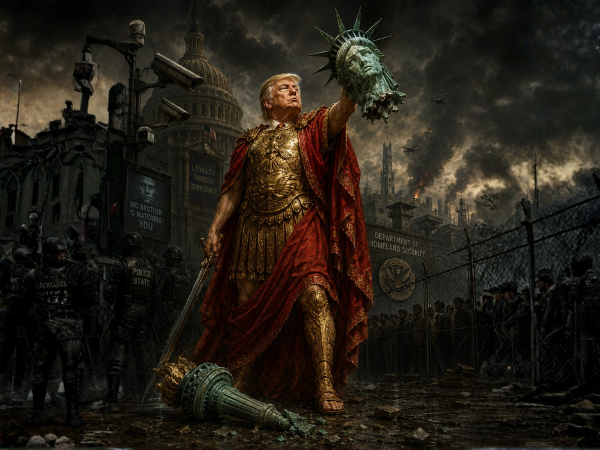
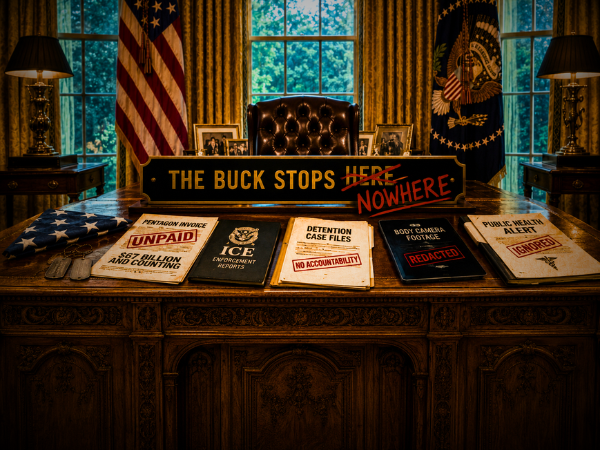
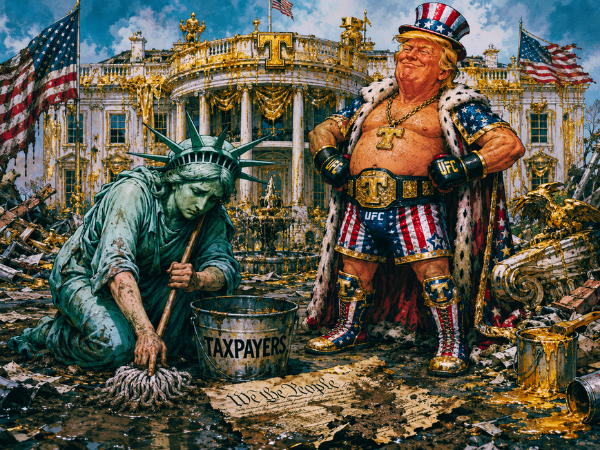
The spectacle of public executions. Deadly military strikes on foreign countries. Innocent civilian lives lost to war. Aggressive ICE raids. Government officials accused of using their powers to intimidate political opponents. Public office increasingly entangled with private financial interests. Government leaders who glorify violence, spew hatred, stir up racial prejudice, provoke civil unrest, and stoke discontent.
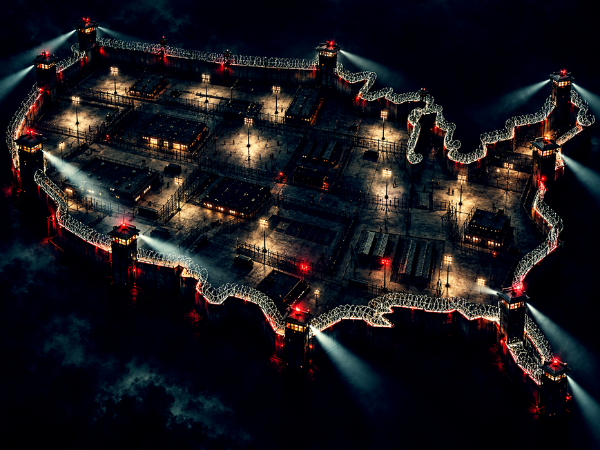
This is what it looks like when a nation loses its way.
When cruelty is mistaken for courage, vengeance for justice, and the taking of human life for a demonstration of strength.
When government officials tell you not to believe your own eyes and ears about the state of the world around you, when they insist that the truth is a lie and the lie is truth, you’ve stumbled into a dystopian reality in which, as John Lennon rightly concluded, the government is “being run by maniacs for maniacal ends.”
When so-called Christians and self-professed defenders of morality insist that we must accept the lesser of two evils based on exaggerated fears of what might happen if their political opponents gain power, rather than confront the abuses unfolding before our eyes, remember this: the lesser of two evils is still evil.
This is not simply about Donald Trump.
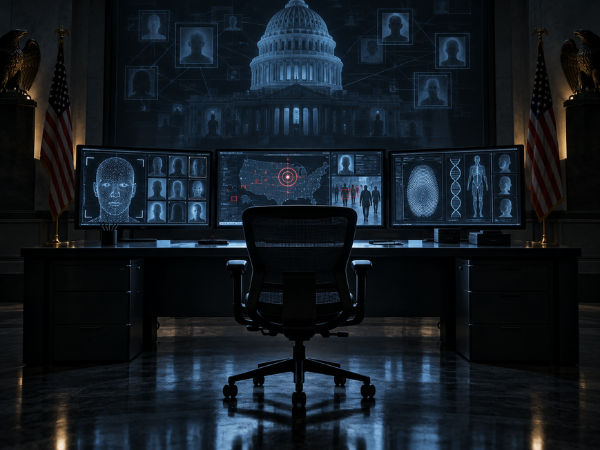
The machinery of the American police state has been assembled over decades, under Republican and Democratic administrations alike. Presidents have expanded executive authority, waged undeclared wars, authorized drone killings, built surveillance networks, militarized domestic policing, and invoked national security to justify extraordinary powers.
What makes the present moment so troubling is the extent to which the public is encouraged to accept increasingly aggressive exercises of government power as necessary demonstrations of strength and resolve.
The Constitution was never intended to protect only the innocent, the popular, the patriotic, or the politically acceptable. Its restraints on government power matter most when the government is dealing with people whom society has already condemned.
Yet what happens when the public becomes so accustomed to government overreach, corruption and brutality that it no longer recognizes them as warning signs? What becomes of a constitutional republic when its leaders and citizens stop asking whether government actions are lawful, justified or necessary, and concern themselves only with whether those actions punish their enemies, advance their political interests or preserve their sense of security?
We are witnessing a political culture in which demanding due process for an accused criminal is treated as defending criminality, questioning a military strike is equated with sympathy for the enemy, and opposing government cruelty is portrayed as weakness.
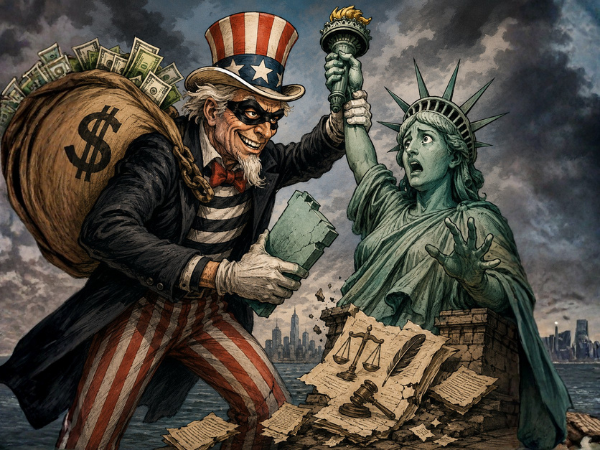
The government doesn’t have to abolish the Constitution outright when it can persuade the public that certain people should no longer be entitled to its protections.
That is how constitutional rights cease to be rights at all and become privileges granted or withdrawn at the government’s discretion.
And that is how a population becomes conditioned to accept the unacceptable.
We’re living in two worlds.
There’s the world we see—or are made to see—and then there’s the one we sense and occasionally catch a glimpse of, which bears little resemblance to the propaganda-driven reality manufactured by those in power and amplified through an increasingly fragmented media landscape.
Indeed, what most Americans perceive as life in America—privileged, progressive and free—is a far cry from the reality of a nation where economic inequality persists, government power continues to expand, and freedom is increasingly subjected to the demands of surveillance, security and control.
All is not as it seems.
Monsters with human faces walk among us.
Some of them wield extraordinary government power.
This is the premise of John Carpenter’s film They Live, released in November 1988, which remains unnervingly, chillingly appropriate for our modern age.
Best known for his horror film Halloween, Carpenter’s larger body of work is infused with a strong anti-authoritarian, anti-establishment, laconic bent that speaks to the filmmaker’s concerns about the unraveling of our society, particularly our government.
Time and again, Carpenter portrays the government working against its own citizens, a populace out of touch with reality, technology run amok, and a future more horrific than any horror film.
In They Live, two migrant workers discover that the world is being subliminally controlled and exploited by aliens working in partnership with an oligarchic elite.
All the while, the populace—blissfully unaware of the real agenda at work in their lives—has been lulled into complacency, indoctrinated into compliance, bombarded with media distractions, and hypnotized by hidden messages beamed out of television and various electronic devices, billboards and the like.
Sound familiar?
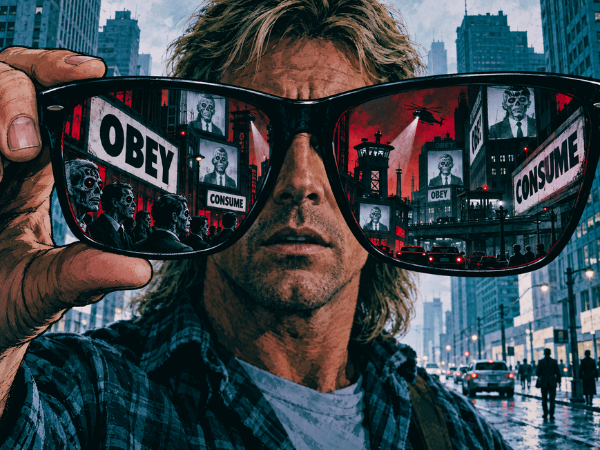
It is only when homeless drifter John Nada, played by the late Roddy Piper, discovers a pair of special sunglasses that he sees what lies beneath the elite’s fabricated reality: control and bondage.
When viewed through Nada’s lenses, the wealthy and powerful who appear human are revealed as monsters exploiting the citizenry.
Likewise, seemingly mundane advertisements conceal subliminal, authoritarian messages. Magazine racks scream “CONSUME” and “OBEY.” Money proclaims “THIS IS YOUR GOD.” Other hidden messages reinforce the same demands: CONFORM. SUBMIT. STAY ASLEEP. WATCH TV. DO NOT QUESTION AUTHORITY. NO INDEPENDENT THOUGHT.
This indoctrination campaign engineered by the elite in They Live is painfully familiar to anyone who has studied the workings of an authoritarian state.
A citizenry that does not think for themselves, obeys without question, is submissive, does not challenge authority, does not think outside the box, and is content to sit back and be entertained is a citizenry that can be easily controlled.
In this way, the message of They Live provides an apt analogy for the distorted vision of life in the American police state—what philosopher Slavoj Žižek has characterized as the invisible structures of domination that sustain the appearance of freedom.
Tune out the government’s attempts to distract, divert and befuddle us and tune into what’s really going on in this country, and you’ll run headlong into an uncomfortable truth: government corruption and power have expanded far beyond the restraints the Constitution was intended to impose.
And the corruption is not always hidden.
What happens when public office, private wealth and political influence become so intertwined that ordinary citizens can no longer distinguish whose interests their government is serving? What happens when those conflicts are repeatedly exposed, yet the public becomes too distracted, too divided or too politically invested to demand answers?
This is where the warning of They Live becomes especially relevant.
The danger is not simply that powerful interests might conceal what they’re doing. It’s that they can operate in plain sight, confident that enough people will refuse to see—or refuse to care.
We have allowed the government’s corruption, brutality, self-dealing and abuses go on for too long. While this has been true of both parties, it has become painfully evident under the Trump administration.
Desperate to hold onto power, the powers-that-be continue to advance a series of carefully contrived narratives, threats and emergencies to justify expanding their authority, encouraging the public to fear one another, distrust our own judgment, and accept increasingly invasive government powers as the price of safety.
Fear is the great enabler of authoritarianism.
Fear of terrorists. Fear of criminals. Fear of immigrants. Fear of foreign enemies. Fear of domestic extremists. Fear of one another.
Every new threat becomes another justification for expanding government authority, weakening constitutional safeguards, and demanding greater obedience from a frightened public.
This is how government power expands in plain sight. The targets are portrayed as threats. The government’s actions are defended as necessary. Those who question its methods are accused of defending criminals, undermining public safety or siding with the enemy.
And with every exception made to constitutional restraints, the public becomes a little more accustomed to powers it once would have considered intolerable. Surveillance becomes security. Censorship becomes protection. Militarized policing becomes public safety. Indefinite detention becomes national defense.
And killing becomes justice.
For too long, Americans have been persuaded to barter their freedoms for promises of security, rationalizing government wrongdoing because they are told the alternatives would be worse.
But no matter how you rationalize it, the lesser of two evils is still evil.
The greatest danger is not merely that government officials may abuse their power.
It is that ordinary people may become so accustomed to those abuses that they lose the ability—or the willingness—to recognize them for what they are.
This brings us back to They Live, in which the danger posed is not simply the alien conspiracy but the population’s willingness to remain asleep and controlled.
Again, not so different from our own.
As one of the characters points out, “The poor and the underclass are growing. Racial justice and human rights are nonexistent. They have created a repressive society and we are their unwitting accomplices. Their intention to rule rests with the annihilation of consciousness. We have been lulled into a trance. They have made us indifferent to ourselves, to others. We are focused only on our own gain.”
We, too, are encouraged to focus on our own pleasures, prejudices and political victories, while remaining indifferent to the suffering of others. Our poor and underclasses are also growing. Injustice is growing. Inequality is growing. A concern for human rights is nearly nonexistent. We too have been lulled into a trance, indifferent to others.
The government doesn’t have to convince everyone that its actions are lawful, just or humane. It merely has to persuade enough people that those being targeted deserve whatever happens to them.
Nor does corruption have to be concealed when it can be rationalized, dismissed, or excused as the unavoidable cost of keeping one’s preferred political leaders in power.
This is perhaps the most disturbing parallel to They Live: a population that has been shown what is happening, yet remains unwilling to confront the implications.
The warning signs are no longer buried beneath elaborate disguises. They are unfolding in courtrooms, detention facilities, government offices, financial disclosures and daily news reports.
And still, too many people choose to look away.
We can convince ourselves that we are different from the victims of government abuse. That we are too law-abiding, too patriotic, too respectable, too insignificant to become targets ourselves.
We can tell ourselves that the government means well, that extraordinary measures are necessary, and that those caught in the machinery of state power must have done something to deserve their fate. But every exception made to someone else’s rights weakens the protections intended to safeguard our own.
That was the warning behind the Bill of Rights.
The founders understood that government officials could not be trusted to restrain themselves simply because they professed good intentions. The Constitution was intended to bind government power, not magnify it.
So where does that leave us?
The characters who populate Carpenter’s films provide some insight.
Underneath their machismo, they still believe in the ideals of liberty and equal opportunity. Their beliefs place them in constant opposition with the law and the establishment, but they are nonetheless freedom fighters.
When John Nada destroys the alien hypno-transmitter in They Live, he delivers a wake-up call for freedom. As Nada memorably declares, “I have come here to chew bubblegum and kick ass. And I’m all out of bubblegum.”
In other words, it’s time to get active and take a stand for what’s really important.
Stop allowing yourselves to be easily distracted by political spectacles and manufactured fears. Stop treating constitutional rights as privileges reserved for people you agree with. Stop excusing government abuses merely because the victims are unpopular or the perpetrators share your political loyalties.
As we make clear in Battlefield America: The War on the American People and its fictional counterpart The Erik Blair Diaries, all the trappings of the American police state are now in plain sight.
The greatest danger is not that the monsters have become so adept at hiding among us. It is that we have become so conditioned to their presence, so accustomed to their abuses, and so willing to excuse their corruption that we no longer recognize them for what they are.
Wake up, America.
If they live—the tyrants, the oppressors, the invaders, the overlords—it is only because “we the people” sleep.
Source: https://tinyurl.com/rp6v5e95
ABOUT JOHN W. WHITEHEAD
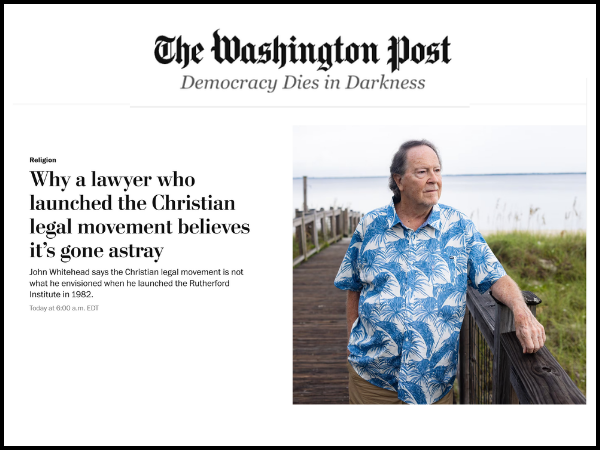
Constitutional attorney and author John W. Whitehead is founder and president of The Rutherford Institute. His most recent books are the best-selling Battlefield America: The War on the American People, the award-winning A Government of Wolves: The Emerging American Police State, and a debut dystopian fiction novel, The Erik Blair Diaries. Whitehead can be contacted at staff@rutherford.org. Nisha Whitehead is the Executive Director of The Rutherford Institute. Information about The Rutherford Institute is available at www.rutherford.org.
Publication Guidelines / Reprint Permission
John W. Whitehead’s weekly commentaries are available for publication to newspapers and web publications at no charge.