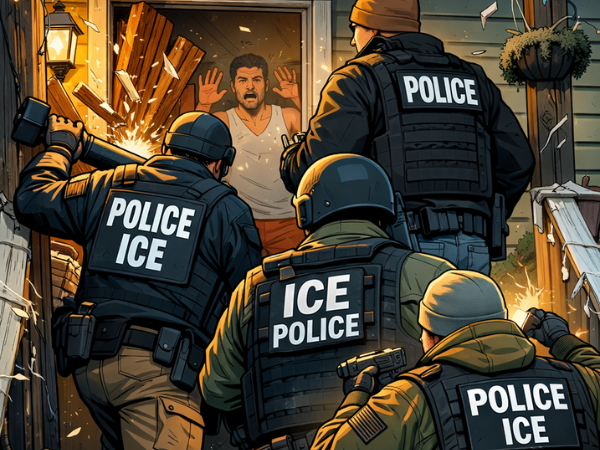
WASHINGTON, D.C. — One year after the U.S. Supreme Court declined to protect homeowners from warrantless searches by police based merely on a suspicion that a person on probation or parole resides on the premises, agents with Immigration and Customs Enforcement are now forcibly entering private homes without a judge’s warrant.
According to reporting by the Associated Press, ICE officers are being instructed that they may use force to enter a residence based solely on an administrative arrest warrant tied to a final order of removal—despite prior guidelines and legal precedent holding that such warrants do not authorize entry into a private home absent consent or exigent circumstances.
“This is not law enforcement. It’s a home-invasion policy,” said constitutional attorney John W. Whitehead, president of The Rutherford Institute and author of Battlefield America: The War on the American People. “The Fourth Amendment does not disappear at the doorstep simply because the government labels a piece of paper an ‘administrative warrant.’ Judicial oversight is not optional. It is the Constitution’s first line of defense against tyranny.”
The Rutherford Institute warned one year ago that the Supreme Court’s refusal to intervene in Bailey v. Arkansas set the nation on a slippery slope toward a society in which police may invade homes based on nothing more than a hunch. That warning now carries graver weight in light of ICE’s newly revealed internal memo authorizing officers to forcibly enter private residences without judicial approval—a sweeping assertion of power that directly collides with the Fourth Amendment’s core protections against unreasonable searches and seizures. Disturbingly, these warrantless raids are not confined to non-citizens. In a widely reported incident, ICE agents forced open the door to the Minnesota home of ChongLy Thao, a U.S. citizen, dragged him outside in his underwear, and detained him without a judicial warrant—despite his repeated assertions of citizenship. The incident underscores the real-world consequences of treating administrative authority as a substitute for constitutional safeguards. Unlike judicial warrants issued by neutral judges upon a showing of probable cause, ICE administrative warrants are signed internally by immigration officials—allowing the same agency to act as lawmaker, judge, and enforcer. Civil liberties advocates warn that this concentration of power invites precisely the kind of warrantless, militarized home raids the Fourth Amendment was written to prevent.
For years, The Rutherford Institute has documented the steady erosion of Fourth Amendment protections through no-knock raids, militarized policing, and “Constitution-free” enforcement tactics—often targeting the most vulnerable communities first. ICE’s new guidance represents a dangerous escalation of that trend. “This memo doesn’t just threaten immigrants. It normalizes the idea that armed government agents may force their way into a home without judicial approval. Once that line is crossed, no one’s privacy is secure—not even citizens,” Whitehead said. “The government is once again testing how much lawlessness the public will tolerate. History shows that when agencies are allowed to ignore the Fourth Amendment in the name of expediency, abuse follows—and freedom is the casualty.”
The Rutherford Institute, a nonprofit civil liberties organization, defends individuals whose constitutional rights have been threatened or violated and educates the public on a wide spectrum of issues affecting their freedoms.
None of this is accidental. And none of it is temporary.
At a time when executive orders are used to punish dissent, federal agencies are weaponized against political opponents, protesters are met with militarized force, immigration enforcement is used as terror theater, and constitutional limits are treated as inconveniences rather than restraints, one fact has become impossible to ignore: politics won’t fix a system that is broken beyond repair.
Elections have failed to check the police state.
Courts increasingly defer to it.
And a year into Trump’s second term, what began as campaign rhetoric has hardened into administrative policy; what was once framed as a national emergency has become routine authoritarianism.
Executive power has expanded, accountability has contracted, and constitutional limits have been tested—and ignored—by the Trump administration with increasing confidence.
This is no longer a warning about what might happen. It is a record of what has already occurred.
This same authoritarian mindset has not remained confined to domestic policy. It has predictably expanded outward, revealing itself just as clearly in foreign affairs.
Trump’s renewed saber-rattling over Greenland—treating another nation’s territory as if it were a corporate asset to be acquired or controlled—reveals how deeply this distortion of power has taken hold.
It is the language of ownership, not governance; of command, not consent.
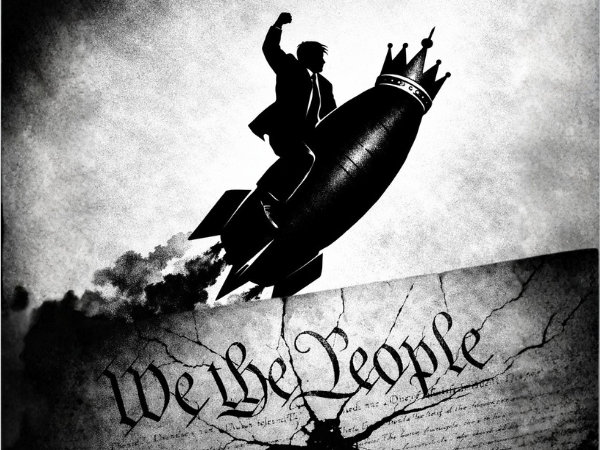
A president is not a monarch, a CEO, or a landlord over the republic. He is an employee—hired by “we the people,” bound by a written contract called the Constitution, and subject to limits he did not write and cannot rewrite.
When that employee ignores his limits, only one check remains: the people themselves.
John Lennon’s reminder that “the people have the power” has never been more relevant—or more dangerous to those in power.
That power has a name: nullification.
It is the authority of ordinary citizens and local communities to refuse cooperation with unjust laws, illegitimate prosecutions, and unconstitutional government action.
In an era of open executive defiance and punitive governance, nullification is no longer optional—it is a civic necessity.
How else do you balance the scales of justice at a time when Americans are being tasered, tear-gassed, pepper-sprayed, hit with batons, shot with rubber bullets and real bullets, blasted with sound cannons, detained in cages and kennels, and arrested and jailed for challenging the government’s excesses, abuses and power-grabs?
No matter who sits in the White House, a shadow government continues to call the shots behind the scenes.
Relying on the courts to restore justice has exposed a growing fracture within the judiciary itself.
On one side are lower courts, which have often served as a first line of defense against the Trump administration’s constitutional overreaches and abuses of power. On the other is the U.S. Supreme Court, which appears increasingly preoccupied with preserving order and insulating government agents from accountability rather than upholding the rights enshrined in the Constitution.
With each ruling handed down by the Supreme Court, it becomes harder to deny that we are living in an age of hollow justice—one in which the government is routinely granted a free pass to sidestep the rule of law, shielding the powerful from accountability rather than restraining them.
Even so, justice matters.
It matters whether you’re a rancher protesting a federal land grab by the Bureau of Land Management, a Native American defending sacred land and water from oil pipelines, a college student demonstrating against U.S. complicity in foreign wars, a trucker protesting government mandates, a Black American marching against the routine killing of unarmed citizens by police, or a protester standing witness in the face of ICE raids that terrorize communities.
They may be different causes, but it’s the same police state response over and over again: militarized force, mass arrests, surveillance, and prosecution.
Unfortunately, protests and populist movements haven’t done much to push back against an authoritarian regime that is deaf to our cries, dumb to our troubles, blind to our needs, and accountable to no one.
Regardless of ideology or grievance, the government’s modus operandi remains the same: shut down protests using all means available, prosecute First Amendment activities to the fullest extent of the law, criminalize dissent, label dissidents as extremists or terrorists, and surveil the population in order to crush resistance before it can take root.
If protests are met with force, elections are rendered performative, courts defer to power, and legislatures refuse to act, then any remaining means of thwarting the government’s relentless march toward outright dictatorship cannot lie within the system itself.
It must lie with the people—specifically, with the power of juries and local communities to refuse cooperation with illegitimate laws, abusive prosecutions, and unconstitutional government actions.
Nullification works.
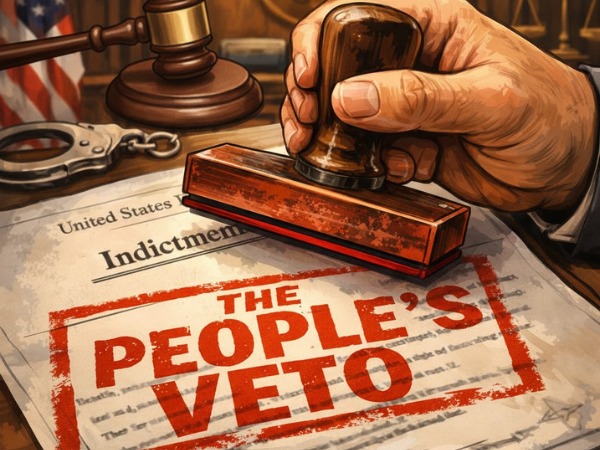
Just as a President may veto an act of Congress, the American juror possesses the “People’s Veto”—the power to refuse enforcement of a law or prosecution that offends the conscience of the Constitution.
In a world of “rampant overcriminalization,” where the average American unknowingly breaks multiple laws every day, jury nullification serves as “a check on runaway authoritarian criminalization and the increasing network of confusing laws that are passed with neither the approval nor oftentimes even the knowledge of the citizenry.”
Indeed, Butler believes so strongly in the power of nullification to balance the scales between the power of the prosecutor and the power of the people that he advises: “If you are ever on a jury in a marijuana case, I recommend that you vote ‘not guilty’—even if you think the defendant actually smoked pot, or sold it to another consenting adult. As a juror, you have this power under the Bill of Rights; if you exercise it, you become part of a proud tradition of American jurors who helped make our laws fairer.”
In other words, it is “we the people”—not politicians, not prosecutors, not judges, not corporate interests—who can and should be determining what laws are just, what activities are criminal and who can be jailed for what crimes.
This is why nullification matters now more than ever—not just because injustice is being imposed from below, but because accountability is being erased from above.
Trump’s willingness to use the presidential pardon power not as a safeguard against injustice but as a tool to erase it reveals a dangerous inversion of constitutional authority.
Jury nullification, by contrast, operates from below, as the people’s last remaining check on government abuse.
Writing for New York magazine, Elie Honig, a former federal and state prosecutor, rightly points out:
“Trump presently faces little meaningful opposition to his agenda, and to his excesses. The Executive Branch has largely been purged of objectors (or even some who faithfully do their jobs). The Republican-controlled House and Senate provide no friction, while Democrats flail helplessly. And the Supreme Court generally (though not always) has gone Trump’s way on executive power. One of the few remaining checks comes from the most humble of sources – the everyday civilians who get that dreaded notice in the mail and wind up serving on grand juries and trial juries. Other than voting, it’s the most basic, populist exercise of American democracy.”
The punishment should fit the crime, but the law itself should also reflect the will and conscience of the people—not the profit-driven priorities of a corporate-government elite that sees nothing wrong with locking someone away for life over a nonviolent offense.
Unsurprisingly, the powers-that-be do not want the public to know it has this power.
The government prefers a citizenry ignorant of its rights.
Those who attempt to educate jurors about nullification have faced intimidation’ and prosecution. Yet courts have also recognized that discussing jury nullification in the abstract is protected speech under the First Amendment, reinforcing the idea that public debate about the justice system is not only lawful, but essential.
Jury nullification has deep roots in American history. It was championed by figures such as John Adams and John Hancock and used repeatedly to resist laws that were unjust, immoral, or out of step with fundamental liberties—from colonial resistance to British rule to modern opposition to draconian drug laws.
At a time when government officials accused of wrongdoing are routinely granted leniency, while ordinary citizens are prosecuted to the fullest extent of the law, jury nullification stands as a powerful reminder that “we the people” are the government.
For too long, we have allowed our so-called representatives to call the shots. It is time to restore the citizenry to its rightful place in the republic.
To reclaim our power, we must change the rules and restore “we the people” as the masters, not the servants, in the power dynamic.
The government has perfected a divide-and-conquer strategy that exploits political, racial, economic, and cultural divisions. Surveillance, extremism reports, militarized policing, fusion centers, domestic intelligence databases, and the transformation of local police into extensions of the military have created an atmosphere of fear, suspicion, and distrust.
What too many Americans fail to realize is that, in the eyes of an unaccountable state, distinctions between left and right, protester and bystander, loyalist and dissenter eventually collapse.
When the crackdown comes—and it is coming—it will not matter who you voted for, which protest you supported, or whether you spoke out or stayed silent. When the machinery of repression turns inward, everyone becomes a potential target.
The government is not afraid of civil unrest. It anticipates it. It prepares for it.
The protests in Ferguson, Baltimore, Baton Rouge, and Standing Rock—where militarized police turned American towns into war zones and caged demonstrators like animals—were dress rehearsals.
They were training exercises for a future in which widespread dissent is met with overwhelming force.
The objective is compliance. The strategy is destabilization followed by control.
Knowing this, the question is no longer whether the police state can be reasoned with, voted out, or restrained from within.
The question is how ordinary people reclaim power in a system designed to deny it.
You change the rules.
You engage in disciplined, nonviolent resistance that disrupts unjust systems without surrendering moral authority. You practice civil disobedience and militant nonviolence, as Martin Luther King Jr. did through sit-ins, boycotts, and mass protest. You build grassroots power locally—thinking nationally, but acting locally.
And above all, you refuse to comply with laws, prosecutions, and policies that are illegitimate, egregious, or unconstitutional.
Justice in America is too often reserved for those who can afford to buy it. For everyone else, the system is riddled with failures: police misconduct, prosecutorial abuse, judicial bias, inadequate defense, and a legal code so vast and convoluted that innocence becomes almost irrelevant.
In a courtroom, the conscience of a jury manifesting as nullification may be the one advantage left to us in the face of government corruption.
Nullification is not lawlessness. It is lawful resistance and it may be our last remaining safeguard against tyranny.
It is ordinary people refusing to rubber-stamp injustice. It is the citizenry exercising the authority the Constitution entrusts to them when every other safeguard has failed.
What nullification represents is the power of the people to reject potentates and tyrants.
It is a reminder that no president owns this country—just as no president gets to purchase, annex, or command the world as if it were his personal domain.
For too long, we have been conditioned to believe that power flows downward—from politicians, courts, and enforcers to the people. The truth is the opposite. Power flows upward, but only when citizens are willing to claim it.
In January 1776, Thomas Paine published Common Sense, a pamphlet that gave voice to the discontent of a nation struggling to free itself from a tyrannical ruler who believed power flowed from his own will rather than the consent of the governed.
Paine’s warning was not theoretical.
Two hundred and fifty years later, we find ourselves confronting the same dilemma—this time from inside the White House: can a people remain free if they place their faith in the virtue (or vice) of one man?
According to Trump, the only thing standing between America and unchecked power is his own morality.
Now America’s founders believed in faith and morality. As John Adams warned in 1798, “Avarice, Ambition and Revenge or Galantry, would break the strongest Cords of our Constitution as a Whale goes through a Net. Our Constitution was made only for a moral and religious People. It is wholly inadequate to the government of any other.”
Adams was not advocating for a theocracy. Rather, he was emphasizing that a government of liars, thugs, and thieves will not be bound by constitutional limits. It will treat them as inconveniences.
A constitutional government survives only when both the people and their leaders are willing to be bound by it.
If our freedoms depend on Donald Trump’s self-proclaimed morality, we are in dangerous territory.
Christian nationalists have tried to whitewash Trump’s behavior by wrapping religion in the national flag and urging Americans to submit to authoritarianism—an appeal that flies in the face of everything the founders risked their lives to establish.
That whitewashing effort matters, because it asks Americans to abandon the very safeguards the Founders put in place to protect them from men like Trump.
Trump speaks in a language of kings, strongmen, and would-be emperors advocating for personal rule over constitutional government. America’s founders rejected that logic, revolted against tyranny, and built for themselves a system of constitutional restraints—checks and balances, divided authority through a separation of powers, and an informed, vigilant populace.
All of their hard work is being undone. Not by accident, and not overnight.
The erosion follows a familiar pattern to any who have studied the rise of authoritarian regimes.
Trump and his army of enablers and enforcers may have co-opted the language of patriotism, but they are channeling the tactics of despots.
This is not about left versus right, or even about whether Trump is a savior or a villain. It is about the danger of concentrating unchecked power in any one individual, regardless of party or personality.
This should be a flashing red warning sign for any who truly care about freedom, regardless of partisan politics.
The ends do not justify the means.
Power that can be used “for the right reasons” today will be used for the wrong reasons tomorrow.
History shows that once the machinery of oppression is built—surveillance systems, militarized enforcement, emergency authorities—it does not care who operates the controls. The only question is who will be targeted next.
All presidents in recent years have contributed to the rise of the American police state with executive overreach, standing armies, militarized policing, war without consent, mass surveillance, and concentrated power.
But Trump 2.0 has done more to dismantle the nation’s constitutional guardrails than at any other time in history.
Rather than adhering to the script provided by America’s founders, it’s as if the Trump administration took the grievances leveled against King George III in the Declaration of Independence and adopted them as a governing playbook.
These are not hypotheticals or worst-case projections.
They are unfolding now through emergency declarations, warrantless raids, speech-based detentions, unaccountable surveillance, and military actions launched without consent or constitutional authority.
It is the same sequence every despot follows.
First, power is centralized.
Trump has ruled by executive decree rather than law, sidelining Congress through emergency declarations and unilateral orders.
He has obstructed laws necessary for the public good, refusing to enforce statutes that limit his authority.
He has conditioned governance on loyalty, withholding protection, relief, or aid from those who oppose him.
Next, accountability is dismantled.
Trump has obstructed the administration of justice, interfering with investigations and shielding allies from prosecution.
He has politicized the judiciary, rewarding loyalty over independence and attacking courts that resist him.
He has undermined due process, expanding detention, administrative punishment, and coercive enforcement.
Once law no longer restrains power, force takes its place.
Trump has deployed militarized federal agents among the civilian population without meaningful oversight.
He has blurred the line between civilian authority and military power, treating force as governance.
He has protected agents from accountability, excusing abuse, violence, and killing by law enforcement.
If this is how Trump intends to celebrate the country’s 250th birthday, by reenacting the abuses that drove Americans to revolt in 1776, someone might need to clue him in to the fact that it ends with Americans rejecting “absolute tyranny.”
With every passing day, the American police state with Trump at its helm gets more unhinged.
Once force replaces law at home, it is only a matter of time before it is unleashed abroad.
Without congressional authorization, without constitutional authority, and without any grounding in international law, Trump directed U.S. forces to invade a foreign country, abduct its president and his wife—and then Trump declared himself the new head of Venezuela.
Consumed with visions of global conquest and military expansion, Trump has treated sovereignty as negotiable and international law as an inconvenience. He has threatened, coerced, or destabilized nations including Venezuela, Greenland, Cuba, Nigeria, Iran, and others—not through diplomacy or lawful process, but through dominance, spectacle, and unilateral force.
Trump’s push to boost the military budget to $1.5 trillion speaks less to national defense than to imperial ambition.
This is not leadership. It is lawlessness carried out by mercenaries and thugs on the government payroll.
Not content to wage war abroad, the government has systematically worked to transform America into a battlefield, setting its sights on the American people.
That transformation is almost complete.
In Minneapolis, a federal ICE agent shot and killed 37-year-old Renee Good in the head, while she was behind the wheel of her car. In the immediate aftermath of the shooting, the Trump administration rushed to paint Good as an agitator and domestic terrorist, justifying the cold-blooded assassination of an American citizen by a masked gunman as an act of self-defense.
Video footage, including from the ICE agent who can be heard remarking, “Fucking bitch,” reflects poorly on the government’s claims.
Rather than de-escalating a situation that they created, the Trump administration has continued to add fuel to the fire, deploying more militarized agents, more force, more intimidation.
A government that recognizes no moral limits will recognize no legal limits.
And a nation that places its faith in the “morality” of unrestrained power will soon discover that morality—like liberty—cannot survive where law no longer rules.
Unchecked power does not protect its supporters—it eventually turns on them, too.
This is what happens when the rule of law gives way to rule by force.
Looming over all of this is a question that can no longer be ignored: who is pulling the strings?
Nothing about Trump’s behavior is rational or sane, even by his own standards: he’s bulldozing the White House, blitz-bombing boats, threatening to seize foreign lands by force, and plastering his name and face on every available surface.
As diabolical as these distractions are, they are a sideshow to keep us from seeing the long-term plans to lock down the country being put in place by an unaccountable shadow apparatus operating behind the scenes for whom the Constitution means nothing.
We ignore them at our own peril.
What we are witnessing is not merely presidential overreach, but the consolidation of power within an unaccountable executive-security apparatus—one that operates beyond meaningful public oversight and treats constitutional limits as obstacles rather than obligations.
A ruler who sees himself as indispensable soon comes to believe the law is expendable.
A government that elevates personal ambition over public accountability begins to treat constitutional restraints as obstacles rather than safeguards.
And a nation that confuses brute force with authority inevitably finds itself governed by fear rather than consent.
When a president surrounds himself with military parades, inflates defense budgets to obscene levels, deploys federal forces against the civilian population, and insists that his personal morality is the only safeguard against abuse, the republic is no longer drifting towards tyranny—it is sliding fast.
And when ego becomes policy, the results are predictable: perpetual war, endless surveillance, normalized violence, the criminalization of dissent, and a public conditioned to accept abuses in the name of security and patriotism.
This is how republics fall.
Not all at once. Not with a single coup or declaration. But gradually, through the steady erosion of norms, the hollowing out of institutions, and the quiet surrender of moral responsibility.
Paine warned that “a long habit of not thinking a thing wrong gives it a superficial appearance of being right.” That warning resonates with terrifying clarity today.
Americans are being trained to accept what would have once been unthinkable: law enforcement that kills without consequence, presidents who operate above the law, wars launched without consent, and power exercised without accountability.
That normalization is the true danger.
Which brings us to the question that Common Sense forced Americans to confront in 1776—and that we must confront again now: Are we a nation governed by laws, or by the will of a man?
If the answer is the latter, then no election, no court, no ritual invocation of patriotism can save us.
The founders did not risk everything to replace one tyrant with another. They did not reject monarchy only to embrace executive supremacy. They did not enshrine checks and balances so that future generations could shrug and hope that those in power would restrain themselves.
They understood that freedom requires moral courage, not blind loyalty; that resistance to tyranny is not treason, but duty; and that the price of liberty is eternal vigilance—not eternal trust.
But when the law itself is perverted for corrupt ends, the burden of resistance does not disappear. It shifts.
The founders also understood something else—something history has confirmed again and again: when government descends into lawlessness, people of conscience, faith and deep moral beliefs are tested. And they either rise to confront injustice, or become complicit in its abuses.
But scripture does not command blind obedience to power. The same Bible invoked to demand submission also records prophets confronting kings, apostles defying unjust rulers, and Jesus himself executed for refusing to submit to an immoral state.
As Martin Luther King Jr. pointed out, “One has not only a legal but a moral responsibility to obey just laws. Conversely, one has a moral responsibility to disobey unjust laws.”
That resistance has historic roots.
During the years leading up to the American Revolution, it was the so-called Black Robed Regiment—a derisive term used by the British to describe colonial clergy—who spoke most forcefully against tyranny. From pulpits across the colonies, pastors preached sermons condemning unchecked power, defending liberty of conscience, and warning that obedience to unjust authority was itself a form of moral corruption.
Those ministers did not preach submission to power. They preached resistance to it.
In Nazi Germany, theologian Dietrich Bonhoeffer watched as the church gradually surrendered its independence and aligned itself with state power. Bonhoeffer warned that when the church becomes silent in the face of evil—or worse, when it cloaks injustice in religious language—it ceases to be the church at all. Silence, he argued, was not neutrality; it was collaboration.
Bonhoeffer paid for that conviction with his life.
These pastors understood that the church’s role is not to sanctify empire, but to confront it.
The same themes running through Paine’s Common Sense and the later American Crisis are just as relevant now as they were 250 years ago: no ruler is above the law, no government is entitled to unchecked power, and no people remain free who surrender their conscience to the ambitions of the powerful.
And as I make clear in Battlefield America: The War on the American People and in its fictional counterpart The Erik Blair Diaries, history has already told us what happens next: when government becomes destructive of liberty, it is not only the right of the people to resist—it is their duty.
“The demagogue is one who preaches doctrines he knows to be untrue to men he knows to be idiots… His public life is an endless series of evasions and false pretences. He is willing to embrace any issue, however idiotic, that will get him votes, and he is willing to sacrifice any principle, however sound, that will lose them for him… He may be, on the one hand, a cross-roads idler striving to get into the State Legislature … or he may be, on the other, the President of the United States.”—H. L. Mencken
Trump has repeatedly framed himself as a victim of corruption while weaponizing the machinery of government for personal, political, and financial gain. He rails against censorship while threatening journalists, blacklisting law firms, and punishing dissenters. He decries political persecution while using federal power to retaliate against critics and whistleblowers, condemning ‘rigged systems’ even as he stacks courts, rewrites rules, and demands loyalty over law.
Nowhere is this hypocrisy more evident than in Trump’s “Stop the Steal” campaign—a slogan that metastasized into a violent assault on democratic norms and culminated in a riot when Trump’s supporters forced their way into the U.S. Capitol to stop Congress from certifying the electoral votes in an election Trump lost.
Five years after January 6, we find ourselves navigating a strange and dangerous new reality:
A president who claims to defend American sovereignty while exploiting public office to extract resources, favors, and concessions for private and political gain.
A president who champions “law and order” while selectively enforcing the law—rewarding loyalty, punishing opposition, and dismantling checks on executive power.
Stop the steal, indeed.
Trump’s second term has become a painful lesson in what it looks like when a government of the people, by the people, and for the people is stolen out from under them—and replaced by a government of the rich, by the rich, and for the rich.
This is not governance.
It is projection weaponized, retaliation normalized, and Orwellian doublespeak elevated to official policy.
This pattern of projection becomes most dangerous when it targets the democratic process itself.
Trump’s obsession with election fraud masks a quieter, more consequential theft: the deliberate manipulation of the electoral system.
While endlessly warning that elections are “rigged,” Donald Trump and his allies have worked aggressively to redraw voting districts, restructure election rules, and manipulate the electoral map ahead of the 2026 midterms—not to reflect the will of the people, but to predetermine outcomes.
This is not election security. It is election control.
By reshaping districts and rewriting rules while crying fraud, Trump accuses others of stealing elections while quietly rigging the system himself.
In a striking escalation of this pattern, Trump has even floated the idea of canceling future elections—suggesting that the 2026 midterms might not need to be held, then quickly backpedaling by framing the comments as rhetorical or directed at political opponents.
Even when cloaked in bravado, sarcasm, or faux humor, the effect is the same: undermining public confidence in free and fair elections while signaling that democratic rules are negotiable when they obstruct the pursuit of power. If elections can be dismissed whenever outcomes are inconvenient, the very premise of self-government collapses.
When projection can no longer justify control, it serves another purpose: deflection.
Nowhere is this more evident than in Trump’s repeated invocations of the Jeffrey Epstein files.
Trump has loudly and insistently suggested—often without evidence—that his political enemies are implicated in Epstein’s crimes, while portraying himself as untouched by the scandal. Yet Trump remains one of Epstein’s most documented, long-standing associates, appearing repeatedly in photographs, flight records, and contemporaneous accounts over many years.
The result is not accountability, but misdirection: a calculated effort to shift attention away from the president’s own condition by casting doubt on an opponent’s, depriving voters of consistent standards for evaluating those entrusted with immense power.
Projection does not stop at home.
While posturing as an isolationist intent on “ending endless wars,” Trump has embraced the role of global enforcer and expansionist. He polices other nations, threatens intervention, and wields economic and military power to coerce compliance, all while insisting that America must retreat from international responsibility. He condemns foreign governments for repression while excusing—or replicating—those same abuses at home. And now he has seemingly embraced a “Donroe Doctrine” vision of seizing control of much of the western hemisphere.
At the same time, Trump styles himself a “peace president” even as his administration has carried out military strikes that killed civilians abroad and expanded the reach of the American military industrial complex.
In this way, peace becomes a slogan emptied of meaning, while violence is rebranded as strength.
This, too, is projection: claiming moral authority while betraying moral obligation; invoking faith while hollowing it out; declaring peace while sowing destruction.
Perhaps no slogan better captures Trump’s reliance on projection than his long-running promise to “drain the swamp.”
Trump rose to power by portraying Washington as a cesspool of corruption—claiming he alone could cleanse government of self-dealing elites and entrenched interests. Yet once in office, he did not drain the swamp; he moved into it, expanded it, and placed himself at its epicenter. Lobbyists, donors, political loyalists, and corporate insiders flourished, while public office became a vehicle for enrichment and favoritism.
What Trump labeled corruption in others became standard practice in his own administration.
The rhetoric of reform masked the transformation of government into a pay-to-play enterprise where access, immunity, and influence were rewards for loyalty.
“Drain the swamp” was never a promise of reform: it was a warning about who would control it.
All of this points to a single conclusion: the greatest theft of the Trump era was not a stolen election, but the systematic dismantling of the constitutional republic itself.
Over the past year alone, the administration has rewritten the rules of governance—discarding constitutional guardrails whenever they interfered with power, profit, or political revenge.
Rights were stolen by eroding First Amendment protections and criminalizing dissent.
Due process was stolen through detention without trial and punishment based on speech.
Representative government was stolen by sidelining Congress and ruling by executive fiat.
Public resources were stolen through pay-to-play politics and corporate favoritism.
Accountability was stolen by shielding allies while weaponizing law enforcement against critics.
One by one, the pillars of constitutional government were stripped for parts.
The courts were transformed from checks on power into ideological enforcement mechanisms.
Checks and balances were treated as obstacles rather than obligations.
Loyalty to the president replaced loyalty to the Constitution.
Trump stole our rights by eroding First Amendment protections, chilling protest, and criminalizing dissent under the guise of “national security” and “law and order.” Speech became suspect. Assembly became dangerous. Political opposition was recast as extremism. The freedoms meant to protect a free people were reframed as threats to government authority.
Trump stole due process through indefinite detention, speech-based targeting, and punishment without trial. Individuals were detained, surveilled, or punished not for crimes committed, but for ideas expressed, associations maintained, or beliefs held. Guilt was assumed. Legal protections were delayed, denied, or discarded.
Trump stole representative government by concentrating power in the executive branch and treating constitutional limits as inconveniences rather than obligations. Agencies were weaponized. Civil servants were purged. Loyalty to the president replaced loyalty to the Constitution. Government ceased to function as a public trust and instead became an instrument of control.
Trump stole public resources through pay-to-play politics, corporate favoritism, and self-serving deals that enriched political insiders at public expense. Taxpayer dollars, government contracts, regulatory favors, and public lands were leveraged not for the common good, but for private profit and political advantage.
Trump stole accountability by shielding allies from prosecution, issuing selective pardons, and turning law enforcement into a tool of political enforcement. Friends were protected. Critics were punished. The rule of law—meant to apply equally to all—became conditional, transactional, and partisan.
This was not mismanagement. It was not incompetence. It was not chaos.
It was theft—methodical, deliberate, and ideological.
Some years chip away at freedom. Others tear the mask off.
2025 was the year the government stopped pretending it was constrained by the Constitution—when executive power expanded openly and unapologetically, surveillance became ambient, dissent became dangerous, and the machinery of militarized government embedded itself into daily life.
Under Trump 2.0, the erosion of civil liberties gave way to something more brazen: the dismantling of constitutional government itself.
What made 2025 different was not any single abuse of power, but the relentless accumulation of them. The losses mounted week by week, crisis by crisis, executive order by executive order, until exhaustion itself became a political condition.
Outrage no longer led to accountability; it simply rolled into the next emergency.
What follows is not a list of grievances or a catalogue of partisan disputes. It is a record of the year freedom lost its guardrails—and of a nation torn apart from within by the very individuals and institutions entrusted with preventing such tyranny.
Donald J. Trump entered his second term promising revenge, retribution, and sweeping transformation. In that regard, he has been utterly successful.
Where he has failed—spectacularly—is in honoring his oath of office to protect and defend the Constitution. He has failed to represent all of the people, opting instead to serve only those interests that inflate his ego and advance his personal and financial ambitions. He has failed to unite the country behind any shared civic vision, choosing instead to deepen divisions through rhetoric and policies that inflame hatred, entrench discrimination, and normalize cruelty. Racism was emboldened, bigotry encouraged, misogyny amplified, and corruption reframed as governance. Authoritarian instincts were no longer masked; they were embraced.
From the outset, Trump treated the Constitution not as a governing framework but as an obstacle—something to be maneuvered around, ignored, or rewritten by executive fiat. Indeed, he signed more executive orders in his first month than any other president had signed in their first 100 days.
The warning signs appeared immediately.
Within days of his inauguration, the U.S. Constitution and Bill of Rights disappeared from the White House website. While the administration later insisted the documents would be restored, the timing and symbolism were impossible to ignore—especially as executive orders poured out at a pace designed to bypass the very rule of law those documents exist to preserve.
Almost immediately thereafter, Trump declared two national states of emergency, announced his intention to disregard the Fourteenth Amendment’s guarantee of birthright citizenship, established new federal agencies without congressional authorization, and pushed for an expansion of the death penalty.
Constitutional boundaries were not merely tested; they were treated as optional.
At the same time, the presidential pardon—intended as a tool of mercy—was transformed into a currency of loyalty. Political allies and insiders were shielded from accountability, signaling that allegiance to the president now mattered more than fidelity to the law.
Economic governance followed the same pattern. Trump unilaterally launched tariff wars against longstanding trade partners, seizing Congress’s power of the purse and throwing already fragile markets into turmoil.
Constitutional process was no longer a prerequisite for national policy; presidential will was sufficient.
Immigration enforcement soon revealed just how far the rule of law had eroded. Despite campaign promises to target violent offenders, Immigration and Customs Enforcement expanded dragnet-style raids that swept up undocumented immigrants with no criminal history. In a calculated effort to evade judicial review and human rights obligations, detainees were secretly flown out of the country to foreign prisons beyond the reach of U.S. courts. Kilmar Garcia, a Maryland man with deep family and community ties, became the public face of the government’s approach to immigration that treated due process as expendable and exile as administrative convenience.
As public opposition mounted, the government’s response was not restraint but force. The National Guard was deployed first to Washington, D.C., and then increasingly to states across the country, under the pretext of addressing crime and unrest. Civil liberties organizations warned that the line between civilian law enforcement and military occupation was rapidly disappearing.
Abroad, constitutional limits collapsed just as readily.
The United States, favoring Israel, carried out preemptive military strikes against Iranian nuclear sites without congressional authorization. Drone strikes escalated in Yemen. Civilian boats were targeted under the banner of counterterrorism and drug interdiction. Trump openly threatened land invasions of Venezuela.
The Founders’ fear of a standing army turned inward—and war powers exercised without consent—was no longer theoretical. It had become standard operating procedure.
Domestic tragedy did nothing to slow this consolidation of power. Crisis after crisis was folded into an ever-expanding rationale for centralized control, rather than prompting accountability, restraint, or reflection.
By midyear, even the machinery of government itself was being dismantled. Under the banner of “efficiency,” the Department of Government Efficiency (DOGE) began shuttering agencies and hacking away at public services. In practice, the initiative cost taxpayers more than it saved, hollowed out institutional expertise, and left Americans with fewer protections and fewer remedies.
The government became less capable of serving the public—and more capable of policing it.
At the same time, the surveillance state reached a new level of sophistication and reach. Government agencies consolidated financial records, biometric identifiers, communications metadata, travel histories, and online behavior into centralized intelligence systems, often facilitated by private contractors such as Palantir. Artificial intelligence tools generated risk scores and predictive profiles, flagging individuals not for crimes committed, but for behaviors, associations, and speech deemed suspicious.
The presumption of innocence gave way to the logic of pre-crime.
Courts increasingly refused to intervene. Again and again, constitutional challenges were dismissed on procedural grounds, with judges ruling that Americans lacked “standing” to challenge secret surveillance systems precisely because the government refused to disclose how those systems worked. Rights that cannot be challenged are rights in name only.
What became unmistakably clear in 2025 was that presidential misconduct is no longer treated as an aberration, but as an occupational hazard the system has learned to tolerate. Once in office, presidents are functionally insulated from meaningful accountability—shielded by partisan loyalty, procedural delay, and judicial deference.
The message could not be clearer: the higher the office, the lower the likelihood of consequences. This is not a failure of any single investigation or prosecutor. It is a structural failure that has trained executive power to act with impunity, confident that the law will bend, stall, or look away.
Due process eroded accordingly.
Habeas corpus—the oldest safeguard of liberty—lost meaning as Americans were detained first and forced to justify their innocence later. Political speech itself was increasingly treated as a public-safety risk.
Incarceration, meanwhile, became national infrastructure. The administration advanced a $170 billion expansion of the prison system, including new megafacilities such as “Alligator Alcatraz.” Predictive policing systems fed people into the system at the front end, while bureaucratic cruelty defined life inside it.
Justice became mechanical, impersonal, and deliberately unforgiving.
Federalism collapsed in parallel. Local police forces were federalized in practice if not in name. National Guard units were commandeered. Federal enforcement authority expanded into states and cities once shielded from centralized power. The balance between local self-governance and federal authority—one of the Constitution’s most important safeguards—was steadily erased.
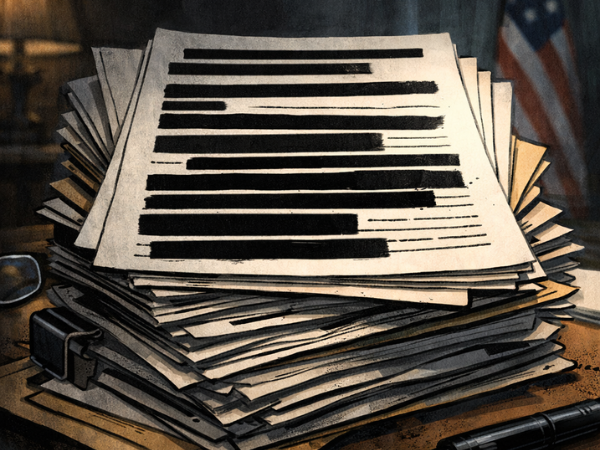
Oversight mechanisms fared no better. Inspectors General were sidelined. Congressional subpoenas were ignored. Whistleblowers were punished rather than protected. Transparency collapsed as Freedom of Information Act requests were delayed, denied, or buried. Routine documents were classified. Internal communications vanished.
A government that hides everything cannot be trusted with anything.
Much of this power was exercised indirectly. Core government functions—surveillance, incarceration, border enforcement, data analysis—were outsourced to private corporations immune from constitutional constraints. This corporate shadow state allowed the government to violate rights by proxy, then disclaim responsibility by insisting the Constitution did not apply.
By year’s end, even the machinery of democracy itself showed visible strain. Extreme gerrymandering, voter-roll purges, selective enforcement of election laws, and the targeting of political opponents weakened the people’s ability to choose their representatives.
The Constitution guarantees every state a republican form of government. In 2025, that promise rang hollow.
None of this happened overnight. That is the point.
The damage was cumulative, calculated, and exhausting by design. The goal was not merely to expand power, but as I make clear in Battlefield America: The War on the American People and in its fictional counterpart The Erik Blair Diaries, to normalize its abuse, to wear the public down until resistance felt futile.
2025 showed us what unchecked power looks like when it no longer feels the need to pretend.
The question for 2026 is not whether this trajectory will continue, but whether the American people will reassert the constitutional limits that make freedom possible—before those limits disappear entirely.
“When the song of the angels is stilled, when the star in the sky is gone, when the kings and princes are home, when the shepherds are back with their flocks, the work of Christmas begins: to find the lost, to heal the broken, to feed the hungry, to release the prisoner, to rebuild the nations, to bring peace among the people, to make music in the heart.”—Howard Thurman, theologian and civil rights activist
Every Christmas, Christians celebrate the birth of a child born into oppression—an occupied land, a climate of political fear, and a government quick to crush anything that threatened its authority.
Two thousand years later, the parallels are unmistakable.
If Jesus were born in modern America, under a government obsessed with surveillance, crackdowns on undocumented immigrants, religious nationalism, and absolute obedience to a head-of-state rather than the rule of law, would he survive long enough to preach about love, forgiveness and salvation? Would his message of peace, mercy, and resistance to empire be branded as extremism?
As familiar as the Christmas story of the baby born in a manger might be, it is also a cautionary tale for our age.
The Roman Empire, a police state in its own right, had ordered that a census be conducted. Joseph and his pregnant wife Mary traveled to the little town of Bethlehem so that they could be counted. There being no room for the couple at any of the inns, they stayed in a stable (a barn), where Mary gave birth to a baby boy, Jesus. Warned that the government planned to kill the baby, Jesus’ family fled with him to Egypt until it was safe to return to their native land.
Yet what if Jesus had been born 2,000 years later?
What if, instead of being born into the Roman police state, Jesus had been born at this moment in time? What kind of reception would Jesus and his family be given? Would we recognize the Christ child’s humanity, let alone his divinity? Would we treat him any differently than he was treated by the Roman Empire? If his family were forced to flee violence in their native country and sought refuge and asylum within our borders, what sanctuary would we offer them?
Those nativity scenes were a pointed attempt to remind the modern world that the narrative about the birth of Jesus is one that speaks on multiple fronts to a world that has allowed the life, teachings and crucifixion of Jesus to be drowned out by partisan politics, secularism, materialism and war, all driven by a manipulative shadow government called the Deep State.
The modern-day church has largely shied away from applying Jesus’ teachings to modern problems such as war, poverty, immigration, etc., but thankfully there have been individuals throughout history who ask themselves and the world: what would Jesus do?
What would Jesus—the baby born in Bethlehem who grew into an itinerant preacher and revolutionary activist, who not only died challenging the police state of his day (namely, the Roman Empire) but spent his adult life speaking truth to power, challenging the status quo of his day, and pushing back against the abuses of the Roman Empire—do about the injustices of our modern age?
Dietrich Bonhoeffer asked himself what Jesus would have done about the horrors perpetrated by Hitler and his assassins. The answer: Bonhoeffer was executed by Hitler for attempting to undermine the tyranny at the heart of Nazi Germany.
Martin Luther King Jr. asked himself what Jesus would have done about America’s warmongering. The answer: declaring “my conscience leaves me no other choice,” King risked widespread condemnation as well as his life when he publicly opposed the Vietnam War on moral and economic grounds.
Their lives make clear that the question “What would Jesus do?” is never abstract. It is always political, always dangerous, and always costly.
Even now, there remains a disconnect in the modern church between the teachings of Christ and the suffering of what Jesus in Matthew 25 refers to as the “least of these.”
Yet this is not a theological gray area: Jesus was unequivocal about his views on many things, not the least of which was charity, compassion, war, tyranny and love.
After all, Jesus—the revered preacher, teacher, radical and prophet—was born into a police state not unlike the growing menace of the American police state.
Jesus was not born into comfort or security. He was born poor, without shelter, in an occupied land ruled by force and fear, under the watchful eye of a government obsessed with control, compliance, and the elimination of perceived threats. His parents were politically powerless. His birthplace was makeshift. His earliest days were shaped by fear of state violence.
Herod’s response to the news of the Messiah’s birth was not humility or reflection, but paranoia. Threatened by the mere possibility of a rival authority, Herod turned to brute force. The lesson is timeless: this is how tyranny operates. Unchecked power, when gripped by insecurity, will always seek to eliminate dissent rather than allow its own corruption to be confronted.
Modern governments, including our own, cloaked in the language of security and “law and order,” behave no differently. Any challenge to centralized power is treated as a threat to be neutralized. In such an environment, speaking truth to power is dangerous. Challenging imperial authority invites retaliation.
From the moment of his birth, Jesus represented a threat—not because he wielded violence or political power, but because his life and message exposed the moral bankruptcy of empire and offered an alternative rooted in justice, mercy, and truth.
When Jesus grew up, he had powerful, profound things to say—things that would change how we view people, things that challenged everything empire stood for. “Blessed are the merciful,” “Blessed are the peacemakers,” and “Love your enemies” are just a few examples of his most profound and revolutionary teachings.
When confronted by those in authority, Jesus did not shy away from speaking truth to power. Indeed, his teachings undermined the political and religious establishment of his day. It cost him his life. He was eventually crucified as a warning to others not to challenge the powers-that-be.
Can you imagine what Jesus’ life would have been like if, instead of being born into the Roman police state, he had been born and raised in the American police state?
Consider the following if you will.
Had Jesus been born in the era of the American police state, his parents would not have traveled to Bethlehem for a census. Instead, they would have been entered into a vast web of government databases—flagged, categorized, scored, and assessed by algorithms they could neither see nor challenge. What passes for a census today is no longer a simple headcount, but rather part of a data-harvesting regime that feeds artificial intelligence systems, predictive policing programs, immigration enforcement, and national security watchlists.
Instead of being born in a manger, Jesus might have been born at home. Rather than wise men and shepherds bringing gifts, however, the baby’s parents might have been forced to ward off visits from state social workers intent on prosecuting them for the home birth.
Had Jesus’ parents been undocumented immigrants, they and their newborn child might have been swept up in an early-morning ICE raid, detained without meaningful due process, processed through a profit-driven, private prison, and deported in the dead of night to a detention camp in a third-world country.
From the time he was old enough to attend school, Jesus would have been drilled in lessons of compliance and obedience to government authorities, while learning little—if anything—about his own rights. Had he been daring enough to speak out against injustice while still in school, he might have found himself tasered or beaten by a school resource officer, or at the very least suspended under a school zero tolerance policy that punishes minor infractions as harshly as more serious offenses.
Had Jesus disappeared for a few hours let alone days as a 12-year-old, his parents would have been handcuffed, arrested and jailed for parental negligence. Parents across the country have been arrested for far less “offenses” such as allowing their children to walk to the park unaccompanied and play in their front yard alone.
Rather than disappearing from the history books from his early teenaged years to adulthood, Jesus’ movements and personal data—including his biometrics—would have been documented, tracked, monitored and filed by governmental agencies and corporations such as Google and Microsoft. Incredibly, 95 percent of school districts share their student records with outside companies that are contracted to manage data, which they then use to market products to us.
Jesus’ anti-government views would certainly have resulted in him being labeled a domestic extremist. Law enforcement agencies are being trained to recognize signs of anti-government extremism during interactions with potential extremists who share a “belief in the approaching collapse of government and the economy.”
While traveling from community to community, Jesus might have been reported to government officials as “suspicious” under the Department of Homeland Security’s “See Something, Say Something” programs. Many states are providing individuals with phone apps that allow them to take photos of suspicious activity and report them to their state Intelligence Center, where they are reviewed and forwarded to law-enforcement agencies.
Jesus’ teachings—his refusal to pledge allegiance to empire, his warnings about wealth and power, his insistence that obedience to God sometimes requires resistance to unjust authority—would almost certainly be interpreted today as signs of ideological extremism. In an age when dissent is increasingly framed as a threat to public order, Jesus would not need to commit violence to be labeled dangerous. His words alone would suffice.
Viewed by the government as a dissident and a potential threat to its power, Jesus might have had government spies planted among his followers to monitor his activities, report on his movements, and entrap him into breaking the law. Such Judases today—called informants—often receive hefty paychecks from the government for their treachery.
Had Jesus used the internet to spread his radical message of peace and love, he might have found his blog posts infiltrated by government spies attempting to undermine his integrity, discredit him or plant incriminating information online about him. At the very least, he would have had his website hacked and his email monitored.
Had Jesus attempted to feed large crowds of people, he would have been threatened with arrest for violating various ordinances prohibiting the distribution of food without a permit.
Had Jesus spoken publicly about his forty days in the wilderness, his visions, or his confrontations with evil, he might have been labeled mentally ill and subjected to an involuntary psychiatric hold—detained not for what he had done, but for what authorities feared he might do. Increasingly, expressions of distress, spiritual conviction, or nonconformity are pathologized and treated as grounds for confinement, especially when paired with homelessness or poverty.
Without a doubt, had Jesus attempted to overturn tables in a Jewish temple and rage against the materialism of religious institutions, he would have been charged with a hate crime. More than 45 states and the federal government have hate crime laws on the books.
Had anyone reported Jesus to the police as being potentially dangerous, he might have found himself confronted—and killed—by police officers for whom any perceived act of non-compliance (a twitch, a question, a frown) can result in them shooting first and asking questions later.
Rather than having armed guards capture Jesus in a public place, government officials would have ordered that a SWAT team carry out a raid on Jesus and his followers, complete with flash-bang grenades and military equipment. There are upwards of 80,000 such SWAT team raids carried out every year, many on unsuspecting Americans who have no defense against such government invaders, even when such raids are done in error.
Instead of being detained by Roman guards, Jesus might have been made to “disappear” into a secret government detention center where he would have been interrogated, tortured and subjected to all manner of abuses. Chicago police have “disappeared” more than 7,000 people into a secret, off-the-books interrogation warehouse at Homan Square.
Indeed, whether Jesus had been born in his own time or in ours, the outcome would likely be the same. A government that demands obedience over conscience, order over mercy, and power over truth will always view a figure like Jesus as a threat.
The uncomfortable truth is that a nation willing to surveil, detain, and silence Jesus today is a nation far removed from the Gospel it claims to honor.
Christmas, then, is not merely a celebration of the Christ child’s birth. It is a recognition of all that follows it: what happened in that manger on that starry night in Bethlehem is only the beginning of the story. That baby born in a police state grew up to be a man who did not turn away from the evils of his age but rather spoke out against it.
That contradiction forces a reckoning.
The work of peace, justice, and compassion does not begin in the manger and end with a holiday, but demands courage long after the carols fade.
This reality stands in stark contrast to the brand of Christianity increasingly embraced and promoted by the government and its enforcers. A faith fused with nationalism, militarism, and obedience to authority bears little resemblance to the teachings of Christ.
What makes this moment especially dangerous is that this distortion of Christianity is no longer marginal—it is increasingly mainstream.
Yet Jesus did not preach dominance, conquest, or submission to empire. He stood with the poor, the imprisoned, and the outcast—and he paid for it with his life.
As I make clear in my book Battlefield America: The War on the American People and in its fictional counterpart The Erik Blair Diaries, we must decide, once again, whether we will march in lockstep with the machinery of a military empire—or with the child born under its shadow who dared to resist it.
“He sees you when you’re sleeping. He knows when you’re awake. He knows if you’ve been bad or good, So be good for goodness’ sake.” — “Santa Claus Is Coming to Town”
For generations, “Santa Claus Is Coming to Town” has been treated as a playful reminder to children to be good because someone, somewhere, is watching.
Today, it reads less like a joke and more like a warning.
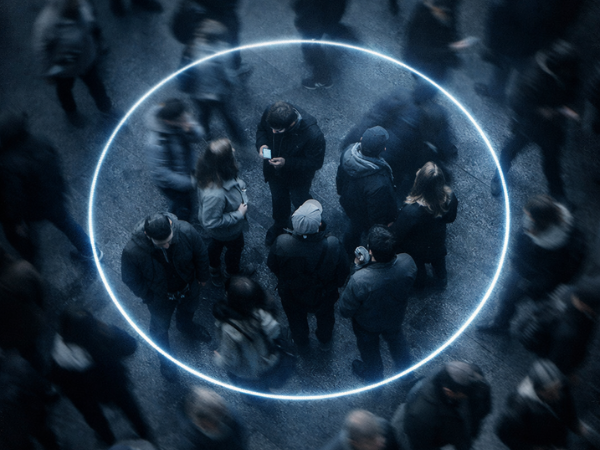
Long before Santa’s elves start loading his sleigh with toys for good girls and boys, the government’s surveillance apparatus is already at work—logging your movements, monitoring your messages, tracking your purchases, scanning your face, recording your license plate, and feeding it all into algorithmic systems designed to determine whether you belong on a government watchlist.
Unlike Santa’s naughty list, however, the consequences of landing on the government’s “naughty list” are far more severe than a stocking full of coal. They can include heightened surveillance, loss of privacy, travel restrictions, financial scrutiny, police encounters, or being flagged as a potential threat—often without notice, explanation, or recourse.
This is not fiction. This is not paranoia.
This is the modern surveillance state operating exactly as designed.
Santa Claus has long been the benign symbol of omniscient surveillance, a figure who watches, judges, and rewards. His oversight is fleeting, imaginary, and ultimately harmless.
The government’s surveillance is none of those things—and never was.
What was once dismissed as a joke—“Santa is watching”—has morphed into a chilling reality. Instead of elves, the watchers are data brokers, intelligence agencies, predictive algorithms, and fusion centers. Instead of a naughty-or-nice list, Americans are sorted into databases, risk profiles, and threat assessments—lists that never disappear.
The shift is subtle but profound.
Innocence is no longer presumed.
Everyone is watched. Everyone is scored. Everyone is a potential suspect.
This is the surveillance state in action.
Today’s surveillance state doesn’t require suspicion, a warrant, or probable cause. It is omnipresent, omniscient, and inescapable.
Your smartphone tracks your location. Your car records your movements. License plate readers log when and where you drive. Retail purchases create detailed consumer profiles. Smart speakers listen to everything you say. Home security cameras observe not just your property, but your neighbors, delivery drivers, and anyone who passes by.
What was once routine aviation security data has been transformed into an enforcement tool—merging civilian travel records with the machinery of deportation and demonstrating how ordinary movements can be weaponized by the state.
Even the most personal acts—like Christmas shopping—are now tracked in real time. Every item you buy, where you buy it, how you pay, and who you buy it for becomes part of a permanent digital record. That data does not stay confined to retailers. It is shared, sold, aggregated, and folded into sprawling surveillance ecosystems that blur the line between corporate data collection and government intelligence.
Companies like Palantir specialize in fusing these data streams into comprehensive behavioral profiles, linking financial activity, social media behavior, geolocation data, and government records into a single, searchable identity map.
The result is not merely a government that watches what you’ve done but one that claims the power to predict what you will do next.
It is a short step from surveillance to pre-crime.
While predictive policing and AI-driven risk assessments are marketed as tools of efficiency and public safety, in reality, they represent a dangerous shift from punishing criminal acts to policing potential behavior.
Algorithms—trained on historical data already shaped by over-policing, bias, and inequality—are now used to predict who might commit a crime, who might protest, or who might pose a “risk.” Even the way you drive—where you came from, where you were going and which route you took—is being analyzed by predictive intelligence programs for suspicious patterns that could get you flagged and pulled over.
Once flagged by an algorithm, individuals often have no meaningful way to challenge the designation. The criteria are secret. The data sources opaque. The decisions automated.
Accountability disappears.
This isn’t law enforcement as envisioned by the Founders. This is pre-crime enforcement—punishing people not for what they’ve done, but for what an AI machine predicts they might do.
The federal government has transformed immigration policy into a proving ground for authoritarian surveillance tactics—testing tools, technologies, and legal shortcuts could be deployed with minimal public resistance and quietly repurposed for use against the broader population. As journalist Todd Miller warned, these areas have been transformed into “a ripe place to experiment with tearing apart the Constitution, a place where not just undocumented border-crossers, but millions of borderland residents have become the targets of continual surveillance.”
Through ICE and DHS, the government fused immigration enforcement with corporate surveillance technologies—facial recognition, license-plate readers, cellphone tracking, and massive data-sharing agreements—creating a sprawling digital dragnet that now extends far beyond immigrants.
“What’s new,” reports the Brennan Center for Justice, “is that the federal government now openly says it will use its supercharged spy capabilities to target people who oppose ICE’s actions. Labeled as ‘domestic terrorists’ by the administration, these targets include anti-ICE protesters and anyone who allegedly funds them—all of them part of a supposed left-wing conspiracy to violently oppose the president’s agenda.”
The critical point is this: the surveillance infrastructure developed to track immigrants is now used to monitor everyone. Immigration enforcement served as the justification, the infrastructure, and the legal gray zone needed to create a permanent surveillance apparatus that treats all Americans as potential suspects.
All of this adds up to an algorithmic naughty list.
Government watchlists have exploded in size and scope.
Terrorist watchlists, no-fly lists, gang databases, protester tracking systems, and “suspicious activity” registries operate with little oversight and even less transparency.
People can be added to these lists without notification and can remain there indefinitely. Errors are common. Corrections are rare.
Social media posts are mined. Associations are mapped. Speech is scrutinized. Peaceful dissent is increasingly treated as a precursor to extremism.
The government’s watchlists aren’t just opaque databases hidden from public view. They are becoming public-facing instruments of political classification. Internal Justice Department memoranda now direct the FBI to compile lists of groups and networks it categorizes as possible domestic extremists, broadening counter-terror tools to sweep in ideological opponents and organizations without clear statutory definitions.
At the same time, the White House has launched an official “Offender Hall of Shame”—a public naughty list of journalists and media outlets it accuses of bias—even briefly circulating a video styled like Santa putting together a naughty list of offenders before deleting it amid backlash.
In this system, being “good” no longer means obeying the law. It means staying under the radar, avoiding attention, and never questioning authority.
The chilling effect is the point.
Once upon a time, privacy was recognized as a fundamental liberty—an essential buffer between the individual and the state. Today, it’s a conditional privilege, granted temporarily and revoked when it suits the police state’s purposes.
Under the banner of national security, public health, and law and order, surveillance powers continue to expand. Biometric identification—facial recognition, gait analysis, voice prints—are normalized.
Yet history teaches us the opposite: societies that normalize surveillance do not become safer—they become more authoritarian.
A government that sees everything, everywhere, all the time, will eventually control everything.
The Founders understood this. That is why they enshrined protections against unreasonable searches and unchecked power. They knew liberty couldn’t survive under constant surveillance.
When the government knows where you go, what you buy, what you say, who you associate with, and what you believe, freedom becomes conditional.
This Christmas, we might joke about Santa watching from the North Pole, but we should be far more concerned about the watchers much closer to home.
The surveillance state doesn’t take a holiday. It doesn’t sleep. It doesn’t forget. And it doesn’t forgive easily.
So you see, the question is not whether we are being watched. We are.
The question, as I make clear in my book Battlefield America: The War on the American People and in its fictional counterpart The Erik Blair Diaries, is whether we will continue to accept a system that treats every citizen as a suspect—and whether we will reclaim the constitutional limits that once stood between liberty and the all-seeing state.
We now live in a nation where constitutional rights exist in theory, not in practice.
Yet what good are rights on paper when every branch of government is allowed to ignore, circumvent, chip away at or hollow them out in practice?
Two hundred and thirty-four years after the ratification of the Bill of Rights on December 15, 1791, the safeguards meant to shield “We the people” from government abuse are barely recognizable.
In ways the Founders could scarcely have imagined—and would never have tolerated—the safeguards meant to restrain government overreach have become little more than empty platitudes.
America’s founders understood that power corrupts and absolute power—especially when it comes to power-hungry governments fixated on amassing institutional power at the expense of individual freedoms—corrupts absolutely. That’s why they insisted on binding down the government “with the chains of the Constitution.”
In 2025, those chains have been cut link by link.
These links were not severed in secret. They snapped under the weight of executive orders issued without congressional authority, judicial doctrines that shield misconduct from accountability, and a Congress that no longer defends its own constitutional prerogatives.
If Americans are finally learning the true significance of constitutional limits, it is because the government keeps violating them—and daring anyone to stop it. Time and again, the message is being drummed into our heads that constitutional limits no longer apply when they inconvenience those in power.
Any government that treats rights as privileges—contingent on economic status, citizenship, race, orientation, religious beliefs, or political alignment—has already abandoned the Bill of Rights.
And a government that does so with the courts’ blessing is not a constitutional republic.
When rights become privileges, what we are left with is a two-tier system of freedom: those afforded the privilege of enjoying their constitutional rights vs. those targeted for exercising those same rights.
The Bill of Rights was intended as a bulwark. Each amendment was drafted as a barrier against a specific form of tyranny.
In 2025, every one of those barriers buckled under the weight of government corruption, political expediency, partisan politics, and institutional neglect.
The following is what it looked like to live without the protections of the Bill of Rights in the American police state.
First Amendment—Speech Without Protection: In 2025, the right to speak freely was not guaranteed—it was conditional. Political activism—especially around immigration, foreign policy, or policing—was treated as a national security concern. Students questioning government actions found themselves on watchlists. ICE agents used ideology as cause for detention. Peaceful protest was conflated with domestic extremism.
This year also saw revelations—via leaked FBI planning documents—that the government is preparing an expanded “extremist” classification system that goes far beyond violence or criminal activity. The categories include broad ideological markers that include anyone expressing “opposition to law and immigration enforcement; extreme views in favor of mass migration and open borders; adherence to radical gender ideology,” as well as labels such as “anti-Americanism,” “anti-capitalism,” and “anti-Christianity.” In other words, Americans are being profiled not for what they have done, but for what the government predicts they might think, believe, or someday express. It is the architecture of a pre-crime state.
Second Amendment—The Right to Self-Defense in a Militarized Nation. While the political class fixated on culture-war debates over gun ownership, the government quietly expanded the militarization of policing, federalized National Guard units, and broadened executive authority to deploy armed agents domestically. During several high-profile ICE operations, heavily armed federal teams equipped with military-grade gear conducted raids in residential neighborhoods, making it clear that this administration intends to rule by martial law.
Third Amendment—Quartering Without Quarters: The Rise of Domestic Militarization. The Third Amendment is often dismissed as obsolete. Nothing could be further from the truth. Although Americans no longer face the literal quartering of soldiers in their homes, the spirit of the Third Amendment—prohibiting the use of the military against the civilian population—has been trampled. Its purpose was to prevent exactly what we are seeing now: a permanent, militarized presence in civilian life, illustrated vividly when armored vehicles and tactical teams patrol residential neighborhoods during ICE operations.
Fourth Amendment—Privacy Without Boundaries. The Framers wrote the Fourth Amendment in response to “general warrants”: broad, suspicionless searches by the British Crown. In 2025, the digital equivalents of general warrants have become routine, executed at the speed of an algorithm and justified by the flimsiest of standards. Americans now live under surveillance so pervasive that privacy survives mostly in legal theory. In several cities, entire apartment complexes were subjected to geofence dragnets after minor incidents, sweeping innocent residents into criminal databases simply because their phones were nearby. Geofence warrants became routine, sweeping up location data from entire neighborhoods. Predictive policing tools—fueled by Palantir-style data fusion—were treated as legitimate substitutes for suspicion or probable cause. And the Supreme Court keeps lowering the threshold for intrusion.
Fifth & Sixth Amendments—Due Process Without Process. What we have seen emerge this year is a justice system where the government is accountable only to itself. Immigration courts—already overcrowded and under-resourced—operated as Constitution-lite tribunals where counsel was scarce, evidence was opaque, and the presumption of innocence evaporated. Executive detention powers continued to expand under the radar, with little oversight. Due process now bends to government expediency. For example, asylum seekers placed into “expedited removal” proceedings were denied meaningful hearings, legal counsel, or the ability to present evidence—procedures that would never withstand constitutional scrutiny in any ordinary court of law. In some instances, hearings lasted less than ten minutes. In others, decisions were issued without the accused ever speaking to a lawyer. This is not due process. It is bureaucracy masquerading as justice.
Seventh Amendment—Civil Justice Denied by Design. The right to a civil jury trial—already inaccessible for many—continued to erode in 2025, keeping ordinary Americans from ever getting their day in court, while corporations and government agencies enjoy legal shields that no ordinary citizen can penetrate. A right that exists only in theory—and which you cannot afford to exercise—is a right that has already been lost.
Eighth Amendment—Justice Without Humanity. Cruelty, once hidden, has now been codified as policy. The federal government allocated $170 billion to expand incarceration, including the construction of Alligator Alcatraz, the first of several planned megaprison complexes. The Kilmar Garcia case exposed the brutality of a system where preventable death, medical neglect, and inhumane conditions are treated as regrettable but acceptable collateral. In one widely reported incident, a detainee held on a nonviolent immigration violation died after being denied medical care for hours—a tragedy officials dismissed as “procedurally compliant,” revealing just how low the bar has fallen. These incidents are not anomalies. They are symptoms of a system designed for maximum control and minimum accountability, a system where cruelty is not an accident but an administrative outcome.
Ninth Amendment—Unenumerated Rights Crushed by Government Power. The Ninth Amendment affirms that the people retain rights beyond those listed in the Constitution. In 2025, those inherent liberties—bodily autonomy, privacy, freedom of movement, freedom from government coercion—were repeatedly undermined. Biometric surveillance was expanded. Predictive analytics categorized individuals as pre-criminal. Mandatory data-sharing regimes blurred the boundary between state and citizen. Bodily autonomy came under attack through proposed health-tracking mandates.
The Ninth Amendment’s warning has never been more relevant: the rights of the people do not end where the government’s imagination begins.
Tenth Amendment—Powers Reserved to the People Swept Aside. Federal overreach dominated 2025. Executive orders, emergency declarations, and federalized law enforcement displaced state and local authority. The Tenth Amendment’s guarantee that powers not delegated to the federal government are reserved to the states—or to the people—has become meaningless under a system in which the executive branch claims inherent authority to:
deploy troops domestically,
commandeer local police,
surveil the populace, and
dictate immigration enforcement priorities.
When states attempted to challenge the federal deployment of troops or resist federalized policing mandates, the courts largely sided with the executive, leaving states with little more than symbolic sovereignty.
A government that disregards the Bill of Rights rarely stops there.
The collapse of the Bill of Rights would be alarming enough on its own, but it is only part of the story. Beyond these first ten amendments, the structural safeguards designed to limit government power—the separation of powers, checks and balances, transparency, and federalism—were also weakened dramatically.
Without an independent judiciary willing to restrain power, the founders recognized that the entire constitutional framework would collapse.
What we continue to witness is the U.S. Supreme Court’s abdication of its constitutional duties in favor of partisan politics. By refusing to review cases that cut to the heart of constitutional protections, the Court has effectively signaled to the executive branch that there is no constitutional line it cannot cross.
While the Supreme Court is not the only institution responsible for upholding the Constitution, when the Court refuses to act as a check on government power, every American suffers.
A constitutional crisis does not always erupt in dramatic fashion.
Sometimes it arrives quietly, in the form of a Court that declines to hear the very cases that would determine whether the Constitution still has meaning.
Here is what it means to live under the Constitution today.
For generations, Americans were taught that living under the Constitution meant:
The government cannot enter your home without a warrant.
The government cannot silence you for criticizing its actions.
The government cannot surveil you without probable cause.
The government cannot imprison you without due process.
The government cannot treat you as guilty until proven innocent.
The government cannot deploy troops against the public unless the Constitution expressly allows it.
The government cannot classify you as a threat solely for your beliefs.
Now consider what it means to live under the American Police State of 2025:
Your digital life is a government search zone.
Your speech can place you on a watchlist.
Your movements are tracked without a warrant.
Your property can be seized without meaningful judicial review.
Your community can be subjected to predictive policing algorithms with no oversight.
Your rights depend on which legal category you fall into.
And the courts increasingly refuse to intervene.
The gap between the promise of a constitutional republic and the practice of the American Police State has grown so vast that the rights Americans take for granted no longer resemble the realities they face in their daily lives.
America’s founders assumed the people—not the president, not the politicians, not the courts—would be the ones to keep the government in check.
What the police state wants is for us to meekly accept its constitutional violations as normal, inevitable, or justified. That complacency fuels and sustains tyranny.
We cannot afford to be complacent.
If Americans want a government bound by law, we must insist on it—daily, loudly, relentlessly and without apology or fear.
As I make clear in my book Battlefield America: The War on the American People and in its fictional counterpart The Erik Blair Diaries, the Constitution will not collapse all at once. It will erode one unchallenged abuse at a time—until future generations wonder how the people who inherited a framework for liberty allowed it to slip through their fingers.
If 2025 was the year the Constitution became optional, 2026 will determine whether it becomes obsolete.
Every military servicemember’s oath is a pledge to defend the Constitution against all enemies, foreign and domestic.
It is not an oath to a politician. It is not an oath to a party. And it is not an oath to the police state.
Yet what happens when those same men and women are being told—by their own government—that obedience to power and loyalty to a political leader come before allegiance to the Constitution they swore to uphold?
That question isn’t hypothetical.
It is the moral line now being tested in real time, and it goes to the heart of what kind of country we are: do we live in a constitutional republic governed by the rule of law, or in a militarized police state where “legality” is whatever the person with the most power and the biggest army say it is?
The answer becomes painfully clear when you look at what our troops are being ordered to do—and what “we the people” are tacitly allowing them to be ordered to do—in the so-called name of national security.
Members of the military are now being deployed domestically to police their fellow American citizens in ways that trample the spirit, if not the letter, of the Posse Comitatus Act.
It’s legally dubious enough that the military is being used to enforce immigration crackdowns and police protests in American cities. But now they’re being tasked with killing civilians far from any declared battlefield in the absence of an imminent threat—all while being told that questioning the legality of those missions is itself a form of disloyalty.
So, which is it: obedience to the Constitution or the Commander-in-Chief?
According to multiple accounts, after an initial “lethal, kinetic” strike disabled the vessel and killed nine men on board, a second strike was carried out to kill two survivors clinging to the wreckage—an alleged “double tap strike” that legal experts warn could constitute murder or a war crime if the survivors no longer posed a threat.
In all, the boat was reportedly hit four times: twice to kill the eleven occupants on board and twice more to sink the boat.
Even the Pentagon’s manual on the law of war says combatants who are “wounded, sick, or shipwrecked” no longer pose a threat and should not be attacked.
Some Republicans who have, until now, turned a blind eye to the Trump administration’s most egregious offenses against the Constitution appear reluctant to let this one slide.
Not surprisingly, the Trump administration has done an about-face.
Hegseth—who bragged about watching the September 2 strike live—now claims he wasn’t in the room when the second strike happened.
Suddenly, the White House—which had been gleefully chest-thumping over its power to kill extrajudicially—is signaling its willingness to scapegoat subordinates in the chain of command.
Clearly, it’s a lesson learned too late: when you’re dealing with power-hungry authoritarians, loyalty is no guarantee of protection. It’s always the men and women who carry out the unlawful orders—not the ones who give them—who end up paying the price.
Here’s the problem, though. While the media fixates on who will bear the blame for ordering the double-tap strike, the government war machine is moving forward, full steam ahead.
The Sept. 2 boat strike was part of a broader Trump administration campaign of maritime attacks that has already killed at least 80 people at sea, all without a formal declaration of war or due process—evidence of who they were or what they had done—to warrant an extrajudicial execution.
This is yet another of Trump’s everywhere, endless wars—this time at sea—sold as toughness on “narco-terrorists” at a moment when his poll numbers are slipping, economic promises have failed to manifest, and new Epstein-related revelations continue to surface.
When presidents manufacture new fronts in a forever war whenever they need a distraction, we should all beware.
The Trump administration has tried to frame this preemptive maritime war on suspected “narco-terrorists” as a “non-international armed conflict” with designated terrorist organizations.
Yet what it amounts to is an undeclared war, launched in international waters, without just cause and without congressional authorization.
The legal landscape is not murky—it is clear.
Most of the public debate has revolved around those technical legalities—what kind of conflict this is, which statutes apply, which court might have jurisdiction—yet what is really at stake is whether we are training a generation of American troops to believe that loyalty to a leader can excuse disobedience to, or even override, the Constitution.
Three bodies of law converge here: the Constitution’s allocation of war powers, the international law of armed conflict, and the Uniform Code of Military Justice.
First, there has been no declaration of war by Congress. Under the Constitution, only Congress can declare war. The president cannot start wars based solely on his own authority.
Second, the law of armed conflict and the law of the sea forbid killing shipwrecked survivors who pose no immediate threat.
A command to “kill everybody” is precisely the kind of order these guardrails were written to forbid.
The rationale that “I was just following orders” is not a defense to war crimes. That is the core lesson of the Nuremberg Trials and the modern law of armed conflict.
Of course, the police state wants mindless automatons who obey unquestioningly.
Arendt, a Holocaust survivor, denounced Eichmann, a senior officer who organized Hitler’s death camps, for being a bureaucrat who unquestioningly carried out orders that were immoral, inhumane and evil. This, Arendt concluded, was the banality of evil, the ability to engage in wrongdoing or turn a blind eye to it, without taking any responsibility for your actions or inactions.
Coincidentally, the same year that Arendt’s book Eichmann in Jerusalem: A Report on the Banality of Evil was published, Martin Luther King Jr. penned his “Letter from a Birmingham Jail,” in which he points out “that everything Adolf Hitler did in Germany was ‘legal’ and everything the Hungarian freedom fighters did in Hungary was ‘illegal.’ It was ‘illegal’ to aid and comfort a Jew in Hitler’s Germany.”
In other words, there comes a time when law and order are in direct opposition to justice.
If the government can redefine “self-defense” to justify killing incapacitated survivors on a sinking boat, then it can justify killing anyone—at home or abroad, in uniform or out of it.
No matter how the White House spins it, however, these are crimes and those involved—from Hegseth on down—could find themselves in legal jeopardy and should be held accountable.
The pressure on the military is mounting.
The Orders Project, a nonpartisan initiative that helps connect servicemembers with outside legal counsel, reports a spike in calls from military personnel concerned that they could be asked to carry out an illegal order or pressured to take part in missions that violate their training in the laws of war.
Given Hegseth’s much-publicized approach to waging war without constraints—he has openly derided the military’s Judge Advocate General corps and championed a more “unshackled” approach to lethal force—these concerns are reasonable.
For re-stating what every recruit is taught in basic training, these lawmakers have been accused by President Trump of “sedition” and branded as “traitors” who should be arrested and punished by death. The FBI has reportedly opened an investigation. Hegseth has even threatened to recall one of the lawmakers—Senator Mark Kelly, a retired Navy captain—to active duty in order to court-martial him for his remarks.
The message from the top could not be clearer: allegiance to the Constitution is a crime.
Every person like myself who has served in uniform has experienced the tension between following orders and honoring that oath. Discipline requires obedience, but a constitutional republic requires lawful obedience.
That is why the oath matters.
It is not an oath to a man, a party, or a policy agenda. It is an oath to a charter of law: the Constitution.
That principle is not antiquated. It is the foundation of American civil-military relations. Remove it, and what remains is not a republic but a personality cult with weapons.
The danger becomes even clearer when you examine the rhetoric now shaping national policy.
According to U.S. prosecutors, Hernández—quoted as saying he wanted to “shove the drugs right up the noses of the gringos by flooding the United States with cocaine”—took bribes from drug traffickers and had the country’s armed forces protect a cocaine laboratory and shipments to the U.S.
Yet conscripting the military to do the dirty work of the police state—and then throwing them under the bus for doing so—takes us into even darker territory.
The U.S. government’s weaponization of the armed forces for political power is a betrayal of the Constitution, but it is also a betrayal of the very men and women who swore to give their lives for it.
And once a government shows a willingness to break faith with its defenders, it will break faith with anyone.
A government that can discard its military service members can discard its whistleblowers and truth-tellers who expose corruption.
A government that can discard its military service members can discard its journalists, judges, and watchdogs in the press and the courts who insist on transparency and limits to power.
A government that can discard its military service members can discard its political opponents and dissidents, its religious and racial minorities, its immigrants and asylum seekers, its small business owners and workers who organize, its parents and community members who speak up locally, and any citizen who dares to say “no” when the state demands “yes.”
This betrayal of those who swore an oath to the Constitution is not an accident—it is a warning.
Today is Giving Tuesday—a day when people across the country choose to support the causes that matter most. And this year, the stakes for freedom could not be higher.
Everywhere we turn, the government is expanding its power:
· Surveillance programs are monitoring ordinary Americans.
· Executive orders are being used to bypass constitutional limits.
· Police powers are growing more militarized and unchecked.
· Dissenters are being censored, silenced, and punished.
· The Bill of Rights is treated as optional—especially when inconvenient.
The Constitution cannot defend itself—and defending it has nothing to do with politics.
At a time where every issue is twisted into a partisan wedge, The Rutherford Institute remains committed to something far more enduring: the rule of law, the Bill of Rights, and the fundamental liberties that belong to all Americans—no matter who holds power.
We don’t play politics. We don’t take sides. We stand on the side of the Constitution.
The Constitution needs people who are willing to stand up. People who refuse to surrender their freedoms quietly. People who say “no” to the steady erosion of their rights.
The Constitution draws a clear line between the rule of law and the rule of power. The Rutherford Institute is working to hold that line.
· Hold officials accountable for violating the rule of law
· Speak truth to power without fear or favor
Our work has never been more critical. In recent months, The Rutherford Institute has:
· Fought warrantless digital surveillance in cases challenging geofence searches and mass data sweeps.
· Defended students, journalists, and activists targeted for their protected speech.
· Challenged the use of excessive police force and militarized tactics in situations where the Fourth Amendment was ignored.
· Opposed executive actions that bypass constitutional safeguards and expand unchecked government power.
Every one of these battles depends on supporters who believe the Constitution still matters.
Thanks to a $250,000 Matching Gift Challenge Grant, Giving Tuesday contributions will go twice as far in helping The Rutherford Institute hold the constitutional line against government overreach.