Posts Tagged ‘fourth amendment’

Random, suspicionless lockdown raids against children teach our children a horrific lesson—one that goes against every fundamental principle this country was founded upon—that we have no rights at all against the police state. Americans should be outraged over the fact that school officials are not only defending such clearly unconstitutional practices but are actually going so far as to insist that these raids are a “standard drill” that will continue. Making matters worse, the courts are actually affirming this dangerous mindset.

For example, in a ruling issued by the U.S. Court of Appeals for the Eighth Circuit in Burlison vSpringfield Public Schools, the court deemed a Missouri school district’s policy of imposing a “lockdown” of the school for the purpose of allowing the local sheriff’s department, aided by drug-sniffing dogs, to perform mass inspections of students’ belongings to be a “reasonable procedure to maintain the safety and security of students at the school,” and not a violation of the Fourth Amendment rights of students.

Attorneys for The Rutherford Institute had challenged the school district’s practice of conducting random lockdowns and mass searches of students. Institute attorneys had asked the appeals court to reverse a federal district court’s January 2012 ruling that Springfield Public Schools and the Greene County Sheriff’s Office did not violate the Fourth Amendment rights of students when they executed the April 2010 lockdown at Central High School.

On April 22, 2010, the principal of Central High School announced over the public address system that the school was going into “lockdown” and that students were prohibited from leaving their classrooms. School officials and agents of the Greene County Sheriff’s Department thereafter ordered students to leave all personal belongings behind and exit the classrooms. Dogs were also brought in to assist in the raid. Upon re-entering the classrooms, students allegedly discovered that their belongings had been rummaged through. Mellony and Doug Burlison, who had two children attending Central High School, complained to school officials that the lockdown and search were a violation of their children’s rights. School officials allegedly responded by insisting that the search was a “standard drill” and policy of the school district which would continue.

Attorneys for The Rutherford Institute sued the school district in September 2010 on behalf of the Burlisons and their two children, asking the U.S. District Court for the Western District of Missouri to declare that the practice of effecting a lockdown of the school and conducting random, suspicionless seizures and searches violates the Fourth Amendment to the U.S. Constitution and the similar provision of the Missouri Constitution. In its January 2012 decision, the district court declared that the random lockdown and mass searches did not violate students’ rights. In its ruling issued March 4, 2013, the Court of Appeals affirmed the judgment, holding that the school’s interest in combatting drug use outweighed the privacy rights of students.

More info on Burlison vSpringfield Public Schools at The Rutherford Institute’s website.

“The unspoken power dynamics in a police/civilian encounter will generally favor the police, unless the civilian is a local sports hero, the mayor, or a giant who is impervious to bullets.”—Journalist Justin Peters

From time to time throughout history, individuals have been subjected to charges (and eventual punishment) by accusers whose testimony was treated as infallible and inerrant. Once again, we find ourselves repeating history, only this time, it’s the police whose testimony is too often considered beyond reproach and whose accusations have the power to render one’s life over.

In the police state being erected around us, the police can probe, poke, pinch, taser, search, seize, strip and generally manhandle anyone they see fit in almost any circumstance, all with the general blessing of the courts. Making matters worse, however, police dogs—cute, furry, tail-wagging mascots with a badge—have now been elevated to the ranks of inerrant, infallible sanctimonious accusers with the power of the state behind them. This is largely due to the U.S. Supreme Court’s recent ruling in Florida v. Harris, in which a unanimous Court declared roadside stops to be Constitution-free zones where police may search our vehicles based upon a hunch and the presence of a frisky canine.

This is what one would call a slow death by a thousand cuts, only it’s the Fourth Amendment being inexorably bled to death. This latest wound, in which a unanimous Supreme Court determined that police officers may use drug-sniffing dogs to conduct warrantless searches of cars during routine traffic stops, comes on the heels of recent decisions by the Court that give police the green light to taser defenseless motorists, strip search non-violent suspects arrested for minor incidents, and break down people’s front doors without evidence that they have done anything wrong.

These are the hallmarks of the emerging American police state, where police officers, no longer mere servants of the people entrusted with keeping the peace, are part of an elite ruling class dependent on keeping the masses corralled, under control, and treated like suspects and enemies rather than citizens. Whether it’s police officers breaking through people’s front doors and shooting them dead in their homes or strip searching innocent motorists on the side of the road, in a police state such as ours, these instances of abuse are not condemned by the government. Rather, they are continually validated by a judicial system that kowtows to every police demand, no matter how unjust, no matter how in opposition to the Constitution.

The justices of the United States Supreme Court through their deference to police power, preference for security over freedom, and evisceration of our most basic rights for the sake of order and expediency have become the architects of the American police state.

The justices of the United States Supreme Court through their deference to police power, preference for security over freedom, and evisceration of our most basic rights for the sake of order and expediency have become the architects of the American police state.

In Florida v. Harris, for example, the Court was presented with the case of Clayton Harris who, in 2006, was pulled over by Officer William Wheetley for having an expired license tag. During the stop, Wheetley decided that Harris was acting suspicious and requested to search his vehicle. Harris refused, so Wheetley brought out his drug-sniffing dog, Aldo, to walk around Harris’ car. Aldo allegedly alerted to the door handle of Harris’ car, leading Wheetley to search the vehicle.

Although the search of Harris’ car did not turn up any of the drugs which Aldo was actually trained to detect, such as marijuana, Wheetley found pseudophedrine, a common ingredient in cold medicine, and other materials allegedly used in the manufacture of methamphetamine. Harris was arrested and released on bail, during which time he was again stopped by Officer Wheetley and again subjected to a warrantless search of his vehicle based upon Aldo’s alert, but this time Wheetley found nothing.

Harris challenged the search, arguing that the police had not provided sufficient evidence that Aldo was a reliable drug-sniffing dog, thus his supposed alert on Harris’ door did not give the officer probable cause to search the vehicle. The Florida Supreme Court agreed, ruling that police should be able to prove that the dog actually has a track record of finding drugs while in the field before it is used as an excuse for a warrantless search.

Unfortunately, the U.S. Supreme Court did not see it that way. In reversing the Florida Supreme Court’s ruling, the U.S. Supreme Court sided with police by claiming that all that the police need to do to prove probable cause for a search is simply assert that a drug detection dog has received proper training. As such, the Court has now given the police free reign to use dogs as “search warrants on leashes,” justifying any and all police searches of vehicles stopped on the roadside. The ruling turns man’s best friend into an extension of the police state.

The Supreme Court’s decision is particularly alarming when one considers that drug sniffing dogs, even expertly trained dogs with reliable handlers, are rarely accurate. One study demonstrated that dogs were incorrect in drug identification up to 60% of the time. A 2011 study published in Animal Cognition involved a series of tests, some designed to fool the dog and some designed to fool the handler. The dogs in these tests falsely alerted 123 out of a total of 144 times. When a test was designed to fool the handler rather than the dog, the dog was twice as likely to falsely alert.

As the Animal Cognition study shows, dogs are heavily influenced by the behavior and biases of their handlers. If an officer thinks he is likely to find something, whether due to personal bias or because he finds the suspect suspicious, he often cues his dog—consciously or unconsciously—to alert on the area to be searched.

The Supreme Court has now given the police free reign to use dogs as “search warrants on leashes,” justifying any and all police searches of vehicles stopped on the roadside. The Court’s ruling in Florida v. Harris turns man’s best friend into an extension of the police state.

Despite being presented with numerous reports documenting flaws in the use of drug-detection dogs, the U.S. Supreme Court opted to ignore plentiful evidence that drug dog alerts are specious at best. Moreover, the justices also chose to interpret Aldo’s failure to detect any of the drugs he was trained to find during the two sniff searches around Harris’ car as proof of Aldo’s superior sniffing skills rather than glaring proof that drug-sniffing dogs do make mistakes. Incredibly, the Court suggested that the dog alert was due to Aldo having smelled an odor that was transferred to the car door after the defendant used methamphetamine—a supposition that is nearly impossible to prove.

Law enforcement officials have come up with a slew of clever excuses to “explain” the not uncommon phenomenon of dogs that alert but fail to uncover drugs. For example, in 2008, U.S. border patrol agent Christopher Jbara claimed that a dog alerted to a car containing no drugs because the car’s window “had been washed by a window washer on the street… and the water used to clean it could have been contaminated with bong water.” The real reason may be that the odors which dogs are trained to detect are simply chemical compositions found in a number of common products. For example, to a dog, perfume may smell like cocaine, glue may smell like heroin, and mosquito repellant may smell like the drug ecstasy.

Unfortunately, the Supreme Court’s decision is merely the latest in a long line of abuses justified by an institution concerned more with establishing order and protecting government agents than with upholding the rights enshrined in the Constitution. For example, in 2011, the U.S. Supreme Court ruled 8-1 in Kentucky v. King that police may smash down doors of homes or apartments without a warrant when in search of illegal drugs which they suspect might be destroyed.  Despite the fact that police busted in on the wrong suspect in the wrong apartment, the Court sanctioned the warrantless raid, saying that police had acted lawfully and that was all that mattered.

In April 2012, a divided Supreme Court ruled in Florence v. Burlington that any person who is arrested and processed at a jail house, regardless of the severity of his or her offense (i.e., they can be guilty of nothing more than a minor traffic offense), can be subjected to a strip search by police or jail officials, which involves exposing the genitals and the buttocks.

This “license to probe” is being extended to roadside stops, as police officers throughout the country have begun performing roadside strip searches without any evidence of wrongdoing and without a warrant. For example, Angel Dobbs and her niece, who were pulled over by a Texas state trooper on July 13, 2012, allegedly for flicking cigarette butts out of the car window, were subjected to roadside cavity searches of their anus and vagina. The officer claimed to be searching for marijuana. No marijuana was found.

With case after case stacking up in which the courts empower the police to run roughshod over citizens’ rights, the Constitution be damned, the outlook is decidedly grim. In fact, the U.S. Supreme Court still has to rule on another drug-sniffing, dog-related case, Florida v. Jardines, which challenges warrantless searches of individuals’ homes based on questionable dog alerts. For those hoping that our rights will be restored or at least protected, you could have a long wait.

Indeed, the next decision from the Supreme Court might just take the Fourth Amendment down for the count. — John W. Whitehead

Talk about freedom going to the dogs…

In a 9-0 decision in Florida v. Harris, the U.S. Supreme Court has declared that police may use drug-sniffing dogs to carry out warrantless searches during routine traffic stops, despite the fact that published scientific studies show that drug dog alerts are wrong as much as 56% of the time, and are heavily influenced by the biases of the dog’s handler.

This ruling undercuts the entire basis of the Fourth Amendment, which was designed to protect us from unreasonable searches and seizures. When dog sniffs, which have proven to be unreliable, are considered probable cause for police to search your property without a warrant—whether it’s your home, your car or your person—then none of our rights are secure.

As CBS News points out, “The irony in this case, Florida v. Harris, is that the trained narcotics dog (named Aldo) did not find the drugs he was trained to find when he prompted an officer to search Clayton Harris’ truck.”

The case began in June 2006, when a Florida county sheriff stopped a vehicle driven by Clayton Harris for an expired license tag. When Harris refused the sheriff’s request for consent to search his vehicle, a drug-detection dog was deployed and conducted a “free air sniff” of the exterior of the vehicle. When the dog alerted to the door handle on the driver’s side, the officer conducted a warrantless search of the interior of the vehicle. Although the search didn’t turn up anything the dog was trained to find, the officer reportedly found pseudoephedrine and materials used for making methamphetamine.

Harris was arrested and charged.

Two months later, Harris was once again pulled over in his vehicle by the same police officer and drug-sniffing dog. Once again the dog “alerted,” and once again the search failed to turn up anything for which the dog was trained to find. Only this time, nothing of interest was found whatsoever.

In court, Harris’ attorneys moved to suppress the evidence found as a result of the search of his vehicle, asserting that the search violated the Fourth Amendment. The trial court denied the motion to suppress. The Florida Supreme Court granted the motion on appeal, however, ruling that the state’s claim that the dog was trained and certified to detect narcotics, standing alone, is not sufficient to establish the dog’s reliability for purposes of determining probable cause. The court held that the state has the burden of showing the officer had a reasonable basis for believing the dog was reliable by presenting evidence on matters such as training field performance records.

In asking the U.S. Supreme Court to affirm the lower court’s ruling, The Rutherford Institute documented empirical research showing dog alerts are not inherently reliable. One recent study at the University of California—Davis, showed that in a test where handlers were told drugs might be found at the test site, but no drugs were present, dogs gave false positive alerts an astonishing 85% of the time. The U.S. Supreme Court has yet to rule on a related case, Florida v. Jardines, which challenges the use of drug-sniffing dogs by police to carry out warrantless searches of private homes. The Rutherford Institute also filed an amicus brief in Florida v. Jardines. — John W. Whitehead
 

“Much of our foreign policy now depends on the hope of benevolent dictators and philosopher kings. The law can’t help. The law is what the kings say it is.”—Ta-Nehisi Coateswriting for The Atlantic

“If George Bush had done this, it would have been stopped.”—Joe Scarborough, former Republican congressman and current MSNBC pundit

When Barack Obama ascended to the presidency in 2008, there was a sense, at least among those who voted for him, that the country might change for the better. Those who watched in awe as President Bush chipped away at our civil liberties over the course of his two terms as president thought that maybe this young, charismatic Senator from Illinois would reverse course and put an end to some of the Bush administration’s worst transgressions—the indefinite detention of suspected terrorists, the torture, the black site prisons, and the never-ending wars that have drained our resources, to name just a few.

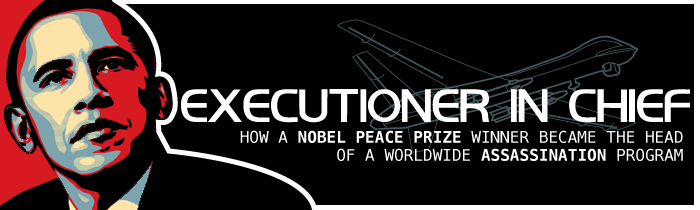
A few short years later, that fantasy has proven to be just that: a fantasy. Indeed, Barack Obama has not only carried on the Bush legacy, but has taken it to its logical conclusion. As president, Obama has gone beyond Guantanamo Bay, gone beyond spying on Americans’ emails and phone calls, and gone beyond bombing countries without Congressional authorization. He now claims, as revealed in a leaked Department of Justice memo, the right to murder any American citizen the world over, so long as he has a feeling that they might, at some point in the future, pose a threat to the United States.

Let that sink in. The President of the United States of America believes he has the absolute right to kill you based upon secret “evidence” that you might be a terrorist. Not only does he think he can kill you, but he believes he has the right to do so in secret, without formally charging you of any crime and providing you with an opportunity to defend yourself in a court of law. To top it all off, the memo asserts that these decisions about whom to kill are not subject to any judicial review whatsoever.

The President of the United States of America believes he has the absolute right to kill you based upon secret “evidence” that you might be a terrorist. Not only does he think he can kill you, but he believes he has the right to do so in secret, without formally charging you of any crime and providing you with an opportunity to defend yourself in a court of law. To top it all off, the memo asserts that these decisions about whom to kill are not subject to any judicial review whatsoever. This is what one would call Mafia-style justice, when one powerful overlord—in this case, the president—gets to decide whether you live or die based solely on his own peculiar understanding of right and wrong. This is how far we have fallen in the twelve years since 9/11, through our negligence and our failure to hold our leaders in both political parties accountable to the principles enshrined in the Constitution.

This is what one would call Mafia-style justice, when one powerful overlord—in this case, the president—gets to decide whether you live or die based solely on his own peculiar understanding of right and wrong. This is how far we have fallen in the twelve years since 9/11, through our negligence and our failure to hold our leaders in both political parties accountable to the principles enshrined in the Constitution.

According to the leaked Department of Justice memo, there are certain “conditions” under which it is acceptable for the president to kill a U.S. citizen without the basic trappings of American justice, i.e., a lawyer and a fair hearing before a neutral judge.

First, you have to be suspected of being a “senior operational leader” of al-Qaeda or an “associated force.” Of course, neither of these terms is defined. Making matters worse, the government doesn’t actually have to prove that you’re an “operational leader.” It simply has to suspect that you are. (Of course, if all it takes for the government to pull the trigger and kill a U.S. citizen is a hunch, then the rest of the conditions set out in the memo are moot.)

Second, capturing you has to be “infeasible.” Easy enough, since “infeasibility of capture” includes being unable to capture someone without putting American troops in harm’s way.

Third, you must pose “an imminent threat of violent attack against the United States,” whether or not you can actually execute an attack on our soil. Before you breathe a sigh of relief that perhaps your neck is safe now, keep in mind that the imminence requirement “does not require the United States to have clear evidence that a specific attack on U.S. persons and interests will take place in the immediate future.” The Bush administration should get some credit here, since it was their creative parsing of the “imminent” threat posed by Saddam Hussein and his so-called weapons of mass destruction that inspired the Obama lawyers to play footloose with the laws on killing American citizens.

In short, by simply asserting that an American citizen is an enemy of the United States, the Obama administration has given itself the authority to murder that individual. This pales in comparison to George W. Bush’s assertion that he could detain an American citizen indefinitely simply by labeling him an enemy combatant.

Compounding this travesty, the Obama administration also insists that the power to target a U.S. citizen for murder applies to any “informed, high-level official of the U.S. government,” not just the president. Therefore, any bureaucrat or politician, if appointed to a high enough position, can target an American for execution by way of drone strikes.

It’s been done before. Without proving that they were “senior operational leaders” of any terrorist organization, the Obama administration used drone strikes to assassinate Anwar al-Awlaki and his 16-year-old son, Abdulrahman, both American citizens.

So now we find ourselves at this strange, surreal juncture where clear-cut definitions of right and wrong and the rule of law have been upended by legal parsing, government corruption, corporate greed, partisan games, and politicians with questionable morals and little-to-no loyalty to the American people.

It’s a short skip and a jump from a scenario where the president authorizes drone strikes on American citizens abroad to one in which a high-level bureaucrat authorizes a drone strike on American citizens here in the United States. It’s only a matter of time. Obama has already opened the door to drones flying in American skies—an estimated 30,000 by 2015, and a $30 billion per year industry to boot.

Yet no matter how much legislation we pass to protect ourselves from these aerial threats being used against us domestically, either to monitor our activities or force us into compliance, as long as the president is allowed to unilaterally determine who is a threat and who deserves to die by way of a drone strike, we are all in danger.

This is surely the beginning of the end of the republic. Not only are we upending the rule of law, but killing people across the globe without accountability seriously undermines America’s long term relationships with other nations. The use of drones to kill American citizens demonstrates just how out of control the so-called “war on terror” has become. A war that by definition cannot be won has expanded to encompass the entire globe. This confirms the fears of those who have been watching as the American drone program has slowly expanded from targeting members of al-Qaeda and the Taliban in Afghanistan and Pakistan to include any person the president cares to see eliminated, not to mention the countless civilians killed along the way.

Retired general Stanley McChrystal has said that drone strikes are “hated on a visceral level” and feed into a “perception of American arrogance.” By attacking small time jihadists, as well as innocent civilians, the American government further inflames populations where terrorist groups are embedded, exciting anti-American sentiment among those who may have previously been an asset to America’s relationship with Muslim countries. In fact, McChrystal and former CIA director Michael Hayden have both expressed concern that American drone strikes are “targeting low-level militants who do not pose a direct threat to the United States.”

For example, Salem Ahmed bin Ali Jaber, a Muslim cleric in Yemen gave a long sermon in August 2012 denouncing Al-Qaeda. A few days later, three members of Al-Qaeda showed up to his neighborhood, saying they wanted to talk with Jaber. Jaber agreed, bringing along his cousin Waleed Abdullah, a police officer, for protection. In the middle of the conversation, a hail of American missiles rained down upon the men, killing them all.

Incidents such as these are the exact reason that America cannot seem to bring an end to its myriad military commitments abroad.  By undermining our potential allies, we simply further endanger American lives. According to Naji al Zaydi, an opponent of Al-Qaeda and former governor of Marib province in Yemen, “some of these young guys getting killed have just been recruited and barely known what terrorism means.” In direct opposition to the stated goal of the “war on terror,” we are creating enemies abroad who will gladly look forward to the day when the United States falls in on itself, like the Roman Empire before it.

Unfortunately, there seems to be no exit from this situation. Too many high-level officials, both Democrats and Republicans, either don’t care, or actively champion the murder of American citizens and innocent civilians alike by the president. As journalist Amy Goodman put it, “the recent excesses of U.S. presidential power are not transient aberrations, but the creation of a frightening new normal, where drone strikes, warrantless surveillance, assassination and indefinite detention are conducted with arrogance and impunity, shielded by secrecy and beyond the reach of law.” — John W. Whitehead

“The shaping of the will of Congress and the choosing of the American president has become a privilege reserved to the country’s equestrian classes, a.k.a. the 20% of the population that holds 93% of the wealth, the happy few who run the corporations and the banks, own and operate the news and entertainment media, compose the laws and govern the universities, control the philanthropic foundations, the policy institutes, the casinos, and the sports arenas.” – Journalist Lewis Lapham

The pomp and circumstance of the presidential inauguration has died down. Members of Congress have taken their seats on Capitol Hill, and Barack Obama has reclaimed his seat in the White House. The circus of the presidential election has become a faint memory. The long months of debates, rallies, and political advertisements have slipped from our consciousness. Now we are left with the feeling that nothing has really changed, nor will it.

This is not by accident. The media circus leading up to the elections, the name calling in the halls of Congress, the vitriol and barbs traded back and forth among people who are supposed to be working together to improve the country, are all components of the game set up by those who run the show. The movers and shakers behind these engaging, but ultimately trite, political exercises are the elite, the so-called upper class, who benefit from the status quo. This status quo is marked by an economic crisis with no end in sight, by the slow but steady growth of a police state aimed at the lowest rungs of society, and a political circus which keeps us enraptured long enough that we don’t question what’s really going on.

Meanwhile, this elite, composed of corporations profiting off of our ignorance, avoid being brought to task for their destruction of democratic governance and the economy. These are the corporations who sent our economy into a tail spin and were then rewarded with taxpayer money. These are the corporations who write laws which eliminate real competition in the market in order to secure their profits through lucrative government contracts. These are the corporations who avoid criminal prosecution, and are instead slapped with meager fines which do nothing to halt their felonious activities.

We now live in a two-tiered system of justice and governance. There are two sets of laws: one set for the government and the corporations, and another set for you and me.

The laws which apply to the majority of the population allow the government to do things like rectally probe you during a roadside stop, or listen in on your phone calls and read all of your email messages, or indefinitely detain you in a military holding cell. These are the laws which are executed every single day against a population which has up until now been blissfully ignorant of the radical shift taking place in American government.

Then there are the laws constructed for the elite, which allow bankers who crash the economy to walk free. They’re the laws which allow police officers to avoid prosecution when they strip search non-violent criminals, or taser pregnant women on the side of the road, or pepper spray peaceful protestors. These are the laws of the new age we are entering, an age of neo-feudalism, in which corporate-state rulers dominate the rest of us, where the elite create the laws which can result in a person being jailed for possessing marijuana while bankers that launder money for drug cartels walk free.

Unfortunately, this two-tiered system of justice has been a long time coming. The march toward an imperial presidency, to congressional intransigence and impotence, to a corporate takeover of the mechanisms of government, and the division of America into haves and have nots has been building for years.

Journalist Chris Hedges, one of the few voices to speak against the corporate-state, who has put himself on the line by making a legal challenge to the President’s authority to indefinitely detain American citizens, summarizes the situation at hand:

 “Our passivity has resulted… in much more than imperial adventurism and a permanent underclass. A slow-motion coup by a corporate state has cemented into place a neofeudalism in which there are only masters and serfs. And the process is one that cannot be reversed through the traditional mechanisms of electoral politics.”

Indeed, electoral politics are off the table as a means of reforming the system. They are so thoroughly corrupted by corporate money that there is no chance, even for a well-meaning person, to affect any real change through Congress.

Just consider the last election cycle. Both parties spent $1 billion each attempting to get their candidate elected to the presidency. This money came from rich donors and corporate sponsors, intent on getting their candidate in office. This massive spending was mirrored at the congressional level, where business lobbying soared in the last three months of the year. The U.S. Chamber of Commerce alone spent over $125 million attempting to influence members of Congress, an 88 percent increase from 2011.

Indeed, lobbyists are the source of much corruption and exchanging of money in Washington, and their attempts to woo Congressmen only exacerbate the problems inherent to the institution. Jack Abramoff should know. Jailed for bribing public officials, the former lobbyist insists that the system is every bit as corrupt now as it was when he was convicted. From job offers for staffers and Congressmen after they leave Capitol Hill, to taking representatives to sporting events and fancy restaurants, there is no shortage of methods of influencing public officials to enact the policies of special interests. According to Abramoff, these tactics are still in use today, and “the system hasn’t been cleaned up at all.”

Once their foot is in the door, these lobbyists then offer up language for legislation that is “so obscure, so confusing, so uninformative, but so precise” as to make passage as easy as possible. This legislation cements the privilege of the corporations to do as they please, making all of their dubious activities “legal.”

This lobbying is buoyed by a congressional lifestyle which demands that our representatives spend the majority of their time fund raising for campaigns, rather than responding to the needs of their constituents. In November 2012, the Democratic House leadership offered a model daily schedule to newly elected Democrats which suggests a ten-hour day, five hours of which are dominated by “call time” and “strategic outreach,” including fund raisers and correspondence with potential donors. Three or four hours are for actually doing the job they were elected to do, such as attending committee meetings, voting on legislation, and interacting with constituents.

When half of one’s time is devoted to asking for money from rich individuals and special interests, there is no way that he can respond to the problems which pervade the country. And yet, even Congressmen in safe seats are expected to fundraise constantly so as to support their colleagues in competitive districts. As Rep. John Larson (D-Conn.) put it, “…this is the mother’s milk of what [Congressmen] need to do to try to sustain their campaigns, and it’s the only system they have to work with.”

Thus, even well-meaning Congressmen face a Catch-22 where they are pushed to fundraise to secure their seats, but then once in office, it is basically impossible for them to do their jobs. The full ramifications of this are laid out by Rep. Brad Miller (D-NC):

“Any member who follows that schedule will be completely controlled by their staff, handed statements that their staff prepared, speaking from talking points they get emailed from leadership… It really does affect how members of Congress behave if the most important thing they think about is fundraising. You end up being nice to people that probably somebody needs to be questioning skeptically… You won’t ask tough questions in hearings that might displease potential contributors, won’t support amendments that might anger them, will tend to vote the way contributors want you to vote.”

The influence of corporate money on Congress is exacerbated by how out of touch Congressmen are with the daily struggles of most Americans. In February 2012, the median net worth of Congressmen was $913,000 as compared to $100,000 for the rest of the population. Aside from being immediately wealthy, Congressmen also weathered the tribulations of the financial crisis much better than the average American. An analysis of Congressional finances by theWashington Post in October 2012 revealed that the wealthiest one-third of Congress was largely shielded from the effects of the Great Recession. While the median household net worth of the average American dropped by 39 percent between 2007 and 2010, the median wealth of Congressmen rose 5 percent. It rose 14 percent for the wealthiest one-third.

At a time when most people in the country are suffering, Congressmen are profiting. This alone should demonstrate how out of touch our elected leaders have become. Members of Congress, entrusted to represent the best interests of the average American, instead play out a stilted, ineffective soap opera on our TV screens, complete with phony discussions of fiscal cliffs and debt ceilings which take the place of real proposals for meaningful change in the country.

There is no voice for the working American in the halls of Congress, the American who was promised a life beyond taxes, debt, and unemployment. There is no voice for the peace loving American, the American who understands that America’s military might is meant for defense of the homeland, not looking for trouble in faraway lands. There is no voice for the American who expects his representatives to abide by the Constitution, who laments the way Congress, the President, and the Supreme Court work together to take away our rights piece by piece. — John W. Whitehead


We’re at an important crossroads in our country in terms of how the police operate and how the courts are not operating. The only thing, in my opinion, that’s standing between us and a total police state are the courts. We’re not going to get any help from Congress or the president. So are we going to have courts of justice or courts of order? Now courts of order are going to enforce the regime. Courts of justice are going to protect and uphold our Constitution. If we don’t have courts of justice–if they don’t protect the Constitution–then in my opinion, freedom as we have known it will be lost. — John W. Whitehead

Tune into my latest vodcast to hear more:  https://www.youtube.com/watch?feature=player_embedded&v=aytoYIVWeo8

“The Fourth Amendment was designed to stand between us and arbitrary governmental authority. For all practical purposes, that shield has been shattered, leaving our liberty and personal integrity subject to the whim of every cop on the beat, trooper on the highway and jail official. The framers would be appalled.”—Herman Schwartz, The Nation

If you want a recipe for disaster, take police officers hyped up on their own authority and the power of the badge, throw in a few court rulings suggesting that security takes precedence over individual rights, set it against a backdrop of endless wars and militarized law enforcement, and then add to the mix a populace distracted by entertainment, out of touch with the workings of their government, and more inclined to let a few sorry souls suffer injustice than to challenge the status quo.

The resulting concoction, I can promise you, will be a messy, noxious stew unfit for consumption, miserable to digest and with after-effects that will leave you reeling and clutching your stomach in dismay. Such is the nature of life in the emerging police state that is America today, where roadside police stops have devolved into government-sanctioned exercises in humiliation and degradation with a complete disregard for privacy and human dignity.

Consider, for example, what happened to 38-year-old Angel Dobbs and her 24-year-old niece, Ashley, who were pulled over by a Texas state trooper on July 13, 2012, allegedly for flicking cigarette butts out of the car window. First, the trooper berated the women for littering on the highway. Then, insisting that he smelled marijuana, he proceeded to interrogate them and search the car. Despite the fact that both women denied smoking or possessing any marijuana, the police officer then called in a female trooper, who carried out a roadside cavity search, sticking her fingers into the older woman’s anus and vagina, then performing the same procedure on the younger woman, wearing the same pair of gloves. No marijuana was found.

Women Suing State Troopers Over Roadside Cavity Searches

Leila Tarantino was allegedly subjected to two roadside strip searches in plain view of passing traffic during a routine traffic stop, while her two children—ages 1 and 4—waited inside her car. During the second strip search, presumably in an effort to ferret out drugs, a female officer “forcibly removed” a tampon from Tarantino’s body. No contraband or anything illegal was found.

Meanwhile, four Milwaukee police officers have been charged with carrying out rectal searches of suspects on the street and in police district stations over the course of several years. One of the officers is accused of conducting searches of men’s anal and scrotal areas, often inserting his fingers into their rectums and leaving some of his victims with bleeding rectums. Half-way across the country, the city of Oakland, California, has agreed to pay $4.6 million to 39 men who had their pants pulled down by police on city streets between 2002 and 2009.

And then there’s the increasingly popular practice of doing blood draws at DUI checkpoints, where drivers who refuse a breathalyzer test find themselves subjected to forcible blood extractions to test for alcohol levels. Police in Tangipahoa Parish, Louisiana, actually had a registered nurse and an assistant district attorney on hand “to help streamline the ‘blood draw’ warrants and collect blood samples from suspected impaired drivers” at one exercise in holiday drunk driving enforcement. A similar case, Missouri v. McNeely, which deals with a driver who failed a sobriety test, then refused a breathalyzer test and was subjected to a warrantless blood draw, is currently before the U.S. Supreme Court.

Of course, the issue being debated in McNeely is not so much whether the government can forcibly take your blood but whether it can do so without a warrant. As important as the Fourth Amendment’s warrant requirement may be, it’s scant comfort in the face of a societal acceptance of roadside stops where blood is being drawn and cavity searches are being carried out.

No matter which way the Supreme Court rules in Missouri v. McNeely, it will do little to rein in this runaway police state of ours. Indeed, as we have seen repeatedly, by the time a case arrives before the U.S. Supreme Court, it’s almost too late for any real change to take place, especially when it’s a matter of government abuse. More often than not, during the course of however many years it takes for a case to make its way through the courts, the particular violations being challenged have already been accepted by the citizenry as part of the government’s modus operandi.

Such was the case with Florence v. Bd. of Chosen Freeholders of County of Burlington, which attempted to challenge the practice of forcible strip searches by government officials, namely jail wardens. Albert Florence, an African-American man in his mid-thirties, was on his way to Sunday dinner in 2005 when his then-pregnant wife, who was driving, was pulled over by a New Jersey State Police trooper. Asked to show his ID, Florence soon found himself handcuffed, erroneously arrested for failing to pay a traffic fine, and forced to submit to two egregious strip and visual body-cavity searches at two different county jails. After spending six days in jail, Florence was finally able to prove his innocence. Outraged, Florence sued the jail officials who had needlessly degraded his bodily integrity.

It took seven years for Florence’s case to make it to the Supreme Court, and a year later, in April 2012, the Court handed down a 5-4 ruling which struck a blow to any long-standing protections against blanket strip searches, declaring that any person who is arrested and processed at a jail house, regardless of the severity of his or her offense (i.e., they can be guilty of nothing more than a minor traffic offense), can be subjected to a strip search by police or jail officials without reasonable suspicion that the arrestee is carrying a weapon or contraband.

However, all the while Florence was making its way through the courts, law enforcement officials were playing fast and loose with the Fourth Amendment’s prohibition on searches and seizures, especially as it relates to violations of bodily integrity and roadside strip searches. Examples of minor infractions which have resulted in strip searches include: individuals arrested for driving with a noisy muffler, driving with an inoperable headlight, failing to use a turn signal, riding a bicycle without an audible bell, making an improper left turn, engaging in an antiwar demonstration (the individual searched was a nun, a Sister of Divine Providence for 50 years). Police have also carried out strip searches for passing a bad check, dog leash violations, filing a false police report, failing to produce a driver’s license after making an illegal left turn, having outstanding parking tickets, and public intoxication. A failure to pay child support could also result in a strip search.

This brings us to the present moment where we find ourselves hapless, helpless passengers in a runaway car hurtling down the road toward a police state, and the only hope of salvation rests with the Supreme Court, which is little hope at all when you consider that the Court has, in recent years alone, given a green light to all manner of police abuses, including the tasering of a pregnant woman for failing to sign a speeding ticket.

It must be remembered that the Fourth Amendment to the U.S. Constitution was intended to protect the citizenry from being subjected to “unreasonable searches and seizures” by government agents. While the literal purpose of the amendment is to protect our property and our bodies from unwarranted government intrusion, the moral intention behind it is to protect our human dignity. Unfortunately, the rights supposedly guaranteed by the Fourth Amendment have been steadily eroded over the past few decades. Court rulings justifying invasive strip searches as well as Americans’ continued deference to the dictates of achieving total security have left us literally stranded on the side of the road, grasping for dignity. — John W. Whitehead


For more information about John W. Whitehead and the work of The Rutherford Institute, visit www.rutherford.org.