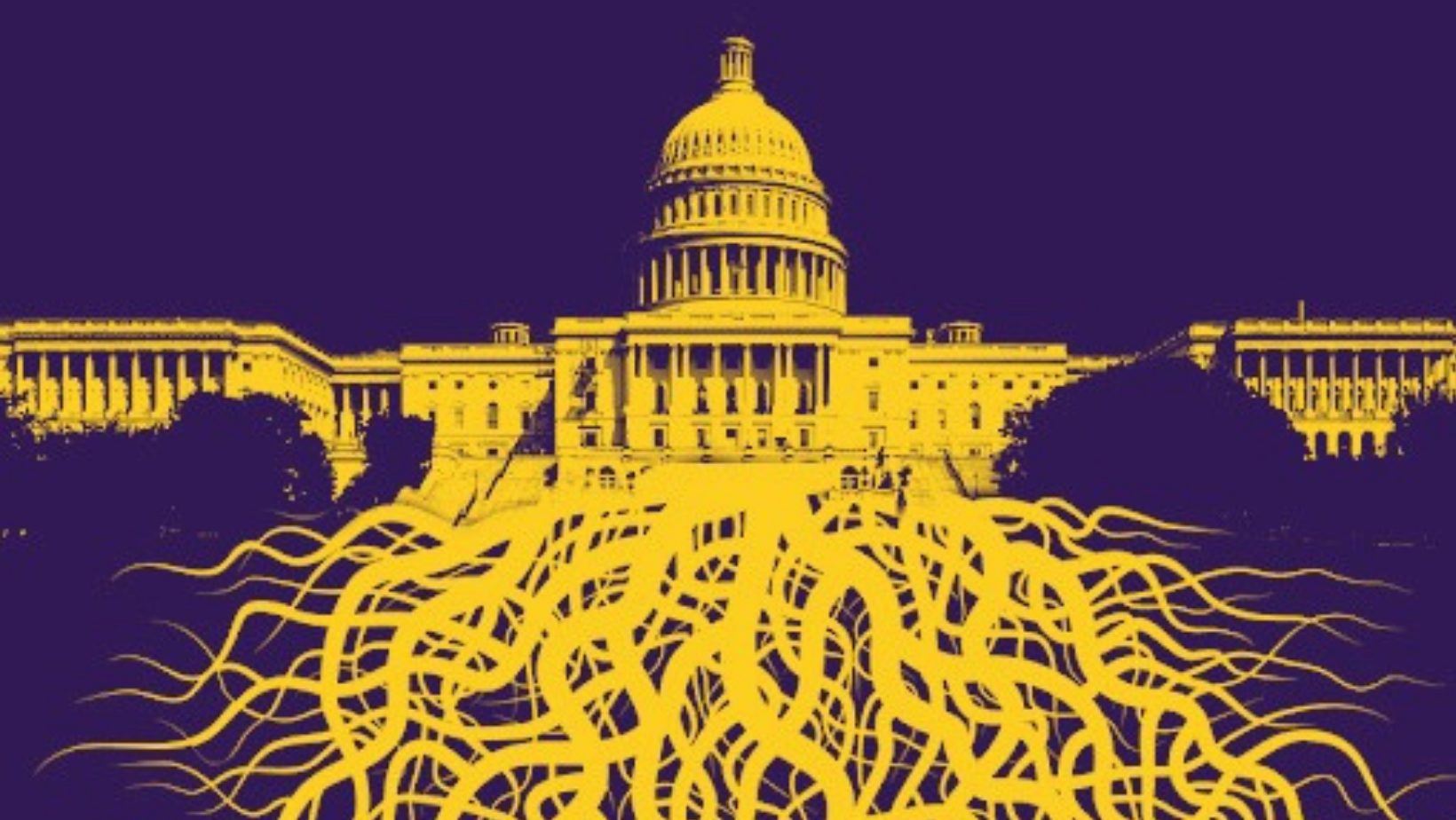
“It’s Christmas Eve! It’s the one night of the year when we all act a little nicer, we smile a little easier, we cheer a little more. For a couple of hours out of the whole year, we are the people that we always hoped we would be! It’s a sort of a miracle because it happens every Christmas Eve… There are people that are having trouble making their miracle happen… It’s not just the poor and the hungry, it’s everybody that’s gotta have this miracle!”— Scrooged (1988)

What a year.

It feels as if government Grinches, corporate Scrooges, and cancel culture humbugs have been working overtime to drain every last drop of joy, kindness and liberty from the world.

After endless months of gloom and doom, it can be hard to feel the joy of Christmas in the midst of rampant commercialism, political correctness and the casual cruelty of an apathetic, self-absorbed, dog-eat-dog world.

Then again, isn’t that struggle to overcome the darkness and find the light within exactly what Christmas—the celebration of a baby born in a manger—is all about? The reminder that we have not been forgotten or forsaken. Glad tidings in the midst of hard times. Goodwill to counter meanness. Innocence in the face of cynicism. Hope in the midst of despair. Comfort to soothe our fears. Peace as an answer to war. Love that conquers hate.

As “fellow-passengers to the grave,” we all have a moral duty to make this world (or at least our small corners of it) just a little bit kinder, a little less hostile and a lot more helpful to those in need.

No matter what one’s budget, religion, or political persuasion, there is no shortage of things we can each do right now to pay our blessings forward and recapture the true spirit of Christmas.

For starters, move beyond the “us” vs. “them” mentality. Tune into what’s happening in your family, in your community and your world, and get active. Show compassion to those in need, be kind to those around you, forgive those who have wronged you, and teach your children to do the same. Talk less, and listen more. Take less, and give more. Stop being a hater. Stop acting entitled and start being empowered. Learn tolerance in the true sense of the word. Value your family. Count your blessings. Share your blessings. Feed the hungry, shelter the homeless and comfort the lonely and broken-hearted. Build bridges, and tear down walls. Stand for freedom. Strive for peace.

One thing more: make time for joy and laughter. Shake off the blues with some Christmas tunes, whatever fits the bill for you, be it traditional carols, rollicking oldies, or some rocking new tunes. Watch a Christmas movie that reinforces your faith in the things that truly matter.

Here are ten of my favorite Christmas movies and music albums to get you started.

First the movies.

It’s A Wonderful Life (1946). An American classic about a despondent man, George Bailey who is saved from suicide by an angel working to get his wings. This film is a testament to director Frank Capra’s faith in people. Sublime performances by James Stewart and Donna Reed.

The Bishop’s Wife (1947). An angel comes to earth in answer to a bishop’s prayer for help. Cary Grant, David Niven and Loretta Young help energize this tale of lost visions and longings of the heart.

Miracle on 34th Street (1947). By happenchance, Kris Kringle is hired as Santa Claus by Macy’s Department Store in New York City for the Thanksgiving Day Parade. Before long, Kringle, who believes himself to be the one and only Santa Claus, has impacted virtually everyone around him. Funny, witty and heartwarming, this film is stocked with some fine performances from Maureen O’Hara, John Payne and young Natalie Wood. Edmund Gwenn won the Academy Award for best supporting actor for his role as Saint Nick.

A Christmas Carol (1951). This is the best film version of the penny-pinching Scrooge’s journey to spiritual enlightenment by way of visits from supernatural visitors. Alastair Sim as Scrooge gives one of the finest film performances never to win an Oscar. The Man Who Invented Christmas (2017) provides a wonderful glimpse into how Charles Dickens came to write A Christmas Carol.

A Christmas Story (1983). Ralphie is a young boy obsessed with one thing and only one thing: how to get a Red Ryder BB-gun for Christmas. Ralphie’s parents are wary, and his mother continually warns him that “you’ll shoot your eye out.” Based on Jean Shepherd’s autobiographical book In God We Trust, All Others Pay Cash, at the heart of this timeless comedy is the universal yearning of a child for the magic of Christmas morning. A great cast, which includes Darren McGavin, Peter Billingsley, Melinda Dillon and a voice-over narrative by Shepherd himself.

One Magic Christmas (1985). If you grew up in a family where times were tough, this film is for you. A guardian angel comes to earth to help a disillusioned woman who hates Christmas. This tale of redemption and second chances is a delight to watch. And Harry Dean Stanton makes a first-class offbeat angel.

Prancer (1989). This story of an eight-year-old girl who believes that an injured reindeer in her barn is actually one of Santa’s reindeer is one of the most down-to-earth Christmas films ever made. It’s a testament to the transforming power of love and childhood innocence. Sam Elliott and Cloris Leachman are fine in supporting roles, but Rebecca Harrell shines. Filmed on location in freezing, snowy weather, this film is a treat for those who love Christmas.

Home Alone (1990). Eight-year-old Kevin, accidentally left behind at home when his family flies to Paris for Christmas, thinks he’s got it made. Hijinks ensue when two burglars match their wits against his. A funny, tender tribute to childhood and the bonds of family.

Elf (2003). Another modern classic with a lot of heart. Buddy, played to the hilt by Will Ferrell, is a human who was raised by elves at the North Pole. Determined to find his birth father, Buddy travels to the Big Apple and spreads his Christmas cheer to everyone he meets. This film has it all: Santa, elves, family problems, humor, emotion and above all else, a large dose of the Christmas spirit. One of the best Christmas movies ever made.

The Christmas Chronicles (2018). The story of a sister and brother, Kate and Teddy Pierce, whose Christmas Eve plan to catch Santa Claus on camera turns into an unexpected journey that most kids could only dream about. Kurt Russell’s star turn as Santa makes for movie magic.

Now for the music.

Out of the hundreds of Christmas albums I’ve listened to over the years, the following, covering a broad range of musical styles, moods and tastes, each in its own way perfectly captures the essence of Christmas for me.

It’s Christmas (EMI, 1989): 18 great songs, ranging from John Lennon’s “Happy Xmas (War Is Over)” to Bing Crosby’s “White Christmas.” The real treats on this album are Greg Lake’s “I Believe in Father Christmas,” Kate Bush’s “December Will Be Magic Again” and Aled Jones’ “Walking in the Air.”

Christmas Guitar (Rounder, 1986): 28 beautifully done traditional Christmas songs by master guitarist John Fahey. Hearing Fahey’s guitar strings plucking out “Joy to the World,” “Good King Wenceslas,” “Jolly Old Saint Nicholas,” among others, is a sublime experience.

Christmas Is A Special Day (The Right Stuff, 1993): 12 fine songs by Fats Domino, the great Fifties rocker, ranging from “Amazing Grace” to “Jingle Bells.” The title song, written by Domino himself, is a real treat. No one has ever played the piano keys like Fats.

Christmas Island (August/Private Music, 1989): “Frosty the Snowman” will never sound the same after you hear Leon Redbone and Dr. John do their duet. Neither will “Christmas Island” or “Toyland” on this collection of 11 traditional and rather offbeat songs.

A Holiday Celebration (Gold Castle, 1988): The classic folk trio Peter, Paul & Mary, backed by the New York Choral Society, sing traditional and nontraditional holiday fare on 12 beautifully orchestrated songs. Included are “I Wonder as I Wander,” “Children Go Where I Send Thee,” and “The Cherry Tree Carol.” Also thrown in is Bob Dylan’s “Blowin’ in the Wind.”

The Christmas Album (Columbia, 1992): Neil Diamond sings 14 songs, ranging from “Silent Night” to “Jingle Bell Rock” to “The Christmas Song” to “Come, O Come Emmanuel.” Diamond also gives us a great rendition of Lennon’s “Happy Xmas (War Is Over).” A delightful album.

A Charlie Brown Christmas (Fantasy, 1988): 12 traditional Christmas songs by the Vince Guaraldi Trio. The pianist extraordinaire and his trio perform “O Tannenbaum,” “The Christmas Song” and “Greensleeves.” Also included is the Charlie Brown Christmas theme.

The Jethro Tull Christmas Album (Fuel Records, 2003): If you like deep-rooted traditional holiday songs, you’ll love this album. The 16 songs range from “God Rest Ye Merry Gentlemen” to Ian Anderson originals such as “Another Christmas Song” and “Jack Frost and the Hooded Crow.” With Anderson on flute and vocals, this album has an old world flavor that will have you wanting mince pie and plum pudding.

A Twisted Christmas (Razor Tie, 2006): Twisted Sister, the heavy metal group, knocks the socks off a bevy of traditional and pop Christmas songs. Dee Snider’s amazing vocals brings to life “Oh Come All Ye Faithful,” “Deck the Halls,” “I Saw Mommy Kissing Santa Claus,” among others—including “Heavy Metal Christmas (The Twelve Days of Christmas).” Great fun and a great band.

Songs for Christmas (Asthmatic Kitty, 2006): In 2001, independent singer/songwriter Sufjan Stevens set out to create a Christmas gift through songs for his friends and family. It eventually grew to a 5-CD box set, which includes Stevens’ original take on such standards as “Amazing Grace” and “We Three Kings” and some inventive yuletide creations of his own. A lot of fun.

Before you know it, Christmas will be a distant memory and we’ll be back to our regularly scheduled programming of “us vs. them” politics, war, violence, materialism and mayhem.

As I make clear in my book Battlefield America: The War on the American People and in its fictional counterpart The Erik Blair Diaries, there may not be much we can do to avoid the dismal reality of the American police state in the long term—not so long as the powers-that-be allow profit margins to take precedence over people—but in the short term, I hope you’ll do your part to “spread a smile of joy” and “throw your arms around the world at Christmastime.”

As you celebrate the season, take to heart the closing sermon in The Bishop’s Wife:

“Once upon a midnight clear, there was a child’s cry, a blazing star hung over a stable, and wise men came with birthday gifts. We haven’t forgotten that night down the centuries. We celebrate it with stars on Christmas trees, with the sound of bells, and with gifts… We forget nobody, adult or child. All the stockings are filled, all that is, except one. And we have even forgotten to hang it up. The stocking for the child born in a manger. It’s his birthday we’re celebrating. Don’t let us ever forget that. Let us ask ourselves what He would wish for most. And then, let each put in his share, loving kindness, warm hearts, and a stretched out hand of tolerance. All the shining gifts that make peace on earth.”—The Bishop’s Wife (1947)

Source: https://bit.ly/3yHuNYg

ABOUT JOHN W. WHITEHEAD

Constitutional attorney and author John W. Whitehead is founder and president The Rutherford Institute. His books Battlefield America: The War on the American People and A Government of Wolves: The Emerging American Police State are available at www.amazon.com. He can be contacted at johnw@rutherford.org. Nisha Whitehead is the Executive Director of The Rutherford Institute. Information about The Rutherford Institute is available at www.rutherford.org.

Publication Guidelines / Reprint Permission

John W. Whitehead’s weekly commentaries are available for publication to newspapers and web publications at no charge. Please contact staff@rutherford.org to obtain reprint permission.

“When the song of the angels is stilled, when the star in the sky is gone, when the kings and princes are home, when the shepherds are back with their flocks, the work of Christmas begins: to find the lost, to heal the broken, to feed the hungry, to release the prisoner, to rebuild the nations, to bring peace among the people, to make music in the heart.” ― Howard Thurman

The Christmas story of a baby born in a manger is a familiar one.

The Roman Empire, a police state in its own right, had ordered that a census be conducted. Joseph and his pregnant wife Mary traveled to the little town of Bethlehem so that they could be counted. There being no room for the couple at any of the inns, they stayed in a stable (a barn), where Mary gave birth to a baby boy, Jesus. Warned that the government planned to kill the baby, Jesus’ family fled with him to Egypt until it was safe to return to their native land.

Yet what if Jesus had been born 2,000 years later?

What if, instead of being born into the Roman police state, Jesus had been born at this moment in time? What kind of reception would Jesus and his family be given? Would we recognize the Christ child’s humanity, let alone his divinity? Would we treat him any differently than he was treated by the Roman Empire? If his family were forced to flee violence in their native country and sought refuge and asylum within our borders, what sanctuary would we offer them?

A singular number of churches across the country have asked those very questions in recent years, and their conclusions were depicted with unnerving accuracy by nativity scenes in which Jesus and his family are separated, segregated and caged in individual chain-link pens, topped by barbed wire fencing.

Those nativity scenes were a pointed attempt to remind the modern world that the narrative about the birth of Jesus is one that speaks on multiple fronts to a world that has allowed the life, teachings and crucifixion of Jesus to be drowned out by partisan politics, secularism, materialism and war, all driven by a manipulative shadow government called the Deep State.

The modern-day church has largely shied away from applying Jesus’ teachings to modern problems such as war, poverty, immigration, etc., but thankfully there have been individuals throughout history who ask themselves and the world: what would Jesus do?

What would Jesus—the baby born in Bethlehem who grew into an itinerant preacher and revolutionary activist, who not only died challenging the police state of his day (namely, the Roman Empire) but spent his adult life speaking truth to power, challenging the status quo of his day, and pushing back against the abuses of the Roman Empire—do about the injustices of our  modern age?

Dietrich Bonhoeffer asked himself what Jesus would have done about the horrors perpetrated by Hitler and his assassins. The answer: Bonhoeffer was executed by Hitler for attempting to undermine the tyranny at the heart of Nazi Germany.

Aleksandr Solzhenitsyn asked himself what Jesus would have done about the soul-destroying gulags and labor camps of the Soviet Union. The answer: Solzhenitsyn found his voice and used it to speak out about government oppression and brutality.

Martin Luther King Jr. asked himself what Jesus would have done about America’s warmongering. The answer: declaring “my conscience leaves me no other choice,” King risked widespread condemnation as well as his life when he publicly opposed the Vietnam War on moral and economic grounds.

Even now, despite the popularity of the phrase “What Would Jesus Do?” (WWJD) in Christian circles, there remains a disconnect in the modern church between the teachings of Christ and the suffering of what Jesus in Matthew 25 refers to as the “least of these.”

Yet this is not a theological gray area: Jesus was unequivocal about his views on many things, not the least of which was charity, compassion, war, tyranny and love.

After all, Jesus—the revered preacher, teacher, radical and prophet—was born into a police state not unlike the growing menace of the American police state. When he grew up, he had powerful, profound things to say, things that would change how we view people, alter government policies and change the world. “Blessed are the merciful,” “Blessed are the peacemakers,” and “Love your enemies” are just a few examples of his most profound and revolutionary teachings.

When confronted by those in authority, Jesus did not shy away from speaking truth to power. Indeed, his teachings undermined the political and religious establishment of his day. It cost him his life. He was eventually crucified as a warning to others not to challenge the powers-that-be.

Can you imagine what Jesus’ life would have been like if, instead of being born into the Roman police state, he had been born and raised in the American police state?

Consider the following if you will.

Had Jesus been born in the era of the America police state, rather than traveling to Bethlehem for a census, Jesus’ parents would have been mailed a 28-page American Community Survey, a mandatory government questionnaire documenting their habits, household inhabitants, work schedule, how many toilets are in your home, etc. The penalty for not responding to this invasive survey can go as high as $5,000.

Instead of being born in a manger, Jesus might have been born at home. Rather than wise men and shepherds bringing gifts, however, the baby’s parents might have been forced to ward off visits from state social workers intent on prosecuting them for the home birth. One couple in Washington had all three of their children removed after social services objected to the two youngest being birthed in an unassisted home delivery.

Had Jesus been born in a hospital, his blood and DNA would have been taken without his parents’ knowledge or consent and entered into a government biobank. While most states require newborn screening, a growing number are holding onto that genetic material long-term for research, analysis and purposes yet to be disclosed.

Then again, had Jesus’ parents been undocumented immigrants, they and the newborn baby might have been shuffled to a profit-driven, private prison for illegals where they first would have been separated from each other, the children detained in make-shift cages, and the parents eventually turned into cheap, forced laborers for corporations such as Starbucks, Microsoft, Walmart, and Victoria’s Secret. There’s quite a lot of money to be made from imprisoning immigrants, especially when taxpayers are footing the bill.

From the time he was old enough to attend school, Jesus would have been drilled in lessons of compliance and obedience to government authorities, while learning little about his own rights. Had he been daring enough to speak out against injustice while still in school, he might have found himself tasered or beaten by a school resource officer, or at the very least suspended under a school zero tolerance policy that punishes minor infractions as harshly as more serious offenses.

Had Jesus disappeared for a few hours let alone days as a 12-year-old, his parents would have been handcuffed, arrested and jailed for parental negligence. Parents across the country have been arrested for far less “offenses” such as allowing their children to walk to the park unaccompanied and play in their front yard alone.

Rather than disappearing from the history books from his early teenaged years to adulthood, Jesus’ movements and personal data—including his biometrics—would have been documented, tracked, monitored and filed by governmental agencies and corporations such as Google and Microsoft. Incredibly, 95 percent of school districts share their student records with outside companies that are contracted to manage data, which they then use to market products to us.

From the moment Jesus made contact with an “extremist” such as John the Baptist, he would have been flagged for surveillance because of his association with a prominent activist, peaceful or otherwise. Since 9/11, the FBI has actively carried out surveillance and intelligence-gathering operations on a broad range of activist groups, from animal rights groups to poverty relief, anti-war groups and other such “extremist” organizations.

Jesus’ anti-government views would certainly have resulted in him being labeled a domestic extremist. Law enforcement agencies are being trained to recognize signs of anti-government extremism during interactions with potential extremists who share a “belief in the approaching collapse of government and the economy.”

While traveling from community to community, Jesus might have been reported to government officials as “suspicious” under the Department of Homeland Security’s “See Something, Say Something” programs. Many states, including New York, are providing individuals with phone apps that allow them to take photos of suspicious activity and report them to their state Intelligence Center, where they are reviewed and forwarded to law-enforcement agencies.

Rather than being permitted to live as an itinerant preacher, Jesus might have found himself threatened with arrest for daring to live off the grid or sleeping outside. In fact, the number of cities that have resorted to criminalizing homelessness by enacting bans on camping, sleeping in vehicles, loitering and begging in public has doubled.

Viewed by the government as a dissident and a potential threat to its power, Jesus might have had government spies planted among his followers to monitor his activities, report on his movements, and entrap him into breaking the law. Such Judases today—called informants—often receive hefty paychecks from the government for their treachery.

Had Jesus used the internet to spread his radical message of peace and love, he might have found his blog posts infiltrated by government spies attempting to undermine his integrity, discredit him or plant incriminating information online about him. At the very least, he would have had his website hacked and his email monitored.

Had Jesus attempted to feed large crowds of people, he would have been threatened with arrest for violating various ordinances prohibiting the distribution of food without a permit. Florida officials arrested a 90-year-old man for feeding the homeless on a public beach.

Had Jesus spoken publicly about his 40 days in the desert and his conversations with the devil, he might have been labeled mentally ill and detained in a psych ward against his will for a mandatory involuntary psychiatric hold with no access to family or friends. One Virginia man was arrested, strip searched, handcuffed to a table, diagnosed as having “mental health issues,” and locked up for five days in a mental health facility against his will apparently because of his slurred speech and unsteady gait.

Without a doubt, had Jesus attempted to overturn tables in a Jewish temple and rage against the materialism of religious institutions, he would have been charged with a hate crime. Currently, 45 states and the federal government have hate crime laws on the books.

Had anyone reported Jesus to the police as being potentially dangerous, he might have found himself confronted—and killed—by police officers for whom any perceived act of non-compliance (a twitch, a question, a frown) can result in them shooting first and asking questions later.

Rather than having armed guards capture Jesus in a public place, government officials would have ordered that a SWAT team carry out a raid on Jesus and his followers, complete with flash-bang grenades and military equipment. There are upwards of 80,000 such SWAT team raids carried out every year, many on unsuspecting Americans who have no defense against such government invaders, even when such raids are done in error.

Instead of being detained by Roman guards, Jesus might have been made to “disappear” into a secret government detention center where he would have been interrogated, tortured and subjected to all manner of abuses. Chicago police have “disappeared” more than 7,000 people into a secret, off-the-books interrogation warehouse at Homan Square.

Charged with treason and labeled a domestic terrorist, Jesus might have been sentenced to a life-term in a private prison where he would have been forced to provide slave labor for corporations or put to death by way of the electric chair or a lethal mixture of drugs.

Indeed, as I make clear in my book Battlefield America: The War on the American People and in its fictional counterpart The Erik Blair Diaries, given the nature of government then and now, it is painfully evident that whether Jesus had been born in our modern age or his own, he still would have died at the hands of a police state.

Thus, as we draw near to Christmas with its celebration of miracles and promise of salvation, we would do well to remember that what happened in that manger on that starry night in Bethlehem is only the beginning of the story. That baby born in a police state grew up to be a man who did not turn away from the evils of his age but rather spoke out against it.

We must do no less.

Source: https://bit.ly/3ESY1WD

ABOUT JOHN W. WHITEHEAD

Constitutional attorney and author John W. Whitehead is founder and president The Rutherford Institute. His books Battlefield America: The War on the American People and A Government of Wolves: The Emerging American Police State are available at www.amazon.com. He can be contacted at johnw@rutherford.org. Nisha Whitehead is the Executive Director of The Rutherford Institute. Information about The Rutherford Institute is available at www.rutherford.org.

Publication Guidelines / Reprint Permission

John W. Whitehead’s weekly commentaries are available for publication to newspapers and web publications at no charge. Please contact staff@rutherford.org to obtain reprint permission.

“He sees you when you’re sleeping

He knows when you’re awake

He knows when you’ve been bad or good

So be good for goodness’ sake!”

—“Santa Claus Is Coming to Town”

Santa’s got a new helper.

No longer does the all-knowing, all-seeing, jolly Old St. Nick need to rely on antiquated elves on shelves and other seasonal snitches in order to know when you’re sleeping or awake, and if you’ve been naughty or nice.

Thanks to the government’s almost limitless powers made possible by a domestic army of techno-tyrants, fusion centers and Peeping Toms, Santa can get real-time reports on who’s been good or bad this year. This creepy new era of government/corporate spying—in which we’re being listened to, watched, tracked, followed, mapped, bought, sold and targeted—makes the NSA’s rudimentary phone and metadata surveillance appear almost antiquated in comparison.

Consider just a small sampling of the tools being used to track our movements, monitor our spending, and sniff out all the ways in which our thoughts, actions and social circles might land us on the government’s naughty list.

Tracking you based on your health status. In the age of COVID-19, digital health passports are gaining traction as gatekeepers of a sort, restricting access to travel, entertainment, etc., based on one’s vaccine status. Whether or not one has a vaccine passport, however, individuals may still have to prove themselves “healthy” enough to be part of society. For instance, in the wake of Supreme Court rulings that paved the way for police to use drug-sniffing dogs as “search warrants on leashes,” government agencies are preparing to use virus-detecting canine squads to carry out mass screenings to detect individuals who may have COVID-19. Researchers claim the COVID-sniffing dogs have a 95% success rate of identifying individuals with the virus (except when they’re hungry, tired or distracted). These dogs are also being to trained to ferret out individuals suffering from other health ailments such as cancer.

Tracking you based on your face: Facial recognition software aims to create a society in which every individual who steps out into public is tracked and recorded as they go about their daily business. Coupled with surveillance cameras that blanket the country, facial recognition technology allows the government and its corporate partners to identify and track someone’s movements in real-time. One particularly controversial software program created by Clearview AI has been used by police, the FBI and the Department of Homeland Security to collect photos on social media sites for inclusion in a massive facial recognition database. Similarly, biometric software, which relies on one’s unique identifiers (fingerprints, irises, voice prints), is becoming the standard for navigating security lines, as well as bypassing digital locks and gaining access to phones, computers, office buildings, etc. In fact, greater numbers of travelers are opting into programs that rely on their biometrics in order to avoid long waits at airport security. Scientists are also developing lasers that can identify and surveil individuals based on their heartbeats, scent and microbiome.

Tracking you based on your behavior: Rapid advances in behavioral surveillance are not only making it possible for individuals to be monitored and tracked based on their patterns of movement or behavior, including gait recognition (the way one walks), but have given rise to whole industries that revolve around predicting one’s behavior based on data and surveillance patterns and are also shaping the behaviors of whole populations. One smart “anti-riot” surveillance system purports to predict mass riots and unauthorized public events by using artificial intelligence to analyze social media, news sources, surveillance video feeds and public transportation data.

Tracking you based on your spending and consumer activities: With every smartphone we buy, every GPS device we install, every Twitter, Facebook, and Google account we open, every frequent buyer card we use for purchases—whether at the grocer’s, the yogurt shop, the airlines or the department store—and every credit and debit card we use to pay for our transactions, we’re helping Corporate America build a dossier for its government counterparts on who we know, what we think, how we spend our money, and how we spend our time. Consumer surveillance, by which your activities and data in the physical and online realms are tracked and shared with advertisers, has become big business, a $300 billion industry that routinely harvests your data for profit. Corporations such as Target have not only been tracking and assessing the behavior of their customers, particularly their purchasing patterns, for years, but the retailer has also funded major surveillance in cities across the country and developed behavioral surveillance algorithms that can determine whether someone’s mannerisms might fit the profile of a thief.

Tracking you based on your public activities: Private corporations in conjunction with police agencies throughout the country have created a web of surveillance that encompasses all major cities in order to monitor large groups of people seamlessly, as in the case of protests and rallies. They are also engaging in extensive online surveillance, looking for any hints of “large public events, social unrest, gang communications, and criminally predicated individuals.” Defense contractors have been at the forefront of this lucrative market. Fusion centers, $330 million-a-year, information-sharing hubs for federal, state and law enforcement agencies, monitor and report such “suspicious” behavior as people buying pallets of bottled water, photographing government buildings, and applying for a pilot’s license as “suspicious activity.”

Tracking you based on your social media activities: Every move you make, especially on social media, is monitored, mined for data, crunched, and tabulated in order to form a picture of who you are, what makes you tick, and how best to control you when and if it becomes necessary to bring you in line. As The Intercept reported, the FBI, CIA, NSA and other government agencies are increasingly investing in and relying on corporate surveillance technologies that can mine constitutionally protected speech on social media platforms such as Facebook, Twitter and Instagram in order to identify potential extremists and predict who might engage in future acts of anti-government behavior. This obsession with social media as a form of surveillance will have some frightening consequences in coming years. As Helen A.S. Popkin, writing for NBC News, observed, “We may very well face a future where algorithms bust people en masse for referencing illegal ‘Game of Thrones’ downloads… the new software has the potential to roll, Terminator-style, targeting every social media user with a shameful confession or questionable sense of humor.”

Tracking you based on your phone and online activities: Cell phones have become de facto snitches, offering up a steady stream of digital location data on users’ movements and travels. Police have used cell-site simulators to carry out mass surveillance of protests without the need for a warrant. Moreover, federal agents can now employ a number of hacking methods in order to gain access to your computer activities and “see” whatever you’re seeing on your monitor. Malicious hacking software can also be used to remotely activate cameras and microphones, offering another means of glimpsing into the personal business of a target.

Tracking you based on your social network: Not content to merely spy on individuals through their online activity, government agencies are now using surveillance technology to track one’s social network, the people you might connect with by phone, text message, email or through social message, in order to ferret out possible criminals. An FBI document obtained by Rolling Stone speaks to the ease with which agents are able to access address book data from Facebook’s WhatsApp and Apple’s iMessage services from the accounts of targeted individuals and individuals not under investigation who might have a targeted individual within their network. What this creates is a “guilt by association” society in which we are all as guilty as the most culpable person in our address book.

Tracking you based on your car: License plate readers are mass surveillance tools that can photograph over 1,800 license tag numbers per minute, take a picture of every passing license tag number and store the tag number and the date, time, and location of the picture in a searchable database, then share the data with law enforcement, fusion centers and private companies to track the movements of persons in their cars. With tens of thousands of these license plate readers now in operation throughout the country, affixed to overpasses, cop cars and throughout business sectors and residential neighborhoods, it allows police to track vehicles and run the plates through law enforcement databases for abducted children, stolen cars, missing people and wanted fugitives. Of course, the technology is not infallible: there have been numerous incidents in which police have mistakenly relied on license plate data to capture out suspects only to end up detaining innocent people at gunpoint.

Tracking you based on your mail: Just about every branch of the government—from the Postal Service to the Treasury Department and every agency in between—now has its own surveillance sector, authorized to spy on the American people. For instance, the U.S. Postal Service, which has been photographing the exterior of every piece of paper mail for the past 20 years, is also spying on Americans’ texts, emails and social media posts. Headed up by the Postal Service’s law enforcement division, the Internet Covert Operations Program (iCOP) is reportedly using facial recognition technology, combined with fake online identities, to ferret out potential troublemakers with “inflammatory” posts. The agency claims the online surveillance, which falls outside its conventional job scope of processing and delivering paper mail, is necessary to help postal workers avoid “potentially volatile situations.”

Fusion centers. Smart devices. Behavioral threat assessments. Terror watch lists. Facial recognition. Snitch tip lines. Biometric scanners. Pre-crime. DNA databases. Data mining. Precognitive technology. Contact tracing apps.

What these add up to is a world in which, on any given day, the average person is now monitored, surveilled, spied on and tracked in more than 20 different ways by both government and corporate eyes and ears.

Big Tech wedded to Big Government has become Big Brother.

Every second of every day, the American people are being spied on by a vast network of digital Peeping Toms, electronic eavesdroppers and robotic snoops.

As I make clear in my book Battlefield America: The War on the American People and in its fictional counterpart The Erik Blair Diaries, surveillance, digital stalking and the data mining of the American people—weapons of compliance and control in the government’s hands—add up to a society in which there’s little room for indiscretions, imperfections, or acts of independence.

In an age of overcriminalization, mass surveillance, and an appalling lack of protections for our privacy rights, we can all be considered guilty of some transgression or other.

So you’d better watch out—you’d better not pout—you’d better not cry—‘cos I’m telling you why: this Christmas, it’s the Surveillance State that’s coming to town, and you’re already on its naughty list.

Source: https://bit.ly/3Ezxc9I

ABOUT JOHN W. WHITEHEAD

Constitutional attorney and author John W. Whitehead is founder and president The Rutherford Institute. His books Battlefield America: The War on the American People and A Government of Wolves: The Emerging American Police State are available at www.amazon.com. He can be contacted at johnw@rutherford.org. Nisha Whitehead is the Executive Director of The Rutherford Institute. Information about The Rutherford Institute is available at www.rutherford.org.

Publication Guidelines / Reprint Permission

John W. Whitehead’s weekly commentaries are available for publication to newspapers and web publications at no charge. Please contact staff@rutherford.org to obtain reprint permission.

“Abortion on demand is the ultimate State tyranny; the State simply declares that certain classes of human beings are not persons, and therefore not entitled to the protection of the law. The State protects the ‘right’ of some people to kill others, just as the courts protected the ‘property rights’ of slave masters in their slaves. Moreover, by this method the State achieves a goal common to all totalitarian regimes: it sets us against each other, so that our energies are spent in the struggle between State-created classes, rather than in freeing all individuals from the State. Unlike Nazi Germany, which forcibly sent millions to the gas chambers (as well as forcing abortion and sterilization upon many more), the new regime has enlisted the assistance of millions of people to act as its agents in carrying out a program of mass murder.”—Ron Paul

Who gets to decide when it comes to bodily autonomy?

Where does one draw the line over whose rights are worthy of protecting? And how do present-day legal debates over bodily autonomy, privacy, vaccine mandates, the death penalty and abortion play into future discussions about singularity, artificial intelligence, cloning, and the privacy rights of the individual in the face of increasingly invasive, intrusive and unavoidable government technologies?

Caught up in the heated debate over the legality of abortion, we’ve failed to think about what’s coming next. Get ready, because it could get scary, ugly and overwhelming really fast.

Thus far, abortion politics have largely revolved around who has the right to decide—the government or the individual—when it comes to bodily autonomy, the right to privacy in one’s body, sexual freedom, and the rights of the unborn.

In 1973, the U.S. Supreme Court ruled in Roe v. Wade that the Fourteenth Amendment’s Due Process Clause provides for a “right to privacy” that assures a woman’s right to abort her pregnancy within the first two trimesters.

Since that landmark ruling, abortion has been so politicized, polarized and propagandized as to render it a major frontline in the culture wars.

In Planned Parenthood v. Casey (1992), the Supreme Court reaffirmed its earlier ruling in Roe  when it prohibited states from imposing an “undue burden” or “substantial obstacle in the path of a woman seeking an abortion before the fetus attains viability.”

Thirty years later, in the case of Dobbs v. Jackson Women’s Health Organization, the Supreme Court is poised to revisit whether the Constitution—namely, the Fourteenth Amendment—truly provides for the right to an abortion.

At a time when abortion is globally accessible (approximately 73 million abortions are carried out every year), legally expedient form of birth control (it is used to end more than 60% of unplanned pregnancies), and considered a societal norm (according to the Pew Research Center, a majority of Americans continue to believe that abortion should be legal in all or most cases), it’s debatable whether it will ever be truly possible to criminalize abortion altogether.

No matter how the Supreme Court rules in Dobbs, it will not resolve the problem of a culture that values life based on a sliding scale. Nor will it help us navigate the moral, ethical and scientific minefields that await us as technology and humanity move ever closer to a point of singularity.

Here’s what I know.

Life is an inalienable right. By allowing the government to decide who or what is deserving of rights, it shifts the entire discussion from one in which we are “endowed by our Creator with certain inalienable rights” (that of life, liberty property and the pursuit of happiness) to one in which only those favored by the government get to enjoy such rights. The abortion debate—a tug-of-war over when an unborn child is considered a human being with rights—lays the groundwork for discussions about who else may or may not be deserving of rights: the disabled, the aged, the infirm, the immoral, the criminal, etc. The death penalty is just one aspect of this debate. As theologian Francis Schaeffer warned early on: “The acceptance of death of human life in babies born or unborn opens the door to the arbitrary taking of any human life. From then on, it’s purely arbitrary.

If all people are created equal, then all lives should be equally worthy of protection. There’s an idea embraced by both the Right and the Left according to their biases that there is a hierarchy to life, with some lives worthier of protection than others. Out of that mindset is born the seeds of eugenics, genocide, slavery and war.

There is no hierarchy of freedoms. All freedoms hang together. Freedom cannot be a piece-meal venture. My good friend Nat Hentoff (1925-2017), a longtime champion of civil liberties and a staunch pro-lifer, often cited Cardinal Bernardin, who believed that a “consistent ethic of life” viewed all threats to life as immoral: “[N]uclear war threatens life on a previously unimaginable scale. Abortion takes life daily on a horrendous scale. Public executions are fast becoming weekly events in the most advanced technological society in history, and euthanasia is now openly discussed and even advocated. Each of these assaults on life has its own meaning and morality. They cannot be collapsed into one problem, but they must be confronted as pieces of a larger pattern.”

Beware slippery slopes. To suggest that the end justifies the means (for example, that abortion is justified in order to ensure a better quality of life for women and children) is to encourage a slippery slope mindset that could just as reasonably justify ending a life in order for the great good of preventing war, thwarting disease, defeating poverty, preserving national security, etc. Such arguments have been used in the past to justify such dubious propositions as subjecting segments of the population to secret scientific experiments, unleashing nuclear weapons on innocent civilians, and enslaving fellow humans.

Beware double standards. As the furor surrounding COVID-19 vaccine mandates make clear, the debate over bodily autonomy and privacy goes beyond the singular right to abortion. Indeed, as vaccine mandates have been rolled out, long-held positions have been reversed: many of those who historically opposed the government usurping a woman’s right to bodily autonomy and privacy have no qualms about supporting vaccine mandates that trample upon those very same rights. Similarly, those who historically looked to the government to police what a woman does with her body believe the government should have no authority to dictate whether or not one opts to get vaccinated.

What’s next? Up until now, we have largely focused the privacy debate in the physical realm as it relates to abortion rights, physical searches of our persons and property, and our communications. Yet humanity is being propelled at warp speed into a whole new frontier when it comes to privacy, bodily autonomy, and what it means to be a human being.

We haven’t even begun to understand how to talk about these new realms, let alone establish safeguards to protect against abuses.

Humanity itself hangs in the balance.

Remaining singularly human and retaining your individuality and dominion over yourself—mind, body and soul—in the face of corporate and government technologies that aim to invade, intrude, monitor, manipulate and control us may be one of the greatest challenges before us.

These battles over COVID-19 vaccine mandates are merely the tipping point. The groundwork being laid with these mandates is a prologue to what will become the police state’s conquest of a new, relatively uncharted, frontier: inner space, specifically, the inner workings (genetic, biological, biometric, mental, emotional) of the human race.

If you were unnerved by the rapid deterioration of privacy under the Surveillance State, prepare to be terrified by the surveillance matrix that will be ushered in within the next few decades.

Everything we do is increasingly dependent on and, ultimately, controlled by technological devices. For example, in 2007, there were an estimated 10 million sensor devices connecting human utilized electronic devices (cell phones, laptops, etc.) to the Internet. By 2013, it had increased to 3.5 billion. By 2030, there will be an estimated 100 trillion sensor devices connecting us to the internet by way of a neural network that approximates a massive global brain.

The end goal? Population control and the creation of a new “human” species, so to speak, through singularity, a marriage of sorts between machine and human beings in which artificial intelligence and the human brain will merge to form a superhuman mind.

The plan is to develop a computer network that will exhibit intelligent behavior equivalent to or indistinguishable from that of human beings by 2029. And this goal is to have computers that will be “a billion times more powerful than all of the human brains on earth.” As former Google executive Mo Gawdat warns, “The reality is, we’re creating God.”

Neuralink, a brain-computer chip interface (BCI), paves the way for AI control of the human brain, at which point the disconnect between humans and AI-controlled computers will become blurred and human minds and computers will essentially become one and the same. “In the most severe scenario, hacking a Neuralink-like device could turn ‘hosts’ into programmable drone armies capable of doing anything their ‘master’ wanted,” writes Jason Lau for Forbes.

Advances in neuroscience indicate that future behavior can be predicted based upon activity in certain portions of the brain, potentially creating a nightmare scenario in which government officials select certain segments of the population for more invasive surveillance or quarantine based solely upon their brain chemistry.

Clearly, we are rapidly moving into the “posthuman era,” one in which humans will become a new type of being. “Technological devices,” writes journalist Marcelo Gleiser, “will be implanted in our heads and bodies, or used peripherally, like Google Glass, extending our senses and cognitive abilities.”

Transhumanism—the fusing of machines and people—is here to stay and will continue to grow.

In fact, as science and technology continue to advance, the ability to control humans will only increase. In 2014, for example, it was revealed that scientists had discovered how to deactivate that part of our brains that controls whether we are conscious or not. Add to this the fact that increasingly humans will be implanted with microchips for such benign purposes as tracking children or as medical devices to assist with our health.

Such devices “point to an uber-surveillance society that is Big Brother on the inside looking out,” warns Dr. Katina Michael. “Governments or large corporations would have the ability to track people’s actions and movements, categorize them into different socio-economic, political, racial, or consumer groups and ultimately even control them.”

All of this indicates a new path forward for large corporations and government entities that want to achieve absolute social control.

It is slavery in another form.

Yet we must never stop working to protect life, preserve our freedoms and maintain some semblance of our humanity.

Abortion, vaccine mandates, transhumanism, etc.: these are all points along the continuum.

Even so, there will be others. For instance, analysts are speculating whether artificial intelligence, which will eventually dominate all emerging technologies, could come to rule the world and enslave humans. How will a world dominated by artificial intelligence redefine what it means to be human and exercise free will?

Scientists say the world’s first living robots can now reproduce. What rights are these “living” organisms entitled to? For that matter, what about clones? At the point that scientists are able to move beyond cloning organs and breeding hybrid animals to breeding full-bodied, living clones in order to harvest body parts, who is to say that clones do not also deserve to have their right to life protected?

These are ethical dilemmas without any clear-cut answers. Yet one thing is certain: as I make clear in my book Battlefield America: The War on the American People and in its fictional counterpart The Erik Blair Diaries, putting the power to determine who gets to live or die in the hands of the government is a dangerous place to start.

Source: https://bit.ly/3G6OgEs

ABOUT JOHN W. WHITEHEAD

Constitutional attorney and author John W. Whitehead is founder and president The Rutherford Institute. His books Battlefield America: The War on the American People and A Government of Wolves: The Emerging American Police State are available at www.amazon.com. He can be contacted at johnw@rutherford.org. Nisha Whitehead is the Executive Director of The Rutherford Institute. Information about The Rutherford Institute is available at www.rutherford.org.

Publication Guidelines / Reprint Permission

John W. Whitehead’s weekly commentaries are available for publication to newspapers and web publications at no charge. Please contact staff@rutherford.org to obtain reprint permission.

“All we are saying is give peace a chance.”—John Lennon

How do you give thanks for freedoms that are constantly being eroded?

How do you express gratitude for one’s safety when the perils posed by the American police state grow more treacherous by the day?

How do you come together as a nation in thanksgiving when the powers-that-be continue to polarize and divide us into warring factions?

Every year finds us struggling to reconcile our hope for a better, freer, more just world with the soul-sucking reality of a world in which greed, meanness and war continue to triumph.

Fifty years ago, John Lennon released “Imagine” and exhorted us to “Imagine all the people livin’ life in peace.” That same year, Lennon released “Happy Xmas (War Is Over)” as part of a major anti-war campaign. Lennon—a musical genius, anti-war activist, and a high-profile example of the lengths to which the Deep State will go to persecute those who dare to challenge its authority—made clear that the only way to achieve an end to hunger, violence, war, and tyranny is to want it badly enough and work towards it.

Fifty years later, we clearly don’t want those things badly enough.

Peace remains out of reach. Activists and whistleblowers continue to be prosecuted for challenging the government’s authority. Militarism is on the rise, all the while the governmental war machine continues to wreak havoc on innocent lives.

For those of us who joined with John Lennon to imagine a world of peace, it’s getting harder to reconcile that dream with the reality of the American police state. And those who do dare to speak up about government corruption (such as Julian Assange) are labeled dissidents, troublemakers, terrorists, lunatics, or mentally ill and tagged for surveillance, censorship or, worse, involuntary detention.

All the while, people still keep looking to the government to “fix” what’s wrong with this country. You’d think we’d have learned—after 20 years of heavy-handed government authoritarianism that started with the 9/11 attacks and has continued through to the present-day COVID-19 tyranny—that the only thing the government can be trusted to do is make things worse.

Now we find ourselves approaching that time of year when, as George Washington and Abraham Lincoln proclaimed, we’re supposed to give thanks as a nation and as individuals for our safety and our freedoms.

It’s not an easy undertaking.

Thinking good thoughts, being grateful, counting your blessings and adopting a glass-half-full mindset are fine and good, but that’s not enough. This world requires doers, men and women (and children) who will put those good thoughts into action.

Remember, evil prevails when good men and women do nothing.

Here’s what I suggest: this year, do yourselves a favor and turn off the talking heads, shut down the screen devices, tune out the politicians, take a deep breath, then do something to pay your blessings forward.

Refuse to remain silent. Take a stand. Speak up. Speak out. Recognize injustice. Don’t turn away from suffering.

Find something to be thankful for about the things and people in your community for which you might have the least tolerance or appreciation. Instead of just rattling off a list of things you’re thankful for that sound good, dig a little deeper and acknowledge the good in those you may have underappreciated or feared.

When it comes time to giving thanks for your good fortune, put your gratitude into action: pay your blessings forward with deeds that spread a little kindness, lighten someone’s burden, and brighten some dark corner.

Engage in acts of kindness. Smile more. Fight less. Build bridges. Refuse to let toxic politics define your relationships. Focus on the things that unite instead of that which divides.

Do your part to push back against the meanness of our culture with conscious compassion and humanity. Moods are contagious, the good and the bad. They can be passed from person to person. So can the actions associated with those moods, the good and the bad.

Be a hero, whether or not anyone ever notices.

Acts of benevolence, no matter how inconsequential they might seem, can spark a movement.

All it takes is one person to start a chain reaction.

For instance, a few years ago in Florida, a family of six—four adults and two young boys—were swept out to sea by a powerful rip current in Panama City Beach. There was no lifeguard on duty. The police were standing by, waiting for a rescue boat. And the few people who had tried to help ended up stranded, as well.

Those on shore grouped together and formed a human chain. What started with five volunteers grew to 15, then 80 people, some of whom couldn’t swim.

One by one, they linked hands and stretched as far as their chain would go. The strongest of the volunteers swam out beyond the chain and began passing the stranded victims of the rip current down the chain.

One by one, they rescued those in trouble and pulled each other in.

There’s a moral here for what needs to happen in this country if we only can band together and prevail against the riptides that threaten to overwhelm us.

As I make clear in my book Battlefield America: The War on the American People and in its fictional counterpart The Erik Blair Diaries, there may not be much we can do to avoid the dismal reality of the police state in the long term—not so long as the powers-that-be continue to call the shots and allow profit margins to take precedence over the needs of people—but in the short term, there are things we can all do right now to make this world (or at least our small corners of it) a little bit kinder, a lot less hostile and more just.

It’s never too late to start making things right in the world.

John Lennon tried to imagine a world in which we all lived in peace. He was a beautiful dreamer whose life ended with an assassin’s bullet on December 8, 1980.

Still, that doesn’t mean the dream has to die, too.

There’s something to be said for working to make that dream a reality. As Lennon reminded his listeners, “War is over, if you want it.”

The choice is ours, if we want it.

Source: https://bit.ly/3nDw3YG

ABOUT JOHN W. WHITEHEAD

Constitutional attorney and author John W. Whitehead is founder and president The Rutherford Institute. His books Battlefield America: The War on the American People and A Government of Wolves: The Emerging American Police State are available at www.amazon.com. He can be contacted at johnw@rutherford.org. Nisha Whitehead is the Executive Director of The Rutherford Institute. Information about The Rutherford Institute is available at www.rutherford.org.

Publication Guidelines / Reprint Permission

John W. Whitehead’s weekly commentaries are available for publication to newspapers and web publications at no charge. Please contact staff@rutherford.org to obtain reprint permission.
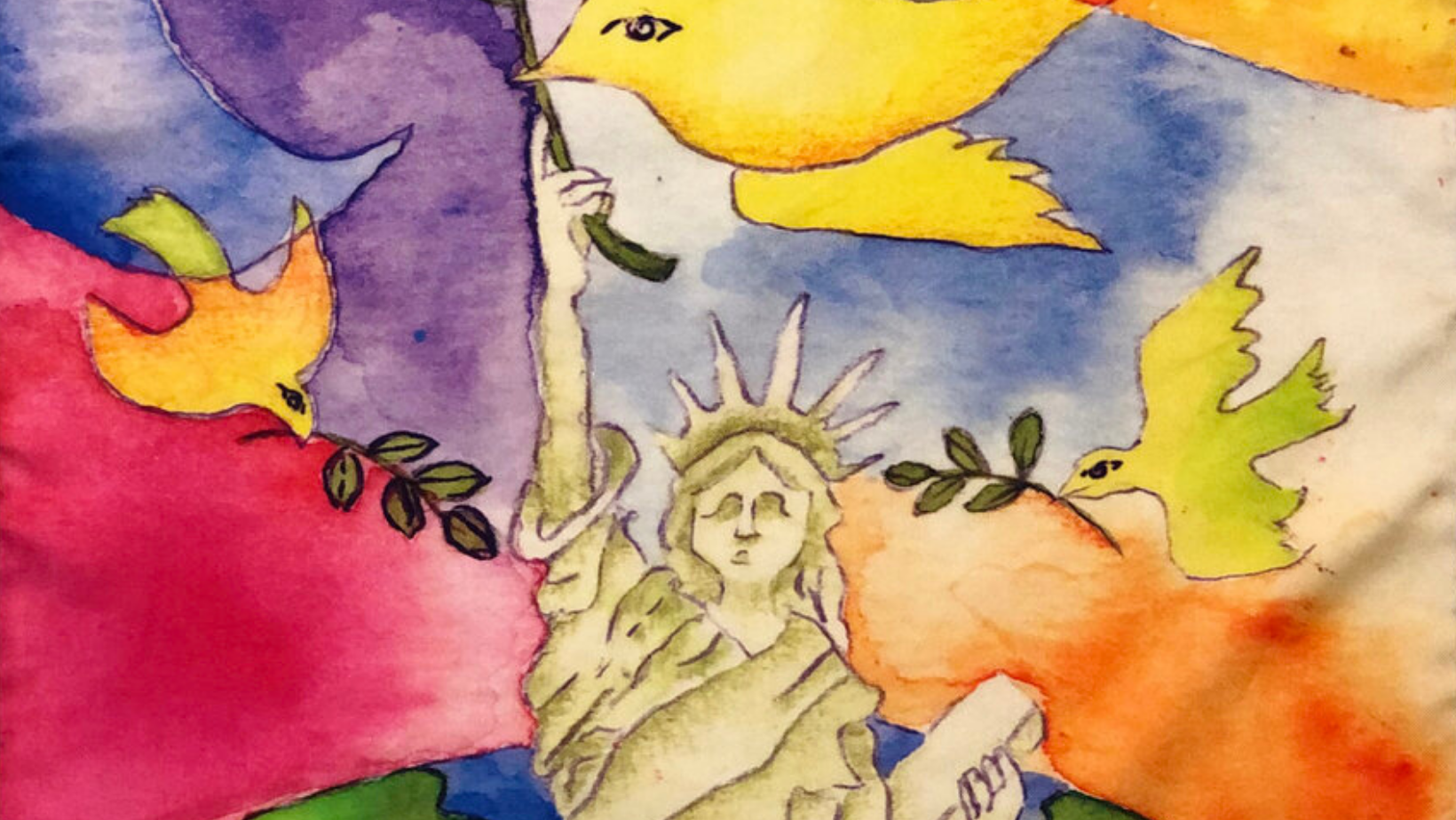
“Man is born free but everywhere is in chains.”—Jean-Jacques Rousseau

We are moving fast down the road to fascism.

This COVID-19 pandemic has shifted us into high gear.

The heavy-handed collusion between the Techno-Corporate State and the U.S. government over vaccine mandates is merely the latest manifestation of the extent to which fascist forces are working to overthrow our constitutional republic and nullify the rights of the individual.

In early November 2021, the Biden Administration drew its line in the sand for more than 100 million American workers: get vaccinated against COVID-19 (by Nov. 22 for federal workers, and Jan. 4 for federal contractors and companies with more than 100 employees) or else.

Or else what?

For many individuals with sincere objections to the vaccine, either based on their religious beliefs or some other medical or philosophical concern, non-compliance with workplace vaccine mandates will mean losing their jobs and the possibility of no unemployment benefits.

One survey conducted by the Society for Human Resource Management estimated that 28% of employed Americans wouldn’t get a COVID vaccine even if it meant losing their jobs.

Although OSHA (the Occupational Safety and Health Administration) is requiring that employees be paid for the time it takes to get vaccinated and recover from any side effects, those who refuse to get vaccinated but keep their jobs will have to test negative for COVID weekly and could be made to shoulder the costs of those weekly tests. Healthcare workers are not being given an option for testing: it’s the vaccine or nothing.

To give the government’s arm-twisting some added strength, companies that violate the workplace mandate rules “can face fines of up to $13,653 per violation for serious violations and 10 times that for willful or repeated violations.”

In other words, as Katrina Trinko writes for USA Today, “the government is turning employers—who are not paid by, nor work for, the government—into an army of vaccine enforcers.”

You know who won’t suffer any harm as a result of these vaccine mandates? The Corporate State (manufacturers, distributors, and health care providers), which were given a blanket “get out of jail” card to insulate them from liability for any injuries or death caused by the vaccines.

While this vaccine mandate is being presented as a “targeted” mandate as opposed to a national mandate that impacts the entire population, it effectively leaves those with sincere objections to the COVID vaccine with very little options beyond total compliance or unemployment.

This has long since ceased to be a debate over how best to protect the populace at large against an unknown pandemic. Rather, it has become a massively intrusive, coercive and authoritarian assault on the right of individual sovereignty over one’s life, self and private property.

As such, these COVID-19 mandates have become the new battleground in the government’s tug-of-war over bodily autonomy and individual sovereignty.

Already, the legal challenges to these vaccine mandates are piling up before the courts. Before long, divided circuit court rulings will make their way to the U.S. Supreme Court, which will be asked to decide whether these mandates constitute government overreach or a natural extension of the government’s so-called emergency powers.

With every new court ruling that empowers corporations and the government to use heavy-handed tactics to bring about vaccine compliance, with every new workplace mandate that forces employees to choose between their right to bodily autonomy and economic livelihood, and with every new piece of legislation that insulates corporations and the government from being held accountability for vaccine injuries and deaths, our property interest in our bodies is diminished.

At a minimum, our right to individual sovereignty over our lives and our bodies is being usurped by power-hungry authoritarians; greedy, self-serving corporations; egotistical Nanny Staters who think they know what’s best for the rest of the populace; and a short-sighted but well-meaning populace which fails to understand the long-term ramifications of trading their essential freedoms for temporary promises of safety and security.

We are more vulnerable now than ever before.

This debate over bodily autonomy, which covers broad territory ranging from forced vaccinations, abortion and euthanasia to forced blood draws, biometric surveillance and basic healthcare, has far-reaching ramifications for who gets to decide what happens to our bodies during an encounter with government officials.

On a daily basis, Americans are already being made to relinquish the most intimate details of who we are—our biological makeup, our genetic blueprints, and our biometrics (facial characteristics and structure, fingerprints, iris scans, etc.)—in order to clear the nearly insurmountable hurdle that increasingly defines life in the United States: we are now guilty until proven innocent.

This merely pushes us one step further down that road towards a total control society in which the government in collusion with Corporate America gets to decide who is “worthy” of being allowed to take part in society.

Right now, COVID-19 vaccines are the magic ticket for gaining access to the “privileges” of communal life. Having already conditioned the population to the idea that being part of society is a privilege and not a right, such access could easily be predicated on social credit scores, the worthiness of one’s political views, or the extent to which one is willing to comply with the government’s dictates, no matter what they might be.

The government is litigating and legislating its way into a new framework where the dictates of petty bureaucrats carry greater weight than the inalienable rights of the citizenry.

When all that we own, all that we earn, all that we say and do—our very lives—depends on the benevolence of government agents and corporate shareholders for whom profit and power will always trump principle, we should all be leery and afraid.

As I make clear in my book Battlefield America: The War on the American People and in its fictional counterpart The Erik Blair Diaries, nothing good can come from totalitarian tactics—no matter how benevolent they appear—that are used to make us cower, fear and comply with the government’s dictates.

Source: https://bit.ly/3kJyEhQ

ABOUT JOHN W. WHITEHEAD

Constitutional attorney and author John W. Whitehead is founder and president The Rutherford Institute. His books Battlefield America: The War on the American People and A Government of Wolves: The Emerging American Police State are available at www.amazon.com. He can be contacted at johnw@rutherford.org. Nisha Whitehead is the Executive Director of The Rutherford Institute. Information about The Rutherford Institute is available at www.rutherford.org.

Publication Guidelines / Reprint Permission

John W. Whitehead’s weekly commentaries are available for publication to newspapers and web publications at no charge. Please contact staff@rutherford.org to obtain reprint permission.
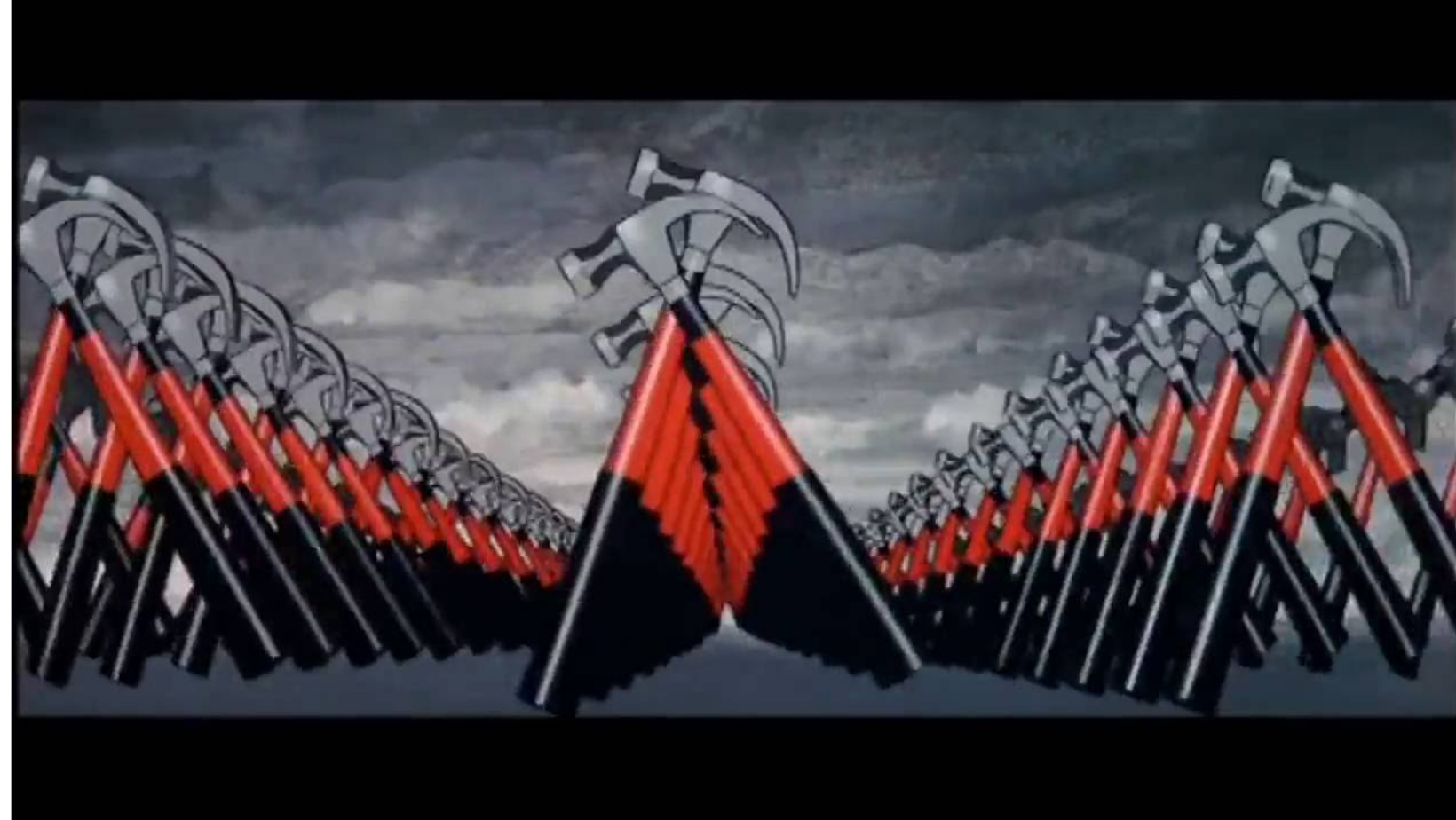
The term metaverse, like the term meritocracy, was coined in a sci fi dystopia novel written as cautionary tale. Then techies took metaverse, and technocrats took meritocracy, and enthusiastically adopted what was meant to inspire horror.”—Antonio García Martínez

Welcome to the Matrix (i.e. the metaverse), where reality is virtual, freedom is only as free as one’s technological overlords allow, and artificial intelligence is slowly rendering humanity unnecessary, inferior and obsolete.

Mark Zuckerberg, the CEO of Facebook, sees this digital universe—the metaverse—as the next step in our evolutionary transformation from a human-driven society to a technological one.

Yet while Zuckerberg’s vision for this digital frontier has been met with a certain degree of skepticism, the truth—as journalist Antonio García Martínez concludes—is that we’re already living in the metaverse.

The metaverse is, in turn, a dystopian meritocracy, where freedom is a conditional construct based on one’s worthiness and compliance.

In a meritocracy, rights are privileges, afforded to those who have earned them. There can be no tolerance for independence or individuality in a meritocracy, where political correctness is formalized, legalized and institutionalized. Likewise, there can be no true freedom when the ability to express oneself, move about, engage in commerce and function in society is predicated on the extent to which you’re willing to “fit in.”

We are almost at that stage now.

Consider that in our present virtue-signaling world where fascism disguises itself as tolerance, the only way to enjoy even a semblance of freedom is by opting to voluntarily censor yourself, comply, conform and march in lockstep with whatever prevailing views dominate.

Fail to do so—by daring to espouse “dangerous” ideas or support unpopular political movements—and you will find yourself shut out of commerce, employment, and society: Facebook will ban you, Twitter will shut you down, Instagram will de-platform you, and your employer will issue ultimatums that force you to choose between your so-called freedoms and economic survival.

This is exactly how Corporate America plans to groom us for a world in which “we the people” are unthinking, unresistant, slavishly obedient automatons in bondage to a Deep State policed by computer algorithms.

Science fiction has become fact.

Twenty-some years after the Wachowskis’ iconic film, The Matrix, introduced us to a futuristic world in which humans exist in a computer-simulated non-reality powered by authoritarian machines—a world where the choice between existing in a denial-ridden virtual dream-state or facing up to the harsh, difficult realities of life comes down to a blue pill or a red pill—we stand at the precipice of a technologically-dominated matrix of our own making.

We are living the prequel to The Matrix with each passing day, falling further under the spell of technologically-driven virtual communities, virtual realities and virtual conveniences managed by artificially intelligent machines that are on a fast track to replacing human beings and eventually dominating every aspect of our lives.

In The Matrixcomputer programmer Thomas Anderson a.k.a. hacker Neo is wakened from a virtual slumber by Morpheus, a freedom fighter seeking to liberate humanity from a lifelong hibernation state imposed by hyper-advanced artificial intelligence machines that rely on humans as an organic power source. With their minds plugged into a perfectly crafted virtual reality, few humans ever realize they are living in an artificial dream world.

Neo is given a choice: to take the red pill, wake up and join the resistance, or take the blue pill, remain asleep and serve as fodder for the powers-that-be.

Most people opt for the blue pill.

In our case, the blue pill—a one-way ticket to a life sentence in an electronic concentration camp—has been honey-coated to hide the bitter aftertaste, sold to us in the name of expediency and delivered by way of blazingly fast Internet, cell phone signals that never drop a call, thermostats that keep us at the perfect temperature without our having to raise a finger, and entertainment that can be simultaneously streamed to our TVs, tablets and cell phones.

Yet we are not merely in thrall with these technologies that were intended to make our lives easier. We have become enslaved by them.

Look around you. Everywhere you turn, people are so addicted to their internet-connected screen devices—smart phones, tablets, computers, televisions—that they can go for hours at a time submerged in a virtual world where human interaction is filtered through the medium of technology.

This is not freedom. This is not even progress.

This is technological tyranny and iron-fisted control delivered by way of the surveillance state, corporate giants such as Google and Facebook, and government spy agencies such as the National Security Agency.

So consumed are we with availing ourselves of all the latest technologies that we have spared barely a thought for the ramifications of our heedless, headlong stumble towards a world in which our abject reliance on internet-connected gadgets and gizmos is grooming us for a future in which freedom is an illusion.

Yet it’s not just freedom that hangs in the balance. Humanity itself is on the line.

If ever Americans find themselves in bondage to technological tyrants, we will have only ourselves to blame for having forged the chains through our own lassitude, laziness and abject reliance on internet-connected gadgets and gizmos that render us wholly irrelevant.

Indeed, we’re fast approaching Philip K. Dick’s vision of the future as depicted in the film Minority Report. There, police agencies apprehend criminals before they can commit a crime, driverless cars populate the highways, and a person’s biometrics are constantly scanned and used to track their movements, target them for advertising, and keep them under perpetual surveillance.

Cue the dawning of the Age of the Internet of Things (IoT), in which internet-connected “things” monitor your home, your health and your habits in order to keep your pantry stocked, your utilities regulated and your life under control and relatively worry-free.

The key word here, however, is control.

In the not-too-distant future, “just about every device you have—and even products like chairs, that you don’t normally expect to see technology in—will be connected and talking to each other.”

By the end of 2018, “there were an estimated 22 billion internet of things connected devices in use around the world… Forecasts suggest that by 2030 around 50 billion of these IoT devices will be in use around the world, creating a massive web of interconnected devices spanning everything from smartphones to kitchen appliances.”

As the technologies powering these devices have become increasingly sophisticated, they have also become increasingly widespread, encompassing everything from toothbrushes and lightbulbs to cars, smart meters and medical equipment.

It is estimated that 127 new IoT devices are connected to the web every second.

This “connected” industry has become the next big societal transformation, right up there with the Industrial Revolution, a watershed moment in technology and culture.

Between driverless cars that completely lacking a steering wheel, accelerator, or brake pedal, and smart pills embedded with computer chips, sensors, cameras and robots, we are poised to outpace the imaginations of science fiction writers such as Philip K. Dick and Isaac Asimov. (By the way, there is no such thing as a driverless car. Someone or something will be driving, but it won’t be you.)

These Internet-connected techno gadgets include smart light bulbs that discourage burglars by making your house look occupied, smart thermostats that regulate the temperature of your home based on your activities, and smart doorbells that let you see who is at your front door without leaving the comfort of your couch.

Nest, Google’s suite of smart home products, has been at the forefront of the “connected” industry, with such technologically savvy conveniences as a smart lock that tells your thermostat who is home, what temperatures they like, and when your home is unoccupied; a home phone service system that interacts with your connected devices to “learn when you come and go” and alert you if your kids don’t come home; and a sleep system that will monitor when you fall asleep, when you wake up, and keep the house noises and temperature in a sleep-conducive state.

The aim of these internet-connected devices, as Nest proclaims, is to make “your house a more thoughtful and conscious home.” For example, your car can signal ahead that you’re on your way home, while Hue lights can flash on and off to get your attention if Nest Protect senses something’s wrong. Your coffeemaker, relying on data from fitness and sleep sensors, will brew a stronger pot of coffee for you if you’ve had a restless night.

Yet given the speed and trajectory at which these technologies are developing, it won’t be long before these devices are operating entirely independent of their human creators, which poses a whole new set of worries. As technology expert Nicholas Carr notes, “As soon as you allow robots, or software programs, to act freely in the world, they’re going to run up against ethically fraught situations and face hard choices that can’t be resolved through statistical models. That will be true of self-driving cars, self-flying drones, and battlefield robots, just as it’s already true, on a lesser scale, with automated vacuum cleaners and lawnmowers.”

For instance, just as the robotic vacuum, Roomba, “makes no distinction between a dust bunny and an insect,” weaponized drones will be incapable of distinguishing between a fleeing criminal and someone merely jogging down a street. For that matter, how do you defend yourself against a robotic cop—such as the Atlas android being developed by the Pentagon—that has been programmed to respond to any perceived threat with violence?

Moreover, it’s not just our homes and personal devices that are being reordered and reimagined in this connected age: it’s our workplaces, our health systems, our government, our bodies and our innermost thoughts that are being plugged into a matrix over which we have no real control.

It is expected that by 2030, we will all experience The Internet of Senses (IoS), enabled by Artificial Intelligence (AI), Virtual Reality (VR), Augmented Reality (AR), 5G, and automation. The Internet of Senses relies on connected technology interacting with our senses of sight, sound, taste, smell, and touch by way of the brain as the user interface. As journalist Susan Fourtane explains:

Many predict that by 2030, the lines between thinking and doing will blur. Fifty-nine percent of consumers believe that we will be able to see map routes on VR glasses by simply thinking of a destination… By 2030, technology is set to respond to our thoughts, and even share them with others… Using the brain as an interface could mean the end of keyboards, mice, game controllers, and ultimately user interfaces for any digital device. The user needs to only think about the commands, and they will just happen. Smartphones could even function without touch screens.

In other words, the IoS will rely on technology being able to access and act on your thoughts.

Fourtane outlines several trends related to the IoS that are expected to become a reality by 2030:

1: Thoughts become action: using the brain as the interface, for example, users will be able to see map routes on VR glasses by simply thinking of a destination.

2: Sounds will become an extension of the devised virtual reality: users could mimic anyone’s voice realistically enough to fool even family members.

3: Real food will become secondary to imagined tastes. A sensory device for your mouth could digitally enhance anything you eat, so that any food can taste like your favorite treat.

4: Smells will become a projection of this virtual reality so that virtual visits, to forests or the countryside for instance, would include experiencing all the natural smells of those places.

5: Total touch: Smartphones with screens will convey the shape and texture of the digital icons and buttons they are pressing.

6: Merged reality: VR game worlds will become indistinguishable from physical reality by 2030.

This is the metaverse, wrapped up in the siren-song of convenience and sold to us as the secret to success, entertainment and happiness.

It’s a false promise, a wicked trap to snare us, with a single objective: total control.

George Orwell understood this.

Orwell’s masterpiece, 1984, portrays a global society of total control in which people are not allowed to have thoughts that in any way disagree with the corporate state. There is no personal freedom, and advanced technology has become the driving force behind a surveillance-driven society. Snitches and cameras are everywhere. And people are subject to the Thought Police, who deal with anyone guilty of thought crimes. The government, or “Party,” is headed by Big Brother, who appears on posters everywhere with the words: “Big Brother is watching you.”

As I make clear in my book Battlefield America: The War on the American People and in its fictional counterpart The Erik Blair Diaries, total control over every aspect of our lives, right down to our inner thoughts, is the objective of any totalitarian regime.

The Metaverse is just Big Brother in disguise.

Source: https://bit.ly/3kpg26z

ABOUT JOHN W. WHITEHEAD

Constitutional attorney and author John W. Whitehead is founder and president The Rutherford Institute. His books Battlefield America: The War on the American People and A Government of Wolves: The Emerging American Police State are available at www.amazon.com. He can be contacted at johnw@rutherford.org. Nisha Whitehead is the Executive Director of The Rutherford Institute. Information about The Rutherford Institute is available at www.rutherford.org.

Publication Guidelines / Reprint Permission

John W. Whitehead’s weekly commentaries are available for publication to newspapers and web publications at no charge. Please contact staff@rutherford.org to obtain reprint permission.
Sexual predation by police officers happens far more often than people in the business are willing to admit.”—Former Seattle police chief Norm Stamper

We are a nation on the brink of a nervous breakdown.

Undeniably, the blowback from COVID-19 lockdowns and mandates continues to reverberate around the country, impacting the nation’s struggling workplaces, choking the economy and justifying all manner of authoritarian tyrannies being inflicted on the populace by state and federal governments.

Yet while it is easy to be distracted by political theater, distressed by the COVID-19 pandemic, and divided over authoritarian lockdowns and mandates, there are still darker forces afoot that cannot—should not—must not be ignored.

Here’s a news flash for you: there are sexual predators on America’s police forces.

Indeed, when it comes to sex trafficking—the buying and selling of young girls, boys and women for sex—police have become both predators and pimps. As the Philadelphia Inquirer reports, “Hundreds of police officers across the country have turned from protectors to predators, using the power of their badge to extort sex.”

Victims of sex trafficking report that police are among those “buying” young girls and women for sex. Incredibly, this COVID-19 pandemic has resulted in even greater numbers of children being preyed upon by sex traffickers.

Unfortunately, rather than being part of the solution, America’s police forces—riddled with corruption, brutality, sexual misconduct and drug abuse—have largely become part of the problem.

In New York, for instance, seven NYPD cops—three sergeants, two detectives and two officers—were accused of running brothels that sold 15-minute sexual encounters, raking in more than $2 million over the course of 13 months.

In California, a police sergeant—a 16-year veteran of the police force—was arrested for raping a 16-year-old girl who was being held captive and sold for sex in a home in an upscale neighborhood.

A week-long sting in Florida ended with 277 arrests of individuals accused of sex trafficking, including doctors, pharmacists and police officers.

Sex trafficking victims in Hawaii described “cops asking for sexual favors to more coercive situations like I’ll let you go if you do X, Y, or Z for me.”

One study found that “over 14 percent of sex workers said that they had been threatened with arrest unless they had sex with a police officer.” In many states, it’s actually legal for police to have sex with prostitutes during the course of sting operations.

While the problem of cops engaged in sex trafficking is part of the American police state’s seedy underbelly that doesn’t get addressed enough, equally alarming is the number of cops who commit sex crimes against those they encounter as part of their job duties, a largely underreported number given the “blue wall of silence” that shields police misconduct.

Former Seattle police chief Norm Stamper describes cases in which cops fondled prisoners, made false traffic stops of attractive women, traded sexual favors for freedom, had sex with teenagers and raped children.

Young girls are particularly vulnerable to these predators in blue.

Former police officer Phil Stinson estimates that half of the victims of police sex crimes are minors under the age of eighteen.

According to The Washington Post, a national study found that 40 percent of reported cases of police sexual misconduct involved teens. One young woman was assaulted during a “ride along” with an officer, who said in a taped confession: “The badge gets you the p—y and the p—y gets your badge, you know?

For example, a Pennsylvania police chief and his friend were arrested for allegedly raping a young girl hundreds of times—orally, vaginally, and anally several times a week—over the course of seven years, starting when she was 4 years old.

In 2017, two NYPD cops were accused of arresting a teenager, handcuffing her, and driving her in an unmarked van to a nearby parking lot, where they raped her and forced her to perform oral sex on them, then dropped her off on a nearby street corner.

The New York Times reports that “a sheriff’s deputy in San Antonio was charged with sexually assaulting the 4-year-old daughter of an undocumented Guatemalan woman and threatening to have her deported if she reported the abuse.”

One young girl, J.E., was kidnapped by a Border Patrol agent when she was 14 years old, taken to his apartment and raped. “In the apartment, there were two beds on top of the other, children’s bunk beds, and ropes there, too. They were shoelaces. For my wrists and my feet. My mind was blank,” recalls J.E. “I was trying to understand everything. I didn’t know what to do. My feet were tied up. I would look at him and he had a gun. And that frightened me. I asked him why, and he answered me that he was doing this to me because I was the prettiest one of the three.”

Two teenage girls accused a Customs and Border Protection officer of forcing them to strip, fondling them, then trying to get them to stop crying by offering chocolates, potato chips and a blanket. The government settled the case for $125,000. (Mind you, this is the same government that separated immigrant children from their parents and locked them up in detention centers, where they were easy prey for sexual predators. At one point, the government had received more than 4500 complaints about sexual abuse at those child detention facilities.)

The police state’s sexual assaults of children are sickening enough, but when you add sex crimes against grown women into the mix, the picture becomes even more sordid.

According to The Washington Post, “research on ‘police sexual misconduct’—a term used to describe actions from sexual harassment and extortion to forcible rape by officers—overwhelmingly concludes that it is a systemic problem.”

Investigative journalist Andrea Ritchie has tracked national patterns of sexual violence by police officers during traffic stops, in addition to heightened risk from minor offenses, drug arrests and police interactions with teenagers.

Victims of domestic abuse, women of color, transgender women, women who use drugs or alcohol, and women involved in the sex trade are particularly vulnerable to sexual assault by police.

One Oklahoma City police officer allegedly sexually assaulted at least seven women while on duty over the course of four months, including a 57-year-old grandmother who says she was forced to give the cop oral sex after he pulled her over.

A Philadelphia state trooper, eventually convicted of assaulting six women and teenagers, once visited the hospital bedside of a pregnant woman who had attempted suicide, and groped her breasts and masturbated.

These aren’t isolated incidents.

According to research from Bowling Green State University, police officers in the U.S. were charged with more than 400 rapes over a 9-year period. During that same time period, 600 police officers were arrested for forcible fondling; 219 were charged with forcible sodomy; 186 were arrested for statutory rape; 58 for sexual assault with an object; and 98 with indecent exposure.

Sexual assault is believed to be the second-most reported form of misconduct against police officers after the use of excessive force, making up more than 9% of all complaints.

Even so, these crimes are believed to be largely underreported so much so that sex crimes may in fact be the number one form of misconduct among police officers.

So why are the numbers underreported?

“The women are terrified. Who are they going to call? It’s the police who are abusing them,” said Penny Harrington, the former police chief of Portland, Ore.

One Philadelphia cop threatened to arrest a teenager for carjacking unless she had sex with him. “He had all the power. I had no choice,” testified the girl. “Who was I? He had his badge.”

This is the danger of a police state that invests its henchmen with so much power that they don’t even need to use handcuffs or a gun to get what they want.

Making matters worse, most police departments do little to identify the offenders, and even less to stop them. “Unlike other types of police misconduct, the abuse of police power to coerce sex is little addressed in training, and rarely tracked by police disciplinary systems,” conclude Nancy Phillips and Craig R. McCoy writing for the Philadelphia Inquirer. “This official neglect makes it easier for predators to escape punishment and find new victims.”

Unfortunately, this is a problem that is hiding in plain sight, covered up by government agencies that are failing in their constitutional duties to serve and protect “we the people.”

That thin blue line of knee-jerk adulation and absolute loyalty to police above and beyond what the law requires is creating a menace to society that cannot be ignored.

As researcher Jonathan Blanks notes, “The system is rigged to protect police officers from outside accountability. The worst cops are going to get the most protection.

Hyped up on the power of the badge and their weaponry, protected from charges of wrongdoing by police unions and government agencies, and empowered by rapidly advancing tools—technological and otherwise—that make it all too easy to identify, track and take advantage of vulnerable members of society, predators on the nation’s police forces are growing in number.

“It can start with a police officer punching a woman’s license plate into a police computer – not to see whether a car is stolen, but to check out her picture,” warns investigative journalists Nancy Phillips and Craig R. McCoy. “If they are not caught, or left unpunished, the abusers tend to keep going, and get worse, experts say.”

So where does this leave us?

The courts, by allowing the government’s desire for unregulated, unaccountable, expansive power to trump justice and the rule of law, have turned away from this menace. Politicians, eager for the support of the powerful police unions, have turned away from this menace. Police unions, which have been at the forefront of the effort to shield sexual misconduct by cops, have exacerbated this menace.

Yet for the sake of the most vulnerable among us, we as a nation must stop turning away from this menace in our midst.

For starters, police should not be expected—or allowed—to police themselves.

Misconduct by local police has become a national problem. Therefore, the response to this national problem must start at the local level.

This is no longer a matter of a few bad apples. As I make clear in my book Battlefield America: The War on the American People and in its fictional counterpart The Erik Blair Diaries, the entire system has become corrupted and must be reformed.

Greater oversight is needed, yes, but also greater accountability and more significant consequences for assaults.

Andrea Ritchie’s piece in The Washington Post provides some practical suggestions for reform ranging from small steps to structural changes (greater surveillance of police movements, heightened scrutiny of police interactions and traffic stops, and more civilian oversight boards), but as she acknowledges, these efforts still don’t strike at the root of the problem: a criminal justice system that protects abusers and encourages abuse.

It’s difficult to say whether modern-day policing with its deep-seated corruption, immunity from accountability, and authoritarian approach to law enforcement attracts this kind of deviant behavior or cultivates it, but empowering police to view themselves as the best, or even the only, solution to the public’s problems, while failing to hold them accountable for misconduct, will only deepen the policing crisis that grows deadlier and more menacing by the day.

Source: https://bit.ly/3CU9DYx

ABOUT JOHN W. WHITEHEAD

Constitutional attorney and author John W. Whitehead is founder and president The Rutherford Institute. His books Battlefield America: The War on the American People and A Government of Wolves: The Emerging American Police State are available at www.amazon.com. He can be contacted at johnw@rutherford.org. Nisha Whitehead is the Executive Director of The Rutherford Institute. Information about The Rutherford Institute is available at www.rutherford.org.

Publication Guidelines / Reprint Permission

John W. Whitehead’s weekly commentaries are available for publication to newspapers and web publications at no charge. Please contact staff@rutherford.org to obtain reprint permission.
“You see them on the street. You watch them on TV. You might even vote for one this fall. You think they’re people just like you. You’re wrong. Dead wrong.” — They Live

We are living in an age of mayhem, madness and monsters.

Monsters with human faces walk among us. Many of them work for the U.S. government.

What we are dealing with today is an authoritarian beast that has outgrown its chains and will not be restrained.

Through its acts of power grabs, brutality, meanness, inhumanity, immorality, greed, corruption, debauchery and tyranny, the government has become almost indistinguishable from the evil it claims to be fighting, whether that evil takes the form of terrorism, torture, disease, drug traffickingsex trafficking, murder, violence, theft, pornography, scientific experimentations or some other diabolical means of inflicting pain, suffering and servitude on humanity.

We have let the government’s evil-doing and abuses go on for too long.

We have bought into the illusion and refused to grasp the truth.

We’re being fed a series of carefully contrived fictions that bear no resemblance to reality.

We’re living in two worlds: the world we see (or are made to see) and the one we sense (and occasionally catch a glimpse of), the latter of which is a far cry from the propaganda-driven reality manufactured by the government and its corporate sponsors, including the media.

Indeed, what most Americans perceive as life in America—privileged, progressive and free—is a far cry from reality, where economic inequality is growing; pandemic lockdowns (both mental and physical), real agendas and real power are buried beneath layers of Orwellian doublespeak and corporate obfuscation; and “freedom,” such that it is, is meted out in small, legalistic doses by militarized police armed to the teeth.

The powers-that-be want us to feel threatened by forces beyond our control (terrorists, shootersbombers, disease, etc.).

They want us afraid and dependent on the government and its militarized armies for our safety and well-being.

They want us distrustful of each other, divided by our prejudices, and at each other’s throats.

Most of all, they want us to continue to march in lockstep with their dictates.

Tune out the government’s attempts to distract, divert and befuddle us and tune into what’s really going on in this country, and you’ll run headlong into an unmistakable, unpalatable truth: the moneyed elite who rule us view us as expendable resources to be used, abused and discarded.

In fact, a study conducted by Princeton and Northwestern University concluded that the U.S. government does not represent the majority of American citizens. Instead, the study found that the government is ruled by the rich and powerful, or the so-called “economic elite.” Moreover, the researchers concluded that policies enacted by this governmental elite nearly always favor special interests and lobbying groups.

In other words, we are being ruled by an oligarchy disguised as a democracy, and arguably on our way towards fascism—a form of government where private corporate interests rule, money calls the shots, and the people are seen as mere subjects to be controlled.

Not only do you have to be rich—or beholden to the rich—to get elected these days, but getting elected is also a surefire way to get rich. As CBS News reports, “Once in office, members of Congress enjoy access to connections and information they can use to increase their wealth, in ways that are unparalleled in the private sector. And once politicians leave office, their connections allow them to profit even further.”

In denouncing this blatant corruption of America’s political system, former president Jimmy Carter blasted the process of getting elected—to the White House, governor’s mansion, Congress or state legislatures—as “unlimited political bribery… a subversion of our political system as a payoff to major contributors, who want and expect, and sometimes get, favors for themselves after the election is over.”

Rest assured that when and if fascism finally takes hold in America, the basic forms of government will remain: Fascism will appear to be friendly. The legislators will be in session. There will be elections, and the news media will continue to cover the entertainment and political trivia. Consent of the governed, however, will no longer apply. Actual control will have finally passed to the oligarchic elite controlling the government behind the scenes.

Sound familiar?

Clearly, we are now ruled by an oligarchic elite of governmental and corporate interests.

We have moved into “corporatism” (favored by Benito Mussolini), which is a halfway point on the road to full-blown fascism.

Corporatism is where the few moneyed interests—not elected by the citizenry—rule over the many. In this way, it is not a democracy or a republican form of government, which is what the American government was established to be. It is a top-down form of government and one which has a terrifying history typified by the developments that occurred in totalitarian regimes of the past: police states where everyone is watched and spied on, rounded up for minor infractions by government agents, placed under police control, and placed in detention (a.k.a. concentration) camps.

For the final hammer of fascism to fall, it will require the most crucial ingredient: the majority of the people will have to agree that it’s not only expedient but necessary.

But why would a people agree to such an oppressive regime?

The answer is the same in every age: fear.

Fear makes people stupid.

Fear is the method most often used by politicians to increase the power of government. And, as most social commentators recognize, an atmosphere of fear permeates modern America: fear of terrorism, fear of the police, fear of our neighbors and so on.

The propaganda of fear has been used quite effectively by those who want to gain control, and it is working on the American populace.

Despite the fact that we are 17,600 times more likely to die from heart disease than from a terrorist attack; 11,000 times more likely to die from an airplane accident than from a terrorist plot involving an airplane; 1,048 times more likely to die from a car accident than a terrorist attack, and 8 times more likely to be killed by a police officer than by a terrorist , we have handed over control of our lives to government officials who treat us as a means to an end—the source of money and power.

As the Bearded Man warns in John Carpenter’s film They Live: “They are dismantling the sleeping middle class. More and more people are becoming poor. We are their cattle. We are being bred for slavery.”

In this regard, we’re not so different from the oppressed citizens in They Live, which was released more than 30 years ago, and remains unnervingly, chillingly appropriate for our modern age or Carpenter’s other dystopian films.

Best known for his horror film Halloween, which assumes that there is a form of evil so dark that it can’t be killed, Carpenter’s larger body of work is infused with a strong anti-authoritarian, anti-establishment, laconic bent that speaks to the filmmaker’s concerns about the unraveling of our society, particularly our government.

Time and again, Carpenter portrays the government working against its own citizens, a populace out of touch with reality, technology run amok, and a future more horrific than any horror film.

In Escape from New York, Carpenter presents fascism as the future of America.

In The Thing, a remake of the 1951 sci-fi classic of the same name, Carpenter presupposes that increasingly we are all becoming dehumanized.

In Christine, the film adaptation of Stephen King’s novel about a demon-possessed car, technology exhibits a will and consciousness of its own and goes on a murderous rampage.

In In the Mouth of Madness, Carpenter notes that evil grows when people lose “the ability to know the difference between reality and fantasy.”

And then there is Carpenter’s They Live, in which two migrant workers discover that the world is not as it seems. In fact, the population is actually being controlled and exploited by aliens working in partnership with an oligarchic elite. All the while, the populace—blissfully unaware of the real agenda at work in their lives—has been lulled into complacency, indoctrinated into compliance, bombarded with media distractions, and hypnotized by subliminal messages beamed out of television and various electronic devices, billboards and the like.

It is only when homeless drifter John Nada (played to the hilt by the late Roddy Piper) discovers a pair of doctored sunglasses—Hoffman lenses—that Nada sees what lies beneath the elite’s fabricated reality: control and bondage.

When viewed through the lens of truth, the elite, who appear human until stripped of their disguises, are shown to be monsters who have enslaved the citizenry in order to prey on them.

Likewise, billboards blare out hidden, authoritative messages: a bikini-clad woman in one ad is actually ordering viewers to “MARRY AND REPRODUCE.” Magazine racks scream “CONSUME” and “OBEY.” A wad of dollar bills in a vendor’s hand proclaims, “THIS IS YOUR GOD.”

When viewed through Nada’s Hoffman lenses, some of the other hidden messages being drummed into the people’s subconscious include: NO INDEPENDENT THOUGHT, CONFORM, SUBMIT, STAY ASLEEP, BUY, WATCH TV, NO IMAGINATION, and DO NOT QUESTION AUTHORITY.

This indoctrination campaign engineered by the elite in They Live is painfully familiar to anyone who has studied the decline of American culture.

A citizenry that does not think for themselves, obeys without question, is submissive, does not challenge authority, does not think outside the box, and is content to sit back and be entertained is a citizenry that can be easily controlled.

In this way, the subtle message of They Live provides an apt analogy of our own distorted vision of life in the American police state, what philosopher Slavoj Žižek refers to as dictatorship in democracy, “the invisible order which sustains your apparent freedom.”

From the moment we are born until we die, we are indoctrinated into believing that those who rule us do it for our own good. The truth is far different.

Despite the truth staring us in the face, we have allowed ourselves to become fearful, controlled, pacified zombies.

We live in a perpetual state of denial, insulated from the painful reality of the American police state by wall-to-wall entertainment news and screen devices.

Most everyone keeps their heads down these days while staring zombie-like into an electronic screen, even when they’re crossing the street. Families sit in restaurants with their heads down, separated by their screen devices and unaware of what’s going on around them. Young people especially seem dominated by the devices they hold in their hands, oblivious to the fact that they can simply push a button, turn the thing off and walk away.

Indeed, there is no larger group activity than that connected with those who watch screens—that is, television, lap tops, personal computers, cell phones and so on. In fact, a Nielsen study reports that American screen viewing is at an all-time high. For example, the average American watches approximately 151 hours of television per month.

The question, of course, is what effect does such screen consumption have on one’s mind?

Psychologically it is similar to drug addiction. Researchers found that “almost immediately after turning on the TV, subjects reported feeling more relaxed, and because this occurs so quickly and the tension returns so rapidly after the TV is turned off, people are conditioned to associate TV viewing with a lack of tension.” Research also shows that regardless of the programming, viewers’ brain waves slow down, thus transforming them into a more passive, nonresistant state.

Historically, television has been used by those in authority to quiet discontent and pacify disruptive people. “Faced with severe overcrowding and limited budgets for rehabilitation and counseling, more and more prison officials are using TV to keep inmates quiet,” according to Newsweek.

Given that the majority of what Americans watch on television is provided through channels controlled by six mega corporations, what we watch is now controlled by a corporate elite and, if that elite needs to foster a particular viewpoint or pacify its viewers, it can do so on a large scale.

If we’re watching, we’re not doing.

The powers-that-be understand this. As television journalist Edward R. Murrow warned in a 1958 speech:

We are currently wealthy, fat, comfortable and complacent. We have currently a built-in allergy to unpleasant or disturbing information. Our mass media reflect this. But unless we get up off our fat surpluses and recognize that television in the main is being used to distract, delude, amuse, and insulate us, then television and those who finance it, those who look at it, and those who work at it, may see a totally different picture too late.

This brings me back to They Live, in which the real zombies are not the aliens calling the shots but the populace who are content to remain controlled.

When all is said and done, the world of They Live is not so different from our own. As one of the characters points out, “The poor and the underclass are growing. Racial justice and human rights are nonexistent. They have created a repressive society and we are their unwitting accomplices. Their intention to rule rests with the annihilation of consciousness. We have been lulled into a trance. They have made us indifferent to ourselves, to others. We are focused only on our own gain.”

We, too, are focused only on our own pleasures, prejudices and gains. Our poor and underclasses are also growing. Injustice is growing. Inequality is growing. Human rights is nearly nonexistent. We too have been lulled into a trance, indifferent to others.

Oblivious to what lies ahead, we’ve been manipulated into believing that if we continue to consume, obey, and have faith, things will work out. But that’s never been true of emerging regimes. And by the time we feel the hammer coming down upon us, it will be too late.

So where does that leave us?

The characters who populate Carpenter’s films provide some insight.

Underneath their machismo, they still believe in the ideals of liberty and equal opportunity. Their beliefs place them in constant opposition with the law and the establishment, but they are nonetheless freedom fighters.

When, for example, John Nada destroys the alien hyno-transmitter in They Live, he delivers a wake-up call for freedom. As Nada memorably declares, “I have come here to chew bubblegum and kick ass. And I’m all out of bubblegum.”

In other words: we need to get active.

Stop allowing yourselves to be easily distracted by pointless political spectacles and pay attention to what’s really going on in the country.

The real battle between freedom and tyranny is taking place right in front of our eyes, if we would only open them.

As I make clear in my book Battlefield America: The War on the American People and in its fictional counterpart The Erik Blair Diaries, the real battle for control of this nation is taking place on roadsides, in police cars, on witness stands, over phone lines, in government offices, in corporate offices, in public school hallways and classrooms, in parks and city council meetings, and in towns and cities across this country.

All the trappings of the American police state are now in plain sight.

Wake up, America.

If they live (the tyrants, the oppressors, the invaders, the overlords), it is only because “we the people” sleep.

Source: https://bit.ly/3jDABvK

ABOUT JOHN W. WHITEHEAD

Constitutional attorney and author John W. Whitehead is founder and president The Rutherford Institute. His books Battlefield America: The War on the American People and A Government of Wolves: The Emerging American Police State are available at www.amazon.com. He can be contacted at johnw@rutherford.org. Nisha Whitehead is the Executive Director of The Rutherford Institute. Information about The Rutherford Institute is available at www.rutherford.org.

Publication Guidelines / Reprint Permission

John W. Whitehead’s weekly commentaries are available for publication to newspapers and web publications at no charge. Please contact staff@rutherford.org to obtain reprint permission.
“The world is a dangerous place, not because of those who do evil, but because of those who look on and do nothing.”—Albert Einstein

America is breaking down.

This breakdown—triggered by polarizing circus politics, media-fed mass hysteria, racism, classism, fascism, fear-mongering, political correctness, cultural sanitation, virtue signaling, a sense of hopelessness and powerlessness in the face of growing government corruption and brutality, a growing economic divide that has much of the population struggling to get by, and militarization and militainment (the selling of war and violence as entertainment)—is manifesting itself in madness, mayhem and an utter disregard for the very principles and liberties that have kept us out of the clutches of totalitarianism for so long.

In New York City, for example, a 200-year-old statue of Thomas Jefferson holding the Declaration of Independence will be removed from the City Council’s chambers where it has presided since 1915. Despite Jefferson’s many significant accomplishments, without which we might not have the rights we do today, he will be banished for having been, like many of his day, a slaveowner. Curiously, that same brutal expectation of infallibility has yet to be applied to many other politically correct yet equally imperfect and fallible role models of the day.

In Washington, DC, a tribunal of nine men and women spoke with one voice to affirm that the government and its henchmen can literally get away with murder and not be held accountable for their wrongdoing. The Supreme Court’s latest rulings are yet another painful lesson in compliance, a reminder that in the American police state, “we the people” are at the mercy of law enforcement officers who have almost absolute discretion to decide who is a threat, what constitutes resistance, and how harshly they can deal with the citizens they were appointed to ‘serve and protect.”

All across the country, from California to Connecticut and every point in between, men and women who have worked faithfully and diligently at their jobs for years are being terminated for daring to believe that they have a right to bodily integrity; that they should not be forced, against their conscience or better judgment, to choose between individual liberty and economic survival; and that they—and not the government, or the FDA, or the CDC, or the Corporate State—have dominion over their bodies. Conveniently enough, this COVID-19 pandemic has created yet another double standard in how “we the people” navigate this country: while “we the middling classes” are subjected to vaccine mandates and denied even the right to be skeptical about the origins of the COVID virus, let alone the efficacy of the so-called cure, the government, corporations and pharmaceutical companies have been shielded from liability with blanket immunity laws that ensure we are little more than guinea pigs for their questionable experiments.

And then in Pennsylvania, a man traveling on a commuter train harassed, assaulted and then raped a woman over the course of 40 minutes and more than two dozen train stops while fellow travelers, watching and filming the attack, did nothing. Not a single witness called 911. Not a single bystander intervened to help the woman. Despite the fact that the man was outnumbered and could have been overwhelmed by those on the train, no collective effort was made to ward off the attack. Only when it was too late, when the damage had been done and the train had pulled into its last stop, did police show up to intervene.

There is an allegory here for what is happening to our country and its citizens, who have also been waylaid by a madman (the Deep State), stripped of their safety nets (their rights undermined and eroded), and savaged out in the open by a fiend (the American Police State and its many operatives—the courts, the legislatures and their various armies) that is devoid of humanity while those not in the immediate crosshairs watch safely from a distance without making a move to help.

This is madness, yet there is a method to this madness.

This is how freedom falls and tyranny rises.

Remember, authoritarian regimes begin with incremental steps: overcriminalization, surveillance of innocent citizens, imprisonment for nonviolent—victimless—crimes, etc. Bit by bit, the citizenry finds its freedoms being curtailed and undermined for the sake of national security. And slowly the populace begins to submit.

No one speaks up for those being targeted.

No one resists these minor acts of oppression.

No one recognizes the indoctrination into tyranny for what it is.

Historically this failure to speak truth to power has resulted in whole populations being conditioned to tolerate unspoken cruelty toward their fellow human beings, a bystander syndrome in which people remain silent and disengaged—mere onlookers—in the face of abject horrors and injustice.

Time has insulated us from the violence perpetrated by past regimes in their pursuit of power: the crucifixion and slaughter of innocents by the Romans, the torture of the Inquisition, the atrocities of the Nazis, the butchery of the Fascists, the bloodshed by the Communists, and the cold-blooded war machines run by the military industrial complex.

We can disassociate from such violence. We can convince ourselves that we are somehow different from the victims of government abuse. We can continue to spout empty political rhetoric about how great America is, despite the evidence to the contrary.

We can avoid responsibility for holding the government accountable.

We can zip our lips and bind our hands and shut our eyes.

In other words, we can continue to exist in a state of denial. Yet there is no denying the ugly, hard truths that become more evident with every passing day.

  1. The government is not our friend. Nor does it work for “we the people.”
  2. Our so-called government representatives do not actually represent us, the citizenry. We are now ruled by an oligarchic elite of governmental and corporate interests whose main interest is in perpetuating power and control.
  3. Republicans and Democrats like to act as if there’s a huge difference between them and their policies. However, they are not sworn enemies so much as they are partners in crime, united in a common goal, which is to maintain the status quo.
  4. The lesser of two evils is still evil.
  5. Some years ago, a newspaper headline asked the question: “What’s the difference between a politician and a psychopath?” The answer, then and now, remains the same: None. There is virtually no difference between psychopaths and politicians.
  6. More than terrorism, more than domestic extremism, more than gun violence and organized crime, the U.S. government has become a greater menace to the life, liberty and property of its citizens than any of the so-called dangers from which the government claims to protect us
  7. The government knows exactly which buttons to push in order to manipulate the populace and gain the public’s cooperation and compliance.
  8. If voting made any difference, they wouldn’t let us do it.
  9. America’s shadow government—which is comprised of unelected government bureaucrats, corporations, contractors, paper-pushers, and button-pushers who are actually calling the shots behind the scenes right now and operates beyond the reach of the Constitution with no real accountability to the citizenry—is the real reason why “we the people” have no control over our government.
  10. You no longer have to be poor, black or guilty to be treated like a criminal in America. All that is required is that you belong to the suspect class—that is, the citizenry—of the American police state. As a de facto member of this so-called criminal class, every U.S. citizen is now guilty until proven innocent.
  11. “We the people” are no longer shielded by the rule of law. By gradually whittling away at our freedoms—free speech, assembly, due process, privacy, etc.—the government has, in effect, liberated itself from its contractual agreement to respect our constitutional rights while resetting the calendar back to a time when we had no Bill of Rights to protect us from the long arm of the government.
  12. Private property means nothing if the government can take your home, car or money under the flimsiest of pretexts, whether it be asset forfeiture schemes, eminent domain or overdue property taxes. Likewise, private property means little at a time when SWAT teams and other government agents can invade your home, break down your doors, kill your dog, wound or kill you, damage your furnishings and terrorize your family
  13. We now find ourselves caught in the crosshairs of a showdown between the rights of the individual and the so-called “emergency” state, and “we the people” are losing.
  14. All of those freedoms we cherish—the ones enshrined in the Constitution, the ones that affirm our right to free speech and assembly, due process, privacy, bodily integrity, the right to not have police seize our property without a warrant, or search and detain us without probable cause—amount to nothing when the government and its agents are allowed to disregard those prohibitions on government overreach at will.
  15. If there is an absolute maxim by which the federal government seems to operate, it is that the American taxpayer always gets ripped off.
  16. Our freedoms—especially the Fourth Amendment—continue to be choked out by a prevailing view among government bureaucrats that they have the right to search, seize, strip, scan, spy on, probe, pat down, taser, and arrest any individual at any time and for the slightest provocation.
  17. Forced vaccinations, forced cavity searches, forced colonoscopies, forced blood draws, forced breath-alcohol tests, forced DNA extractions, forced eye scans, forced inclusion in biometric databases: these are just a few ways in which Americans continue to be reminded that we have no control over what happens to our bodies during an encounter with government officials.
  18. Finally, freedom is never free. There is always a price—always a sacrifice—that must be made in order to safeguard one’s freedoms.

We cannot remain silent in the face of the government’s ongoing overreaches, power grabs, and crimes against humanity.

Evil disguised as bureaucracy is still evil. Indeed, this is what Hannah Arendt referred to as the banality of evil.

As I make clear in my book Battlefield America: The War on the American People and in its fictional counterpart The Erik Blair Diaries, such evil happens when bureaucrats (governmental and corporate) unquestioningly carry out orders that are immoral and inhumane; obey immoral instructions unthinkingly; march in lockstep with tyrants; mindlessly perpetuate acts of terror and inhumanity; and justify it all as just “doing one’s job.”

Such evil prevails when good men and women do nothing.

By doing nothing, by remaining silent, by being bystanders to injustice, hate and wrongdoing, good people become as guilty as the perpetrator.

There’s a term for this phenomenon where people stand by, watch and do nothing—even when there is no risk to their safety—while some horrific act takes place (someone is mugged or raped or bullied or left to die): it’s called the bystander effect.

It works the same whether you’re talking about kids watching bullies torment a fellow student on a playground, bystanders watching someone dying on a sidewalk, passengers on a train filming a fellow traveler be raped without intervening to help, or citizens remaining silent in the face of government atrocities.

We need to stop being silent bystanders.

It’s time to stand up for truth—for justice—for freedom—not just for ourselves but for all humanity. Tomorrow may be too late.

Source: https://bit.ly/3vFnOOl

ABOUT JOHN W. WHITEHEAD

Constitutional attorney and author John W. Whitehead is founder and president The Rutherford Institute. His books Battlefield America: The War on the American People and A Government of Wolves: The Emerging American Police State are available at www.amazon.com. He can be contacted at johnw@rutherford.org. Nisha Whitehead is the Executive Director of The Rutherford Institute. Information about The Rutherford Institute is available at www.rutherford.org.

Publication Guidelines / Reprint Permission

John W. Whitehead’s weekly commentaries are available for publication to newspapers and web publications at no charge. Please contact staff@rutherford.org to obtain reprint permission.