Posts Tagged ‘supreme court’

“We are fast approaching the stage of the ultimate inversion: the stage where the government is free to do anything it pleases, while the citizens may act only by permission; which is the stage of the darkest periods of human history, the stage of rule by brute force.” — Ayn Rand

130 executive orders in under 100 days.

Sweeping powers claimed in the name of “security” and “efficiency.”

One president acting as lawmaker, enforcer, and judge.

No debate. No oversight. No limits.

This is how the Constitution dies—not with a coup, but with a pen.

The Unitary Executive Theory is no longer a theory—it’s the architecture of a dictatorship in motion.

Where past presidents have used executive orders, decrees, memorandums, proclamations, national security directives and legislative signing statements to circumvent Congress or sidestep the rule of law, President Trump is using executive orders to advance his “unitary executive theory” of governance, which is a thinly disguised excuse for a government by fiat.

In other words, these executive orders are the mechanism by which we finally arrive at a full-blown dictatorship.

America’s founders established a system of checks and balances to prevent the concentration of power in any single branch. To this end, the Constitution establishes three separate but equal branches of government: the legislative branch, which makes the law; the executive branch, which enforces the law; and the judicial branch, which interprets the law.

And yet, despite this carefully balanced structure, we now find ourselves in a place the founders warned against.

Despite Trump’s attempts to rule by fiat, the president has no unilateral authority to operate outside the Constitution’s system of checks and balances—no matter how urgent the crisis or how well-meaning the intentions.

This is what government by fiat looks like.

Where Congress was once the nation’s lawmaking body, its role is now being eclipsed by a deluge of executive directives—each one issued without public debate, legislative compromise, or judicial review.

These executive orders aren’t mere administrative housekeeping. They represent a radical shift in how power is exercised in America, bypassing democratic institutions in favor of unilateral command. From trade and immigration to surveillance, speech regulation, and policing, the president is claiming broad powers that traditionally reside with the legislative and judicial branches.

Some orders invoke national security to disrupt global markets. Others attempt to override congressional control over tariffsfast-track weapons exports, or alter long-standing public protections through regulatory rollbacks. A few go even further—flirting with ideological loyalty tests for citizenshipchilling dissent through financial coercion, and expanding surveillance in ways that undermine due process and privacy.

Yet here’s where these actions run into constitutional peril: they redefine executive authority in ways that bypass the checks and balances enshrined in the Constitution. They centralize decision-making in the White House, sideline the legislative process, and reduce the judiciary to an afterthought—if not an outright obstacle.

Each of these directives, taken individually, might seem technocratic or temporary. But taken together, they reveal the architecture of a parallel legal order—one in which the president acts as lawmaker, enforcer, and judge. That is not how a constitutional republic operates. That is how a dictatorship begins.

Each of these orders marks another breach in the constitutional levee, eroding the rule of law and centralizing unchecked authority in the executive.

This is not merely policy by another name—it is the construction of a parallel legal order, where the president acts as lawmaker, enforcer, and judge—the very state of tyranny our founders sought to prevent.

This legal theory—the so-called Unitary Executive—is not new. But under this administration, it has metastasized into something far more dangerous: a doctrine of presidential infallibility.

What began as a constitutional interpretation that the president controls the executive branch has morphed into an ideological justification for unchecked power.

Under this theory, all executive agencies, decisions, and even enforcement priorities bend entirely to the will of the president—obliterating the idea of an independent bureaucracy or impartial governance.

The result? An imperial presidency cloaked in legalism.

Historically, every creeping dictatorship has followed this pattern: first, undermine the legislative process; then, centralize enforcement powers; finally, subjugate the judiciary or render it irrelevant. America is following that roadmap, one executive order at a time.

Even Supreme Court justices and legal scholars who once defended broad executive authority are beginning to voice concern.

Yet the real danger of the Unitary Executive Theory is not simply that it concentrates power in the hands of the president—it’s that it does so by ignoring the rest of the Constitution.

Respect for the Constitution means obeying it even when it’s inconvenient to do so.

We’re watching the collapse of constitutional constraints not through tanks in the streets, but through policy memos drafted in the West Wing.

No matter how well-meaning the politicians make these encroachments on our rights appear, in the right (or wrong) hands, benevolent plans can easily be put to malevolent purposes. Even the most principled policies can be twisted to serve illegitimate ends once power and profit enter the equation.

The war on terror, the war on drugs, the war on illegal immigration, asset forfeiture schemes, road safety schemes, school safety schemes, eminent domain: all of these programs started out as legitimate responses to pressing concerns and have since become weapons of compliance and control in the police state’s hands.

We are approaching critical mass.

The groundwork has been laid for a new kind of government where it doesn’t matter if you’re innocent or guilty, whether you’re a threat to the nation, or even if you’re a citizen.

What will matter is what the government—or whoever happens to be calling the shots at the time—thinks. And if the powers-that-be think you’re a threat to the nation and should be locked up, then you’ll be locked up with no access to the protections our Constitution provides.

In effect, you will disappear.

Our freedoms are already being made to disappear.

This is how tyranny arrives: not with a constitutional amendment, but with a series of executive orders; not with a military coup, but with a legal memo; not with martial law, but with bureaucratic obedience and public indifference.

A government that rules by fiat, outside of constitutional checks and balances, is not a republic. It is a dictatorship in everything but name.

If freedom is to survive this constitutional crisis, We the People must reclaim our role as the ultimate check on government power.

That means holding every branch of government accountable to the rule of law. It means demanding that Congress do its job—not merely as a rubber stamp or partisan enabler, but as a coequal branch with the courage to rein in executive abuses.

It means insisting that the courts serve justice, not politics.

And it means refusing to normalize rule by decree, no matter who sits in the Oval Office.

There is no freedom without limits on power.

There is no Constitution if it can be ignored by those who swear to uphold it.

The presidency was never meant to be a throne. The Constitution was never meant to be optional. And the people were never meant to be silent.

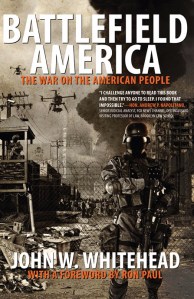
As I make clear in my book Battlefield America: The War on the American People and in its fictional counterpart The Erik Blair Diaries, the time to speak out is now.

As our revolutionary forefathers learned the hard way, once freedom is lost, it is rarely regained without a fight.

Source: https://tinyurl.com/mr2hvf3h

ABOUT JOHN W. WHITEHEAD

Constitutional attorney and author John W. Whitehead is founder and president of The Rutherford Institute. His most recent books are the best-selling Battlefield America: The War on the American People, the award-winning A Government of Wolves: The Emerging American Police State, and a debut dystopian fiction novel, The Erik Blair Diaries. Whitehead can be contacted at staff@rutherford.org. Nisha Whitehead is the Executive Director of The Rutherford Institute. Information about The Rutherford Institute is available at www.rutherford.org.

Publication Guidelines / Reprint Permission

John W. Whitehead’s weekly commentaries are available for publication to newspapers and web publications at no charge. 

“Never has our future been more unpredictable, never have we depended so much on political forces that cannot be trusted to follow the rules of common sense and self-interest — forces that look like sheer insanity, if judged by the standards of other centuries.”—Hannah Arendt, The Origins of Totalitarianism

This has all the makings of a constitutional crisis.

According to law professor Amanda Frost, “a constitutional crisis occurs when one branch of government, usually the executive, ‘blatantly, flagrantly and regularly exceeds its constitutional authority — and the other branches are either unable or unwilling to stop it.’”

Consider for yourself.

The president has gone rogue, doubling down on his belief that “I have the right to do whatever I want as president.”

The vice president believes the president should be a law unto himself, i.e., unaccountable to the other branches of the government.

The Republican-controlled Congress appears to be deaf, dumb and blind to the Executive Branch’s blatantly unconstitutional overreaches.

The courts, which have in recent years largely rubberstamped the government’s power grabs, are ill-prepared to rein in a sitting president who is determined to do whatever he wants, the Constitution be damned.

In fact, the U.S. Supreme Court preemptively gave future presidents the green light to engage in all manner of criminal activities when it ruled 6-3 that presidents have absolute immunity from prosecution, provided the lawbreaking is related to their official duties.

Meanwhile, the Constitution is still missing from the White House’s website.

This last point is not an oversight.

Rather, it speaks volumes about the priorities of the current presidential administration, which operates as if the rule of law does not apply to itself.

Indeed, while President Trump’s predecessors paid lip service to the rule of law while sidestepping it at every opportunity, Trump has been unapologetic about his intentions to set aside whatever legal, moral or political barricades stand in the way of his end goals.

Rule by fiat—when presidents attempt to unilaterally impose their will through the use of executive orders, decrees, memorandums, proclamations, national security directives and legislative signing statements—is an offense to the Constitution.

It was offensive when Biden did it. It was offensive when Obama did it. And it is just as offensive when Trump does it.

Already, Trump has signed more executive orders in his first month than any other president in their first 100 days.

This is not a sign of strength and leadership. This is a red flag.

In bypassing Congress in order to carry out his ambitious agenda to “make America safe again,” “make America affordable and energy dominant again,” “drain the swamp,” and “bring back American values,” the Trump Administration risks transforming the executive branch into something akin to the very entities it often criticizes: an overreaching surveillance state, a nanny state that dictates individual choices, and a police state that prioritizes compliance over freedom.

It is particularly telling that while Trump and his Musk-led Department of Government Efficiency (DOGE) are pledging to lay off huge swaths of federal employees and replace the workforce with artificial intelligence, the police state’s martial law apparatus will remain largely untouched.

This is how you prepare to lock down a nation.

This danger transcends party lines and tests the resilience of our constitutional framework. 

How far will “we the people” allow the Executive Branch to continue to expand its power at the expense of established legal principles and the rule of law?

As much as past occupants of the White House and Congress would like us to believe otherwise, winning an election is not a populist mandate for one-party rule.

This way lies totalitarianism, by way of authoritarianism, and those who insist it can’t happen here need to pay better attention.

It’s happening already.

The following are 15 benchmarks of a totalitarian regime, according to Benjamin Carlson, a former editor at The Atlantic.  

  1. Media is controlled.
  2. Dissent is equated to violence.
  3. Legal system is co-opted by the state.
  4. Power is exerted to prevent dissent.
  5. State police are directed to protect the regime, not the people.
  6. Financial, legal, and civil rights are contingent on compliance.
  7. There is a mass conformity of behaviors and beliefs.
  8. Power is concentrated in an inner ring of people and institutions.
  9. Semi-organized violence is permitted.
  10. Propaganda targets enemies of the state.
  11. Whole classes of people are scapegoated and singled out for persecution.
  12. Extra-legal action against internal enemies is condoned.
  13. Unpredictable and harsh enforcement is used against unfavored classes.
  14. The language of the constitution serves as a facade for the exercise of power.
  15. And all private and public levers of power are used to enforce adherence to state orthodoxy.

To guard against these pitfalls, we must start by understanding the rule of law, and how it functions within our system of checks and balances.

The rule of law is the principle that everyone, including the government—and the president—must obey the law, which is embodied in the U.S. Constitution.

In a nutshell, the Constitution is the social contract—the people’s contract with the government—which outlines our expectations about the role of the government and its limits, a system of checks and balances dependent on a separation of powers, and the rights of the citizenry.

America’s founders established a system of checks and balances to prevent the concentration of power in any single branch. To this end, the Constitution establishes three separate but equal branches of government: the legislative branch, which makes the law; the executive branch, which enforces the law; and the judicial branch, which interprets the law.

As constitutional scholar Linda Monk explains, “Within the separation of powers, each of the three branches of government has ‘checks and balances’ over the other two. For instance, Congress makes the laws, but the President can veto them, and the Supreme Court can declare them unconstitutional. The President enforces the law, but Congress must approve executive appointments and the Supreme Court rules whether executive action is constitutional. The Supreme Court can strike down actions by both the legislative and executive branches, but the President nominates Supreme Court justices, and the Senate confirms or denies their nominations.”

Despite Trump’s attempts to rule by fiat, nowhere in the Constitution is the president granted unilateral authority to act outside these established checks and balances, no matter how well-meaning his intentions might be or how worthy the goals (a balanced budget, safety, economic prosperity, etc.).

Writing for The Washington Post, Alan Charles Raul, general counsel of the Office of Management and Budget under Presidents Reagan and George H.W. Bush, warns that not only is Trump acting extra-constitutionally, i.e., beyond the scope of the Constitution, but he lays out the case for why DOGE itself is unconstitutional:

“The protocols of the Constitution do not permit statutorily mandated agencies and programs to be transformed — or reorganized out of existence — without congressional authorization… The radical reorganization now underway is not just footfaulting over procedural lines; it is shattering the fundamental checks and balances of our constitutional order. The DOGE process, if that is what it is, mocks two basic tenets of our government: that we are nation of laws, not men and that it is Congress which controls spending and passes legislation. The president must faithfully execute Congress’s laws and manage the executive agencies consistent with the Constitution and lawmakers’ appropriations — not by any divine right or absolute power… [T]here is no reading of the Constitution that allows any president to claim that a political mandate, or a political promise made, obviates or supersedes the role for Congress… Even under the most aggressive view of the president’s ‘unitary executive’ control over the entire executive branch and independent agencies, it is Congress’s sole authority to appropriate and legislate for our entire government… [I]n the end, the president is constitutionally stuck with the policies for the federal government that Congress enacts and appropriates. No one man in America is the law — not even a Trump or an Elon Musk.

Allowing the president to bypass established legal procedures in order to prioritize his own power over adherence to the rule of law ultimately undermines the principles of a constitutional government.

Which brings us to the present moment.

With Congress on the sidelines, the momentum is building for a constitutional showdown between the White House and the judiciary.

This is as it should be.

The job of the courts is to maintain the rule of law and serve as the referees in the power struggle between the President and Congress. That delicate balance between the three branches of government was intended to serve as a bulwark against tyranny and a deterrent to any who would overreach.

So for anyone, especially someone who has sworn to uphold and defend the Constitution, to suggest that “judges aren’t allowed to control the executive’s legitimate power” constitutes either an appalling admission of civic illiteracy or a bold-faced attempt to sidestep accountability.

When all is said and done, however, it is supposed to be “we the people” who hold the real power—not the president, not Congress, and not the courts. As the Tenth Amendment proclaims, “The powers not delegated to the United States by the Constitution, nor prohibited by it to the States, are reserved to the States respectively, or to the people.”

The government’s purpose is to serve the people, not the other way around.

Those first three words of the preamble to the Constitution say it all:

“We the People of the United States, in Order to form a more perfect Union, establish Justice, insure domestic Tranquility, provide for the common defense, promote the general Welfare, and secure the Blessings of Liberty to ourselves and our Posterity, do ordain and establish this Constitution for the United States of America.”

This is a government of the people, by the people and for the people.

This is not a monarchy with an imperial ruler. It is not a theocracy with a religious order. It is not a banana republic policed by a junta. It is not a crime syndicate with a mob boss. Nor is it a democracy with mob rule.

So, what’s the answer?

As I point out in my book Battlefield America: The War on the American People and in its fictional counterpart The Erik Blair Diaries, America’s founders were very clear about what to do when the government oversteps.

Bind them down from mischief with the chains of the Constitution, advised Thomas Jefferson.

Take alarm at the first experiment on your freedoms, cautioned James Madison.

And if government leaders attempt to abuse their powers and usurp the rights of the people, get rid of them, warned the Declaration of Independence.

Source: https://tinyurl.com/bdcr9f54

ABOUT JOHN W. WHITEHEAD

Constitutional attorney and author John W. Whitehead is founder and president of The Rutherford Institute. His most recent books are the best-selling Battlefield America: The War on the American People, the award-winning A Government of Wolves: The Emerging American Police State, and a debut dystopian fiction novel, The Erik Blair Diaries. Whitehead can be contacted at staff@rutherford.org. Nisha Whitehead is the Executive Director of The Rutherford Institute. Information about The Rutherford Institute is available at www.rutherford.org.

Publication Guidelines / Reprint Permission

John W. Whitehead’s weekly commentaries are available for publication to newspapers and web publications at no charge. 

WASHINGTON, DC — Should police be made to answer for their reckless actions leading to use of deadly force against unarmed citizens? That’s what the U.S. Supreme Court must decide.

Even as the Trump administration scales back oversight into police misconduct, it appears that the U.S. Supreme Court may be open to overturning the “moment-of-threat doctrine,” which has contributed to a climate where police unnecessarily escalate situations over relatively minor crimes and then respond to the perceived danger with excessive or deadly force. For instance, an Illinois sheriff’s deputy shot and killed Sonya Massey in her home after the deputy terrified her to seek cover by unnecessarily drawing his gun and then placed himself in close proximity to where he claimed she might throw hot water on him. In Ohio, pregnant mother Ta’Kiya Young was killed by a police officer who chose to place himself in front of her car as she slowly pulled out of her parking space. And in Arizona, police officers repeatedly punched and tasered Tyron McAlpin, who is deaf and has cerebral palsy, due to his startled response when the officers suddenly jumped out of their car at him. Weighing in on Barnes v. Felix, The Rutherford Institute warned that the “moment-of-threat doctrine” not only violates established Fourth Amendment principles for determining what constitutes a reasonable use of force, but it also encourages police to act recklessly with impunity

“In an age when police are increasingly militarized, weaponized and protected by the courts, run-of-the mill encounters between police and citizens are now inherently dangerous for any individual unlucky enough to be in a situation where police are inclined to respond to perceived challenges to their ‘authority’ by drawing and using their weapons,” said constitutional attorney John W. Whitehead, president of The Rutherford Institute and author of Battlefield America: The War on the American People. “Unfortunately, this mindset that any challenge to police authority is a threat that needs to be ‘neutralized’ is a dangerous one that is part of a greater nationwide trend that sets law enforcement officers beyond the reach of the Fourth Amendment.”

In the afternoon of April 28, 2016, a Harris County Texas police officer initiated a traffic stop of Ashtian Barnes due to a report by the Toll Road Authority that the license plate number on his vehicle had outstanding toll violations. When asked for proof of insurance, Barnes explained that the car had been rented a week earlier by his girlfriend and the documentation might be in the trunk. The officer claimed he smelled marijuana and ordered Barnes to open the trunk. A few seconds after Barnes opened the trunk, the car’s blinker toward the side of the Tollway to which Barnes pulled over turned off for about ten seconds. Once the same blinker turned back on, the officer shouted at Barnes not to move, stepped onto the door sill where the driver-side door was open, and shoved his gun into Barnes’s head. At that point, the car started to move, and the officer fired two shots into the car, killing Barnes. The incident was recorded on video. Barnes’s parents filed a lawsuit arguing that Barnes did not pose a threat justifying deadly force, especially in light of the fact that the officer jumped onto the car, but the trial court dismissed the case, concluding that the officer’s use of deadly force was “presumptively reasonable” because the moment of threat occurred when the officer was hanging onto the moving vehicle and feared for his safety. The Fifth Circuit Court of Appeals affirmed the dismissal under its moment-of-threat doctrine, and the Supreme Court subsequently agreed to review the case on appeal.

Angela M. Liu, Peter J. McGinley, Christopher J. Merken, Steven Oberlander, Shane Sanderson, and Luke D. Yamulla of Dechert LLP advanced the arguments in the Barnes v. Felix amicus briefs.

The Rutherford Institute, a nonprofit civil liberties organization, defends individuals whose constitutional rights have been threatened or violated and educates the public on a wide spectrum of issues affecting their freedoms.

Source: https://tinyurl.com/zdppzwry

“The relationship between the President and the people he serves has shifted irrevocably. In every use of official power, the President is now a king above the law.”—Justice Sonia Sotomayor dissenting in Trump v. United States

The U.S. Supreme Court has made it official: the president of the United States can now literally get away with murder.

In a devastating 6-3 ruling in Trump v. United States that is equal parts politically short-sighted, self-servingly partisan, and utterly devoid of any pretense that the president is anything other than a dictator, the Supreme Court has validated what Richard Nixon once claimed: “When the president does it, that means that it is not illegal.”

As Justice Sotomayor concluded in her powerful dissent:

“The President of the United States is the most powerful person in the country, and possibly the world. When he uses his official powers in any way, under the majority’s reasoning, he now will be insulated from criminal prosecution. Orders the Navy’s Seal Team 6 to assassinate a political rival? Immune. Organizes a military coup to hold onto power? Immune. Takes a bribe in exchange for a pardon? Immune. Immune, immune, immune. Let the President violate the law, let him exploit the trappings of his office for personal gain, let him use his official power for evil ends. Because if he knew that he may one day face liability for breaking the law, he might not be as bold and fearless as we would like him to be. That is the majority’s message today. Even if these nightmare scenarios never play out, and I pray they never do, the damage has been done.”

The damage has indeed been done. Indubitably. Irrevocably. Unarguably.

Every American should be outraged, offended and afraid of what this ruling means for the future of our nation.

There can be no more pretending that we live in a constitutional republic. It’s all out in the open now. This is a dictatorship: Hitler has finally stepped out of the shadows.

The rule of law may have been on life support for a long time, but this ruling pulls the plug.

The facts of the case itself, which asks whether former president Donald Trump is immune from prosecution on charges that he attempted to overturn the 2020 presidential election, are less important than the ramifications of this ruling, which go so far as to dramatically expand the power of the presidency, rendering whoever occupies the Oval Office lawless and unaccountable.

This is exactly how tyranny rises and freedom falls.

In a textbook example of doublespeak, Chief Justice John Roberts, writing for the Supreme Court’s six-person conservative majority, essentially declared that presidents are not above the law and then turned right around and ensured that president can do whatever they want in their official capacity without being held accountable or criminally liable.

As Roberts noted, “We conclude that under our constitutional structure of separated powers, the nature of presidential power requires that a former president have some immunity from criminal prosecution for official acts during his tenure in office. At least with respect to the President’s exercise of his core constitutional powers, this immunity must be absolute.”

Here’s the thing, however: this isn’t anything new. Not really.

Although the Constitution invests the President with very specific, limited powers, in recent years, American presidents have claimed the power to completely and almost unilaterally alter the landscape of this country for good or for ill. The powers amassed by each successive president through the negligence of Congress and the courts—powers which add up to a toolbox of terror for an imperial ruler—empower whoever occupies the Oval Office to act as a dictator, above the law and beyond any real accountability.

As law professor William P. Marshall explains, “every extraordinary use of power by one President expands the availability of executive branch power for use by future Presidents.”

Moreover, it doesn’t even matter whether other presidents have chosen not to take advantage of any particular power, because “it is a President’s action in using power, rather than forsaking its use, that has the precedential significance.”

In other words, each successive president continues to add to his office’s list of extraordinary orders and directives, expanding the reach and power of the presidency and granting him- or herself near dictatorial powers.

All of the imperial powers amassed by past presidents—to kill American citizens without due process, to detain suspects indefinitely, to strip Americans of their citizenship rights, to carry out mass surveillance on Americans without probable cause, to suspend laws during wartime, to disregard laws with which he might disagree, to conduct secret wars and convene secret courts, to sanction torture, to sidestep the legislatures and courts with executive orders and signing statements, to direct the military to operate beyond the reach of the law, to operate a shadow government, and to act as a dictator and a tyrant, above the law and beyond any real accountability—were passed from Clinton to Bush to Obama to Trump to Biden and will be passed along to the next president.

These presidential powers—acquired through the use of executive orders, decrees, memorandums, proclamations, national security directives and legislative signing statements and which can be activated by any sitting president—enable past, president and future presidents to operate above the law and beyond the reach of the Constitution.

These are the powers that continue to be passed along to each successive heir to the Oval Office, the Constitution be damned.

So you see, the Supreme Court didn’t make the president a dictator. It merely confirmed what we’ve been warning about all along: the president is already an imperial, unaccountable and unconstitutional dictator with permanent powers.

Absolute power absolutely corrupted the presidency.

As for Trump, his concept of power, immunity and the presidency has always been troubling, self-serving and corrupt.

For instance, in 2016, Trump bragged, “I could stand in the middle of Fifth Avenue and shoot somebody and wouldn’t lose any voters, okay?”

In 2019, Trump declared, “I have to the right to do whatever I want as president.

And in 2023, Trump promised if he were reelected to only be a dictator on “day one.”

Any presidential candidate who promises to be a dictator on day one will be a dictator-in-chief for life. The government does not voluntarily relinquish those powers once it acquires, uses and inevitably abuses them.

As political science professor Gene Sharp warned, “Dictators are not in the business of allowing elections that could remove them from their thrones.”

Which brings me back to the Supreme Court’s ruling on July 1, 2024, which was handed down mere days before the nation celebrates the anniversary of its declaration of independence from the heavy-handed tyranny of King George.

A document seething with outrage over a government which had betrayed its citizens, the Declaration of Independence was signed on July 4, 1776, by 56 men who laid everything on the line, pledged it all—“our Lives, our Fortunes, and our sacred Honor”—because they sought to free the American people from the reign of a dictatorial British emperor and believed in a radical idea: that all people are created to be free.

Labeled traitors, these men were charged with treason, a crime punishable by death. For some, their acts of rebellion would cost them their homes and their fortunes. For others, it would be the ultimate price—their lives.

Yet even knowing the heavy price they might have to pay, these men dared to speak up when silence could not be tolerated. Even after they had won their independence from Great Britain, these new Americans worked to ensure that the rights they had risked their lives to secure would remain secure for future generations.

The result: our Bill of Rights, the first ten amendments to the Constitution.

Imagine the shock and outrage these 56 men would feel were they to discover that 248 years later, the government they had risked their lives to create has been transformed into a militaristic police state in which exercising one’s freedoms—at a minimum, merely questioning a government agent—is often viewed as a flagrant act of defiance.

In fact, had the Declaration of Independence been written today, it would have rendered its signers extremists or terrorists, resulting in them being placed on a government watch list, targeted for surveillance of their activities and correspondence, and potentially arrested, held indefinitely, stripped of their rights and labeled enemy combatants.

Read the Declaration of Independence again, and ask yourself if the list of complaints tallied by Jefferson don’t bear a startling resemblance to the abuses “we the people” are suffering at the hands of the American police state.

In the 248 years since early Americans first declared and eventually won their independence from Great Britain, “we the people” have managed to work ourselves right back under the tyrant’s thumb.

Only this time, the tyrant is one of our own making. The abuses meted out by an imperial government and endured by the American people have not ended. They have merely evolved.

Given the fact that America is a relatively young nation, it hasn’t taken very long for an authoritarian regime to creep into power.

Unfortunately, the bipartisan coup that laid siege to our nation did not happen overnight.

It snuck in under our radar, hiding behind the guise of national security, the war on drugs, the war on terror, the war on immigration, political correctness, hate crimes and a host of other official-sounding programs aimed at expanding the government’s power at the expense of individual freedoms.

The building blocks for the bleak future we’re just now getting a foretaste of—police shootings of unarmed citizens, profit-driven prisons, weapons of compliance, a wall-to-wall surveillance state, pre-crime programs, a suspect society, school-to-prison pipelines, militarized police, overcriminalization, SWAT team raids, endless wars, etc.—were put in place by government officials we trusted to look out for our best interests.

Yet as I make clear in my book Battlefield America: The War on the American People and in its fictional counterpart The Erik Blair Diaries, that does not mean we should give up or give in or tune out.

Folks, if ever there were a time to declare our independence from tyranny, it’s now.

Source: https://tinyurl.com/fk7jb787

ABOUT JOHN W. WHITEHEAD

Constitutional attorney and author John W. Whitehead is founder and president of The Rutherford Institute. His most recent books are the best-selling Battlefield America: The War on the American People, the award-winning A Government of Wolves: The Emerging American Police State, and a debut dystopian fiction novel, The Erik Blair Diaries. Whitehead can be contacted at staff@rutherford.org. Nisha Whitehead is the Executive Director of The Rutherford Institute. Information about The Rutherford Institute is available at www.rutherford.org.

Publication Guidelines / Reprint Permission

John W. Whitehead’s weekly commentaries are available for publication to newspapers and web publications at no charge.

No one should get used to their rights. Predicting with certainty which ones, if any, will go, or when, is impossible.”—Mary R. Ziegler, legal historian

The Supreme Court has spoken: there will be no consequences for cops who brutalize the citizenry and no justice for the victims of police brutality.

Although the Court’s 2021-22 rulings on qualified immunity for police who engage in official misconduct were largely overshadowed by its politically polarizing rulings on abortion, gun ownership and religion, they were no less devastating.

The doctrine of qualified immunity was intended to insulate government officials from frivolous lawsuits, but the real purpose of qualified immunity is to ensure that government officials are not held accountable for official misconduct.

In Egbert v. Boule, the Court gave total immunity to Border Patrol agents who beat up a bed-and-breakfast owner, in the process carving out a massive exception to the Fourth Amendment for border police (and by extension, other federal police) who unconstitutionally use excessive force. As journalist Ian Millhiser concludes, “Egbert v. Boule is a severe blow to the proposition that law enforcement must obey the Constitution.”

In Cope v. Cogdill, the Court let stand a Fifth Circuit ruling that granted qualified immunity to jail officials who watched a suicidal inmate strangle himself without intervening or calling for help. Likewise, in Ramirez v. Guadarrama, the Court let stand a lower court ruling granting qualified immunity to police officers who fired their tasers at a suicidal man who had doused himself in gasoline, causing the man to burst into flames.

Both Cope and Ramirez move the goal posts for the kind of misconduct that merits qualified immunity, suggesting that even sheer incompetence is excusable when it involves a cop.

It’s a chilling reminder that in the American police state, ‘we the people’ are at the mercy of law enforcement officers who have almost absolute discretion to decide who is a threat, what constitutes resistance, and how harshly they can deal with the citizens they were appointed to ‘serve and protect.”

This is how unarmed Americans keep dying at the hands of militarized police.

Under the guise of qualified immunity, there have been no consequences for police who destroyed a private home by bombarding it with tear gas grenades during a SWAT team raid gone awry, or for the cop who mistakenly shot a 10-year-old boy after aiming for and missing the non-threatening family dog, or for the arresting officer who sicced a police dog on a suspect who had already surrendered.

Qualified immunity is how the police state stays in power.

Although the U.S. Supreme Court recognized in Harlow v. Fitzgerald (1982) that suing government officials for monetary damages is “the only realistic avenue” of holding them accountable for abusing their offices and violating the Constitution, it has ostensibly given the police and other government agents a green light to shoot first and ask questions later, as well as to probe, poke, pinch, taser, search, seize, strip and generally manhandle anyone they see fit in almost any circumstance, all with the general blessing of the courts.

Whether it’s police officers breaking through people’s front doors and shooting them dead in their homes or strip searching motorists on the side of the road, these instances of abuse are continually validated by a judicial system that kowtows to virtually every police demand, no matter how unjust, no matter how in opposition to the Constitution.

Make no mistake about it: this is what constitutes “law and order” in the American police state.

These are the hallmarks of a police state: where police officers, no longer mere servants of the people entrusted with keeping the peace, are part of an elite ruling class dependent on keeping the masses corralled, under control, and treated like suspects and enemies rather than citizens.

Unfortunately, we’ve been traveling this dangerous road for a long time now.

A review of critical court rulings over the past several decades, including rulings affirming qualified immunity protections for government agents by the U.S. Supreme Court, reveals a startling and steady trend towards pro-police state rulings by an institution concerned more with establishing order, protecting the ruling class, and insulating government agents from charges of wrongdoing than with upholding the rights enshrined in the Constitution.

Indeed, as Reuters reports, qualified immunity “has become a nearly failsafe tool to let police brutality go unpunished and deny victims their constitutional rights.” Worse, as Reuters concluded, “the Supreme Court has built qualified immunity into an often insurmountable police defense by intervening in cases mostly to favor the police.”

For instance, police can claim qualified immunity for warrantless searches. In Anderson v. Creighton, the Supreme Court ruled that FBI and state law enforcement agents were entitled to qualified immunity protections after they were sued for raiding a private home without a warrant and holding family members at gunpoint, all in a search for a suspected bank robber who was not in the house.

Police can claim qualified immunity for using excessive force against protesters. In Saucier v. Katz, the Court ruled in favor of federal law enforcement agents who forcefully tackled a protester as he attempted to unfurl a banner at Vice President Gore’s political rally. The Court reasoned that the officers acted reasonably given the urgency of protecting the vice president.

Police can claim qualified immunity for shooting a fleeing suspect in the back. In Brosseau v. Haugen, the Court dismissed a lawsuit against a police officer who shot Kenneth Haugen in the back as he entered his car in order to flee from police. The Court ruled that in light of existing case law, the cop’s conduct fell in the “hazy border between excessive and acceptable force” and so she did not violate clearly established law.

Police can claim qualified immunity for shooting a mentally impaired person. In City of San Francisco v. Sheehan, the Court ruled in favor of police who repeatedly shot Teresa Sheehan during the course of a mental health welfare check. The Court ruled that it was not unreasonable for police to pepper spray and shoot Sheehan multiple times after entering her room without a warrant and encountering her holding a knife.

Police officers can use lethal force in car chases without fear of lawsuits. In Plumhoff v. Rickard, the U.S. Supreme Court declared that police officers who used deadly force to terminate a car chase were immune from a lawsuit. The officers were accused of needlessly resorting to deadly force by shooting multiple times at a man and his passenger in a stopped car, killing both individuals.

Police can stop, arrest and search citizens without reasonable suspicion or probable cause. In a 5-3 ruling in Utah v. Strieff, the U.S. Supreme Court effectively gave police the go-ahead to embark on a fishing expedition of one’s person and property, rendering Americans completely vulnerable to the whims of any cop on the beat.

Police officers can stop cars based on “anonymous” tips or for “suspicious” behavior such as having a reclined car seat or driving too carefully. In a 5-4 ruling in Navarette v. California, the U.S. Supreme Court declared that police officers, under the guise of “reasonable suspicion,” can stop cars and question drivers based solely on anonymous tips, no matter how dubious, and whether or not they themselves witnessed any troubling behavior. Then in State v. Howard, the Kansas Supreme Court declared that motorists who recline their car seats are guilty of suspicious behavior and can be subject to warrantless searches by police. That ruling, coupled with other court rulings upholding warrantless searches and seizures by police renders one’s car a Constitution-free zone.

Americans have no protection against mandatory breathalyzer tests at a police checkpoint, although mandatory blood draws violate the Fourth Amendment (Birchfield v. North Dakota). Police can also conduct sobriety and “information-seeking” checkpoints (Illinois v. Lidster and Mich. Dep’t of State Police v. Sitz).

Police can forcibly take your DNA, whether or not you’ve been convicted of a crime. In Maryland v. King, a divided U.S. Supreme Court determined that a person arrested for a crime who is supposed to be presumed innocent until proven guilty must submit to forcible extraction of their DNA. Once again the Court sided with the guardians of the police state over the defenders of individual liberty in determining that DNA samples may be extracted from people arrested for “serious” offenses. The end result of the ruling paves the way for a nationwide dragnet of suspects targeted via DNA sampling.

Police can use the “fear for my life” rationale as an excuse for shooting unarmed individuals. Upon arriving on the scene of a nighttime traffic accident, an Alabama police officer shot a driver exiting his car, mistakenly believing the wallet in his hand to be a gun. A report by the Justice Department found that half of the unarmed people shot by one police department over a seven-year span were “shot because the officer saw something (like a cellphone) or some action (like a person pulling at the waist of their pants) and misidentified it as a threat.”

Police have free reign to use drug-sniffing dogs as “search warrants on leashes.” In Florida v. Harris, a unanimous U.S. Supreme Court determined that police officers may use highly unreliable drug-sniffing dogs to conduct warrantless searches of cars during routine traffic stops. The ruling turns man’s best friend into an extension of the police state, provided the use of a K-9 unit takes place within a reasonable amount of time (Rodriguez v. United States).

Not only are police largely protected by qualified immunity, but police dogs are also off the hook for wrongdoing. The Fourth Circuit Court of Appeals ruled in favor of a police officer who allowed a police dog to maul a homeless man innocent of any wrongdoing.

Police can subject Americans to strip searches, no matter the “offense.” A divided U.S. Supreme Court actually prioritized making life easier for overworked jail officials over the basic right of Americans to be free from debasing strip searches. In its 5-4 ruling in Florence v. Burlington, the Court declared that any person who is arrested and processed at a jail house, regardless of the severity of his or her offense (i.e., they can be guilty of nothing more than a minor traffic offense), can be subjected to a strip search by police or jail officials, which involves exposing the genitals and the buttocks. This “license to probe” is now being extended to roadside stops, as police officers throughout the country have begun performing roadside strip searches—some involving anal and vaginal probes—without any evidence of wrongdoing and without a warrant.

Police can break into homes without a warrant, even if it’s the wrong home. In an 8-1 ruling in Kentucky v. King, the U.S. Supreme Court placed their trust in the discretion of police officers, rather than in the dictates of the Constitution, when they gave police greater leeway to break into homes or apartments without a warrant. Despite the fact that the police in question ended up pursuing the wrong suspect, invaded the wrong apartment and violated just about every tenet that stands between us and a police state, the Court sanctioned the warrantless raid, leaving Americans with little real protection in the face of all manner of abuses by police.

Police can use knock-and-talk tactics as a means of sidestepping the Fourth Amendment. Aggressive “knock and talk” practices have become thinly veiled, warrantless exercises by which citizens are coerced and intimidated into “talking” with heavily armed police who “knock” on their doors in the middle of the night. Andrew Scott didn’t even get a chance to say no to such a heavy-handed request before he was gunned down by police who pounded aggressively on the wrong door at 1:30 a.m., failed to identify themselves as police, and then repeatedly shot and killed the man when he answered the door while holding a gun in self-defense.

Police can carry out no-knock raids if they believe announcing themselves would be dangerous. Police can perform a “no-knock” raid as long as they have a reasonable suspicion that knocking and announcing their presence, under the particular circumstances, would be dangerous or futile or give occupants a chance to destroy evidence of a crime (Richards v. Wisconsin). Legal ownership of a firearm is also enough to justify a no-knock raid by police (Quinn v. Texas). For instance, a Texas man had his home subject to a no-knock, SWAT-team style forceful entry and raid based solely on the suspicion that there were legally-owned firearms in his household. The homeowner was actually shot by police through his closed bedroom door.

Police can recklessly open fire on anyone that might be “armed.” Philando Castile was shot and killed during a routine traffic stop allegedly over a broken taillight merely for telling police he had a conceal-and-carry permit. That’s all it took for police to shoot Castile four times in the presence of his girlfriend and her 4-year-old daughter. A unanimous Supreme Court declared in County of Los Angeles vs. Mendez that police should not be held liable for recklessly firing 15 times into a shack where a homeless couple had been sleeping because the grabbed his BB gun in defense, fearing they were being attacked.

Police can destroy a home during a SWAT raid, even if the owner gives their consent to enter and search it. In West v. Winfield, the Supreme Court provided cover to police after they smashed the windows of Shaniz West’s home, punched holes in her walls and ceilings, and bombed the house with so much tear gas that it was uninhabitable for two months. All of this despite the fact that the suspect they were pursuing was not in the house and West, the homeowner, agreed to allow police to search the home to confirm that.

Police can suffocate someone, deliberately or inadvertently, in the process of subduing them. “I can’t breathe” has become a rallying cry following the deaths of Eric Garner and George Floyd, both of whom died after being placed in a chokehold by police. Dozens more have died in similar circumstances at the hands of police who have faced little repercussions for these deaths.

Clearly, as I make clear in my book Battlefield America: The War on the American People and in its fictional counterpart The Erik Blair Diaries, the system is rigged.

Because the system is rigged, because the government is corrupt, and because the U.S. Supreme Court has consistently chosen to protect the police at the expense of the people, we are dealing with a nationwide epidemic of court-sanctioned police violence carried out with impunity against individuals posing little or no real threat.

This is how “we the people” keep losing.

Source: https://bit.ly/3NMzEgX

ABOUT JOHN W. WHITEHEAD

Constitutional attorney and author John W. Whitehead is founder and president of The Rutherford Institute. His most recent books are the best-selling Battlefield America: The War on the American People, the award-winning A Government of Wolves: The Emerging American Police State, and a debut dystopian fiction novel, The Erik Blair Diaries. Whitehead can be contacted at staff@rutherford.org. Nisha Whitehead is the Executive Director of The Rutherford Institute. Information about The Rutherford Institute is available at www.rutherford.org.

Publication Guidelines / Reprint Permission

John W. Whitehead’s weekly commentaries are available for publication to newspapers and web publications at no charge. Please contact staff@rutherford.org to obtain reprint permission.
United States Supreme Court Building

“The Constitution is not neutral. It was designed to take the government off the backs of the people.”—Justice William O. Douglas

The U.S. Supreme Court will not save us.

It doesn’t matter which party gets to pick the replacement to fill Justice Ruth Bader Ginsberg’s seat on the U.S. Supreme Court. The battle that is gearing up right now is yet more distraction and spin to keep us oblivious to the steady encroachment on our rights by the architects of the American Police State.

Americans can no longer rely on the courts to mete out justice.

Although the courts were established to serve as Courts of Justice, what we have been saddled with, instead, are Courts of Order. This is true at all levels of the judiciary, but especially so in the highest court of the land, the U.S. Supreme Court, which is seemingly more concerned with establishing order and protecting government interests than with upholding the rights of the people enshrined in the U.S. Constitution.

As a result, the police and other government agents have been generally empowered to probe, poke, pinch, taser, search, seize, strip and generally manhandle anyone they see fit in almost any circumstance, all with the general blessing of the courts.

Rarely do the concerns of the populace prevail.

When presented with an opportunity to loosen the government’s noose that keeps getting cinched tighter and tighter around the necks of the American people, what does our current Supreme Court usually do?

It ducks. Prevaricates. Remains silent. Speaks to the narrowest possible concern.

More often than not, it gives the government and its corporate sponsors the benefit of the doubt, which leaves “we the people” hanging by a thread.

Rarely do the justices of the U.S. Supreme Court— preoccupied with their personal politics, cocooned in a world of privilege, partial to those with power, money and influence, and narrowly focused on a shrinking docket (the court accepts on average 80 cases out of 8,000 each year)—venture beyond their rarefied comfort zones.

Every so often, the justices toss a bone to those who fear they have abdicated their allegiance to the Constitution. Too often, however, the Supreme Court tends to march in lockstep with the police state.

In recent years, for example, the Court has ruled that police officers can use lethal force in car chases without fear of lawsuits; police officers can stop cars based only on “anonymous” tips; Secret Service agents are not accountable for their actions, as long as they’re done in the name of “security”; citizens only have a right to remain silent if they assert it; police have free reign to use drug-sniffing dogs as “search warrants on leashes,” justifying any and all police searches of vehicles stopped on the roadside; police can forcibly take your DNA, whether or not you’ve been convicted of a crime; police can stop, search, question and profile citizens and non-citizens alike; police can subject Americans to virtual strip searches, no matter the “offense”; police can break into homes without a warrant, even if it’s the wrong home; and it’s a crime to not identify yourself when a policeman asks your name.

The cases the Supreme Court refuses to hear, allowing lower court judgments to stand, are almost as critical as the ones they rule on. Some of these cases have delivered devastating blows to the lives and rights enshrined in the Constitution. By remaining silent, the Court has affirmed that: legally owning a firearm is enough to justify a no-knock raid by police; the military can arrest and detain American citizens; students can be subjected to random lockdowns and mass searches at school; and police officers who don’t know their actions violate the law aren’t guilty of breaking the law.

You think you’ve got rights? Think again.

All of those freedoms we cherish—the ones enshrined in the Constitution, the ones that affirm our right to free speech and assembly, due process, privacy, bodily integrity, the right to not have police seize our property without a warrant, or search and detain us without probable cause—amount to nothing when the government and its agents are allowed to disregard those prohibitions on government overreach at will.

This is the grim reality of life in the American police state.

In fact, our so-called rights have been reduced to technicalities in the face of the government’s ongoing power grabs.

In the police state being erected around us, the police can probe, poke, pinch, taser, search, seize, strip and generally manhandle anyone they see fit in almost any circumstance, all with the general blessing of the courts.

This is what one would call a slow death by a thousand cuts, only it’s the Fourth Amendment being inexorably bled to death by the very institution that is supposed to be protecting it (and us) from government abuse.

Remember, it was a unanimous Supreme Court which determined that police officers may use drug-sniffing dogs to conduct warrantless searches of cars during routine traffic stops. That same Court gave police the green light to taser defenseless motorists, strip search non-violent suspects arrested for minor incidents, and break down people’s front doors without evidence that they have done anything wrong.

Make no mistake about it: this is what constitutes “law and order” in the American police state.

These are the hallmarks of the emerging American police state, where police officers, no longer mere servants of the people entrusted with keeping the peace, are part of an elite ruling class dependent on keeping the masses corralled, under control, and treated like suspects and enemies rather than citizens.

Whether it’s police officers breaking through people’s front doors and shooting them dead in their homes or strip searching motorists on the side of the road, in a police state such as ours, these instances of abuse are not condemned by the government. Rather, they are continually validated by a judicial system that kowtows to every police demand, no matter how unjust, no matter how in opposition to the Constitution.

The system is rigged.

Because the system is rigged and the U.S. Supreme Court—the so-called “people’s court”—has exchanged its appointed role as a gatekeeper of justice for its new role as maintainer of the status quo, the police state will keep winning and “we the people” will keep losing.

By refusing to accept any of the eight or so qualified immunity cases before it this past term that strove to hold police accountable for official misconduct, the Supreme Court delivered a chilling reminder that in the American police state, ‘we the people’ are at the mercy of law enforcement officers who have almost absolute discretion to decide who is a threat, what constitutes resistance, and how harshly they can deal with the citizens they were appointed to ‘serve and protect.”

This is how qualified immunity keeps the police state in power.

Lawyers tend to offer a lot of complicated, convoluted explanations for the doctrine of qualified immunity, which was intended to insulate government officials from frivolous lawsuits, but the real purpose of qualified immunity is to rig the system, ensuring that abusive agents of the government almost always win and the victims of government abuse almost always lose.

How else do you explain a doctrine that requires victims of police violence to prove that their abusers knew their behavior was illegal because it had been deemed so in a nearly identical case at some prior time?

It’s a setup for failure.

A review of critical court rulings over the past several decades, including rulings affirming qualified immunity protections for government agents by the U.S. Supreme Court, reveals a startling and steady trend towards pro-police state rulings by an institution concerned more with establishing order, protecting the ruling class, and insulating government agents from charges of wrongdoing than with upholding the rights enshrined in the Constitution.

Indeed, as Reuters reports, qualified immunity “has become a nearly failsafe tool to let police brutality go unpunished and deny victims their constitutional rights.”

Worse, as Reuters concluded, “the Supreme Court has built qualified immunity into an often insurmountable police defense by intervening in cases mostly to favor the police.”

For those in need of a reminder of all the ways in which the Supreme Court has made us sitting ducks at the mercy of the American police state, let me offer the following.

As a result of court rulings in recent years, police can claim qualified immunity for warrantless searches. Police can claim qualified immunity for warrantless arrests based on mere suspicion. Police can claim qualified immunity for using excessive force against protesters. Police can claim qualified immunity for shooting a fleeing suspect in the back. Police can claim qualified immunity for shooting a mentally impaired person. Police officers can use lethal force in car chases without fear of lawsuits. Police can stop, arrest and search citizens without reasonable suspicion or probable cause.  Police officers can stop cars based on “anonymous” tips or for “suspicious” behavior such as having a reclined car seat or driving too carefully. Police can forcibly take your DNA, whether or not you’ve been convicted of a crime.  Police can use the “fear for my life” rationale as an excuse for shooting unarmed individuals. Police have free reign to use drug-sniffing dogs as “search warrants on leashes.” Not only are police largely protected by qualified immunity, but police dogs are also off the hook for wrongdoing.

Police can subject Americans to strip searches, no matter the “offense.” Police can break into homes without a warrant, even if it’s the wrong home. Police can use knock-and-talk tactics as a means of sidestepping the Fourth Amendment. Police can carry out no-knock raids if they believe announcing themselves would be dangerous. Police can recklessly open fire on anyone that might be “armed.” Police can destroy a home during a SWAT raid, even if the owner gives their consent to enter and search it. Police can suffocate someone, deliberately or inadvertently, in the process of subduing them.

To sum it up, we are dealing with a nationwide epidemic of court-sanctioned police violence carried out with impunity against individuals posing little or no real threat. In this way, the justices of the United States Supreme Court—through their deference to police power, preference for security over freedom, and evisceration of our most basic rights for the sake of order and expediency—have become the architects of the American police state.

So where does that leave us?

For those deluded enough to believe that they’re living the American dream—where the government represents the people, where the people are equal in the eyes of the law, where the courts are arbiters of justice, where the police are keepers of the peace, and where the law is applied equally as a means of protecting the rights of the people—it’s time to wake up.

We no longer have a representative government, a rule of law, or justice.

Liberty has fallen to legalism. Freedom has fallen to fascism.

Justice has become jaded, jaundiced and just plain unjust.

And for too many, the American dream of freedom and opportunity has turned into a living nightmare.

Given the turbulence of our age, with its police overreach, military training drills on American soil, domestic surveillance, SWAT team raids, asset forfeiture, wrongful convictions, profit-driven prisons, and corporate corruption, the need for a guardian of the people’s rights has never been greater.

Yet as I make clear in my book Battlefield America: The War on the American People, neither the president, nor the legislatures, nor the courts will save us from the police state that holds us in its clutches.

So we can waste our strength over the next few weeks and months raging over the makeup of the Supreme Court or we can stand united against the tyrant in our midst.

After all, the president, the legislatures, and the courts are all on the government’s payroll.

They are the police state.

Source: https://bit.ly/3iQ0Bl2

ABOUT JOHN W. WHITEHEAD

Constitutional attorney and author John W. Whitehead is founder and president of The Rutherford Institute. His new book Battlefield America: The War on the American People  is available at www.amazon.com. Whitehead can be contacted at johnw@rutherford.org.

Publication Guidelines / Reprint Permission

John W. Whitehead’s weekly commentaries are available for publication to newspapers and web publications at no charge. Please contact staff@rutherford.org to obtain reprint permission.
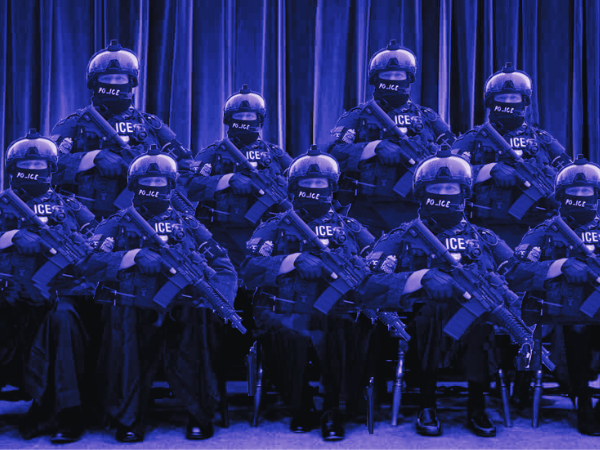
 

“What’s been most striking to me is just how one-sided the rules are when Americans take on their own government…. It has been dismaying to learn the extent to which rules and laws shield the government from accountability for its abuses—or even lawbreaking…. It’s been a long and frightening lesson…. The rules seem rigged to protect government lawlessness, and the playing field is uneven. Too many processes favor the government. The deck is still stacked.” —  Journalist Sharyl Attkisson

The system is rigged.

The system is rigged, the government is corrupt, and “we the people” continue to waste our strength by fighting each other rather than standing against the tyrant in our midst.

Because the system is rigged, because the government is corrupt, and because “we the people” remain polarized and divided, the police state will keep winning and “we the people” will keep losing.

Because the system is rigged and the U.S. Supreme Court—the so-called “people’s court”—has exchanged its appointed role as a gatekeeper of justice for its new role as maintainer of the status quo, there will be little if no consequences for the cops who brutalize and no justice for the victims of police brutality.

Because the system is rigged, there will be no consequences for police who destroyed a private home by bombarding it with tear gas grenades during a SWAT team raid gone awry, or for the cop who mistakenly shot a 10-year-old boy after aiming for and missing the non-threatening family dog, or for the arresting officer who sicced a police dog on a suspect who had already surrendered.

This is how unarmed Americans keep dying at the hands of militarized police.

By refusing to accept any of the eight or so qualified immunity cases before it this term that strove to hold police accountable for official misconduct, the Supreme Court delivered a chilling reminder that in the American police state, ‘we the people’ are at the mercy of law enforcement officers who have almost absolute discretion to decide who is a threat, what constitutes resistance, and how harshly they can deal with the citizens they were appointed to ‘serve and protect.”

This is how qualified immunity keeps the police state in power.

Lawyers tend to offer a lot of complicated, convoluted explanations for the doctrine of qualified immunity, which was intended to insulate government officials from frivolous lawsuits, but the real purpose of qualified immunity is to rig the system, ensuring that abusive agents of the government almost always win and the victims of government abuse almost always lose.

How else do you explain a doctrine that requires victims of police violence to prove that their abusers knew their behavior was illegal because it had been deemed so in a nearly identical case at some prior time: it’s a setup for failure.

Do you know how many different ways a cop can kill, maim, torture and abuse someone without being held liable?

The cops know: in large part due to training classes that drill them on the art of sidestepping the Fourth Amendment, which protects us from being bullied, badgered, beaten, broken and spied on by government agents.

This is how “we the people” keep losing.

Although the U.S. Supreme Court recognized in Harlow v. Fitzgerald (1982) that suing government officials for monetary damages is “the only realistic avenue” of holding them accountable for abusing their offices and violating the Constitution, it has ostensibly given the police and other government agents a green light to shoot first and ask questions later, as well as to probe, poke, pinch, taser, search, seize, strip and generally manhandle anyone they see fit in almost any circumstance, all with the general blessing of the courts.

Whether it’s police officers breaking through people’s front doors and shooting them dead in their homes or strip searching motorists on the side of the road, these instances of abuse are continually validated by a judicial system that kowtows to virtually every police demand, no matter how unjust, no matter how in opposition to the Constitution.

Make no mistake about it: this is what constitutes “law and order” in the American police state.

These are the hallmarks of a police state: where police officers, no longer mere servants of the people entrusted with keeping the peace, are part of an elite ruling class dependent on keeping the masses corralled, under control, and treated like suspects and enemies rather than citizens.

Unfortunately, we’ve been traveling this dangerous road for a long time now.

A review of critical court rulings over the past several decades, including rulings affirming qualified immunity protections for government agents by the U.S. Supreme Court, reveals a startling and steady trend towards pro-police state rulings by an institution concerned more with establishing order, protecting the ruling class, and insulating government agents from charges of wrongdoing than with upholding the rights enshrined in the Constitution.

Indeed, as Reuters reports, qualified immunity “has become a nearly failsafe tool to let police brutality go unpunished and deny victims their constitutional rights.” Worse, as Reuters concluded, “the Supreme Court has built qualified immunity into an often insurmountable police defense by intervening in cases mostly to favor the police.”

The system is rigged.

Police can claim qualified immunity for warrantless searches. In Anderson v. Creighton, the Supreme Court ruled that FBI and state law enforcement agents were entitled to qualified immunity protections after they were sued for raiding a private home without a warrant and holding family members at gunpoint, all in a search for a suspected bank robber who was not in the house.

Police can claim qualified immunity for warrantless arrests based on mere suspicion. In Hunter v. Bryant, the Court ruled that police acted reasonably in arresting James Bryant without a warrant in order to protect the president. Bryant had allegedly written a letter that referenced a third-party plot to assassinate President Ronald Reagan, but police had no proof that he intended to harm Reagan beyond a mere suspicion. The charges against Bryant were eventually dropped.

Police can claim qualified immunity for using excessive force against protesters. In Saucier v. Katz, the Court ruled in favor of federal law enforcement agents who forcefully tackled a protester as he attempted to unfurl a banner at Vice President Gore’s political rally. The Court reasoned that the officers acted reasonably given the urgency of protecting the vice president.

Police can claim qualified immunity for shooting a fleeing suspect in the back. In Brosseau v. Haugen, the Court dismissed a lawsuit against a police officer who shot Kenneth Haugen in the back as he entered his car in order to flee from police. The Court ruled that in light of existing case law, the cop’s conduct fell in the “hazy border between excessive and acceptable force” and so she did not violate clearly established law.

Police can claim qualified immunity for shooting a mentally impaired person. In City of San Francisco v. Sheehan, the Court ruled in favor of police who repeatedly shot Teresa Sheehan during the course of a mental health welfare check. The Court ruled that it was not unreasonable for police to pepper spray and shoot Sheehan multiple times after entering her room without a warrant and encountering her holding a knife.

Police officers can use lethal force in car chases without fear of lawsuits. In Plumhoff v. Rickard, the U.S. Supreme Court declared that police officers who used deadly force to terminate a car chase were immune from a lawsuit. The officers were accused of needlessly resorting to deadly force by shooting multiple times at a man and his passenger in a stopped car, killing both individuals.

Police can stop, arrest and search citizens without reasonable suspicion or probable cause. In a 5-3 ruling in Utah v. Strieff, the U.S. Supreme Court effectively gave police the go-ahead to embark on a fishing expedition of one’s person and property, rendering Americans completely vulnerable to the whims of any cop on the beat.

Police officers can stop cars based on “anonymous” tips or for “suspicious” behavior such as having a reclined car seat or driving too carefully. In a 5-4 ruling in Navarette v. California, the U.S. Supreme Court declared that police officers, under the guise of “reasonable suspicion,” can stop cars and question drivers based solely on anonymous tips, no matter how dubious, and whether or not they themselves witnessed any troubling behavior. Then in State v. Howard, the Kansas Supreme Court declared that motorists who recline their car seats are guilty of suspicious behavior and can be subject to warrantless searches by police. That ruling, coupled with other court rulings upholding warrantless searches and seizures by police renders one’s car a Constitution-free zone.

Americans have no protection against mandatory breathalyzer tests at a police checkpoint, although mandatory blood draws violate the Fourth Amendment (Birchfield v. North Dakota). Police can also conduct sobriety and “information-seeking” checkpoints (Illinois v. Lidster and Mich. Dep’t of State Police v. Sitz).

Police can forcibly take your DNA, whether or not you’ve been convicted of a crime. In Maryland v. King, a divided U.S. Supreme Court determined that a person arrested for a crime who is supposed to be presumed innocent until proven guilty must submit to forcible extraction of their DNA. Once again the Court sided with the guardians of the police state over the defenders of individual liberty in determining that DNA samples may be extracted from people arrested for “serious” offenses. The end result of the ruling paves the way for a nationwide dragnet of suspects targeted via DNA sampling.

Police can use the “fear for my life” rationale as an excuse for shooting unarmed individuals. Upon arriving on the scene of a nighttime traffic accident, an Alabama police officer shot a driver exiting his car, mistakenly believing the wallet in his hand to be a gun. A report by the Justice Department found that half of the unarmed people shot by one police department over a seven-year span were “shot because the officer saw something (like a cellphone) or some action (like a person pulling at the waist of their pants) and misidentified it as a threat.”

Police have free reign to use drug-sniffing dogs as “search warrants on leashes.” In Florida v. Harris, a unanimous U.S. Supreme Court determined that police officers may use highly unreliable drug-sniffing dogs to conduct warrantless searches of cars during routine traffic stops. The ruling turns man’s best friend into an extension of the police state, provided the use of a K-9 unit takes place within a reasonable amount of time (Rodriguez v. United States).

Not only are police largely protected by qualified immunity, but police dogs are also off the hook for wrongdoing. The Fourth Circuit Court of Appeals ruled in favor of a police officer who allowed a police dog to maul a homeless man innocent of any wrongdoing.

Police can subject Americans to strip searches, no matter the “offense.” A divided U.S. Supreme Court actually prioritized making life easier for overworked jail officials over the basic right of Americans to be free from debasing strip searches. In its 5-4 ruling in Florence v. Burlington, the Court declared that any person who is arrested and processed at a jail house, regardless of the severity of his or her offense (i.e., they can be guilty of nothing more than a minor traffic offense), can be subjected to a strip search by police or jail officials, which involves exposing the genitals and the buttocks. This “license to probe” is now being extended to roadside stops, as police officers throughout the country have begun performing roadside strip searches—some involving anal and vaginal probes—without any evidence of wrongdoing and without a warrant.

Police can break into homes without a warrant, even if it’s the wrong home. In an 8-1 ruling in Kentucky v. King, the U.S. Supreme Court placed their trust in the discretion of police officers, rather than in the dictates of the Constitution, when they gave police greater leeway to break into homes or apartments without a warrant. Despite the fact that the police in question ended up pursuing the wrong suspect, invaded the wrong apartment and violated just about every tenet that stands between us and a police state, the Court sanctioned the warrantless raid, leaving Americans with little real protection in the face of all manner of abuses by police.

Police can use knock-and-talk tactics as a means of sidestepping the Fourth Amendment. Aggressive “knock and talk” practices have become thinly veiled, warrantless exercises by which citizens are coerced and intimidated into “talking” with heavily armed police who “knock” on their doors in the middle of the night. Andrew Scott didn’t even get a chance to say no to such a heavy-handed request before he was gunned down by police who pounded aggressively on the wrong door at 1:30 a.m., failed to identify themselves as police, and then repeatedly shot and killed the man when he answered the door while holding a gun in self-defense.

Police can carry out no-knock raids if they believe announcing themselves would be dangerous. Police can perform a “no-knock” raid as long as they have a reasonable suspicion that knocking and announcing their presence, under the particular circumstances, would be dangerous or futile or give occupants a chance to destroy evidence of a crime (Richards v. Wisconsin). Legal ownership of a firearm is also enough to justify a no-knock raid by police (Quinn v. Texas). For instance, a Texas man had his home subject to a no-knock, SWAT-team style forceful entry and raid based solely on the suspicion that there were legally-owned firearms in his household. The homeowner was actually shot by police through his closed bedroom door.

Police can recklessly open fire on anyone that might be “armed.” Philando Castile was shot and killed during a routine traffic stop allegedly over a broken tail light merely for telling police he had a conceal-and-carry permit. That’s all it took for police to shoot Castile four times in the presence of his girlfriend and her 4-year-old daughter. A unanimous Supreme Court declared in County of Los Angeles vs. Mendez that police should not be held liable for recklessly firing 15 times into a shack where a homeless couple had been sleeping because the grabbed his BB gun in defense, fearing they were being attacked.

Police can destroy a home during a SWAT raid, even if the owner gives their consent to enter and search it. In West v. Winfield, the Supreme Court provided cover to police after they smashed the windows of Shaniz West’s home, punched holes in her walls and ceilings, and bombed the house with so much tear gas that it was uninhabitable for two months. All of this despite the fact that the suspect they were pursuing was not in the house and West, the homeowner, agreed to allow police to search the home to confirm that.

Police can suffocate someone, deliberately or inadvertently, in the process of subduing them. “I can’t breathe” has become a rallying cry following the deaths of Eric Garner and George Floyd, both of whom died after being placed in a chokehold by police. Dozens more have died in similar circumstances at the hands of police who have faced little repercussions for these deaths.

As I make clear in my book Battlefield America: The War on the American People, we are dealing with a nationwide epidemic of court-sanctioned police violence carried out with impunity against individuals posing little or no real threat.

So what’s the answer to reforming a system that is clearly self-serving and corrupt?

Abolishing the police is not the answer: that will inevitably lead to outright anarchy, which will give the police state and those law-and-order zealots all the incentive it needs to declare martial law.

Looting and violence are not the answer: As Martin Luther King Jr. recognized, “A riot merely intensifies the fears of the white community while relieving the guilt.” Using the looting and riots as justification for supporting police brutality is also not the answer:  As King recognized, “It is not enough … to condemn riots… without, at the same time, condemning the contingent, intolerable conditions that exist in our society. These conditions are the things that cause individuals to feel that they have no other alternative than to engage in violent rebellions to get attention. And I must say tonight that a riot is the language of the unheard. And what is it America has failed to hear? It has failed to hear that the plight of the negro poor has worsened over the last twelve or fifteen years. It has failed to hear that the promises of freedom and justice have not been met. And it has failed to hear that large segments of white society are more concerned about tranquility and the status quo than about justice and humanity.”

Police reform is necessary and unavoidable if we are to have any hope of living in an America in which freedom means something more than the right to stay alive, but how we reform the system is just as important as getting it done.

We don’t need to wait for nine members of a ruling aristocracy who primarily come from privileged backgrounds and who have a vested interest in maintaining the status quo to fix what’s broken in America.

Nor do we need to wait for 535 highly paid politicians to do something about these injustices only when it suits their political ambitions

And we certainly don’t need to wait for a president with a taste for totalitarian tactics to throw a few crumbs our way.

This is as much a local problem as it is a national one.

Be fair. Be nonviolent. Be relentless in your pursuit of justice for all.

Let’s get it done.

Source: https://bit.ly/2YJrle3

ABOUT JOHN W. WHITEHEAD

Constitutional attorney and author John W. Whitehead is founder and president of The Rutherford Institute. His new book Battlefield America: The War on the American People  is available at www.amazon.com. Whitehead can be contacted at johnw@rutherford.org.

Publication Guidelines / Reprint Permission

John W. Whitehead’s weekly commentaries are available for publication to newspapers and web publications at no charge. Please contact staff@rutherford.org to obtain reprint permission.

 

“The warlords of history are still kicking our heads in, and no one, not our fathers, not our Gods, is coming to save us.”— Journalist Ta-Nehisi Coates

The U.S. Supreme Court has ruled: it will not hear the case of Young v. Borders.

Despite the fact that a 26-year-old man was gunned down by police who banged on the wrong door at 1:30 am, failed to identify themselves as police, and then repeatedly shot and killed the innocent homeowner who answered the door while holding a gun in self-defense, the justices of the high court refused to intervene to address police misconduct.

Although 26-year-old Andrew Scott committed no crime and never fired a single bullet or lifted his firearm against police, only to be gunned down by police who were investigating a speeding incident by engaging in a middle-of-the-night “knock and talk” in Scott’s apartment complex, the Supreme Court refused to balance the scales between justice and injustice.

Despite the fact that police shot and killed nearly 1,000 people nationwide for the third year in a row (many of whom were unarmed, mentally ill, minors or were shot merely because militarized police who were armed to the hilt “feared” for their safety), the Supreme Court will not act to right the wrongs being meted out by the American police state.

Although “knock-and-talk” policing has become a thinly veiled, warrantless—lethal—exercise by which citizens are coerced and intimidated into “talking” with heavily armed police who “knock” on their doors in the middle of the night, the Supreme Court will not make the government play by the rules of the Constitution.

The lesson to be learned: the U.S. Supreme Court will not save us.

No one is coming to save us: not the courts, not the legislatures, and not the president.

According to journalist Michael Harriot:

More people died from police violence in 2017 than the total number of U.S. soldiers killed in action around the globe (21). More people died at the hands of police in 2017 than the number of black people who were lynched in the worst year of Jim Crow (161 in 1892). Cops killed more Americans in 2017 than terrorists did (four). They killed more citizens than airplanes (13 deaths worldwide), mass shooters (428 deaths) and Chicago’s “top gang thugs” (675 Chicago homicides).

Americans are dying at the hands of the police, and the U.S. government doesn’t care.

In Kansas, a prank caller placed a fake 911 call (the tactic is referred to as “swatting”) that prompted a SWAT team to open fire on a 28-year-old unarmed man who had been spending a quiet evening at home with his family. The man was shot dead within moments of appearing outside his home, clearly confused to find his home surrounded by police on all sides, guns pointed in his direction, and orders being shouted at him. Thus far, all the blame has rested with the prank caller and little with the cops who shot first and asked questions later.

In New York, a 68-year-old former Marine was shot and killed by police who did a welfare check on him after he accidentally set off his emergency medical alert device. Although Kenneth Chamberlain insisted he was fine, police refused to leave, eventually kicked open the door, zapping Chamberlain with a stun gun, shooting him with beanbag ammunition and then killing him with a pistol shot. The cops were not charged.

In Arizona, a police officer was acquitted after he shot an unarmed man outside his hotel room while the man cried, begged and pleaded for his life. As the Associated Press reports:

“The shooting occurred in the Phoenix suburb of Mesa after officers ordered Shaver to exit his hotel room, lie face-down in a hallway and refrain from making sudden movements — or risk being shot. Shaver, 26, sobbed as he begged police not to shoot and was ordered to crawl toward officers. As he inched forward, he reached toward the waistband of his shorts. Brailsford said he fired his rifle because he believed Shaver was grabbing a handgun in his waistband. While no gun was found on Shaver’s body…the detective investigating the shooting had agreed Shaver’s movement was similar to reaching for a pistol, but has said it also looked as though Shaver was pulling up his loose-fitting basketball shorts that had fallen down as he was ordered to crawl toward officers.”

It gets worse.

You see, it’s not just that the U.S. government appears unconcerned about the fact that Americans are dying at the hands of the police.

Right now, the U.S. government is actively doing everything in its power to ensure that the killing spree continues.

Take Jeff Sessions, for example.

While the president’s conveniently-timed tweets distract the public and dominate the headlines, his attorney general continues to bulldoze over the Constitution, knocking down what scant protections remain between the citizenry and the hydra-headed police state.

Within his first year as attorney general, Jeff Sessions has made a concerted effort to expand the police state’s power to search, strip, seize, raid, steal from, arrest and jail Americans for any infraction, no matter how insignificant.

What this means is more militarized police, more asset forfeiture, more private prisons, more SWAT team raids, more police shootings of unarmed citizens, and more wars waged by the government against the American people.

And while the crime rate may be falling, the death toll—casualties of the government’s war on the American people—is growing.

The body count will continue to mount as long as the courts continue to march in lockstep with the police state, as long as police unions continue to strong-arm politicians into letting police agencies get away with murder, as long as legislators continue to care more about getting re-elected than about protecting the rights of the citizenry, as long as police continue to treat their fellow citizens as enemy combatants on a battlefield, as long as the media continues to focus the spotlight on circus politics, and as long as the citizenry fail to be alarmed and outraged every time the police state shoots another hole in the Constitution.

Even so, it’s not just the police shootings that are cause for concern.

We are inching ever closer to a constitutional crisis the likes of which we have never seen before, and “we the people” are woefully unprepared and ill-equipped to deal with a government that is corrupt, topsy turvy, unjust, immoral, illegal, brutal, violent, war-hungry, greedy, biased, imbalanced, unaccountable, non-transparent, fascist and as illegitimate as they come.

Where do we go from here?

We’ve been through troubled times before.

In fact, it was 50 years ago this year, in 1968, when the country was buffeted by assassinations, riots and protests: “The assassinations of the Rev. Martin Luther King Jr. and Robert F. Kennedy. The riots that shook Washington, Chicago, Baltimore and other U.S. cities. Campus protests. Civil rights protests. Vietnam War protests. The Tet Offensive. The My Lai massacre. The rise of Richard Nixon and the retreat of Lyndon Johnson.”

Fifty years later, we’re no better off.

The nation is still being buffeted by economic instability, racial inequality, injustice, police brutality, government misconduct and a rising discontent on the part of the populace.

I can’t help but wonder what Martin Luther King Jr. would have to say to about his dream today.

Certainly, the reality we must contend with is far different from King’s dream of a world without racism, militarism and materialism: America has become a ticking time bomb of racial unrest and injustice, police militarization, surveillance, government corruption and ineptitude, the blowback from a battlefield mindset and endless wars abroad, and a growing economic inequality between the haves and have nots.

King himself—in life, a hard-talking, charismatic leader, voice of authority, and militant, nonviolent activist minister/peace warrior who staged sit-ins, boycotts and marches and lived through police attack dogs, water cannons and jail cells—has been so watered down in death that younger generations recognize his face but know very little about his message.

Yet King had a lot to say that remains relevant to our day and age.

“Freedom is never voluntarily given by the oppressor; it must be demanded by the oppressed.”

“Nonviolence is the answer to the crucial political and moral questions of our time — the need for mankind to overcome oppression and violence without resorting to violence and oppression.”

“The arc of the moral universe is long but it bends toward justice.”

“We can no longer afford to worship the god of hate or bow before the altar of retaliation.”

“We are now faced with the fact that tomorrow is today. We are confronted with the fierce urgency of now. In this unfolding conundrum of life and history there is such a thing as being too late. Procrastination is still the thief of time. Life often leaves us standing bare, naked, and dejected with a lost opportunity. The tide in the affairs of men does not remain at flood — it ebbs. We may cry out desperately for time to pause in her passage, but time is adamant to every plea and rushes on. Over the bleached bones and jumbled residues of numerous civilizations are written the pathetic words, ‘Too late.’”

We cannot afford to wait until it is “too late.”

This is no time to stand silently on the sidelines. It’s a time for anger and reform. Most importantly, it’s a time for making ourselves heard. And there is no better time to act than the present.

As Robert F. Kennedy reminded his listeners in a speech delivered at the University of Cape Town in 1966, “Hand in hand with freedom of speech goes the power to be heard, to share in the decisions of government which shape men’s lives. Everything that makes man’s life worthwhile—family, work, education, a place to rear one’s children and a place to rest one’s head—all this depends on decisions of government; all can be swept away by a government which does not heed the demands of its people.”

What can ordinary citizens do?

As I make clear in my book Battlefield America: The War on the American People, instead of sitting around and waiting for someone else to change things, take charge. Never discount the part that everyday citizens play in our nation’s future. You can change things, but there can be no action without education. Get educated about your rights and exercise them. Start by reading the Bill of Rights. You can do so online at http://www.rutherford.org. Or, if you want a copy to keep with you, email me at staff@rutherford.org and I’ll send you a free one.

Most important of all, just get out there and do your part to make sure that your government officials hear you. The best way to ensure that happens is by never giving up, never backing down, and never remaining silent. To quote Dr. King, “If you can’t fly, run; if you can’t run, walk; if you can’t walk, crawl, but by all means keep moving.”

It doesn’t matter whether you’re protesting the economy, the war, the environment or something else altogether. What matters is that you do your part. As that great revolutionary firebrand Samuel Adams pointed out, “It does not require a majority to prevail, but rather an irate, tireless minority keen to set brushfires in people’s minds.”

Take some time right now and start your own brushfire for freedom. Learn about the issues and then take a stand: attend local government meetings, contact your representatives, raise awareness within your community, and generally make your voice heard.

It’s midnight in America right now. But the real question is, will there be a dawn?

That’s up to you and me. The future is in our hands.

WC: 1958

ABOUT JOHN W. WHITEHEAD

Constitutional attorney and author John W. Whitehead is founder and president of The Rutherford Institute. His new book Battlefield America: The War on the American People (SelectBooks, 2015) is available online at http://www.amazon.com. Whitehead can be contacted at johnw@rutherford.org.

PUBLICATION GUIDELINES / REPRINT PERMISSION

John W. Whitehead’s weekly commentaries are available for publication to newspapers and web publications at no charge. Please contact staff@rutherford.org to obtain reprint permission. This commentary originally appeared at https://www.rutherford.org/publications_resources/john_whiteheads_commentary/justice_denied_the_government_is_not_going_to_save_us


“What are the defenders of free speech to do? The sad fact is that this fundamental freedom is on its heels across America. Politicians of both parties want to use the power of government to silence their foes. Some in the university community seek to drive it from their campuses. And an entire generation of Americans is being taught that free speech should be curtailed as soon as it makes someone else feel uncomfortable. On the current trajectory, our nation’s dynamic marketplace of ideas will soon be replaced by either disengaged intellectual silos or even a stagnant ideological conformity. Few things would be so disastrous for our nation and the well-being of our citizenry.”—William Ruger, “Free Speech Is Central to Our Dignity as Humans

As a nation, we have a tendency to sentimentalize cultural icons in death in a way that renders them non-threatening, antiseptic and easily digested by a society with an acute intolerance for anything controversial, politically incorrect or marred by imperfection.

This revisionist history—a silent censorship of sorts—has proven to be a far more effective means of neutralizing radicals such as Martin Luther King Jr. than anything the NSA, CIA or FBI could dream up.

In life, King called for Americans to rise up against a government that was not only treating blacks unfairly but was also killing innocent civilians, impoverishing millions, and prioritizing the profits of war over human rights and dignity. This was a man who went to jail over racial segregation laws, encouraged young children to face down police dogs and water hoses, and who urged people to turn their anger loose on the government through civil disobedience. King actually insisted that people have a moral responsibility to disobey unjust laws.

In death, however, King has been reduced to a face on a national monument and a national holiday, neither of which even hint at the true nature of the man: fiery, passionate, single-minded in his pursuit of justice, unwilling to remain silent in the face of wrongdoing, and unafraid of offending those who might disagree with him.

A contemporary of King’s, heavy-weight championship boxer Muhammad Ali followed a different path as a social activist and “breaker of boundaries.” Like King, Ali didn’t pull any punches when it came to saying what he believed and acting on it. Yet already, in the wake of Ali’s passing, we’re being treated to a sentimentalized version of the heavy-weight boxer.

In life, Ali was fast-talking, fast-moving and as politically incorrect as they come. He became an early convert to the Nation of Islam, a black separatist religious movement whose membership at one time included Malcolm X and Louis Farrakhan. He denounced his “slave name” (Cassius Marcellus Clay) and refused to be the “white man’s Negro.”

He was stripped of his boxing title, arrested and threatened with five years in prison and a fine of $10,000 after refusing to be drafted into the Army as a conscientious objector to the Vietnam War. “My conscience won’t let me go shoot my brother, or some darker people, or some poor hungry people in the mud for big powerful America,” declared Ali. “And shoot them for what? They never called me nigger, they never lynched me, they didn’t put no dogs on me, they didn’t rob me of my nationality, rape and kill my mother and father. … Shoot them for what? How can I shoot them poor people? Just take me to jail.”

As First Amendment scholar David L. Hudson Jr. notes, “Ali’s remarkable career and life placed him at the vortex of these First Amendment freedoms… Ali freely exercised his religious faith. He regularly spoke provocatively on a variety of topics. The press was abuzz with coverage and criticism. Thousands assembled in support of him, and the champion himself took part in rallies, parades and marches. Some petitioned the government to redress the injustice of his conviction for refusing military service, which resulted in his being exiled from the boxing ring for his beliefs.”

It took a legal battle all the way to the U.S. Supreme Court for Ali’s religious objections to serving in the Army to be given credence and his First Amendment arguments to prevail. The case was Clay v. United States.

That was in 1971.

Forty-five years later, Ali is dead, fear is alive, and free speech is being dealt one knock-out punch after another.

Indeed, talk-show celebrity Piers Morgan has been soundly trounced and roundly censured for daring to suggest that Ali—a champion of the First Amendment who liberally peppered his speech with words (nigger and Uncle Tom) and opinions (“the white man is the Devil“ and “I’m sure no intelligent white person watching this show … want black boys and black girls marrying their white sons and daughters“) that would horrify most of his politically correct fans—made more “inflammatory/racist” comments than Donald Trump.

Speaking of Trump, in Fresno, California, a third-grader was ordered to remove his pro-Trump “Make America Great Again” hat because school officials feared for his safety. The 9-year-old boy refused, citing the First Amendment.

That was the same argument—a concern for safety—officials used in 2010 when they ordered several high school students to remove their t-shirts emblazoned with the American flag. The concern: wearing the flag on Cinco de Mayo, a Mexican day of celebration, might offend Hispanic students attending the school. The U.S. Supreme Court agreed with the school’s logic. Coincidentally, that same week, the high court also ruled against Confederate flag license plates on the grounds that they constituted government speech and might be offensive to African-Americans.

For those of us who came of age in the 1960s, college campuses were once the bastion of free speech, awash with student protests, sit-ins, marches, pamphleteering, and other expressive acts showing our displeasure with war, the Establishment and the status quo.

Today, on college campuses across the nation, merely chalking the word “Trump” on the sidewalk is enough to have student groups crying foul and labeling it as hate speech in need of censorship. Under the misleading guise of tolerance, civility, love and political correctness, college campuses have become hotbeds of student-led censorship, trigger warningsmicroaggressions, and “red light” speech policies targeting anything that might cause someone to feel uncomfortable, unsafe or offended.

As I point out in my book Battlefield America: The War on the American People, this doesn’t even begin to touch on the criminalization and surveillance of various forms of speech that the government deems to be hateful, anti-government, extremist, bullying, dangerous or inflammatory.

One could say that we have allowed our fears—fear for our safety, fear of each other, fear of being labeled racist or hateful or prejudiced, etc.—to trump our freedom of speech and muzzle us far more effectively than any government edict could.

Ultimately the war on free speech—and that’s exactly what it is: a war being waged by Americans against other Americans—is a war that is driven by fear.

America is in the midst of an epidemic of historic proportions. The contagion being spread like wildfire is turning communities into battlegrounds and setting Americans one against the other. Normally mild-mannered individuals caught up in the throes of this disease have been transformed into belligerent zealots, while others inclined to pacifism have taken to stockpiling weapons and practicing defensive drills.

This plague on our nation—one that has been carefully cultivated and spread by the powers-that-be—is a potent mix of fear coupled with unhealthy doses of paranoia and intolerance, tragic hallmarks of the post-9/11 America in which we live.

Everywhere you turn, those on both the left- and right-wing are fomenting distrust and division. You can’t escape it. We’re being fed a constant diet of fear: fear of terrorists, fear of illegal immigrants, fear of people who are too religious, fear of people who are not religious enough, fear of the government, fear of those who fear the government. The list goes on and on.

The strategy is simple yet brilliant: the best way to control a populace is through fear and discord. Confound them, distract them with mindless news chatter and entertainment, pit them against one another by turning minor disagreements into major skirmishes, and tie them up in knots over matters lacking in national significance. Most importantly, keep the people divided so that they see each other as the enemy and screaming at each other so that they drown out all other sounds. In this way, they will never reach consensus about anything or hear the corporate state as it closes in on them.

This is how a freedom-loving people enslave themselves and allow tyrants to prevail.

This Machiavellian scheme has so ensnared the nation that few Americans even realize they are being manipulated into adopting an “us” against “them” mindset. Instead, fueled with fear and loathing for phantom opponents, they pour millions of dollars and resources into political elections, hoping for change that never comes. All the while, those in power—bought and paid for by lobbyists and corporations—move their costly agendas forward, and “we the suckers” get saddled with the tax bills.

We have been down this road before.

A classic example is the fear and paranoia that gripped the country during the 1950s. Many huddled inside their homes and fallout shelters, awaiting a nuclear war. It was also the time of the Red Scare. The enemy this time was Communist infiltration of American society.

Joseph McCarthy, a young Republican senator, grasped the opportunity to capitalize on the popular paranoia for personal national attention. In a speech in February 1950, McCarthy alleged having a list of over 200 members of the Communist Party “working and shaping the policy of the U.S. State Department.” The speech was picked up by the Associated Press, without substantiating the facts, and within a few days the hysteria began.

McCarthy specialized in sensational and unsubstantiated accusations about Communist infiltration of the American government, particularly the State Department. He also targeted well-known Hollywood actors and directors, trade unionists and teachers. Many others were brought before the inquisitional House Committee on Un-American Activities for questioning. Regarded as bad risks, the accused struggled to secure employment. The witch hunt ruined careers, resulting in suicides, and tightened immigration to exclude alleged subversives.

“McCarthyism” eventually smeared all the accused with the same broad brush, whether the evidence was good, bad or nonexistent. McCarthy, like many do today, appealed to the low instincts of envy, paranoia and dislike for the intellectual establishment.

“The real scoundrel in all this,” writes historian David Halberstam, “was the behavior of the members of the Washington press corps, who, more often than not, knew better. They were delighted to be a part of his traveling road show, chronicling each charge and then moving on to the next town, instead of bothering to stay behind and follow up. They had little interest in reporting how careless McCarthy was or how little it all meant to him.”

However, on March 9, 1954, Edward R. Murrow, the most-respected newsman on television at the time, broke the ice. He attacked McCarthy on his weekly show, See It Now. Murrow interspersed his own comments and clarifications into a damaging series of film clips from McCarthy’s speeches. Murrow ended the broadcast with one of the greatest news commentaries of all time, also a warning.

We will not walk in fear, one of another. We will not be driven by fear into an age of unreason, if we dig deep in our history and our doctrine; and remember that we are not descended from fearful men. Not from men who feared to write, to speak, to associate, and to defend causes that were for the moment unpopular.

This is no time for men who oppose Senator McCarthy’s methods to keep silent, or for those who approve. We can deny our heritage and our history, but we cannot escape responsibility for the result. There is no way for a citizen of a republic to abdicate his responsibilities. As a nation we have come into our full inheritance at a tender age. We proclaim ourselves, as indeed we are, the defenders of freedom, wherever it continues to exist in the world, but we cannot defend freedom abroad by deserting it at home. The actions of the junior Senator from Wisconsin have caused alarm and dismay amongst our allies abroad, and given considerable comfort to our enemies. And whose fault is that? Not really his. He didn’t create this situation of fear; he merely exploited it—and rather successfully. Cassius was right. ”The fault, dear Brutus, is not in our stars, but in ourselves.” 

Support the work of The Rutherford Institute with a tax-deductible donation today.

Support the work of The Rutherford Institute with a tax-deductible donation today.

Whether you’re talking about free speech, surveillance, police misconduct or some other symptom of a government that has grown drunk on its own power, the answer is always the same: “we the people.”

We need to reject fear as our guiding principle, and restore freedom to its rightful place at the center of our republic.

As William Ruger writes in a powerful editorial for Time:

We must vigorously re-make the case for free speech. We must recur to its great defenders from ages past and reintroduce their ideas to our fellow Americans. The wisdom of John Milton, John Locke and John Stuart Mill—not to mention that of Americans like George Mason and Justice Louis Brandeis—is as true today as it was in their times. We just have to remember it… we must transmit an understanding of the value of free speech to today’s Americans in order to ensure that it is protected for future generations. And perhaps even more importantly, we need to demonstrate a vigorous commitment to free speech. America’s success depends on whether we continue to embrace this fundamental freedom.

“We are not to simply bandage the wounds of victims beneath the wheels of injustice, we are to drive a spoke into the wheel itself.”—Dietrich Bonhoeffer

The untimely death of Supreme Court Justice Antonin Scalia has predictably created a political firestorm.

Republicans and Democrats, eager to take advantage of an opening on the Supreme Court, have been quick to advance their ideas about Scalia’s replacement. This is just the beginning of the furor over who gets to appoint the next U.S. Supreme Court justice (President Obama or his successor), when (as soon as Obama chooses or as long as Congress can delay), how (whether by way of a recess appointment or while Congress is in session), and where any judicial nominee will stand on the hot-button political issues of our day (same-sex marriage, Obamacare, immigration, the environment, and abortion).

This is yet another spectacle, not unlike the carnival-like antics of the presidential candidates, to create division, dissension and discord and distract the populace from the nation’s steady march towards totalitarianism.

Not to worry. This is a done deal. There are no surprises awaiting us.

We may not know the gender, the orientation, the politics, or the ethnicity of Justice Scalia’s replacement, but those things are relatively unimportant in the larger scheme of things.
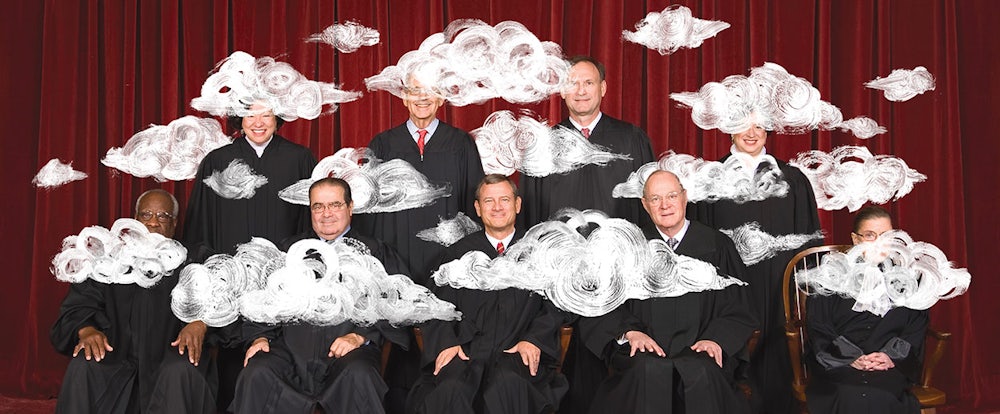
The powers-that-be have already rigged the system. They—the corporations, the military industrial complex, the surveillance state, the monied elite, etc.—will not allow anyone to be appointed to the Supreme Court who will dial back the police state. They will not tolerate anyone who will undermine their policies, threaten their profit margins, or overturn their apple cart.

Scalia’s replacement will be safe (i.e., palatable enough to withstand Congress’ partisan wrangling), reliable and most important of all, an extension of the American police state.

With the old order dying off or advancing into old age rapidly, we’ve arrived at a pivotal point in the makeup of the Supreme Court. With every vacant seat on the Court and in key judgeships around the country, we are witnessing a transformation of the courts into pallid, legalistic bureaucracies governed by a new breed of judges who have beencareful to refrain from saying, doing or writing anything that might compromise their future ambitions.

Today, the judges most likely to get appointed today are well-heeled, well-educated (all of them attended either Yale or Harvard law schools) blank slates who have traveled a well-worn path from an elite law school to a prestigious judicial clerkship and then a pivotal federal judgeship. Long gone are the days when lawyers without judicial experience such as Earl Warren, William Rehnquist, Felix Frankfurter, and Louis Brandeis could be appointed to the Supreme Court.

As Supreme Court correspondent Dahlia Lithwick points out, “a selection process that discourages political or advocacy experience and reduces the path to the Supreme Court to a funnel” results in “perfect judicial thoroughbreds who have spent their entire adulthoods on the same lofty, narrow trajectory.”

In other words, it really doesn’t matter whether a Republican or Democratic president appoints the next Supreme Court justice, because they will all look alike (in terms of their educational and professional background) and sound alike (they are primarily advocates for the government).

Given the turbulence of our age, with its police overreach, military training drills on American soil, domestic surveillance, SWAT team raids, asset forfeiture, wrongful convictions, and corporate corruption, the need for a guardian of the people’s rights has never been greater.

Unfortunately, as I document in Battlefield America: The War on the American People, what we have been saddled with instead are government courts dominated by technicians and statists who march in lockstep with the American police state.

This is true at all levels of the judiciary.

Thus, while what the nation needs is a constitutionalist, what we will get is a technician.

It’s an important distinction.

A legal constitutionalist believes that the authority of government derives from and is limited by a body of fundamental law (the Constitution) and strives to hold the government accountable to abiding by the Constitution. A judge of this order will uphold the rights of the citizenry in the face of government abuses.

Justice William O. Douglas, who served on the Supreme Court for 36 years, was such a constitutionalist. He believed that the “Constitution is not neutral. It was designed to take the government off the backs of the people.” Considered the most “committed civil libertarian ever to sit on the court,” Douglas was frequently controversial and far from perfect (he was part of a 6-3 majority in Korematsu vs. United States that supported the government’s internment of American citizens of Japanese descent during World War II). Even so, his warnings against a domineering, suspicious, totalitarian, police-driven surveillance state resonate still today.

A legal technician, on the other hand, is an arbitrator of the government’s plethora of laws whose priority is maintaining order and preserving government power. As such, these judicial technicians are deferential to authority, whether government or business, and focused on reconciling the massive number of laws handed down by the government.

John Roberts who joined the Supreme Court in 2005 as Chief Justice is a prime example of a legal technician. His view that the “role of the judge is limited…to decide the cases before them” speaks to a mindset that places the judge in the position of a referee. As USA Today observes, “Roberts’ tenure has been marked by an incremental approach to decision-making — issuing narrow rather than bold rulings that have the inevitable effect of bringing the same issues back to the high court again and again.”

Roberts’ approach to matters of law and justice can best be understood by a case dating back to his years on the U.S. Court of Appeals for the District of Columbia. The case involved a 12-year-old black girl who was handcuffed, searched and arrested by police—all for eating a single French fry in violation of a ban on food in the D.C. metro station. Despite Roberts’ ability to recognize the harshness of the treatment meted out to Ansche Hedgepeth for such a minor violation—the little girl was transported in the windowless rear compartment of a police vehicle to a juvenile processing center, where she was booked, fingerprinted, and detained for three hours, and was “frightened, embarrassed, and crying throughout the ordeal”—Roberts ruled that the girl’s constitutional rights had not been violated in any way.
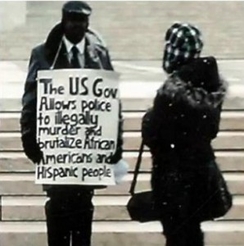
This is not justice meted out by a constitutionalist.

This is how a technician rules, according to the inflexible letter of the law.

Circuit Judge Sri Srinivasan of the DC Court of Appeals, who is rumored to be a favorite pick for Scalia’s spot on the court, is another such technician. When asked to strike down a 60-year-old ban on expressive activities in front of the Supreme Court Plaza, Srinivasan turned a blind eye to the First Amendment. (Ironically, the Supreme Court must now decide whether to declare its own free speech ban unconstitutional.)

By ruling in favor of the ban, Srinivasan also affirmed that police were correct to arrest an African-American protester who was standing silently in front of the Supreme Court wearing a sign protesting the police state on a snowy day when no one was on the plaza except him.

Srinivasan’s rationale? “Allowing demonstrations directed at the Court, on the Court’s own front terrace, would tend to yield the opposite impression: that of a Court engaged with — and potentially vulnerable to — outside entreaties by the public.”

This view of the Supreme Court as an entity that must be sheltered from select outside influences—for example, the views of the citizenry—is shared by the members of the Court itself to a certain extent. As Lithwick points out:

The Court has become worryingly cloistered, even for a famously cloistered institution… today’s justices filter out anything that might challenge their perspectives. Antonin Scalia won’t read newspapers that conflict with his views and claims to often get very little from amicus briefs. John Roberts has said that he doesn’t believe that most law-review articles—where legal scholars advance new thinking on contemporary problems—are relevant to the justices’ work. Ruth Bader Ginsburg, Scalia’s opera-going buddy, increasingly seems to revel in, rather than downplay, her status as a liberal icon. Kennedy spends recesses guest-teaching law school courses in Salzburg.”

Are you getting the picture yet?

The members of the Supreme Court are part of a ruling aristocracy composed of men and women who primarily come from privileged backgrounds and who have a vested interest in maintaining the status quo.

These justices, all of whom are millionaires in their own rights, circulate among an elite, privileged class of individuals, attending exclusive events at private resorts orchestrated by billionaire oil barons, traveling on the private jets of billionaires, and delivering paid speeches in far-flung locales such as Berlin, London and Zurich.

When you’re cocooned within the rarefied, elitist circles in which most of the judiciary operate, it can be difficult to see the humanity behind the facts of a case, let alone identify with the terror and uncertainty that most people feel when heavily armed government agents invade their homes, or subject them to a virtual strip search, or taser them into submission.

If you’ve never had to worry about police erroneously crashing through your door in the dead of night, then it might not be a hardship to rule as the Court did in Kentucky v. King that police should have greater leeway to break into homes or apartments without a warrant.

If you have no fear of ever being strip searched yourself, it would be easy to suggest as the Court did in Florence v. Burlington that it’s more important to make life easier for overworked jail officials than protect Americans from debasing strip searches.

And if you have never had to submit to anyone else’s authority—especially a militarized police officer with no knowledge of the Constitution’s prohibitions against excessive force, warrantless searches and illegal seizures, then you would understandably give police the benefit of the doubt as the Court did in Brooks v. City of Seattle, when they let stand a ruling that police officers who had clearly used excessive force when they repeatedly tasered a pregnant woman during a routine traffic stop were granted immunity from prosecution.

Likewise, if you’re not able to understand what it’s like to be one of the “little guys,” afraid to lose your home because some local government wants to commandeer it and sell it to a larger developer for profit, it would be relatively easy to rule, as the Supreme Court did in Kelo v. New London, that the government is within its right to do so.

Now do you understand why the Supreme Court’s decisions in recent years, which have run the gamut from suppressing free speech activities and justifying suspicionless strip searches to warrantless home invasions and conferring constitutional rights on corporations, while denying them to citizens, have been characterized most often by an abject deference to government authority, military and corporate interests?

They no longer work for us. They no longer represent us. They can no longer relate to our suffering.

In the same way that the Legislative Branch, having been co-opted by lobbyists, special interests, and the corporate elite, has ceased to function as a vital check on abuses by the other two branches of government, the Judicial Branch has also become part of the same self-serving bureaucracy.

Sound judgment, compassion and justice have taken a back seat to legalism, statism and elitism.

Preserving the rights of the people has been deprioritized and made to play second fiddle to both governmental and corporate interests.

In the case of the People vs. the Police State, the ruling is 9-0 against us.

So where does that leave us?

The Supreme Court of old is gone, if not for good then at least for now.

It will be a long time before we have another court such as the Warren Court (1953-1969), when Earl Warren served alongside such luminaries as William J. Brennan, Jr., William O. Douglas, Hugo Black, Felix Frankfurter and Thurgood Marshall.

The Warren Court handed down rulings that were instrumental in shoring up critical legal safeguards against government abuse and discrimination. Without the Warren Court, there would be no Miranda warnings, no desegregation of the schools and no civil rights protections for indigents.

Yet more than any single ruling, what Warren and his colleagues did best was embody what the Supreme Court should always be—an institution established to intervene and protect the people against the government and its agents when they overstep their bounds.

That is no longer the case.

We can no longer depend on the federal courts to protect us against the government. They are the government.

Yet as is the case with most things, the solution is far simpler and at the same time more complicated than space allows, but it starts with local action—local change—and local justice. If you want a revolution, start small, in your own backyard, and the impact will trickle up.

If you don’t like the way justice is being meted out in America, then start demanding justice in your own hometown, before your local judges. Serve on juries, nullify laws that are egregious, picket in front of the courthouse, vote out judges (and prosecutors) who aren’t practicing what the Constitution preaches, encourage your local newspapers to report on cases happening in your town, educate yourself about your rights, and make sure your local judges understand that they work for you and are not to be extensions of the police, prosecutors and politicians.

This is the only way we will ever have any hope of pushing back against the police state.