


We don’t need no education
We don’t need no thought control
No dark sarcasm in the classroom
Teachers leave them kids alone…
All in all it’s just another brick in the wall
All in all you’re just another brick in the wall.
—Pink Floyd, “Another Brick in the Wall”
The nation’s young people have been given front-row seats for an unfolding police drama that is rated R for profanity, violence and adult content.
In Arizona, a 7-year-old girl watched panic-stricken as a state trooper pointed his gun at her and her father during a traffic stop and reportedly threatened to shoot her father in the back (twice) based on the mistaken belief that they were driving a stolen rental car.
 In Oklahoma, a 5-year-old boy watched as a police officer used a high-powered rifle to shoot his dog Opie multiple timesin his family’s backyard while other children were also present. The police officer was mistakenly attempting to deliver a warrant on a 10-year-old case for someone who hadn’t lived at that address in a decade.
In Maryland, a 5-year-old boy was shot when police exchanged gunfire with the child’s mother—eventually killing her—over a dispute that began when Korryn Gaines refused to accept a traffic ticket for driving without a license plate on her car.
It’s difficult enough raising a child in a world ravaged by war, disease, poverty and hate, but when you add the police state into the mix, it becomes near impossible to guard against the growing unease that some of the monsters of our age come dressed in government uniforms.
The lesson being taught to our youngest—and most impressionable—citizens is this: in the American police state, you’re either a prisoner (shackled, controlled, monitored, ordered about, limited in what you can do and say, your life not your own) or a prison bureaucrat (politician, police officer, judge, jailer, spy, profiteer, etc.).
Unfortunately, now that school is back in session, life is that much worse for the children of the American police state.
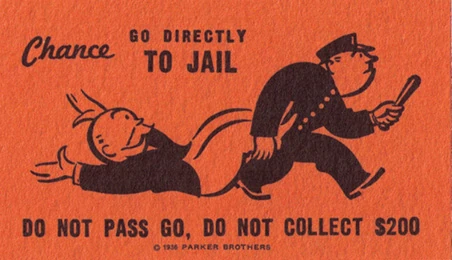
The nation’s public schools—extensions of the world beyond the schoolhouse gates, a world that is increasingly hostile to freedom—have become microcosms of the American police state, containing almost every aspect of the militarized, intolerant, senseless, overcriminalized, legalistic, surveillance-riddled, totalitarian landscape that plagues those of us on the “outside.”
If your child is fortunate enough to survive his encounter with the public schools with his individuality and freedoms intact, you should count yourself fortunate.
Most students are not so lucky.
From the moment a child enters one of the nation’s 98,000 public schools to the moment he or she graduates, they will be exposed to a steady diet of
- draconian zero tolerance policies that criminalize childish behavior,
- overreaching anti-bullying statutes that criminalize speech,
- school resource officers (police) tasked with disciplining and/or arresting so-called “disorderly” students,
- standardized testing that emphasizes rote answers over critical thinking,
- politically correct mindsets that teach young people to censor themselves and those around them,
- and extensive biometric and surveillance systems that, coupled with the rest, acclimate young people to a world in which they have no freedom of thought, speech or movement.
 Clearly, instead of making the schools safer, we have managed to make them more authoritarian.
Young people in America are now first in line to be searched, surveilled, spied on, threatened, tied up, locked down, treated like criminals for non-criminal behavior, tasered and in some cases shot.
Roped into the government’s profit-driven campaign to keep the nation “safe” from drugs, weapons and terrorism, the schools have transformed themselves into quasi-prisons, complete with surveillance cameras, metal detectors, police patrols, zero tolerance policies, lock downs, drug sniffing dogs, strip searches and active shooter drills.
It used to be that if you talked back to a teacher, or played a prank on a classmate, or just failed to do your homework, you might find yourself in detention or doing an extra writing assignment after school.
That is no longer the case.
Nowadays, students are not only punished for minor transgressions such as playing cops and robbers on the playground, bringing LEGOs to school, or having a food fight, but the punishments have become far more severe, shifting from detention and visits to the principal’s office into misdemeanor tickets, juvenile court, handcuffs, tasers and even prison terms.
Students have been suspended under school zero tolerance policies for bringing to school “look alike substances” such as oregano, breath mints, birth control pills and powdered sugar.
For instance, a Virginia sixth grader, the son of two school teachers and a member of the school’s gifted program, was suspended for a year after school officials found a leaf (likely a maple leaf) in his backpack that they suspected was marijuana. Despite the fact that the leaf in question was not marijuana (a fact that officials knew almost immediately), the 11-year-old was still kicked out of school, charged with marijuana possession in juvenile court, enrolled in an alternative school away from his friends, subjected to twice-daily searches for drugs, and forced to be evaluated for substance abuse problems.
Look-alike weapons (toy guns—even Lego-sized ones, hand-drawn pictures of guns, pencils twirled in a “threatening” manner, imaginary bows and arrows, even fingers positioned like guns) can also land a student in hot water.
Acts of kindness, concern or basic manners can also result in suspensions. One 13-year-old was given detention for exposing the school to “liability” by sharing his lunch with a hungry friend. A third grader was suspended for shaving her head in sympathy for a friend who had lost her hair to chemotherapy. And then there was the high school senior who wassuspended for saying “bless you” after a fellow classmate sneezed.
 Consider that by the time the average young person in America finishes their public school education, nearly one out of every three of them will have been arrested.
More than 3 million students are suspended or expelled from schools every year, often for minor misbehavior, such as “disruptive behavior” or “insubordination.” Black students are three times more likely than white students to face suspension and expulsion.
In South Carolina, where it’s against the law to disturb a school, more than a thousand students a year—some as young as 7 years old—“face criminal charges for not following directions, loitering, cursing, or the vague allegation of acting ‘obnoxiously.’ If charged as adults, they can be held in jail for up to 90 days.”
Moreover, just as militarized police who look, think and act like soldiers on a battlefield have made our communities less safe, the growing presence of police in the nation’s schools is resulting in environments in which it’s no longer safe for children to act like children.
Thanks to a combination of media hype, political pandering and financial incentives, the use of armed police officers to patrol school hallways has risen dramatically in recent years. Funded by the U.S. Department of Justice, these school resource officers have become de facto wardens in elementary, middle and high schools, doling out their own brand of justice to the so-called “criminals” in their midst with the help of tasers, pepper spray, batons and brute force.
The horror stories are legion.
One school police officer was accused of punching a 13-year-old student in the face for cutting the cafeteria line. Thatsame cop put another student in a chokehold a week later, allegedly knocking the student unconscious and causing a brain injury. In Pennsylvania, a student was tasered after ignoring an order to put his cell phone away.
Defending the use of handcuffs and pepper spray to subdue students, one Alabama police department reasoned that if they can employ such tactics on young people away from school, they should also be permitted to do so on campus.
Now advocates for such harsh police tactics and weaponry will tell you that school safety should be our first priority.
What they might fail to mention in their zeal to lock down the schools are the lucrative, multi-million dollar deals being cut with military contractors to equip school cops with tasers, tanks, rifles and $100,000 shooting detection systems.
 Indeed, the militarization of the police has been mirrored in the public schools, where school police have been gifted with high-powered M16 rifles, MRAP armored vehicles, grenade launchers, and other military gear. One Texas school district even boasts its own 12-member SWAT team.
According to one law review article on the school-to-prison pipeline, “Many school districts have formed their own police departments, some so large they rival the forces of major United States cities in size. For example, the safety division in New York City’s public schools is so large that if it were a local police department, it would be the fifth-largest police force in the country.”
The term “school-to-prison pipeline” refers to a phenomenon in which children who are suspended or expelled from school have a greater likelihood of ending up in jail.
What we’re grappling with, you see, is not merely a public school system that resembles a prison and is treating young people like prisoners but also a profit-driven system of incarceration has given rise to a growth in juvenile prisons and financial incentives for jailing young people.
Indeed, young people have become easy targets for the private prison industry, which profits from criminalizing childish behavior and jailing young people. Nearly 40 percent of young people who are arrested will serve time in a private prison, where the emphasis is on making profits for large megacorporations above all else.
It has been said that America’s schools are the training ground for future generations.
Instead of raising up a generation of freedom fighters, however, we seem to be busy churning out newly minted citizens of the American police state who are being taught the hard way what it means to comply, fear and march in lockstep with the government’s dictates.
As I point out in my book Battlefield America: The War on the American People, it’s getting harder by the day to convince young people that we live in a nation that values freedom and which is governed by the rule of law.
 With every school police raid and overzealous punishment that is carried out in the name of school safety, the lesson being imparted is that Americans—especially young people—have no rights at all against the state or the police.
The bottom line is this: if you want a nation of criminals, treat the citizenry like criminals.
If you want young people who grow up seeing themselves as prisoners, run the schools like prisons.
But if you want to raise up a generation of freedom fighters, who will actually operate with justice, fairness, accountability and equality towards each other and their government, then run the schools like freedom forums. Remove the metal detectors and surveillance cameras, re-assign the cops elsewhere, and start treating our nation’s young people like citizens of a republic and not inmates in a police state.
_____
Constitutional attorney and author John W. Whitehead is founder and president of The Rutherford Institute. His book Battlefield America: The War on the American People (SelectBooks, 2015) is available online at http://www.amazon.com. Whitehead can be contacted at johnw@rutherford.org. Information about The Rutherford Institute is available at http://www.rutherford.org.
Publication Guidelines / Reprint Permission: John W. Whitehead’s weekly commentaries are available for publication to newspapers and web publications at no charge. Please contact staff@rutherford.org to obtain reprint permission.


 We’re being locked up by a government of greedy jailers. We have become a
  We’re being ravaged by a government of ruffians, rapists and killers. It’s not just the police
  The government and its cohorts have conspired to ensure that the only real recourse the American people have to express their displeasure with the government is through voting, which is no real recourse at all. The penalties for civil disobedience, whistleblowing and rebellion are severe. If you refuse to pay taxes for government programs you believe to be immoral or illegal, you will go to jail. If you attempt to overthrow the government—or any agency thereof—because you believe it has overstepped its reach, you will go to jail. If you attempt to blow the whistle on government misconduct, there’s a pretty good chance you will go to jail.
 America’s founders provided us with a very specific explanation about the purpose of government and a


 For starters, stop with the scare tactics. In much the same way that American citizens are being cocooned in a climate of fear—fear of terrorism, fear of extremism, fear of each other—by a government that knows exactly which buttons to push in order to gain the public’s cooperation and compliance, police officers are also being indoctrinated with the psychology of fear.
 Fifth, demilitarize. There are many examples of

 Remember Barack Obama, the young candidate who campaigned on a message of hope, change and transparency, and promised an end to war and surveillance?
 If you want to boo, boycott, picket, protest and altogether reject a corrupt political system that has failed you abysmally, more power to you. I’ll take an irate, engaged, informed, outraged American any day over an apathetic, constitutionally illiterate citizenry that is content to be diverted, distracted and directed.
 Tune into a political convention and you will find yourself being sucked into an alternate reality so glossy, star-studded, emotionally charged and entertaining as to make you forget that you live in a police state. The elaborate stage show, the costumes, the actors, the screenplay, the lighting, the music, the drama: all carefully calibrated to appeal to the public’s need for bread and circuses, diversion and entertainment, and pomp and circumstance.
 The nation is drowning in debt, crippled by a slowing economy, overrun by militarized police, swarming with surveillance, besieged by endless wars and a military industrial complex intent on starting new ones, and riddled with corrupt politicians at every level of government. All the while, we’re arguing over which corporate puppet will be given the honor of stealing our money, invading our privacy, abusing our trust, undermining our freedoms, and shackling us with debt and misery for years to come.
 Many of our politicians live like kings. Chauffeured around in limousines, flying in private jets and eating gourmet meals, all paid for by the American taxpayer, they are far removed from those they represent. Such a luxurious lifestyle makes it difficult to identify with the “little guy”—the roofers, plumbers and blue-collar workers who live from paycheck to paycheck and keep the country running with their hard-earned dollars and the sweat of their brows.
 Meanwhile, the
  There is no place in our nation for the kind of armed revolution our forefathers mounted against a tyrannical Great Britain. Such an act would be futile and tragic. We are no longer dealing with a distant, imperial king but with a tyrant of our own making: a militarized, technologized, heavily-financed bureaucratic machine that operates beyond the reach of the law.
 The strategy: destabilize the economy through endless wars, escalate racial tensions, polarize the populace, heighten tensions through a show of force, intensify the use of violence, and then, when all hell breaks loose, clamp down on the nation for the good of the people and the security of the nation.

 High–speed car chases: Police officers can use lethal force in car chases without fear of lawsuits (Plumhoff v. Rickard).
 Phone and email surveillance, databases for dissidents, threat assessments, terror watch lists, militarized police, SWAT team raids, security checkpoints, lockdowns, roadside strip searches: there was a time when any one of these encroachments on our Fourth Amendment rights would have roused the public to outrage. Today, such violations are shrugged off matter-of-factly by Americans who have been assiduously groomed to accept the intrusions of the police state into their private lives.
 You see, by gradually whittling away at our freedoms—free speech, assembly, due process, privacy, etc.—the government has, in effect, liberated itself from its contractual agreement to respect our constitutional rights while resetting the calendar back to a time when we had no Bill of Rights to protect us from the long arm of the government.
 We’ve been hoodwinked into believing that our votes count, that we live in a democracy, that elections make a difference, that it matters whether we vote Republican or Democrat, and that our elected officials are looking out for our best interests. Truth be told,
  Help grow the military–industrial complex: Fifty-five years after President Dwight D. Eisenhower warned about the growth of the “military-industrial complex” in his farewell address, the partnership between the government, the military and private corporations has resulted in the
  Sow seeds of discord and foment wars among other nations under the guise of democracy: It’s not enough for the commander-in-chief to lead the United States into endless wars abroad. Any successful presidential candidate also needs to be adept at stirring up strife within other nations under the guise of spreading democracy. The real motive, of course, is creating new markets for the nation’s #1 export: weapons. In this way, the U.S. is constantly arming so-called “allies” with deadly weapons, only to later wage war against these same nations for possessing weapons of mass destruction. It happened in Iraq when the
  Promote the interests of Corporate America and Big Money over the rights of the citizenry: Almost every major government program hailed as benefiting Americans—affordable healthcare, the war on terror, airport security, police-worn body cameras—has proven to be a Trojan Horse aimed at enriching Corporate America while leaving Americans poorer, less secure and less free. For instance, the so-called “affordable” health care mandated by Congress has become yet another
  Act as if the work of the presidency is a hardship while enjoying all the perks: The race for the White House is an expensive, grueling horse race: candidates must have at a minimum
 So here we are once again, preparing to embark upon yet another delusional, reassurance ritual of voting in order to sustain the illusion that we have a democratic republic when, in fact, what we have is a dictatorship without tears. Once again, we are left feeling helpless in the face of a well-funded, heavily armed propaganda machine that is busily spinning political webs with which the candidates can lure voters. And once again we are being urged to vote for the lesser of two evils.

 The mindset driving these programs has, appropriately, been
 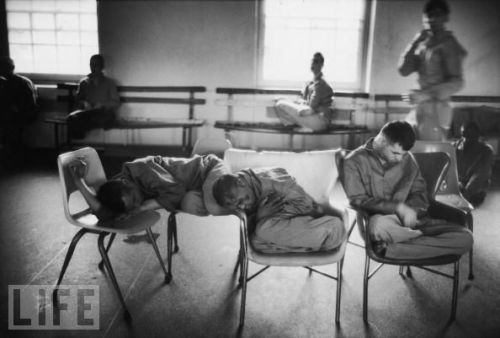 In New York,
  And then there was the CIA’s
  Consider this: after revelations about the government’s experiments spanning the 20th century spawned outrage, the
  This is the same government that in
  Are you getting my drift yet?
 Perhaps the answer lies in The Third Man, Carol Reed’s influential 1949 film starring Joseph Cotten and Orson Welles. In the film, set in a post-WW II Vienna, rogue war profiteer Harry Lime has come to view human carnage with a callous indifference, unconcerned that the diluted penicillin he’s been trafficking underground has resulted in the tortured deaths of young children.

 Be an individual. For all of its championing of the individual, American culture advocates a stark conformity. As a result, young people are sedated by the flatness and predictability of modern life. “You can travel far and wide and have a difficult time finding a store or restaurant that is even mildly unique,” writes Thomas More in The Care of the Soul. “In shopping malls everywhere, in restaurant districts, in movie theaters, you will find the same clothes, the same names, the same menus, the same new films, the identical architecture. On the East Coast, you can sit in a restaurant seat identical to that you sat in on the West Coast.” In other words, the repetition that is modern life means the death of individuality.
 Standing at the pulpit of the Riverside Church in New York City in April 1967, Martin Luther King Jr. urged his listeners:
 The only way we’ll ever achieve change in this country is for this generation of young people to say “enough is enough” and fight for the things that truly matter.
