Posts Tagged ‘free speech’

RICHMOND, Va. — A settlement has been reached in a lawsuit filed by The Rutherford Institute on behalf of a man who was arrested as he was engaged in a First Amendment protest against President Obama while lawfully carrying a rifle. The settlement in Brandon Howard v. John Hunter resolved the lawsuit to the mutual satisfaction of the parties, which included claims that the police violated Howard’s First Amendment right to free speech, Second Amendment right to bear arms, and Fourth Amendment right to be free from a groundless arrest when they confronted him with guns drawn and ordered him to the ground on the unfounded belief that Howard was violating the law by being in public with a rifle slung over his shoulder. Soon after the incident, the City of Hopewell Police Department admitted in writing that the incident involved a violation of department policy. The settlement included an apology by the defendant police officer acknowledging respect for citizens’ First and Second Amendment rights and stating “[it] was not my intention to compromise Mr. Howard’s rights under the Constitution.”

The Rutherford Institute’s complaint in Brandon Howard v. John Hunter is available at www.rutherford.org.

Battlefield_Cover_300“As this case shows, if you feel like you can’t walk away from a police encounter of your own volition—and more often than not you can’t, especially when you’re being confronted by someone armed to the hilt with all manner of militarized weaponry and gear—then for all intents and purposes, you’re under arrest from the moment a cop stops you,” said constitutional attorney John W. Whitehead, president of The Rutherford Institute and author of Battlefield America: The War on the American People. “Certainly, if you’ve been placed in handcuffs and transported to a police station against your will, that constitutes an arrest.”

According to the complaint filed in the U.S. District Court for the Eastern District of Virginia, on Monday, Aug. 26, 2013, Brandon Howard arrived at an overpass above Interstate 295 in the City of Hopewell, Va., and displayed a 6 foot by 4 foot sign that read “Impeach Obama.” Howard was carrying a DMTS Panther Arms AR-15 rifle slung over his shoulder on a strap, and a .380 caliber Bersa Thunder sidearm pistol in a belted holster on his waist. Howard lawfully owned each firearm and did not point or brandish them at any time while engaged in his First Amendment protest activity on the overpass. Howard displayed his protest sign for 30 minutes, but Howard did not directly engage with anyone.

At about 5:30 p.m., a police officer pulled up to the area, remained in his car and observed Howard. Thereafter, three to five additional police cruisers arrived at the scene with emergency lights engaged. Approximately eight officers exited these vehicles with their guns drawn and ordered Howard to drop his sign and get on the ground with his hands spread above his head. Howard complied with the officers’ orders. Howard explained that he had not threatened anyone but was simply exercising his First and Second amendment rights. Howard was then handcuffed and transported to the police station, where he was left, handcuffed, in an interrogation room for 90 minutes, after which time he had his firearms returned and was released. A month later, the Deputy Chief of Police acknowledged in writing that an internal investigation had concluded that one of the officers violated department policy and would be disciplined and sent to remedial training. Attorney Raul Novo of Richmond, Va., assisted The Rutherford Institute with the lawsuit and settlement.

CASE HISTORY

March 11, 2016: VICTORY: Police Settle Rutherford Institute Lawsuit Over Activist Held at Gun, Handcuffed and Arrested for Lawfully Carrying a Rifle During a Protest

October 22, 2015: Victory: Court Gives Green Light to Lawsuit over Activist Held at Gun Point by Police, Handcuffed and Arrested for Lawfully Carrying a Rifle During a Protest

September 25, 2015: Virginia Police Insist That Activist Was Not Under Arrest Even Though He Was Held at Gun Point by Police, Handcuffed and Taken to the Police Station

November 17, 2014: Citing 1st, 2nd & 4th Amendments, Rutherford Institute Sues Virginia Police for Violating Obama Protester’s Right to Free Speech and Lawful Gun Ownership

cucart

“That’s the way the ruling class operates in any society. They keep the lower and the middle classes fighting with each other… Anything different—that’s what they’re gonna talk about—race, religion, ethnic and national background, jobs, income, education, social status, sexuality, anything they can do to keep us fighting with each other, so that they can keep going to the bank!”—Comedian George Carlin

“We the people” have been utterly and completely betrayed.

The politicians “we the people” most trusted to look out for our best interests, protect our rights, and ensure that the nation does not slip into tyranny have cheated on us, lied to us, swindled us, deceived us, double-crossed us, and sold us to the highest bidder.

Time and again, they have shown in word and deed that their priorities lay elsewhere, that they care nothing about our plight, that they owe us no allegiance, that they are motivated by power and money rather than principle, that they are deaf to our entreaties, that they are part of an elite ruling class that views us as mere cattle, that their partisan bickering is part of an elaborate ruse to keep us divided and distracted, and that their oaths of office to uphold the Constitution mean nothing.

Incredibly, even in the face of their treachery and lies, the great majority of Americans persist in believing that the politicians have the people’s best interests at heart.

Despite the fact that we’ve been burned before, most Americans continue to allow themselves to be bamboozled into casting their votes for one candidate or another, believing that this time they mean what they say, this time they really care about the citizenry, this time will be different.

Of course, they rarely ever mean what they say, they care about their constituents only to the extent that it advances their political careers, and it never turns out differently. We are as easily discarded the day after the elections as we were wantonly wooed in the months leading up to the big day. Those same politicians who were once so eager to pose for our pictures, smile at our jokes, and glad-hand us for our votes will, upon being elected, retreat behind a massive, impenetrable wall that ensures we are not seen or heard from again—at least, until the next election.

The joke is on us.

Battlefield_Cover_300As I point out in my book Battlefield America: The War on the American People, all of the caucuses, primaries, nominating conventions, town hall meetings, rallies, meet and greets, delegates and super-delegates are sophisticated schemes aimed at advancing the illusion of participation culminating in the reassurance ritual of voting.

It’s not about Red Republicans or Blue Democrats. It’s about Green Donors—i.e, those with money who can afford to pay for access.

Votes might elect politicians, but as a 2014 field experiment by political scientists at Yale University and the University of California, Berkeley, makes clear, it’s money that talks.

The experiment went something like this: members of Congress were contacted by constituents requesting meetings about pending public policy issues. As the Washington Post reports, “When the attendees were revealed to be ‘local campaign donors,’ they often gained access to Members of Congress, Legislative Directors, and Chiefs of Staff. But when the attendees were described as only ‘local constituents,’ they almost never gained this level of access.”

Conclusion: money buys access to politicians who are otherwise deaf, dumb and blind to the entreaties of their constituents.

It works the same with every politician and every party.

Indeed, the First Amendment’s assurance of a right to petition the government for a redress of grievances has become predicated on how much money you’re willing to shell out in order to gain access to your elected and appointed officials.

Then again, money has always played a starring role in American politics.

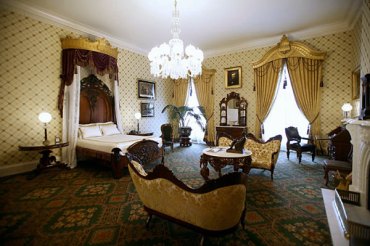
lincoln-bedroom-2007-seThe spoils system reared its greedy head under Andrew Jackson, who traded jobs in his administration in exchange for campaign contributions. For $1 million, donors could take part in Warren Harding’s poker parties and enjoy a sleepover at the White House. Lyndon Johnson had a President’s Club that cost donors $1000 a year. Nixon was prepared to sell ambassadorships for $250,000. And Bill Clinton famously allowed top-dollar donors to spend a night in the Lincoln Bedroom at the White House in exchange for roughly $5.4 million in donations to the Democratic National Committee.

Fast forward to the present day, and a $500,000 donation might get you invited to a quarterly meeting with Barack Obama. For a mere $5,000 donation, lobbyists are being given exclusive invitations to join Congressmen and senators for weekend getaways that include wine tastings, fly fishing, skiing, golfing, hunting, spas, seaside cocktail parties and more.

If you’re just a lowly citizen with limited cash, however, you’re out of luck.

Try contacting your so-called representatives without paying for the privilege, and see how far that gets you. I can assure you that you won’t be given the kinds of access that lobbyists, special interest groups and top donors enjoy.

Having been saddled with a pay-to-play system that provides access only to those with enough cash to grease the wheels of the political machine, average Americans have little to no say in the workings of their government and even less access to their so-called representatives.

trump-clinton-weddingDonald Trump, as he has boasted, might be able to buy and sell politicians of all stripes (including Hillary Clinton), but the average American would be hard-pressed to get the kind of access enjoyed by corporate executives, lobbyists and other members of the moneyed elite.

Indeed, members of Congress have to work hard to keep their constituents at a distanceminimizing town-hall meetings, making minimal public appearances while at home in their districts, only appearing at events in controlled settings where they’re the only ones talking, and if they must interact with constituents, doing so via telephone town meetings or impromptu visits to local businesses where the chances of being accosted by angry voters are greatly minimized.

And under the Trespass Bill, passed by Congress in 2012 and signed into law by President Obama, if you dare to exercise your First Amendment right to speak freely to a politician, assemble in public near a politician, or petition a government official for a redress of grievances, you risk a fine or a lengthy stay in prison.

Talk about self-serving.

Under the guise of protecting government officials from physical attacks, the Trespass Bill, a.k.a. “the Federal Restricted Buildings and Grounds Improvement Act,” criminalizes First Amendment activity by making it a federal offense, punishable by up to 10 years in prison, to protest anywhere the Secret Service might be guarding someone.

Mind you, the Secret Service not only protects the president but all past sitting presidents, members of Congress, foreign dignitaries, presidential candidates, and anyone whom the president determines needs protection, but is also in charge of securing National Special Security Events, which include events such as the G8 and NATO summits, the National Conventions of both major parties, and even the Super Bowl.

The law essentially creates a roving bubble zone where the First Amendment is effectively off-limits, thereby putting an end to free speech, political protest and the right to peaceably assemble in all areas where government officials happen to be present. Thus, simply walking by one of these events could make you subject to arrest.

31bc75e000000578-0-image-a-2_1456850087032“What that means in practice,” as The Intercept rightly points out, “is that campaign rallies for Donald Trump, who was granted Secret Service protection in November, and Hillary Clinton, who will be guarded for life as a former first lady, arethe very opposite of free speech zones under federal law. (The restrictions also apply to all appearances by former presidents and first ladies, as well as those of two other candidates, Bernie Sanders and Ben Carson, who are currently protected by the service.)”

Consider yourself warned: If you do dare to show up to a Trump or Clinton rally and even appear to be the kind of person who might engage in any kind of protest, lawful or otherwise, you could find yourself quickly dispatched to a “free speech zone” out of sight and sound of the candidates. (“Free speech zones” are government-sanctioned areas located far away from government officials, into which activists and citizens are herded at political rallies and events.) In fact, that’s exactly what happened to a group of black students at a recent Trump rally in Georgia. They were escorted by police to “‘free speech zones’ in a field shielded from the venue by a set of tennis courts, or outside a church about a quarter of a mile away.”

The message is clear: in an age of robber barons, “we the people” are expected to just shut up and vote.

The powers-that-be want us to be censored, silenced, muzzled, gagged, zoned out, caged in and shut down. They want our speech and activities monitored for any sign of “extremist” activity. They want us to be estranged from each other and kept at a distance from those who are supposed to represent us. They want taxation without representation. They want a government without the consent of the governed.

They want the police state.

free20speechThe system has been so corrupted and compromised that there are few left in the halls of government who hear or speak for us.

Congress does not represent us. The courts do not advocate for us. The president does not listen to us. And the First Amendment’s assurance of the right to speak freely and petition our government for a redress of grievance no longer applies to us.

So if representative government has become an exercise in futility, where does that leave us?

One of the key ingredients in maintaining democratic government is the right of citizens to freely speak their minds to those who represent them. In fact, it is one of the few effective tools we have left to combat government corruption and demand accountability.

If there is to be any hope of righting the wrongs that are being perpetrated against the American people, we must make them—our elected officials—hear us.

But where to begin?

Start by opening up a dialogue within your own community about what’s wrong with this country. Stop focusing on the issues that divide, and find common ground with your fellow citizens about issues on which you can agree. Focus less on politics and more on principles. Stop buying into the false and divisive narratives that are being promulgated by political windbags and start thinking and speaking for yourselves.

los_angeles_people-300x204Once you’ve found that common ground, whatever it might be, make enough noise at the local level—at your city council meetings, in your local paper, at your school board meetings, in front of your courthouses and police stations—and the message will trickle up. Those in power may not like what they hear, but they will hear you.

Remember, there is power in numbers.

There are 319 million of us in this country. Imagine what we could accomplish if we actually worked together, presented a united front, and spoke with one voice?

The police state wouldn’t stand a chance.

March on Albany

March on Albany, NYPL Digital Collection, Image ID 1602566

“If liberty means anything at all, it means the right to tell people what they do not want to hear.”― George Orwell

Free speech is not for the faint of heart.

Nor is it for those who are easily offended, readily intimidated or who need everything wrapped in a neat and tidy bow. Free speech is often messy, foul-mouthed, obscene, intolerant, undignified, insensitive, cantankerous, bawdy and volatile.

While free speech can also be tender, tolerant, soft-spoken, sensitive and sweet, it is free speech’s hot-blooded alter ego—the wretched, brutal, beastly Mr. Hyde to its restrained, dignified and civil Dr. Jekyll—that tests the limits of our so-called egalitarian commitment to its broad-minded principles.

Unfortunately, our appreciation for a robust freedom of speech has worn thin over the years.

Many Americans have become fearfully polite, careful to avoid offense, and largely unwilling to be labeled intolerant, hateful, closed-minded or any of the other toxic labels that carry a badge of shame today. We’ve come to prize civility over freedom. Most of all, too many Americans, held hostage by their screen devices and the talking heads on television, have lost the ability to think critically.

Societies that cherish free speech relish open debates and controversy and, in turn, produce a robust citizenry who will stand against authoritarian government. Indeed, oppressive regimes of the past have understood the value of closed-mouthed, closed-minded citizens and the power inherent in controlling speech and, thus, controlling how a people view their society and government.

We in the United States have a government with a ravenous appetite for power and a seeming desire to turn the two-way dialogue that is our constitutional republic into a one-way dictatorship. Emboldened by phrases such as “hate crimes,” “bullying,” “extremism” and “microaggressions,” the government is whittling away at free speech, confining it to carefully constructed “free speech zones,” criminalizing it when it skates too close to challenging the status quo, shaming it when it butts up against politically correct ideals, and muzzling it when it appears dangerous.

Free speech is no longer free.

Nor is free speech still considered an inalienable right or an essential liberty, even by those government entities entrusted with protecting it.

We’ve entered into an egotistical, insulated, narcissistic era in which free speech has become regulated speech: to be celebrated when it reflects the values of the majority and tolerated otherwise, unless it moves so far beyond our political, religious and socio-economic comfort zones as to be rendered dangerous and unacceptable.

Consider some of the kinds of speech being targeted for censorship or outright elimination.

Offensive, politically incorrect and “unsafe” speech: Disguised as tolerance, civility and love, political correctness has resulted in the chilling of free speech and the demonizing of viewpoints that run counter to the cultural elite. Consequently, college campuses have become hotbeds of student-led censorship, trigger warnings, microaggressions, and “red light” speech policies targeting anything that might cause someone to feel uncomfortable, unsafe or offended.

Bullying, intimidating speech: Warning that “school bullies become tomorrow’s hate crimes defendants,” the Justice Department has led the way in urging schools to curtail bullying, going so far as to classify “teasing” as a form of “bullying,” and “rude” or “hurtful” “text messages” as “cyberbullying.”

Hateful speech: Hate speech—speech that attacks a person or group on the basis of attributes such as gender, ethnic origin, religion, race, disability, or sexual orientation—is the primary candidate for online censorship. Corporate internet giants Google, Twitter and Facebook are in the process of determining what kinds of speech will be permitted online and what will be deleted.

Dangerous, anti-government speech: As part of its newly unveiled war on “extremism,” the Obama administration is partnering with the tech industry to establish a task force to counter online “propaganda” by terrorists hoping to recruit support or plan attacks. In this way, anyone who criticizes the government online is considered an extremist and will have their content reported to government agencies for further investigation or deleted.

The upshot of all of this editing, parsing, banning and silencing is the emergence of a new language, what George Orwell referred to as Newspeak, which places the power to control language in the hands of the totalitarian state. Under such a system, language becomes a weapon to change the way people think by changing the words they use. The end result is control.

In totalitarian regimes—a.k.a. police states—where conformity and compliance are enforced at the end of a loaded gun, the government dictates what words can and cannot be used. In countries where the police state hides behind a benevolent mask and disguises itself as tolerance, the citizens censor themselves, policing their words and thoughts to conform to the dictates of the mass mind lest they find themselves ostracized or placed under surveillance.

Even when the motives behind this rigidly calibrated reorientation of societal language appear well-intentioned—discouraging racism, condemning violence, denouncing discrimination and hatred—inevitably, the end result is the same: intolerance, indoctrination and infantilism.

Thus, while on paper, we are technically still free to speak, in reality, we are only as free to speak as a government official or corporate censor may allow.

Battlefield_Cover_300The U.S. Supreme Court has long been the referee in the tug-of-war over the nation’s tolerance for free speech and other expressive activities protected by the First Amendment. Yet as I point out in my book Battlefield America: The War on the American People, the Supreme Court’s role as arbiter of justice in these disputes is undergoing a sea change. Except in cases where it has no vested interest, the Court has begun to advocate for the government’s outsized interests, ruling in favor of the government in matters of war, national security, commerce and speech. When asked to choose between the rule of law and government supremacy, this Court tends to side with the government.

In the 225 years since the First Amendment to the U.S. Constitution was adopted, the rights detailed in that amendment—which assures the American people of the right to speak freely, worship freely, peaceably assemble, petition the government for a redress of grievances, and have a free press—have certainly taken a beating, but none more so than the right to free speech.

Nowhere in the First Amendment does it permit the government to limit speech in order to avoid causing offense, hurting someone’s feelings, safeguarding government secrets, protecting government officials, insulating judges from undue influence, discouraging bullying, penalizing hateful ideas and actions, eliminating terrorism, combatting prejudice and intolerance, and the like.

Unfortunately, in the war being waged between free speech purists who believe that free speech is an inalienable right and those who believe that free speech should be regulated, the censors are winning. Free speech zones, bubble zones, trespass zones, anti-bullying legislation, zero tolerance policies, hate crime laws and a host of other legalistic maladies dreamed up by politicians and prosecutors have conspired to corrode our core freedoms.

If we no longer have the right to tell a Census Worker to get off our property, if we no longer have the right to tell a police officer to get a search warrant before they dare to walk through our door, if we no longer have the right to stand in front of the Supreme Court wearing a protest sign or approach an elected representative to share our views, if we no longer have the right to voice our opinions in public—no matter how misogynistic, hateful, prejudiced, intolerant, misguided or politically incorrect they might be—then we do not have free speech.

What we have instead is regulated, controlled speech, and that’s a whole other ballgame.

Just as surveillance has been shown to “stifle and smother dissent, keeping a populace cowed by fear,” government censorship gives rise to self-censorship, breeds compliance, makes independent thought all but impossible, and ultimately foments a seething discontent that has no outlet but violence.

The First Amendment is a steam valve. It allows people to speak their minds, air their grievances and contribute to a larger dialogue that hopefully results in a more just world. When there is no steam valve—when there is no one to hear what the people have to say—frustration builds, anger grows and people become more volatile and desperate to force a conversation.

The problem as I see it is that we’ve lost faith in the average citizen to do the right thing. We’ve allowed ourselves to be persuaded that we need someone else to think and speak for us. The result is a society in which we’ve stopped debating among ourselves, stopped thinking for ourselves, and stopped believing that we can fix our own problems and resolve our own differences.

In short, we have reduced ourselves to a largely silent, passive populace, content to watch and not do. In this way, we have become our worst enemy. As U.S. Supreme Court Justice Louis Brandeis once warned, a silent, inert citizenry is the greatest menace to freedom.

Brandeis provided a well-reasoned argument against government censorship in his concurring opinion in Whitney v. California (1927). It’s not a lengthy read, but here it is boiled down to ten basic truths:

1. The purpose of government is to make men free to develop their faculties, i.e., THINK. 2. The freedom to think as you will and to speak as you think are essential to the discovery and spread of political truth. 3. Without free speech and assembly, discussion would be futile. 4. The greatest menace to freedom is a silent people. 5. Public discussion is a political duty, and should be a fundamental principle of the American government. 6. Order cannot be secured through censorship. 7. Fear breeds repression; repression breeds hate; and hate menaces stable government. 8. The power of reason as applied through public discussion is always superior to silence coerced by law. 9. Free speech and assembly were guaranteed in order to guard against the occasional tyrannies of governing majorities. 10. To justify suppression of free speech, there must be reasonable ground (a clear and present danger) to believe that the danger apprehended is imminent, and that the evil to be prevented is a serious one.

Perhaps the most important point that Brandeis made is that freedom requires courage. “Those who won our independence by revolution were not cowards,” he wrote. “They did not fear political change. They did not exalt order at the cost of liberty.” Rather, they were “courageous, self-reliant men, with confidence in the power of free and fearless reasoning applied through the processes of popular government.”

In other words, the founders did not fear the power of speech. Rather, they embraced it, knowing all too well that a nation without a hearty tolerance for free speech, no matter how provocative, insensitive or dangerous, will be easy prey for a police state where only government speech is allowed.

What the police state wants is a nation of sheep that will docilely march in lockstep with its dictates. What early Americans envisioned was a nation of individualists who knew exactly when to tell the government to go to hell.

BrandonRaub_2WASHINGTON, D.C. —  The U.S. Supreme Court has refused to hear the case of decorated Marine Brandon Raub, who was seized by a swarm of Secret Service, FBI and local police officials and involuntarily committed to a mental institution for a week after posting controversial song lyrics and political views critical of the government on his Facebook page. In asking the Supreme Court to hear the case, Rutherford Institute attorneys were seeking to overturn lower court rulings dismissing the case, which characterized concerns over government suppression of dissident speech as “far-fetched.” In rejecting the appeal, the Supreme Court also refused to establish standards to guide and constrain mental health professionals when they seek to commit individuals and to prevent commitment on the basis of a person’s exercise of his right to free speech.

“This case was about more than one Marine’s right to not be targeted for speaking out against the government. It was about whether Americans have the freedom to criticize the government without being labeled ‘domestic extremists’ and stripped of their rights,” said constitutional attorney John W. Whitehead, president of The Rutherford Institute and author of Battlefield America: The War on the American People. “Unfortunately, in refusing to hear this case, the Supreme Court has left us all vulnerable to the possibility that we can be declared mentally unfit, handcuffed, arrested and locked up against our will simply for exercising our right to speak truth to power.”

Brandon Raub, a decorated Marine who has served tours in Iraq and Afghanistan, uses his Facebook page to post song lyrics and air his political opinions. On Aug.16, 2012, Chesterfield police, Secret Service and FBI agents arrived at Raub’s home, asked to speak with him about his Facebook posts, and without providing any explanation, levying any charges against Raub or reading him his rights, handcuffed Raub and transported him to police headquarters, then to a medical facility, where he was held against his will for psychological evaluation and treatment.

In coming to Raub’s aid, Rutherford Institute attorneys challenged the government’s actions as a violation of Raub’s First and Fourth Amendment rights. On Aug. 23, Circuit Court Judge Allan Sharrett ordered Raub’s immediate release, stating that the government’s case was “so devoid of any factual allegations that it could not be reasonably expected to give rise to a case or controversy.” Rutherford Institute attorneys filed a lawsuit in May 2013, challenging the government’s actions as procedurally improper and legally unjustified. In February 2014, a U.S. District Court judge dismissed the lawsuit, rejecting concerns over government suppression of dissident speech as “far-fetched.” On appeal to the Court of Appeals for the Fourth Circuit, Institute attorneys claimed that the Chesterfield County mental health screener who recommended Raub’s seizure and commitment failed to exercise reasonable professional judgment in wrongly determining that Raub was mentally ill and dangerous, and that Raub’s seizure and detention were the result of a mental health screener’s dislike of Raub’s “unpatriotic” views on federal government misconduct, thereby violating the ex-Marine’s First Amendment right to freedom of speech. The appeals court subsequently affirmed the lower court judgment.

Attorneys William H. Hurd and Stephen C. Piepgrass of Troutman Sanders and Anthony Troy and Charles A. Zdebski of Eckert Seamens Cherin & Mellott assisted The Rutherford Institute in its defense of Brandon Raub.

RICHMOND, Va. —The Rutherford Institute has asked a federal appeals court to reject a lower court ruling that confers sweeping power on the government to police private ideas and equates a trademark registration with a form of government-sanctioned speech. Weighing in before the U.S. Court of Appeals for the Fourth Circuit in Pro-Football, Inc. v. Amanda Blackhorse, et al., attorneys for The Rutherford Institute and The Cato Institute argue that a district court order allowing the government to cancel the federal trademark registration of the NFL Redskins and refuse registration to other applications it deems “offensive” constitutes blatant content and viewpoint discrimination and imposes a “hecklers veto” on speech that violates the First Amendment’s protection of even unpopular speech.

In a related matter, attorneys for The Rutherford Institute have filed an amicus brief in In re: Simon Shiao Tam, coming to the defense of “The Slants,” an Asian-American dance rock band whose trademark application was denied by the U.S. Patent and Trademark Office on the grounds that the trademark might disparage or offend persons of Asian heritage.

Click here to read The Rutherford Institute’s amicus brief in Pro-Football, Inc. v. Amanda Blackhorse .

“Whether the debate is over a trademark for the Slants, the Redskins, or a specialty license plate for the Sons of Confederate Veterans, the sticking point remains the same: how much do we really value the First Amendment, and how far are we willing to go to protect someone else’s freedom of speech, even if that speech might be offensive to some?” asked constitutional attorney John W. Whitehead, president of The Rutherford Institute and author of Battlefield America: The War on the American People. “The end result remains the same: outright censorship and the creation of a class system that renders speech perceived as politically incorrect, hateful or offensive as inferior and less entitled to the full protection of the law.”

The Redskins have been waging a 20-year battle to protect the football team’s name in the face of charges that it is offensive to Native Americans. In 2014, the Trademark Trial and Appeal Board voted to cancel the Redskins’ trademark, declaring it to be offensive to Native Americans and therefore in violation of the Lanham Act, which prohibits names that “may disparage” or bring people into contempt or disrepute. In asserting the team’s First Amendment right to retain its name, the Redskins argued that the team name is a valuable commodity, in which the NFL team has invested millions of dollars for promotions and protections of trademarks. Moreover, the team claims that the Redskins name honors Native Americans rather than disrespecting them. The Redskins brought an action challenging the TTAB’s cancellation of the trademarks in Virginia federal district court, but that court upheld the ruling asserting that cancellation did not violate any First Amendment rights of the Redskins.

In challenging the district court’s ruling, The Rutherford Institute argued that the trademark statute allowing cancellation or denial of registration if a mark “may disparage” a particular group is unconstitutional on its face because it discriminates against speech that a government official or body considers inappropriate or offensive.

Affiliate attorneys Megan L. Brown, Joshua Turner, Christopher Kelly, Jennifer Elgin, and Dwayne D. Sam of Wiley Rein LLP in Washington, D.C., assisted The Rutherford Institute and The Cato Institute in advancing the arguments in thePro-Football, Inc., brief.

Screen Shot 2015-09-01 at 9.56.09 AMWASHINGTON, DC — A federal appeals court has summarily rejected a request that it reconsider its ruling that a 60-year old federal statute criminalizing expressive First Amendment activity on the Supreme Court plaza is “reasonable” and does not violate the First Amendment, setting up an appeal to the U.S. Supreme Court.

The U.S. Court of Appeals for the District of Columbia denied without explanation a petition for rehearing filed by The Rutherford Institute in Hodge v. Talkin, in which Institute attorneys pointed out that the ruling by a three-judge panel of the Court upholding the ban on speech on the plaza conflicts with earlier decisions construing a nearly-identical statute. The panel decision reversed a lower court decision finding the ban to be “repugnant” to the Constitution and “unreasonable, substantially overbroad, and irreconcilable with the First Amendment.” Rutherford Institute attorneys filed the lawsuit on behalf of activist Harold Hodge, who was arrested while standing silently in front of the U.S. Supreme Court on a snowy day wearing a sign voicing his concerns about the government’s disparate treatment of African-Americans and Hispanics.

“Through a series of carefully crafted legislative steps and politically expedient court rulings, government officials have managed to disembowel this fundamental freedom, rendering the First Amendment with little more meaning than the right to file a lawsuit against government officials,” said constitutional attorney John W. Whitehead, president of The Rutherford Institute and author of Battlefield America: The War on the American People. “Ironically, when we appeal this case, it will be the justices of the U.S. Supreme Court who will eventually be asked to decide the constitutionality of their own statute, yet they have already made their views on the subject quite clear.”

On January 28, 2011, Harold Hodge quietly and peacefully stood in the plaza area near the steps leading to the United States Supreme Court Building, wearing a 3’ X 2’ sign around his neck that proclaimed: “The U.S. Gov. Allows Police To Illegally Murder And Brutalize African Americans And Hispanic People.” The plaza is a place where the public is allowed to gather and converse, and is in all relevant respects like a public square or park where citizens have traditionally met to express their views on matters of public interest. However, Hodge was handcuffed, placed under arrest, and then transported to U.S. Capitol Police Headquarters for violating 40 U.S.C. § 6135, which broadly makes it unlawful to display any flag, banner, or device designed to bring into public notice a party, organization, or movement while on the grounds of the U.S. Supreme Court, thereby banning expressive activity on the Supreme Court plaza. Rutherford Institute attorneys subsequently filed a lawsuit challenging § 6135, and in June 2013 a district court judge struck down the law finding it “plainly unconstitutional on its face.” In response, the government not only appealed that ruling, but the marshal for the Supreme Court—with the approval of Chief Justice John Roberts—issued even more strident regulations outlawing expressive activity on the grounds of the high court, including the plaza. Rutherford Institute attorneys have since filed a related lawsuit challenging the Supreme Court’s more strident regulations.

Affiliate attorney Jeffrey Light is assisting The Rutherford Institute with Hodge.


LAWRENCEVILLE, Va. — Attorneys for The Rutherford Institute have filed a petition with a Virginia Circuit Court challenging an order of the state Department of Motor Vehicles (DMV) cancelling, revoking and/or demanding the return of specialty commemorative license plates issued to the Sons of Confederate Veterans (SCV) bearing the Confederate battle flag on the grounds that such a recall is unauthorized by Virginia law and beyond the power of the DMV. The DMV’s order comes in the wake of a U.S. Supreme Court decision holding that states issuing specialty license plates may engage in viewpoint discrimination when granting applications for specialty license plate designs. However, in the petition challenging the DMV’s September 2015 order, Rutherford Institute attorneys assert the order is unlawful and does not comply with Virginia statutes relating to the cancellation and recall of license plates.

“No matter what the U.S. Supreme Court might say about the matter, the First Amendment is unmistakably clear about the fact that the government has no right to dictate how we should act, what we should believe or what we should say, nor should it be in the business of determining what is or is not offensive, whether such expression appears on a license plate, a T-shirt, or a protest sign,” said John W. Whitehead, president of The Rutherford Institute and author of Battlefield America: The War on the American People.

Under Virginia law, specialty Virginia license plates bearing an organization’s logo and motto in addition to letters and numbers as found on other Virginia license plates may be issued to members and supporters of various organizations or groups. In 1999, The Rutherford Institute and the Sons of Confederate Veterans (SCV), a non-profit organization dedicated to preserving the history and legacy of citizen-soldiers who fought for the Confederacy in the Civil War, brought a lawsuit against Virginia and the DMV challenging its refusal to include the logo of the SCV which includes the Confederate battle flag. A federal district court ruled in 2001 that the State’s refusal to include the Confederate battle flag on SCV specialty plates constituted viewpoint discrimination in violation of the First Amendment. This ruling was upheld by the Fourth Circuit Court of Appeals in 2002.

Shortly thereafter, the DMV began issuing SCV specialty license plates which included a display of the Confederate battle flag. However, in June 2015, the U.S. Supreme Court ruled in Walker v. Tex. Div. of SCV that specialty license plates do not represent the speech of the individual motorists who purchase them, and that Texas could refuse to issue plates with the SCV’s Confederate battle flag logo. Following the ruling, Virginia’s DMV was granted permission by a federal court to be relieved from the orders entered in 2001 and 2002 respecting the SCV specialty plates. Soon after, the DMV notified SCV members that the previously-issued plates had been cancelled and were being recalled. In legal papers filed with the Circuit Court for Brunswick County, on behalf of Leonard Tracy Clary, Rutherford Institute attorneys challenge the DMV’s decision to cancel, revoke and/or demand the return of the SCV license plates, while ordering that recipients display new plates that do not bear the true logo of the SCV, which includes the Confederate battle flag.

Attorney Fred D. Taylor of Bush & Taylor, P.C., in Suffolk, Va., is assisting The Rutherford Institute in representing Clary and challenging the DMV order.


RICHMOND, Va. — A federal court has rejected an attempt by a Virginia police officer to dismiss a lawsuit filed by The Rutherford Institute on behalf of a man who was arrested as he was engaged in a First Amendment protest against President Obama while lawfully carrying a rifle.

The order entered in Brandon Howard v. John Hunter, allows the lawsuit to move forward.

Rutherford Institute attorneys assert that the police violated Howard’s First Amendment right to free speech, Second Amendment right to bear arms, and Fourth Amendment right to be free from a groundless arrest when they confronted him with guns drawn and ordered him to the ground on the unfounded belief that Howard was violating the law by being in public with a rifle slung over his shoulder, when in fact his possession and display of the rifle was wholly legal and did not make him subject to an arrest.  Soon after the incident, the City of Hopewell Police Department  admitted in writing that the incident involved a violation of department policy.

Click here to read The Rutherford Institute’s reply brief in Brandon Howard v. John Hunter .

“As this case shows, if you feel like you can’t walk away from a police encounter of your own volition—and more often than not you can’t, especially when you’re being confronted by someone armed to the hilt with all manner of militarized weaponry and gear—then for all intents and purposes, you’re under arrest from the moment a cop stops you,” said constitutional attorney John W. Whitehead, president of The Rutherford Institute and author of Battlefield America: The War on the American People. “Certainly, if you’ve been placed in handcuffs and transported to a police station against your will, that constitutes an arrest.”

On Monday, Aug. 26, 2013, Brandon Howard arrived at an overpass above Interstate 295 in the City of Hopewell, Va., and displayed a 6 foot by 4 foot sign that read “Impeach Obama.” Howard was carrying a DMTS Panther Arms AR-15 rifle slung over his shoulder on a strap, and a .380 caliber Bersa Thunder sidearm pistol in a belted holster on his waist. Howard lawfully owned each firearm and did not point or brandish them at any time while engaged in his First Amendment protest activity on the overpass. Howard displayed his protest sign for 30 minutes, but Howard did not directly engage with anyone.

At about 5:30 p.m., a police officer pulled up to the area, remained in his car and observed Howard. Thereafter, three to five additional police cruisers arrived at the scene with emergency lights engaged.  Approximately eight officers exited these vehicles with their guns drawn and ordered Howard to drop his sign and get on the ground with his hands spread above his head. Howard complied with the officers’ orders.

Despite the fact that Howard at no time made any threatening action toward the officers or anyone else, one police officer allegedly asked Howard, “What do you think you are doing threatening people on my interstate?” Howard explained that he had not threatened anyone but was simply exercising his First and Second amendment rights. Howard was then handcuffed and transported to the police station, where he was left, handcuffed, in an interrogation room for 90 minutes, after which time he had his firearms returned and was released. A month later, the Deputy Chief of Police acknowledged in writing that an internal investigation had concluded that one of the officers violated department policy and would be disciplined and sent to remedial training. Attorney Raul Novo of Richmond, Va., is assisting The Rutherford Institute with the lawsuit.

______

Support the Fight


The Rutherford Institute, a nonprofit civil liberties organization based in Charlottesville, Va., is deeply committed to protecting the constitutional freedoms of every American and the integral human rights of all people through its extensive legal and educational programs. The Institute provides its legal services at no charge to those whose constitutional and human rights have been threatened or violated.

Every dollar donated to support The Rutherford Institute’s legal and educational work helps to safeguard someone’s constitutional rights and religious freedoms. Whether you are a new donor, a Supporting Member wishing to renew your gift, or interested in becoming a Supporting Member, your generous support is crucial to continuing success in The Rutherford Institute’s fight for freedom.

The Rutherford Institute is a 501(c)(3) organization, gifts to which are deductible as charitable contributions for Federal income tax purposes.

You can use your credit or debit card to make an online donation right now—it’s fast, it’s easy, and it’s totally secure.


“If the freedom of speech be taken away, then dumb and silent we may be led, like sheep to the slaughter.”—George Washington

The architects of the American police state must think we’re idiots.

With every passing day, we’re being moved further down the road towards a totalitarian society characterized by government censorship, violence, corruption, hypocrisy and intolerance, all packaged for our supposed benefit in the Orwellian doublespeak of national security, tolerance and so-called “government speech.”

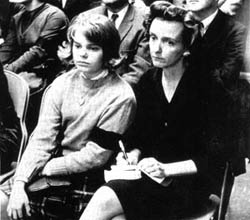
Long gone are the days when advocates of free speech could prevail in a case such as Tinker v. Des Moines. Indeed, it’s been 50 years since 13-year-old Mary Beth Tinker was suspended for wearing a black armband to school in protest of the Vietnam War. In taking up her case, the U.S. Supreme Court declared that students do not “shed their constitutional rights to freedom of speech or expression at the schoolhouse gate.”

Were Tinker to make its way through the courts today, it would have to overcome the many hurdles being placed in the path of those attempting to voice sentiments that may be construed as unpopular, offensive, conspiratorial, violent, threatening or anti-government.

Consider, if you will, that the U.S. Supreme Court, historically a champion of the First Amendment, has declared that citizens can exercise their right to free speech everywhere it’s lawful—online, in social media, on a public sidewalk, etc.—as long as they don’t do so in front of the Court itself.

What is the rationale for upholding this ban on expressive activity on the Supreme Court plaza?

“Allowing demonstrations directed at the Court, on the Court’s own front terrace, would tend to yield the…impression…of a Court engaged with — and potentially vulnerable to — outside entreaties by the public.”

Translation: The appellate court that issued that particular ruling in Hodge v. Talkin actually wants us to believe that the Court is so impressionable that the justices could be swayed by the sight of a single man, civil rights activist Harold Hodge, standing alone and silent in the snow in a 20,000 square-foot space in front of the Supreme Court building wearing a small sign protesting the toll the police state is taking on the lives of black and Hispanic Americans. [You can watch the video here: https://www.youtube.com/watch?v=xy1HQm67b2c]

My friends, we’re being played for fools.

The Supreme Court is not going to be swayed by you or me or Harold Hodge.

For that matter, the justices—all of whom hale from one of two Ivy League schools (Harvard or Yale) and most of whom are now millionaires and enjoy such rarefied privileges as lifetime employment, security details, ample vacations and travel perks—are anything but impartial.

If they are partial, it is to those with whom they are on intimate terms: with Corporate America and the governmental elite who answer to them, and they show their favor by investing in their businesses, socializing at their events, and generally marching in lockstep with their values and desires in and out of the courtroom.

Screen Shot 2015-09-01 at 9.56.09 AMTo suggest that Harold Hodge, standing in front of the Supreme Court building on a day when the Court was not in session hearing arguments or issuing rulings, is a threat to the Court’s neutrality, while their dalliances with Corporate America is not, is utter hypocrisy.

Making matters worse, the Supreme Court has the effrontery to suggest that the government can discriminate freely against First Amendment activity that takes place within a government forum. Justifying such discrimination as “government speech,” the Court ruled that the Texas Dept. of Motor Vehicles could refuse to issue specialty license plate designs featuring a Confederate battle flag because it was offensive.

If it were just the courts suppressing free speech, that would be one thing to worry about, but First Amendment activities are being pummeled, punched, kicked, choked, chained and generally gagged all across the country.

The reasons for such censorship vary widely from political correctness, safety concerns and bullying to national security and hate crimes but the end result remains the same: the complete eradication of what Benjamin Franklin referred to as the “principal pillar of a free government.”

Officials at the University of Tennessee, for instance, recently introduced an Orwellian policy that would prohibit students from using gender specific pronouns and be more inclusive by using gender “neutral” pronouns such as ze, hir, zir, xe, xem and xyr, rather than he, she, him or her.

On many college campuses, declaring that “America is the land of opportunity” or asking someone “Where were you born?” are now considered microaggressions, “small actions or word choices that seem on their face to have no malicious intent but that are thought of as a kind of violence nonetheless.”  Trigger warnings are also being used to alert students to any material or ideas they might read, see or hear that might upset them.

More than 50 percent of the nation’s colleges, including Boston University, Harvard University, Columbia University and Georgetown University, subscribe to “red light” speech policies that restrict or ban so-called offensive speech, or limit speakers to designated areas on campus. The campus climate has become so hypersensitive that comedians such as Chris Rock and Jerry Seinfeld refuse to perform stand-up routines to college crowds anymore.

What we are witnessing is an environment in which political correctness has given rise to “vindictive protectiveness,” a term coined by social psychologist Jonathan Haidt and educational First Amendment activist Greg Lukianoff. It refers to a society in which “everyone must think twice before speaking up, lest they face charges of insensitivity, aggression or worse.”

This is particularly evident in the public schools where students are insulated from anything—words, ideas and images—that might create unease or offense. For instance, the thought police at schools in Charleston, South Carolina, have instituted a ban on displaying the Confederate flag on clothing, jewelry and even cars on campus.

Added to this is a growing list of programs, policies, laws and cultural taboos that defy the First Amendment’s safeguards for expressive speech and activity. Yet as First Amendment scholar Robert Richards points out, “The categories of speech that fall outside of [the First Amendment’s] protection are obscenity, child pornography, defamation, incitement to violence and true threats of violence. Even in those categories, there are tests that have to be met in order for the speech to be illegal. Beyond that, we are free to speak.”

Technically, Richards is correct. On paper, we are free to speak.

In reality, however, we are only as free to speak as a government official may allow.

Free speech zones, bubble zones, trespass zones, anti-bullying legislation, zero tolerance policies, hate crime laws and a host of other legalistic maladies dreamed up by politicians and prosecutors have conspired to corrode our core freedoms.

Battlefield_Cover_300As a result, we are no longer a nation of constitutional purists for whom the Bill of Rights serves as the ultimate authority. As I make clear in my book Battlefield America: The War on the American People, we have litigated and legislated our way into a new governmental framework where the dictates of petty bureaucrats carry greater weight than the inalienable rights of the citizenry.

It may seem trivial to be debating the merits of free speech at a time when unarmed citizens are being shot, stripped, searched, choked, beaten and tasered by police for little more than daring to frown, smile, question, challenge an order, or just breathe.

However, while the First Amendment provides no tangible protection against a gun wielded by a government agent, nor will it save you from being wrongly arrested or illegally searched, or having your property seized in order to fatten the wallets of government agencies, without the First Amendment, we are utterly helpless.

It’s not just about the right to speak freely, or pray freely, or assemble freely, or petition the government for a redress of grievances, or have a free press. The unspoken freedom enshrined in the First Amendment is the right to think freely and openly debate issues without being muzzled or treated like a criminal.

Just as surveillance has been shown to “stifle and smother dissent, keeping a populace cowed by fear,” government censorship gives rise to self-censorship, breeds compliance and makes independent thought all but impossible.

In the end, censorship and political correctness not only produce people that cannot speak for themselves but also people who cannot think for themselves. And a citizenry that can’t think for itself is a citizenry that will neither rebel against the government’s dictates nor revolt against the government’s tyranny.

The end result: a nation of sheep who willingly line up for the slaughterhouse.

The cluttered cultural American landscape today is one in which people are so distracted by the military-surveillance-entertainment complex that critical thinkers are in the minority and frank, unfiltered, uncensored speech is considered uncivil, uncouth and unacceptable.

That’s the point, of course.

The architects, engineers and lever-pullers who run the American police state want us to remain deaf, dumb and silent. They want our children raised on a vapid diet of utter nonsense, where common sense is in short supply and the only viewpoint that matters is the government’s.

We are becoming a nation of idiots, encouraged to spout political drivel and little else.

In so doing, we have adopted the lexicon of Newspeak, the official language of George Orwell’s fictional Oceania, which was “designed not to extend but to diminish the range of thought.” As Orwell explained in 1984, “The purpose of Newspeak was not only to provide a medium of expression for the world-view and mental habits proper to the devotees of IngSoc [the state ideology of Oceania], but to make all other modes of thought impossible.”

If Orwell envisioned the future as a boot stamping on a human face, a fair representation of our present day might well be a muzzle on that same human face.

If we’re to have any hope for the future, it will rest with those ill-mannered, bad-tempered, uncivil, discourteous few who are disenchanted enough with the status quo to tell the government to go to hell using every nonviolent means available.

However, as Orwell warned, you cannot become conscious until you rebel.

WASHINGTON, D.C. — Delivering a sharp blow to the First Amendment, a 5-4 U.S. Supreme Court has declared specialty license plates to be “government speech” and not private speech and, thus, subject to censorship by government officials. The Rutherford Institute warns that the ruling could set a dangerous precedent, paving the way for the government to censor private speech whenever it occurs in a public or government forum. At issue in Walker v. Texas Division, Sons of Confederate Veterans, Inc., was whether Texas officials violated the First Amendment when they denied a Civil War heritage group’s request for a specialty plate bearing the Confederate battle flag, allegedly because the Department of Motor Vehicles was concerned some people would be offended by the Confederate flag.

In weighing in on the case, The Rutherford Institute had urged the Court to affirm that specialty license plates—which run the gamut in Texas from college alumni associations and fast food chains to real estate brokers and Dr. Pepper—are private speech which may not be censored on the basis of viewpoint. Institute attorneys also argued that by inviting groups to engage in private speech and contribute to the marketplace of ideas, the government surrendered the right to treat the license plate as “government speech” subject to any censorship the state deems appropriate.

“This ruling sanctions total government censorship. We are witnessing an elitist philosophy at play, one shared by both the extreme left and the extreme right, which aims to stifle all expression that doesn’t fit within their parameters of what they consider to be ‘acceptable’ speech, ” said John W. Whitehead, president of The Rutherford Institute and author of Battlefield America: The War on the American People. “There are all kinds of labels put on such speech: it’s been called politically incorrect speech, hate speech, offensive speech, and so on, but really, the message being conveyed is that you don’t have a right to express yourself if certain people don’t like or agree with what you are saying.”

Like many states, Texas allows motorists to use specialty license plates, which display a message or symbol supporting a cause or nonprofit group. By law, any nonprofit organization is allowed to apply for a specialty plate by submitting a design to be approved by the Department of Motor Vehicles. In 2009, Texas SCV, a nonprofit organization that works to preserve the memory and reputation of soldiers who fought for the Confederacy during the Civil War, applied for a specialty license plate and submitted a design that featured the SCV logo, which is a Confederate battle flag framed on all four sides by the words “Sons of Confederate Veterans 1896.” When the matter reached the DMV, it asked for public comment on approval of the application, and in response received comments both supporting and against the application. Eventually, the DMV voted to deny the application, explaining that some of the public comments found the Confederate flag portion of the propose plate offensive. The SCV then filed suit, alleging that the denial of the application constituted viewpoint discrimination in violation of the First Amendment. A district court subsequently ruled that the state did not violate the Constitution. On appeal, however, the Court of Appeals for the Fifth Circuit reversed that decision, holding that the specialty license plates are private speech protected by the First Amendment. Moreover, the Fifth Circuit ruled that the DMV unconstitutionally discriminated against the SCV by classifying as offensive its view that the Confederate flag is a symbol of sacrifice, independence, and Southern heritage.

Affiliate attorneys D. Alicia Hickok and Todd N. Hutchinson of Drinker, Biddle & Reath LLP, in Philadelphia, assisted The Rutherford Institute in advancing the arguments in the amicus brief before the U.S. Supreme Court.