SAN FRANCISCO, Calif. — A coalition of free speech organizations is asking the federal courts to rein in President Trump’s unprecedented use of the military against civilians, especially as a means of silencing and punishing disfavored speech, warning that such actions echo the very abuses the nation’s Founders sought to prevent. The filing comes amid Trump’s ongoing threats to deploy troops to Memphis, Baltimore, San Francisco, Chicago, and New York City, often over the objections of state governors.
In an amicus brief before the Ninth Circuit Court of Appeals in Newsom v. Trump, The Rutherford Institute joined the ACLU, its state affiliates, and the Knight First Amendment Institute at Columbia University to challenge Trump’s June 2025 order federalizing the California National Guard and deploying active-duty Marines in Los Angeles to quell protests against his immigration raids. The coalition’s brief argues that the President’s claim of unilateral, unreviewable authority to deploy troops on American streets is “extreme, unprecedented, and incompatible with the history, traditions, and laws of the United States.”
“The Founders warned against standing armies on American soil, fearing that the military might be used not to defend the people, but to control them,” said constitutional attorney John W. Whitehead, president of The Rutherford Institute and author of Battlefield America: The War on the American People. “Deploying the military to deal with domestic matters that can—and should—be handled by local police violates the Posse Comitatus Act and crosses the line into authoritarianism.”
On June 7, 2025, President Trump invoked a rarely used statute, 10 U.S.C. § 12406, to forcibly federalize the California National Guard and deploy thousands of troops against largely peaceful protesters in Los Angeles. The protests erupted after armed federal agents carried out aggressive immigration raids, sparking public outrage. The federal government escalated the situation by unleashing military troops armed with tear gas, pepper balls, and flash-bang grenades on demonstrators that included journalists, legal observers, clergy, children, and elected officials. Trump claimed that the protests “constitute a form of rebellion against the authority of the Government.”
Five days later, the federal district court found that “[Trump’s] actions were illegal—both exceeding the scope of his statutory authority and violating the Tenth Amendment,” and thus issued a temporary restraining order to return control of the National Guard to the Governor. But a panel of the Ninth Circuit then stayed that initial restraining order pending appeal, giving high deference to the President’s authority. While this appeal has been pending, the district court ruled on Sept. 2, 2025, that the federal government also violated the Posse Comitatus Act, which forbids the use of the military for domestic policing absent express constitutional or statutory authorization.
The coalition’s brief before the Ninth Circuit stresses that: 1) History and tradition strictly limit military deployments against civilians; 2) Military policing threatens the First Amendment by suppressing lawful protests, political dissent, and association; and 3) Unchecked troop deployments risk authoritarian abuse, because the President cannot label ordinary political opposition as “rebellion” to justify military force. With 300 National Guard troops to remain deployed in Los Angeles through Election Day, the dangers of Trump’s military deployments are not theoretical: internal assessments reveal that troops’ presence in Washington, D.C. has been perceived by the public as “leveraging fear.”
Hina Shamsi, Charlie Hogle, Sean M. Lau, and other ACLU attorneys advanced the arguments in the amicus brief.
The Rutherford Institute is a nonprofit civil liberties organization dedicated to making the government play by the rules of the Constitution. To this end, the Institute defends individuals whose constitutional rights have been threatened or violated and educates the public on a broad range of issues affecting their freedoms.
“That was when they suspended the Constitution… There wasn’t even an enemy you could put your finger on.”—Margaret Atwood, The Handmaid’s Tale
What we are witnessing is not a government of the people, by the people, and for the people; it is a government over the people.
Call it what it is: political gaslighting—the regime says one thing while doing the opposite, and insists on the citizenry’s trust while dismantling the very checks and balances that make trust possible.
So when the powers-that-be claim to be protecting the Constitution, they’re dismantling it at every turn. In this way, the mechanisms of constitutional government—separation of powers, federalism, due process, and the Bill of Rights—are being hollowed out in plain sight.
Although this dismantling did not start with President Trump, it has accelerated beyond imagining.
What was once a slow bleed is now a hemorrhage—and it is not random. The damage is unfolding on two parallel tracks: a steady, methodical, bureaucratic erosion (rule changes, executive orders, new databases) paired with shock-and-awe surges (National Guard deployments, mass round-ups, headline-grabbing prosecutions).
The words may say “freedom” and “order,” but the deeds smack of tyranny.
Rights are framed as absolute for friends and privileges for critics. That is the opposite of constitutional government, which holds everyone—especially those in power—to the same rule of law, applied evenly.
If the government can police ideas, deploy troops at home, run dragnets by algorithm, disappear people into distant prisons, build spectacle cages, and amass power in one office, then no American is safe—including those who cheer these efforts today.
If you believe in limited government, equal justice, and due process—whatever your party—these double standards should alarm you most, because the precedents being cheered today will be wielded against you tomorrow.
What follows is a running ledger of the gaslighting playbook and its constitutional costs.
The Gaslight: “We’re Restoring the Constitution.” Reality: The “temporary” powers created after 9/11 have hardened into a permanent police-state architecture—Patriot Act surveillance, secret FISA processes and National Security Letters, DHS fusion centers, a diluted Fourth Amendment “border zone,” civil-asset forfeiture, Pentagon 1033 militarization, Real ID, facial-recognition and geofence warrants—now run at full throttle across administrations. The Cost: A police state.
The Gaslight: “We Value Law and Order.” Reality: The administration deployed Marines and the National Guard into American streets to police protests protected by the First Amendment. On September 2, 2025, a federal judge ruled that the administration’s deployment of thousands of Guard troops and U.S. Marines to Los Angeles—ostensibly for immigration protests—violated the Posse Comitatus Act, describing a “top-down, systemic effort” to militarize civil law enforcement. The Constitution’s framers feared standing armies and military occupations of American communities. The Cost: The death of Posse Comitatus.
The Gaslight: “We Defend Free Speech.” Reality: Dissent is criminalized, expressive conduct is relitigated, and disfavored groups face terror labels and IRS pressure. Protest is a right, not a privilege, yet the government increasingly recasts organized dissent as conspiracy. After the Charlie Kirk shooting, the White House floated designating “antifa” and other liberal groups as domestic terrorists, bringing racketeering cases against funders, and targeting nonprofits critical of the administration—all while downplaying right-wing violence. Fold in Bondi’s vow to target “hateful” speech and Vance’s pledge to eradicate “leftist ideology,” and power slides from punishing unlawful acts to policing ideas. The Cost: A weaponized First Amendment.
The Gaslight: “We’re Protecting You from Extremists.” Reality: Watchlists without due process, elastic “material support” theories, politicized “extremism” labels, and donor targeting that treat journalists, whistleblowers, activists—even parents at school boards—as suspects first and citizens second. Speaking truth to power is reframed as a security risk. In free societies, the state fears the citizen; in unfree ones, the citizen fears the state. The Cost: Dissent rebranded as extremism.
The Gaslight: “We’re Ending Federal Censorship.” Reality: On Day One, the President signed an order to “end federal censorship.” Read closely, it asserts sweeping control over how agencies interact with media platforms and broadcasters, rebranding ordinary outreach and fact-checking as First Amendment violations, while positioning the Executive as referee of the private square. By centralizing power over the flow of information in the Executive Branch, it threatens the independence of the very private forums where Americans speak. The test of free speech is whether the government stays out of the marketplace of ideas—not whether it curates it to the President’s liking. The Cost: The state as speech referee.
The Gaslight: “We Use Smart Tech, Not Dragnet Surveillance.” Reality: The administration is fusing government databases and outsourcing “intelligence” to private vendors in such a way that data becomes the warrant. ICE’s new $30 million deal with Palantir to build “ImmigrationOS” promises to identify, track, and deport people using AI-driven analytics and cross-agency data sharing. Add in geofence warrants, face-scan dragnets, and fusion-center “suspicious activity” pipelines, and you get a domestic intelligence system that presumes guilt by data trail. The Cost: Probable cause replaced by algorithms.
The Gaslight: “We’re Tough on Crime.” Reality: This year, U.S. agencies financed the transfer of migrants to El Salvador’s mega-prison (CECOT), where families and lawyers lost contact with detainees for months. Florida’s “Alligator Alcatraz” detention site whetted the government’s appetite for scaled-up incarceration, converting state prisons into immigration jails nationwide. These attempts by the Trump administration constitute an end run around longstanding constitutional protections for anyone accused of a crime. The common denominator is spectacle over justice, expansion over restraint. The Cost: The death of due process.
The Gaslight: “We’re Compassionate, Not Cruel.” Reality: The push to clear homeless encampments combines criminalization with expanded involuntary commitments. A July 24, 2025 executive order encourages states to funnel people into institutions and mental-health courts, tying funding to “maximum” use of commitments—an end-run around the presumption of liberty that undergirds due process. The Cost: Bureaucratic coercion over compassion.
The Gaslight: “We’re Streamlining Government.” Reality: The separation of powers was intended to serve as a check against any one government agency becoming too powerful. Yet the administration has pressed an aggressive unitary-executive theory to encroach on independent agencies, such as the Federal Reserve. Scholars warn this could erase the independence of agencies designed to check the White House. The Cost: Checks and balances gutted.
The Gaslight: “We’re Keeping America Safe Overseas.” Reality: Killing by assassination, not authorization. Twice in recent months, U.S. forces have launched unannounced attacks on Venezuelan boats, killing crews without warning or due process, on the mere assertion that they were drug traffickers. The Cost: War powers and judicial oversight bypassed.
The Gaslight: “We’re Fixing Wasteful Spending.” Reality: Having poured billions into surveillance, prisons, and domestic deployments, the “police-state budget” unravels the economy while eroding liberty. The Cost: A debt-funded police state.
Many who cherish ordered liberty, limited government, fiscal restraint, and constitutional morality would normally recoil at these tactics under any other administration, so why not now?
Principles should not change because the party in power has changed, and yet that’s exactly what continues to drive the double standard.
If there’s a constitutional scorecard, “we the people” are on the losing team right now.
The First Amendment is buckling as protest is chilled, expressive conduct is targeted, opponents are threatened with terror labels, and the Executive Branch expands control over the speech ecosystem.
The Fourth and Fifth Amendments have been weakened by AI surveillance and cross-agency fusion that normalize suspicionless tracking, while offshore detention and coerced commitments compromise due process.
The Eighth Amendment is mocked by harsh, theatrical detention regimes.
Federalism and the Tenth Amendment give way when federal troops step into local policing.
Separation of powers erodes as an inflated unitary-executive theory encroaches on independent agencies.
War powers are skirted by extrajudicial killings abroad. And fiscal responsibility is inverted as surveillance and prison appropriations swell while liberty contracts.
What must happen now?
Congress must codify guardrails against domestic military use—tighten Posse Comitatus, narrow Insurrection Act exceptions, and mandate transparency for any domestic mission. Courts and prosecutors should reaffirm expressive rights, rejecting end-runs around Texas v. Johnson and refusing cases that criminalize symbolism.
Lawmakers must impose bright-line limits on data fusion, bar cross-agency pooling for generalized surveillance, and require algorithmic transparency and adversarial testing before any tool touches liberty. The U.S. must prohibit outsourcing detention to abusive regimes, close loopholes, and apply human-rights scrutiny to every foreign arrangement.
The independence of watchdogs and the Fed needs protection through clear “for cause” standards. States and cities should decriminalize homelessness and fund housing-first approaches instead of coercive commitments.
Congress must reassert war powers, requiring explicit authorization before any attack abroad. And fiscal sanity must be restored: sunset emergency outlays for surveillance and prison build-outs, mandate GAO audits of domestic deployments and fusion contracts, and attach civil-liberties impact statements to major security spending.
Our job as citizens is not to trust the government but to bind it down with the Constitution. “In questions of power,” Thomas Jefferson warned, we must “bind [government] down from mischief by the chains of the Constitution.”
Whatever you do, don’t trust the government with your privacy. Don’t trust it with your property: no-knock raids and forfeiture turn “private” property into whatever authorities permit you to keep.
Don’t trust it with your finances: Washington spends money it doesn’t have on programs it can’t afford. Don’t trust it with your life: force without accountability is not protection.
Above all, don’t trust it with your freedoms: on paper, rights endure; in practice, they are rationed by policy memos, watchlists, and shifting lines in the sand.
This should never be a right-vs-left debate; it’s the State vs. your liberty.
If you wouldn’t trust your worst political enemy with these weaponized tools, you shouldn’t trust your favorite politician with them either.
So think nationally, act locally.
Rebuild the habits of self-government where you live: know your neighbors and officials; know your rights and your city charter; ask who runs the jail and demand transparency; vet the people you entrust with power; and hold officials to account—show up, file requests, appeal, document, organize.
This is the work in front of us—not knee-jerk outrage, but persistent, consistent work to fortify the “chains of the Constitution.”
As I make clear in my book Battlefield America: The War on the American People and in its fictional counterpart The Erik Blair Diaries, if we let emergency rule become ordinary rule—military troops as beat cops, protest as crime, data as warrant, assassination as policy, money as politics—there won’t be a Constitution left to defend.
“The greatest tyrannies are always perpetuated in the name of the noblest causes.”—Thomas Paine
They said it was for safety. They said it was for order. They said it was for the good of the nation.
They always say it’s for something good… until it isn’t.
Nearly a quarter-century after 9/11, we are still living with the consequences of fear-driven government power grabs. What began as “temporary” measures for our security have hardened into a permanent architecture of control.
The bipartisan police-state architecture that began with 9/11 has been passed from president to president and party to party, each recycling the same justifications—safety, security, patriotism—to expand its powers at the expense of the citizenry.
So they locked down the country “for our safety.” They expanded surveillance “for our security.” They rounded up anyone who challenged the narrative “for the common good.” They erased names, ideas, and histories “to prevent offense.” They forced schools to teach only what was politically correct “for the children.” They censored speech “for our protection.” They targeted dissenters “to preserve peace.” They militarized the streets and called it “law and order.”
These very abuses—once denounced when carried out by the Left—are now cheered, defended, and excused when carried out by the Right.
People who once spoke passionately about truth, freedom, and faith have now fallen silent in the face of injustice, or worse, convinced themselves that nothing is wrong. The very voices that should be warning against tyranny are instead excusing it or looking away.
This is the danger of double standards in politics: every tyranny is rationalized in the moment by its chorus of defenders.
But history teaches that what goes around comes around. If you justify it now, you’ll have no defense when the tables turn.
And yet, time and again, the lies we tell ourselves make it possible. The cult of personality. The blind loyalty to party. The belief that “our side” can’t be the villain.
It never ceases to amaze how far people will go to excuse the actions of their favorite tyrant, even when those actions are the very things they once swore to oppose.
The pattern of justifying tyranny is as old as power itself. Every abuse comes wrapped in the same excuse: we had to do it.
After 9/11, Americans were told the Patriot Act and mass surveillance were “necessary to prevent terrorism.” The result was a sprawling security state that tracks every phone call, every online search, every purchase. The justification was security. The cost was freedom.
Under Obama, drone warfare and the prosecution of whistleblowers were defended as “keeping America safe.” The president even claimed the power to assassinate U.S. citizens abroad without trial. The result was an unaccountable government acting as judge, jury and executioner. The justification was safety. The cost was due process.
During the COVID-19 pandemic, lockdowns and mandates were imposed in the name of “public health,” laying the groundwork for a Nanny State empowered to micromanage every aspect of our lives—where we go, what we buy, who we see. The result was government claiming control over every aspect of daily life. The justification was saving lives. The cost was the right to govern our bodies.
Under Trump, the script is familiar.
National Guard deployments in American cities are justified as “restoring order.” Sweeping surveillance is framed as “protecting communities.” Crackdowns on dissent are defended as “stopping criminals.” Mental health round-ups of the homeless are justified as “helping the vulnerable.” Militarized patrols on city streets are justified as “cleaning up the streets.” Turning ICE into a roving army of lawless thugs is justified as “protecting citizenship.” Censorship and efforts to sanitize American history are now being lauded by the same voices that railed against “cancel culture.”
That same logic has taken a deadly turn abroad. At Trump’s direction, the U.S. carried out a series of preemptive military strikes this year—against Iran’s nuclear sites, against the Houthis in Yemen, and most recently against what the administration claimed was a drug-trafficking boat off the coast of Venezuela. The White House has justified these deadly attacks—carried out without congressional approval or constitutional authorization—as part of the president’s unilateral war-making authority.
This, too, is part of the bipartisan police-state architecture built after 9/11, when presidents claimed open-ended authority to wage preemptive war without meaningful congressional oversight.
What began with Afghanistan and Iraq has metastasized into a global battlefield where any president can launch attacks—on Iran, on Yemen, on Venezuela—without accountability.
As always, the justification is order, safety, and patriotism. The cost is truth, justice and freedom.
Every time Trump expands his powers, the chorus is the same: It wouldn’t be necessary if Democrats had done their job. If you don’t break the law, you have nothing to fear.If you’re not doing anything wrong, why worry?
These are the oldest excuses for tyranny—and they never change. Only the partisanship does.
What makes Trump and those who came before him especially dangerous is not merely their willingness to wield power but the eagerness of their enablers to excuse and defend it at every turn.
History shows that bullies and strongmen can only rise when mobs rally to their side. A tyrant’s greatest weapon is not his fist, but the crowd that cheers him on, intimidates his critics, and convinces itself that might makes right.
The machinery of authoritarianism always needs a chorus of defenders, and today that chorus is louder, more organized, and more dismissive of constitutional limits than ever before.
We have been building to this moment for a long time. Even so, why do people accept tyranny so easily?
First, the cult of personality. When people invest blind faith in a leader, they will excuse anything he does. If he says surveillance is necessary, they believe it. If he says dissenters are enemies, they cheer their punishment. It is the psychology of the mob, cloaked in the loyalty of the true believer.
Second, fear as a political weapon. Every despot knows that frightened people will tolerate almost anything. Fear of terrorism. Fear of crime. Fear of disease. Fear of immigrants. Fear of collapse. Fear makes people beg for the chains that bind them.
Third, the “our side” fallacy. People imagine tyranny is only tyranny when the other side does it. When their side does it, they call it leadership. They call it patriotism. They call it protection. But the abuse doesn’t change when the party label does. Wrong is wrong.
Every new regime that seizes power promises it will use extraordinary authority only for good. And every regime—without exception—uses it to entrench itself at the expense of liberty.
Every generation tells itself the same lies to excuse the same abuses.
Consider the whiplash of partisan double standards:
Conservatives who blasted the Obama administration for NSA spying now cheer Trump’s Palantir partnership and AI-driven surveillance that tracks Americans’ digital footprints.
Democrats who embraced Biden’s use of emergency orders to advance their agenda have been quick to denounce Trump for ruling by executive order.
Those who bristled at COVID mandates under Democrats now applaud Trump’s use of government force to impose his own version of “public safety.”
Both sides flip-flop on free speech. Conservatives denounced censorship on college campuses but defend banning “dangerous” books and surveilling dissidents, while liberals oppose Trump’s attempt to whitewash history yet defend platforms censoring speech they deem “harmful” or “hateful.”
The double standard is breathtaking.
Tyranny doesn’t change depending on who carries it out. Yet partisans convince themselves it does. They say: It’s different this time. It’s necessary. It’s for us.
In truth, the only difference is who holds the whip.
The Constitution was designed to restrain exactly this impulse. It does not say: “These rights apply only when the other party is in power.” It does not say: “The executive may rule by decree if he is popular.”
James Madison warned that “if men were angels, no government would be necessary.” But men are not angels. That is why the Constitution separates powers, guarantees due process, and protects speech and assembly—especially in times of crisis.
Every time one party tramples these limits, the other eventually inherits those same powers and uses them in turn. The Patriot Act, passed under Bush, was wielded aggressively under Obama, Trump, and Biden. The executive orders one president signs become the precedents for the next.
“What you excuse today,” history warns us, “will be used against you tomorrow.”
The descent into tyranny always begins with justifications.
The Roman Republic collapsed into empire because senators claimed Caesar needed extraordinary powers to restore order. The republic never recovered.
In 1930s Germany, emergency decrees were defended as temporary measures to stabilize society. They became the permanent architecture of dictatorship.
In post-9/11 America, warrantless surveillance and secret courts were sold as temporary protections. Nearly a quarter-century later, they remain fixtures of government power.
Tyranny is never announced as tyranny. It is always justified as safety, morality, and order. It is always explained away as temporary. And it is always defended by people who believe they are on the winning side.
And so here we are.
A president issues executive orders that erode the Bill of Rights. His supporters applaud. Another president expands surveillance or censorship. His supporters applaud.
Both sides denounce the abuses of their opponents yet sanction the same abuses when carried out by their own.
This is how liberty dies—not with a sudden coup, but with partisan politics valued more than principled freedom.
The police state thrives on this selective outrage. It does not matter which party is in power. The machinery of control grows. The Constitution withers. And the people are left squabbling over whose tyrant is better.
There is only one antidote: principle.
You cannot defend freedom by defending tyranny when your side is in power. You cannot preserve liberty by cheering for its destruction. You cannot expect constitutional limits to shield you tomorrow if you discard them today.
Those warnings went unheeded after 9/11, and we have been paying the price ever since. The bipartisan police-state architecture built in those years has only grown stronger, repurposed by each new administration.
Unless we find the courage to dismantle it, today’s justifications will become tomorrow’s permanent chains.
The lesson is clear: if you want liberty, you must defend it consistently—even when it restrains your own party, your own leader, your own side. Especially then.
What you excuse today will be used against you tomorrow.
Bodily autonomy—the right to privacy and integrity over our own bodies—is rapidly vanishing.
The debate now extends beyond forced vaccinations or invasive searches to include biometric surveillance, wearable tracking, and predictive health profiling.
We are entering a new age of algorithmic, authoritarian control, where our thoughts, moods, and biology are monitored and judged by the state.
Under the guise of public health and personal empowerment, this initiative is nothing less than the normalization of 24/7 bodily surveillance—ushering in a world where every step, heartbeat, and biological fluctuation is monitored not only by private companies but also by the government.
In this emerging surveillance-industrial complex, health data becomes currency. Tech firms profit from hardware and app subscriptions, insurers profit from risk scoring, and government agencies profit from increased compliance and behavioral insight.
This convergence of health, technology, and surveillance is not a new strategy—it’s just the next step in a long, familiar pattern of control.
Surveillance has always arrived dressed as progress.
Every new wave of surveillance technology—GPS trackers, red light cameras, facial recognition, Ring doorbells, Alexa smart speakers—has been sold to us as a tool of convenience, safety, or connection. But in time, each became a mechanism for tracking, monitoring, or controlling the public.
What began as voluntary has become inescapable and mandatory.
The moment we accepted the premise that privacy must be traded for convenience, we laid the groundwork for a society in which nowhere is beyond the government’s reach—not our homes, not our cars, not even our bodies.
RFK Jr.’s wearable plan is just the latest iteration of this bait-and-switch: marketed as freedom, built as a cage.
According to Kennedy’s plan, which has been promoted as part of a national campaign to “Make America Healthy Again,” wearable devices would track glucose levels, heart rate, activity, sleep, and more for every American.
Participation may not be officially mandatory at the outset, but the implications are clear: get on board, or risk becoming a second-class citizen in a society driven by data compliance.
What began as optional self-monitoring tools marketed by Big Tech is poised to become the newest tool in the surveillance arsenal of the police state.
Devices like Fitbits, Apple Watches, glucose trackers, and smart rings collect astonishing amounts of intimate data—from stress and depression to heart irregularities and early signs of illness. When this data is shared across government databases, insurers, and health platforms, it becomes a potent tool not only for health analysis—but for control.
Once symbols of personal wellness, these wearables are becoming digital cattle tags—badges of compliance tracked in real time and regulated by algorithm.
And it won’t stop there.
The body is fast becoming a battleground in the government’s expanding war on the inner realms.
In the eyes of the surveillance state, these could be red flags—justification for intervention, inquiry, or worse.
RFK Jr.’s embrace of wearable tech is not a neutral innovation. It is an invitation to expand the government’s war on thought crimes, health noncompliance, and individual deviation.
It shifts the presumption of innocence to a presumption of diagnosis. You are not well until the algorithm says you are.
The government has already weaponized surveillance tools to silence dissent, flag political critics, and track behavior in real time. Now, with wearables, they gain a new weapon: access to the human body as a site of suspicion, deviance, and control.
While government agencies pave the way for biometric control, it will be corporations—insurance companies, tech giants, employers—who act as enforcers for the surveillance state.
Wearables don’t just collect data. They sort it, interpret it, and feed it into systems that make high-stakes decisions about your life: whether you get insurance coverage, whether your rates go up, whether you qualify for employment or financial aid.
As reported by ABC News, a JAMA article warns that wearables could easily be used by insurers to deny coverage or hike premiums based on personal health metrics like calorie intake, weight fluctuations, and blood pressure.
It’s not a stretch to imagine this bleeding into workplace assessments, credit scores, or even social media rankings.
Employers already offer discounts for “voluntary” wellness tracking—and penalize nonparticipants. Insurers give incentives for healthy behavior—until they decide unhealthy behavior warrants punishment. Apps track not just steps, but mood, substance use, fertility, and sexual activity—feeding the ever-hungry data economy.
This dystopian trajectory has been long foreseen and forewarned.
In Brave New World by Aldous Huxley (1932), compliance is maintained not through violence but by way of pleasure, stimulation, and chemical sedation. The populace is conditioned to accept surveillance in exchange for ease, comfort, and distraction.
In THX 1138 (1971), George Lucas envisions a corporate-state regime where biometric monitoring, mood-regulating drugs, and psychological manipulation reduce people to emotionless, compliant biological units.
Gattaca (1997) imagines a world in which genetic and biometric profiling predetermines one’s fate, eliminating privacy and free will in the name of public health and societal efficiency.
In The Matrix (1999), written and directed by the Wachowskis, human beings are harvested as energy sources while trapped inside a simulated reality—an unsettling parallel to our increasing entrapment in systems that monitor, monetize, and manipulate our physical selves.
Minority Report (2002), directed by Steven Spielberg, depicts a pre-crime surveillance regime driven by biometric data. Citizens are tracked via retinal scans in public spaces and targeted with personalized ads—turning the body itself into a surveillance passport.
The anthology series Black Mirror, inspired by The Twilight Zone, brings these warnings into the digital age, dramatizing how constant monitoring of behavior, emotion, and identity breeds conformity, judgment, and fear.
Taken collectively, these cultural touchstones deliver a stark message: dystopia doesn’t arrive overnight.
As Margaret Atwood warned in The Handmaid’s Tale, “Nothing changes instantaneously: in a gradually heating bathtub, you’d be boiled to death before you knew it.” Though Atwood’s novel focuses on reproductive control, its larger warning is deeply relevant: when the state presumes authority over the body—whether through pregnancy registries or biometric monitors—bodily autonomy becomes conditional, fragile, and easily revoked.
The tools may differ, but the logic of domination is the same.
What Atwood portrayed as reproductive control, we now face in a broader, digitized form: the quiet erosion of autonomy through the normalization of constant monitoring.
When both government and corporations gain access to our inner lives, what’s left of the individual?
We must ask: when surveillance becomes a condition of participation in modern life—employment, education, health care—are we still free? Or have we become, as in every great dystopian warning, conditioned not to resist, but to comply?
That’s the hidden cost of these technological conveniences: today’s wellness tracker is tomorrow’s corporate leash.
In a society where bodily data is harvested and analyzed, the body itself becomes government and corporate property. Your body becomes a form of testimony, and your biometric outputs are treated as evidence. The list of bodily intrusions we’ve documented—forced colonoscopies, blood draws, DNA swabs, cavity searches, breathalyzer tests—is growing.
To this list we now add a subtler, but more insidious, form of intrusion: forced biometric consent.
Once health tracking becomes a de facto requirement for employment, insurance, or social participation, it will be impossible to “opt out” without penalty. Those who resist may be painted as irresponsible, unhealthy, or even dangerous.
We’ve already seen chilling previews of where this could lead. In states with abortion restrictions, digital surveillance has been weaponized to track and prosecute individuals for seeking abortions—using period-tracking apps, search histories, and geolocation data.
When bodily autonomy becomes criminalized, the data trails we leave behind become evidence in a case the state has already decided to make.
This is not merely the expansion of health care. It is the transformation of health into a mechanism of control—a Trojan horse for the surveillance state to claim ownership over the last private frontier: the human body.
Because ultimately, this isn’t just about surveillance—it’s about who gets to live.
Too often, these debates are falsely framed as having only two possible outcomes: safety vs. freedom, health vs. privacy, compliance vs. chaos. But these are illusions. A truly free and just society can protect public health without sacrificing bodily autonomy or human dignity.
We must resist the narrative that demands our total surrender in exchange for security.
Once biometric data becomes currency in a health-driven surveillance economy, it’s only a matter of time before that data is used to determine whose lives are worth investing in—and whose are not.
We’ve seen this dystopia before.
In the 1973 film Soylent Green, the elderly become expendable when resources grow scarce. My good friend Nat Hentoff—an early and principled voice warning against the devaluation of human life—sounded this alarm decades ago. Once pro-choice, Hentoff came to believe that the erosion of medical ethics—particularly the growing acceptance of abortion, euthanasia, and selective care—was laying the groundwork for institutionalized dehumanization.
Hentoff referred to this as “naked utilitarianism—the greatest good for the greatest number. And individuals who are in the way—in this case, the elderly poor—have to be gotten out of the way. Not murdered, heaven forbid. Just made comfortable until they die with all deliberate speed.”
That concern is no longer theoretical.
In 1996, writing about the Supreme Court’s consideration of physician-assisted suicide, Hentoff warned that once a state decides who shall die “for their own good,” there are “no absolute limits.” He cited medical leaders and disability advocates who feared that the poor, elderly, disabled, and chronically ill would become targets of a system that valued efficiency over longevity.
Today, data collected through wearables—heart rate, mood, mobility, compliance—can shape decisions about insurance, treatment, and life expectancy. How long before an algorithm quietly decided whose suffering is too expensive, whose needs are too inconvenient, or whose body no longer qualifies as worth saving?
This isn’t a left or right issue.
Dehumanization—the process of stripping individuals or groups of their dignity, autonomy, or moral worth—cuts across the political spectrum.
Today, dehumanizing language and policies aren’t confined to one ideology—they’re weaponized across the political divide. Prominent figures have begun referring to political opponents, immigrants, and other marginalized groups as “unhuman”—a disturbing echo of the labels that have justified atrocities throughout history.
How can any party credibly claim to be “pro‑life” when it devalues the humanity of entire groups, stripping them of the moral worth that should be fundamental to civil society?
When the state and its corporate allies treat people as data, as compliance issues, or as “unworthy,” they dismantle the very notion of equal human dignity.
In such a world, rights—including the right to bodily autonomy, health care, or even life itself—become privileges doled out only to the “worthy.”
This is why our struggle must be both political and moral. We can’t defend bodily sovereignty without defending every human being’s equal humanity.
The dehumanization of the vulnerable crosses political lines. It manifests differently—through budget cuts here, through mandates and metrics there—but the outcome is the same: a society that no longer sees human beings, only data points.
The conquest of physical space—our homes, cars, public squares—is nearly complete.
What remains is the conquest of inner space: our biology, our genetics, our psychology, our emotions. As predictive algorithms grow more sophisticated, the government and its corporate partners will use them to assess risk, flag threats, and enforce compliance in real time.
The goal is no longer simply to monitor behavior but to reshape it—to preempt dissent, deviance, or disease before it arises. This is the same logic that drives Minority Report-style policing, pre-crime mental health interventions, and AI-based threat assessments.
If this is the future of “health freedom,” then freedom has already been redefined as obedience to the algorithm.
We must resist the surveillance of our inner and outer selves.
We must reject the idea that safety requires total transparency, or that health requires constant monitoring. We must reclaim the sanctity of the human body as a space of freedom—not as a data point.
The push for mass adoption of wearables is not about health. It is about habituation.
The goal is to train us—subtly, systematically—to accept government and corporate ownership of our bodies.
We must not forget that our nation was founded on the radical idea that all human beings are created equal, “endowed by their Creator with certain unalienable Rights,” among them life, liberty, and the pursuit of happiness.
These rights are not granted by the government, the algorithm, or the market. They are inherent. They are indivisible. And they apply to all of us—or they will soon apply to none of us.
The Founders got this part right: their affirmation of our shared humanity is more vital than ever before.
As I make clear in my book Battlefield America: The War on the American People and in its fictional counterpart The Erik Blair Diaries, the task before us is whether we will defend that humanity—or surrender it, one wearable at a time. Now is the time to draw the line—before the body becomes just another piece of state property.
Having figured out how to parlay presidential authority in foreign affairs in order to sidestep the Constitution, President Trump is using his immigration enforcement powers to lock up—and lock down—the nation.
After all, a police state requires a prison state. And no one is cheering louder than the private prison corporations making money hand over fist from Trump’s expansion of federal detention.
At the center of this campaign is Alligator Alcatraz, a federal detention facility built in the Florida Everglades and hailed by the White House as a model for the future of federal incarceration. But this is more than a new prison—it is the architectural symbol of a carceral state being quietly constructed in plain sight.
With over $170 billion allocated through Trump’s megabill, we are witnessing the creation of a vast, permanent enforcement infrastructure aimed at turning the American police state into a prison state.
Yet be warned: what begins with ICE rarely ends with ICE.
Trump’s initial promise to crack down on “violent illegal criminals” has evolved into a sweeping mandate: a mass, quota-driven roundup campaign that detains anyone the administration deems a threat, regardless of legal status and at significant expense to the American taxpayer: immigrants, activists, journalists, business owners, military veterans, and even spouses of American citizens.
What’s more, the vast majority of those being detained are not violent criminals.
Removing these individuals from the workforce and imprisoning them not only devastates families and communities—it burdens taxpayers and weakens the economy.
These are the workers who keep industries running—doing the jobs many Americans refuse. Locking them up doesn’t save money; it dismantles the very labor force that sustains the economy.
Like so many of the Trump administration’s grandiose plans, the math doesn’t add up.
Just as Trump’s tariffs have failed to revive American manufacturing and instead raised consumer prices, this detention-state spending spree will cost taxpayers far more than it saves.
It’s not just authoritarian—it’s bad economics, funneling tax dollars into a bureaucracy that grows government while delivering no real public benefit.
We’re being told it’s about public safety and border control—but in reality, it’s a bloated, inefficient bureaucracy that shifts billions from productive parts of the economy into a black hole of surveillance, cement, and razor wire.
Making matters worse, many of these detained immigrants are then exploited as a pool of cheap labor inside the very facilities where they’re held.
In other words, this isn’t just a prison expansion—it’s a taxpayer-funded machine that extracts labor from the very people it imprisons, while draining billions from the economy and undermining the industries it claims to protect in order to help corporations make a larger profit.
According to The New York Times, at least 60,000 immigrants were put to work in ICE detention centers in 2013—more than were employed by any single private employer in the country at the time. Paid as little as 13 cents an hour—or nothing at all—these civil detainees were used to prepare meals, clean facilities, and even provide services to other government institutions.
Unlike convicted criminals, these individuals are not serving sentences. Most are civil detainees awaiting immigration hearings, and roughly half are ultimately allowed to stay in the country. Yet while they await due process, they are locked up, stripped of their rights, and forced to work for pennies on the dollar—all while the government and its contractors avoid paying minimum wage and save tens of millions a year in labor costs.
This isn’t just about cutting corners. It’s a taxpayer-subsidized racket—a corporatist scheme where politically connected companies profit from government largesse, growing the very bureaucratic state that so-called fiscal conservatives once claimed to oppose.
This kind of exploitation is not limited to immigration detention.
An investigation by the Associated Press found that prisoners in the United States—many held in private or underregulated facilities—are part of a multibillion-dollar empire that supplies a hidden labor supply chain linked to hundreds of popular food brands and supply companies.
As the Associated Press reports, “The goods these prisoners produce wind up in the supply chains of a dizzying array of products found in most American kitchens, from Frosted Flakes cereal and Ball Park hot dogs to Gold Medal flour, Coca-Cola and Riceland rice. They are on the shelves of virtually every supermarket in the country, including Kroger, Target, Aldi and Whole Foods. And some goods are exported, including to countries that have had products blocked from entering the U.S. for using forced or prison labor.”
It’s no coincidence that 90 percent of people in immigration detention are held in privately run facilities. These corporations profit from every additional body behind bars—and have lobbied aggressively for the policies that keep the beds full. Their contracts often guarantee minimum occupancy levels, creating perverse incentives to detain more people, for longer periods, at the expense of justice and human rights.
The implications for Trump’s detention empire are chilling.
At a time when the administration is promising mass deportations to appease anti-immigrant hardliners, it is simultaneously constructing a parallel economy in which detained migrants can be pressed into near-free labor to satisfy the needs of industries that depend on migrant work.
What Trump is building isn’t just a prison state—it’s a forced labor regime, where confinement and exploitation go hand in hand. And it’s a high price to pay for a policy that creates more problems than it solves.
As the enforcement dragnet expands, so too does the definition of who qualifies as an enemy of the state.
Erected under the banner of law and order, this permanent infrastructure of incarceration and enforcement is being put in place now for use tomorrow—not just against violent criminals who happen to be undocumented immigrants, but against whoever the government deems undesirable.
Increasingly, not even citizenship is a safeguard against the carceral state—as one recent case involving a legal U.S. resident arrested for his political views makes chillingly clear.
Unfortunately, the government’s definition of “national security threat” is so broad, vague and unconstitutional that it could encompass anyone engaged in peaceful, nonviolent, constitutionally protected activities—including criticism of government policy or the policies of allied governments like Israel.
In Trump’s prison state, no one is beyond the government’s reach.
Just ask Mahmoud Khalil, a legal U.S. resident married to a U.S. citizen who was detained for months by ICE for daring to peacefully oppose Israel’s war efforts in Gaza. Khalil’s arrest was not based on any crime—but on his political views, which the government labeled a national security concern under a little-used statute that allows the Secretary of State to deport non-citizens for expressing views deemed contrary to U.S. foreign policy interests.
In other words, exercising your First Amendment rights can land you in a cell—citizen or not.
Despite the Trump administration’s efforts to criminalize dissent and expand the machinery needed to enforce it, this is not a partisan expansion—it’s a structural one and it is being built to outlast any single presidency.
Look closer and you’ll see the outlines of a system built not for justice, but for mass containment and control.
This isn’t speculation. We’ve seen this trajectory before.
Critics of the post-9/11 security state—left, right, and libertarian alike—have long warned that the powers granted to fight terrorism and control immigration would eventually be turned inward, used against dissidents, protestors, and ordinary citizens.
That moment has arrived.
Power, once granted, rarely shrinks. It merely changes hands.
That’s why the Founders placed limits on federal power in the first place—because they knew that even well-meaning government programs would metastasize into tyranny if left unchecked.
Yet Trump’s most vocal supporters remain dangerously convinced they have nothing to fear from this expanding enforcement machine. But history—and the Constitution—say otherwise.
Our founders understood that unchecked government power, especially in the name of public safety, is the most dangerous threat to liberty. That’s why they enshrined rights like due process, trial by jury, and protection from unreasonable searches.
Those safeguards are now being hollowed out.
Immigration courts already operate without juries and allow indefinite detention. Civil liberties have been eroded by predictive policing, no-knock raids, and dragnet surveillance. Asset forfeiture laws allow the government to seize property without charges.
Now, with billions more in detention funding, these tactics are being scaled up and normalized for broader use.
And the public is being conditioned to accept it.
The pageantry surrounding Alligator Alcatraz isn’t just about capacity—it’s about spectacle. The prison, which was built in eight days, features more than 200 security cameras, 28,000-plus feet of barbed wire and 400 security personnel.
This is not a correctional facility. It’s a warning.
A government that rules by fear must maintain that fear.
Trump’s detention expansion—like the mass surveillance programs before it—is not about making America safe. It’s about following the blueprints for authoritarian control in order to lock down the country.
The Trump administration claims its expanding detention regime is aimed at curbing illegal immigration and violent crime. In reality, the new federal budget significantly broadens ICE’s mandate and resources, supercharges its reach through private-public surveillance partnerships, and grants it sweeping policing powers to investigate so-called domestic threats, operate pretrial detention centers, and detain individuals without formal charges under emergency powers.
These are not the tools of a free society. They are the instruments of a permanent security state.
We’re told we must trade liberty for security. But whose security, and at what cost?
With this expansion, we are moving from a nation of laws to a nation of executive decrees, predictive enforcement, and pre-crime detention. Already, courtrooms have become conveyor belts to prison, designed to serve the state, not justice.
The government’s targets may be the vulnerable today—but the infrastructure is built for everyone: Trump’s administration is laying the legal groundwork for indefinite detention of citizens and noncitizens alike.
Executive power during a declared emergency knows few bounds. And those bounds are becoming looser with every new bill, every new detention center, every new algorithm.
This is not just about building prisons. It’s about dismantling the constitutional protections that make us free.
A nation cannot remain free while operating as a security state. And a government that treats liberty as a threat will soon treat the people as enemies.
This is not a partisan warning. It is a constitutional one.
Trump’s supporters may cheer the crackdown now, but what happens when these powers are turned inward?
What happens when a future administration—left, right, or otherwise—decides that your political speech, your religious views, or your refusal to comply with a federal mandate constitutes a threat to order?
What happens when you’re arrested under suspicion, held without trial, and processed through a court system designed for speed, not fairness?
What happens when Alligator Alcatraz becomes the model for every state?
We are dangerously close to losing the constitutional guardrails that keep power in check.
The very people who once warned against Big Government—the ones who decried the surveillance state, the IRS, and federal overreach—are now cheering for the most dangerous part of it: the unchecked power to surveil, detain, and disappear citizens without full due process.
Limited government, not mass incarceration, is the backbone of liberty.
The Founders warned that the greatest threat to liberty was not a foreign enemy, but domestic power left unchecked. That’s exactly what we’re up against now. A nation cannot claim to defend freedom while building a surveillance-fueled, prison-industrial empire.
Trump’s prison state is not a defense of America. It’s the destruction of everything America was meant to defend.
We can pursue justice without abandoning the Constitution. We can secure our borders and our communities without turning every American into a suspect and building a federal gulag.
If we continue down this path, cheering on bigger prisons, broader police powers, and unchecked executive authority—if we fail to reject the dangerous notion that more prisons, more power, and fewer rights will somehow make us safer—if we fail to restore the foundational limits that protect us from government overreach before those limits are gone for good—we may wake up to find that the prisons and concentration camps the police state is building won’t just hold others.
This war at home is quieter but no less destructive. The casualties are not in distant deserts or foreign cities. They are our freedoms, our communities, and the Constitution itself.
And the agents of this domestic war? Masked thugs. Unmarked vans. Raids. Roundups.
Detentions without due process. Retaliation against those who dare to question or challenge government authority. People made to disappear into bureaucratic black holes. Fear campaigns targeting immigrant communities and political dissenters alike. Surveillance weaponized to monitor and suppress lawful activity.
Packaged under the guise of national security—as all power grabs tend to be—this government-sanctioned thuggery masquerading as law-and-order is the face of the Trump Administration’s so-called war on illegal immigration.
The real threat to our way of life comes not from outside invaders, but from within: an unelected, unaccountable enforcement agency operating above the law.
By painting enforcement as narrowly targeted, the administration obscures a far broader dragnet that sweeps up legal residents, naturalized citizens, and native-born Americans alike.
This isn’t targeted enforcement—it’s indiscriminate purging.
What ICE—an agency that increasingly resembles a modern-day Gestapo—is doing to immigrants today, it can and will do to citizens tomorrow: these are the early warning signs of a system already in motion.
The machinery is in place. The abuses are ongoing. And the constitutional safeguards we rely on are being ignored, dismantled, or bypassed entirely.
When legal residents, naturalized citizens, and native-born Americans are swept up in ICE’s raids, detained without cause, and subjected to treatment that defies every constitutional protection against government overreach, this isn’t about immigration.
It’s not about danger. It’s about power—unchecked and absolute.
This is authoritarianism by design.
Here are just a few examples of how ICE’s reach now extends far beyond a criminal class of undocumented immigrants:
ICE has even conducted raids at churches—sanctuaries meant to offer refuge—violating not just constitutional rights but community trust and religious protections.
This pattern of abuse is not accidental.
It reflects a deliberate strategy of fear and domination by ICE agents acting like an occupying army, intent on intimidating the population into submission while the Trump Administration redraws the boundaries of the Constitution for all within America’s borders, citizen and immigrant alike.
This is how you dismantle a constitutional republic: not in one dramatic moment, but through the steady erosion of rights, accountability, and rule of law—first for the marginalized, then for everyone.
When constitutional guarantees become conditional and oversight is systematically evaded, all Americans—regardless of status—stand vulnerable to a regime that governs by fear rather than freedom.
We’ve seen this playbook before.
It’s the same strategy used by fascist regimes to consolidate power—using fear, force, and propaganda to turn public institutions into instruments of oppression.
ICE raids often occur without warrants. Agents frequently detain individuals not charged with any crime. Homes, schools, hospitals, workplaces, and courthouses have all become targets. Agents in plain clothes swarm unsuspecting individuals, arrest them without explanation, and separate families under the pretense of national security. In many cases, masked agents refuse to identify themselves at all—creating a climate of terror where the public cannot distinguish lawful enforcement from lawless abduction.
This is not justice. It is intimidation. And it has become business as usual.
Through an expanded network of partnerships, ICE has turned routine traffic stops into pipelines for deportation. According to The Washington Post, immigrants stopped on the way to volleyball practice, picking up baby formula, or heading to job sites have been detained and, in some cases, sent to a notorious mega-prison in El Salvador.
This is what politicizing and weaponizing local police looks like.
Even members of Congress attempting to exercise constitutional oversight have been turned away from ICE facilities. As The New York Timesreported, ICE now claims the authority to “deny a request or otherwise cancel” congressional visits based on vague “operational concerns”—effectively placing its operations beyond democratic scrutiny.
Beyond the high-profile arrests, the abuse runs deeper.
Julio Noriega, a 54-year-old American citizen, was snatched up off the street and detained in Chicago for 10 hours without explanation. Leonardo Garcia Venegas, a U.S.-born citizen, was detained because ICE dismissed his REAL ID as fake. Cary López Alvarado, a pregnant U.S. citizen, was handcuffed and arrested for challenging ICE agents who had followed her fiancé to work. Children, veterans, and immunocompromised individuals have all suffered under ICE’s dragnet.
These are not outliers. They are the product of a system that operates without meaningful checks.
ICE agents are rarely held accountable. Internal investigations are ineffective. Congress has abdicated oversight. Directives from the Trump administration—including those authored by Stephen Miller—have turbocharged deportations and loosened any remaining restraints.
From boots on the ground to bytes in the cloud, ICE’s unchecked power reflects a broader shift toward authoritarianism, fueled by high-tech surveillance, public indifference and minimal judicial oversight. The agency operates a sprawling digital dragnet: facial recognition, license plate readers, cellphone tracking, and partnerships with tech giants like Amazon and Palantir feed massive databases—often without warrants or oversight.
These same tools—hallmarks of a growing surveillance state—are now being quietly repurposed across other federal agencies, setting the stage for an integrated surveillance-policing regime that threatens the constitutional rights of every American.
This isn’t about safety. It’s about control.
These tools aren’t just targeting undocumented immigrants—they’re laying the digital scaffolding for a future in which everyone is watched, scored, and subject to state suspicion.
Quotas over justice. Algorithms over rights.
ICE’s operations have little to do with individualized threat assessments. What drives these raids is not public safety but bureaucratic performance. Field offices are under pressure to meet arrest quotas, creating a system that incentivizes indiscriminate sweeps over focused investigations.
As Jennie Taer writes for the NY Post:
“The Trump administration’s mandate to arrest 3,000 illegal migrants per day is forcing ICE agents to deprioritize going after dangerous criminals and targets with deportation orders, insiders warn. Instead, federal immigration officers are spending more time rounding up people off the streets… Agents are desperate to meet the White House’s high expectations, leading them to leave some dangerous criminal illegal migrants on the streets, and instead look for anyone they can get their hands on at the local Home Depot or bus stop.”
Predictive algorithms and flawed databases replace constitutional suspicion with digital hunches, turning enforcement into a numbers game and transforming communities into statistical targets.
Constitutional safeguards are being replaced by digital suspicion.
We now live in a nation where lawful dissent—especially from immigrants or those perceived as outsiders—can place someone under state suspicion. The line between investigation and persecution has been erased.
Fear needs fuel.
And ICE finds it in propaganda: just as the Gestapo used propaganda to justify its cruelty, ICE relies on the language of fear and division. When the government labels people “invaders,” “animals,” or “thugs,” it strips them of humanity—and strips us of our conscience.
This rhetoric serves to distract and divide. It normalizes abuse. And it ensures that, once targeted, no one is safe.
The construction of a new ICE mega-prison in Florida—nicknamed “Alligator Alcatraz” for its proposed moat and remote location—serves as a grotesque symbol of the Trump Administration’s mass deportation agenda: out of sight, beyond accountability, and surrounded by literal and bureaucratic barriers to due process.
But the crisis isn’t just rhetorical. It’s systemic. Agents are trained to obey, not to question. Immunity shields misconduct. Whistleblowers are punished. Watchdogs are ignored. Courts too often defer to executive power.
This is not law enforcement—it is authoritarian enforcement.
And it’s not limited to immigrants. It’s creeping into every corner of American life.
When a government can detain its own citizens without due process, punish political dissent, and target individuals for what they believe or how they look, it is no longer governed by law. It is governed by fear.
The Constitution was designed to prevent this. But rights are meaningless when no one is held accountable for violating them.
That is why the solution must go beyond the ballot box.
We must dismantle the machinery of oppression that enables ICE to act as judge, jury, and jailer.
Congress must ban warrantless raids, end predictive profiling, and prohibit mass surveillance. It must enforce real oversight and revoke the legal shields that insulate abusive agents from consequences.
We must reassert the rule of law, not just through legislation, but through a cultural recommitment to constitutional values. That includes transparency, demilitarization, and equal protection for all—citizens and non-citizens alike.
This is not just a fight over immigration policy. It’s a battle for the soul of our nation.
If we fail to dismantle the ICE model, we normalize it—and risk reproducing it everywhere else.
ICE has become the beta test—perfecting the merger of technology, policing, and executive power that could soon define American governance as a whole.
Make no mistake: when fear becomes law, freedom is the casualty.
If we don’t act soon, we may find that the Constitution is the next to be detained.
James Madison warned that “the accumulation of all powers, legislative, executive, and judiciary, in the same hands… may justly be pronounced the very definition of tyranny.”
When ICE acts as enforcer, jailer, and judge for the president, those fears are no longer theoretical—they are the daily reality for countless people within U.S. borders.
In Trump’s America, the bar for martial law is no longer constitutional—it’s personal.
Indeed, if ever we needed proof that Donald Trump was an operative for the Deep State, this is it.
Despite what Trump would have us believe, the Deep State is not the vast numbers of federal employees who have been fired as part of his government purge.
Rather, the Deep State refers to the entrenched network of unelected bureaucrats, intelligence agencies, military contractors, surveillance firms, and corporate lobbyists that operate beyond the reach of democratic accountability. It is a government within a government—an intelligence-industrial complex that persists regardless of who sits in the Oval Office and whose true allegiance lies not with the Constitution but with power, profit, and control.
In other words, the Deep State doesn’t just survive presidential administrations—it recruits them. And in Trump, it has found a showman willing to turn its agenda into a public performance of raw power—militarized, theatrical, and loyal not to the Constitution, but to dominance.
What is unfolding right now in California—with hundreds of Marines deployed domestically; thousands of National Guard troops federalized; and military weapons, tactics and equipment on full display—is the latest chapter in that performance.
Trump is flexing his presidential muscles with a costly, violent, taxpayer-funded military display intended to intimidate, distract and discourage us from pulling back the curtain on the reality of the self-serving corruption, grift, graft, overreach and abuse that have become synonymous with his Administration.
Don’t be distracted. Don’t be intimidated. Don’t be sidelined by the spectacle of a police state.
When Trump issues a call to “BRING IN THE TROOPS!!!” explaining to reporters that he wants to have them “everywhere,” we should all be alarmed.
This is martial law without a formal declaration of war.
This heavy-handed, chest-thumping, politicized, militarized response to what is clearly a matter for local government is yet another example of Trump’s disregard for the Constitution and the limits of his power.
Political protests are protected by the First Amendment until they cross the line from non-violent to violent. Even when protests turn violent, constitutional protocols remain for safeguarding communities: law and order must flow through local and state chains of command, not from federal muscle.
By breaking that chain of command, Trump is breaking the Constitution.
Deploying the military to deal with domestic matters that can—and should—be handled by civilian police, despite the objections of local and state leaders, crosses the line into authoritarianism.
When someone shows you who they are, believe them.
In the span of a single week, the Trump administration is providing the clearest glimpse yet of its unapologetic, uncompromising, corrupt allegiance to the authoritarian Deep State.
First came the federalization of the National Guard, deployed to California in response to protests sparked by violent and aggressive Immigration and Customs Enforcement (ICE) raids across the country. Then, just days later, the president is set to preside over a lavish, taxpayer-funded military parade in the nation’s capital.
These two events bookend the administration’s unmistakable message: dissent will be crushed, and power will be performed.
Trump governs by force (military deployment), fear (ICE raids, militarized policing), and spectacle (the parade).
This is the spectacle of a police state. One side of the coin is militarized suppression. The other is theatrical dominance. Together, they constitute the language of force and authoritarian control.
Wrapped in the rhetoric of “public safety” and “restoring order,” the federalization of California’s National Guard is not about security. It’s about signaling power.
This is the first time in over half a century that a president has forcibly deployed the National Guard against a state governor’s wishes. California Gov. Gavin Newsom’s public opposition to the deployment was met not with dialogue, but with the threat of arrest from Trump himself—a move that evokes the worst abuses of executive power.
This is more than political theater; it is a constitutional crisis in motion.
As we have warned before, this tactic is familiar.
In times of political unrest, authoritarian regimes invoke national emergencies as pretexts to impose military solutions. The result? The Constitution is suspended, civilian control is overrun, and the machinery of the state turns against its own people.
This is precisely what the Founders feared when they warned against standing armies on American soil: that one day, the military might be used not to defend the people, but to control them. Where the military marches at home, the Republic trembles.
And this is not unprecedented.
It is a textbook play from the authoritarian handbook, deployed with increasing frequency under Trump. The optics are meant to intimidate, to broadcast control, and to discourage resistance before it begins.
Fear is the Deep State’s favorite tool—it doesn’t just control the people, it conditions them to surrender voluntarily.
Thus, deploying the National Guard in this manner is not just a political maneuver—it is a strategic act of fear-based governance designed to instill terror, particularly among vulnerable communities, and ensure compliance.
As President Harry S. Truman observed, “Once a government is committed to the principle of silencing the voice of opposition, it has only one way to go, and that is down the path of increasingly repressive measures, until it becomes a source of terror to all its citizens and creates a country where everyone lives in fear.”
Under Trump, the lines between a civilian democracy and a military regime continue to blur. American streets increasingly resemble war zones, where peaceful protests are met with riot gear, armored vehicles, and surveillance drones.
America is being transformed into a battlefield before our eyes.
Militarized police. Riot squads. Black uniforms. Armored vehicles. Pepper spray. Tear gas. Stun grenades. Crowd control and intimidation tactics.
From federal law enforcement to local police, from border patrol to the intelligence agencies, the guiding doctrine is the same: treat Americans as suspects first, citizens second—if at all.
This is not the language of freedom. This is not even the language of law and order.
This is the language of force.
This is what happens when the rule of law gets replaced by the rules of force: war becomes the organizing principle of domestic governance, law becomes subordinate to command, and liberty is reclassified as a liability.
The war zone mentality—where citizens are treated like insurgents to be subdued—is a hallmark of authoritarian rule.
This transformation is not accidental—it’s strategic. The government now sees the public not as constituents to be served but as potential combatants to be surveilled, managed, and subdued. In this new paradigm, dissent is treated as insurrection, and constitutional rights are treated as threats to national security.
What we are witnessing today is also part of a broader setup: an excuse to use civil unrest as a pretext for militarized overreach.
You want to turn a peaceful protest into a riot? Bring in the militarized police with their guns and black uniforms and warzone tactics and “comply or die” mindset. Ratchet up the tension across the board. Take what should be a healthy exercise in constitutional principles (free speech, assembly and protest) and turn it into a lesson in authoritarianism.
We saw signs of this strategy in Charlottesville, Virginia, where police failed to de-escalate and at times exacerbated tensions during protests that should have remained peaceful. The resulting chaos gave authorities cover to crack down—not to protect the public, but to reframe protest as provocation and dissent as disorder.
Charlottesville was the trial run—California is the main event.
Then and now, the objective wasn’t to preserve peace and protect the public. It was to delegitimize dissent and cast protest as provocation.
Yet the right to criticize the government and speak out against government wrongdoing is the quintessential freedom.
The government has become increasingly intolerant of speech that challenges its power. While all kinds of labels are now applied to “unacceptable” speech, the message is clear: Americans have no right to express themselves if what they are saying is at odds with what the government determines to be acceptable.
Where the problem arises is when you put the power to determine who is a potential danger in the hands of government agencies, the courts and the police.
Which brings us to this present moment: there’s a pattern emerging if you pay close enough attention.
Civil discontent leads to civil unrest, which leads to protests and counterprotests. Tensions rise, violence escalates, and federal armies move in. Meanwhile, despite the protests and the outrage, the government’s abuses continue unabated.
It’s all part of an elaborate setup by the architects of the Deep State. The government wants a reason to crack down and lock down and bring in its biggest guns.
They want us divided. They want us to turn on one another. They want us powerless in the face of their artillery and armed forces. They want us silent, servile and compliant.
They certainly do not want us to remember that we have rights, much less attempt to exercise those rights peaceably and lawfully.
This is how it begins.
We are moving fast down that slippery slope to an authoritarian society in which the only opinions, ideas and speech expressed are the ones permitted by the government and its corporate cohorts.
This unilateral power to muzzle free speech represents a far greater danger than any so-called right- or left-wing extremist might pose. The ramifications are so far-reaching as to render almost every American an extremist in word, deed, thought or by association.
Watch and see: we are all about to become enemies of the state.
Today, California is being staged as the test site for the coming crackdown.
The Trump administration provokes unrest through inhumane policies—in this case, mass ICE raids—then paints the resulting protests as violent threats to national security. The answer? Deploy the military.
It’s a cynical and calculated loop: create the crisis, then respond with force. This strategy transforms protest into pretext, dissent into justification for domination.
There are disturbing echoes of history in these tactics, and they come with grave legal implications. We have seen this before.
It has been 55 years since President Nixon deployed the National Guard to put down anti-war student protests, culminating in the Kent State massacre. During the civil rights era, peaceful demonstrators were met with dogs, firehoses, and police batons. In more recent memory, federal agents cracked down on Occupy Wall Street encampments and Black Lives Matter protests with militarized force.
All of it under the guise of order.
Trump’s tactics fall squarely in that lineage.
His use of the military against civilians violates the spirit—if not the letter—of the Posse Comitatus Act, which is meant to bar federal military involvement in domestic affairs. It also raises severe constitutional questions about the infringement of First Amendment rights to protest and Fourth Amendment protections against warrantless search and seizure.
Modern tools of repression compound the threat. AI-driven surveillance, predictive policing software, biometric databases, and fusion centers have made mass control seamless and silent. The state doesn’t just respond to dissent anymore; it predicts and preempts it.
While boots are on the ground in California, preparations are underway for a military spectacle in Washington, D.C.
At first glance, a military procession might seem like a patriotic display. But in this context, it is something far darker. Trump’s parade is not a celebration of service; it is a declaration of supremacy. It is not about honoring troops; it is about reminding the populace who holds the power and who wields the guns.
This is how authoritarian regimes govern—through spectacle. North Korea, Russia, and China use grandiose military pageants to project strength and silence dissent. Mussolini marched troops as theater in carefully staged public displays to bolster fascist control. Augusto Pinochet filled Chile’s streets with tanks to intimidate critics and consolidate power. All of it designed not to honor the nation—but to dominate it.
By sandwiching a military crackdown between a domestic troop deployment and a showy parade, Trump is sending a unified message: dissent is weakness. Obedience is strength. You are being watched.
This is not about immigration. It is not about security. It is not even about protest.
This is about power. Raw, unchecked, theatrical power. And whether we, the people, will accept a government that rules not by consent, but by coercion.
The Constitution was not written to accommodate authoritarian pageantry. It was written to restrain it. It was never meant to sanctify conquest as governance.
We are at a crossroads.
Governments derive their just powers from the consent of the governed. Strip away that consent, and all that remains is conquest—through force, spectacle, and fear.
As I point out in my book Battlefield America: The War on the American People and in its fictional counterpart The Erik Blair Diaries, if we allow the language of fear, the spectacle of dominance, and the machinery of militarized governance to become normalized, then we are no longer citizens of a republic—we are subjects of a police state.
The only question now is: will we rise up as citizens of a constitutional republic—or bow down as subjects of an authoritarian regime?
This isn’t about national security. It’s about control.
According to news reports, the Trump administration is quietly collaborating with Palantir Technologies—the data-mining behemoth co-founded by billionaire Peter Thiel—to construct a centralized, government-wide surveillance system that would consolidate biometric, behavioral, and geolocation data into a single, weaponized database of Americans’ private information.
This isn’t about protecting freedom. It’s about rendering freedom obsolete.
What we’re witnessing is the transformation of America into a digital prison—one where the inmates are told we’re free while every move, every word, every thought is monitored, recorded, and used to assign a “threat score” that determines our place in the new hierarchy of obedience.
This puts us one more step down the road to China’s dystopian system of social credit scores and Big Brother surveillance.
The tools enabling this all-seeing surveillance regime are not new, but under Trump’s direction, they are being fused together in unprecedented ways—with Palantir at the center of this digital dragnet.
Palantir, long criticized for its role in powering ICE (Immigration and Customs Enforcement) raids and predictive policing, is now poised to become the brain of Trump’s surveillance regime.
Under the guise of “data integration” and “public safety,” this public-private partnership would deploy AI-enhanced systems to comb through everything from facial recognition feeds and license plate readers to social media posts and cellphone metadata—cross-referencing it all to assess a person’s risk to the state.
Palantir’s Gotham platform, used by law enforcement and military agencies, has long been the backbone of real-time tracking and predictive analysis. Now, with Trump’s backing, it threatens to become the central nervous system of a digitally enforced authoritarianism.
As Palantir itself admits, its mission is to “augment human decision-making.” In practice, that means replacing probable cause with probability scores, courtrooms with code, and due process with data pipelines.
In this new regime, your innocence will be irrelevant. The algorithm will decide who you are.
To understand the full danger of this moment, we must trace the long arc of government surveillance—from secret intelligence programs like COINTELPRO to today’s AI-driven digital dragnet embodied by data fusion centers.
The threat posed by today’s surveillance state did not emerge overnight. The groundwork was laid decades ago through covert government programs such as COINTELPRO (Counter Intelligence Program), launched by the FBI in the 1950s and continuing through the 1970s. Its explicit mission was to “disrupt, misdirect, discredit, or otherwise neutralize” political dissidents, including civil rights leaders, Vietnam War protesters, and Black liberation groups.
Though exposed and publicly condemned by Congress, the spirit of COINTELPRO never died—it merely went underground and digital.
Post-9/11 legislation like the USA PATRIOT Act provided legal cover for mass surveillance, allowing intelligence agencies to collect phone records, monitor internet activity, and build profiles on American citizens without meaningful oversight. Fusion centers, initially conceived to coordinate counterterrorism efforts, became clearinghouses for domestic spying, facilitating data-sharing between federal agencies and local police.
Today, this infrastructure has merged with the tools of Big Tech.
With Palantir and similar firms at the helm, the government can now watch more people, more closely, for more arbitrary reasons than ever before. Dissent is once again being criminalized. Free expression is being categorized as extremism. And citizens—without ever committing a crime—can be flagged, tracked, and punished by an invisible digital bureaucracy that operates with impunity.
Building on this foundation of historical abuse, the government has evolved its tactics, replacing human informants with algorithms and wiretaps with metadata, ushering in an age where pre-crime prediction is treated as prosecution.
In the age of AI, your digital footprint is enough to convict you—not in a court of law, but in the court of preemptive suspicion.
Every smartphone ping, GPS coordinate, facial scan, online purchase, and social media like becomes part of your “digital exhaust”—a breadcrumb trail of metadata that the government now uses to build behavioral profiles. The FBI calls it “open-source intelligence.” But make no mistake: this is dragnet surveillance, and it is fundamentally unconstitutional.
Already, government agencies are mining this data to generate “pattern of life” analyses, flag “radicalized” individuals, and preemptively investigate those who merely share anti-government views. Whistleblowers have revealed that the FBI has flagged individuals as potential threats based on their internet search history, social media posts, religious beliefs, or associations with activist groups.
In a growing number of cases, individuals have found themselves visited by agents simply for attending a protest, making a political post, or appearing on the “wrong” side of a digital algorithm.
This is not law enforcement. This is thought-policing by machine.
The FBI has developed detailed dossiers on individuals based not on criminal activity, but on constitutionally protected expression—flagging citizens for visiting alternative media websites, criticizing government policies, or supporting causes deemed “extreme.”
According to leaked memos and internal documents, terms like “liberty,” “sovereignty,” and even the Gadsden flag have been cited as potential indicators of domestic extremism. In one case, a peaceful protester was interrogated for merely using encrypted messaging apps. In another, churchgoers were surveilled because their religious leader spoke critically of the government.
These are the logical outcome of a system that criminalizes dissent and deputizes algorithms to do the targeting.
Nor is this entirely new.
For decades, the federal government has reportedly maintained a highly classified database known as Main Core, designed to collect and store information on Americans deemed potential threats to national security.
Trump’s embrace of Palantir, and its unparalleled ability to fuse surveillance feeds, social media metadata, public records, and AI-driven predictions, marks a dangerous evolution: a modern-day resurrection of Main Core, digitized, centralized, and fully automated.
What was once covert contingency planning is now becoming active policy.
What has emerged is a surveillance model more vast than anything dreamed up by past regimes—a digital panopticon in which every citizen becomes both observed and self-regulating.
Imagine a society in which every citizen is watched constantly, and every move is logged in a government database.
Imagine a state where facial recognition cameras scan your face at protests and concerts, where your car’s location is tracked by automatic license plate readers, where your biometric data is captured by drones, and where AI programs assign you a “threat assessment” score based on your behavior, opinions, associations, and even your purchases.
Our every move is being monitored, our every word recorded, our every action judged and categorized—not by humans, but by machines without conscience, without compassion, and without constitutional limits.
And in this surveillance state, the people have become inventory. Lives reduced to data points. Choices reduced to algorithms. Freedom reduced to a permission slip. You are no longer the customer. You are the product.
In this new reality, we are not only watched—we are measured, categorized, and sold back to the very systems that enslave us.
We are no longer free citizens.
We are data points in a digital control grid—commodified, categorized, and exploited.
In this new digital economy, our lives have become profit centers for corporations that track, trade, and monetize our every move.
The surveillance state is powered not only by authoritarian government impulses but by a corporate ecosystem that sees no distinction between the marketplace and the public square.
We are being bought and sold, not as citizens with rights, but as consumers to be studied and shaped.
Our autonomy is being eroded by design, not by accident.
This modern surveillance state knows everything about you—where you go, what you buy, what you read, who you associate with—and it uses that information to predict your behavior, shape your preferences, and ultimately control your actions.
Your phone is tracking you.
Your car is tracking you.
Your smart TV, internet searches, and digital assistant—all of it is being harvested to feed a growing network of AI-powered surveillance.
Even your refrigerator and your doorbell are reporting on you.
This is the machinery of oppression, and it is being refined daily.
The difference between past regimes and the one being constructed now is its subtlety. Today’s totalitarianism doesn’t come with jackboots and secret police. It comes with convenience. With apps. With “national security” justifications. With the illusion of safety.
As in the dystopian world of Soylent Green, where the individual is reduced to a consumable product of the system, today’s surveillance state treats Americans not as citizens but as data points to be harvested, scored, and fed back into the machine of control.
We are no longer governed—we are managed.
It is no less dangerous—just more efficient.
The tragedy, however, is that most Americans don’t see the bars being built around them, because the architecture of tyranny is disguised as convenience and cloaked in comfort.
Most Americans are still asleep to the danger. They live in a prison masquerading as paradise, where surveillance is sold as safety, compliance is branded as patriotism, and convenience has become the currency of captivity.
We have been conditioned to love our servitude, to decorate our cells with apps and smart devices, and to mistake technological dependency for freedom.
The prison walls are invisible, the bars digital, the guards automated.
We are inmates in a high-tech prison, lulled by convenience and pacified by illusion. We carry our tracking devices in our pockets. We whisper our secrets into microphones embedded in our own devices. We voluntarily surrender our privacy to digital overlords.
Meanwhile, those who dare question this system—journalists, whistleblowers, dissidents—are silenced, surveilled, and punished. All under color of law.
Consider:
The FBI has used geofence warrants to identify individuals at protests based solely on their location.
This is predictive policing turned preemptive prosecution. It is the very definition of a surveillance state.
As this technological tyranny expands, the foundational safeguards of the Constitution—those supposed bulwarks against arbitrary power—are quietly being nullified and its protections rendered meaningless.
What does the Fourth Amendment mean in a world where your entire life can be searched, sorted, and scored without a warrant? What does the First Amendment mean when expressing dissent gets you flagged as an extremist? What does the presumption of innocence mean when algorithms determine guilt?
The Constitution was written for humans—not for machine rule. It cannot compete with predictive analytics trained to bypass rights, sidestep accountability, and automate tyranny.
And that is the endgame: the automation of authoritarianism. An unblinking, AI-powered surveillance regime that renders due process obsolete and dissent fatal.
Still, it is not too late to resist—but doing so requires awareness, courage, and a willingness to confront the machinery of our own captivity.
Make no mistake: the government is not your friend in this. Neither are the corporations building this digital prison. They thrive on your data, your fear, and your silence.
To resist, we must first understand the weaponized AI tools being used against us.
We must demand transparency, enforce limits on data collection, ban predictive profiling, and dismantle the fusion centers feeding this machine.
We must treat AI surveillance with the same suspicion we once reserved for secret police. Because that is what AI-powered governance has become—secret police—only smarter, faster, and less accountable.
We must stop cooperating with our captors. Stop consenting to our own control. Stop feeding the surveillance machine with our data, our time, and our trust.
We don’t have much time.
Trump’s alliance with Palantir is a warning sign—not just of where we are, but of where we’re headed. A place where freedom is conditional, rights are revocable, and justice is decided by code.
The question is no longer whether we’re being watched—that is now a given—but whether we will meekly accept it. Will we dismantle this electronic concentration camp, or will we continue building the infrastructure of our own enslavement?
As I point out in my book Battlefield America: The War on the American People and in its fictional counterpart The Erik Blair Diaries, if we trade liberty for convenience and privacy for security, we will find ourselves locked in a prison we helped build, and the bars won’t be made of steel. They will be made of data.
“One of the most essential branches of English liberty is the freedom of one’s house. A man’s house is his castle.”—James Otis, Revolutionary War activist, on the Writs of Assistance, 1761
What the Founders rebelled against—armed government agents invading homes without cause—we are now being told to accept in the so-called name of law and order.
Imagine it: it’s the middle of the night. Your neighborhood is asleep. Suddenly, your front door is splintered by battering rams. Shadowy figures flood your home, screaming orders, pointing guns, threatening violence. You and your children are dragged out into the night—barefoot, in your underwear, in the rain.
Your home is torn apart. Your valuables seized. Your sense of safety, demolished.
But this isn’t a robbery by lawless criminals.
This is what terror policing looks like in Trump’s America: raids by night, flashbangs at dawn, mistaken identities, and shattered lives.
On April 24, 2025, in Oklahoma City, 20 heavily armed federal agents from ICE, the FBI, and DHS kicked in the door of a home where a woman and her three daughters—all American citizens—were sleeping. They were forced out of bed at gunpoint and made to wait in the rain while agents ransacked the house, confiscating their belongings.
It was the wrong house. The wrong family.
There were no apologies. No compensation. No accountability.
This is the new face of American policing, and it’s about to get so much worse thanks to the President Trump’s latest executive order, which aims to eliminate federal oversight and empower local law enforcement to act with impunity.
Trump’s supporters have long praised his efforts to deregulate business and government under the slogan of “no handcuffs.” But when that logic is applied to law enforcement, the result isn’t freedom—it’s unchecked power.
What it really means is no restraints on police power—while the rest of us are left with fewer rights, less recourse, and a Constitution increasingly ignored behind the barrel of a gun.
This isn’t just a political shift. It’s a constitutional unraveling.
These aren’t abstract freedoms—they’re the bedrock of the Bill of Rights: the Fourth Amendment’s shield against warrantless searches, the Fifth Amendment’s promise of due process, and the First Amendment’s guarantee that we may speak, protest, and petition without fear of state retaliation.
Yet the build-up of the police state didn’t begin with Trump. What he has done is seize upon decades of bipartisan failure—and strip away the last remaining restraints.
For years, under both Republican and Democratic administrations, policing in America has grown more militarized, aggressive, and unaccountable. At times, there were modest attempts to rein in the worst excesses—like curbing the flow of military surplus equipment to local police—but these efforts were short-lived, inconsistent, and easily undone.
Trump’s executive order doesn’t just abandon those reforms. It bulldozes the guardrails. It hands law enforcement a blank check: more weapons, more power, and fewer consequences.
The result is not safety. It’s state-sanctioned violence.
It’s a future in which no home is safe, no knock is required, and no officer is ever held accountable.
That future is already here.
Just a few days before Trump signed the order, that reality played out in Oklahoma City when ICE, FBI, and DHS agents stormed the wrong home and terrorized a mother and her daughters.
Unfortunately, this is not an isolated incident.
In the 30 years since the first federal Crime Bill helped militarize local police forces, the use of SWAT teams has exploded. What was once a rare tactic for hostage situations is now used tens of thousands of times a year, often for nonviolent offenses or mere suspicion. These raids leave behind broken doors, traumatized children, and, too often, dead bodies. And yet, when families seek justice, they’re met with a legal wall called qualified immunity.
Under this doctrine, courts excuse even blatant misconduct by law enforcement unless an almost identical case has already been ruled unconstitutional. It’s legal sleight of hand—a get-out-of-jail-free card for government agents who trample on the Constitution.
We’ve entered an era in which federal agents can destroy your home, traumatize your family, and violate the Fourth Amendment with impunity. And the courts have said: that’s just how it works.
More than 80,000 SWAT raids now occur annually in the United States, most of them for nonviolent offenses like drug possession or administrative code violations.
Many are botched. Few are ever investigated.
In Martin v. United States, now before the Supreme Court, a heavily armed FBI SWAT team mistakenly stormed a Georgia home—armed with rifles, clad in tactical gear, and deploying a flashbang grenade—causing the family inside, with a 7-year-old son, to fear they were being burglarized.
Only after detaining the family—forcing one family member onto the bedroom floor at gunpoint, and then pointing a gun in the mother’s face—did the officers realize their mistake.
The Rutherford Institute, alongside the National Police Accountability Project, filed an amicus brief urging the Court to deny qualified immunity for the agents. But if history is any guide, justice may prove elusive.
Just last year, the Court refused to hold a SWAT team leader accountable for raiding the wrong house, wrecking the wrong home, and terrorizing an innocent family.
In Jimerson v. Lewis, the SWAT team ignored clear differences between the actual target house and the Jimerson residence—missing house numbers, architectural mismatches, a wheelchair ramp where none should have been—and still received qualified immunity.
These rulings aren’t exceptions—they reflect a growing doctrine of unaccountability enshrined by the courts and now supercharged by the Trump administration.
Trump wants to give police even more immunity.
Brace yourselves for a new era of lawless policing.
President Trump’s call for a new crime bill that would further insulate police from liability, accountability and charges of official misconduct could usher in a new era of police brutality, lawlessness and the reckless deployment of lethal force on unarmed civilians.
This is how the rights of ordinary Americans get trampled under the boots of unchecked power.
Even when SWAT commanders disregard warrants, ignore addresses, and terrorize innocent families, the courts shield them from consequences.
These SWAT raids have become a thinly veiled, court-sanctioned excuse to let heavily armed police crash through doors in the dead of night. Too often, they’re marked by incompetence, devastation, and death—leaving a trail of broken homes and broken lives, while law enforcement escapes accountability.
There was a time in America when a person’s home was a sanctuary, protected by the Fourth Amendment from unlawful searches and seizures.
That promise is dead.
We have returned to the era of the King’s Writ—blanket search powers once used by British soldiers to invade colonial homes without cause. As James Otis warned in 1761, such writs “annihilate the privilege” of privacy and due process, allowing agents of the state to enter homes “when they please.”
Trump’s new executive order revives this tyranny in modern form: armored vehicles, night raids, no-knock warrants, federal immunity. It empowers police to act without restraint, and it rewards those who brutalize with impunity.
Even more alarming, the order sets the stage for future legislation that could effectively codify qualified immunity into federal law, making it nearly impossible for victims of police violence to sue.
This is how constitutional protections are dismantled—not in one dramatic blow, but in a thousand raids, a thousand broken doors, a thousand courts that look the other way.
Let’s not pretend we’re safe. Who will protect us from the police when the police have become the law unto themselves?
The war on the American people is no longer metaphorical.
Government agents can now kick in your door without warning, shoot your dog, point a gun at your children, and suffer no legal consequences—so long as they claim it was a “reasonable” mistake. They are judge, jury, and executioner.
With Trump’s new order, the architecture of a police state is no longer theoretical. It is being built in real time. It is being normalized.
It’s not just the poor, the marginalized, or the criminalized who should be afraid. It’s every homeowner, every parent, every citizen who still believes in the Bill of Rights.
Nowhere is this threat more visible than in the unholy alliance between ICE and militarized police forces.
This is where the danger deepens: when ICE and SWAT join forces, no one is safe.
This is more than just a problem of policing—it’s the convergence of two of the most dangerous arms of the modern security state: the merging of federal immigration enforcement with militarized domestic operations, creating a volatile blend of ICE lawlessness and militarized SWAT-style brute force.
Together, they’ve created a government apparatus that acts first and justifies itself later, if at all.
What used to be separate spheres—immigration enforcement and local policing—have now, under the pretense of national security, merged into a seamless operation of nighttime raids, heavy weaponry, blacked-out uniforms, and unmarked vehicles.
Armed federal agents, often operating in plainclothes and without clearly presented warrants, storm homes in the dead of night.
The distinction between a SWAT raid and an ICE operation has disappeared.
ICE agents—often masked, plainclothes, and operating without judicial oversight—are executing aggressive home invasions indistinguishable from SWAT team raids. These officers operate in secret, detaining individuals without clear warrants, sometimes without charges, and often without informing families of where their loved ones have been taken.
This alliance of ICE and SWAT has turned the American home into a battlefield, especially for those deemed politically inconvenient or “suspect” by the state.
These raids aren’t limited to those suspected of crimes.
Legal residents, asylum seekers, and even U.S. citizens have found themselves disappeared under vague claims of national security or immigration violations.
It is policing by fear and disappearance. And it runs counter to everything the Bill of Rights was designed to prevent: punishment without trial, surveillance without suspicion, and power without accountability.
When ICE agents armed with military-grade equipment conduct predawn raids alongside SWAT teams, with little to no accountability, the result is not public safety. It is state terror. And it’s exactly the kind of unchecked power the Constitution was written to prevent.
The Constitution is supposed to be a shield—especially the Fourth Amendment, which guards against unreasonable searches and seizures. But in this new reality, the government has nullified that shield.
All of America is fast becoming a Constitution-free zone.
What started as an exception—the so-called Constitution-free zone at the border—is fast becoming the norm across America, where due process is optional, and law enforcement acts more like a domestic army than a public servant.
The government no longer needs to prove its authority in court before violating your rights. It only needs to assert it on your doorstep—with flashbangs and rifles at the ready.
The only castle left may be the one you’re willing to defend.
The Founders knew the dangers of unchecked power. That’s why they gave us the Fourth Amendment. But rights are only as strong as the public’s willingness to defend them.
If we allow the government to turn our homes into war zones—if we continue to reward police for lawless raids, ignore the courts for rubber-stamping abuse, and cheer political leaders who promise “no more handcuffs”—we will lose the last refuge of freedom: the right to be left alone.
WASHINGTON, DC — The U.S. Supreme Court has agreed to hear a case that could determine whether FBI agents can be held accountable for a botched SWAT raid that terrorized an innocent family in the middle of the night.
As detailed in Martin v. United States, a heavily armed FBI SWAT team mistakenly stormed a Georgia home—armed with rifles, clad in tactical gear, and deploying a flashbang grenade—causing the family inside, with a 7-year-old son, to fear they were being burglarized. In an amicus brief filed jointly with the National Police Accountability Project, The Rutherford Institute urged the Court to hold federal agents accountable under the Federal Tort Claims Act (FTCA) for recklessly invading the wrong residence, located a block away from the intended target: a suspected violent gang member. Fearing they were being burglarized, Ms. Martin tried to get to her 7-year-old son before officers forced one family member onto the bedroom floor at gunpoint, and then pointed a gun in Ms. Martin’s face.
“These SWAT raids have become a thinly veiled, court-sanctioned excuse to let heavily armed police crash through doors in the dead of night,” said constitutional attorney John W. Whitehead, president of The Rutherford Institute and author of Battlefield America: The War on the American People. “Too often, they’re marked by incompetence, devastation, and death—leaving a trail of broken homes and broken lives, while law enforcement escapes accountability.”
As part of the FBI’s “Operation Red Tape” to address violent gang activity in Georgia, an FBI SWAT team was deployed to execute an arrest warrant at the home of a suspected gang member. Although the team leader had previously conducted a site survey and received a photograph, map, and directions to the correct location, he relied on his personal GPS during a pre-raid drive-by. That GPS led him instead to the home of Curtrina Martin, which looked similar to the target residence. Critically, he failed to verify the street number. During the predawn hours, the SWAT leader led a caravan of vehicles with FBI SWAT team agents and members of the Atlanta Police Department to Martin’s house, thinking it was the target house. SWAT team members surrounded the home, breached the front door, and deployed a flashbang. Fearing they were under attack, Martin tried to reach her 7-year-old son. Only after detaining the family did the agents realize they had the wrong man—he lacked the gang suspect’s identifying face and neck tattoos—and that the house number did not match their intended destination.
The family subsequently filed a lawsuit for negligence, infliction of emotional distress, trespass, false arrest and imprisonment, and assault and battery under the Federal Tort Claims Act, which allows plaintiffs to bring state-law torts against the United States. However, the Eleventh Circuit Court of Appeals dismissed the lawsuit, citing the FBI’s lack of any formal policy for verifying target locations during warrant executions. Although the Supreme Court previously refused to hear Jimerson v. Lewis, a similar case involving a local SWAT team raid on the wrong home, it has agreed to take up Martin, which involves federal agents and the scope of the Federal Tort Claims Act.
Eugene R. Fidell with the Yale Law School Supreme Court Clinic, along with Charles A. Rothfeld of Mayer Brown LLP and Paul W. Hughes of McDermott Will & Emery LLP, advanced the arguments in the Martin amicus brief.
The Rutherford Institute, a nonprofit civil liberties organization, defends individuals whose constitutional rights have been threatened or violated and educates the public on a wide spectrum of issues affecting their freedoms.


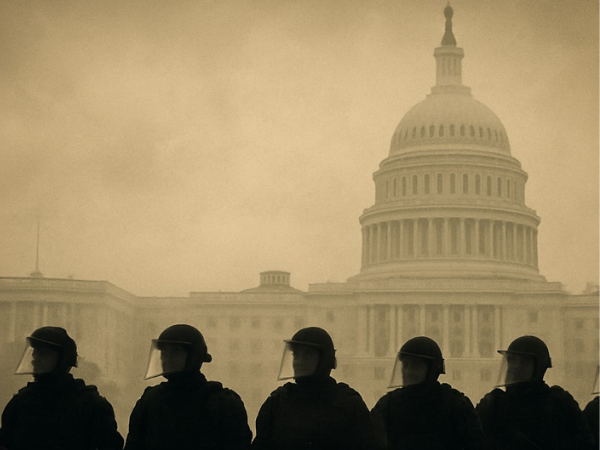


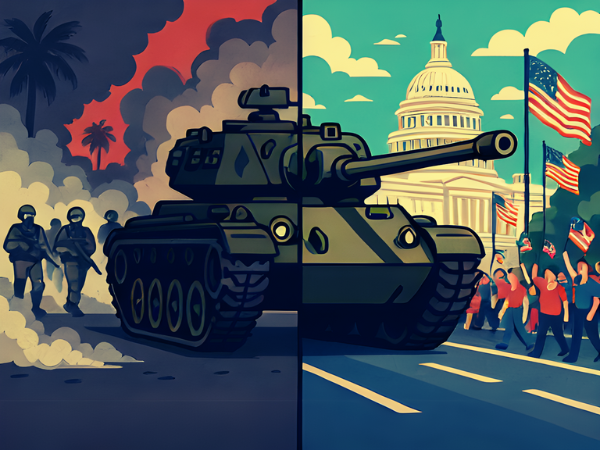
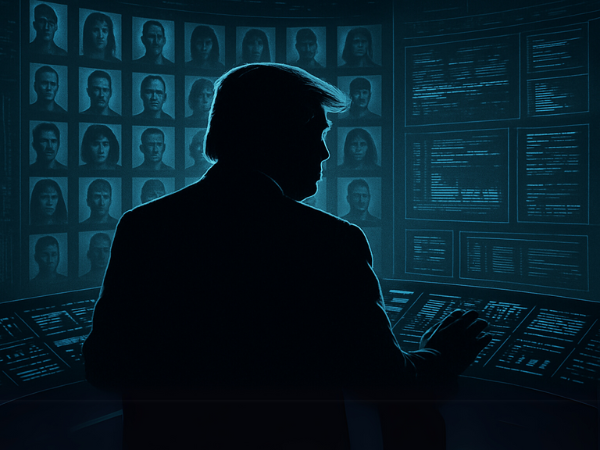
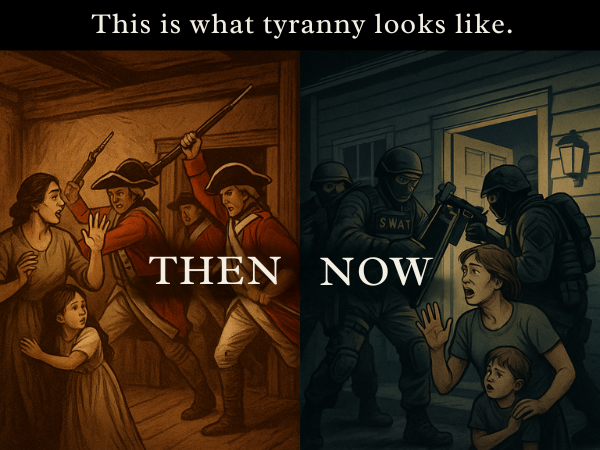

 John W. Whitehead, Constitutional Attorney