WASHINGTON, DC — In a unanimous opinion, the U.S. Supreme Court has ruled that the federal government can be held accountable for a botched FBI SWAT raid that targeted the wrong home and terrorized an innocent family.
The case stems from a middle-of-the-night SWAT raid in which heavily armed FBI agents in tactical gear stormed the home of Curtrina Martin, deployed a flashbang grenade, and held Hilliard Cliatt and Martin at gunpoint before realizing they had the wrong address. The Supreme Court’s decision in Martin v. United States affirms that the Constitution’s Supremacy Clause does not shield the federal government from liability under the Federal Tort Claims Act (FTCA). The Rutherford Institute and the National Police Accountability Project filed an amicus brief urging the Court to allow victims of such reckless raids to hold the government accountable.
“These SWAT raids have become a thinly veiled, court-sanctioned excuse to let heavily armed police crash through doors in the dead of night,” said constitutional attorney John W. Whitehead, president of The Rutherford Institute and author of Battlefield America: The War on the American People. “Too often, they’re marked by incompetence, devastation, and death—leaving a trail of broken homes and broken lives, while law enforcement escapes accountability.”
As part of “Operation Red Tape,” an FBI initiative targeting gang activity in Georgia, agents sought to execute an arrest warrant at the home of a suspected gang member. However, during a pre-raid drive-by, the team leader used his personal GPS and misidentified the home—failing to verify the street name and house number. Hours later, as part of a pre-dawn raid, the SWAT team descended on Martin’s house, a block from the actual target, breached the front door, and deployed a flashbang. Believing they were being burglarized, Martin attempted to reach her 7-year-old child. Only after detaining Cliatt and Martin at gunpoint did agents realize their mistake in targeting the wrong house.
Having been “left with personal injuries and property damage—but few explanations and no compensation,” the family filed a lawsuit alleging negligence, trespass, false arrest and imprisonment, emotional distress, and assault and battery under the FTCA. Although the Eleventh Circuit dismissed the case—holding that the Supremacy Clause barred such claims—the Supreme Court reversed. Pointing out that “the Supremacy Clause supplies a rule of decision when federal and state laws conflict”, the Supreme Court explained that the FTCA itself is the “supreme” federal law and explicitly allows state-law tort claims against the government. In a concurring opinion, Justices Sotomayor and Jackson noted that Congress specifically amended the FTCA to hold the federal government accountable after a 1973 incident where 15 officers mistakenly raided multiple homes, holding innocent families at gunpoint. That amendment, they emphasized, was designed to ensure accountability for precisely these kinds of abuses. The Court sent the lawsuit back for further proceedings.
The amicus brief in Martin v. United States was authored by Eugene R. Fidell with the Yale Law School Supreme Court Clinic, along with Charles A. Rothfeld of Mayer Brown LLP and Paul W. Hughes of McDermott Will & Emery LLP.
The Rutherford Institute, a nonprofit civil liberties organization, defends individuals whose constitutional rights have been threatened or violated and educates the public on a wide spectrum of issues affecting their freedoms.
WASHINGTON, DC — The U.S. Supreme Court has agreed to hear a case that could determine whether FBI agents can be held accountable for a botched SWAT raid that terrorized an innocent family in the middle of the night.
As detailed in Martin v. United States, a heavily armed FBI SWAT team mistakenly stormed a Georgia home—armed with rifles, clad in tactical gear, and deploying a flashbang grenade—causing the family inside, with a 7-year-old son, to fear they were being burglarized. In an amicus brief filed jointly with the National Police Accountability Project, The Rutherford Institute urged the Court to hold federal agents accountable under the Federal Tort Claims Act (FTCA) for recklessly invading the wrong residence, located a block away from the intended target: a suspected violent gang member. Fearing they were being burglarized, Ms. Martin tried to get to her 7-year-old son before officers forced one family member onto the bedroom floor at gunpoint, and then pointed a gun in Ms. Martin’s face.
“These SWAT raids have become a thinly veiled, court-sanctioned excuse to let heavily armed police crash through doors in the dead of night,” said constitutional attorney John W. Whitehead, president of The Rutherford Institute and author of Battlefield America: The War on the American People. “Too often, they’re marked by incompetence, devastation, and death—leaving a trail of broken homes and broken lives, while law enforcement escapes accountability.”
As part of the FBI’s “Operation Red Tape” to address violent gang activity in Georgia, an FBI SWAT team was deployed to execute an arrest warrant at the home of a suspected gang member. Although the team leader had previously conducted a site survey and received a photograph, map, and directions to the correct location, he relied on his personal GPS during a pre-raid drive-by. That GPS led him instead to the home of Curtrina Martin, which looked similar to the target residence. Critically, he failed to verify the street number. During the predawn hours, the SWAT leader led a caravan of vehicles with FBI SWAT team agents and members of the Atlanta Police Department to Martin’s house, thinking it was the target house. SWAT team members surrounded the home, breached the front door, and deployed a flashbang. Fearing they were under attack, Martin tried to reach her 7-year-old son. Only after detaining the family did the agents realize they had the wrong man—he lacked the gang suspect’s identifying face and neck tattoos—and that the house number did not match their intended destination.
The family subsequently filed a lawsuit for negligence, infliction of emotional distress, trespass, false arrest and imprisonment, and assault and battery under the Federal Tort Claims Act, which allows plaintiffs to bring state-law torts against the United States. However, the Eleventh Circuit Court of Appeals dismissed the lawsuit, citing the FBI’s lack of any formal policy for verifying target locations during warrant executions. Although the Supreme Court previously refused to hear Jimerson v. Lewis, a similar case involving a local SWAT team raid on the wrong home, it has agreed to take up Martin, which involves federal agents and the scope of the Federal Tort Claims Act.
Eugene R. Fidell with the Yale Law School Supreme Court Clinic, along with Charles A. Rothfeld of Mayer Brown LLP and Paul W. Hughes of McDermott Will & Emery LLP, advanced the arguments in the Martin amicus brief.
The Rutherford Institute, a nonprofit civil liberties organization, defends individuals whose constitutional rights have been threatened or violated and educates the public on a wide spectrum of issues affecting their freedoms.
“Whoever fights monsters should see to it that in the process he does not become a monster.”— Friedrich Nietzsche
We’re not dealing with a government that exists to serve its people, protect their liberties and ensure their happiness.
Rather, we are the unfortunate victims of the diabolical machinations of a make-works program carried out on an epic scale whose only purpose is to keep the powers-that-be permanently (and profitably) employed.
Case in point: the FBI.
The government’s henchmen have become the embodiment of how power, once acquired, can be so easily corrupted and abused. Indeed, far from being tough on crime, FBI agents are also among the nation’s most notorious lawbreakers.
Whether the FBI is planting undercover agents in churches, synagogues and mosques; issuing fake emergency letters to gain access to Americans’ phone records; using intimidation tactics to silence Americans who are critical of the government, or persuading impressionable individuals to plot acts of terror and then entrapping them, the overall impression of the nation’s secret police force is that of a well-dressed thug, flexing its muscles and doing the boss’ dirty work.
Clearly, this is not a government agency that appears to understand, let alone respect, the limits of the Constitution.
Indeed, this same government agency has a pattern and practice of entrapment that involves targeting vulnerable individuals, feeding them with the propaganda, know-how and weapons intended to turn them into terrorists, and then arresting them as part of an elaborately orchestrated counterterrorism sting.
Basically, it works like this: in order to justify their crime-fighting superpowers, the FBI manufactures criminals by targeting vulnerable individuals and feeding them anti-government propaganda; then, undercover agents and informants equip the targeted individuals with the training and resources to challenge what they’ve been indoctrinated into believing is government corruption; and finally, the FBI arrests the targeted individuals for engaging in anti-government, terrorist activities.
This is what passes for the government’s perverse idea of being tough on crime.
For example, undercover FBI agents pretending to be associated with ISIS have been accused of seeking out online and befriending a 16-year-old with brain development issues, persuading him to secretly send them small cash donations in the form of gift cards, and then the moment Mateo Ventura, turned 18, arresting him for providing financial support to an Islamic terrorist group.
If convicted, the teenager could spend up to 10 years in prison.
Yet as The Interceptexplains, “the only ‘terrorist’ he is accused of ever being in contact with was an undercover FBI agent who befriended him online as a 16-year-old… This law enforcement tactic has been criticized by national security researchers who have scrutinized the FBI’s role in manufacturing terrorism cases using vulnerable people who would have been unable to commit crimes without prolonged government assistance and encouragement… the Ventura case may indicate that authorities are still open to conjuring terrorists where none existed.”
In another incident, the FBI used an undercover agent/informant to seek out and groom an impressionable young man, cultivating his friendship, gaining his sympathy, stoking his outrage over injustices perpetrated by the U.S. government, then enlisting his help to blow up the Herald Square subway station. Despite the fact that Shahawar Matin Siraj ultimately refused to plant a bomb at the train station, he was arrested for conspiring to do so at the urging of his FBI informant and used to bolster the government’s track record in foiling terrorist plots. Of course, no mention was made of the part the government played in fabricating the plot, recruiting a would-be bomber, and setting him up to take the fall.
These are Machiavellian tactics with far-reaching consequences for every segment of the population, no matter what one’s political leanings, but it is especially dangerous for anyone whose views could in any way be characterized as anti-government.
As Rozina Ali writes for The New York Times Magazine, “The government’s approach to counterterrorism erodes constitutional protections for everyone, by blurring the lines between speech and action and by broadening the scope of who is classified as a threat.”
For instance, it was reported that the FBI had been secretly carrying out an entrapment scheme in which it used a front company, ANOM, to sell purportedly hack-proof phones to organized crime syndicates and then used those phones to spy on them as they planned illegal drug shipments, plotted robberies and put out contracts for killings using those boobytrapped phones.
All told, the FBI intercepted 27 million messages over the course of 18 months.
What this means is that the FBI was also illegally spying on individuals using those encrypted phones who may not have been involved in any criminal activity whatsoever.
Even reading a newspaper article is now enough to get you flagged for surveillance by the FBI. The agency served a subpoena on USA Today / Gannett to provide the internet addresses and mobile phone information for everyone who read a news story online on a particular day and time about the deadly shooting of FBI agents.
This is the danger of allowing the government to carry out widespread surveillance, sting and entrapment operations using dubious tactics that sidestep the rule of law: “we the people” become suspects and potential criminals, while government agents, empowered to fight crime using all means at their disposal, become indistinguishable from the corrupt forces they seek to vanquish.
To go after terrorists, they become terrorists.
To go after drug smugglers, they become drug smugglers.
To go after thieves, they become thieves.
For instance, when the FBI raided a California business that was suspected of letting drug dealers anonymously stash guns, drugs and cash in its private vaults, agents seized the contents of all the safety deposit boxes and filed forfeiture motions to keep the contents, which include millions of dollars’ worth of valuables owned by individuals not accused of any crime whatsoever.
It’s hard to say whether we’re dealing with a kleptocracy (a government ruled by thieves), a kakistocracy (a government run by unprincipled career politicians, corporations and thieves that panders to the worst vices in our nature and has little regard for the rights of American citizens), or if we’ve gone straight to an idiocracy.
This certainly isn’t a constitutional democracy, however.
Some days, it feels like the FBI is running its own crime syndicate complete with mob rule and mafia-style justice.
In addition to creating certain crimes in order to then “solve” them, the FBI also gives certain informants permission to break the law, “including everything from buying and selling illegal drugs to bribing government officials and plotting robberies,” in exchange for their cooperation on other fronts.
USA Today estimates that agents have authorized criminals to engage in as many as 15 crimes a day (5600 crimes a year). Some of these informants are getting paid astronomical sums: one particularly unsavory fellow, later arrested for attempting to run over a police officer, was actually paid $85,000 for his help laying the trap for an entrapment scheme.
In a stunning development reported by TheWashington Post, a probe into misconduct by an FBI agent resulted in the release of at least a dozen convicted drug dealers from prison.
In addition to procedural misconduct, trespassing, enabling criminal activity, and damaging private property, the FBI’s laundry list of crimes against the American people includes surveillance, disinformation, blackmail, entrapment, intimidation tactics, and harassment.
For example, the Associated Press lodged a complaint with the Dept. of Justice after learning that FBI agents created a fake AP news story and emailed it, along with a clickable link, to a bomb threat suspect in order to implant tracking technology onto his computer and identify his location. Lambasting the agency, AP attorney Karen Kaiser railed, “The FBI may have intended this false story as a trap for only one person. However, the individual could easily have reposted this story to social networks, distributing to thousands of people, under our name, what was essentially a piece of government disinformation.”
Then again, to those familiar with COINTELPRO, an FBI program created to “disrupt, misdirect, discredit, and neutralize” groups and individuals the government considers politically objectionable, it should come as no surprise that the agency has mastered the art of government disinformation.
The FBI has been particularly criticized in the wake of the 9/11 terrorist attacks for targeting vulnerable individuals and not only luring them into fake terror plots but actually equipping them with the organization, money, weapons and motivation to carry out the plots—entrapment—and then jailing them for their so-called terrorist plotting. This is what the FBI characterizes as “forward leaning—preventative—prosecutions.”
The FBI has also repeatedly sought to expand its invasive hacking powers to allow agents to hack into any computer, anywhere in the world.
Suffice it to say that when and if a true history of the FBI is ever written, it will not only track the rise of the American police state but it will also chart the decline of freedom in America: how a nation that once abided by the rule of law and held the government accountable for its actions has steadily devolved into a police state where justice is one-sided, a corporate elite runs the show, representative government is a mockery, police are extensions of the military, surveillance is rampant, privacy is extinct, and the law is little more than a tool for the government to browbeat the people into compliance.
This is how tyranny rises and freedom falls.
The powers-that-be are not acting in our best interests.
Almost every tyranny being perpetrated by the U.S. government against the citizenry—purportedly to keep us safe and the nation secure—has come about as a result of some threat manufactured in one way or another by our own government.
Think about it.
Cyberwarfare. Terrorism. Bio-chemical attacks. The nuclear arms race. Surveillance. The drug wars. Domestic extremism. The COVID-19 pandemic.
In almost every instance, the U.S. government (often spearheaded by the FBI) has in its typical Machiavellian fashion sown the seeds of terror domestically and internationally in order to expand its own totalitarian powers.
Consider that this very same government has taken every bit of technology sold to us as being in our best interests—GPS devices, surveillance, nonlethal weapons, etc.—and used it against us, to track, control and trap us.
Are you getting the picture yet?
The U.S. government isn’t protecting us from threats to our freedoms.
John W. Whitehead’s weekly commentaries are available for publication to newspapers and web publications at no charge. Please contact staff@rutherford.org to obtain reprint permission.
According to the Foreign Intelligence Surveillance Court, the FBI repeatedly misused Section 702 of the Foreign Intelligence Surveillance Act in order to spy on the communications of two vastly disparate groups of Americans: those involved in the George Floyd protests and those who may have taken part in the Jan. 6, 2021, protests at the Capitol.
Indeed, the FBI has a long history of persecuting, prosecuting and generally harassing activists, politicians, and cultural figures.
Back in the 1950s and ‘60s, the FBI’s targets were civil rights activists, those suspected of having Communist ties, and anti-war activists. In more recent decades, the FBI has expanded its reach to target so-called domestic extremists, environmental activists, and those who oppose the police state.
In 2019, President Trump promised to give the FBI “whatever they need” to investigate and disrupt hate crimes and domestic terrorism, without any apparent thought for the Constitution’s prohibitions on such overreach.
That misguided pledge sheds a curious light on the FBI’s ongoing spree of SWAT team raids, surveillance, disinformation campaigns, fear-mongering, paranoia, and strong-arm tactics meted out to dissidents on both the right and the left.
Yet while these overreaching, heavy-handed lessons in how to rule by force have become standard operating procedure for a government that communicates with its citizenry primarily through the language of brutality, intimidation and fear, none of this is new.
Indeed, the FBI’s love affair with totalitarianism can be traced back to the Nazi police state.
As historian Robert Gellately recounts, the Nazi police state was so admired for its efficiency and order by the world powers of the day that in the decades after World War II, the FBI, along with other government agencies, aggressively recruited at least a thousand Nazis, including some of Hitler’s highest henchmen.
Since then, U.S. government agencies—the FBI, CIA and the military—have fully embraced many of the Nazi’s well-honed policing tactics, and used them repeatedly against American citizens.
With every passing day, the United States government borrows yet another leaf from Nazi Germany’s playbook: Secret police. Secret courts. Secret government agencies. Surveillance. Censorship. Intimidation. Harassment. Torture. Brutality. Widespread corruption. Entrapment. Indoctrination. Indefinite detention.
These are not tactics used by constitutional republics, where the rule of law and the rights of the citizenry reign supreme. Rather, they are the hallmarks of authoritarian regimes, where secret police control the populace through intimidation, fear and official lawlessness on the part of government agents.
Consider the extent to which the FBI’s far-reaching powers to surveil, detain, interrogate, investigate, prosecute, punish, police and generally act as a law unto themselves resemble those of their Nazi cousins, the Gestapo.
Much like the Gestapo’s sophisticated surveillance programs, the FBI’s spying capabilities can delve into Americans’ most intimate details (and allow local police to do so, as well).
Much like the Gestapo’s ability to profile based on race and religion, and its assumption of guilt by association, the FBI’s approach to pre-crime allows it to profile Americans based on a broad range of characteristics including race and religion.
Much like the Gestapo’s power to render anyone an enemy of the state, the FBI has the power to label anyone a domestic terrorist.
Much like the Gestapo infiltrated communities in order to spy on the German citizenry, the FBI routinely infiltrates political and religious groups, as well as businesses.
Just as the Gestapo united and militarized Germany’s police forces into a national police force, America’s police forces have largely been federalized and turned into a national police force.
Just as the Gestapo carried out entrapment operations, the FBI has become a master in the art of entrapment.
Just as the Gestapo’s secret files on political leaders were used to intimidate and coerce, the FBI’s attempts to target and spy on anyone suspected of “anti-government” sentiment have been similarly abused.
The Gestapo became the terror of the Third Reich by creating a sophisticated surveillance and law enforcement system that relied for its success on the cooperation of the military, the police, the intelligence community, neighborhood watchdogs, government workers for the post office and railroads, ordinary civil servants, and a nation of snitches inclined to report “rumors, deviant behavior, or even just loose talk.”
In fact, borrowing heavily from the Gestapo, between 1956 and 1971, the FBI conducted an intensive domestic intelligence program, termed COINTELPRO, intended to neutralize domestic political dissidents. As Congressman Steve Cohen explains, “COINTELPRO was set up to surveil and disrupt groups and movements that the FBI found threatening… many groups, including anti-war, student, and environmental activists, and the New Left were harassed, infiltrated, falsely accused of criminal activity .”
Sound familiar? The more things change, the more they stay the same.
Those targeted by the FBI under COINTELPRO for its intimidation, surveillance and smear campaigns included: Martin Luther King Jr., Malcom X, the Black Panther Party, Billie Holiday, Emma Goldman, Aretha Franklin, Charlie Chaplin, Ernest Hemingway, Felix Frankfurter, John Lennon, and hundreds more.
The Church Committee, the Senate task force charged with investigating COINTELPRO abuses in 1975, denounced the government’s abuses:
“Too many people have been spied upon by too many Government agencies and too much information has been collected. The Government has often undertaken the secret surveillance of citizens on the basis of their political beliefs, even when those beliefs posed no threat of violence or illegal acts on behalf of a hostile foreign power.”
The report continued:
“Groups and individuals have been harassed and disrupted because of their political views and their lifestyles. Investigations have been based upon vague standards whose breadth made excessive collection inevitable. Unsavory and vicious tactics have been employed—including anonymous attempts to break up marriages, disrupt meetings, ostracize persons from their professions, and provoke target groups into rivalries that might result in deaths. Intelligence agencies have served the political and personal objectives of presidents and other high officials.”
Whether 50 years ago or in the present day, the treatment being doled out by the government’s lethal enforcers has remained consistent, no matter the threat.
The FBI’s laundry list of crimes against the American people includes surveillance, disinformation, blackmail, entrapment, intimidation tactics, harassment and indoctrination, governmental overreach, abuse, misconduct, trespassing, enabling criminal activity, and damaging private property, and that’s just based on what we know.
Whether the FBI is planting undercover agents in churches, synagogues and mosques; issuing fake emergency letters to gain access to Americans’ phone records; using intimidation tactics to silence Americans who are critical of the government; recruiting high school students to spy on and report fellow students who show signs of being future terrorists; or persuading impressionable individuals to plot acts of terror and then entrapping them, the overall impression of the nation’s secret police force is that of a well-dressed thug, flexing its muscles and doing the boss’ dirty work of ensuring compliance, keeping tabs on potential dissidents, and punishing those who dare to challenge the status quo.
John W. Whitehead’s weekly commentaries are available for publication to newspapers and web publications at no charge. Please contact staff@rutherford.org to obtain reprint permission.
“In so many of the little places of everyday life in which life is lived out, somehow democracy doesn’t exist. And one of the creeping hands of totalitarianism running through the democracy is the Federal Bureau of Investigation… Because why does the FBI do all this? To scare the hell out of people… They work for the establishment and the corporations and the politicos to keep things as they are. And they want to frighten and chill the people who are trying to change things.”—Howard Zinn, historian
That is how the government plans to get rid of activists and dissidents who stand in its way.
This has always been the modus operandi of the FBI (more aptly referred to as the Federal Bureau of Intimidation): muzzle anti-government sentiment, harass activists, and terrorize Americans into compliance.
Indeed, the FBI has a long history of persecuting, prosecuting and generally harassing activists, politicians, and cultural figures.
Back in the 1950s and ‘60s, the FBI’s targets were civil rights activists, those suspected of having Communist ties, and anti-war activists. In more recent decades, the FBI has expanded its reach to target so-called domestic extremists, environmental activists, and those who oppose the police state.
Back in 2019, President Trump promised to give the FBI “whatever they need” to investigate and disrupt hate crimes and domestic terrorism, without any apparent thought for the Constitution’s prohibitions on such overreach.
That misguided pledge sheds a curious light on the FBI’s latest nationwide spree of SWAT team raids, surveillance, disinformation campaigns, fear-mongering, paranoia, and strong-arm tactics.
In March 2021, under the pretext of carrying out an inventory of U.S. Private Vaults, FBI agents raided 1400 safe deposit boxes in Beverly Hills, seizing “more than $86 million in cash as well as gold, jewelry, and other valuables from property owners who were suspected of no crimes.”
In April 2021, FBI agents raided Rudy Giuliani’s home and office, seizing 18 electronic devices. More than a year later, Giuliani has yet to be charged with any crimes.
In June 2022, Jeffrey Clark, a former Justice Department official under the Trump Administration, was led out of his home in pajamas while federal law enforcement officials raided his home.
Politics aside, the message is clear: this is how the government will deal with anyone who challenges its authority.
You’re next.
Unfortunately, while these overreaching, heavy-handed lessons in how to rule by force have become standard operating procedure for a government that communicates with its citizenry primarily through the language of brutality, intimidation and fear, none of this is new.
The government has been playing these mind games for a long time.
As Betty Medsger, an investigative reporter for The Washington Post, noted in 1971, the FBI was engaged in practices that had never been reported, probably were unconstitutional, and were counter to the public’s understanding of the agency’s purpose.
The objective: target anti-government dissenters for wide-scale harassment, widespread surveillance and intimidation in order to enhance their paranoia and make them think there was an “FBI agent behind every mailbox.”
Medsger, the recipient of stolen government files that provided a glimpse into the workings of the nation’s most powerful law enforcement agency, would later learn that between 1956 and 1971, the FBI conducted an intensive domestic intelligence program, termed COINTELPRO, intended to neutralize domestic political dissidents.
As Congressman Steve Cohen explains, “COINTELPRO was set up to surveil and disrupt groups and movements that the FBI found threatening… many groups, including anti-war, student, and environmental activists, and the New Left were harassed, infiltrated, falsely accused of criminal activity .”
Sound familiar? The more things change, the more they stay the same.
Those targeted by the FBI under COINTELPRO for its intimidation, surveillance and smear campaigns included: Martin Luther King Jr., Malcom X, the Black Panther Party, Billie Holiday, Emma Goldman, Aretha Franklin, Charlie Chaplin, Ernest Hemingway, Felix Frankfurter, John Lennon, and hundreds more.
Among those most closely watched by the FBI was King, a man labeled by the FBI as “the most dangerous and effective Negro leader in the country.” All told, the FBI collected 17,000 pages of materials on King.
With wiretaps and electronic bugs planted in his home and office, King was kept under constant surveillance by the FBI with the aim of “neutralizing” him. He even received blackmail letters written by FBI agents suggesting that he either commit suicide or the details of his private life would be revealed to the public. The FBI kept up its pursuit of King until he was felled by a hollow-point bullet to the head in 1968.
John Lennon, a vocal peace protester and anti-war activist, was another high-profile example of the lengths to which the Deep State will go to persecute those who dare to challenge its authority.
Lennon was singled out for daring to speak truth to power about the government’s warmongering, his phone calls monitored and data files illegally collected on his activities and associations.
For a while, at least, Lennon became enemy number one in the eyes of the U.S. government.
Years after Lennon’s assassination, it would be revealed that the FBI had collected 281 pages of files on him, including song lyrics.
J. Edgar Hoover, head of the FBI at the time, directed the agency to spy on the musician. There were also various written orders calling on government agents to frame Lennon for a drug bust. “The FBI’s files on Lennon … read like the writings of a paranoid goody-two-shoes,” observed reporter Jonathan Curiel.
As the New York Timesnotes, “Critics of today’s domestic surveillance object largely on privacy grounds. They have focused far less on how easily government surveillance can become an instrument for the people in power to try to hold on to power. ‘The U.S. vs. John Lennon’ … is the story not only of one man being harassed, but of a democracy being undermined.”
Indeed, all of the many complaints we have about government today—surveillance, militarism, corruption, harassment, SWAT team raids, political persecution, spying, overcriminalization, etc.—were present in Lennon’s day and formed the basis of his call for social justice, peace and a populist revolution. As Adam Cohen of the New York Times points out, “The F.B.I.’s surveillance of Lennon is a reminder of how easily domestic spying can become unmoored from any legitimate law enforcement purpose. What is more surprising, and ultimately more unsettling, is the degree to which the surveillance turns out to have been intertwined with electoral politics.”
The Church Committee, the Senate task force charged with investigating COINTELPRO abuses in 1975, echoed these concerns about the government’s abuses:
“Too many people have been spied upon by too many Government agencies and too much information has been collected. The Government has often undertaken the secret surveillance of citizens on the basis of their political beliefs, even when those beliefs posed no threat of violence or illegal acts on behalf of a hostile foreign power.”
The report continued:
“Groups and individuals have been harassed and disrupted because of their political views and their lifestyles. Investigations have been based upon vague standards whose breadth made excessive collection inevitable. Unsavory and vicious tactics have been employed—including anonymous attempts to break up marriages, disrupt meetings, ostracize persons from their professions, and provoke target groups into rivalries that might result in deaths. Intelligence agencies have served the political and personal objectives of presidents and other high officials.”
Fifty years later, we’re still having this same debate about the perils of government overreach.
For too long now, the American people have allowed their personal prejudices and politics to cloud their judgment and render them incapable of seeing that the treatment being doled out by the government’s lethal enforcers has remained consistent, no matter the threat.
The lesson to be learned is this: whatever dangerous practices you allow the government to carry out now, rest assured, these same practices can and will be used against you when the government decides to set its sights on you.
All of the excessive, abusive tactics employed by the government and its henchmen today will eventually be meted out on the general populace.
At that point, when you find yourself in the government’s crosshairs, it will not matter whether your skin is black or yellow or brown or white; it will not matter whether you’re an immigrant or a citizen; it will not matter whether you’re rich or poor; it will not matter whether you’re Republican or Democrat; and it certainly won’t matter who you voted for in the last presidential election.
At that point—when you find yourself subjected to dehumanizing, demoralizing, thuggish behavior by government bureaucrats who are hyped up on the power of their badges and empowered to detain, search, interrogate, threaten and generally harass anyone they see fit—remember you were warned.
“The most dangerous man to any government is the man who is able to think things out for himself, without regard to the prevailing superstitions and taboos. Almost inevitably he comes to the conclusion that the government he lives under is dishonest, insane and intolerable.”—H. L. Mencken
The American kleptocracy (a government ruled by thieves) continues to suck the American people down a rabbit hole into a parallel universe in which the Constitution is meaningless, the government is all-powerful, and the citizenry is powerless to defend itself against government agents who steal, spy, lie, plunder, kill, abuse and generally inflict mayhem and sow madness on everyone and everything in their sphere.
Think about it.
Almost every tyranny being perpetrated by the U.S. government against the citizenry—purportedly to keep us safe and the nation secure—has come about as a result of some threat manufactured in one way or another by our own government.
Cyberwarfare. Terrorism. Bio-chemical attacks. The nuclear arms race. Surveillance. The drug wars. Domestic extremism. The COVID-19 pandemic.
In almost every instance, the U.S. government (often spearheaded by the FBI) has in its typical Machiavellian fashion sown the seeds of terror domestically and internationally in order to expand its own totalitarian powers.
Which country has conducted secret experiments on an unsuspecting populace—citizens and noncitizens alike—making healthy people sick by spraying them with chemicals, injecting them with infectious diseases and exposing them to airborne toxins? The U.S. government.
What country has a pattern and practice of entrapment that involves targeting vulnerable individuals, feeding them with the propaganda, know-how and weapons intended to turn them into terrorists, and then arresting them as part of an elaborately orchestrated counterterrorism sting? The U.S. government.
Are you getting the picture yet?
The U.S. government isn’t protecting us from terrorism.
The U.S. government is creating the terror. It is, in fact, the source of the terror.
Consider that this very same government has taken every bit of technology sold to us as being in our best interests—GPS devices, surveillance, nonlethal weapons, etc.—and used it against us, to track, control and trap us.
So why is the government doing this? Money, power and total domination.
We’re not dealing with a government that exists to serve its people, protect their liberties and ensure their happiness. Rather, these are the diabolical machinations of a make-works program carried out on an epic scale whose only purpose is to keep the powers-that-be permanently (and profitably) employed.
Case in point: the FBI.
The government’s henchmen have become the embodiment of how power, once acquired, can be so easily corrupted and abused. Indeed, far from being tough on crime, FBI agents are also among the nation’s most notorious lawbreakers.
Whether the FBI is planting undercover agents in churches, synagogues and mosques; issuing fake emergency letters to gain access to Americans’ phone records; using intimidation tactics to silence Americans who are critical of the government, or persuading impressionable individuals to plot acts of terror and then entrapping them, the overall impression of the nation’s secret police force is that of a well-dressed thug, flexing its muscles and doing the boss’ dirty work.
It’s a diabolical plot with far-reaching consequences for every segment of the population, no matter what one’s political leanings.
As Rozina Ali writes for The New York Times Magazine, “The government’s approach to counterterrorism erodes constitutional protections for everyone, by blurring the lines between speech and action and by broadening the scope of who is classified as a threat.”
This is not an agency that appears to understand, let alone respect, the limits of the Constitution.
For instance, the FBI has been secretly carrying out an entrapment scheme in which it used a front company, ANOM, to sell purportedly hack-proof phones to organized crime syndicates and then used those phones to spy on them as they planned illegal drug shipments, plotted robberies and put out contracts for killings using those boobytrapped phones.
All told, the FBI intercepted 27 million messages over the course of 18 months.
What this means is that the FBI was also illegally spying on individuals using those encrypted phones who may not have been involved in any criminal activity whatsoever.
Even reading a newspaper article is now enough to get you flagged for surveillance by the FBI. The agency served a subpoena on USA Today / Gannett to provide the internet addresses and mobile phone information for everyone who read a news story online on a particular day and time about the deadly shooting of FBI agents.
This is the danger of allowing the government to carry out widespread surveillance, sting and entrapment operations using dubious tactics that sidestep the rule of law: “we the people” become suspects and potential criminals, while government agents, empowered to fight crime using all means at their disposal, become indistinguishable from the corrupt forces they seek to vanquish.
To go after terrorists, they become terrorists. To go after drug smugglers, they become drug smugglers. To go after thieves, they become thieves.
It’s hard to say whether we’re dealing with a kleptocracy (a government ruled by thieves), a kakistocracy (a government run by unprincipled career politicians, corporations and thieves that panders to the worst vices in our nature and has little regard for the rights of American citizens), or if we’ve gone straight to an idiocracy.
This certainly isn’t a constitutional republic, however.
Some days, it feels like the government is running its own crime syndicate complete with mob rule and mafia-style justice.
In addition to creating certain crimes in order to then “solve” them, the FBI—the government’s law enforcement agency—also gives certain informants permission to break the law, “including everything from buying and selling illegal drugs to bribing government officials and plotting robberies,” in exchange for their cooperation on other fronts.
USA Today estimates that government agents have authorized criminals to engage in as many as 15 crimes a day (5600 crimes a year). Some of these informants are getting paid astronomical sums: one particularly unsavory fellow, later arrested for attempting to run over a police officer, was actually paid $85,000 for his help laying the trap for an entrapment scheme.
In addition to procedural misconduct, trespassing, enabling criminal activity, and damaging private property, the FBI’s laundry list of crimes against the American people includes surveillance, disinformation, blackmail, entrapment, intimidation tactics, and harassment.
For example, the Associated Press lodged a complaint with the Dept. of Justice after learning that FBI agents created a fake AP news story and emailed it, along with a clickable link, to a bomb threat suspect in order to implant tracking technology onto his computer and identify his location. Lambasting the agency, AP attorney Karen Kaiser railed, “The FBI may have intended this false story as a trap for only one person. However, the individual could easily have reposted this story to social networks, distributing to thousands of people, under our name, what was essentially a piece of government disinformation.”
Then again, to those familiar with COINTELPRO, an FBI program created to “disrupt, misdirect, discredit, and neutralize” groups and individuals the government considers politically objectionable, it should come as no surprise that the agency has mastered the art of government disinformation.
The FBI has been particularly criticized in the wake of the 9/11 terrorist attacks for targeting vulnerable individuals and not only luring them into fake terror plots but actually equipping them with the organization, money, weapons and motivation to carry out the plots—entrapment—and then jailing them for their so-called terrorist plotting. This is what the FBI characterizes as “forward leaning—preventative—prosecutions.”
Another fallout from 9/11, National Security Letters, one of the many illicit powers authorized by the USA Patriot Act, allows the FBI to secretly demand that banks, phone companies, and other businesses provide them with customer information and not disclose the demands. An internal audit of the agency found that the FBI practice of issuing tens of thousands of NSLs every year for sensitive information such as phone and financial records, often in non-emergency cases, is riddled with widespread violations.
The FBI’s surveillance capabilities, on a par with the National Security Agency, boast a nasty collection of spy tools ranging from Stingray devices that can track the location of cell phones to Triggerfish devices which allow agents to eavesdrop on phone calls.
In fact, the NSA was responsible for the threat posed by the “WannaCry” or “Wanna Decryptor” malware worm which—as a result of hackers accessing the government’s arsenal—hijacked more than 57,000 computers and crippled health care, communications infrastructure, logistics, and government entities in more than 70 countries.
Mind you, the government was repeatedly warned about the dangers of using criminal tactics to wage its own cyberwars. It was warned about the consequences of blowback should its cyberweapons get into the wrong hands.
The government chose to ignore the warnings.
That’s exactly how the 9/11 attacks unfolded.
First, the government helped to create the menace that was al-Qaida and then, when bin Laden had left the nation reeling in shock (despite countless warnings that fell on tone-deaf ears), it demanded—and was given—immense new powers in the form of the USA Patriot Act in order to fight the very danger it had created.
This has become the shadow government’s modus operandi regardless of which party controls the White House: the government creates a menace—knowing full well the ramifications such a danger might pose to the public—then without ever owning up to the part it played in unleashing that particular menace on an unsuspecting populace, it demands additional powers in order to protect “we the people” from the threat.
Yet the powers-that-be don’t really want us to feel safe.
They want us cowering and afraid and willing to relinquish every last one of our freedoms in exchange for their phantom promises of security.
As a result, it’s the American people who pay the price for the government’s insatiable greed and quest for power.
Suffice it to say that when and if a true history of the United States is ever written, it will not only track the rise of the American police state but it will also chart the decline of freedom in America: how a nation that once abided by the rule of law and held the government accountable for its actions has steadily devolved into a police state where justice is one-sided, a corporate elite runs the show, representative government is a mockery, police are extensions of the military, surveillance is rampant, privacy is extinct, and the law is little more than a tool for the government to browbeat the people into compliance.
Somewhere over the course of the past 240-plus years, democracy has given way to kleptocracy, and representative government has been rejected in favor of rule by career politicians, corporations and thieves—individuals and entities with little regard for the rights of American citizens.
This dissolution of that sacred covenant between the citizenry and the government—establishing “we the people” as the masters and the government as the servant—didn’t happen overnight. It didn’t happen because of one particular incident or one particular president. It is a process, one that began long ago and continues in the present day, aided and abetted by politicians who have mastered the polarizing art of how to “divide and conquer.”
John W. Whitehead’s weekly commentaries are available for publication to newspapers and web publications at no charge. Please contact staff@rutherford.org to obtain reprint permission.
With every passing day, the United States government borrows yet another leaf from Nazi Germany’s playbook: Secret police. Secret courts. Secret government agencies. Surveillance. Censorship. Intimidation. Harassment. Torture. Brutality. Widespread corruption. Entrapment. Indoctrination. Indefinite detention.
These are not tactics used by constitutional republics, where the rule of law and the rights of the citizenry reign supreme. Rather, they are the hallmarks of authoritarian regimes, where secret police control the populace through intimidation, fear and official lawlessness on the part of government agents.
If the government’s covert, taxpayer-funded employment of Nazis after World War II weren’t bad enough, U.S. government agencies—the FBI, CIA and the military—adopted many of the Third Reich’s well-honed policing tactics, and have used them against American citizens.
Indeed, the FBI’s laundry list of crimes against the American people includes surveillance, disinformation, blackmail, entrapment, intimidation tactics, harassment and indoctrination, governmental overreach, abuse, misconduct, trespassing, enabling criminal activity, and damaging private property, and that’s just based on what we know.
Compare the FBI’s far-reaching powers to surveil, detain, interrogate, investigate, prosecute, punish, police and generally act as a law unto themselves—powers that have grown since 9/11, transforming the FBI into a mammoth federal policing and surveillance agency that largely operates as a power unto itself, beyond the reach of established laws, court rulings and legislative mandates—to its Nazi counterparts, the Gestapo—and then try to convince yourself that the United States is not a totalitarian police state.
Today, the FBI employs more than 35,000 individuals and operates more than 56 field offices in major cities across the U.S., as well as 400 resident agencies in smaller towns, and more than 50 international offices. In addition to their “data campus,” which houses more than 96 million sets of fingerprints from across the United States and elsewhere, the FBI has also built a vast repository of “profiles of tens of thousands of Americans and legal residents who are not accused of any crime. What they have done is appear to be acting suspiciously to a town sheriff, a traffic cop or even a neighbor.” The FBI’s burgeoning databases on Americans are not only being added to and used by local police agencies, but are also being made available to employers for real-time background checks.
All of this is made possible by the agency’s nearly unlimited resources (President Biden’s budget projections allocate $10.8 billion for the FBI), the government’s vast arsenal of technology, the interconnectedness of government intelligence agencies, and information sharing through fusion centers—data collecting intelligence agencies spread throughout the country that constantly monitor communications (including those of American citizens), everything from internet activity and web searches to text messages, phone calls and emails.
Working through the U.S. Post Office, the FBI has access to every piece of mail that passes through the postal system: more than 160 billion pieces are scanned and recorded annually. Moreover, the agency’s National Security Letters, one of the many illicit powers authorized by the USA Patriot Act, allows the FBI to secretly demand that banks, phone companies, and other businesses provide them with customer information and not disclose those demands to the customer. An internal audit of the agency found that the FBI practice of issuing tens of thousands of NSLs every year for sensitive information such as phone and financial records, often in non-emergency cases, is riddled with widespread constitutional violations.
Much like the Gestapo’s sophisticated surveillance programs, the FBI’s spying capabilities can delve into Americans’ most intimate details (and allow local police to do so, as well).
In addition to technology (which is shared with police agencies) that allows them to listen in on phone calls, read emails and text messages, and monitor web activities, the FBI’s surveillance boasts an invasive collection of spy tools ranging from Stingray devices that can track the location of cell phones to Triggerfish devices which allow agents to eavesdrop on phone calls. In one case, the FBI actually managed to remotely reprogram a “suspect’s” wireless internet card so that it would send “real-time cell-site location data to Verizon, which forwarded the data to the FBI.” Law enforcement agencies are also using social media tracking software to monitor Facebook, Twitter and Instagram posts. Moreover, secret FBI rules also allow agents to spy on journalists without significant judicial oversight.
Much like the Gestapo’s ability to profile based on race and religion, and its assumption of guilt by association, the FBI’s approach to pre-crime allows it to profile Americans based on a broad range of characteristics including race and religion.
The agency’s biometric database has grown to massive proportions, the largest in the world, encompassing everything from fingerprints, palm, face and iris scans to DNA, and is being increasingly shared between federal, state and local law enforcement agencies in an effort to target potential criminals long before they ever commit a crime. This is what’s known as pre-crime. Yet it’s not just your actions that will get you in trouble. In many cases, it’s also who you know—even minimally—and where your sympathies lie that could land you on a government watch list. Moreover, as the Interceptreports, despite anti-profiling prohibitions, the bureau “claims considerable latitude to use race, ethnicity, nationality, and religion in deciding which people and communities to investigate.”
Much like the Gestapo’s power to render anyone an enemy of the state, the FBI has the power to label anyone a domestic terrorist.
As part of the government’s so-called ongoing war on terror, the nation’s de facto secret police force has begun using the terms “anti-government,” “extremist” and “terrorist” interchangeably. Moreover, the government continues to add to its growing list of characteristics that can be used to identify an individual (especially anyone who disagrees with the government) as a potential domestic terrorist. For instance, you might be a domestic terrorist in the eyes of the FBI (and its network of snitches) if you:
Much like the Gestapo infiltrated communities in order to spy on the German citizenry, the FBI routinely infiltrates political and religious groups, as well as businesses.
As Cora Currier writes for the Intercept: “Using loopholes it has kept secret for years, the FBI can in certain circumstances bypass its own rules in order to send undercover agents or informants into political and religious organizations, as well as schools, clubs, and businesses…” The FBI has even been paying Geek Squad technicians at Best Buy to spy on customers’ computers without a warrant.
Just as the Gestapo united and militarized Germany’s police forces into a national police force, America’s police forces have largely been federalized and turned into a national police force.
In addition to government programs that provide the nation’s police forces with military equipment and training, the FBI also operates a National Academy that trains thousands of police chiefs every year and indoctrinates them into an agency mindset that advocates the use of surveillance technology and information sharing between local, state, federal, and international agencies.
Just as the Gestapo’s secret files on political leaders were used to intimidate and coerce, the FBI’s files on anyone suspected of “anti-government” sentiment have been similarly abused.
As countless documents make clear, the FBI has no qualms about using its extensive powers in order to blackmail politicians, spy on celebrities and high-ranking government officials, and intimidate and attempt to discredit dissidents of all stripes. For example, not only did the FBI follow Martin Luther King Jr. and bug his phones and hotel rooms, but agents also sent him anonymous letters urging him to commit suicide and pressured a Massachusetts college into dropping King as its commencement speaker.
Just as the Gestapo carried out entrapment operations, the FBI has become a master in the art of entrapment.
In the wake of the 9/11 terrorist attacks the FBI has not only targeted vulnerable individuals but has also lured or blackmailed them into fake terror plots while actually equipping them with the organization, money, weapons and motivation to carry out the plots—entrapment—and then jailing or deporting them for their so-called terrorist plotting.
When and if a true history of the FBI is ever written, it will not only track the rise of the American police state but it will also chart the decline of freedom in America, in much the same way that the empowerment of Germany’s secret police tracked with the rise of the Nazi regime.
How did the Gestapo become the terror of the Third Reich?
It did so by creating a sophisticated surveillance and law enforcement system that relied for its success on the cooperation of the military, the police, the intelligence community, neighborhood watchdogs, government workers for the post office and railroads, ordinary civil servants, and a nation of snitches inclined to report “rumors, deviant behavior, or even just loose talk.”
In other words, ordinary citizens working with government agents helped create the monster that became Nazi Germany. Writing for the New York Times, Barry Ewen paints a particularly chilling portrait of how an entire nation becomes complicit in its own downfall by looking the other way:
In what may be his most provocative statement, [author Eric A.] Johnson says that ‘‘most Germans may not even have realized until very late in the war, if ever, that they were living in a vile dictatorship.’’ This is not to say that they were unaware of the Holocaust; Johnson demonstrates that millions of Germans must have known at least some of the truth. But, he concludes, ‘‘a tacit Faustian bargain was struck between the regime and the citizenry.’’ The government looked the other way when petty crimes were being committed. Ordinary Germans looked the other way when Jews were being rounded up and murdered; they abetted one of the greatest crimes of the 20th century not through active collaboration but through passivity, denial and indifference.
Much like the German people, “we the people” have become passive, polarized, gullible, easily manipulated, and lacking in critical thinking skills. Distracted by entertainment spectacles, politics and screen devices, we too are complicit, silent partners in creating a police state similar to the terror practiced by former regimes.
Had the government tried to ram such a state of affairs down our throats suddenly, it might have had a rebellion on its hands. Instead, the American people have been given the boiling frog treatment, immersed in water that slowly is heated up—degree by degree—so that they’ve fail to notice that they’re being trapped and cooked and killed.
“We the people” are in hot water now.
The Constitution doesn’t stand a chance against a federalized, globalized standing army of government henchmen protected by legislative, judicial and executive branches that are all on the same side, no matter what political views they subscribe to: suffice it to say, they are not on our side or the side of freedom.
From Presidents Clinton to Bush, then Obama to Trump and now Biden, it’s as if we’ve been caught in a time loop, forced to re-live the same thing over and over again: the same assaults on our freedoms, the same disregard for the rule of law, the same subservience to the Deep State, and the same corrupt, self-serving government that exists only to amass power, enrich its shareholders and ensure its continued domination.
John W. Whitehead’s weekly commentaries are available for publication to newspapers and web publications at no charge. Please contact staff@rutherford.org to obtain reprint permission.
“Whoever fights monsters should see to it that in the process he does not become a monster.”— Friedrich Nietzsche
Almost every tyranny being perpetrated by the U.S. government against the citizenry—purportedly to keep us safe and the nation secure—has come about as a result of some threat manufactured in one way or another by our own government.
Think about it.
Cyberwarfare. Terrorism. Bio-chemical attacks. The nuclear arms race. Surveillance. The drug wars. Domestic extremism. The COVID-19 pandemic.
In almost every instance, the U.S. government (often spearheaded by the FBI) has in its typical Machiavellian fashion sown the seeds of terror domestically and internationally in order to expand its own totalitarian powers.
Which country has conducted secret experiments on an unsuspecting populace—citizens and noncitizens alike—making healthy people sick by spraying them with chemicals, injecting them with infectious diseases and exposing them to airborne toxins? The U.S. government.
What country has a pattern and practice of entrapment that involves targeting vulnerable individuals, feeding them with the propaganda, know-how and weapons intended to turn them into terrorists, and then arresting them as part of an elaborately orchestrated counterterrorism sting? The U.S. government.
Are you getting the picture yet?
The U.S. government isn’t protecting us from terrorism.
The U.S. government is creating the terror. It is, in fact, the source of the terror.
Consider that this very same government has taken every bit of technology sold to us as being in our best interests—GPS devices, surveillance, nonlethal weapons, etc.—and used it against us, to track, control and trap us.
So why is the government doing this? Money, power and total domination.
We’re not dealing with a government that exists to serve its people, protect their liberties and ensure their happiness. Rather, these are the diabolical machinations of a make-works program carried out on an epic scale whose only purpose is to keep the powers-that-be permanently (and profitably) employed.
Case in point: the FBI.
The government’s henchmen have become the embodiment of how power, once acquired, can be so easily corrupted and abused. Indeed, far from being tough on crime, FBI agents are also among the nation’s most notorious lawbreakers.
Whether the FBI is planting undercover agents in churches, synagogues and mosques; issuing fake emergency letters to gain access to Americans’ phone records; using intimidation tactics to silence Americans who are critical of the government, or persuading impressionable individuals to plot acts of terror and then entrapping them, the overall impression of the nation’s secret police force is that of a well-dressed thug, flexing its muscles and doing the boss’ dirty work.
For example, this is the agency that used an undercover agent/informant to seek out and groom an impressionable young man, cultivating his friendship, gaining his sympathy, stoking his outrage over the injustices perpetrated by the U.S. government, then enlisting his help to blow up the Herald Square subway station. Despite the fact that Shahawar Matin Siraj ultimately refused to plant a bomb at the train station, he was arrested for conspiring to do so at the urging of his FBI informant and used to bolster the government’s track record in foiling terrorist plots. Of course, no mention was made of the part the government played in fabricating the plot, recruiting a would-be bomber, and setting him up to take the fall.
This is the government’s answer to precrime: first, foster activism by stoking feelings of outrage and injustice by way of secret agents and informants; second, recruit activists to carry out a plot (secretly concocted by the government) to challenge what they see as government corruption; and finally, arrest those activists for conspiring against the government before they can actually commit a crime.
It’s a diabolical plot with far-reaching consequences for every segment of the population, no matter what one’s political leanings.
As Rozina Ali writes for The New York Times Magazine, “The government’s approach to counterterrorism erodes constitutional protections for everyone, by blurring the lines between speech and action and by broadening the scope of who is classified as a threat.”
This is not an agency that appears to understand, let alone respect, the limits of the Constitution.
Just recently, it was revealed that the FBI has been secretly carrying out an entrapment scheme in which it used a front company, ANOM, to sell purportedly hack-proof phones to organized crime syndicates and then used those phones to spy on them as they planned illegal drug shipments, plotted robberies and put out contracts for killings using those boobytrapped phones.
All told, the FBI intercepted 27 million messages over the course of 18 months.
What this means is that the FBI was also illegally spying on individuals using those encrypted phones who may not have been involved in any criminal activity whatsoever.
Even reading a newspaper article is now enough to get you flagged for surveillance by the FBI. The agency served a subpoena on USA Today / Gannett to provide the internet addresses and mobile phone information for everyone who read a news story online on a particular day and time about the deadly shooting of FBI agents.
This is the danger of allowing the government to carry out widespread surveillance, sting and entrapment operations using dubious tactics that sidestep the rule of law: “we the people” become suspects and potential criminals, while government agents, empowered to fight crime using all means at their disposal, become indistinguishable from the corrupt forces they seek to vanquish.
To go after terrorists, they become terrorists. To go after drug smugglers, they become drug smugglers. To go after thieves, they become thieves.
For instance, when the FBI raided a California business that was suspected of letting drug dealers anonymously stash guns, drugs and cash in its private vaults, agents seized the contents of all the safety deposit boxes and filed forfeiture motions to keep the contents, which include millions of dollars’ worth of valuables owned by individuals not accused of any crime whatsoever.
It’s hard to say whether we’re dealing with a kleptocracy (a government ruled by thieves), a kakistocracy (a government run by unprincipled career politicians, corporations and thieves that panders to the worst vices in our nature and has little regard for the rights of American citizens), or if we’ve gone straight to an idiocracy.
This certainly isn’t a constitutional democracy, however.
Some days, it feels like the FBI is running its own crime syndicate complete with mob rule and mafia-style justice.
In addition to creating certain crimes in order to then “solve” them, the FBI also gives certain informants permission to break the law, “including everything from buying and selling illegal drugs to bribing government officials and plotting robberies,” in exchange for their cooperation on other fronts.
USA Today estimates that agents have authorized criminals to engage in as many as 15 crimes a day (5600 crimes a year). Some of these informants are getting paid astronomical sums: one particularly unsavory fellow, later arrested for attempting to run over a police officer, was actually paid $85,000 for his help laying the trap for an entrapment scheme.
In a stunning development reported by TheWashington Post, a probe into misconduct by an FBI agent resulted in the release of at least a dozen convicted drug dealers from prison.
In addition to procedural misconduct, trespassing, enabling criminal activity, and damaging private property, the FBI’s laundry list of crimes against the American people includes surveillance, disinformation, blackmail, entrapment, intimidation tactics, and harassment.
For example, the Associated Press lodged a complaint with the Dept. of Justice after learning that FBI agents created a fake AP news story and emailed it, along with a clickable link, to a bomb threat suspect in order to implant tracking technology onto his computer and identify his location. Lambasting the agency, AP attorney Karen Kaiser railed, “The FBI may have intended this false story as a trap for only one person. However, the individual could easily have reposted this story to social networks, distributing to thousands of people, under our name, what was essentially a piece of government disinformation.”
Then again, to those familiar with COINTELPRO, an FBI program created to “disrupt, misdirect, discredit, and neutralize” groups and individuals the government considers politically objectionable, it should come as no surprise that the agency has mastered the art of government disinformation.
The FBI has been particularly criticized in the wake of the 9/11 terrorist attacks for targeting vulnerable individuals and not only luring them into fake terror plots but actually equipping them with the organization, money, weapons and motivation to carry out the plots—entrapment—and then jailing them for their so-called terrorist plotting. This is what the FBI characterizes as “forward leaning—preventative—prosecutions.”
Another fallout from 9/11, National Security Letters, one of the many illicit powers authorized by the USA Patriot Act, allows the FBI to secretly demand that banks, phone companies, and other businesses provide them with customer information and not disclose the demands. An internal audit of the agency found that the FBI practice of issuing tens of thousands of NSLs every year for sensitive information such as phone and financial records, often in non-emergency cases, is riddled with widespread violations.
The FBI’s surveillance capabilities, on a par with the National Security Agency, boast a nasty collection of spy tools ranging from Stingray devices that can track the location of cell phones to Triggerfish devices which allow agents to eavesdrop on phone calls.
The FBI has also repeatedly sought to expand its invasive hacking powers to allow agents to hack into any computer, anywhere in the world.
Indeed, for years now, the U.S. government has been creating what one intelligence insider referred to as a cyber-army capable of offensive attacks. As Reuters reported back in 2013:
Even as the U.S. government confronts rival powers over widespread Internet espionage, it has become the biggest buyer in a burgeoning gray market where hackers and security firms sell tools for breaking into computers. The strategy is spurring concern in the technology industry and intelligence community that Washington is in effect encouraging hacking and failing to disclose to software companies and customers the vulnerabilities exploited by the purchased hacks. That’s because U.S. intelligence and military agencies aren’t buying the tools primarily to fend off attacks. Rather, they are using the tools to infiltrate computer networks overseas, leaving behind spy programs and cyber-weapons that can disrupt data or damage systems.
In fact, the NSA was responsible for the threat posed by the “WannaCry” or “Wanna Decryptor” malware worm which—as a result of hackers accessing the government’s arsenal—hijacked more than 57,000 computers and crippled health care, communications infrastructure, logistics, and government entities in more than 70 countries.
Mind you, the government was repeatedly warned about the dangers of using criminal tactics to wage its own cyberwars. It was warned about the consequences of blowback should its cyberweapons get into the wrong hands.
The government chose to ignore the warnings.
That’s exactly how the 9/11 attacks unfolded.
First, the government helped to create the menace that was al-Qaida and then, when bin Laden had left the nation reeling in shock (despite countless warnings that fell on tone-deaf ears), it demanded—and was given—immense new powers in the form of the USA Patriot Act in order to fight the very danger it had created.
This has become the shadow government’s modus operandi regardless of which party controls the White House: the government creates a menace—knowing full well the ramifications such a danger might pose to the public—then without ever owning up to the part it played in unleashing that particular menace on an unsuspecting populace, it demands additional powers in order to protect “we the people” from the threat.
Yet the powers-that-be don’t really want us to feel safe.
They want us cowering and afraid and willing to relinquish every last one of our freedoms in exchange for their phantom promises of security.
As a result, it’s the American people who pay the price for the government’s insatiable greed and quest for power.
We’re the ones to suffer the blowback.
Blowback is a term originating from within the American Intelligence community, denoting the unintended consequences, unwanted side-effects, or suffered repercussions of a covert operation that fall back on those responsible for the aforementioned operations.
Unfortunately, “we the people” are the ones who keep reaping what the government sows.
We’re the ones who suffer every time, directly and indirectly, from the blowback.
Suffice it to say that when and if a true history of the FBI is ever written, it will not only track the rise of the American police state but it will also chart the decline of freedom in America: how a nation that once abided by the rule of law and held the government accountable for its actions has steadily devolved into a police state where justice is one-sided, a corporate elite runs the show, representative government is a mockery, police are extensions of the military, surveillance is rampant, privacy is extinct, and the law is little more than a tool for the government to browbeat the people into compliance.
This is how tyranny rises and freedom falls.
We can persuade ourselves that life is still good, that America is still beautiful, and that “we the people” are still free. However, as science fiction writer Philip K. Dick warned, “Don’t believe what you see; it’s an enthralling—[and] destructive, evil snare. Under it is a totally different world, even placed differently along the linear axis.”
John W. Whitehead’s weekly commentaries are available for publication to newspapers and web publications at no charge. Please contact staff@rutherford.org to obtain reprint permission.
“You gotta remember, establishment, it’s just a name for evil. The monster doesn’t care whether it kills all the students or whether there’s a revolution. It’s not thinking logically, it’s out of control.”—John Lennon (1969)
John Lennon, born 79 years ago on October 9, 1940, was a musical genius and pop cultural icon.
He was also a vocal peace protester and anti-war activist and a high-profile example of the lengths to which the Deep State will go to persecute those who dare to challenge its authority.
Long before Julian Assange, Edward Snowden and Chelsea Manning were being castigated for blowing the whistle on the government’s war crimes and the National Security Agency’s abuse of its surveillance powers, it was Lennon who was being singled out for daring to speak truth to power about the government’s warmongering, his phone calls monitored and data files illegally collected on his activities and associations.
For a while, at least, Lennon became enemy number one in the eyes of the U.S. government.
Years after Lennon’s assassination it would be revealed that the FBI had collected 281 pages of files on him, including song lyrics. J. Edgar Hoover, head of the FBI at the time, directed the agency to spy on the musician. There were also various written orders calling on government agents to frame Lennon for a drug bust. “The FBI’s files on Lennon … read like the writings of a paranoid goody-two-shoes,” observed reporter Jonathan Curiel.
As the New York Timesnotes, “Critics of today’s domestic surveillance object largely on privacy grounds. They have focused far less on how easily government surveillance can become an instrument for the people in power to try to hold on to power. ‘The U.S. vs. John Lennon’ … is the story not only of one man being harassed, but of a democracy being undermined.”
Indeed, all of the many complaints we have about government today—surveillance, militarism, corruption, harassment, SWAT team raids, political persecution, spying, overcriminalization, etc.—were present in Lennon’s day and formed the basis of his call for social justice, peace and a populist revolution.
For all of these reasons, the U.S. government was obsessed with Lennon, who had learned early on that rock music could serve a political end by proclaiming a radical message. More importantly, Lennon saw that his music could mobilize the public and help to bring about change. Lennon believed in the power of the people. Unfortunately, as Lennon recognized: “The trouble with government as it is, is that it doesn’t represent the people. It controls them.”
However, as Martin Lewis writing for Timenotes: “John Lennon was not God. But he earned the love and admiration of his generation by creating a huge body of work that inspired and led. The appreciation for him deepened because he then instinctively decided to use his celebrity as a bully pulpit for causes greater than his own enrichment or self-aggrandizement.”
For instance, in December 1971 at a concert in Ann Arbor, Mich., Lennon took to the stage and in his usual confrontational style belted out “John Sinclair,” a song he had written about a man sentenced to 10 years in prison for possessing two marijuana cigarettes. Within days of Lennon’s call for action, the Michigan Supreme Court ordered Sinclair released.
What Lennon did not know at the time was that government officials had been keeping strict tabs on the ex-Beatle they referred to as “Mr. Lennon.” Incredibly, FBI agents were in the audience at the Ann Arbor concert, “taking notes on everything from the attendance (15,000) to the artistic merits of his new song.”
The U.S. government, steeped in paranoia, was spying on Lennon.
By March 1971, when his “Power to the People” single was released, it was clear where Lennon stood. Having moved to New York City that same year, Lennon was ready to participate in political activism against the U. S. government, the “monster” that was financing the war in Vietnam.
The release of Lennon’s Sometime in New York City album, which contained a radical anti-government message in virtually every song and depicted President Richard Nixon and Chinese Chairman Mao Tse-tung dancing together nude on the cover, only fanned the flames of the conflict to come.
The official U.S. war against Lennon began in earnest in 1972 after rumors surfaced that Lennon planned to embark on a U.S. concert tour that would combine rock music with antiwar organizing and voter registration. Nixon, fearing Lennon’s influence on about 11 million new voters (1972 was the first year that 18-year-olds could vote), had the ex-Beatle served with deportation orders “in an effort to silence him as a voice of the peace movement.”
Then again, the FBI has had a long history of persecuting, prosecuting and generally harassing activists, politicians, and cultural figures. Most notably among the latter are such celebrated names as folk singer Pete Seeger, painter Pablo Picasso, comic actor and filmmaker Charlie Chaplin, comedian Lenny Bruce and poet Allen Ginsberg.
Among those most closely watched by the FBI was Martin Luther King Jr., a man labeled by the FBI as “the most dangerous and effective Negro leader in the country.” With wiretaps and electronic bugs planted in his home and office, King was kept under constant surveillance by the FBI with the aim of “neutralizing” him. He even received letters written by FBI agents suggesting that he either commit suicide or the details of his private life would be revealed to the public. The FBI kept up its pursuit of King until he was felled by a hollow-point bullet to the head in 1968.
While Lennon was not—as far as we know—being blackmailed into suicide, he was the subject of a four-year campaign of surveillance and harassment by the U.S. government (spearheaded by FBI Director J. Edgar Hoover), an attempt by President Richard Nixon to have him “neutralized” and deported. As Adam Cohen of the New York Times points out, “The F.B.I.’s surveillance of Lennon is a reminder of how easily domestic spying can become unmoored from any legitimate law enforcement purpose. What is more surprising, and ultimately more unsettling, is the degree to which the surveillance turns out to have been intertwined with electoral politics.”
As Lennon’s FBI file shows, memos and reports about the FBI’s surveillance of the anti-war activist had been flying back and forth between Hoover, the Nixon White House, various senators, the FBI and the U.S. Immigration Office.
Nixon’s pursuit of Lennon was relentless and in large part based on the misperception that Lennon and his comrades were planning to disrupt the 1972 Republican National Convention. The government’s paranoia, however, was misplaced.
Left-wing activists who were on government watch lists and who shared an interest in bringing down the Nixon Administration had been congregating at Lennon’s New York apartment. But when they revealed that they were planning to cause a riot, Lennon balked. As he recounted in a 1980 interview, “We said, We ain’t buying this. We’re not going to draw children into a situation to create violence so you can overthrow what? And replace it with what? . . . It was all based on this illusion, that you can create violence and overthrow what is, and get communism or get some right-wing lunatic or a left-wing lunatic. They’re all lunatics.”
Despite the fact that Lennon was not part of the “lunatic” plot, the government persisted in its efforts to have him deported. Equally determined to resist, Lennon dug in and fought back. Every time he was ordered out of the country, his lawyers delayed the process by filing an appeal. Finally, in 1976, Lennon won the battle to stay in the country when he was granted a green card. As he said afterwards, “I have a love for this country…. This is where the action is. I think we’ll just go home, open a tea bag, and look at each other.”
Lennon’s time of repose didn’t last long, however. By 1980, he had re-emerged with a new album and plans to become politically active again.
The old radical was back and ready to cause trouble. In his final interview on Dec. 8, 1980, Lennon mused, “The whole map’s changed and we’re going into an unknown future, but we’re still all here, and while there’s life there’s hope.”
The Deep State has a way of dealing with troublemakers, unfortunately. On Dec. 8, 1980, Mark David Chapman was waiting in the shadows when Lennon returned to his New York apartment building. As Lennon stepped outside the car to greet the fans congregating outside, Chapman, in an eerie echo of the FBI’s moniker for Lennon, called out, “Mr. Lennon!”
Lennon turned and was met with a barrage of gunfire as Chapman—dropping into a two-handed combat stance—emptied his .38-caliber pistol and pumped four hollow-point bullets into his back and left arm. Lennon stumbled, staggered forward and, with blood pouring from his mouth and chest, collapsed to the ground.
John Lennon was pronounced dead on arrival at the hospital. He had finally been “neutralized.”
Yet where those who neutralized the likes of John Lennon, Martin Luther King Jr., John F. Kennedy, Malcolm X, Robert Kennedy and others go wrong is in believing that you can murder a movement with a bullet and a madman.
Thankfully, Lennon’s legacy lives on in his words, his music and his efforts to speak truth to power. As Yoko Ono shared in a 2014 letter to the parole board tasked with determining whether Chapman should be released: “A man of humble origin, [John Lennon] brought light and hope to the whole world with his words and music. He tried to be a good power for the world, and he was. He gave encouragement, inspiration and dreams to people regardless of their race, creed and gender.”
Sadly, not much has changed for the better in the world since Lennon walked among us.
Peace remains out of reach. Activism and whistleblowers continue to be prosecuted for challenging the government’s authority. Militarism is on the rise, with local police dressed like the military, all the while the governmental war machine continues to wreak havoc on innocent lives across the globe. Just recently, for example, U.S. military forces carried out drone strikes in Afghanistan that killed 30 pine nut farmers.
For those of us who joined with John Lennon to imagine a world of peace, it’s getting harder to reconcile that dream with the reality of the American police state.
“I think all our society is run by insane people for insane objectives… I think we’re being run by maniacs for maniacal means. If anybody can put on paper what our government and the American government and the Russian… Chinese… what they are actually trying to do, and what they think they’re doing, I’d be very pleased to know what they think they’re doing. I think they’re all insane. But I’m liable to be put away as insane for expressing that. That’s what’s insane about it.”
So what’s the answer?
Lennon had a multitude of suggestions.
“If everyone demanded peace instead of another television set, then there’d be peace.”
“War is over if you want it.”
“Produce your own dream…. It’s quite possible to do anything, but not to put it on the leaders…. You have to do it yourself. That’s what the great masters and mistresses have been saying ever since time began. They can point the way, leave signposts and little instructions in various books that are now called holy and worshipped for the cover of the book and not for what it says, but the instructions are all there for all to see, have always been and always will be. There’s nothing new under the sun. All the roads lead to Rome. And people cannot provide it for you. I can’t wake you up. You can wake you up. I can’t cure you. You can cure you.”
“Peace is not something you wish for; It’s something you make, Something you do, Something you are, And something you give away.”
“If you want peace, you won’t get it with violence.”
And my favorite advice of all: “Say you want a revolution / We better get on right away / Well you get on your feet / And out on the street / Singing power to the people.”
John W. Whitehead’s weekly commentaries are available for publication to newspapers and web publications at no charge. Please contact staff@rutherford.org to obtain reprint permission.
“Adolf Hitler is alive and well in the United States, and he is fast rising to power.”—Paul Craig Roberts, former Assistant Secretary of the Treasury, on the danger posed by the FBI to our civil liberties
Despite the finger-pointing and outcries of dismay from those who are watching the government discard the rule of law at every turn, the question is not whether Donald Trump is the new Adolf Hitler but whether the American Police State is the new Third Reich.
For those who can view the present and past political landscape without partisan blinders, the warning signs are unmistakable: the Deep State’s love affair with totalitarianism began long ago.
Indeed, the U.S. government so admired the Nazi regime that following the second World War, it secretly recruited Hitler’s employees, adopted his protocols, embraced his mindset about law and order, implemented his tactics in incremental steps, and began to lay the foundations for the rise of the Fourth Reich.
Sounds far-fetched? Read on. It’s all documented.
As historian Robert Gellately recounts, “After five years of Hitler’s dictatorship, the Nazi police had won the FBI’s seal of approval.” The Nazi police state was initially so admired for its efficiency and order by the world powers of the day that J. Edgar Hoover, then-head of the FBI, actually sent one of his right-hand men, Edmund Patrick Coffey, to Berlin in January 1938 at the invitation of Germany’s secret police—the Gestapo.
The FBI was so impressed with the Nazi regime that, according to the New York Times, in the decades after World War II, the FBI, along with other government agencies, aggressively recruited at least a thousand Nazis, including some of Hitler’s highest henchmen.
All told, thousands of Nazi collaborators—including the head of a Nazi concentration camp, among others—were given secret visas and brought to America by way of Project Paperclip. Subsequently, they were hired on as spies and informants, and then camouflaged to ensure that their true identities and ties to Hitler’s holocaust machine would remain unknown. All the while, thousands of Jewish refugees were refused entry visas to the U.S. on the grounds that it could threaten national security.
As if the government’s covert, taxpayer-funded employment of Nazis after World War II wasn’t bad enough, U.S. government agencies—the FBI, CIA and the military—have fully embraced many of the Nazi’s well-honed policing tactics, and have used them repeatedly against American citizens.
Indeed, with every passing day, the United States government borrows yet another leaf from Nazi Germany’s playbook: Secret police. Secret courts. Secret government agencies. Surveillance. Censorship. Intimidation. Harassment. Torture. Brutality. Widespread corruption. Entrapment. Indoctrination. Indefinite detention.
These are not tactics used by constitutional republics, where the rule of law and the rights of the citizenry reign supreme. Rather, they are the hallmarks of authoritarian regimes, where the only law that counts comes in the form of heavy-handed, unilateral dictates from a supreme ruler who uses a secret police to control the populace.
That danger is now posed by the FBI, whose laundry list of crimes against the American people includes surveillance, disinformation, blackmail, entrapment, intimidation tactics, harassment and indoctrination, governmental overreach, abuse, misconduct, trespassing, enabling criminal activity, and damaging private property, and that’s just based on what we know.
Whether the FBI is planting undercover agents in churches, synagogues and mosques; issuing fake emergency letters to gain access to Americans’ phone records; using intimidation tactics to silence Americans who are critical of the government; recruiting high school students to spy on and report fellow students who show signs of being future terrorists; or persuading impressionable individuals to plot acts of terror and then entrapping them, the overall impression of the nation’s secret police force is that of a well-dressed thug, flexing its muscles and doing the boss’ dirty work of ensuring compliance, keeping tabs on potential dissidents, and punishing those who dare to challenge the status quo.
Whatever minimal restrictions initially kept the FBI’s surveillance activities within the bounds of the law have all but disappeared post-9/11. Since then, the FBI has been transformed into a mammoth federal policing and surveillance agency that largely operates as a power unto itself, beyond the reach of established laws, court rulings and legislative mandates.
Consider the FBI’s far-reaching powers to surveil, detain, interrogate, investigate, prosecute, punish, police and generally act as a law unto themselves—much like their Nazi cousins, the Gestapo—and then try to convince yourself that the United States is still a constitutional republic.
Today, the FBI employs more than 35,000 individuals and operates more than 56 field offices in major cities across the U.S., as well as 400 resident agencies in smaller towns, and more than 50 international offices. In addition to their “data campus,” which houses more than 96 million sets of fingerprints from across the United States and elsewhere, the FBI has also built a vast repository of “profiles of tens of thousands of Americans and legal residents who are not accused of any crime. What they have done is appear to be acting suspiciously to a town sheriff, a traffic cop or even a neighbor.” The FBI’s burgeoning databases on Americans are not only being added to and used by local police agencies, but are also being made available to employers for real-time background checks.
All of this is made possible by the agency’s nearly unlimited resources (its minimum budget alone in fiscal year 2015 was $8.3 billion), the government’s vast arsenal of technology, the interconnectedness of government intelligence agencies, and information sharing through fusion centers—data collecting intelligence agencies spread throughout the country that constantly monitor communications (including those of American citizens), everything from internet activity and web searches to text messages, phone calls and emails.
Working through the U.S. Post Office, the FBI has access to every piece of mail that passes through the postal system: more than 160 billion pieces are scanned and recorded annually. Moreover, the agency’s National Security Letters, one of the many illicit powers authorized by the USA Patriot Act, allows the FBI to secretly demand that banks, phone companies, and other businesses provide them with customer information and not disclose those demands to the customer. An internal audit of the agency found that the FBI practice of issuing tens of thousands of NSLs every year for sensitive information such as phone and financial records, often in non-emergency cases, is riddled with widespread constitutional violations.
Much like the Gestapo’s sophisticated surveillance programs, the FBI’s spying capabilities can delve into Americans’ most intimate details (and allow local police to do so, as well).
In addition to technology (which is shared with police agencies) that allows them to listen in on phone calls, read emails and text messages, and monitor web activities, the FBI’s surveillance boasts an invasive collection of spy tools ranging from Stingray devices that can track the location of cell phones to Triggerfish devices which allow agents to eavesdrop on phone calls. In one case, the FBI actually managed to remotely reprogram a “suspect’s” wireless internet card so that it would send “real-time cell-site location data to Verizon, which forwarded the data to the FBI.” Law enforcement agencies are also using social media tracking software to monitor Facebook, Twitter and Instagram posts. Moreover, secret FBI rules also allow agents to spy on journalists without significant judicial oversight.
Much like the Gestapo’s ability to profile based on race and religion, and its assumption of guilt by association, the FBI’s approach to pre-crime allows it to profile Americans based on a broad range of characteristics including race and religion.
The agency’s biometric database has grown to massive proportions, the largest in the world, encompassing everything from fingerprints, palm, face and iris scans to DNA, and is being increasingly shared between federal, state and local law enforcement agencies in an effort to target potential criminals long before they ever commit a crime. This is what’s known as pre-crime. Yet it’s not just your actions that will get you in trouble. In many cases, it’s also who you know—even minimally—and where your sympathies lie that could land you on a government watch list. Moreover, as the Interceptreports, despite anti-profiling prohibitions, the bureau “claims considerable latitude to use race, ethnicity, nationality, and religion in deciding which people and communities to investigate.”
Much like the Gestapo’s power to render anyone an enemy of the state, the FBI has the power to label anyone a domestic terrorist.
As part of the government’s so-called ongoing war on terror, the nation’s de facto secret police force has begun using the terms “anti-government,” “extremist” and “terrorist” interchangeably. Moreover, the government continues to add to its growing list of characteristics that can be used to identify an individual (especially anyone who disagrees with the government) as a potential domestic terrorist. For instance, you might be a domestic terrorist in the eyes of the FBI (and its network of snitches) if you:
Much like the Gestapo infiltrated communities in order to spy on the German citizenry, the FBI routinely infiltrates political and religious groups, as well as businesses.
As Cora Currier writes for the Intercept: “Using loopholes it has kept secret for years, the FBI can in certain circumstances bypass its own rules in order to send undercover agents or informants into political and religious organizations, as well as schools, clubs, and businesses…” The FBI has even been paying Geek Squad technicians at Best Buy to spy on customers’ computers without a warrant.
Just as the Gestapo united and militarized Germany’s police forces into a national police force, America’s police forces have largely been federalized and turned into a national police force.
In addition to government programs that provide the nation’s police forces with military equipment and training, the FBI also operates a National Academy that trains thousands of police chiefs every year and indoctrinates them into an agency mindset that advocates the use of surveillance technology and information sharing between local, state, federal, and international agencies.
Just as the Gestapo’s secret files on political leaders were used to intimidate and coerce, the FBI’s files on anyone suspected of “anti-government” sentiment have been similarly abused.
As countless documents make clear, the FBI has no qualms about using its extensive powers in order to blackmail politicians, spy on celebrities and high-ranking government officials, and intimidate and attempt to discredit dissidents of all stripes. For example, not only did the FBI follow Martin Luther King Jr. and bug his phones and hotel rooms, but agents also sent him anonymous letters urging him to commit suicide and pressured a Massachusetts college into dropping King as its commencement speaker.
Just as the Gestapo carried out entrapment operations, the FBI has become a master in the art of entrapment.
In the wake of the 9/11 terrorist attacks the FBI has not only targeted vulnerable individuals but has also lured or blackmailed them into fake terror plots while actually equipping them with the organization, money, weapons and motivation to carry out the plots—entrapment—and then jailing or deporting them for their so-called terrorist plotting. This is what the FBI characterizes as “forward leaning—preventative—prosecutions.” In addition to creating certain crimes in order to then “solve” them, the FBI also gives certain informants permission to break the law, “including everything from buying and selling illegal drugs to bribing government officials and plotting robberies,” in exchange for their cooperation on other fronts. USA Today estimates that agents have authorized criminals to engage in as many as 15 crimes a day. Some of these informants are getting paid astronomical sums: one particularly unsavory fellow, later arrested for attempting to run over a police officer, was actually paid $85,000 for his help laying the trap for an entrapment scheme.
When and if a true history of the FBI is ever written, it will not only track the rise of the American police state but it will also chart the decline of freedom in America, in much the same way that the empowerment of Germany’s secret police tracked with the rise of the Nazi regime.
How did the Gestapo become the terror of the Third Reich?
It did so by creating a sophisticated surveillance and law enforcement system that relied for its success on the cooperation of the military, the police, the intelligence community, neighborhood watchdogs, government workers for the post office and railroads, ordinary civil servants, and a nation of snitches inclined to report “rumors, deviant behavior, or even just loose talk.”
In other words, ordinary citizens working with government agents helped create the monster that became Nazi Germany. Writing for the New York Times, Barry Ewen paints a particularly chilling portrait of how an entire nation becomes complicit in its own downfall by looking the other way:
In what may be his most provocative statement, [author Eric A.] Johnson says that ‘‘most Germans may not even have realized until very late in the war, if ever, that they were living in a vile dictatorship.’’ This is not to say that they were unaware of the Holocaust; Johnson demonstrates that millions of Germans must have known at least some of the truth. But, he concludes, ‘‘a tacit Faustian bargain was struck between the regime and the citizenry.’’ The government looked the other way when petty crimes were being committed. Ordinary Germans looked the other way when Jews were being rounded up and murdered; they abetted one of the greatest crimes of the 20th century not through active collaboration but through passivity, denial and indifference.
Much like the German people, “we the people” have become passive, polarized, gullible, easily manipulated, and lacking in critical thinking skills. Distracted by entertainment spectacles, politics and screen devices, we too are complicit, silent partners in creating a police state similar to the terror practiced by former regimes.
Had the government tried to ram such a state of affairs down our throats suddenly, it might have had a rebellion on its hands.
Instead, the American people have been given the boiling frog treatment, immersed in water that slowly is heated up—degree by degree—so that they’ve fail to notice that they’re being trapped and cooked and killed.
“We the people” are in hot water now.
The Constitution doesn’t stand a chance against a federalized, globalized standing army of government henchmen protected by legislative, judicial and executive branches that are all on the same side, no matter what political views they subscribe to: suffice it to say, they are not on our side or the side of freedom.
From Clinton to Bush, then Obama and now Trump, it’s as if we’ve been caught in a time loop, forced to re-live the same thing over and over again: the same assaults on our freedoms, the same disregard for the rule of law, the same subservience to the Deep State, and the same corrupt, self-serving government that exists only to amass power, enrich its shareholders and ensure its continued domination.
John W. Whitehead’s weekly commentaries are available for publication to newspapers and web publications at no charge. Please contact staff@rutherford.org to obtain reprint permission.




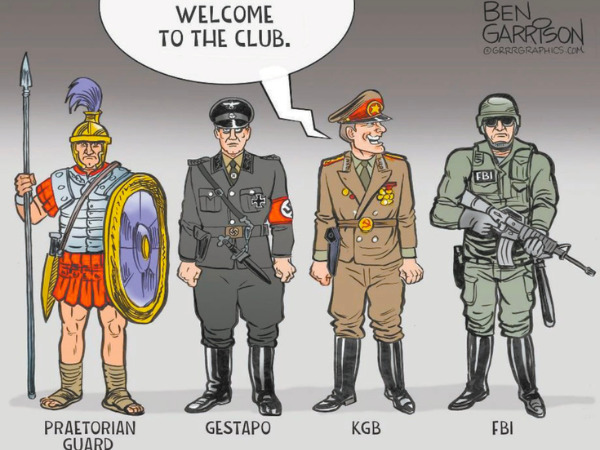
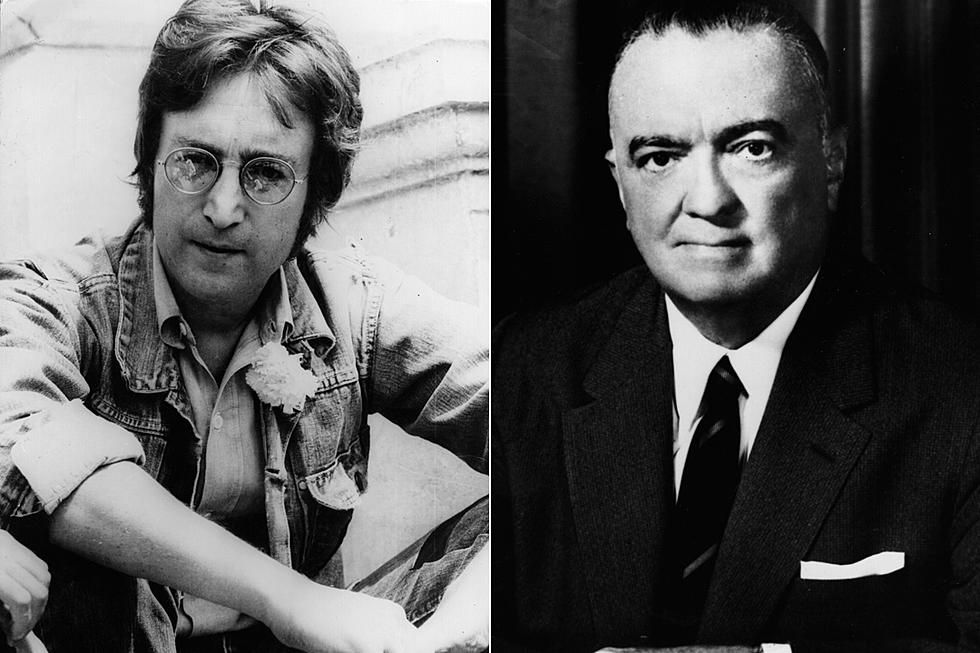

 John W. Whitehead, Constitutional Attorney