WASHINGTON, D.C. — Denouncing the Trump Administration’s ongoing attempts to suppress dissent and chill lawful First Amendment activity, The Rutherford Institute has joined a broad coalition of eleven legal and civil liberties organizations to challenge President Trump’s use of presidential executive orders to retaliate against perceived political opponents.
The coalition, which includes the ACLU, ACLU of DC, CATO, Electronic Frontier Foundation, FIRE, the Institute for Justice, the Knight First Amendment Institute, the National Coalition Against Censorship, the Reporters Committee for the Freedom of the Press, the Society for the Rule of Law, and The Rutherford Institute, filed an amicus brief in Perkins Coie LLP v. U.S. Department of Justice asking a federal court to strike down the president’s executive order as a violation of the separation of powers and an unconstitutional infringement on the rights to free speech, advocacy and due process.
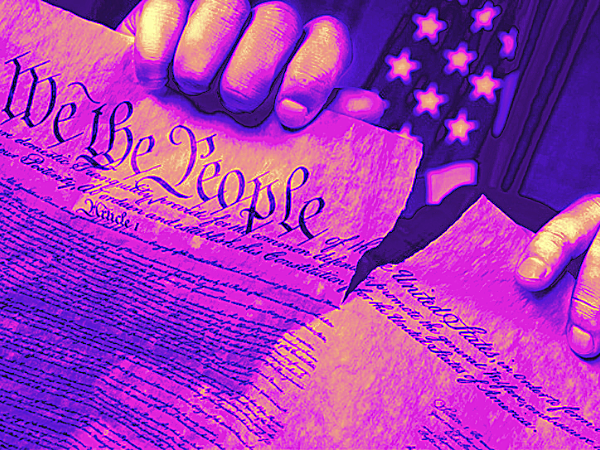
“That the Trump Administration is weaponizing the government in order to wage a war against dissent, against due process, and against the very foundations of our constitutional republic should be a warning to all Americans,” said constitutional attorney John W. Whitehead, president of The Rutherford Institute and author of Battlefield America: The War on the American People. “History shows that when governments claim the power to silence dissent—whether in the name of national security, border protection, or law and order—that power rarely remains limited. These threats against the legal community and ‘we the people’ are merely the first round of the Trump Administration’s effort to turn the Bill of Rights into a Bill of Conditional Privileges.”
In an effort to punish the law firm of Perkins Coie and discourage any other law firms from challenging the Trump Administration’s ongoing efforts to sidestep the Constitution, President Trump issued an Executive Order directing the federal government to suspend the firm’s security clearances, cease providing all goods and services, terminate any contracts with the firm and those who do business with the firm, limit the firm’s access to federal buildings and employees, and refrain from hiring employees of the firm. The intent behind the president’s actions, per former advisor Steve Bannon, is to “put those law firms out of business” so that they can no longer use the system of checks and balances to prevent the Administration from violating the Constitution.
Perkins Coie filed a lawsuit to prevent the implementation of Trump’s Order on grounds that it violates the separation of powers and the First, Fifth, and Sixth Amendments. Warning that Trump’s actions constitute a brazen attack on the independence of the legal profession and the judicial branch, the legal coalition’s amicus brief argues that Trump’s Executive Order not only infringes the First Amendment rights to freedom of speech and petitioning the government, but it also essentially gives the government an unfettered veto over a person’s right to choice of counsel due to the government pushing for a cancel culture and creating a blacklist of firms, similar to what the NRA previously claimed was done to it by a New York state official. Moreover, if the executive order is allowed to stand, it could set a precedent for future Administrations of either political party to suppress challenges to a president’s unconstitutional policies and actions and to deter lawyers from representing the president’s political opponents and any clients adverse to the Administration.
The Rutherford Institute, a nonprofit civil liberties organization, defends individuals whose constitutional rights have been threatened or violated and educates the public on a wide spectrum of issues affecting their freedoms.
“If Trump can disappear them, he can disappear you. The Trump regime is already targeting immigrants who are here legally simply because they expressed opinions that Trump disagreed with. What makes you think he’ll stop there? With no court to verify anything the Trump regime alleges, you could be arrested and sent to a prison in El Salvador for having views the regime dislikes.”—Robert Reich
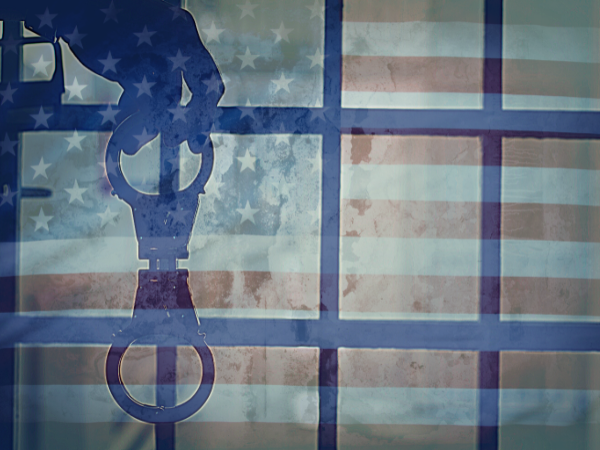
Imagine this: you’re rounded up in the dead of night by government agents, arrested and sent to a detention center. The arresting agents don’t identify themselves, nor do they provide any documentation indicating why you are being detained. Nevertheless, without your family or friends knowing that you have been taken hostage, without anyone knowing where you are being transported or why, and without any opportunity to defend yourself or proclaim your innocence, you are flown out of the country to a foreign prison in a police state where you will have no rights whatsoever.
There can be no understating the danger.
The war on due process is here.
No trials. No hearings. No rights. Just indefinite detention and secret deportations.
This is the fate that awaits every one of us, not just immigrants (legal or otherwise), if the government’s war on the Constitution remains unchecked.
As historian Timothy Snyder warns, “If you accept that non-citizens have no right to due process, you are accepting that citizens have no right to due process. All the government has to do is claim that you are not a citizen; without due process you have no chance to prove the contrary.”
More than two decades after the U.S. government in its post-9/11 frenzy transported individuals, some of whom had not been charged let alone convicted of a crime, to CIA black sites (secret detention centers located outside the U.S. authorized to torture detainees) as a means of sidestepping legal protocols, the Trump Administration is using extraordinary rendition to make those on its so-called “enemies list” disappear.
The first round of arrests and deportations to a mega-prison in El Salvador supposedly targeted members of the infamous Venezuelan gang Tren de Aragua.
“Nazis got better treatment under the Alien Enemies Act than has happened here,” declared U.S. Circuit Judge Patricia Millett. “Y’all could have put me up on Saturday and thrown me on a plane, thinking I’m a member of Tren de Aragua and giving me no chance to protest it and say somehow it’s a violation of presidential war powers.”
Carried out with little evidence and without court hearings or due process, these roundups reportedly may also have swept up individuals with no apparent connection to gang activity apart from common tattoos (firearms, trains, dice, roses, tigers and jaguars) and other circumstantial evidence.
In other words, the government is prepared to preemptively arrest and make people disappear, without any regard for legal protocols or due process, based solely on the president’s claim that they could at some point in the future pose a threat to national security.
This takes pre-crime and preemptive arrests to a whole new sinister level of potential abuses.
Are you starting to sense how quickly this could go off the rails?
This is how democracies collapse. This is how rights disappear overnight.
The most egregious of these incidents involve college students, scientists and doctors, all of them legal permanent residents of the U.S. who, while never having been charged with a crime, are accused of threatening national security by taking part in anti-war protests over the growing death toll in Gaza as a result of the Israeli-Hamas war, or sympathizing with the Palestinians, or being associated with someone who might sympathize with the Palestinians.
When merely exercising one’s right to criticize the government in word, deed or thought is equated to an act of domestic terrorism, we are all in trouble.
Whether those being rounded up and deported have done anything criminally wrong is not the point. That’s what the courts and the Constitution are for: to ensure that justice is served through due process and the right of the accused to have their day in court.
It’s not always a perfect system, but it is better than the alternative, which is outright tyranny.
Indeed, it appears that President Trump is borrowing heavily from the lockdown script used by Nayib Bukele, president of El Salvadora, another police state characterized by arbitrary detentions, systemic violations, brutality, and censorship, which has been under a permanent state of emergency since 2022.
Yet as Amnesty International warns, “‘Security’ at the expense of human rights,” increased militarization, and armed repression coupled with “efforts by state agents to stigmatise human rights organisations and the free press and to thwart their efforts, has fostered a climate of fear and intimidation that stifles civil society and spurs self-censorship.”
Under Bukele, who used a war on gang violence as the pretext for seizing power, constitutional rights have been suspended, with attorneys general fired, judges replaced by loyalists, the legislative and judicial branches coalesced under one party, presidential term limits set aside, innocent individuals swept up in mass arrests, Bitcoin declared legal currency, and friendly overtures made to Russia and China.
Through his use of executive orders, proclamations and so-called national emergencies, President Trump has essentially declared war on the rule of law.
Make no mistake: while immigrants, illegal and legal alike, have largely been the first victims of the Trump administration’s efforts to circumvent the Constitution in order to make them disappear, it’s our very freedoms that are being made to disappear.
At the heart of these freedoms is the right of habeas corpus.
Translated as “you should have the body,” habeas corpus is a legal action by which those imprisoned unlawfully can seek relief from their imprisonment.
Derived from English common law, habeas corpus first appeared in the Magna Carta of 1215 and is the oldest human right in the history of English-speaking civilization. The doctrine of habeas corpus stems from the requirement that a government must either charge a person or let him go free.
Without habeas corpus, other rights become vulnerable to executive overreach.
The Framers of the Constitution, having experienced first-hand what it was like to be labeled enemy combatants, imprisoned indefinitely and not given the opportunity to appear before an impartial judge, were acutely aware of the potential for government tyranny. Thus, they enshrined the writ in Article I, Section IX, of the Constitution, rather than the Bill of Rights, underscoring its fundamental importance as a safeguard against arbitrary detention and ensuring its protection at the federal level.
It has all been downhill since then.
History has shown us the dangers of unchecked executive power. Lincoln’s suspension of habeas corpus during the Civil War led to mass arrests without trial, setting a dangerous precedent.
Decades later, the internment of Japanese Americans during World War II demonstrated how easily fear can be weaponized to justify the imprisonment of innocent people.
Each time habeas corpus has been weakened, it has taken years—sometimes generations—for justice to be restored, if ever.
We cannot afford to repeat these mistakes.
While the Constitution allows the writ of habeas corpus to be suspended in cases of rebellion or invasion when public safety is imperiled, the Trump Administration’s efforts to keep the nation in a permanent state of emergency in order to justify its power grabs leaves “we the people” subject to the kinds of arbitrary mass round-ups, arrests and deportations that have been favored by despots and dictators.
This is usually where the self-righteous defenders of Trump’s blatantly unconstitutional tactics insist that the protections of the Constitution only apply to U.S. citizens.
They are wrong.
At a minimum, as the U.S. Supreme Court has affirmed, the rights enshrined in the first ten amendments to the Constitution apply to all people in the United States, regardless of their citizenship or immigration status. Those rights include free speech, peaceful protest and criticism of the government, assembly, religious freedom, equal protection under the law, due process, legal representation, privacy, among others.
Then again, what good are rights if the government doesn’t respect them?
What good are rights if the president is empowered to nullify them whenever he wants?
For that matter, what good is a government that betrays its own citizens?
When not even citizenship is protection against the abuses of an authoritarian regime, it’s time to do what our forefathers did when they finally got fed up with being silenced, censored, searched, frisked, threatened, and arrested: revolt against the tyrant’s fetters.
History has shown us that when governments operate without checks and balances, tyranny follows. The question is not whether mass arrests and indefinite detentions could be expanded to American citizens—it’s how long before they are.
If we allow the erosion of due process, if we accept that a president can unilaterally decide who is a threat without oversight, then we have already lost the freedoms that define us as a nation.
This is not just about immigrants.
It’s about every American who values liberty over unchecked power.
We must demand accountability. We must challenge policies that violate constitutional protections. We must support organizations fighting for civil liberties, educate ourselves on our rights, and refuse to be silenced by fear. Because when the government starts making people disappear, the only way to stop it is by making our voices impossible to ignore.
“That was when they suspended the Constitution. They said it would be temporary. There wasn’t even any rioting in the streets. People stayed home at night, watching television, looking for some direction. There wasn’t even an enemy you could put your finger on.”—Margaret Atwood, The Handmaid’s Tale
We are witnessing the gradual dismantling of every constitutional principle that serves as a bulwark against government tyranny, overreach and abuse.
As usual, the latest assault comes from the U.S. Supreme Court.
In a 6-3 ruling in Vega v. Tekoh, the Supreme Court took aim at the Miranda warnings, which require that police inform suspects that they have a right against self-incrimination when in police custody: namely, that they have a right to remain silent, to have an attorney present, and that anything they say and do can and will be used against them in a court of law.
By shielding police from lawsuits arising from their failure to Mirandize suspects, the Supreme Court has sent a message to police that they no longer have to respect a suspect’s right to remain silent.
In other words, concludes legal analyst Nick Sibilla, “the Supreme Court has effectively created a new legal immunity for cops accused of infringing on the Fifth Amendment’s protection against self-incrimination.”
Why is this important?
In totality, the rights enshrined in the Fifth Amendment speak to the Founders’ determination to protect the rights of the individual against a government with a natural inclination towards corruption, tyranny and thuggery.
The Founders were especially concerned with balancing the scales of justice in such a way that the innocent and the accused were not railroaded and browbeaten by government agents into coerced confessions, false convictions, or sham trials.
Indeed, so determined were the Founders to safeguard the rights of the innocent, even if it meant allowing a guilty person to go free, that Benjamin Franklin insisted, “It is better a hundred guilty persons should escape than one innocent person should suffer.”
Two hundred-plus years later, the Supreme Court (aided and abetted by the police state, Congress and Corporate America) has flipped that longstanding presumption of innocence on its head.
In our present suspect society, “we the people” are all presumed guilty until proven innocent.
With the Vega ruling, we have even fewer defenses for warding off government chicanery, abuse, threats and entrapment.
To be clear, the Supreme Court is not saying that we don’t have the right to remain silent when in police custody. It’s merely saying that we can’t sue the police for violating that right.
It’s a subtle difference but a significant one that could well encourage police to engage in the very sort of egregious misconduct at the heart of the Vega case: in which a police officer investigating a sexual assault isolated a suspect in a small, windowless room; refused him access to a lawyer or work colleagues; accused him of molesting a female patient; threatened him with violence; implied that he and his family would be deported; and terrorized him into signing a false confession dictated by the cop.
The Vega ruling threatens to turn the clocks back to a time when police resorted to physical brutality (beating, hanging, whipping) and mental torture in order to obtain confessions from suspects without ever informing them of their Fifth Amendment rights.
This was exactly the kind of misconduct that the Warren Court sought to discourage with its 5-4 ruling in Miranda v. Arizona.
As the Court concluded in Miranda almost 60 years ago:
The prosecution may not use statements, whether exculpatory or inculpatory, stemming from custodial interrogation of the defendant unless it demonstrates the use of procedural safeguards effective to secure the privilege against self-incrimination. By custodial interrogation, we mean questioning initiated by law enforcement officers after a person has been taken into custody or otherwise deprived of his freedom of action in any significant way. As for the procedural safeguards to be employed, unless other fully effective means are devised to inform accused persons of their right of silence and to assure a continuous opportunity to exercise it, the following measures are required. Prior to any questioning, the person must be warned that he has a right to remain silent, that any statement he does make may be used as evidence against him, and that he has a right to the presence of an attorney, either retained or appointed. The defendant may waive effectuation of these rights, provided the waiver is made voluntarily, knowingly and intelligently. If, however, he indicates in any manner and at any stage of the process that he wishes to consult with an attorney before speaking, there can be no questioning. Likewise, if the individual is alone and indicates in any manner that he does not wish to be interrogated, the police may not question him. The mere fact that he may have answered some questions or volunteered some statements on his own does not deprive him of the right to refrain from answering any further inquiries until he has consulted with an attorney and thereafter consents to be questioned.
By largely doing away with Miranda, the Supreme Court has made its present position clear: anything goes if you’re a cop in the American police state.
Indeed, pay close to attention to the Court’s rulings lately, and the broader picture that emerges is of a judiciary that is playing fast and loose with the rule of law, picking and choose which rights to uphold and which can be discarded, in order to expand the power of the police state at the expense of the people’s rights.
If left unchecked, this constitutionally illiterate ruling will open the door to a new era of police abuses.
By shielding police from charges of grave misconduct while throwing the book at Americans for violating any of a rapidly expanding assortment of so-called crimes, the government has created a world in which there are two sets of laws: one set for the government and its gun-toting agents, and another set for you and me.
If you’re a cop in the American police state, you can already break the law in a myriad of ways without suffering any major, long-term consequences.
Indeed, not only are cops protected from most charges of wrongdoing—whether it’s shooting unarmed citizens (including children and old people), raping and abusing young women, falsifying police reports, trafficking drugs, or soliciting sex with minors—but even on the rare occasions when they are fired for misconduct, it’s only a matter of time before they get re-hired again.
For instance, police officer Jackie Neal was accused of putting his hands inside a woman’s panties, lifting up her shirt and feeling her breasts during a routine traffic stop. He remained on the police force. A year later, Neal was accused of digitally penetrating another woman. Still, he wasn’t fired or disciplined.
A few years after that, Neal—then serving as supervisor of the department’s youth program—was suspended for three days for having sex with a teenage girl participating in the program. As Reuters reports, “Neal never lost a dime in pay or a day off patrol: The union contract allowed him to serve the suspension using vacation days.”
Later that same year, Neal was arrested on charges that he handcuffed a woman in the rear seat of his police vehicle and then raped her. He was eventually fined $5,000 and sentenced to 14 months in prison, with five months off for “work and education.” The taxpayers of San Antonio got saddled with $500,000 to settle the case.
Now here’s the kicker: when the local city council attempted to amend the police union contract to create greater accountability for police misconduct, the police unions flexed their muscles and engaged in such a heated propaganda campaign that the city backed down.
This is how perverse justice in America has become, and it’s happening all across the country.
Incredibly, while our own constitutional protections against government abuses continue to be dismantled, a growing number of states are adopting Law Enforcement Officers’ Bill of Rights (LEOBoR)—written by police unions—which provides police officers accused of a crime with special due process rights and privileges not afforded to the average citizen.
These LEOBoRs epitomize everything that is wrong with America today.
Now every so often, police officers engaged in wrongdoing are actually charged for abusing their authority and using excessive force against American citizens. Occasionally, those officers are even sentenced for their crimes against the citizenry.
Yet in just about every case, it’s still the American taxpayer who foots the bill.
John W. Whitehead’s weekly commentaries are available for publication to newspapers and web publications at no charge. Please contact staff@rutherford.org to obtain reprint permission.
“In a closed society where everybody’s guilty, the only crime is getting caught.”—Hunter S. Thompson
The burden of proof has been reversed.
No longer are we presumed innocent. Now we’re presumed guilty unless we can prove our innocence beyond a reasonable doubt in a court of law. Rarely, are we even given the opportunity to do so.
Although the Constitution requires the government to provide solid proof of criminal activity before it can deprive a citizen of life or liberty, the government has turned that fundamental assurance of due process on its head.
Each and every one of us is now seen as a potential suspect, terrorist and lawbreaker in the eyes of the government.
Consider all the ways in which “we the people” are now treated as criminals, found guilty of violating the police state’s abundance of laws, and preemptively stripped of basic due process rights.
Red flag gun confiscation laws: Gun control legislation, especially in the form of red flag gun laws, allow the police to remove guns from people “suspected” of being threats. These laws, growing in popularity as a legislative means by which to seize guns from individuals viewed as a danger to themselves or others, will put a target on the back of every American whether or not they own a weapon.
Disinformation eradication campaigns. In recent years, the government has used the phrase “domestic terrorist” interchangeably with “anti-government,” “extremist” and “terrorist” to describe anyone who might fall somewhere on a very broad spectrum of viewpoints that could be considered “dangerous.” The ramifications are so far-reaching as to render almost every American an extremist in word, deed, thought or by association. In the government’s latest assault on those who criticize the government—whether that criticism manifests itself in word, deed or thought—the Biden Administration has likened those who share “false or misleading narratives and conspiracy theories, and other forms of mis- dis- and mal-information” to terrorists. This latest government salvo against consumers and spreaders of “mis- dis- and mal-information” widens the net to potentially include anyone who is exposed to ideas that run counter to the official government narrative. In other words, if you dare to subscribe to any views that are contrary to the government’s, you may well be suspected of being a domestic terrorist and treated accordingly. In this way, government and corporate censors claiming to protect us from dangerous, disinformation campaigns are, in fact, laying the groundwork now to preempt any “dangerous” ideas that might challenge the power elite’s stranglehold over our lives.
Government watch lists. The FBI, CIA, NSA and other government agencies have increasingly invested in corporate surveillance technologies that can mine constitutionally protected speech on social media platforms such as Facebook, Twitter and Instagram in order to identify potential extremists and predict who might engage in future acts of anti-government behavior. Where many Americans go wrong is in naively assuming that you have to be doing something illegal or harmful in order to be flagged and targeted for some form of intervention or detention. In fact, all you need to do these days to end up on a government watch list or be subjected to heightened scrutiny is use certain trigger words (like cloud, pork and pirates), surf the internet, communicate using a cell phone, limp or stutter, drive a car, stay at a hotel, attend a political rally, express yourself on social media, appear mentally ill, serve in the military, disagree with a law enforcement official, call in sick to work, purchase materials at a hardware store, take flying or boating lessons, appear suspicious, appear confused or nervous, fidget or whistle or smell bad, be seen in public waving a toy gun or anything remotely resembling a gun (such as a water nozzle or a remote control or a walking cane), stare at a police officer, question government authority, or appear to be pro-gun or pro-freedom.
Thought crimes. For years now, the government has used all of the weapons in its vast arsenal—surveillance, threat assessments, fusion centers, pre-crime programs, hate crime laws, militarized police, lockdowns, martial law, etc.—to target potential enemies of the state based on their ideologies, behaviors, affiliations and other characteristics that might be deemed suspicious or dangerous. It’s not just what you say or do that is being monitored, but how you think that is being tracked and targeted. There’s a whole spectrum of behaviors ranging from thought crimes and hate speech to whistleblowing that qualifies for persecution (and prosecution) by the Deep State. It’s a slippery slope from censoring so-called illegitimate ideas to silencing truth.
Security checkpoints and fusion centers. By treating an entire populace as suspect, the government has justified wide-ranging security checkpoints that subject travelers to scans, searches, pat downs and other indignities by the TSA and VIPR raids on so-called “soft” targets like shopping malls and bus depots by black-clad, Darth Vader look-alikes. Fusion centers, which represent the combined surveillance efforts of federal, state and local law enforcement, track the citizenry’s movements, record their conversations, and catalogue their transactions.
Surveillance, precrime programs. Facial recognition software aims to create a society in which every individual who steps out into public is tracked and recorded as they go about their daily business. Coupled with surveillance cameras that blanket the country, facial recognition technology allows the government and its corporate partners to warrantlessly identify and track someone’s movements in real-time, whether or not they have committed a crime. Rapid advances in behavioral surveillance are not only making it possible for individuals to be monitored and tracked based on their patterns of movement or behavior, including gait recognition (the way one walks), but have given rise to whole industries that revolve around predicting one’s behavior based on data and surveillance patterns and are also shaping the behaviors of whole populations. With the increase in precrime programs, threat assessments, AI algorithms and surveillance programs such as SpotShotter, which attempt to calculate where illegal activity might occur by triangulating sounds and images, the burden of proof has been turned on its head by a surveillance state that renders us all suspects and overcriminalization which renders us all lawbreakers.
Mail surveillance. Just about every branch of the government—from the Postal Service to the Treasury Department and every agency in between—now has its own surveillance sector, authorized to spy on the American people. For instance, the U.S. Postal Service, which has been photographing the exterior of every piece of paper mail for the past 20 years, is also spying on Americans’ texts, emails and social media posts. Headed up by the Postal Service’s law enforcement division, the Internet Covert Operations Program (iCOP) is reportedly using facial recognition technology, combined with fake online identities, to ferret out potential troublemakers with “inflammatory” posts. The agency claims the online surveillance, which falls outside its conventional job scope of processing and delivering paper mail, is necessary to help postal workers avoid “potentially volatile situations.”
Threat assessments and AI algorithms. The government has a growing list—shared with fusion centers and law enforcement agencies—of ideologies, behaviors, affiliations and other characteristics that could flag someone as suspicious and result in their being labeled potential enemies of the state. Before long, every household in America will be flagged as a threat and assigned a threat score. It’s just a matter of time before you find yourself wrongly accused, investigated and confronted by police based on a data-driven algorithm or risk assessment culled together by a computer program run by artificial intelligence.
No-knock raids. No-knock, no-announce SWAT team raids are what passes for court-sanctioned policing in America today, and it could happen to any one of us. Nationwide, SWAT teams routinely invade homes, break down doors, kill family pets (they always shoot the dogs first), damage furnishings, terrorize families, and wound or kill those unlucky enough to be present during a raid. No longer reserved exclusively for deadly situations, SWAT teams are now increasingly being deployed for relatively routine police matters such as serving a search warrant, with some SWAT teams being sent out as much as five times a day. Police carry out tens of thousands of no-knock raids every year nationwide.
Militarized police. America is overrun with militarized cops—vigilantes with a badge—who have almost absolute discretion to decide who is a threat, what constitutes resistance, and how harshly they can deal with the citizens they were appointed to “serve and protect.” It doesn’t matter where you live—big city or small town—it’s the same scenario being played out over and over again in which government agents, trained to act as judge, jury and executioner in their interactions with the public, ride roughshod over the rights of the citizenry. This is how we have gone from a nation of laws—where the least among us had just as much right to be treated with dignity and respect as the next person (in principle, at least)—to a nation of law enforcers (revenue collectors with weapons) who treat “we the people” like suspects and criminals.
Constitution-free zones. Merely living within 100 miles inland of the border around the United States is now enough to make you a suspect, paving the way for Border Patrol agents to search people’s homes, intimately probe their bodies, and rifle through their belongings, all without a warrant. Nearly 66% of Americans (2/3 of the U.S. population, 197.4 million people) now live within that 100-mile-deep, Constitution-free zone.
Asset forfeiture schemes. Americans no longer have a right to private property. If government agents can invade your home, break down your doors, kill your dog, damage your furnishings and terrorize your family, your property is no longer private and secure—it belongs to the government. Hard-working Americans are having their bank accounts, homes, cars electronics and cash seized by police under the assumption that they have been associated with some criminal scheme. As libertarian Harry Browne observed, “Asset forfeiture is a mockery of the Bill of Rights. There is no presumption of innocence, no need to prove you guilty (or even charge you with a crime), no right to a jury trial, no right to confront your accuser, no right to a court-appointed attorney (even if the government has just stolen all your money), and no right to compensation for the property that’s been taken.”
Vehicle kill switches. Sold to the public as a safety measure aimed at keeping drunk drivers off the roads, “vehicle kill switches” could quickly become a convenient tool in the hands of government agents to put the government in the driver’s seat while rendering null and void the Constitution’s requirements of privacy and its prohibitions against unreasonable searches and seizures. As such, it presumes every driver potentially guilty of breaking some law that would require the government to intervene and take over operation of the vehicle or shut it off altogether. The message: we cannot be trusted to obey the law or navigate the world on our end.
Bodily integrity. The government’s presumptions about our so-called guilt or innocence have extended down to our very cellular level. The debate over bodily integrity covers broad territory, ranging from forced vaccinations, forced cavity searches, forced colonoscopies, forced blood draws and forced breath-alcohol tests to forced DNA extractions, forced eye scans, and forced inclusion in biometric databases: these are just a few ways in which Americans continue to be reminded that we have no real privacy, no real presumption of innocence, and no real control over what happens to our bodies during an encounter with government officials. The groundwork being laid with these mandates is a prologue to what will become the police state’s conquest of a new, relatively uncharted, frontier: inner space, specifically, the inner workings (genetic, biological, biometric, mental, emotional) of the human race. “Guilt by association” has taken on new connotations in the technological age. Yet the debate over genetic privacy—and when one’s DNA becomes a public commodity outside the protection of the Fourth Amendment’s prohibition on warrantless searches and seizures—is really only beginning. Get ready, folks, because the government has embarked on a diabolical campaign to create a nation of suspects predicated on a massive national DNA database.
Limitations on our right to move about freely. We think we have the freedom to go where we want and move about freely, but at every turn, we’re hemmed in by laws, fines and penalties that regulate and restrict our autonomy, and surveillance cameras that monitor our movements. For instance, license plate readers are mass surveillance tools that can photograph over 1,800 license tag numbers per minute, take a picture of every passing license tag number and store the tag number and the date, time, and location of the picture in a searchable database, then share the data with law enforcement, fusion centers and private companies to track the movements of persons in their cars. With tens of thousands of these license plate readers now in operation throughout the country, police can track vehicles and run the plates through law enforcement databases for abducted children, stolen cars, missing people and wanted fugitives. Of course, the technology is not infallible: there have been numerous incidents in which police have mistakenly relied on license plate data to capture suspects only to end up detaining innocent people at gunpoint.
The war on cash and the introduction of digital currency. Digital currency provides the government and its corporate partners with a mode of commerce that can easily be monitored, tracked, tabulated, mined for data, hacked, hijacked and confiscated when convenient. This push for a digital currency dovetails with the government’s war on cash, which it has been subtly waging for some time now. In recent years, just the mere possession of significant amounts of cash could implicate you in suspicious activity and label you a criminal. The rationale (by police) is that cash is the currency for illegal transactions given that it’s harder to track, can be used to pay illegal immigrants, and denies the government its share of the “take,” so doing away with paper money will help law enforcement fight crime and help the government realize more revenue. A cashless society—easily monitored, controlled, manipulated, weaponized and locked down—plays right into the hands of the government (and its corporate partners).
The Security-Industrial Complex. Every crisis—manufactured or otherwise—since the nation’s early beginnings has become a make-work opportunity for the government to expand its reach and its power at taxpayer expense while limiting our freedoms at every turn. What this has amounted to is a war on the American people, fought on American soil, funded with taxpayer dollars, and waged with a single-minded determination to use national crises, manufactured or otherwise, in order to transform the American homeland into a battlefield. As a result, the American people have been treated like enemy combatants, to be spied on, tracked, scanned, frisked, searched, subjected to all manner of intrusions, intimidated, invaded, raided, manhandled, censored, silenced, shot at, locked up, denied due process, and killed.
These programs push us that much closer towards a suspect society where everyone is potentially guilty of some crime or another and must be preemptively rendered harmless.
The ramifications of empowering the government to sidestep fundamental due process safeguards are so chilling and so far-reaching as to put a target on the back of anyone who happens to be in the same place where a crime takes place.
The groundwork has been laid for a new kind of government where it won’t matter if you’re innocent or guilty, whether you’re a threat to the nation, or even if you’re a citizen. What will matter is what the government—or whoever happens to be calling the shots at the time—thinks. And if the powers-that-be think you’re a threat to the nation and should be locked up, then you’ll be locked up with no access to the protections our Constitution provides.
John W. Whitehead’s weekly commentaries are available for publication to newspapers and web publications at no charge. Please contact staff@rutherford.org to obtain reprint permission.



 John W. Whitehead, Constitutional Attorney