Posts Tagged ‘Constitution’

How can the life of such a man

Be in the palm of some fool’s hand?

To see him obviously framed

Couldn’t help but make me feel ashamed to live in a land

Where justice is a game.—Bob Dylan, “Hurricane


Justice in America is not all it’s cracked up to be.

Just ask Jeffrey Deskovic, who spent 16 years in prison for a rape and murder he did not commit. Despite the fact that Deskovic’s DNA did not match what was found at the murder scene, he was singled out by police as a suspect because he wept at the victim’s funeral (he was 16 years old at the time), then badgered over the course of two months into confessing his guilt. He was eventually paid $6.5 million in reparation.

James Bain spent 35 years in prison for the kidnapping and rape of a 9-year-old boy, but he too was innocent of the crime. Despite the fact that the prosecutor’s case was flimsy—it hinged on the similarity of Bain’s first name to the rapist’s, Bain’s ownership of a red motorcycle, and a misidentification of Bain in a lineup by a hysterical 9-year-old boy—Bain was sentenced to life in prison. He was finally freed after DNA testing proved his innocence, and was paid $1.7 million.

Mark Weiner got off relatively easy when you compare his experience to the thousands of individuals who are spending lifetimes behind bars for crimes they did not commit.

Weiner was wrongfully arrested, convicted, and jailed for more than two years for a crime he too did not commit. In his case, a young woman claimed Weiner had abducted her, knocked her out and then sent taunting text messages to her boyfriend about his plans to rape her. Despite the fact that cell phone signals, eyewitness accounts and expert testimony indicated the young woman had fabricated the entire incident, the prosecutor and judge repeatedly rejected any evidence contradicting the woman’s far-fetched account, sentencing Weiner to eight more years in jail. Weiner was only released after his accuser was caught selling cocaine to undercover cops.

In the meantime, Weiner lost his job, his home, and his savings, and time with his wife and young son. As Slate journalist Dahlia Lithwick warned, “If anyone suggests that the fact that Mark Weiner was released this week means ‘the system works,’ I fear that I will have to punch him in the neck. Because at every single turn, the system that should have worked to consider proof of Weiner’s innocence failed him.”

The system that should have worked didn’t, because the system is broken, almost beyond repair.

In courtroom thrillers like 12 Angry Men and To Kill a Mockingbird, justice is served in the end because someone—whether it’s Juror #8 or Atticus Finch—chooses to stand on principle and challenge wrongdoing, and truth wins.

Unfortunately, in the real world, justice is harder to come by, fairness is almost unheard of, and truth rarely wins.

On paper, you may be innocent until proven guilty, but in actuality, you’ve already been tried, found guilty and convicted by police officers, prosecutors and judges long before you ever appear in a courtroom.

Chronic injustice has turned the American dream into a nightmare.

At every step along the way, whether it’s encounters with the police, dealings with prosecutors, hearings in court before judges and juries, or jail terms in one of the nation’s many prisons, the system is riddled with corruption, abuse and an appalling disregard for the rights of the citizenry.

Due process rights afforded to a person accused of a crime—the right to remain silent, the right to be informed of the charges against you, the right to representation by counsel, the right to a fair trial, the right to a speedy trial, the right to prove your innocence with witnesses and evidence, the right to a reasonable bail, the right to not languish in jail before being tried, the right to confront your accusers, etc.—mean nothing when the government is allowed to sidestep those safeguards against abuse whenever convenient.

It’s telling that while President Obama said all the right things about the broken state of our criminal justice system—that we jail too many Americans for nonviolent crimes (we make up 5 percent of the world’s population, but our prison population constitutes nearly 25% of the world’s prisoners), that we spend more money on incarceration than any other nation ($80 billion a year), that we sentence people for longer jail terms than their crimes merit, that our criminal justice system is far from color-blind, that the nation’s school-to-prison pipeline is contributing to overcrowded jails, and that we need to focus on rehabilitation of criminals rather than retribution—he failed to own up to the government’s major role in contributing to this injustice in America.

Indeed, while Obama placed the responsibility for reform squarely in the hands of prosecutors, judges and police, he failed to acknowledge that they bear the burden of our failed justice system, along with the legislatures and corporations who have worked with them to create an environment that is hostile to the rights of the accused.

In such a climate, we are all the accused, the guilty and the suspect.

Battlefield_Cover_300As I document in my book Battlefield America: The War on the American People, we’re operating in a new paradigm where the citizenry are presumed guilty and treated as suspects, our movements tracked, our communications monitored, our property seized and searched, our bodily integrity disregarded, and our inalienable rights to “life, liberty and the pursuit of happiness” rendered insignificant when measured against the government’s priorities.

Every American is now in jeopardy of being targeted and punished for a crime he did not commit thanks to an overabundance of arcane laws. Making matters worse, by allowing government agents to operate above the law, immune from wrongdoing, we have created a situation in which the law is one-sided and top-down, used as a hammer to oppress the populace, while useless in protecting us against government abuse.

Add to the mix a profit-driven system of incarceration in which state and federal governments agree to keep the jails full in exchange for having private corporations run the prisons, and you will find the only word to describe such a state of abject corruption is “evil.”

How else do you explain a system that allows police officers to shoot first and ask questions later, without any real consequences for their misdeeds? Despite the initial outcry over the shootings of unarmed individuals in Ferguson and Baltimore, the pace of police shootings has yet to slow. In fact, close to 400 people were shot and killed by police nationwide in the first half of 2015, almost two shootings a day. Those are just the shootings that were tracked. Of those killed, almost 1 in 6 were either unarmed or carried a toy gun.

For those who survive an encounter with the police only to end up on the inside of a jail cell, waiting for a “fair and speedy trial,” it’s often a long wait. Consider that 60 percent of the people in the nation’s jails have yet to be convicted of a crime. There are 2.3 million people in jails or prisons in America. Those who can’t afford bail, “some of them innocent, most of them nonviolent and a vast majority of them impoverished,” will spend about four months in jail before they even get a trial.

Not even that promised “day in court” is a guarantee that justice will be served.

As Judge Alex Kozinski of the Ninth Circuit Court of Appeals points out, there are an endless number of factors that can render an innocent man or woman a criminal and caged for life: unreliable eyewitnesses, fallible forensic evidence, flawed memories, coerced confessions, harsh interrogation tactics, uninformed jurors, prosecutorial misconduct, falsified evidence, and overly harsh sentences, to name just a few.

In early 2015, the Justice Department and FBI “formally acknowledged that nearly every examiner in an elite FBI forensic unit gave flawed testimony in almost all trials in which they offered evidence against criminal defendants over more than a two-decade period…. The admissions mark a watershed in one of the country’s largest forensic scandals, highlighting the failure of the nation’s courts for decades to keep bogus scientific information from juries, legal analysts said.”

“How do rogue forensic scientists and other bad cops thrive in our criminal justice system?” asks Judge Kozinski. “The simple answer is that some prosecutors turn a blind eye to such misconduct because they’re more interested in gaining a conviction than achieving a just result.”

The power of prosecutors is not to be underestimated.

Increasingly, when we talk about innocent people being jailed for crimes they did not commit, the prosecutor plays a critical role in bringing about that injustice. As The Washington Post reports, “Prosecutors win 95 percent of their cases, 90 percent of them without ever having to go to trial…. Are American prosecutors that much better? No… it is because of the plea bargain, a system of bullying and intimidation by government lawyers for which they ‘would be disbarred in most other serious countries….’”

This phenomenon of innocent people pleading guilty makes a mockery of everything the criminal justice system is supposed to stand for: fairness, equality and justice. As Judge Jed S. Rakoff concludes, “our criminal justice system is almost exclusively a system of plea bargaining, negotiated behind closed doors and with no judicial oversight. The outcome is very largely determined by the prosecutor alone.”

It’s estimated that between 2 and 8 percent of convicted felons who have agreed to a prosecutor’s plea bargain (remember, there are 2.3 million prisoners in America) are in prison for crimes they did not commit.

Clearly, the Coalition for Public Safety was right when it concluded, “You don’t need to be a criminal to have your life destroyed by the U.S. criminal justice system.”

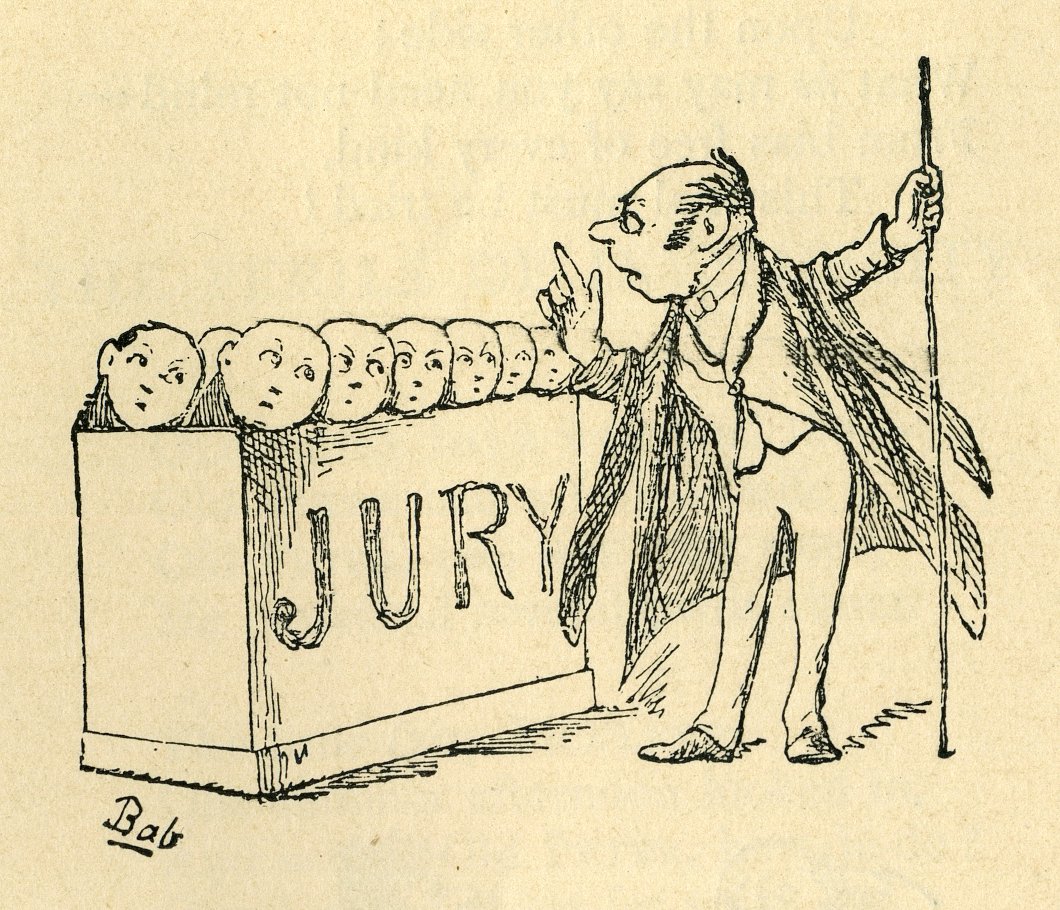
It wasn’t always this way. As Judge Rakoff recounts, the Founding Fathers envisioned a criminal justice system in which the critical element “was the jury trial, which served not only as a truth-seeking mechanism and a means of achieving fairness, but also as a shield against tyranny.”

That shield against tyranny has long since been shattered, leaving Americans vulnerable to the cruelties, vanities, errors, ambitions and greed of the government and its partners in crime.

There is not enough money in the world to make reparation to those whose lives have been disrupted by wrongful convictions.

Over the past quarter century, more than 1500 Americans have been released from prison after being cleared of crimes they did not commit. These are the fortunate ones. For every exonerated convict who is able to prove his innocence after 10, 20 or 30 years behind bars, Judge Kozinski estimates there may be dozens who are innocent but cannot prove it, lacking access to lawyers, evidence, money and avenues of appeal.

For those who have yet to fully experience the injustice of the American system of justice, it’s only a matter of time.

America no longer operates under a system of justice characterized by due process, an assumption of innocence, probable cause, and clear prohibitions on government overreach and police abuse. Instead, our courts of justice have been transformed into courts of order, advocating for the government’s interests, rather than championing the rights of the citizenry, as enshrined in the Constitution.

Without courts willing to uphold the Constitution’s provisions when government officials disregard them, and a citizenry knowledgeable enough to be outraged when those provisions are undermined, the Constitution provides little protection against the police state.

In other words, in this age of hollow justice, courts of order, and government-sanctioned tyranny, the Constitution is no safeguard against government wrongdoing such as SWAT team raids, domestic surveillance, police shootings of unarmed citizens, indefinite detentions, asset forfeitures, prosecutorial misconduct and the like.


“No man in the wrong can stand up against a fellow that’s in the right and keeps on a-comin’.”—Texas Rangers

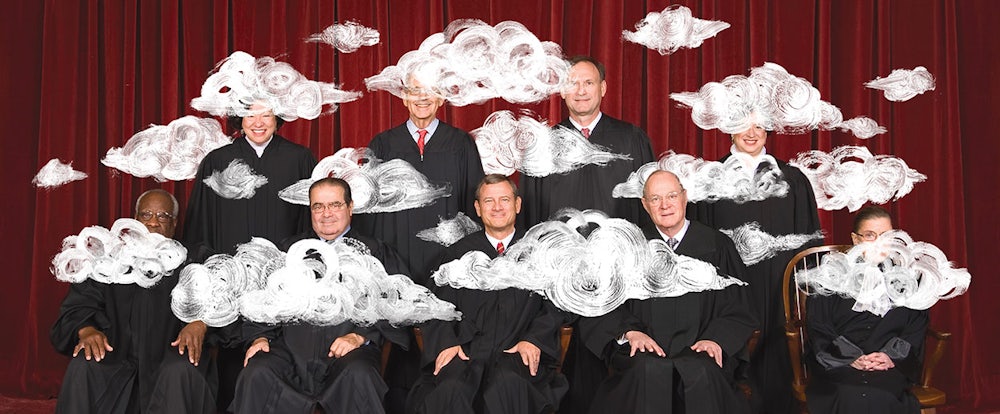
In one swoop, on June 22, 2015, a divided U.S. Supreme Court handed down three consecutive rulings affirming the right of raisin farmers, hotel owners and prison inmates. However, this push back against government abuse, government snooping and government theft only came about because some determined citizens stood up and took a stand against tyranny.

The three cases respectively deal with the government’s confiscation of agricultural crops without any guarantee or promise of payment (Horne v. U.S. Department of Agriculture); the practice of police gaining unfettered access to motel and hotel guest registries (City of Los Angeles v. Patel); and the use of tasers and excessive force by prison officials (Kingsley v. Hendrickson).

Whether these three rulings will amount to much in the long run remains to be seen. In the meantime, they sound a cautiously optimistic note at a time when police state forces continue to use advancing technologies, surveillance and militarization to weaken, sidestep and flout the Constitution at almost every turn.

In the first case, Horne v. U.S. Department of Agriculture, a 5-4 Supreme Court declared that raisin farmer Marvin Horne deserves to be compensated for the official seizure of one-third of his personal property by the government.

The case arose after independent raisin farmers in California were fined almost $700,000 for refusing to surrender about 40% of the raisins they produced to the government as part of a program purportedly aimed at maintaining a stable market for commodities.

Marvin and Laura Horne are independent farmers in California and have been growing raisins for almost half a century. During that time, the Hornes were subject to a Depression-era law promulgated by the U.S. Department of Agriculture that aims to create “orderly” market conditions for raisins by regulating their supply. Supply is regulated by requiring that raisin producers surrender a certain percentage of their raisins (a so-called “reserve tonnage”) each year to an administrative committee.

In 2002-2003, the reserve tonnage was set at 47% of the crop. The reserve tonnage may be sold by the government with the government paying itself first for administrative costs, and then providing pro rata payments to participating farmers. However, in 2002-2003, raisin farmers received payments that did not cover the expenses of production and in 2003-2004, no payments whatsoever were made for reserve tonnage raisins.

Although the Hornes attempted to arrange their operation to avoid having to give up part of their crop, the USDA assessed a monetary penalty of $695,226 against the Hornes for having failed to surrender raisins they produced between 2002 and 2004. The Hornes appealed this order, arguing that the requirement that they surrender, on pain of monetary penalty, a percentage of their property without any guarantee of compensation violated the command of the Fifth Amendment to the U.S. Constitution that private property shall not be taken for public use without just compensation. However, the U.S. Court of Appeals for the Ninth Circuit determined that the Fifth Amendment affords less protection to personal property than real property (land), and upheld the penalties. The Hornes subsequently appealed that ruling to the U.S. Supreme Court, arguing that the Fifth Amendment’s prohibition on government confiscation of property applies not only to the appropriation of land but with full and equal force to personal property such as agricultural crops.

Battlefield_Cover_300The bigger picture: Whether you’re talking about raisins confiscated by the USDA, homes expropriated by government agencies under the rubric of eminent domain, or cars and cash seized by asset forfeiture-driven highway police, these various takings all add up to the same thing: government theft sanctioned by an endless assortment of arcane laws. Unfortunately, as I point out in my book Battlefield America: The War on the American People, the lines between private and public property have been so blurred that private property is reduced to little more than something the government can use to control, manipulate and harass the citizenry to suit its own purposes, while ‘we the people’ have been reduced to little more than tenants or serfs in bondage to an overbearing landlord. This is feudalism revisited.

In the second case handed down on June 22 (City of Los Angeles v. Patel), a 5-4 Supreme Court struck down a Los Angeles ordinance that permits the police to check guest registries at motels and hotels at any hour of the day or night without a warrant or other judicial review.

Section 41.49 of the City of Los Angeles Municipal Code requires all hotel owners to maintain a registry that collects information about persons staying at the hotel, including their names, addresses, vehicle information, arrival and departure dates, room prices, and payment methods.

Under this law, it is a crime for a guest to provide false or misleading information in registering at the hotel. The law also requires that hotels make these records available to any officer of the Los Angeles Police Department for inspection on demand, thereby allowing law enforcement officers to inspect this information at any time regardless of whether there is consent to the inspection or a warrant allowing it. Additionally, police need not have any measure of suspicion in order to review hotel registries under the ordinance and there need not be any history of criminal activity at the hotel. A hotel operator is guilty of a crime if he or she refuses to allow inspection.

In 2005, the Los Angeles Lodging Association and various owners and operators of hotels and motels in the city filed a lawsuit challenging the requirement of the ordinance that they grant unfettered access to their guest registries, arguing that the ordinance is a patent violation of the Fourth Amendment’s protection of persons’ houses, papers and effects against “unreasonable searches and seizures.”

In December 2013, the U.S. Court of Appeals for the Ninth Circuit upheld the hotel owners’ claims, ruling that the inspection of hotel registries by police is clearly a search for purposes of the Fourth Amendment. The Ninth Circuit also rejected the claim that hotels are a “closely regulated” industry that should expect government inspections, thereby holding that police are not excused from the general search warrant requirement.

Citing a fundamental right to privacy, travel and association, civil liberties advocates argued that the ordinance, which is similar to laws on the books in cities across the nation, flies in the face of historical protections affording hotel guests privacy in regards to their identities and comings-and-goings and burdens the fundamental rights of travel and association. Moreover, police should not be given carte blanche to rummage through records containing highly personal information because this could chill the exercise of other constitutional rights, such as the right to travel and the right of association.

The bigger picture: The practice of giving police officers unfettered, warrantless access to Americans’ hotel records is no different from the government’s use of National Security Letters to force banks, phone companies, casinos and other businesses to secretly provide the FBI with customer information such as telephone records, subscriber information, credit reports, employment information, and email records and not disclose the demands. Both ploys are merely different facets of the government’s campaign to circumvent, by hook or by crook, the clear procedural safeguards of the Fourth Amendment and force business owners to act as extensions of the police state.

In the last case, a 5-4 U.S. Supreme Court ruled in Kingsley v. Hendrickson that a lower court used an improper test to determine whether guards used excessive force against a pretrial detainee.

The case involves a Wisconsin man who alleged that he was subjected to unreasonable and excessive force in reckless disregard for his safety when prison guards forcibly removed him from his jail cell and subdued him with a stun gun.

In 2010, Michael Kingsley was arrested and booked into the jail in Sparta, Wisconsin, and detained there pending his court appearances on the charges against him. About a month into his detention, guards noticed that a sheet of yellow paper was covering the light above Kingsley’s bed, which was a common practice among detainees in order to dim the brightness of the facilities lights. The guards ordered Kingsley to remove the paper, but he refused, pointing out that he had not put the paper over the light.

The next morning, Kingsley was again ordered to remove the paper and again he refused. The jail administrator was then called, who told Kingsley he would be transferred to another cell. Five officers then came to the cell and ordered Kingsley to stand up. Kingsley protested that he had done nothing wrong, but was told to follow the order or he would be tasered.

Kingsley continued to lie face down on his bunk but put his hands behind his back and was handcuffed. The officers pulled Kingsley off the bunk, which allegedly caused injuries to his knees and feet and inflicted pain so severe Kingsley could not stand or walk. The officers then carried him to a receiving cell, placed him face down on a bunk and attempted to remove the handcuffs.

Although Kingsley denied that he resisted, the officers allegedly smashed his head into the concrete bunk and placed a knee into his back. When Kingsley told the officer to get off him, one of the officers tasered Kingsley for five seconds. As a result of this incident, Kingsley sued several officers involved, alleging that they used excessive force against him and that this violated his constitutional right to due process. A jury ruled against Kingsley, who subsequently lost his appeal to the U.S. Court of Appeals for the Seventh Circuit. Weighing in on the case, civil liberties advocates asked the Supreme Court to remove restrictions some courts have imposed on civil rights lawsuits for excessive force by inmates against jail personnel, thereby discouraging the use of excessive force by prison officials.

The bigger picture: In a police state, there is no need for judges, juries or courts of law, because the police act as judge, jury and law, and their version of justice is one-sided, delivered at the end of a gun, taser or riot stick. Unless the courts and legislatures act soon to change this climate of government-sanctioned police brutality, we may find that there is no real difference between those who are innocent, those accused of committing crimes and those found guilty, because we will all suffer the same at the hands of government agents.

Taken individually, these three cases may appear to be little more than small, procedural slaps on the wrist to government agencies that are so bloated, out-of-control and unaccountable as to scarcely register the slaps. However, taken together they serve as a potent reminder of what happens when a determined citizenry takes a collective stand against government abuse. That said, if “we the people” don’t keep pushing back, standing up, and holding government officials accountable to the rule of law, these victories will do little to keep government bureaucrats off the backs of the American citizenry.


“The government is merely a servant―merely a temporary servant; it cannot be its prerogative to determine what is right and what is wrong, and decide who is a patriot and who isn’t. Its function is to obey orders, not originate them.” ― Mark Twain

How many Americans have actually bothered to read the Constitution, let alone the first ten amendments to the Constitution, the Bill of Rights (a quick read at 462 words)?

Take a few minutes and read those words for yourself—rather than having some court or politician translate them for you—and you will be under no illusion about where to draw the line when it comes to speaking your mind, criticizing your government, defending what is yours, doing whatever you want on your own property, and keeping the government’s nose out of your private affairs.

In an age of overcriminalization, where the average citizen unknowingly commits three crimes a day, and even the most mundane activities such as fishing and gardening are regulated, government officials are constantly telling Americans what not to do. Yet it was not always this way. It used to be “we the people” telling the government what it could and could not do. Indeed, the three words used most frequently throughout the Bill of Rights in regards to the government are “no,” “not” and “nor.”

Compare the following list of “don’ts” the government is prohibited from doing with the growing list of abuses to which “we the people” are subjected on a daily basis, and you will find that we have reached a state of crisis wherein the government is routinely breaking the law and violating its contractual obligations.

For instance, the government is NOT allowed to restrict free speech, press, assembly or the citizenry’s ability to protest and correct government wrongdoing. Nevertheless, the government continues to prosecute whistleblowers, persecute journalists, cage protesters, criminalize expressive activities, crack down on large gatherings of citizens mobilizing to voice their discontent with government policies, and insulate itself and its agents from any charges of wrongdoing (or what the courts refer to as “qualified immunity”).

The government may NOT infringe on a citizen’s right to defend himself. Nevertheless, in many states, it’s against the law to carry a concealed weapon (gun, knife or even pepper spray), and the average citizen is permitted little self-defense against militarized police officers who shoot first and ask questions later.

The government may NOT enter or occupy a citizen’s house without his consent (the quartering of soldiers). Nevertheless, government soldiers (i.e., militarized police) carry out more than 80,000 no-knock raids on private homes every year, while maiming children, killing dogs and shooting citizens.

The government may NOT carry out unreasonable searches and seizures on the citizenry or their possessions. NOR can government officials issue warrants without some evidence of wrongdoing (probable cause). Unfortunately, what is unreasonable to the average American is completely reasonable to a government agent, for whom the ends justify the means. In such a climate, we have no protection against roadside strip searches, blood draws, DNA collection, SWAT team raids, surveillance or any other privacy-stripping indignity to which the government chooses to subject us.

The government is NOT to deprive anyone of life, liberty or property without due process. Nevertheless, the government continues to incarcerate tens of thousands of Americans whose greatest crime is being poor and brown-skinned. The same goes for those who are put to death, some erroneously, by a system weighted in favor of class and wealth.

The government may NOT take private property for public use without just compensation. Nevertheless, under the guise of the “greater public interest,” the government often hides behind eminent domain laws in order to allow megacorporations to tear down homes occupied by less prosperous citizens in order to build high-priced resorts and shopping malls.

Government agents may NOT force a citizen to testify against himself. Yet what is the government’s extensive surveillance network that spies on all of our communications but a thinly veiled attempt at using our own words against us?

The government is NOT allowed to impose excessive fines on the citizenry or inflict cruel and unusual punishments upon them. Nevertheless Americans are subjected to egregious fines and outrageous punishments for minor traffic violations, student tardiness and absence from school, and generally having the misfortune of being warm bodies capable of filling privatized, profit-driven jails.

The government is NOT permitted to claim any powers that are not expressly granted to them by the Constitution. This prohibition has become downright laughable as the government continues to claim for itself every authority that serves to swell its coffers, cement its dominion, and expand its reach.

Despite what some special interest groups have suggested to the contrary, the problems we’re experiencing today did not arise because the Constitution has outlived its usefulness or become irrelevant, nor will they be solved by a convention of states or a ratification of the Constitution.

Battlefield_Cover_300No, as I document in my new book Battlefield America: The War on the American People, the problem goes far deeper. It can be traced back to the point at which “we the people” were overthrown as the center of the government. As a result, our supremacy has been undone, our authority undermined, and our experiment in democratic self-governance left in ruins. No longer are we the rulers of this land. We have long since been deposed and dethroned, replaced by corporate figureheads with no regard for our sovereignty, no thought for our happiness, and no respect for our rights.

In other words, without our say-so and lacking any mandate, the point of view of the Constitution has been shifted from “we the people” to “we the government.” Our taxpayer-funded employees—our appointed servants—have stopped looking upon us as their superiors and started viewing as their inferiors. Unfortunately, we’ve gotten so used to being dictated to by government agents, bureaucrats and militarized police alike that we’ve forgotten that WE are supposed to be the ones calling the shots and determining what is just, reasonable and necessary.

Then again, we’re not the only ones guilty of forgetting that the government was established to serve us as well as obey us. Every branch of government, from the Executive to the Judicial and Legislative, seems to be suffering this same form of amnesia. Certainly, when government programs are interpreted from the government’s point of view (i.e., the courts and legislatures), there is little the government CANNOT do in its quest for power and control.

We’ve been so brainwashed and indoctrinated into believing that the government is actually looking out for our best interests, when in fact the only compelling interesting driving government programs is maintain power and control by taking away our money and control. This vital truth, that the government exists for our benefit and operates at our behest, seems to have been lost in translation over two centuries dominated by government expansion, endless wars and centralized federal power.

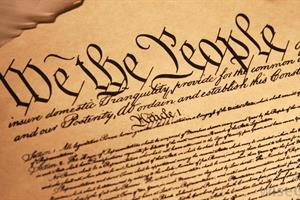
Have you ever wondered why the Constitution begins with those three words “we the people”? It was intended to be a powerful reminder that everything flows from the citizenry. We the people are the center of the government and the source of its power. That “we” is crucial because it reminds us that there is power and safety in numbers, provided we stand united. We can accomplish nothing alone.

This is the underlying lesson of the Constitution, which outlines the duties and responsibilities of government. It was a mutual agreement formed by early Americans in order to ensure that when problems arose, they could address them together.

It’s like the wagon trains of the Old West, comprised of individual groups of pioneers. They rarely ventured out alone but instead traveled as convoys. And when faced with a threat, these early Americans formed their wagons into a tight circle in order to defend against invaders. In doing so, they presented a unified front and provided protection against an outside attack. In much the same way, the Constitution was intended to work as an institutionalized version of the wagon circle, serving as a communal shield against those who would harm us.

Unfortunately, we have been ousted from that protected circle, left to fend for ourselves in the wilderness that is the American frontier today. Those who did the ousting—the courts, the politicians, and the corporations—have since replaced us with yes-men, shills who dance to the tune of an elite ruling class. In doing so, they have set themselves as the central source of power and the arbiters of what is just and reasonable.

Once again we’re forced to navigate hostile terrain, unsure of how to protect ourselves and our loved ones from militarized police, weaponized drones, fusion centers, Stingray devices, SWAT team raids, the ongoing military drills on American soil, the government stockpiling of ammunition, the erection of mass detention centers across the country, and all other manner of abuses.

Read the smoke signals, and the warning is clear: It’s time to circle the wagons, folks. The government is on the warpath, and if we are to have any hope of surviving whatever is coming at us, we’ll need to keep our wits about us and present a unified front. Most of all, we need to restore “we the people” to our rightful place at the center of government. How we do that depends largely on each community’s willingness to get past their partisan politics and blind allegiance to uniformed government officials and find common ground.

To put it a little more bluntly, stop thinking like mindless government robots and start acting like a powerhouse of citizens vested with the power to say “enough is enough.” We have the numbers to stand our ground. Now we just need the will.

The U.S. Supreme Court was intended to be an institution established to intervene and protect the people against the government and its agents when they overstep their bounds. Yet, as John W. Whitehead points out in this week’s vodcast, Americans can no longer rely on the courts to mete out justice. In the police state being erected around us, the police and other government agents can probe, poke, pinch, taser, search, seize, strip and generally manhandle anyone they see fit in almost any circumstance, all with the general blessing of the courts.

“You’re either a cop or little people.”—Police captain Harry Bryant in Blade Runner

For those of us who have managed to survive 2014 with our lives intact and our freedoms hanging by a thread, it has been a year of crackdowns, clampdowns, shutdowns, showdowns, shootdowns, standdowns, knockdowns, putdowns, breakdowns, lockdowns, takedowns, slowdowns, meltdowns, and never-ending letdowns.

We’ve been held up, stripped down, faked out, photographed, frisked, fracked, hacked, tracked, cracked, intercepted, accessed, spied on, zapped, mapped, searched, shot at, tasered, tortured, tackled, trussed up, tricked, lied to, labeled, libeled, leered at, shoved aside, saddled with debt not of our own making, sold a bill of goods about national security, tuned out by those representing us, tossed aside, and taken to the cleaners.

A Government of Wolves book coverAs I point out in my book A Government of Wolves: The Emerging American Police State, we’ve had our freedoms turned inside out, our democratic structure flipped upside down, and our house of cards left in a shambles.

We’ve had our children burned by flashbang grenades, our dogs shot, and our old folks hospitalized after “accidental” encounters with marauding SWAT teams. We’ve been told that as citizens we have no rights within 100 miles of our own border, now considered “Constitution-free zones.” We’ve had our faces filed in government databases, our biometrics crosschecked against criminal databanks, and our consumerist tendencies catalogued for future marketing overtures.

We’ve been given the runaround on government wrongdoing, starting with President Obama’s claim that the National Security Agency has never abused its power to spy on Americans’ phone calls and emails. All the while, the NSA has been racing to build a supercomputer that could break through “every kind of encryption used to protect banking, medical, business and government records around the world.” Despite the fact that the NSA’s domestic surveillance program has been shown to be ineffective at preventing acts of terrorism, the agency continues to vacuum up almost 200 million text messages a day.

We’ve seen the police transformed from community peacekeepers to point guards for the militarized corporate state. From Boston to Ferguson and every point in between, police have pushed around, prodded, poked, probed, scanned, shot and intimidated the very individuals—we the taxpayers—whose rights they were hired to safeguard. Networked together through fusion centers, police have surreptitiously spied on our activities and snooped on our communications, using hi-tech devices provided by the Department of Homeland Security.

We’ve been deemed suspicious for engaging in such dubious activities as talking too long on a cell phone and stretching too long before jogging, dubbed extremists and terrorists for criticizing the government and suggesting it is tyrannical or oppressive, and subjected to forced colonoscopies and anal probes for allegedly rolling through a stop sign.

We’ve been arrested for all manner of “crimes” that never used to be considered criminal, let alone uncommon or unlawful, behavior: letting our kids walk to the playground alone, giving loose change to a homeless man, feeding the hungry, and living off the grid.

We’ve been sodomized, victimized, jeopardized, demoralized, traumatized, stigmatized, vandalized, demonized, polarized and terrorized, often without having done anything to justify such treatment. Blame it on a government mindset that renders us guilty before we’ve even been charged, let alone convicted, of any wrongdoing. In this way, law-abiding individuals have had their homes mistakenly raided by SWAT teams that got the address wrong. One accountant found himself at the center of a misguided police standoff after surveillance devices confused his license plate with that of a drug felon.

We’ve been railroaded into believing that our votes count, that we live in a democracy, that elections make a difference, that it matters whether we vote Republican or Democrat, and that our elected officials are looking out for our best interests. Truth be told, we live in an oligarchy, politicians represent only the profit motives of the corporate state, whose leaders know all too well that there is no discernible difference between red and blue politics, because there is only one color that matters in politics—green.

We’ve gone from having privacy in our inner sanctums to having nowhere to hide, with smart pills that monitor the conditions of our bodies, homes that spy on us (with smart meters that monitor our electric usage and thermostats and light switches that can be controlled remotely) and cars that listen to our conversations and track our whereabouts. Even our cities have become wall-to-wall electronic concentration camps, with police now able to record hi-def video of everything that takes place within city limits.

We’ve had our schools locked down, our students handcuffed, shackled and arrested for engaging in childish behavior such as food fights, our children’s biometrics stored, their school IDs chipped, their movements tracked, and their data bought, sold and bartered for profit by government contractors, all the while they are treated like criminals and taught to march in lockstep with the police state.

We’ve been rendered enemy combatants in our own country, denied basic due process rights, held against our will without access to an attorney or being charged with a crime, and left to molder in jail until such a time as the government is willing to let us go or allow us to defend ourselves.

We’ve had the very military weapons we funded with our hard-earned tax dollars used against us, from unpiloted, weaponized drones tracking our movements on the nation’s highways and byways and armored vehicles, assault rifles, sound cannons and grenade launchers in towns with little to no crime to an arsenal of military-grade weapons and equipment given free of charge to schools and universities.

We’ve been silenced, censored and forced to conform, shut up in free speech zones, gagged by hate crime laws, stifled by political correctness, muzzled by misguided anti-bullying statutes, and pepper sprayed for taking part in peaceful protests.

We’ve been shot by police for reaching for a license during a traffic stop, reaching for a baby during a drug bust, carrying a toy sword down a public street, and wearing headphones that hamper our ability to hear.

We’ve had our tax dollars spent on $30,000 worth of Starbucks for Dept. of Homeland Security employees, $630,000 in advertising to increase Facebook “likes” for the State Dept., and close to $25 billion to fund projects ranging from the silly to the unnecessary, such as laughing classes for college students and programs teaching monkeys to play video games and gamble.

We’ve been treated like guinea pigs, targeted by the government and social media for psychological experiments on how to manipulate the masses. We’ve been tasered for talking back to police, tackled for taking pictures of police abuses, and threatened with jail time for invoking our rights. We’ve even been arrested by undercover cops stationed in public bathrooms who interpret men’s “shaking off” motions after urinating to be acts of lewdness.

We’ve had our possessions seized and stolen by law enforcement agencies looking to cash in on asset forfeiture schemes, our jails privatized and used as a source of cheap labor for megacorporations, our gardens smashed by police seeking out suspicious-looking marijuana plants, and our buying habits turned into suspicious behavior by a government readily inclined to view its citizens as terrorists.

We’ve had our cities used for military training drills, with Black Hawk helicopters buzzing the skies, Urban Shield exercises overtaking our streets, and active shooter drills wreaking havoc on unsuspecting bystanders in our schools, shopping malls and other “soft target” locations.

We’ve been told that national security is more important than civil liberties, that police dogs’ noses are sufficient cause to carry out warrantless searches, that the best way not to get raped by police is to “follow the law,” that what a police officer says in court will be given preference over what video footage shows, that an upright posture and acne are sufficient reasons for a cop to suspect you of wrongdoing, that police can stop and search a driver based solely on an anonymous tip, and that police officers have every right to shoot first and ask questions later if they feel threatened.

Now there are those who still insist that they are beyond the reach of the police state because they have done nothing wrong and have nothing to fear. To those sanctimonious few, secure in their delusions, let this be a warning: the danger posed by the American police state applies equally to all of us: lawbreaker and law abider alike, black and white, rich and poor, liberal and conservative, blue collar and white collar, and any other distinction you’d care to trot out.

The lesson of 2014 is simply this: in a police state, you’re either a cop or you’re one of the little people. Right now, we are the little people, the servants, the serfs, the grunts who must obey without question or suffer the consequences.

If there is to be any hope in 2015 for restoring our freedoms and reclaiming our runaway government, we will have to start by breathing life into those three powerful words that set the tone for everything that follows in the Constitution: “we the people.”

It’s time to stop waiting patiently for change to happen and, as Gandhi once advised, be the change you want to see in the world.

Get mad, get outraged, get off your duff and get out of your house, get in the streets, get in people’s faces, get down to your local city council, get over to your local school board, get your thoughts down on paper, get your objections plastered on protest signs, get your neighbors, friends and family to join their voices to yours, get your representatives to pay attention to your grievances, get your kids to know their rights, get your local police to march in lockstep with the Constitution, get your media to act as watchdogs for the people and not lapdogs for the corporate state, get your act together, and get your house in order.

In other words, get moving. Time is growing short, and the police state is closing in. Power to the people!

If you dress police officers up as soldiers and you put them in military vehicles and you give them military weapons, they adopt a warrior mentality. We fight wars against enemies, and the enemies are the people who live in our cities—particularly in communities of color.—Thomas Nolan, criminology professor and former police officer

Should police officer Darren Wilson be held accountable for the shooting death of unarmed citizen Michael Brown in Ferguson, Missouri, on August 9, 2014?

That the police officer was white and his victim black should make no difference. In a perfect world, it would not matter. In an imperfect world such as ours, however, racism is an effective propaganda tool used by the government and the media to distract us from the real issues.

As a result, the national dialogue about the dangers of militarized, weaponized police officers being trained to act like soldiers on the battlefield, shooting first and asking questions later, has shifted into a largely unspoken debate over race wars, class perceptions and longstanding, deep-seated notions of who deserves our unquestioning loyalty and who does not.

Putting aside our prejudices, however, let’s not overlook the importance of Ferguson and this grand jury verdict. Tasked with determining whether Wilson should stand trial for Brown’s shooting, the grand jury ruled that the police officer will not face charges for the fatal shooting.

However, the greater question—whether anything will really change to rein in militarized police, police shootings, lack of accountability and oversight, and a military industrial complex with a vested interest in turning America into a war zone—remains unanswered.

Ferguson matters because it provides us with a foretaste of what is to come. It is the shot across the bow, so to speak, a warning that this is how we will all be treated if we do not tread cautiously in challenging the police state, and it won’t matter whether we’re black or white, rich or poor, Republican or Democrat. In the eyes of the corporate state, we are all the enemy.

This is the lesson of Ferguson.

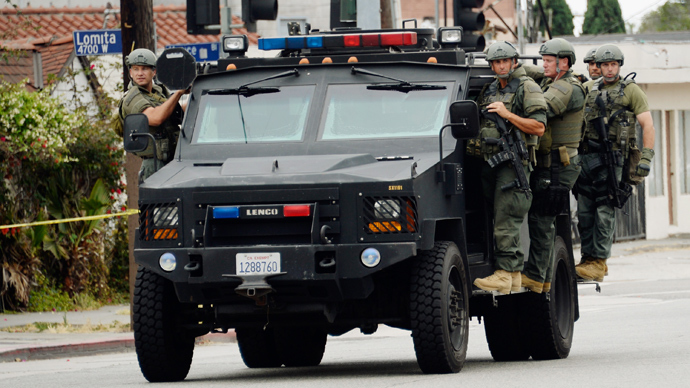
Remember that in the wake of the shooting, Ferguson police officers clad in body armor, their faces covered with masks, equipped with assault rifles and snipers and riding armored vehicles, showed up in force to deal with protesters. Describing that show of force by police in Ferguson, Senator Claire McCaskill, Democrat of Missouri, stated, “This was a military force, and they were facing down an enemy.”

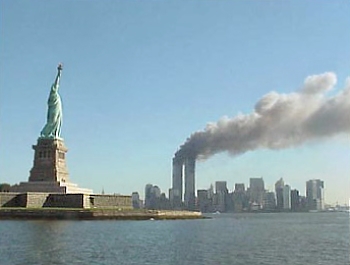
A Government of Wolves book coverYes, we are the enemy. As I point out in my book A Government of Wolves: The Emerging American Police State, since those first towers fell on 9/11, the American people have been treated like enemy combatants, to be spied on, tracked, scanned, frisked, searched, subjected to all manner of intrusions, intimidated, invaded, raided, manhandled, censored, silenced, shot at, locked up, and denied due process.

There was a moment of hope after Ferguson that perhaps things might change. Perhaps the balance would be restored between the citizenry and their supposed guardians, the police. Perhaps our elected officials would take our side for a change and oppose the militarization of the police. Perhaps warfare would take a backseat to more pressing national concerns.

That hope was short-lived.

It wasn’t long before the media moved on to other, more titillating stories. The disappearance of a University of Virginia college student and the search for her alleged abductor, the weeks-long man-hunt for an accused cop killer, the Republican electoral upset, a Rolling Stone expose on gang rapes at fraternity parties, Obama’s immigration amnesty plan, and the rape charges against Bill Cosby are just a few of the stories that have dominated the news cycle since the Ferguson standoff between police and protesters.

It wasn’t long before the American public, easily acclimated to news of government wrongdoing (case in point: the national yawn over the NSA’s ongoing domestic surveillance), ceased to be shocked, outraged or alarmed by reports of police shootings. In fact, the issue was nowhere to be found in this year’s run-up to Election Day, which was largely devoid of any pressing matters of national concern.

And with nary a hiccup, the police state marched steadily forth. In fact, aided and abetted by the citizenry’s short attention span, its easily distracted nature, and its desensitization to anything that occupies the news cycle for too long, it has been business as usual in terms of police shootings, the amassing of military weapons, and the government’s sanctioning of police misconduct. Most recently, Ohio police shot and killed a 12-year-old boy who was seen waving a toy gun at a playground.

Rubbing salt in our wounds, in the wake of Ferguson, police agencies not only continued to ramp up their military arsenals but have used them whenever possible. In fact, in anticipation of the grand jury’s ruling, St. Louis police actually purchased more equipment for its officers, including “civil disobedience equipment.”

Just a few weeks after the Ferguson showdown, law enforcement agencies took part in an $11 million manhunt in Pennsylvania for alleged cop killer Eric Frein. Without batting an eye, the news media switched from outraged “shock” over the military arsenal employed by police in Ferguson to respectful “awe” of the 48-day operation that cost taxpayers $1.4 million per week in order to carry out a round-the-clock dragnet search of an area with a 5-mile-radius.

The Frein operation brought together 1,000 officers from local, state and federal law enforcement, as well as SWAT teams and cutting edge military equipment (high-powered rifles, body armor, infrared sensors, armored trucks, helicopters and unmanned, silent surveillance blimps)—some of the very same weapons and tactics employed in Ferguson and, a year earlier, in Boston in the wake of the marathon bombing.

The manhunt was a well-timed, perfectly choreographed exercise in why Americans should welcome the police state: for our safety, of course, and to save the lives of police officers.

Opposed to any attempt to demilitarize America’s police forces, the Dept. of Homeland Security has been chanting this safety mantra in testimony before Congress: Remember 9/11. Remember Boston. Remember how unsafe the world was before police were equipped with automatic weapons, heavily armored trucks, night-vision goggles, and aircraft donated by the DHS.

Contrary to DHS rhetoric, however, militarized police—twitchy over perceived dangers, hyped up on their authority, and protected by their agencies, the legislatures and the courts—have actually made communities less safe at a time when violent crime is at an all-time low and lumberjacks, fishermen, airline pilots, roofers, construction workers, trash collectors, electricians and truck drivers all have a higher risk of on-the-job fatalities than police officers.

Moreover, as Senator Tom Coburn points out, the militarization of America’s police forces has actually “created some problems that wouldn’t have been there otherwise.” Among those problems: a rise in the use of SWAT team raids for routine law enforcement activities (averaging 80,000 a year), a rise in the use and abuse of asset forfeiture laws by police agencies, a profit-driven incentive to criminalize lawful activities and treat Americans as suspects, and a transformation of the nation’s citizenry into suspects.

Ferguson provided us with an opportunity to engage in a much-needed national dialogue over how police are trained, what authority they are given, what weaponry they are provided, and how they treat those whom they are entrusted with protecting.

Caught up in our personal politics, prejudices and class warfare, we have failed to answer that call. In so doing, we have played right into the hands of all those corporations who profit from turning America into a battlefield by selling the government mine-resistant vehicles, assault rifles, grenade launchers, and drones.

As long as we remain steeped in ignorance, there will be no reform.

As long as we remain divided by our irrational fear of each other, there will be no overhaul in the nation’s law enforcement system or institution of an oversight process whereby communities can ensure that local police departments are acting in accordance with their wishes and values.

And as long as we remain distracted by misguided loyalties to military operatives who are paid to play the part of the government’s henchmen, there will be no saving us when the events of Ferguson unfold in our own backyards.

When all is said and done, it doesn’t matter whose “side” you’re on as far as what transpired in Ferguson, whether you believe that Michael Brown was a victim or that Darren Wilson was justified in shooting first and asking questions later.

What matters is that we not allow politics and deep-rooted prejudices of any sort to divert our efforts to restore some level of safety, sanity and constitutional balance to the role that police officers play in our communities. If we fail to do so, we will have done a disservice to ourselves and every man, woman and child in this country who have become casualties of the American police state.

Back in the heyday of the old Soviet Union, a phrase evolved to describe gullible western intellectuals who came to visit Russia and failed to notice the human and other costs of building a communist utopia. The phrase was “useful idiots” and it applied to a good many people who should have known better. I now propose a new, analogous term more appropriate for the age in which we live: useful hypocrites. That’s you and me, folks, and it’s how the masters of the digital universe see us. And they have pretty good reasons for seeing us that way. They hear us whingeing about privacy, security, surveillance, etc., but notice that despite our complaints and suspicions, we appear to do nothing about it. In other words, we say one thing and do another, which is as good a working definition of hypocrisy as one could hope for.—John Naughton, The Guardian

“Who needs direct repression,” asked philosopher Slavoj Zizek, “when one can convince the chicken to walk freely into the slaughterhouse?”

In an Orwellian age where war equals peace, surveillance equals safety, and tolerance equals intolerance of uncomfortable truths and politically incorrect ideas, “we the people” have gotten very good at walking freely into the slaughterhouse, all the while convincing ourselves that the prison walls enclosing us within the American police state are there for our protection.

Call it doublespeak, call it hypocrisy, call it delusion, call it whatever you like, but the fact remains that while we claim to value freedom, privacy, individuality, equality, diversity, accountability, and government transparency, our actions and those of our government overseers contradict these much-vaunted principles at every turn.

For instance, we disdain the jaded mindset of the Washington elite, and yet we continue to re-elect politicians who lie, cheat and steal. We disapprove of the endless wars that drain our resources and spread thin our military, and yet we repeatedly buy into the idea that patriotism equals supporting the military. We chafe at taxpayer-funded pork barrel legislation for roads to nowhere, documentaries on food fights, and studies of mountain lions running on treadmills, and yet we pay our taxes meekly and without raising a fuss of any kind. We object to the militarization of our local police forces and their increasingly battlefield mindset, and yet we do little more than shrug our shoulders over SWAT team raids and police shootings of unarmed citizens.

And then there’s our love-hate affair with technology, which sees us bristling at the government’s efforts to monitor our internet activities, listen in on our phone calls, read our emails, track our every movement, and punish us for what we say on social media, and yet we keep using these very same technologies all the while doing nothing about the government’s encroachments on our rights. This contradiction is backed up by a recent Pew Research Center study, which finds that “Americans say they are deeply concerned about privacy on the web and their cellphones. They say they do not trust Internet companies or the government to protect it. Yet they keep using the services and handing over their personal information.”

Let me get this straight: the government continues to betray our trust, invade our privacy, and abuse our rights, and we keep going back for more?

A Government of Wolves book coverSure we do. After all, the alternative—taking a stand, raising a ruckus, demanding change, refusing to cooperate, engaging in civil disobedience—is a lot of work. What we fail to realize, however, is that by tacitly allowing these violations to continue, we not only empower the tyrant but we feed the monster. In this way, as I point out in my book A Government of Wolves: The Emerging American Police State, what starts off as small, occasional encroachments on our rights, justified in the name of greater safety, becomes routine, wide-ranging abuses so entrenched as to make reform all but impossible.

We saw this happen with the police and their build-up of military arsenal, ostensibly to fight the war on drugs. The result: a transformation of America’s law enforcement agencies into extensions of the military, populated with battle-hardened soldiers who view “we the people” as enemy combatants.

The same thing happened with the government’s so-called efforts to get tough on crime by passing endless laws outlawing all manner of activities. The result: an explosion of laws criminalizing everything from parenting decisions and fishing to gardening and living off the grid.

And then there were the private prisons, marketed as a way to lower the government’s cost of locking up criminals. Only it turns out that private prisons actually cost the taxpayer more money and place profit incentives on jailing more Americans.

Are you starting to notice a pattern yet? The government lures us in with a scheme to make our lives better, our families safer, and our communities more secure, and then once we buy into it, they slam the trap closed. Doesn’t matter whether you’re talking about red light cameras, DNA databases, surveillance cameras, or zero tolerance policies—they all result in “we the people” being turned into enemy #1.

In this way, the government campaign to spy on our phone calls, letters and emails was sold to the American people as a necessary tool in the war on terror. Instead of targeting terrorists, however, the government has turned us into potential terrorists, so that if we dare say the wrong thing in a phone call, letter, email or on the internet, especially social media, we end up investigated, charged and possibly jailed.

This criminalization of free speech, which is exactly what the government’s prosecution of those who say the “wrong” thing using an electronic medium amounts to, is at the heart of Elonis v. The United States, a case before the U.S. Supreme Court this term.

If you happen to be one of the 1.31 billion individuals who use Facebook or one of the 255 million who tweet their personal and political views on Twitter, you might want to pay close attention, because the case has broad First Amendment implications for where the government can draw the line when it comes to expressive speech that is protected and permissible versus speech that could be interpreted as connoting a criminal intent.

The case arose after Anthony Elonis, an aspiring rap artist, used personal material from his life as source material and inspiration for rap lyrics which he then shared on Facebook. For instance, shortly after Elonis’ wife left him and he was fired from his job, his lyrics included references to killing his ex-wife, shooting a classroom of kindergarten children, and blowing up an FBI agent who had opened an investigation into his postings.

Despite the fact that Elonis routinely accompanied his Facebook posts with disclaimers that his lyrics were fictitious, and that he was using such writings as an outlet for his frustrations, he was charged with making unlawful threats (although it was never proven that he intended to threaten anyone) and sentenced to 44 months in jail.

Elonis is not the only Facebook user to be targeted for the content of his posts. In a similar case making its way through the courts, Marine veteran Brandon Raub was arrested by a swarm of FBI, Secret Service agents and local police and forcibly detained in a psychiatric ward because of controversial song lyrics and political views posted on his Facebook page. He was eventually released after a circuit court judge dismissed the charges against him as unfounded.

Earlier this year, rapper Jamal Knox and Rashee Beasley were sentenced to jail terms of up to six years for a YouTube video calling on listeners to “kill these cops ‘cause they don’t do us no good.” Although the rapper contended that he had no intention of bringing harm to the police, he was convicted of making terroristic threats and intimidation of witnesses.

And then there was Franklin Delano Jeffries II, an Iraq war veteran, who, in the midst of a contentious custody battle for his daughter, shared a music video on YouTube and Facebook in which he sings about the judge in his case, “Take my child and I’ll take your life.” Despite his insistence that the lyrics were just a way for him to vent his frustrations with the legal battle, Jeffries was convicted of communicating threats and sentenced to 18 months in jail.

The common thread running through all of these cases is the use of social media to voice frustration, grievances, and anger, sometimes using language that is overtly violent. The question the U.S. Supreme Court must now decide in Elonis is whether this activity, in the absence of any overt intention of committing a crime, rises to the level of a “true threat” or whether it is, as I would contend, protected First Amendment activity. (The Supreme Court has defined a “true threat” as “statements where the speaker means to communicate a serious expression of an intent to commit an act of unlawful violence to a particular individual or group of individuals.”)

The internet and social media have taken the place of the historic public square, which has slowly been crowded out by shopping malls and parking lots. As such, these cyber “public squares” may be the only forum left for citizens to freely speak their minds and exercise their First Amendment rights, especially in the wake of legislation that limits access to our elected representatives. Unfortunately, the internet has become a tool for the government to monitor, control and punish the populace for behavior and speech that may be controversial but are far from criminal.

Indeed, the government, a master in the art of violence, intrusion, surveillance and criminalizing harmless activities, has repeatedly attempted to clamp down on First Amendment activity on the web and in social media under the various guises of fighting terrorism, discouraging cyberbullying, and combatting violence. Police and prosecutors have also targeted “anonymous” postings and messages on forums and websites, arguing that such anonymity encourages everything from cyber-bullying to terrorism, and have attempted to prosecute those who use anonymity for commercial or personal purposes.

We would do well to tread cautiously in how much authority we give the government to criminalize free speech activities and chill what has become a vital free speech forum. Not only are social media and the Internet critical forums for individuals to freely share information and express their ideas, but they also serve as release valves to those who may be angry, seething, alienated or otherwise discontented. Without an outlet for their pent-up anger and frustration, these thoughts and emotions fester in secret, which is where most violent acts are born.

In the same way, free speech in the public square—whether it’s the internet, the plaza in front of the U.S. Supreme Court or a college campus—brings people together to express their grievances and challenge oppressive government regimes. Without it, democracy becomes stagnant and atrophied. Likewise, if free speech is not vigilantly protected, democracy is more likely to drift toward fear, repression, and violence. In such a scenario, we will find ourselves threatened with an even more pernicious injury than violence itself: the loss of liberty. In confronting these evils, more speech, not less, is the remedy.

Fully masked and suited up in personal protective clothing and equipment, special agents on the Jacksonville FBI SWAT team pack into a deployment vehicle.

We want no Gestapo or secret police. The FBI is tending in that direction. They are dabbling in sex-life scandals and plain blackmail. J. Edgar Hoover would give his right eye to take over, and all congressmen and senators are afraid of him.[1]—President Harry S. Truman

Secret police. Secret courts. Secret government agencies. Surveillance. Intimidation tactics. Harassment. Torture. Brutality. Widespread corruption. Entrapment schemes.

These are the hallmarks of every authoritarian regime from the Roman Empire to modern-day America, yet it’s the secret police—tasked with silencing dissidents, ensuring compliance, and maintaining a climate of fear—who sound the death knell for freedom in every age.

Every regime has its own name for its secret police: Mussolini’s OVRA carried out phone surveillance on government officials.[2] Stalin’s NKVD carried out large-scale purges, terror and depopulation.[3] Hitler’s Gestapo went door to door ferreting out dissidents and other political “enemies” of the state.[4] And in the U.S., it’s the Federal Bureau of Investigation that does the dirty work of ensuring compliance, keeping tabs on potential dissidents, and punishing those who dare to challenge the status quo.

Whether the FBI is planting undercover agents in churches, synagogues and mosques; issuing fake emergency letters to gain access to Americans’ phone records; using intimidation tactics to silence Americans who are critical of the government,[5] or persuading impressionable individuals to plot acts of terror and then entrapping them,[6] the overall impression of the nation’s secret police force is that of a well-dressed thug, flexing its muscles and doing the boss’ dirty work.

Indeed, a far cry from the glamorized G-men depicted in Hollywood film noirs and spy thrillers, the government’s henchmen have become the embodiment of how power, once acquired, can be so easily corrupted and abused.

Case in point: the FBI is being sued after its agents, lacking sufficient evidence to acquire a search warrant, disabled a hotel’s internet and then impersonated Internet repair technicians in order to gain access to a hotel suite and record the activities of the room’s occupants. Justifying the warrantless search as part of a sting on internet gambling, FBI officials insisted that citizens should not expect the same right to privacy in the common room of a hotel suite as they would at home in their bedroom.[7]

Far from being tough on crime, FBI agents are also among the nation’s most notorious lawbreakers. In fact, in addition to creating certain crimes in order to then “solve” them, the FBI also gives certain informants permission to break the law, “including everything from buying and selling illegal drugs to bribing government officials and plotting robberies,” in exchange for their cooperation on other fronts.[8] USA Today estimates that agents have authorized criminals to engage in as many as 15 crimes a day.[9] Some of these informants are getting paid astronomical sums: one particularly unsavory fellow, later arrested for attempting to run over a police officer, was actually paid $85,000 for his help laying the trap for an entrapment scheme.[10]

In a stunning development reported by The Washington Post, a probe into misconduct by an FBI agent has resulted in the release of at least a dozen convicted drug dealers from prison. Several suspects awaiting trial have also been freed, and more could be released as the unnamed agent’s caseload comes under scrutiny. As the Post reports: “The scope and type of alleged misconduct by the agent have not been revealed, but defense lawyers involved in the cases described the mass freeing of felons as virtually unprecedented—and an indication that convictions could be in jeopardy. Prosecutors are periodically faced with having to drop cases over police misconduct, but it is unusual to free those who have been found guilty.”[11]

In addition to procedural misconduct, trespassing, enabling criminal activity, and damaging private property, the FBI’s laundry list of crimes against the American people includes surveillance, disinformation, blackmail, entrapment, intimidation tactics, and harassment.

For example, the Associated Press recently lodged a complaint with the Dept. of Justice after learning that FBI agents created a fake AP news story and emailed it, along with a clickable link, to a bomb threat suspect in order to implant tracking technology onto his computer and identify his location.[12] Lambasting the agency, AP attorney Karen Kaiser railed, “The FBI may have intended this false story as a trap for only one person. However, the individual could easily have reposted this story to social networks, distributing to thousands of people, under our name, what was essentially a piece of government disinformation.”[13]

Then again, to those familiar with COINTELPRO, an FBI program created to “disrupt, misdirect, discredit, and neutralize” groups and individuals the government considers politically objectionable,[14] it should come as no surprise that the agency has mastered the art of government disinformation.

The FBI has been particularly criticized in the wake of the 9/11 terrorist attacks for targeting vulnerable individuals and not only luring them into fake terror plots but actually equipping them with the organization, money, weapons and motivation to carry out the plots—entrapment—and then jailing them for their so-called terrorist plotting. This is what the FBI characterizes as “forward leaning—preventative—prosecutions.”[15]

Another fallout from 9/11, National Security Letters, one of the many illicit powers authorized by the USA Patriot Act, allows the FBI to secretly demand that banks, phone companies, and other businesses provide them with customer information and not disclose the demands.[16] An internal audit of the agency found that the FBI practice of issuing tens of thousands of NSLs every year for sensitive information such as phone and financial records, often in non-emergency cases, is riddled with widespread violations.[17]

The FBI’s surveillance capabilities, on a par with the National Security Agency, boast a nasty collection of spy tools ranging from Stingray devices that can track the location of cell phones to Triggerfish devices which allow agents to eavesdrop on phone calls.[18]  In one case, the FBI actually managed to remotely reprogram a “suspect’s” wireless internet card so that it would send “real-time cell-site location data to Verizon, which forwarded the data to the FBI.”[19]

Now the FBI is seeking to expand its already invasive hacking powers to allow agents to hack into any computer, anywhere in the world.[20] As journalist Brett Wilkins warns:

If the proposed rule change is approved, the FBI would have the power to unleash “network investigative techniques” against computers anywhere in the world, allowing the agency to secretly install malware and spyware on any computer, effectively allowing it to control that computer and all its stored information. The FBI could download all the computer’s digital contents, switch its camera or microphone on or off and even control other computers in its network.[21]

And then there’s James Comey, current director of the FBI, who knows enough to say all the right things about the need to abide by the Constitution, all the while his agency routinely discards it. Comey has this idea that the government’s powers shouldn’t be limited, especially when it comes to carrying out surveillance on American citizens.[22] Responding to reports that Apple and Google are creating smart phones that will be more difficult to hack into, Comey has been lobbying Congress and the White House to force technology companies to keep providing the government with backdoor access to Americans’ cell phones.[23]

It’s not all Comey’s fault, though. This transformation of the FBI into a secret police force can be traced back to the days of J. Edgar Hoover. As author Anthony S. Summers points out, it was Hoover who “built the first federal fingerprint bank, and his Identification Division would eventually offer instant access to the prints of 159 million people. His Crime Laboratory became the most advanced in the world.”[24]

Eighty years after Hoover instituted the FBI’s first fingerprint “database”—catalogued on index cards, no less—the agency’s biometric database has grown to massive proportions, the largest in the world, encompassing everything from fingerprints, palm, face and iris scans[25] to DNA,[26] and is being increasingly shared between federal, state and local law enforcement agencies in an effort to target potential criminals long before they ever commit a crime. This is what’s known as pre-crime.

If it were just about fighting the “bad guys,” that would be one thing. But as countless documents make clear, the FBI has a long track record of abusing its extensive powers in order to blackmail politicians, spy on celebrities[27] and high-ranking government officials,[28] and intimidate dissidents of all stripes.[29] It’s an old tactic, used effectively by former authoritarian regimes.

In fact, as historian Robert Gellately documents, the Nazi police state was repeatedly touted as a model for other nations to follow, so much so that Hoover actually sent one of his right-hand men, Edmund Patrick Coffey, to Berlin in January 1938 at the invitation of Germany’s secret police. As Gellately noted, “[A]fter five years of Hitler’s dictatorship, the Nazi police had won the FBI’s seal of approval.”[30]

Indeed, so impressed was the FBI with the Nazi order that, as the New York Times recently revealed, in the decades after World War II, the FBI, along with other government agencies, aggressively recruited at least a thousand Nazis, including some of Hitler’s highest henchmen, brought them to America, hired them on as spies and informants, and then carried out a massive cover-up campaign to ensure that their true identities and ties to Hitler’s holocaust machine would remain unknown. Moreover, anyone who dared to blow the whistle on the FBI’s illicit Nazi ties found himself spied upon, intimidated, harassed and labeled a threat to national security.[31]

So not only have American taxpayers have been paying to keep ex-Nazis on the government payroll for decades but we’ve been subjected to the very same tactics used by the Third Reich: surveillance, militarized police, overcriminalization, and a government mindset that views itself as operating outside the bounds of the law.

A Government of Wolves book coverYet as I point out in my book A Government of Wolves: The Emerging American Police State,[32] it’s no coincidence that the similarities between the American police state and past totalitarian regimes such as Nazi Germany grow more pronounced with each passing day. This is how freedom falls, and tyrants come to power.

Suffice it to say that when and if a true history of the FBI is ever written, it will not only track the rise of the American police state but it will also chart the decline of freedom in America: how a nation that once abided by the rule of law and held the government accountable for its actions has steadily devolved into a police state where justice is one-sided, a corporate elite runs the show, representative government is a mockery, police are extensions of the military, surveillance is rampant, privacy is extinct, and the law is little more than a tool for the government to browbeat the people into compliance.

[1] Anthony S. Summers, “The secret life of J Edgar Hoover,” The Guardian (Dec. 31, 2011), http://www.theguardian.com/film/2012/jan/01/j-edgar-hoover-secret-fbi.

[2] Peter Neville, Mussolini (Routledge, 2014), http://books.google.com/books?id=GCyDBAAAQBAJ&pg=PT90&lpg=PT90&dq=mussolini+ovra&source=bl&ots=VevTl8pne8&sig=UZFsLzO2zGc4a-QQdvg_YQ71fFA&hl=en&sa=X&ei=sL5YVNmPLYfasASStYDACw&ved=0CFAQ6AEwCDgK#v=onepage&q=mussolini%20ovra&f=false.

[3] “Revelations from the Russian Archives: Secret Police,” Library of Congress, http://www.loc.gov/exhibits/archives/secr.html.

[4] “SS Police,” U.S. Holocaust Memorial Museum, http://www.ushmm.org/outreach/en/article.php?ModuleId=10007675.

[5] Earl Ofari Hutchinson, “The FBI Walks a Perilous Line Between Surveillance and Outright Spying,” The Huffington Post (Aug. 18, 2013), http://www.huffingtonpost.com/earl-ofari-hutchinson/the-fbi-walks-a-perilous-_b_3447225.html.

[6] William Norman Grigg, “The FBI: An American Cheka,” Lew Rockwell (June 4, 2013), http://www.lewrockwell.com/2013/06/william-norman-grigg/the-american-secret-police/.

[7] Dugald McConnell and Brian Todd, “Undercover sting: FBI agents posed as Internet repairmen,” CNN (Oct. 30, 2014), http://www.cnn.com/2014/10/30/us/fbi-sting-internet/.

[8] Brad Heath, “Exclusive: FBI allowed informants to commit 5,600 crimes,” USA Today (Aug. 4, 2013), http://www.usatoday.com/story/news/nation/2013/08/04/fbi-informant-crimes-report/2613305/.

[9] Brad Heath, “Exclusive: FBI allowed informants to commit 5,600 crimes,” USA Today (Aug. 4, 2013), http://www.usatoday.com/story/news/nation/2013/08/04/fbi-informant-crimes-report/2613305/.

[10] Paul Harris, “Fake terror plots, paid informants: the tactics of FBI ‘entrapment’ questioned,” The Guardian (Nov. 16, 2011), http://www.theguardian.com/world/2011/nov/16/fbi-entrapment-fake-terror-plots.

[11] Peter Hermann, “Probe of FBI agent leads to release of convicted drug dealers from prison,” The Washington Post (Oct. 31, 2014), http://www.washingtonpost.com/local/crime/probe-of-fbi-agent-leads-to-convicted-drug-dealers-released-from-prison/2014/10/31/48e7b1e6-6064-11e4-9f3a-7e28799e0549_story.html.

[12] Karen Kaiser, “Letter to Attorney General Eric Holder,” Associated Press (Oct. 30, 2014), https://corpcommap.files.wordpress.com/2014/10/letter_103014.pdf.

[13] Karen Kaiser, “Letter to Attorney General Eric Holder,” Associated Press (Oct. 30, 2014), https://corpcommap.files.wordpress.com/2014/10/letter_103014.pdf.

[14] Earl Ofari Hutchinson, “The FBI Walks a Perilous Line Between Surveillance and Outright Spying,” The Huffington Post (Aug. 18, 2013), http://www.huffingtonpost.com/earl-ofari-hutchinson/the-fbi-walks-a-perilous-_b_3447225.html.

[15] Paul Harris, “Fake terror plots, paid informants: the tactics of FBI ‘entrapment’ questioned,” The Guardian (Nov. 16, 2011), http://www.theguardian.com/world/2011/nov/16/fbi-entrapment-fake-terror-plots.

[16] “FBI ‘secretly spying’ on Google users, company reveals,” FOX News (March 6, 2013), http://www.foxnews.com/tech/2013/03/06/fbi-ecretly-spying-on-google-users-company-reveals/.

[17] “Judge rules secret FBI national security letters unconstitutional,” FOX News (March 16, 2013), http://www.foxnews.com/politics/2013/03/16/judge-rules-secret-fbi-letters-unconstitutional/.

[18] Ryan Gallagher, “FBI Files Reveal New Info on Clandestine Phone Surveillance Unit,” Slate (Oct. 8, 2013), http://www.slate.com/blogs/future_tense/2013/10/08/fbi_wireless_intercept_and_tracking_team_files_reveal_new_information_on.html.

[19] Kim Zetter, “Secrets of FBI Smartphone Surveillance Tool Revealed in Court Fight,” Wired (April 9, 2013), http://www.wired.com/2013/04/verizon-rigmaiden-aircard/all/.

[20] Brett Wilkins, “FBI Seeking New Invasive Global Hacking Powers,” Ethics in Tech (Nov. 1, 2014), https://www.ethicsintech.com/fbi-seeking-invasive-global-hacking-powers/.

[21] Brett Wilkins, “FBI Seeking New Invasive Global Hacking Powers,” Ethics in Tech (Nov. 1, 2014), https://www.ethicsintech.com/fbi-seeking-invasive-global-hacking-powers/.

[22] Ravi Mandalia, “FBI chief lashes out at Apple, Google over default cell-phone encryption,” TechieNews (Sept. 28, 2014), http://www.techienews.co.uk/9718566/fbi-chief-lashes-apple-google-default-cell-phone-encryption/.

[23] Ravi Mandalia, “FBI chief lashes out at Apple, Google over default cell-phone encryption,” TechieNews (Sept. 28, 2014), http://www.techienews.co.uk/9718566/fbi-chief-lashes-apple-google-default-cell-phone-encryption/.

[24] Anthony S. Summers, “The secret life of J Edgar Hoover,” The Guardian (Dec. 31, 2011), http://www.theguardian.com/film/2012/jan/01/j-edgar-hoover-secret-fbi.

[25] Robert L. Mitchell, “Gotcha! FBI launches new biometric systems to nail criminals,” Computerworld (Dec. 19, 2013), http://www.computerworld.com/article/2486963/security0/gotcha-fbi-launches-new-biometric-systems-to-nail-criminals.html.

[26] Paul Rincon, “FBI’s DNA database upgrade plans come under fire,” BBC News (Oct. 17, 2011), http://www.bbc.co.uk/news/science-environment-15311718.

[27] Amanda Carey, “FBI opens ‘The Vault,’ UFOs, Jimi Hendrix and Malcolm X fly out,” Daily Caller (April 8, 2011), http://dailycaller.com/2011/04/08/fbi-opens-the-vault-ufos-jimi-hendrix-and-malcolm-x-fly-out/.

[28] Anthony S. Summers, “The secret life of J Edgar Hoover,” The Guardian (Dec. 31, 2011), http://www.theguardian.com/film/2012/jan/01/j-edgar-hoover-secret-fbi.

[29] Adam Cohen, “While Nixon Campaigned, the F.B.I. Watched John Lennon,” New York Times (Sept. 21, 2006), http://www.nytimes.com/2006/09/21/opinion/21thu4.html?_r=0.

[30] Robert Gellately, Backing Hitler: Consent and Coercion in Nazi Germany (Oxford University Press, 2001), http://books.google.com/books?id=jCiGWtxyQv0C&pg=PT95&lpg=PT95&dq=gellately+edmund+coffey&source=bl&ots=G4JHwvD5AU&sig=WkXKIkL5Ip-oJ05H_15XA3CIWww&hl=en&sa=X&ei=NOlYVJT-H8GRsQSjk4HYDQ&ved=0CCYQ6AEwAQ#v=onepage&q=gellately%20edmund%20coffey&f=false.

[31] Eric Lichtblau, “In Cold War, U.S. Spy Agencies Used 1,000 Nazis,” New York Times (Oct. 26, 2014), http://www.nytimes.com/2014/10/27/us/in-cold-war-us-spy-agencies-used-1000-nazis.html.

[32] John W. Whitehead, A Government of Wolves: The Emerging American Police State (SelectBooks, 2013), http://www.amazon.com/Government-Wolves-Emerging-American-Police/dp/1590799755/ref=cm_cr_pr_product_top.

I tell you, freedom and human rights in America are doomed. The U.S. government will lead the American people in — and the West in general — into an unbearable hell and a choking life.”—Osama bin Laden (October 2001), as reported by CNN

"Hands up, don't shoot!"

“Hands up, don’t shoot!” Photo via Cactusbones/Flickr

What a strange and harrowing road we’ve walked since September 11, 2001, littered with the debris of our once-vaunted liberties. We have gone from a nation that took great pride in being a model of a representative democracy to being a model of how to persuade a freedom-loving people to march in lockstep with a police state.

What began with the passage of the USA Patriot Act in October 2001 has snowballed into the eradication of every vital safeguard against government overreach, corruption and abuse. Since then, we have been terrorized, traumatized, and tricked into a semi-permanent state of compliance. The bogeyman’s names and faces change over time—Osama bin Laden, Saddam Hussein and now ISIS—but the end result remains the same: our unquestioning acquiescence to anything the government wants to do in exchange for the phantom promise of safety and security.

Ironically, just a short week after the 13th anniversary of the 9/11 attacks, we find ourselves commemorating the 227th anniversary of the ratification of our Constitution. Yet while there is much to mourn about the loss of our freedoms in the years since 9/11, there has been little to celebrate.

The Constitution has been steadily chipped away at, undermined, eroded, whittled down, and generally discarded to such an extent that what we are left with today is but a shadow of the robust document adopted more than two centuries ago. Most of the damage has been inflicted upon the Bill of Rights—the first ten amendments to the Constitution—which historically served as the bulwark from government abuse.

Set against a backdrop of government surveillance, militarized police, SWAT team raids, asset forfeiture, eminent domain, overcriminalization, armed surveillance drones, whole body scanners, stop and frisk searches, roving VIPR raids and the like—all sanctioned by Congress, the White House and the courts—a recitation of the Bill of Rights would understandably sound more like a eulogy to freedoms lost than an affirmation of rights we truly possess.

As I make clear in my book A Government of Wolves: The Emerging American Police State, the Constitution has been on life support for some time now. We can pretend that the Constitution, which was written to hold the government accountable, is still our governing document. However, the reality we must come to terms with is that in the America we live in today, the government does whatever it wants, freedom be damned.A Government of Wolves book cover

Consider the state of our freedoms, and judge for yourself whether this Constitution Day should be a day of mourning, celebration or a robust call to action:

The First Amendment is supposed to protect the freedom to speak your mind and protest in peace without being bridled by the government. It also protects the freedom of the media, as well as the right to worship and pray without interference. In other words, Americans should not be silenced by the government. Yet despite the clear protections found in the First Amendment, the freedoms described therein are under constant assault. Increasingly, Americans are being arrested and charged with bogus charges such as “disrupting the peace” or “resisting arrest” for daring to film police officers engaged in harassment or abusive practices. Journalists are being prosecuted for reporting on whistleblowers. States are passing legislation to muzzle reporting on cruel and abusive corporate practices. Religious ministries are being fined for attempting to feed and house the homeless. And protesters are being tear-gassed, beaten, arrested and forced into “free speech zones.” But to the founders, all of America was a free speech zone.

The Second Amendment was intended to guarantee “the right of the people to keep and bear arms.” Yet while gun ownership has been recognized by the U.S. Supreme Court as an individual citizen right, Americans remain powerless to defend themselves against government agents armed to the teeth with military weapons. Police shootings of unarmed citizens continue to outrage communities, while little is being done to demilitarize law enforcement agencies better suited to the battlefield.

The Third Amendment reinforces the principle that civilian-elected officials are superior to the military by prohibiting the military from entering any citizen’s home without “the consent of the owner.” With the police increasingly posing as military forces—complete with military weapons, assault vehicles, etc.—it is clear that we now have what the founders feared most—a violent standing army on American soil. Moreover, as a result of SWAT team raids where police invade homes, often without warrants, and injure and even kill unarmed citizens, the barrier between public and private property has done away with this critical safeguard.

The Fourth Amendment prohibits the government from conducting surveillance on you or touching you or invading you, unless they have some evidence that you’re up to something criminal. In other words, the Fourth Amendment ensures privacy and bodily integrity. Unfortunately, the Fourth Amendment has suffered the greatest damage in recent years and been all but eviscerated by an unwarranted expansion of police powers that include strip searches and even anal and vaginal searches of citizens, surveillance and intrusions justified in the name of fighting terrorism, as well as the outsourcing of otherwise illegal activities to private contractors.

The use of civil asset forfeiture schemes to swell the coffers of police forces has continued to grow in popularity among cash-strapped states. The federal government continues to strong-arm corporations into providing it with access to Americans’ private affairs, from emails and online transactions to banking and web surfing. Coming in the wake of massive leaks about the inner workings of the NSA and the massive secretive surveillance state, it was recently revealed that the government threatened to fine Yahoo $250,000 every day for failing to comply with the NSA’s mass data collection program known as PRISM.

The technological future appears to pose even greater threats to what’s left of our Fourth Amendment rights, with advances in biometric identification and microchip implants on the horizon making it that much easier for the government to track not only our movements and cyber activities but our very cellular beings. Barclays has already begun using a finger-scanner as a form of two-step authentication to give select customers access to their accounts. Similarly, Motorola has been developing thin “digital tattoos” that will ensure that a phone’s owner is the only person who may unlock it. All of this information, of course, will be available to the spying surveillance agencies.

The Fifth Amendment and the Sixth Amendment work in tandem. These amendments supposedly ensure that you are innocent until proven guilty, and government authorities cannot deprive you of your life, your liberty or your property without the right to an attorney and a fair trial before a civilian judge. However, in the new suspect society in which we live, where surveillance is the norm, these fundamental principles have been upended. And now the National Defense Authorization Act, signed into law by President Obama, allows the military to arrive at your door if the president thinks you’re a terrorist (a.k.a. extremist), place you in military detention, jail you indefinitely and restrict access to your family and your lawyer.

The Seventh Amendment guarantees citizens the right to a jury trial. However, when the populace has no idea of what’s in the Constitution—civic education has virtually disappeared from most school curriculums—that inevitably translates to an ignorant jury incapable of distinguishing justice and the law from their own preconceived notions and fears.

The Eighth Amendment is similar to the Sixth in that it is supposed to protect the rights of the accused and forbid the use of cruel and unusual punishment. However, the Supreme Court’s determination that what constitutes “cruel and unusual” should be dependent on the “evolving standards of decency that mark the progress of a maturing society” leaves us with little protection in the face of a society lacking in morals altogether. For example, if you are thrown into a military detention camp, then what constitutes cruel and unusual punishment is up to your jailers.

The Ninth Amendment provides that other rights not enumerated in the Constitution are nonetheless retained by the people. Popular sovereignty—the belief that the power to govern flows upward from the people rather than downward from the rulers—is clearly evident in this amendment. However, it has since been turned on its head by a centralized federal government that sees itself as supreme and which continues to pass more and more laws that restrict our freedoms under the pretext that it has an “important government interest” in doing so. Thus, once the government began violating the non-enumerated rights granted in the Ninth Amendment, it was only a matter of time before it began to trample the enumerated rights of the people, as explicitly spelled out in the rest of the Bill of Rights.

As for the Tenth Amendment’s reminder that the people and the states retain every authority that is not otherwise mentioned in the Constitution, that assurance of a system of government in which power is divided among local, state and national entities has long since been rendered moot by the centralized Washington, DC power elite—the president, Congress and the courts. Indeed, the federal governmental bureaucracy has grown so large that it has made local and state legislatures relatively irrelevant. Through its many agencies and regulations, the federal government has stripped states of the right to regulate countless issues that were originally governed at the local level. This distinction is further blurred by programs such as the Pentagon’s 1033 program, which distributes excess military hardware to local police stations, effectively turning them into extensions of the military.

If there is any sense to be made from this recitation of freedoms lost, it is simply this: our individual freedoms have been eviscerated so that the government’s powers could be expanded. In this regard, ironically, Osama Bin Laden was right when he warned that freedom and human rights in America are doomed, and that the U.S. government would be responsible for leading us into an “unbearable hell and a choking life.”

The choices before us are simple: We can live in the past, dwelling on what freedoms we used to enjoy and shrugging helplessly at the destruction of our liberties. We can immerse ourselves in the present, allowing ourselves to be utterly distracted by the glut of entertainment news and ever-changing headlines so that we fail to pay attention to or do anything about the government’s ongoing power-grabs. We can hang our hopes on the future, believing against all odds that someone or something—whether it be a politician, a movement, or a religious savior—will save us from inevitable ruin.

Or we can start right away by instituting changes at the local level, holding our government officials accountable to the rule of law, and resurrecting the Constitution, recognizing that if we follow our current trajectory, the picture of the future will be closer to what George Orwell likened to “a boot stamping on a human face—forever.”


“Police are specialists in violence. They are armed, trained, and authorized to use force. With varying degrees of subtlety, this colors their every action. Like the possibility of arrest, the threat of violence is implicit in every police encounter. Violence, as well as the law, is what they represent.”—Kristian Williams, activist and author

If you don’t want to get probed, poked, pinched, tasered, tackled, searched, seized, stripped, manhandled, arrested, shot, or killed, don’t say, do or even suggest anything that even hints of noncompliance. This is the new “thin blue line” over which you must not cross in interactions with police if you want to walk away with your life and freedoms intact.

"Stand on Guard" - via Jason Hargrove / Flickr

“Stand on Guard” – via Jason Hargrove / Flickr

The following incidents and many more like them serve as chilling reminders that in the American police state, “we the people” are at the mercy of law enforcement officers who have almost absolute discretion to decide who is a threat, what constitutes resistance, and how harshly they can deal with the citizens they were appointed to “serve and protect.”

For example, police arrested Chaumtoli Huq because she failed to promptly comply when ordered to “move along” while waiting outside a Ruby Tuesday’s restaurant for her children, who were inside with their father, using the bathroom. NYPD officers grabbed Huq, a lawyer with the New York City Public Advocate’s office, flipped her around, pressed her against a wall, handcuffed her, searched her purse, arrested her, and told her to “shut up” when she cried out for help, before detaining her for nine hours. Huq was charged with obstructing governmental administration, resisting arrest and disorderly conduct.

Oregon resident Fred Marlow was jailed and charged with interfering and resisting arrest after he filmed a SWAT team raid that took place across the street from his apartment and uploaded the footage to the internet. The footage shows police officers threatening Marlow, who was awoken by the sounds of “multiple bombs blasting and glass breaking” and ran outside to investigate only to be threatened with arrest if he didn’t follow orders and return inside.

Eric Garner, 43 years old, asthmatic and unarmed, died after being put in a chokehold by NYPD police, allegedly for resisting arrest over his selling untaxed, loose cigarettes, although video footage of the incident shows little resistance on Garner’s part. Indeed, the man was screaming, begging and insisting he couldn’t breathe. And what was New York Mayor Bill De Blasio’s advice to citizens in order to avoid a similar fate? Don’t resist arrest. (Mind you, the NYPD arrests more than 13,000 people every year on charges of resisting arrest, although only a small fraction of those charged ever get prosecuted.)

Then there was Marine Brandon Raub, who was questioned at his home by a swarm of DHS, FBI, Secret Service agents and local police, tackled to the ground, handcuffed, and forcibly transported to a police station. Raub was then detained against his will in a psychiatric ward, without being provided any explanation, having any charges levied against him or being read his rights—all allegedly because of controversial song lyrics and political views posted on his Facebook page.

Incredibly, police insisted that Raub was not in fact under arrest. Of course, Raub was under arrest. When your hands are handcuffed behind you, when armed policemen are tackling you to the ground and transporting you across town in the back of a police car, and then forcibly detaining you against your will, you’re not free to walk away.

If you do attempt to walk away, be warned that the consequences will likely be even worse, as Tremaine McMillian learned the hard way. Miami-Dade police slammed the 14-year-old boy to the ground, putting him in a chokehold and handcuffing him after he allegedly gave them “dehumanizing stares” and walked away from them, which the officers found unacceptable. According to Miami-Dade Police Detective Alvaro Zabaleta, “His body language was that he was stiffening up and pulling away… When you have somebody resistant to them and pulling away and somebody clenching their fists and flailing their arms, that’s a threat. Of course we have to neutralize the threat.”

A Government of Wolves book coverAs I point out in my book A Government of Wolves: The Emerging American Police State, this mindset that any challenge to police authority is a threat that needs to be “neutralized” is a dangerous one that is part of a greater nationwide trend that sets the police beyond the reach of the Fourth Amendment. Moreover, when police officers are allowed to operate under the assumption that their word is law and that there is no room for any form of disagreement or even question, that serves to chill the First Amendment’s assurances of free speech, free assembly and the right to petition the government for a redress of grievances.

Frankly, it doesn’t matter whether it’s a casual “show your ID” request on a boardwalk, a stop-and-frisk search on a city street, or a traffic stop for speeding or just to check your insurance: if you feel like you can’t walk away from a police encounter of your own volition—and more often than not you can’t, especially when you’re being confronted by someone armed to the hilt with all manner of militarized weaponry and gear—then for all intents and purposes, you’re under arrest from the moment a cop stops you.

That raises the question, what exactly constitutes resisting an arrest? What about those other trumped up “contempt of cop” charges such as interference, disorderly conduct, obstruction, and failure to obey a police order that get trotted out anytime a citizen engages in behavior the police perceive as disrespectful or “insufficiently deferential to their authority”? Do Americans really have any recourse at all when it comes to obeying an order from a police officer, even if it’s just to ask a question or assert one’s rights, or should we just “surrender quietly”?

The short answer is that anything short of compliance will get you arrested and jailed. The long answer is a little more complicated, convoluted and full of legal jargon and dissonance among the courts, but the conclusion is still the same: anything short of compliance is being perceived as “threatening” behavior or resistance to be met by police with extreme force resulting in injury, arrest or death for the resistor.

The key word, of course, is comply meaning to obey, submit or conform. This is what author Kristian Williams describes as the dual myths of heroism and danger: “The overblown image of police heroism, and the ‘obsession’ with officer safety, do not only serve to justify police violence after the fact; by providing such justification, they legitimize violence, and thus make it more likely.”

How else can we explain why police shot a schizophrenic 30-year-old man holding a pellet gun over 80 times before his corpse was handcuffed? Mind you, witnesses reportedly informed the police that it was not a real gun, but the officers nonetheless opened fire about five minutes after arriving on the scene.

John Crawford was shot by police in an Ohio Wal-Mart for holding an air rifle sold in the store that he may have intended to buy. Oscar Grant, age 23, unarmed and lying face-down on the ground, was shot in the back by a transit officer in Oakland, Calif., who mistakenly used a gun instead of a taser to further restrain him. Ordered to show his hands after “anti-crime” police officers noticed him adjusting “his waistband in a manner the officers deemed suspicious,” 16-year old Kimani Grey was fired at 11 times, and shot seven times, including three times in the back. Reportedly, the teenager was unarmed and unthreatening.

Even dogs aren’t spared if they are perceived as “threatening.” Family dogs are routinely shot and killed during SWAT team raids, even if the SWAT team is at the wrong address or the dog is in the next yard over. One six-year-old girl witnessed her dog Apollo shot dead by an Illinois police officer.

Clearly, when police officers cease to look and act like civil servants or peace officers but instead look and act like soldiers occupying a hostile territory, it alters their perception of “we the people.” Those who founded this country believed that we were the masters and that those whose salaries we pay with our hard-earned tax dollars are our servants.

If daring to question, challenge or even hesitate when a cop issues an order can get you charged with resisting arrest or disorderly conduct, you’re not the master in a master-servant relationship. In fact, you’re not even the servant—you’re the slave.

This is not freedom. This is not even a life.

This is a battlefield, a war zone—if you will—governed by martial law and disguised as a democracy. No matter how many ways you fancy it up with shopping malls, populist elections, and Monday night football, the fact remains that “we the people” are little more than prisoners in the American police state, and the police are our jailers and wardens.