


 “Big Brother in the form of an increasingly powerful government and in an increasingly powerful private sector will pile the records high with reasons why privacy should give way to national security, to law and order […] and the like.” ― William O. Douglas, Supreme Court Justice
Bottle up the champagne, pack away the noisemakers, and toss out the party hats.
There is no cause for celebration.
We have secured no major victories against tyranny.
We have achieved no great feat in pushing back against government overreach.
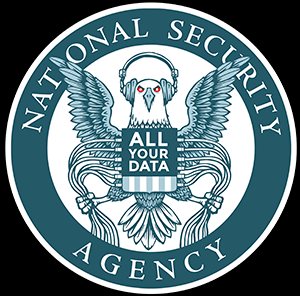
For all intents and purposes, the National Security Agency has supposedly ceased its bulk collection of metadata from Americans’ phone calls, but read the fine print: nothing is going to change.
The USA Freedom Act, which claimed to put an end to the National Security Agency’s controversial collection of metadata from Americans’ phone calls, was just a placebo pill intended to make us feel better and let the politicians take credit for reforming mass surveillance.
In other words, it was a sham, a sleight-of-hand political gag pulled on a gullible public desperate to believe that we still live in a constitutional republic rather than a down-and-out, out-of-control, corporate-controlled, economically impoverished, corrupt, warring, militarized banana republic.
You cannot restrain the NSA. The beast has outgrown its chains.
You cannot reform the NSA. A government that lies, cheats, steals, sidesteps the law, and then absolves itself of wrongdoing does not voluntarily alter its behavior.
You cannot put an end to the NSA’s “technotyranny.” Presidents, politicians, and court rulings have come and gone over the course of the NSA’s 60-year history, but none of them have managed to shut down the government’s secret surveillance of Americans’ phone calls, emails, text messages, transactions, communications and activities.
Indeed, the government has become an expert in finding ways to sidestep niggling, inconvenient laws aimed at ensuring accountability, bringing about government transparency and protecting citizen privacy.
It has mastered the art of stealth maneuvers and end-runs around the Constitution.
It knows all too well how to hide its nefarious, covert, clandestine activities behind the classified language of national security and terrorism. And when that doesn’t suffice, it obfuscates, complicates, stymies or just plain bamboozles the public into remaining in the dark.
Case in point: the so-called end of the NSA’s metadata collection of Americans’ phone calls.
This, of course, is no end at all.
On any given day, the average American going about his daily business will still be monitored, surveilled, spied on and tracked in more than 20 different ways, by both government and corporate eyes and ears.
More than a year before politicians attempted to patch up our mortally wounded privacy rights with the legislative bandaid fix that is the USA Freedom Act, researchers at Harvard and Boston University documented secret loopholes that allow the government to bypass Fourth Amendment protections to conduct massive domestic surveillance on U.S. citizens.
It’s extraordinary rendition all over again, only this time it’s surveillance instead of torture being outsourced.
In much the same way that the government moved its torture programs overseas in order to bypass legal prohibitions against doing so on American soil, it is doing the same thing for its surveillance programs. By shifting its data storage, collection and surveillance activities outside of the country, the government is able to bypass constitutional protectionsagainst unwarranted searches of Americans’ emails, documents, social networking data, and other cloud-stored data.
Heck, the government doesn’t even need to move all of its programs overseas. It just has to push the data over the border in order to “[circumvent] constitutional and statutory safeguards seeking to protect the privacy of Americans.”
 Credit for this particular brainchild goes to the Obama administration, which issued Executive Order 12333 authorizing the collection of Americans’ data from surveillance conducted on foreign soil.
Using this rationale, the government was able to justify hacking into and collecting an estimated 180 million user records from Google and Yahoo data centers every month because the data travels over international fiber-optic cables. The NSA program, dubbed MUSCULAR, is carried out in concert with British intelligence.
No wonder the NSA appeared so unfazed about being forced to shut down its much-publicized metadata program. It had already figured out a way to accomplish the same results (illegally spying on Americans’ communications) without being shackled by the legislative or judicial branches of the government.
Mind you, this metadata collection now being carried out overseas is just a small piece of the surveillance pie. The government and its corporate partners have a veritable arsenal of surveillance programs that will continue to operate largely in secret, carrying out warrantless mass surveillance on hundreds of millions of Americans’ phone calls, emails, text messages and the like, beyond the scrutiny of most of Congress and the taxpayers who are forced to fund its multi-billion dollar secret black ops budget.
The surveillance state is alive and well and kicking privacy to shreds in America.
Whether you’re walking through a store, driving your car, checking email, or talking to friends and family on the phone, you can be sure that some government agency, whether the NSA or some other entity, will still be listening in and tracking your behavior. This doesn’t even begin to touch on the corporate trackers that monitor your purchases, web browsing, Facebook posts and other activities taking place in the cyber sphere.
We are now in a state of transition with the police state shifting into high-gear under the auspices of the surveillance state.
Having already transformed local police into extensions of the military, the Department of Homeland Security, the Justice Department and the FBI are preparing to turn the nation’s police officers into techno-warriors, complete with iris scanners, body scanners, thermal imaging Doppler radar devices, facial recognition programs, license plate readers, cell phone Stingray devices and so much more.
Add in the fusion centers, city-wide surveillance networks, data clouds conveniently hosted overseas by Amazon and Microsoft, drones equipped with thermal imaging cameras, and biometric databases, and you’ve got the makings of a world in which “privacy” is reserved exclusively for government agencies.
Thus, telephone surveillance by the NSA is the least of our worries.
Even with restrictions on its ability to collect mass quantities of telephone metadata, the government and its various spy agencies, from the NSA to the FBI, can still employ an endless number of methods for carrying out warrantless surveillance on Americans, all of which are far more invasive than the bulk collection program.
 As I point out in my new book Battlefield America: The War on the American People, just about every branch of the government—from the Postal Service to the Treasury Department and every agency in between—now has its own surveillance sector, authorized to spy on the American people.
Then there are the fusion and counterterrorism centers that gather all of the data from the smaller government spies—the police, public health officials, transportation, etc.—and make it accessible for all those in power.
And of course that doesn’t even begin to touch on the complicity of the corporate sector, which buys and sells us from cradle to grave, until we have no more data left to mine. Indeed, Facebook, Amazon and Google are among the government’s closest competitors when it comes to carrying out surveillance on Americans, monitoring the content of your emails, tracking your purchases and exploiting your social media posts.
“Few consumers understand what data are being shared, with whom, or how the information is being used,” reports the Los Angeles Times. “Most Americans emit a stream of personal digital exhaust — what they search for, what they buy, who they communicate with, where they are — that is captured and exploited in a largely unregulated fashion.”
It’s not just what we say, where we go and what we buy that is being tracked.
We’re being surveilled right down to our genes, thanks to a potent combination of hardware, software and data collection that scans our biometrics—our faces, irises, voices, genetics, even our gait—runs them through computer programs that can break the data down into unique “identifiers,” and then offers them up to the government and its corporate allies for their respective uses.
All of those internet-connected gadgets we just have to have (Forbes refers to them as “(data) pipelines to our intimate bodily processes”)—the smart watches that can monitor our blood pressure and the smart phones that let us pay for purchases with our fingerprints and iris scans—are setting us up for a brave new world where there is nowhere to run and nowhere to hide.
For instance, imagine what the NSA could do (and is likely already doing) with voiceprint technology, which has been likened to a fingerprint. Described as “the next frontline in the battle against overweening public surveillance,” the collection of voiceprints is a booming industry for governments and businesses alike. As The Guardian reports, “voice biometrics could be used to pinpoint the location of individuals. There is already discussion about placing voice sensors in public spaces, and [Lee Tien, senior staff attorney with the Electronic Frontier Foundation] said that multiple sensors could be triangulated to identify individuals and specify their location within very small areas.”
Suddenly the NSA’s telephone metadata program seems like child’s play compared to what’s coming down the pike.
That, of course, is the point.
The NSA is merely one small part of a shadowy permanent government comprised of unelected bureaucrats who march in lockstep with profit-driven corporations that actually runs Washington, DC, and works to keep us under surveillance and, thus, under control. For example, Google openly works with the NSA, Amazon has built a massive $600 million intelligence database for CIA, and the telecommunications industry is making a fat profit by spying on us for the government.
In other words, Corporate America is making a hefty profit by aiding and abetting the government in its domestic surveillance efforts.
At every turn, we have been handicapped in our quest for transparency, accountability and a representative democracy by an establishment culture of secrecy: secret agencies, secret experiments, secret military bases, secret surveillance, secret budgets, and secret court rulings, all of which exist beyond our reach, operate outside our knowledge, and do not answer to “we the people.”
 Now there are still those who insist that they have nothing to hide from the surveillance state and nothing to fear from the police state because they have done nothing wrong.
To those sanctimonious few, secure in their delusions, let this be a warning: the danger posed by the American police state applies equally to all of us—lawbreaker and law abider alike, black and white, rich and poor, liberal and conservative, blue collar and white collar, and any other distinction you’d care to trot out.
In an age of too many laws, too many prisons, too many government spies, and too many corporations eager to make a fast buck at the expense of the American taxpayer, there is no safe place and no watertight alibi. We are all guilty of some transgression or other, and eventually, we will all be made to suffer the same consequences in the electronic concentration camp that surrounds us.

 Endless wars have resulted in a battlefield mindset that is infecting the nation. The Departments of Justice, Homeland Security (DHS) and Defense have passed off
  The schools, modeled after quasi-prisons, are churning out future compliant citizens. Within America’s public schools can be found almost every aspect of the American police state that plagues those of us on the “outside”: metal detectors, surveillance cameras, militarized police, drug-sniffing dogs, tasers, cyber-surveillance, random searches, senseless arrests, jail time, the list goes on. Whether it takes the form of draconian zero tolerance policies, overreaching anti-bullying statutes, police officers charged with tasering and arresting so-called unruly children, standardized testing with its emphasis on rote answers, political correctness, or the extensive surveillance systems cropping up in schools all over the country, young people in America are first in line to be indoctrinated into compliant citizens of the new American police state.
 WASHINGTON, D.C. — The U.S. Supreme Court has refused to hear the case of decorated Marine Brandon Raub, who was seized by a swarm of Secret Service, FBI and local police officials and involuntarily committed to a mental institution for a week after posting controversial song lyrics and political views critical of the government on his Facebook page. In asking the Supreme Court to hear the case,

 What remains to be seen is whether France, standing where the United States did 14 years ago, will follow in America’s footsteps as she grapples with the best way to shore up her defenses, where to draw the delicate line in balancing security with liberty, and what it means to secure justice for those whose lives were taken.
 Allowing the government to spy on the citizenry will not reduce acts of terrorism, but it will result in a watched, submissive, surveillance society. A byproduct of this post 9/11-age in which we live, whether you’re walking through a store, driving your car, checking email, or talking to friends and family on the phone, you can be sure that some government agency, whether the NSA or some other entity, is listening in and tracking your behavior. This doesn’t even begin to touch on the corporate trackers such as Google that monitor your purchases, web browsing, Facebook posts and other activities taking place in the cyber sphere. We are all becoming data collected in government files. The
  Do not turn your country into a battlefield, your citizens into enemy combatants, and your law enforcement officers into extensions of the military. A standing army—something that propelled the early colonists into revolution—strips the citizenry of any vestige of freedom. How can there be any semblance of freedom when there are tanks in the streets, military encampments in cities, Blackhawk helicopters and armed drones patrolling overhead? It was for this reason that those who established America vested control of the military in a civilian government, with a civilian commander-in-chief. They did not want a military government, ruled by force. Rather, they opted for a republic bound by the rule of law: the U.S. Constitution. Unfortunately, we in America now find ourselves struggling to retain some semblance of freedom in the face of police and law enforcement agencies that look and act like the military and have just as little regard for the Fourth Amendment, laws such as the NDAA that allow the military to arrest and indefinitely detain American citizens, and military drills that acclimate the American people to the sight of armored tanks in the streets, military encampments in cities, and combat aircraft patrolling overhead.

 In much the same way that the nation was taken hostage after 9/11 by color-coded terror alerts and “See Something, Say Something” campaigns that transformed us into a fearful, watchful nation of suspects, the government’s efforts to prepare us for a so-called national disaster have, in turn, left us a constant state of near-emergency and acclimated us to the sight of militarized police, military drills on American soil, privatized prisons, the specter of internment camps, and the erosion of constitutional rights, especially as they pertain to so-called “extremists,” domestic or otherwise.
 Built into the side of a mountain,
  For all intents and purposes, the nation is one national “emergency” away from having a full-fledged, unelected, authoritarian state emerge from the shadows. All it will take is the right event—another terrorist attack, perhaps, or a natural disaster—for such a regime to emerge from the shadows.
 RICHMOND, Va. —
 WASHINGTON, DC — A federal appeals court has summarily rejected a request that it reconsider its ruling that a 60-year old federal statute criminalizing expressive First Amendment activity on the Supreme Court plaza is “reasonable” and does not violate the First Amendment, setting up an appeal to the U.S. Supreme Court.
 The national debt. Why aren’t politicians talking about the
  Cost of war. Then there’s the detrimental impact the government’s endless wars (fueled by the profit-driven military industrial complex) is having on our communities, our budget and our police forces. In fact, the
  Asset forfeiture. Under the guise of fighting the war on drugs, government agents (usually the police) have been given broad leeway to seize billions of dollars’ worth of private property (money, cars, TVs, etc.) they “suspect” may be connected to criminal activity. Then—and here’s the kicker—whether or not any crime is actually proven to have taken place, the government keeps the citizen’s property, often divvying it up with the local police who did the initial seizure. The police are actually being
  Young people. Nearly
 John W. Whitehead, Constitutional Attorney