


“Mass shootings have become routine in the United States and speak to a society that relies on violence to feed the coffers of the merchants of death. Given the profits made by arms manufacturers, the defense industry, gun dealers and the lobbyists who represent them in Congress, it comes as no surprise that the culture of violence cannot be abstracted from either the culture of business or the corruption of politics. Violence runs through US society like an electric current offering instant pleasure from all cultural sources, whether it be the nightly news or a television series that glorifies serial killers.”—Professor Henry A. Giroux
This latest mass shooting in Las Vegas that left more than 50 people dead and more than 500 injured is as obscure as they come: a 64-year-old retiree with no apparent criminal history, no military training, and no obvious axe to grind opens fire on a country music concert crowd from a hotel room 32 floors up using a semi-automatic gun that may have been rigged to fire up to 700 rounds a minute, then kills himself.
We’re left with more questions than answers, none of them a flattering reflection of the nation’s values, political priorities, or the manner in which the military-industrial complex continues to dominate, dictate and shape almost every aspect of our lives.
For starters, why do these mass shootings keep happening? Mass shootings have taken place at churches, in nightclubs, on college campuses, on military bases, in elementary schools, in government offices, and at concerts. This shooting is the deadliest to date.
What is it about America that makes violence our nation’s calling card?
Is it because America is a gun culture (what professor Henry Giroux describes as “a culture soaked in blood – a culture that threatens everyone and extends from accidental deaths, suicides and domestic violence to mass shootings“)?
Is it because guns are so readily available? After all, the U.S. is home to more firearms than adults. As The Atlantic reports, gun fetishism has become mainstream in recent decades due in large part to “gun porn in music, movies, and TV, [and] the combination of weapons marketing and violent videogames.” (Curiously enough, the majority of gun-related deaths in the U.S. are suicides, not homicides.)
Is it because entertainment violence is the hottest selling ticket at the box office? As Giroux points out, “Popular culture not only trades in violence as entertainment, but also it delivers violence to a society addicted to a pleasure principle steeped in graphic and extreme images of human suffering, mayhem and torture.”
 Is it because the government continues to whet the nation’s appetite for violence and war through paid propaganda programs (seeded throughout sports entertainment, Hollywood blockbusters and video games)—what professor Roger Stahl refers to as “militainment“—that glorify the military and serve as recruiting tools for America’s expanding military empire?
Is it because Americans from a very young age are being groomed to enlist as foot soldiers—even virtual ones—in America’s Army (coincidentally, that’s also the name of a first person shooter video game produced by the military)? Explorer scouts are one of the most popular recruiting tools for the military and its civilian counterparts (law enforcement, Border Patrol, and the FBI).
Writing for The Atlantic, a former Explorer scout described the highlight of the program: monthly weekend maneuvers with the National Guard where scouts “got to fire live rounds from M16s, M60 machine guns, and M203 grenade launchers… we would have urban firefights (shooting blanks, of course) in Combat Town, a warren of concrete buildings designed for just that purpose. The exercise always devolved into a free-for-all, with all of us weekend warriors emptying clip after clip of blanks until we couldn’t see past the end of our rifles for all the smoke in the air.”
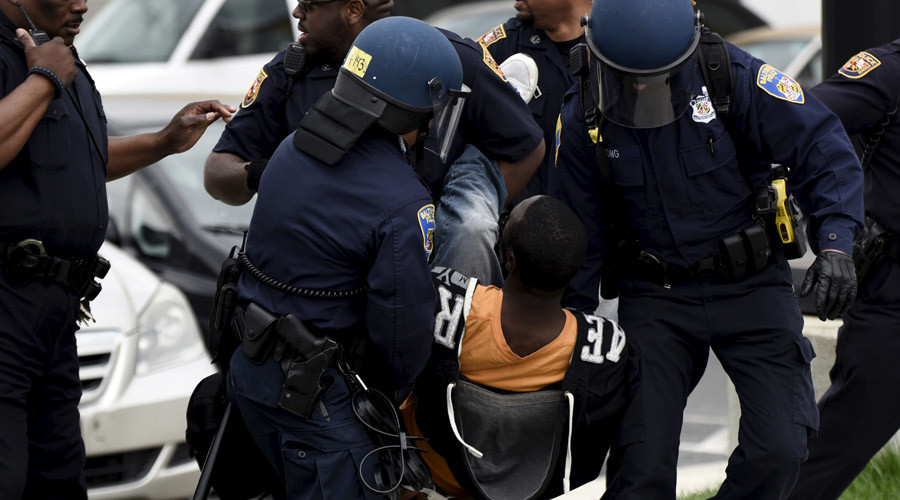
Is it because the United States is the number one consumer, exporter and perpetrator of violence and violent weapons in the world? Seriously, America spends more money on war than the combined military budgets of China, Russia, the United Kingdom, Japan, France, Saudi Arabia, India, Germany, Italy and Brazil. America polices the globe, with 800 military bases and troops stationed in 160 countries. Moreover, the war hawks have turned the American homeland into a quasi-battlefield with military gear, weapons and tactics. In turn, domestic police forces have become roving extensions of the military—a standing army.
Or is the Second Amendment to blame, as many continue to suggest? Would there be fewer mass shootings if tighter gun control laws were enacted? Or would the violence simply take a different form: homemade bombs, cars driven into crowds, and knives (remember the knife assailant in Japan who stabbed 19 people to death at a care home for the disabled)?
Then again, could it be, as some have speculated, that these shootings are all part of an elaborate plan to incite fear and chaos, heighten national tensions and shift us that much closer to a complete lockdown? After all, the military and our militarized police forces have been predicting and preparing for exactly this kind of scenario for years now.
So who’s to blame for the violence?
This time, in Las Vegas, it was a seemingly nondescript American citizen pulling the trigger.
At other times, it’s organized crime syndicates or petty criminals or so-called terrorists/extremists.
Still other times, it’s the police with their shoot first, ask questions later mindset (more than 900,000 law enforcement officers are armed).
In certain parts of the Middle East, it’s the U.S. government and the military carrying out drone strikes and bombing campaigns that leave innocent civilians dead and their communities torn apart.
Are you starting to get the picture yet?
We’re caught in a vicious cycle with no end in sight.
Perhaps there’s no single one factor to blame for this gun violence. However, there is a common denominator, and that is a war-drenched, violence-imbued, profit-driven military industrial complex that has invaded almost every aspect of our lives.
Ask yourself: Who are these shooters modelling themselves after? Where are they finding the inspiration for their weaponry and tactics? Whose stance and techniques are they mirroring?
In almost every instance, you can connect the dots back to the military.
We are a military culture.
We have been a nation at war for most of our existence.
We are a nation that makes a living from killing through defense contracts, weapons manufacturing and endless wars.
In order to sustain the nation’s appetite for war over the long haul in spite of the costs of war in lives lost and dollars spent—and little else to show for it—the military has had to work overtime to churn out pro-war, pro-military propaganda. It’s exactly what President Eisenhower warned against (“the acquisition of unwarranted influence, whether sought or unsought, by the military-industrial complex”) in his 1961 farewell address.
We didn’t listen then and we’re still not listening now.
All the while, the government’s war propaganda machine has grown more sophisticated and entrenched in American culture.
 Back when I was a boy growing up in the 1950s, almost every classic sci fi movie ended with the heroic American military saving the day, whether it was battle tanks in Invaders from Mars (1953) or military roadblocks in Invasion of the Body Snatchers (1956). What I didn’t know then as a schoolboy was the extent to which the Pentagon was paying to be cast as America’s savior.
By the time my own kids were growing up, it was Jerry Bruckheimer’s blockbuster film Top Gun—created with Pentagon assistance and equipment—that boosted civic pride in the military.
Now it’s my grandkids’ turn to be awed and overwhelmed by child-focused military propaganda in the X-Men movies. Same goes for The Avengers and Superman and the Transformers. (Don’t even get me started on the war propaganda churned out by the toymakers.)
All of the military equipment featured in blockbuster movies is provided—at taxpayer expense—in exchange for carefully placed promotional spots aimed at indoctrinating the American populace into believing that patriotism means throwing their support behind the military wholeheartedly and unquestioningly.
Even reality TV shows have gotten in on the gig, with the Pentagon’s entertainment office influencing “American Idol,” “The X-Factor,” “Masterchef,” “Cupcake Wars,” numerous Oprah Winfrey shows, “Ice Road Truckers,” “Battlefield Priests,” “America’s Got Talent,” “Hawaii Five-O,” lots of BBC, History Channel and National Geographic documentaries, “War Dogs,” and “Big Kitchens.” And that’s just a sampling.
It’s estimated that U.S. military intelligence agencies (including the NSA) have influenced over 1,800 movies and TV shows.
And then there are the growing number of video games, a number of which are engineered by or created for the military, which have accustomed players to interactive war play through military simulations and first-person shooter scenarios.
This is how you acclimate a population to war.
This is how you cultivate loyalty to a war machine.
This is how, to borrow from the subtitle to the 1964 film Dr. Strangelove, you teach a nation to “stop worrying and love the bomb.”
As journalist David Sirota writes for Salon, “[C]ollusion between the military and Hollywood – including allowing Pentagon officials to line edit scripts – is once again on the rise, with new television programs and movies slated to celebrate the Navy SEALs….major Hollywood directors remain more than happy to ideologically slant their films in precisely the pro-war, pro-militarist direction that the Pentagon demands in exchange for taxpayer-subsidized access to military hardware.”
Why is the Pentagon (and the CIA and the government at large) so focused on using Hollywood as a propaganda machine?
To those who profit from war, it is—as Sirota recognizes—”a ‘product’ to be sold via pop culture products that sanitize war and, in the process, boost recruitment numbers….At a time when more and more Americans are questioning the fundamental tenets of militarism (i.e., budget-busting defense expenditures, never-ending wars/occupations, etc.), military officials are desperate to turn the public opinion tide back in a pro-militarist direction — and they know pop culture is the most effective tool to achieve that goal.”
The media, eager to score higher ratings, has been equally complicit in making (real) war more palatable to the public by packaging it as TV friendly.
This is what Dr. Stahl refers to as the representation of a “clean war“: a war “without victims, without bodies, and without suffering”:
‘Dehumanize destruction’ by extracting all human imagery from target areas … The language used to describe the clean war is as antiseptic as the pictures. Bombings are ‘air strikes.’ A future bombsite is a ‘target of opportunity.’ Unarmed areas are ‘soft targets.’ Civilians are ‘collateral damage.’ Destruction is always ‘surgical.’ By and large, the clean war wiped the humanity of civilians from the screen … Create conditions by which war appears short, abstract, sanitized and even aesthetically beautiful. Minimize any sense of death: of soldiers or civilians.”
This is how you sell war to a populace that may have grown weary of endless wars: sanitize the war coverage of anything graphic or discomfiting (present a clean war), gloss over the actual numbers of soldiers and civilians killed (human cost), cast the business of killing humans in a more abstract, palatable fashion (such as a hunt), demonize one’s opponents, and make the weapons of war a source of wonder and delight.
“This obsession with weapons of war has a name: technofetishism,” explains Stahl. “Weapons appear to take on a magical aura. They become centerpieces in a cult of worship.”
“Apart from gazing at the majesty of these bombs, we were also invited to step inside these high-tech machines and take them for a spin,” said Stahl. “Or if we have the means, we can purchase one of the military vehicles on the consumer market. Not only are we invited to fantasize about being in the driver’s seat, we are routinely invited to peer through the crosshairs too. These repeated modes of imaging war cultivate new modes of perception, new relationships to the tools of state violence. In other words, we become accustomed to ‘seeing’ through the machines of war.”
In order to sell war, you have to feed the public’s appetite for entertainment.
Not satisfied with peddling its war propaganda through Hollywood, reality TV shows and embedded journalists whose reports came across as glorified promotional ads for the military, the Pentagon turned to sports to further advance its agenda, “tying the symbols of sports with the symbols of war.”
 The military has been firmly entrenched in the nation’s sports spectacles ever since, having co-opted football, basketball, even NASCAR.
Remember, just before this Vegas shooting gave the media, the politicians and the easily distracted public something new to obsess over, the headlines were dominated by President Trump’s feud with the NFL over players kneeling during the national anthem.
That, too, was yet another example of how much the military entertainment complex—which paid $53 million of taxpayer money between 2012 and 2015 to pro sports teams for military tributes (on-field events recognizing military service members, including ceremonial first pitches, honor guards and Jumbotron tributes)—has infiltrated American culture.
This Trump-NFL feud is also a classic example of how to squash dissent—whether it’s dissent over police brutality or America’s killing fields abroad. As Stahl explains, “Supporting the troops is made synonymous with supporting the war. Those who disagree with the decision to send soldiers to war are thus identified with the enemy. This is done through a variety of associations… Dissent becomes synonymous with criminal activity.”
When you talk about the Las Vegas mass shooting, you’re not dealing with a single shooter scenario. Rather, you’re dealing with a sophisticated, far-reaching war machine that has woven itself into the very fabric of this nation.
As Stahl concludes, “War has come to look very much like a video game. As viewers of the TV war, we are treated to endless flyovers. We are immersed in a general spirit of play. We are shown countless computer animations that contribute a sense of virtuality. We play alongside news anchors who watch on their monitors. We sit in front of the crosshairs directing missiles with a sense of interactivity. The destruction, if shown at all, seems unreal, distant. These repeated images foster habitual fantasies of crossing over.”
You want to stop the gun violence?
Stop the worship of violence that permeates our culture.
Stop glorifying the military industrial complex with flyovers and salutes during sports spectacles.
Stop acting as if there is anything patriotic about military exercises and occupations that bomb hospitals and schools.
Stop treating guns and war as entertainment fodder in movies, music, video games, toys, amusement parks, reality TV and more.
Stop distribution weapons of war to the local police and turning them into extensions of the military—weapons that have no business being anywhere but on a battlefield.
 Most of all, as I point out in my book Battlefield America: The War on the American People, stop falling for the military industrial complex’s psychological war games.
WC: 2513
ABOUT JOHN W. WHITEHEAD
Constitutional attorney and author John W. Whitehead is founder and president of The Rutherford Institute. His new book Battlefield America: The War on the American People (SelectBooks, 2015) is available online at http://www.amazon.com. Whitehead can be contacted at johnw@rutherford.org.
PUBLICATION GUIDELINES / REPRINT PERMISSION
John W. Whitehead’s weekly commentaries are available for publication to newspapers and web publications at no charge. Please contact staff@rutherford.org to obtain reprint permission.
Original article appeared at https://rutherford.org/publications_resources/john_whiteheads_commentary/mass_shootings_the_military_entertainment_complexs_culture_of_violence.

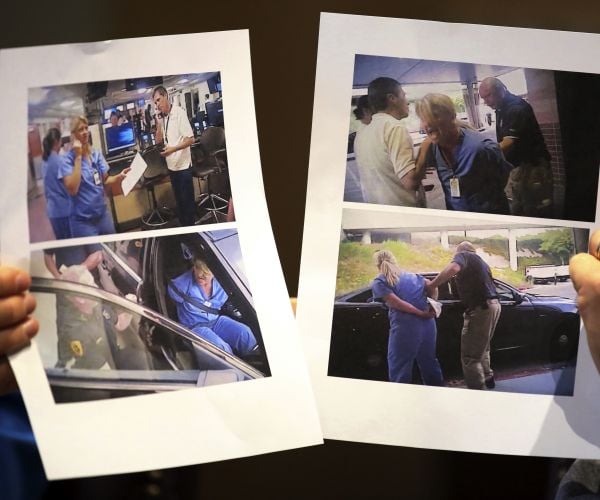
 What these incidents show is that while forced searches may span a broad spectrum of methods and scenarios, the common denominator remains the same: a complete disregard for the rights of the citizenry.
 As for those endless pictures everyone so cheerfully uploads to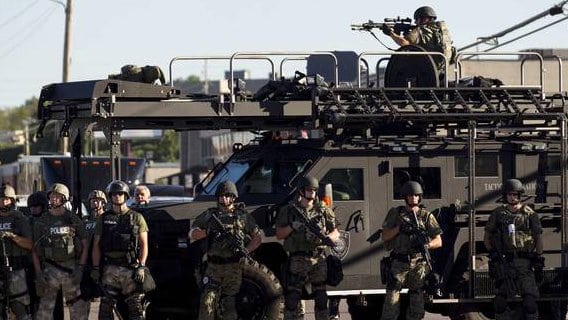
 Set against a backdrop of government surveillance, militarized police, SWAT team raids, asset forfeiture, eminent domain, overcriminalization, armed surveillance drones, whole body scanners, stop and frisk searches, roving VIPR raids and the like—all sanctioned by Congress, the White House, the courts and the like—a recitation of the Bill of Rights would understandably sound more like a eulogy to freedoms lost than an affirmation of rights we truly possess.
 The Fifth Amendment and the Sixth Amendment work in tandem. These amendments supposedly ensure that you are innocent until proven guilty, and government authorities cannot deprive you of your life, your liberty or your property without the right to an attorney and a fair trial before a civilian judge. However, in the new suspect society in which we live, where surveillance is the norm, these fundamental principles have been upended. Certainly, if the government can arbitrarily freeze, seize or lay claim to your property (money, land or possessions) under government asset forfeiture schemes, you have no true rights.
 As the National Review rightly asks, “
 Our national priorities need to be re-prioritized. For instance, Donald Trump wants to make America great again. I, for one, would prefer to make America free again.
 We have allowed ourselves to become fearful, controlled, pacified zombies.
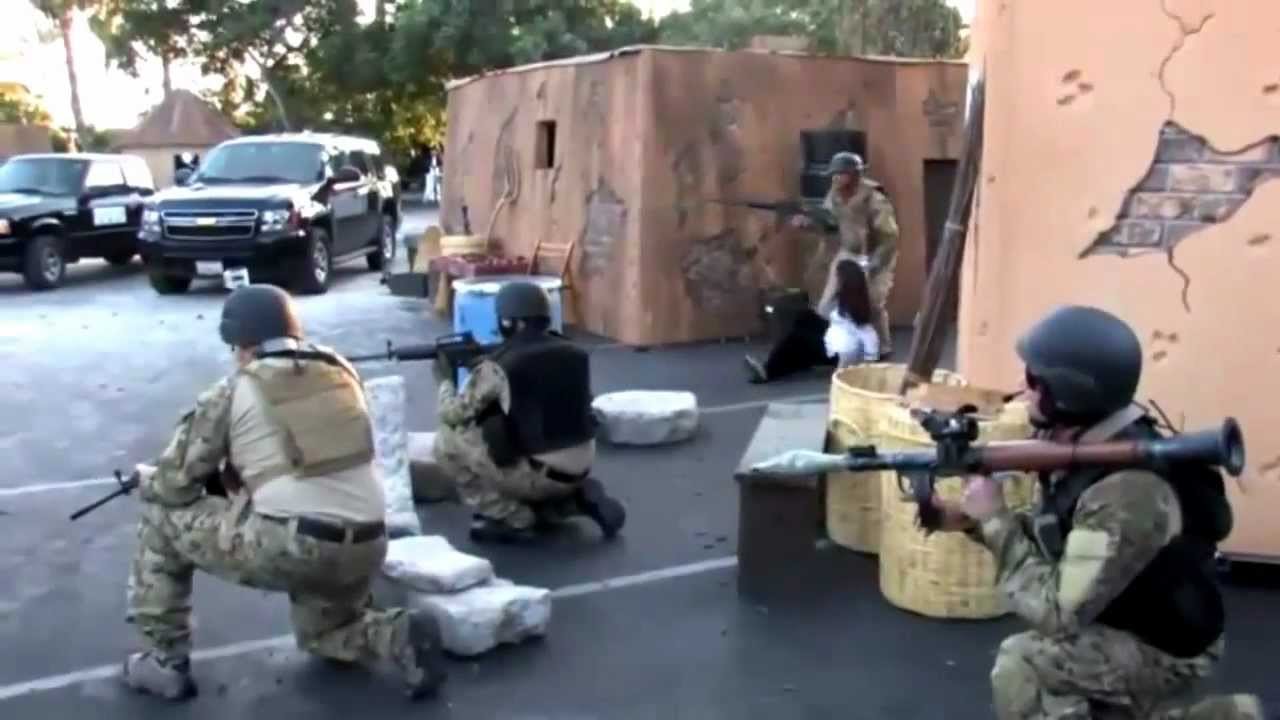 Consider this: the government started playing around with the idea of using zombies as stand-ins for enemy combatants in its training drills right around the time the Army War College issued its
  So when presented with the

 Just recently, for example, a Minnesota jury
  Except that the government has no intention of scaling back on its weapons. To the contrary, the government’s
  To founders such as Thomas Jefferson, who viewed the government as a powerful entity that must be bound “
 Government social workers actually
 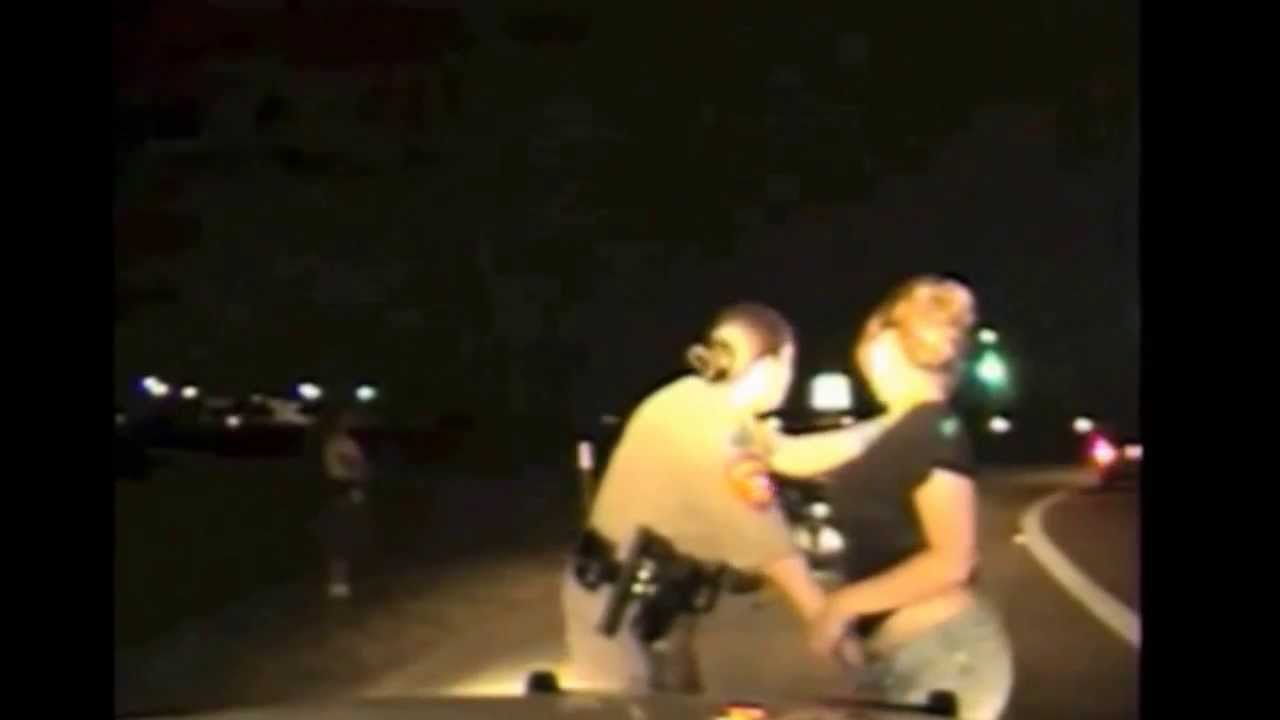 Forced cavity searches, forced colonoscopies, forced blood draws, forced breath-alcohol tests, forced DNA extractions, forced eye scans, forced inclusion in biometric databases—these are just a few ways in which Americans continue to be reminded that we have no control over what happens to our bodies during an encounter with government officials.
 The message being beaten, shot, tasered, probed and slammed into our collective consciousness is simply this: it doesn’t matter if you’re in the right, it doesn’t matter if a cop is in the wrong, it doesn’t matter if you’re being treated with less than the respect you deserve or the law demands.
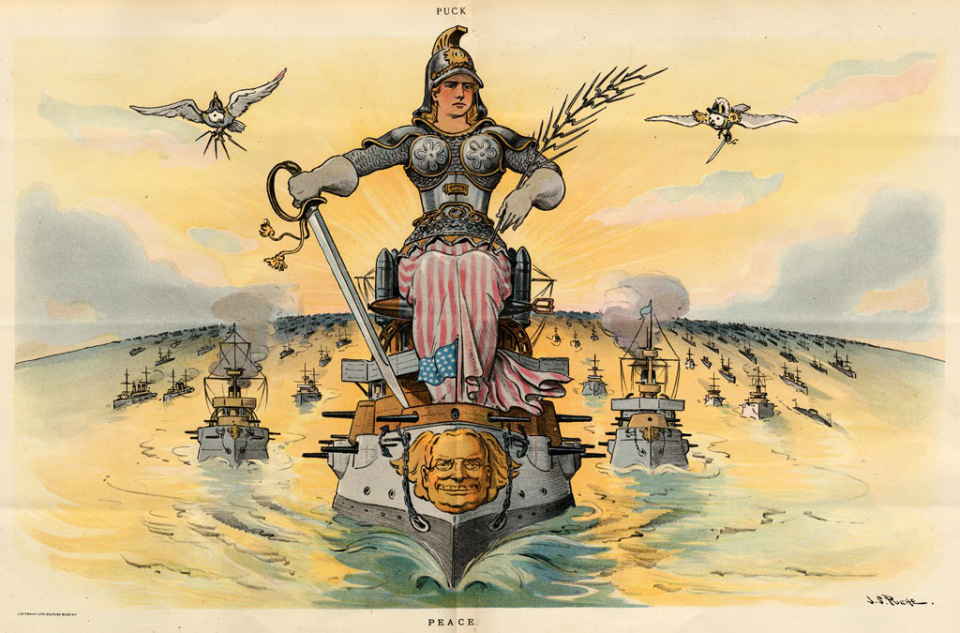
 The U.S. government
  In other words, in order to fund this burgeoning military empire that polices the globe, the U.S. government is prepared to bankrupt the nation, jeopardize our servicemen and women, increase the chances of terrorism and blowback domestically, and push the nation that much closer to eventual collapse.
 As long as “we the people” continue to allow the government to wage its costly, meaningless, endless wars abroad, the American homeland will continue to suffer: our roads will crumble, our bridges will fail, our schools will fall into disrepair, our drinking water will become undrinkable, our communities will destabilize, and crime will rise.

 First, the police assumed tactical positions surrounding the door to Apartment 114, guns drawn and ready to shoot.
 Unfortunately, with police departments increasingly shifting towards pre-crime policing and relying on dubious

 On Monday, March 6, police were given the go-ahead to keep stealing from Americans who were innocent of any wrongdoing.
 You might know this branch of government as Surveillance, but I prefer “technotyranny,” a term coined by investigative journalist James Bamford to refer to an age of technological tyranny made possible by government secrets, government lies, government spies and their corporate ties. Beware of what you say, what you read, what you write, where you go, and with whom you communicate, because it will all be recorded, stored and used against you eventually, at a time and place of the government’s choosing.
 Also on March 9, government officials assured the Michigan Supreme Court that there was nothing unlawful, unreasonable or threatening about the prospect of armed police dressed in SWAT gear knocking on doors at 4 a.m. and “asking” homeowners to engage in

This Is How Tyranny Rises and Freedom Falls: The Experiment in Freedom Is Failing
Posted: October 17, 2017 in CommentaryTags: A Government of Wolves, a nation of sheep, American empire, bread and circuses, circus politics, Congress, Donald Trump, freedom, H.L. Mencken, militarized police, police state, private prisons, standing army, surveillance, terrorism, tyranny
It is easy to be distracted right now by the circus politics that have dominated the news headlines for the past year, but don’t be distracted.
Don’t be fooled, not even a little, no matter how tempting it seems to just take a peek.
We’re being subjected to the oldest con game in the books, the magician’s sleight of hand that keeps you focused on the shell game in front of you while your wallet is being picked clean by ruffians in your midst.
This is how tyranny rises and freedom falls.
What characterizes American government today is not so much dysfunctional politics as it is ruthlessly contrived governance carried out behind the entertaining, distracting and disingenuous curtain of political theater. And what political theater it is, diabolically Shakespearean at times, full of sound and fury, yet in the end, signifying nothing.
Our nation of sheep has, as was foretold, given rise to a government of wolves.
The U.S. government now poses the greatest threat to our freedoms.
More than terrorism, more than domestic extremism, more than gun violence and organized crime, even more than the perceived threat posed by any single politician, the U.S. government remains a greater menace to the life, liberty and property of its citizens than any of the so-called dangers from which the government claims to protect us.
This has been true of virtually every occupant of the White House in recent years.
Unfortunately, nothing has changed for the better since Donald Trump ascended to the Oval Office.
As American satirist H.L. Mencken predicted almost a century ago:
In other words, nothing has changed, folks.
The facts speak for themselves.
We’re being robbed blind by a government of thieves. Americans no longer have any real protection against government agents empowered to seize private property at will. For instance, police agencies under the guise of asset forfeiture laws are taking Americans’ personal property based on little more than a suspicion of criminal activity and keeping it for their own profit and gain. In one case, police seized $53,000 from the manager of a Christian rock band that was touring and raising money for an orphanage in Thailand. Despite finding no evidence of wrongdoing, police kept the money. Homeowners are losing their homes over nonpayment of taxes (for as little as $400 owed) and municipal bills such as water or sewer fees that amount to a fraction of what they have invested in their homes. And then there’s the Drug Enforcement Agency, which has been searching train and airline passengers and pocketing their cash, without ever charging them with a crime.
We’re being locked up by a government of greedy jailers. We have become a carceral state, spending three times more on our prisons than on our schools and imprisoning close to a quarter of the world’s prisoners, despite the fact that crime is at an all-time low and the U.S. makes up only 5% of the world’s population. The rise of overcriminalization and profit-driven private prisons provides even greater incentives for locking up American citizens for such non-violent “crimes” as having an overgrown lawn. As the Boston Review points out, “America’s contemporary system of policing, courts, imprisonment, and parole … makes money through asset forfeiture, lucrative public contracts from private service providers, and by directly extracting revenue and unpaid labor from populations of color and the poor. In states and municipalities throughout the country, the criminal justice system defrays costs by forcing prisoners and their families to pay for punishment. It also allows private service providers to charge outrageous fees for everyday needs such as telephone calls. As a result people facing even minor criminal charges can easily find themselves trapped in a self-perpetuating cycle of debt, criminalization, and incarceration.”
We’re being spied on by a government of Peeping Toms. The government is watching everything you do, reading everything you write, listening to everything you say, and monitoring everything you spend. Omnipresent surveillance is paving the way for government programs that profile citizens, document their behavior and attempt to predict what they might do in the future, whether it’s what they might buy, what politician they might support, or what kinds of crimes they might commit. The impact of this far-reaching surveillance, according to Psychology Today, is “reduced trust, increased conformity, and even diminished civic participation.” As technology analyst Jillian C. York concludes, “Mass surveillance without due process—whether undertaken by the government of Bahrain, Russia, the US, or anywhere in between—threatens to stifle and smother that dissent, leaving in its wake a populace cowed by fear.”
We’re being forced to surrender our freedoms—and those of our children—to a government of extortionists, money launderers and professional pirates. The American people have repeatedly been sold a bill of goods about how the government needs more money, more expansive powers, and more secrecy (secret courts, secret budgets, secret military campaigns, secret surveillance) in order to keep us safe. Under the guise of fighting its wars on terror, drugs and now domestic extremism, the government has spent billions in taxpayer dollars on endless wars that have notended terrorism but merely sown the seeds of blowback, surveillance programs that have caught few terrorists while subjecting all Americans to a surveillance society, and militarized police that have done little to decrease crime while turning communities into warzones. Not surprisingly, the primary ones to benefit from these government exercises in legal money laundering have been the corporations, lobbyists and politicians who inflict them on a trusting public.
Whatever else it may be—a danger, a menace, a threat—the U.S. government is certainly no friend to freedom.
To our detriment, the criminal class that Mark Twain mockingly referred to as Congress has since expanded to include every government agency that feeds off the carcass of our once-constitutional republic.
The government and its cohorts have conspired to ensure that the only real recourse the American people have to hold the government accountable or express their displeasure with the government is through voting, which is no real recourse at all.
Consider it: the penalties for civil disobedience, whistleblowing and rebellion are severe. If you refuse to pay taxes for government programs you believe to be immoral or illegal, you will go to jail. If you attempt to overthrow the government—or any agency thereof—because you believe it has overstepped its reach, you will go to jail. If you attempt to blow the whistle on government misconduct, you will go to jail. In some circumstances, if you even attempt to approach your elected representative to voice your discontent, you can be arrested and jailed.
For too long, the American people have obeyed the government’s dictates, no matter now unjust.
We have paid its taxes, penalties and fines, no matter how outrageous. We have tolerated its indignities, insults and abuses, no matter how egregious. We have turned a blind eye to its indiscretions and incompetence, no matter how imprudent. We have held our silence in the face of its lawlessness, licentiousness and corruption, no matter how illicit.
Oh how we have suffered.
How long we will continue to suffer depends on how much we’re willing to give up for the sake of freedom.
It may well be that Professor Morris Berman is correct: perhaps we are entering into the dark ages that signify the final phase of the American Empire. “It seems to me,” writes Berman, “that the people do get the government they deserve, and even beyond that, the government who they are, so to speak. In that regard, we might consider, as an extreme version of this… that Hitler was as much an expression of the German people at that point in time as he was a departure from them.”
As French philosopher Etienne de La Boétie observed half a millennium ago:
The bait towards slavery. The price of liberty. The instruments of tyranny.
Yes, that sounds about right.
“We the people” have learned only too well how to be slaves. Worse, we have come to enjoy our voluntary servitude, which masquerades as citizenship.
Unfortunately, as I point out in my book Battlefield America: The War on the American People, we won’t be able to sustain this fiction much longer.
“Things fall apart,” wrote W.B. Yeats in his dark, forbidding poem “The Second Coming.” “The centre cannot hold; Mere anarchy is loosed upon the world… Surely some revelation is at hand.”
Wake up, America, and break free of your chains.
Something wicked this way comes.
WC: 2312
Constitutional attorney and author John W. Whitehead is founder and president of The Rutherford Institute. His new book Battlefield America: The War on the American People (SelectBooks, 2015) is available online at http://www.amazon.com. Whitehead can be contacted at johnw@rutherford.org.
PUBLICATION GUIDELINES / REPRINT PERMISSION
John W. Whitehead’s weekly commentaries are available for publication to newspapers and web publications at no charge. Please contact staff@rutherford.org to obtain reprint permission.