Posts Tagged ‘police state’

“When plunder becomes a way of life for a group of men in a society, over the course of time they create for themselves a legal system that authorizes it and a moral code that glorifies it.” ― Frédéric Bastiat, French economist

If there is an absolute maxim by which the American government seems to operate, it is that the taxpayer always gets ripped off.

Not only are Americans forced to “spend more on state, municipal, and federal taxes than the annual financial burdens of food, clothing, and housing combined,” but we’re also being played as easy marks by hustlers bearing the imprimatur of the government.

With every new tax, fine, fee and law adopted by our so-called representatives, the yoke around the neck of the average American seems to tighten just a little bit more.

Everywhere you go, everything you do, and every which way you look, we’re getting swindled, cheated, conned, robbed, raided, pickpocketed, mugged, deceived, defrauded, double-crossed and fleeced by governmental and corporate shareholders of the American police state out to make a profit at taxpayer expense.

The overt and costly signs of the despotism exercised by the increasingly authoritarian regime that passes itself off as the United States government are all around us: warrantless surveillance of Americans’ private phone and email conversations by the FBI, NSA, etc.; SWAT team raids of Americans’ homes; shootings of unarmed citizens by police; harsh punishments meted out to schoolchildren in the name of zero tolerance; drones taking to the skies domestically; endless wars; out-of-control spending; militarized police; roadside strip searches; privatized prisons with a profit incentive for jailing Americans; fusion centers that collect and disseminate data on Americans’ private transactions; and militarized agencies with stockpiles of ammunition, to name some of the most appalling.

Meanwhile, the three branches of government (Executive, Legislative and Judicial) and the agencies under their command—Defense, Commerce, Education, Homeland Security, Justice, Treasury, etc.—have switched their allegiance to the Corporate State with its unassailable pursuit of profit at all costs and by any means possible.

By the time you factor in the financial blowback from the COVID-19 pandemic with its politicized mandates, lockdowns, and payouts, it becomes quickly apparent that we are now ruled by a government consumed with squeezing every last penny out of the population and seemingly unconcerned if essential freedoms are trampled in the process.

As with most things, if you want to know the real motives behind any government program, follow the money trail.

When you dig down far enough, you quickly find that those who profit from Americans being surveilled, fined, scanned, searched, probed, tasered, arrested and imprisoned are none other than the police who arrest them, the courts which try them, the prisons which incarcerate them, and the corporations, which manufacture the weapons, equipment and prisons used by the American police state.

Examples of this legalized, profits-over-people, government-sanctioned extortion abound.

On the roads: Not satisfied with merely padding their budgets by issuing speeding tickets, police departments have turned to asset forfeiture and red light camera schemes as a means of growing their profits. Despite revelations of corruption, collusion and fraud, these money-making scams have been being inflicted on unsuspecting drivers by revenue-hungry municipalities. Now legislators are hoping to get in on the profit sharing by imposing a vehicle miles-traveled tax, which would charge drivers for each mile behind the wheel.

In the prisons: States now have quotas to meet for how many Americans go to jail. Increasing numbers of states have contracted to keep their prisons at 90% to 100% capacity. This profit-driven form of mass punishment has, in turn, given rise to a $70 billion private prison industry that relies on the complicity of state governments to keep the money flowing and their privately run prisons full, “regardless of whether crime was rising or falling.” As Mother Jones reports, “private prison companies have supported and helped write … laws that drive up prison populations. Their livelihoods depend on towns, cities, and states sending more people to prison and keeping them there.” Private prisons are also doling out harsher punishments for infractions by inmates in order to keep them locked up longer in order to “boost profits” at taxpayer expense. All the while, prisoners are being forced to provide cheap labor for private corporations. No wonder the United States has the largest prison population in the world.

In the schools: The security industrial complex with its tracking, spying, and identification devices has set its sights on the schools as “a vast, rich market”—a $20 billion market, no less—just waiting to be conquered. In fact, the public schools have become a microcosm of the total surveillance state which currently dominates America, adopting a host of surveillance technologies, including video cameras, finger and palm scanners, iris scanners, as well as RFID and GPS tracking devices, to keep constant watch over their student bodies. Likewise, the military industrial complex with its military weapons, metal detectors, and weapons of compliance such as tasers has succeeded in transforming the schools—at great taxpayer expense and personal profit—into quasi-prisons. Rounding things out are school truancy laws, which come disguised as well-meaning attempts to resolve attendance issues in the schools but in truth are nothing less than stealth maneuvers aimed at enriching school districts and court systems alike through excessive fines and jail sentences for “unauthorized” absences. Curiously, none of these efforts seem to have succeeded in making the schools any safer.

In the endless wars abroad: Fueled by the profit-driven military industrial complex, the government’s endless wars are wreaking havoc on our communities, our budget and our police forces. Having been co-opted by greedy defense contractors, corrupt politicians and incompetent government officials, America’s expanding military empire is bleeding the country dry at a rate of more than $32 million per hour. Future wars and military exercises waged around the globe are expected to push the total bill upwards of $12 trillion by 2053.  Talk about fiscally irresponsible: the U.S. government is spending money it doesn’t have on a military empire it can’t afford. War spending is bankrupting America.

In the form of militarized police: The Department of Homeland Security routinely hands out six-figure grants to enable local municipalities to purchase military-style vehicles, as well as a veritable war chest of weaponry, ranging from tactical vests, bomb-disarming robots, assault weapons and combat uniforms. This rise in military equipment purchases funded by the DHS has, according to analysts Andrew Becker and G.W. Schulz, “paralleled an apparent increase in local SWAT teams.” The end result? An explosive growth in the use of SWAT teams for otherwise routine police matters, an increased tendency on the part of police to shoot first and ask questions later, and an overall mindset within police forces that they are at war—and the citizenry are the enemy combatants. Over 80,000 SWAT team raids are conducted on American homes and businesses each year. Moreover, government-funded military-style training drills continue to take place in cities across the country.

In profit-driven schemes such as asset forfeiture: Under the guise of fighting the war on drugs, government agents (usually the police) have been given broad leeway to seize billions of dollars’ worth of private property (money, cars, TVs, etc.) they “suspect” may be connected to criminal activity. Then—and here’s the kicker—whether or not any crime is actually proven to have taken place, the government keeps the citizen’s property, often divvying it up with the local police who did the initial seizure. The police are actually being trained in seminars on how to seize the “goodies” that are on police departments’ wish lists. According to the New York Times, seized monies have been used by police to “pay for sports tickets, office parties, a home security system and a $90,000 sports car.”

Among government contractors: We have been saddled with a government that is outsourcing much of its work to high-paid contractors at great expense to the taxpayer and with no competition, little transparency and dubious savings. According to the Washington Post, “By some estimates, there are twice as many people doing government work under contract than there are government workers.” These open-ended contracts, worth hundreds of millions of dollars, “now account for anywhere between one quarter and one half of all federal service contracting.” Moreover, any attempt to reform the system is “bitterly opposed by federal employee unions, who take it as their mission to prevent good employees from being rewarded and bad employees from being fired.”

By the security industrial complex: We’re being spied on by a domestic army of government snitches, spies and techno-warriors. In the so-called name of “precrime,” this government of Peeping Toms is watching everything we do, reading everything we write, listening to everything we say, and monitoring everything we spend. Beware of what you say, what you read, what you write, where you go, and with whom you communicate, because it is all being recorded, stored, and catalogued, and will be used against you eventually, at a time and place of the government’s choosing. This far-reaching surveillance, carried out with the complicity of the Corporate State, has paved the way for an omnipresent, militarized fourth branch of government—the Surveillance State—that came into being without any electoral mandate or constitutional referendum. That doesn’t even touch on the government’s bold forays into biometric surveillance as a means of identifying and tracking the American people from birth to death.

By a government addicted to power: It’s a given that you can always count on the government to take advantage of a crisis, legitimate or manufactured. Emboldened by the citizenry’s inattention and willingness to tolerate its abuses, the government has weaponized one national crisis after another in order to expand its powers. The war on terror, the war on drugs, the war on illegal immigration, asset forfeiture schemes, road safety schemes, school safety schemes, eminent domain: all of these programs started out as legitimate responses to pressing concerns and have since become weapons of compliance and control in the police state’s hands. Now that the government has gotten a taste for flexing its police state powers by way of a bevy of COVID-19 lockdowns, mandates, restrictions, contact tracing programs, heightened surveillance, censorship, overcriminalization, etc., “we the people” may well find ourselves burdened with a Nanny State inclined to use its draconian pandemic powers to protect us from ourselves.

These injustices, petty tyrannies and overt acts of hostility are being carried out in the name of the national good—against the interests of individuals, society and ultimately our freedoms—by an elite class of government officials working in partnership with megacorporations that are largely insulated from the ill effects of their actions.

This perverse mixture of government authoritarianism and corporate profits has increased the reach of the state into our private lives while also adding a profit motive into the mix. And, as always, it’s we the people, we the taxpayers, we the gullible voters who keep getting taken for a ride by politicians eager to promise us the world on a plate.

This is a far cry from how a representative government is supposed to operate.

Indeed, it has been a long time since we could claim to be the masters of our own lives. Rather, we are now the subjects of a militarized, corporate empire in which the vast majority of the citizenry work their hands to the bone for the benefit of a privileged few

Adding injury to the ongoing insult of having our tax dollars misused and our so-called representatives bought and paid for by the moneyed elite, the government then turns around and uses the money we earn with our blood, sweat and tears to target, imprison and entrap us, in the form of militarized police, surveillance cameras, private prisons, license plate readers, drones, and cell phone tracking technology.

All of those nefarious deeds by government officials that you hear about every day: those are your tax dollars at work.

It’s your money that allows for government agents to spy on your emails, your phone calls, your text messages, and your movements. It’s your money that allows out-of-control police officers to burst into innocent people’s homes, or probe and strip search motorists on the side of the road. And it’s your money that leads to Americans across the country being prosecuted for innocuous activities such as growing vegetable gardens in their front yards or daring to speak their truth to their elected officials.

Just remember the next time you see a news story that makes your blood boil, whether it’s a police officer arresting someone for filming them in public, or a child being kicked out of school for attending a virtual class while playing with a toy gun, remember that it is your tax dollars that are paying for these injustices.

There was a time in our history when our forebears said “enough is enough” and stopped paying their taxes to what they considered an illegitimate government. They stood their ground and refused to support a system that was slowly choking out any attempts at self-governance, and which refused to be held accountable for its crimes against the people.

Their resistance sowed the seeds for the revolution that would follow.

Unfortunately, in the 200-plus years since we established our own government, we’ve let bankers, turncoats and number-crunching bureaucrats muddy the waters and pilfer the accounts to such an extent that we’re back where we started.

Once again, we’ve got a despotic regime with an imperial ruler doing as they please.

Once again, we’ve got a judicial system insisting we have no rights under a government which demands that the people march in lockstep with its dictates.

And once again, we’ve got to decide whether we’ll keep marching or break stride and make a turn toward freedom.

But what if we didn’t just pull out our pocketbooks and pony up to the federal government’s outrageous demands for more money?

What if we didn’t just dutifully line up to drop our hard-earned dollars into the collection bucket, no questions asked about how it will be spent?

What if, instead of quietly sending in our checks, hoping vainly for some meager return, we did a little calculating of our own and started deducting from our taxes those programs that we refuse to support?

As I make clear in my book Battlefield America: The War on the American People, if the government and its emissaries can just take from you what they want, when they want, and then use it however they want, you can’t claim to be anything more than a serf in a land they think of as theirs.

This is not freedom, America.

Source: https://bit.ly/3d8UGa6

ABOUT JOHN W. WHITEHEAD

Constitutional attorney and author John W. Whitehead is founder and president The Rutherford Institute. His books Battlefield America: The War on the American People and A Government of Wolves: The Emerging American Police State are available at www.amazon.com. He can be contacted at johnw@rutherford.org. Nisha Whitehead is the Executive Director of The Rutherford Institute. Information about The Rutherford Institute is available at www.rutherford.org.

Publication Guidelines / Reprint Permission

John W. Whitehead’s weekly commentaries are available for publication to newspapers and web publications at no charge. Please contact staff@rutherford.org to obtain reprint permission.

When you upload your DNA, you’re potentially becoming a genetic informant on the rest of your family.”— Law professor Elizabeth Joh

“Guilt by association” has taken on new connotations in the technological age.

All of those fascinating, genealogical searches that allow you to trace your family tree by way of a DNA sample can now be used against you and those you love.

As of 2019, more than 26 million people had added their DNA to ancestry databases. It’s estimated those databases could top 100 million profiles within the year, thanks to the aggressive marketing of companies such as Ancestry and 23andMe.

It’s a tempting proposition: provide some mega-corporation with a spit sample or a cheek swab, and in return, you get to learn everything about who you are, where you came from, and who is part of your extended your family.

The possibilities are endless.

You could be the fourth cousin once removed of Queen Elizabeth II of England. Or the illegitimate grandchild of an oil tycoon. Or the sibling of a serial killer.

Without even realizing it, by submitting your DNA to an ancestry database, you’re giving the police access to the genetic makeup, relationships and health profiles of every relative—past, present and future—in your family, whether or not they ever agreed to be part of such a database.

After all, a DNA print reveals everything about “who we are, where we come from, and who we will be.”

It’s what police like to refer to a “modern fingerprint.”

Whereas fingerprint technology created a watershed moment for police in their ability to “crack” a case, DNA technology is now being hailed by law enforcement agencies as the magic bullet in crime solving.

Indeed, police have begun using ancestry databases to solve cold cases that have remained unsolved for decades.

For instance, in 2018, former police officer Joseph DeAngelo was flagged as the notorious “Golden State Killer” through the use of genetic genealogy, which allows police to match up an unknown suspect’s crime scene DNA with that of any family members in a genealogy database. Police were able to identify DeAngelo using the DNA of a distant cousin found in a public DNA database. Once police narrowed the suspect list to DeAngelo, they tracked him—snatched up a tissue he had tossed in a trash can—and used his DNA on the tissue to connect him to a rash of rapes and murders from the 1970s and ‘80s.

Although DeAngelo was the first public arrest made using forensic genealogy, police have identified more than 150 suspects since then. Most recently, police relied on genetic genealogy to nab the killer of a 15-year-old girl who was stabbed to death nearly 50 years ago.

Who wouldn’t want to get psychopaths and serial rapists off the streets and safely behind bars, right? At least, that’s the argument being used by law enforcement to support their unrestricted access to these genealogy databases.

“In the interest of public safety, don’t you want to make it easy for people to be caught? Police really want to do their job. They’re not after you. They just want to make you safe,” insists Colleen Fitzpatrick, a co-founder of the DNA Doe Project, which identifies unknown bodies and helps find suspects in old crimes.

Except it’s not just psychopaths and serial rapists who get caught up in the investigative dragnet.

Anyone who comes up as a possible DNA match—including distant family members—suddenly becomes part of a circle of suspects that must be tracked, investigated and ruled out.

Although a number of states had forbidden police from using government databases to track family members of suspects, the genealogy websites provided a loophole that proved irresistible to law enforcement.

Hoping to close that loophole, a few states have started introducing legislation to restrict when and how police use these genealogical databases, with Maryland requiring that they can only be used for serious violent crimes such as murder and rape, only after they exhaust other investigatory methods, and only under the supervision of a judge.

Yet the debate over genetic privacy—and when one’s DNA becomes a public commodity outside the protection of the Fourth Amendment’s prohibition on warrantless searches and seizures—is really only beginning.

Certainly, it’s just a matter of time before the government gets hold of our DNA, either through mandatory programs carried out in connection with law enforcement and corporate America, by warrantlessly accessing our familial DNA shared with genealogical services such as Ancestry and 23andMe, or through the collection of our “shed” or “touch” DNA.

According to research published in the journal Science, more than 60 percent of Americans who have some European ancestry can be identified using DNA databases, even if they have not submitted their own DNA. According to law professor Natalie Ram, one genealogy profile can lead to as many as 300 other people.

That’s just on the commercial side.

All 50 states now maintain their own DNA databases, although the protocols for collection differ from state to state. Increasingly, many of the data from local databanks are being uploaded to CODIS (Combined DNA Index System), the FBI’s massive DNA database, which has become a de facto way to identify and track the American people from birth to death.

Even hospitals have gotten in on the game by taking and storing newborn babies’ DNA, often without their parents’ knowledge or consent. It’s part of the government’s mandatory genetic screening of newborns. In many states, the DNA is stored indefinitely.

What this means for those being born today is inclusion in a government database that contains intimate information about who they are, their ancestry, and what awaits them in the future, including their inclinations to be followers, leaders or troublemakers.

Get ready, folks, because the government— helped along by Congress (which adopted legislation allowing police to collect and test DNA immediately following arrests), President Trump (who signed the Rapid DNA Act into law), the courts (which have ruled that police can routinely take DNA samples from people who are arrested but not yet convicted of a crime), and local police agencies (which are chomping at the bit to acquire this new crime-fighting gadget)—has embarked on a diabolical campaign to create a nation of suspects predicated on a massive national DNA database.

Referred to as “magic boxes,” Rapid DNA machines—portable, about the size of a desktop printer, highly unregulated, far from fool-proof, and so fast that they can produce DNA profiles in less than two hours—allow police to go on fishing expeditions for any hint of possible misconduct using DNA samples.

Journalist Heather Murphy explains: “As police agencies build out their local DNA databases, they are collecting DNA not only from people who have been charged with major crimes but also, increasingly, from people who are merely deemed suspicious, permanently linking their genetic identities to criminal databases.”

The ramifications of these DNA databases are far-reaching.

At a minimum, they will do away with any semblance of privacy or anonymity. The lucrative possibilities for hackers and commercial entities looking to profit off one’s biological record are endless.

Moreover, while much of the public debate, legislative efforts and legal challenges in recent years have focused on the protocols surrounding when police can legally collect a suspect’s DNA (with or without a search warrant and whether upon arrest or conviction), the question of how to handle “shed” or “touch” DNA has largely slipped through without much debate or opposition.

As scientist Leslie A. Pray notes:

We all shed DNA, leaving traces of our identity practically everywhere we go. Forensic scientists use DNA left behind on cigarette butts, phones, handles, keyboards, cups, and numerous other objects, not to mention the genetic content found in drops of bodily fluid, like blood and semen. In fact, the garbage you leave for curbside pickup is a potential gold mine of this sort of material. All of this shed or so-called abandoned DNA is free for the taking by local police investigators hoping to crack unsolvable cases. Or, if the future scenario depicted at the beginning of this article is any indication, shed DNA is also free for inclusion in a secret universal DNA databank.

What this means is that if you have the misfortune to leave your DNA traces anywhere a crime has been committed, you’ve already got a file somewhere in some state or federal database—albeit it may be a file without a name. As Heather Murphy warns in the New York Times: “The science-fiction future, in which police can swiftly identify robbers and murderers from discarded soda cans and cigarette butts, has arrived…  Genetic fingerprinting is set to become as routine as the old-fashioned kind.

Even old samples taken from crime scenes and “cold” cases are being unearthed and mined for their DNA profiles.

Today, helped along by robotics and automation, DNA processing, analysis and reporting takes far less time and can bring forth all manner of information, right down to a person’s eye color and relatives. Incredibly, one company specializes in creating “mug shots” for police based on DNA samples from unknown “suspects” which are then compared to individuals with similar genetic profiles.

If you haven’t yet connected the dots, let me point the way.

Having already used surveillance technology to render the entire American populace potential suspects, DNA technology in the hands of government will complete our transition to a suspect society in which we are all merely waiting to be matched up with a crime.

No longer can we consider ourselves innocent until proven guilty.

Now we are all suspects in a DNA lineup until circumstances and science say otherwise.

Suspect Society, meet the American police state.

Every dystopian sci-fi film we’ve ever seen is suddenly converging into this present moment in a dangerous trifecta between science, technology and a government that wants to be all-seeing, all-knowing and all-powerful.

By tapping into your phone lines and cell phone communications, the government knows what you say. By uploading all of your emails, opening your mail, and reading your Facebook posts and text messages, the government knows what you write. By monitoring your movements with the use of license plate readers, surveillance cameras and other tracking devices, the government knows where you go.

By churning through all of the detritus of your life—what you read, where you go, what you say—the government can predict what you will do. By mapping the synapses in your brain, scientists—and in turn, the government—will soon know what you remember.

And by accessing your DNA, the government will soon know everything else about you that they don’t already know: your family chart, your ancestry, what you look like, your health history, your inclination to follow orders or chart your own course, etc.

Of course, none of these technologies are foolproof.

Nor are they immune from tampering, hacking or user bias.

Nevertheless, they have become a convenient tool in the hands of government agents to render null and void the Constitution’s requirements of privacy and its prohibitions against unreasonable searches and seizures.

What this amounts to is a scenario in which we have little to no defense of against charges of wrongdoing, especially when “convicted” by technology, and even less protection against the government sweeping up our DNA in much the same way it sweeps up our phone calls, emails and text messages.

With the entire governmental system shifting into a pre-crime mode aimed at detecting and pursuing those who “might” commit a crime before they have an inkling, let alone an opportunity, to do so, it’s not so far-fetched to imagine a scenario in which government agents (FBI, local police, etc.) target potential criminals based on their genetic disposition to be a “troublemaker” or their relationship to past dissenters.

Equally disconcerting: if scientists can, using DNA, track salmon across hundreds of square miles of streams and rivers, how easy will it be for government agents to not only know everywhere we’ve been and how long we were at each place but collect our easily shed DNA and add it to the government’s already burgeoning database?

Not to be overlooked, DNA evidence is not infallible: it can be wrong, either through human error, tampering, or even outright fabrication, and it happens more often than we are told. The danger, warns scientist Dan Frumkin, is that crime scenes can be engineered with fabricated DNA.

Now if you happen to be the kind of person who trusts the government implicitly and refuses to believe it would ever do anything illegal or immoral, then the prospect of government officials—police, especially—using fake DNA samples to influence the outcome of a case might seem outlandish.

Yet as history shows, the probability of our government acting in a way that is not only illegal but immoral becomes less a question of “if” and more a question of “when.”

With technology, the courts, the corporations and Congress conspiring to invade our privacy on a cellular level, suddenly the landscape becomes that much more dystopian.

As I make clear in my book Battlefield America: The War on the American People, this is the slippery slope toward a dystopian world in which there is nowhere to run and nowhere to hide.

Source: https://www.rutherford.org/publications_resources/john_whiteheads_commentary/guilt_by_association_dna_databases_forensic_genealogy_and_genetic_privacy

ABOUT JOHN W. WHITEHEAD

Constitutional attorney and author John W. Whitehead is founder and president The Rutherford Institute. His books Battlefield America: The War on the American People and A Government of Wolves: The Emerging American Police State are available at www.amazon.com. He can be contacted at johnw@rutherford.org. Nisha Whitehead is the Executive Director of The Rutherford Institute. Information about The Rutherford Institute is available at www.rutherford.org.

Publication Guidelines / Reprint Permission

John W. Whitehead’s weekly commentaries are available for publication to newspapers and web publications at no charge. Please contact staff@rutherford.org to obtain reprint permission.
“Whoever fights monsters should see to it that in the process he does not become a monster.”— Friedrich Nietzsche

Almost every tyranny being perpetrated by the U.S. government against the citizenry—purportedly to keep us safe and the nation secure—has come about as a result of some threat manufactured in one way or another by our own government.

Think about it.

Cyberwarfare. Terrorism. Bio-chemical attacks. The nuclear arms race. Surveillance. The drug wars. Domestic extremism. The COVID-19 pandemic.

In almost every instance, the U.S. government (often spearheaded by the FBI) has in its typical Machiavellian fashion sown the seeds of terror domestically and internationally in order to expand its own totalitarian powers.

Who is the biggest black market buyer and stockpiler of cyberweapons (weaponized malware that can be used to hack into computer systems, spy on citizens, and destabilize vast computer networks)? The U.S. government.

Who is the largest weapons manufacturer and exporter in the world, such that they are literally arming the world? The U.S. government.

Which country has a history of secretly testing out dangerous weapons and technologies on its own citizens? The U.S. government.

Which country has conducted secret experiments on an unsuspecting populace—citizens and noncitizens alike—making healthy people sick by spraying them with chemicals, injecting them with infectious diseases and exposing them to airborne toxins? The U.S. government.

What country has a pattern and practice of entrapment that involves targeting vulnerable individuals, feeding them with the propaganda, know-how and weapons intended to turn them into terrorists, and then arresting them as part of an elaborately orchestrated counterterrorism sting? The U.S. government.

Are you getting the picture yet?

The U.S. government isn’t protecting us from terrorism.

The U.S. government is creating the terror. It is, in fact, the source of the terror.

Consider that this very same government has taken every bit of technology sold to us as being in our best interests—GPS devices, surveillance, nonlethal weapons, etc.—and used it against us, to track, control and trap us.

So why is the government doing this? Money, power and total domination.

We’re not dealing with a government that exists to serve its people, protect their liberties and ensure their happiness. Rather, these are the diabolical machinations of a make-works program carried out on an epic scale whose only purpose is to keep the powers-that-be permanently (and profitably) employed.

Case in point: the FBI.

The government’s henchmen have become the embodiment of how power, once acquired, can be so easily corrupted and abused. Indeed, far from being tough on crime, FBI agents are also among the nation’s most notorious lawbreakers.

Whether the FBI is planting undercover agents in churches, synagogues and mosques; issuing fake emergency letters to gain access to Americans’ phone records; using intimidation tactics to silence Americans who are critical of the government, or persuading impressionable individuals to plot acts of terror and then entrapping them, the overall impression of the nation’s secret police force is that of a well-dressed thug, flexing its muscles and doing the boss’ dirty work.

For example, this is the agency that used an undercover agent/informant to seek out and groom an impressionable young man, cultivating his friendship, gaining his sympathy, stoking his outrage over the injustices perpetrated by the U.S. government, then enlisting his help to blow up the Herald Square subway station. Despite the fact that Shahawar Matin Siraj ultimately refused to plant a bomb at the train station, he was arrested for conspiring to do so at the urging of his FBI informant and used to bolster the government’s track record in foiling terrorist plots. Of course, no mention was made of the part the government played in fabricating the plot, recruiting a would-be bomber, and setting him up to take the fall.

This is the government’s answer to precrime: first, foster activism by stoking feelings of outrage and injustice by way of secret agents and informants; second, recruit activists to carry out a plot (secretly concocted by the government) to challenge what they see as government corruption; and finally, arrest those activists for conspiring against the government before they can actually commit a crime.

It’s a diabolical plot with far-reaching consequences for every segment of the population, no matter what one’s political leanings.

As Rozina Ali writes for The New York Times Magazine, “The government’s approach to counterterrorism erodes constitutional protections for everyone, by blurring the lines between speech and action and by broadening the scope of who is classified as a threat.”

This is not an agency that appears to understand, let alone respect, the limits of the Constitution.

Just recently, it was revealed that the FBI has been secretly carrying out an entrapment scheme in which it used a front company, ANOM, to sell purportedly hack-proof phones to organized crime syndicates and then used those phones to spy on them as they planned illegal drug shipments, plotted robberies and put out contracts for killings using those boobytrapped phones.

All told, the FBI intercepted 27 million messages over the course of 18 months.

What this means is that the FBI was also illegally spying on individuals using those encrypted phones who may not have been involved in any criminal activity whatsoever.

Even reading a newspaper article is now enough to get you flagged for surveillance by the FBI. The agency served a subpoena on USA Today / Gannett to provide the internet addresses and mobile phone information for everyone who read a news story online on a particular day and time about the deadly shooting of FBI agents.

This is the danger of allowing the government to carry out widespread surveillance, sting and entrapment operations using dubious tactics that sidestep the rule of law: “we the people” become suspects and potential criminals, while government agents, empowered to fight crime using all means at their disposal, become indistinguishable from the corrupt forces they seek to vanquish.  

To go after terrorists, they become terrorists. To go after drug smugglers, they become drug smugglers. To go after thieves, they become thieves.

For instance, when the FBI raided a California business that was suspected of letting drug dealers anonymously stash guns, drugs and cash in its private vaults, agents seized the contents of all the  safety deposit boxes and filed forfeiture motions to keep the contents, which include millions of dollars’ worth of valuables owned by individuals not accused of any crime whatsoever.

It’s hard to say whether we’re dealing with a kleptocracy (a government ruled by thieves), a kakistocracy (a government run by unprincipled career politicians, corporations and thieves that panders to the worst vices in our nature and has little regard for the rights of American citizens), or if we’ve gone straight to an idiocracy.  

This certainly isn’t a constitutional democracy, however.

Some days, it feels like the FBI is running its own crime syndicate complete with mob rule and mafia-style justice.

In addition to creating certain crimes in order to then “solve” them, the FBI also gives certain informants permission to break the law, “including everything from buying and selling illegal drugs to bribing government officials and plotting robberies,” in exchange for their cooperation on other fronts.

USA Today estimates that agents have authorized criminals to engage in as many as 15 crimes a day (5600 crimes a year). Some of these informants are getting paid astronomical sums: one particularly unsavory fellow, later arrested for attempting to run over a police officer, was actually paid $85,000 for his help laying the trap for an entrapment scheme.

In a stunning development reported by The Washington Post, a probe into misconduct by an FBI agent resulted in the release of at least a dozen convicted drug dealers from prison.

In addition to procedural misconduct, trespassing, enabling criminal activity, and damaging private property, the FBI’s laundry list of crimes against the American people includes surveillance, disinformation, blackmail, entrapment, intimidation tactics, and harassment.

For example, the Associated Press lodged a complaint with the Dept. of Justice after learning that FBI agents created a fake AP news story and emailed it, along with a clickable link, to a bomb threat suspect in order to implant tracking technology onto his computer and identify his location. Lambasting the agency, AP attorney Karen Kaiser railed, “The FBI may have intended this false story as a trap for only one person. However, the individual could easily have reposted this story to social networks, distributing to thousands of people, under our name, what was essentially a piece of government disinformation.”

Then again, to those familiar with COINTELPRO, an FBI program created to “disrupt, misdirect, discredit, and neutralize” groups and individuals the government considers politically objectionable, it should come as no surprise that the agency has mastered the art of government disinformation.

The FBI has been particularly criticized in the wake of the 9/11 terrorist attacks for targeting vulnerable individuals and not only luring them into fake terror plots but actually equipping them with the organization, money, weapons and motivation to carry out the plots—entrapment—and then jailing them for their so-called terrorist plotting. This is what the FBI characterizes as “forward leaning—preventative—prosecutions.”

Another fallout from 9/11, National Security Letters, one of the many illicit powers authorized by the USA Patriot Act, allows the FBI to secretly demand that banks, phone companies, and other businesses provide them with customer information and not disclose the demands. An internal audit of the agency found that the FBI practice of issuing tens of thousands of NSLs every year for sensitive information such as phone and financial records, often in non-emergency cases, is riddled with widespread violations.

The FBI’s surveillance capabilities, on a par with the National Security Agency, boast a nasty collection of spy tools ranging from Stingray devices that can track the location of cell phones to Triggerfish devices which allow agents to eavesdrop on phone calls. 

In one case, the FBI actually managed to remotely reprogram a “suspect’s” wireless internet card so that it would send “real-time cell-site location data to Verizon, which forwarded the data to the FBI.”

The FBI has also repeatedly sought to expand its invasive hacking powers to allow agents to hack into any computer, anywhere in the world.

Indeed, for years now, the U.S. government has been creating what one intelligence insider referred to as a cyber-army capable of offensive attacks. As Reuters reported back in 2013:

Even as the U.S. government confronts rival powers over widespread Internet espionage, it has become the biggest buyer in a burgeoning gray market where hackers and security firms sell tools for breaking into computers. The strategy is spurring concern in the technology industry and intelligence community that Washington is in effect encouraging hacking and failing to disclose to software companies and customers the vulnerabilities exploited by the purchased hacks. That’s because U.S. intelligence and military agencies aren’t buying the tools primarily to fend off attacks. Rather, they are using the tools to infiltrate computer networks overseas, leaving behind spy programs and cyber-weapons that can disrupt data or damage systems.

As part of this cyberweapons programs, government agencies such as the NSA have been stockpiling all kinds of nasty malware, viruses and hacking tools that can “steal financial account passwords, turn an iPhone into a listening device, or, in the case of Stuxnet, sabotage a nuclear facility.”

In fact, the NSA was responsible for the threat posed by the “WannaCry” or “Wanna Decryptor” malware worm which—as a result of hackers accessing the government’s arsenal—hijacked more than 57,000 computers and crippled health care, communications infrastructure, logistics, and government entities in more than 70 countries.

Mind you, the government was repeatedly warned about the dangers of using criminal tactics to wage its own cyberwars. It was warned about the consequences of blowback should its cyberweapons get into the wrong hands.

The government chose to ignore the warnings.

That’s exactly how the 9/11 attacks unfolded.

First, the government helped to create the menace that was al-Qaida and then, when bin Laden had left the nation reeling in shock (despite countless warnings that fell on tone-deaf ears), it demanded—and was given—immense new powers in the form of the USA Patriot Act in order to fight the very danger it had created.

This has become the shadow government’s modus operandi regardless of which party controls the White House: the government creates a menace—knowing full well the ramifications such a danger might pose to the public—then without ever owning up to the part it played in unleashing that particular menace on an unsuspecting populace, it demands additional powers in order to protect “we the people” from the threat.

Yet the powers-that-be don’t really want us to feel safe.

They want us cowering and afraid and willing to relinquish every last one of our freedoms in exchange for their phantom promises of security.

As a result, it’s the American people who pay the price for the government’s insatiable greed and quest for power.

We’re the ones to suffer the blowback.

Blowback is a term originating from within the American Intelligence community, denoting the unintended consequences, unwanted side-effects, or suffered repercussions of a covert operation that fall back on those responsible for the aforementioned operations.

As historian Chalmers Johnson explains, “blowback is another way of saying that a nation reaps what it sows.”

Unfortunately, “we the people” are the ones who keep reaping what the government sows.

We’re the ones who suffer every time, directly and indirectly, from the blowback.

Suffice it to say that when and if a true history of the FBI is ever written, it will not only track the rise of the American police state but it will also chart the decline of freedom in America: how a nation that once abided by the rule of law and held the government accountable for its actions has steadily devolved into a police state where justice is one-sided, a corporate elite runs the show, representative government is a mockery, police are extensions of the military, surveillance is rampant, privacy is extinct, and the law is little more than a tool for the government to browbeat the people into compliance.

This is how tyranny rises and freedom falls.

We can persuade ourselves that life is still good, that America is still beautiful, and that “we the people” are still free. However, as science fiction writer Philip K. Dick warned, “Don’t believe what you see; it’s an enthralling—[and] destructive, evil snare. Under it is a totally different world, even placed differently along the linear axis.”

In other words, as I point out Battlefield America: The War on the American People, all is not as it seems.

The powers-that-be are not acting in our best interests.

“We the people” are not free.

The government is not our friend.

Source: https://bit.ly/3gEnbgN

ABOUT JOHN W. WHITEHEAD

Constitutional attorney and author John W. Whitehead is founder and president The Rutherford Institute. His books Battlefield America: The War on the American People and A Government of Wolves: The Emerging American Police State are available at www.amazon.com. He can be contacted at johnw@rutherford.org. Nisha Whitehead is the Executive Director of The Rutherford Institute. Information about The Rutherford Institute is available at www.rutherford.org.

Publication Guidelines / Reprint Permission

John W. Whitehead’s weekly commentaries are available for publication to newspapers and web publications at no charge. Please contact staff@rutherford.org to obtain reprint permission.
“The Fourth Amendment was designed to stand between us and arbitrary governmental authority. For all practical purposes, that shield has been shattered, leaving our liberty and personal integrity subject to the whim of every cop on the beat, trooper on the highway and jail official. The framers would be appalled.”—Herman Schwartz, The Nation

We’ve all been there before.

You’re driving along and you see a pair of flashing blue lights in your rearview mirror. Whether or not you’ve done anything wrong, you get a sinking feeling in your stomach.

You’ve read enough news stories, seen enough headlines, and lived in the American police state long enough to be anxious about any encounter with a cop that takes place on the side of the road.

For better or worse, from the moment you’re pulled over, you’re at the mercy of law enforcement officers who have almost absolute discretion to decide who is a threat, what constitutes resistance, and how harshly they can deal with the citizens they were appointed to “serve and protect.”

This is what I call “blank check policing,” in which the police get to call all of the shots.

So if you’re nervous about traffic stops, you have every reason to be.

Trying to predict the outcome of any encounter with the police is a bit like playing Russian roulette: most of the time you will emerge relatively unscathed, although decidedly poorer and less secure about your rights, but there’s always the chance that an encounter will turn deadly.

Try to assert your right to merely ask a question during a traffic stop and see how far it gets you.

Juanisha Brooks—black, 34 years old and on her way home at 2:20 am—was pulled over, handcuffed, arrested and charged with resisting arrest, eluding the police, reckless driving and failure to use headlights after repeatedly asking police why she had been stopped. When Brooks—a Department of Defense employee—filed a complaint, prosecutors conceded that the traffic stop had been carried out without “proper legal basis” and dropped all charges.

Caron Nazario, a uniformed Army officer returning home from his duty station, was stopped for not having a rear license plate (his temporary plates were taped to the rear window of his new SUV). Nazario, who is Black and Latino, pulled over at a well-lit gas station only to be pepper sprayed, held at gunpoint, beaten and threatened with execution.

Zachary Noel was tasered by police and charged with resisting arrest after he questioned why he was being ordered out of his truck during a traffic stop. “Because I’m telling you to,” the officer replied before repeating his order for Noel to get out of the vehicle and then, without warning, shooting him with a taser through the open window.

Despite complying with all police orders when ordered to show his identification and exit his parked vehicle, Jeriel Edwards was subjected to excessive force and brutality, including being thrown to the ground, tasered, and placed in a chokehold that rendered him unconscious and required his hospitalization for three days. Although dash cam video of the arrest confirms that Edwards was peaceful, did not defy police orders, and did nothing to provoke police, a federal court ruled that Edwards’ trouble understanding police directions during the encounter constituted “resistance” that justified the force used by the four police officers involved in the violent arrest. Edwards is African-American.

Gregory Tucker, also black, was stopped by police for a broken taillight, only to be thrown to the ground, beaten and punched in the face and body more than 20 times, then arrested and hospitalized for severe injuries to his face and arm, all for allegedly “resisting arrest” by driving to a safe, well-lit area in front of his cousin’s house before stopping.

No wonder Americans are afraid of getting pulled over by police.

Mind you, all of these individuals complied with police. They just didn’t do it fast enough to suit their purposes.

At a time when police can do no wrong—at least in the eyes of the courts, police unions and politicians dependent on their votes—and a “fear” for officer safety is used to justify all manner of police misconduct, “we the people” are at a severe disadvantage.

Add a traffic stop to the mix, and that disadvantage increases dramatically.

According to the Justice Department, the most common reason for a citizen to come into contact with the police is being a driver in a traffic stop.

On average, one in 10 Americans gets pulled over by police.

According to data collected under Virginia’s new Community Policing Act, black drivers are almost two times more likely than white drivers to be pulled over by police and three times more likely to have their vehicles searched. As the Washington Post concludes, “‘Driving while black’ is, indeed, a measurable phenomenon.”

Historically, police officers have been given free range to pull anyone over for a variety of reasons.

This free-handed approach to traffic stops has resulted in drivers being stopped for windows that are too heavily tinted, for driving too fast, driving too slow, failing to maintain speed, following too closely, improper lane changes, distracted driving, screeching a car’s tires, and leaving a parked car door open for too long.

Motorists can also be stopped by police for driving near a bar or on a road that has large amounts of drunk driving, driving a certain make of car (Mercedes, Grand Prix and Hummers are among the most ticketed vehicles), having anything dangling from the rearview mirror (air fresheners, handicap parking permits, toll transponders or rosaries), and displaying pro-police bumper stickers.

Incredibly, a federal appeals court actually ruled unanimously in 2014 that acne scars and driving with a stiff upright posture are reasonable grounds for being pulled over. The Fifth Circuit Court of Appeals ruled that driving a vehicle that has a couple air fresheners, rosaries and pro-police bumper stickers at 2 MPH over the speed limit is suspicious, meriting a traffic stop.

Equally appalling, in Heien v. North Carolina, the U.S. Supreme Court—which has largely paved the way for the police and other government agents to probe, poke, pinch, taser, search, seize, strip and generally manhandle anyone they see fit in almost any circumstance—allowed police officers to stop drivers who appear nervous, provided they provide a palatable pretext for doing so.

Justice Sonia Sotomayor was the lone objector in the case. Dissenting in Heien, Sotomayor warned, “Giving officers license to effect seizures so long as they can attach to their reasonable view of the facts some reasonable legal interpretation (or misinterpretation) that suggests a law has been violated significantly expands this authority… One wonders how a citizen seeking to be law-abiding and to structure his or her behavior to avoid these invasive, frightening, and humiliating encounters could do so.”

In other words, drivers beware.

Traffic stops aren’t just dangerous. They can be downright deadly.

Remember Walter L. Scott? Reportedly pulled over for a broken taillight, Scott—unarmed—ran away from the police officer, who pursued and shot him from behind, first with a Taser, then with a gun. Scott was struck five times, “three times in the back, once in the upper buttocks and once in the ear — with at least one bullet entering his heart.”

Samuel Dubose, also unarmed, was pulled over for a missing front license plate. He was reportedly shot in the head after a brief struggle in which his car began rolling forward.

Levar Jones was stopped for a seatbelt offense, just as he was getting out of his car to enter a convenience store. Directed to show his license, Jones leaned into his car to get his wallet, only to be shot four times by the “fearful” officer. Jones was also unarmed.

Bobby Canipe was pulled over for having an expired registration. When the 70-year-old reached into the back of his truck for his walking cane, the officer fired several shots at him, hitting him once in the abdomen.

Dontrell Stevens was stopped “for not bicycling properly.” The officer pursuing him “thought the way Stephens rode his bike was suspicious. He thought the way Stephens got off his bike was suspicious.” Four seconds later, sheriff’s deputy Adams Lin shot Stephens four times as he pulled out a black object from his waistband. The object was his cell phone. Stephens was unarmed.

Sandra Bland, pulled over for allegedly failing to use her turn signal, was arrested after refusing to comply with the police officer’s order to extinguish her cigarette and exit her vehicle. The encounter escalated, with the officer threatening to “light” Bland up with his taser. Three days later, Bland was found dead in her jail cell. “You’re doing all of this for a failure to signal?” Bland asked as she got out of her car, after having been yelled at and threatened repeatedly.

Keep in mind, from the moment those lights start flashing and that siren goes off, we’re all in the same boat. However, it’s what happens after you’ve been pulled over that’s critical.

Survival is key.

Technically, you have the right to remain silent (beyond the basic requirement to identify yourself and show your registration). You have the right to refuse to have your vehicle searched. You have the right to film your interaction with police. You have the right to ask to leave. You also have the right to resist an unlawful order such as a police officer directing you to extinguish your cigarette, put away your phone or stop recording them.

However, there is a price for asserting one’s rights. That price grows more costly with every passing day.

If you ask cops and their enablers what Americans should do to stay alive during encounters with police, they will tell you to comply, cooperate, obey, not resist, not argue, not make threatening gestures or statements, avoid sudden movements, and submit to a search of their person and belongings. 

Unfortunately, there are no longer any fail-safe rules of engagement for interacting with the police.

In the American police state, compliance is no guarantee that you will survive an encounter with the police with your life and liberties intact.

Every day we hear about situations in which unarmed Americans complied and still died during an encounter with police simply because they appeared to be standing in a “shooting stance” or held a cell phone or a garden hose or carried around a baseball bat or answered the front door or held a spoon in a threatening manner or ran in an aggressive manner holding a tree branch or wandered around naked or hunched over in a defensive posture or made the mistake of wearing the same clothes as a carjacking suspect (dark pants and a basketball jersey) or dared to leave an area at the same time that a police officer showed up or had a car break down by the side of the road or were deaf or homeless or old.

More often than not, it seems as if all you have to do to be shot and killed by police is stand a certain way, or move a certain way, or hold something—anything—that police could misinterpret to be a gun, or ignite some trigger-centric fear in a police officer’s mind that has nothing to do with an actual threat to their safety.

Now you can make all kinds of excuses to justify these shootings, and in fact that’s exactly what you’ll hear from politicians, police unions, law enforcement officials and individuals who are more than happy to march in lockstep with the police.

However, to suggest that a good citizen is a compliant citizen and that obedience will save us from the police state is not only recklessly irresponsible, but it is also deluded and out of touch with reality.

To begin with, and most importantly, Americans need to know their rights when it comes to interactions with the police, bearing in mind that many law enforcement officials are largely ignorant of the law themselves.

A good resource is The Rutherford Institute’s “Constitutional Q&A: Rules of Engagement for Interacting with Police.”

In a nutshell, the following are your basic rights when it comes to interactions with the police as outlined in the Bill of Rights:

You have the right under the First Amendment to ask questions and express yourself. You have the right under the Fourth Amendment to not have your person or your property searched by police or any government agent unless they have a search warrant authorizing them to do so.  You have the right under the Fifth Amendment to remain silent, to not incriminate yourself and to request an attorney. Depending on which state you live in and whether your encounter with police is consensual as opposed to your being temporarily detained or arrested, you may have the right to refuse to identify yourself. Not all states require citizens to show their ID to an officer (although drivers in all states must do so).

As a rule of thumb, you should always be sure to clarify in any police encounter whether or not you are being detained, i.e., whether you have the right to walk away. That holds true whether it’s a casual “show your ID” request on a boardwalk, a stop-and-frisk search on a city street, or a traffic stop for speeding or just to check your insurance. If you feel like you can’t walk away from a police encounter of your own volition—and more often than not you can’t, especially when you’re being confronted by someone armed to the hilt with all manner of militarized weaponry and gear—then for all intents and purposes, you’re essentially under arrest from the moment a cop stops you. Still, it doesn’t hurt to clarify that distinction.

While technology is always going to be a double-edged sword, with the gadgets that are the most useful to us in our daily lives—GPS devices, cell phones, the internet—being the very tools used by the government to track us, monitor our activities, and generally spy on us, cell phones are particularly useful for recording encounters with the police and have proven to be increasingly powerful reminders to police that they are not all powerful.

Knowing your rights is only part of the battle, unfortunately.

As I make clear in my book Battlefield America: The War on the American People, the hard part comes in when you have to exercise those rights in order to hold government officials accountable to respecting those rights.

Source: https://bit.ly/3fJlPR9

ABOUT JOHN W. WHITEHEAD

Constitutional attorney and author John W. Whitehead is founder and president The Rutherford Institute. His books Battlefield America: The War on the American People and A Government of Wolves: The Emerging American Police State are available at www.amazon.com. He can be contacted at johnw@rutherford.org. Nisha Whitehead is the Executive Director of The Rutherford Institute. Information about The Rutherford Institute is available at www.rutherford.org.

Publication Guidelines / Reprint Permission

John W. Whitehead’s weekly commentaries are available for publication to newspapers and web publications at no charge. Please contact staff@rutherford.org to obtain reprint permission.
“Voice or no voice, the people can always be brought to the bidding of the leaders. That is easy. All you have to do is tell them they are being attacked and denounce the pacifists for lack of patriotism and exposing the country to danger. It works the same way in any country.”—Hermann Goering, Nazi leader

With all that is crashing down upon us, from government-manipulated crises to the blowback arising from a society that has repeatedly prized technological expedience and mass-marketed values over self-ownership and individual sovereignty, those coming of age today are facing some of the greatest threats to freedom the world has ever witnessed.

It’s downright frightening.

Young people will find themselves overtaxed, burdened with excessive college debt, and struggling to find worthwhile employment in a debt-ridden economy on the brink of implosion. Their privacy will be eviscerated by the surveillance state. They will be threatened, intimidated and beaten by militarized police. They will be the subjects of a military empire constantly waging war against shadowy enemies and government agents armed to the teeth ready and able to lock down the country at a moment’s notice.

As such, they will find themselves forced to march in lockstep with a government that no longer exists to serve the people but which demands that “we the people” be obedient slaves or suffer the consequences.

It’s a dismal prospect, isn’t it?

Unfortunately, we failed to guard against such a future.

Worse, we who should have known better neglected to maintain our freedoms or provide our young people with the tools necessary to resist oppression and survive, let alone succeed, in the impersonal jungle that is modern America.

We brought them into homes fractured by divorce, distracted by mindless entertainment, and obsessed with the pursuit of materialism. We institutionalized them in daycares and afterschool programs, substituting time with teachers and childcare workers for parental involvement. We turned them into test-takers instead of thinkers and automatons instead of activists.

We allowed them to languish in schools which not only look like prisons but function like prisons, as well—where conformity is the rule and freedom is the exception. We made them easy prey for our corporate overlords, while instilling in them the values of a celebrity-obsessed, technology-driven culture devoid of any true spirituality. And we taught them to believe that the pursuit of their own personal happiness trumped all other virtues, including any empathy whatsoever for their fellow human beings.

We have allowed them to be manipulated by a corporate culture that simply wants money and control. However, as Aldous Huxley warned: “The victim of mind-manipulation does not know he is a victim. To him, the walls of his prison are invisible and he believes himself to be free.”

No, we haven’t done this generation any favors.

Based on the current political climate, things could very well get much worse before they ever take a turn for the better. Here are a few pieces of advice that will hopefully help those coming of age today survive the perils of the journey that awaits:

Be a thinking individual. For all of its claims to champion the individual, American culture advocates a stark conformity which, as John F. Kennedy warned, is “the jailer of freedom, and the enemy of growth.” Worry less about fitting in with the rest of the world and instead, as Henry David Thoreau urged, become “a Columbus to whole new continents and worlds within you, opening new channels, not of trade, but of thought.”

Learn your rights. We’re losing our freedoms for one simple reason: most of us don’t know anything about our freedoms. At a minimum, anyone who has graduated from high school, let alone college, should know the Bill of Rights backwards and forwards. However, the average young person, let alone citizen, has very little knowledge of their rights for the simple reason that the educational system no longer teaches them and spends little time on the rights of the people. So grab a copy of the Constitution and the Bill of Rights, and study them at home. And when the time comes, stand up for your rights before it’s too late.

Speak truth to power. Don’t be naive about those in positions of authority. As James Madison, who wrote our Bill of Rights, observed, “All men having power ought to be distrusted.” We must learn the lessons of history. People in power, more often than not, abuse that power. To maintain our freedoms, this will mean challenging government officials whenever they exceed the bounds of their office.

Resist all things that numb you. Don’t measure your worth by what you own or earn. Likewise, don’t become mindless consumers unaware of the world around you. Resist all things that numb you, put you to sleep or help you “cope” with so-called “reality.” Those who establish the rules and laws that govern society’s actions desire compliant subjects. However, as George Orwell warned, “Until they become conscious, they will never rebel, and until after they rebelled, they cannot become conscious.” It is these conscious individuals who change the world for the better.

Don’t let technology turn you into zombies. Technology anesthetizes us to the all-too-real tragedies that surround us. Techno-gadgets are merely distractions from what’s really going on in America and around the world. As a result, we’ve begun mimicking the inhuman technology that surrounds us and we have lost our humanness. We’ve become sleepwalkers. If you’re going to make a difference in the world, you’re going to have to pull the earbuds out, turn off the cell phones and spend much less time viewing screens. Then, maybe you’ll see the world for what it really is.

Help others. We all have a calling in life. And I believe it boils down to one thing: You are here on this planet to help other people. In fact, none of us can exist very long without help from others. If we’re going to see any positive change for freedom, then we must change our view of what it means to be human and regain a sense of what it means to love and help one another. That will mean gaining the courage to stand up for the oppressed.

Give voice to moral outrage. As Martin Luther King Jr. said, “Our lives begin to end the day we become silent about the things that matter.” There is no shortage of issues on which to take a stand. For instance, on any given night, over half a million people in the U.S. are homeless, and half of them are elderly. There are 46 million Americans living at or below the poverty line, and 16 million children living in households without adequate access to food. Congress creates, on average, more than 50 new criminal laws each year. With more than 2 million Americans in prison, and close to 7 million adults in correctional care, the United States has the largest prison population in the world. At least 2.7 million children in the United States have at least one parent in prison. At least 400 to 500 innocent people are killed by police officers every year. Americans are now eight times more likely to die in a police confrontation than they are to be killed by a terrorist. On an average day in America, over 100 Americans have their homes raided by SWAT teams. It costs the American taxpayer $52.6 billion every year to be spied on by the government intelligence agencies tasked with surveillance, data collection, counterintelligence and covert activities. All the while, since 9/11, the U.S. has spent more than $1.6 trillion to wage wars abroad and police the rest of the world. This is an egregious affront to anyone who believes in freedom.

Cultivate spirituality, reject materialism and put people first. When the things that matter most have been subordinated to materialism, we have lost our moral compass. We must change our values to reflect something more meaningful than technology, materialism and politics. Standing at the pulpit of the Riverside Church in New York City in April 1967, Martin Luther King Jr. urged his listeners:

[W]e as a nation must undergo a radical revolution of values. We must rapidly begin the shift from a “thing-oriented” society to a “person-oriented” society. When machines and computers, profit motive and property rights are considered more important than people, the giant triplets of racism, materialism, and militarism are incapable of being conquered.

Pitch in and do your part to make the world a better place. Don’t rely on someone else to do the heavy lifting for you. Don’t wait around for someone else to fix what ails you, your community or nation. As Gandhi urged: “Be the change you wish to see in the world.”

Say no to war. Addressing the graduates at Binghampton Central High School in 1968, at a time when the country was waging war “on different fields, on different levels, and with different weapons,” Twilight Zone creator Rod Serling declared:

Too many wars are fought almost as if by rote. Too many wars are fought out of sloganry, out of battle hymns, out of aged, musty appeals to patriotism that went out with knighthood and moats. Love your country because it is eminently worthy of your affection. Respect it because it deserves your respect. Be loyal to it because it cannot survive without your loyalty. But do not accept the shedding of blood as a natural function or a prescribed way of history—even if history points this up by its repetition. That men die for causes does not necessarily sanctify that cause. And that men are maimed and torn to pieces every fifteen and twenty years does not immortalize or deify the act of war… find another means that does not come with the killing of your fellow-man.

Finally, prepare yourselves for what lies ahead. The demons of our age—some of whom disguise themselves as politicians—delight in fomenting violence, sowing distrust and prejudice, and persuading the public to support tyranny disguised as patriotism and/or keeping us “safe.” Overcoming the evils of our age will require more than intellect and activism. It will require decency, morality, goodness, truth and toughness. As Serling concluded in his remarks to the graduating class of 1968:

Toughness is the singular quality most required of you… we have left you a world far more botched than the one that was left to us… Part of your challenge is to seek out truth, to come up with a point of view not dictated to you by anyone, be he a congressman, even a minister… Are you tough enough to take the divisiveness of this land of ours, the fact that everything is polarized, black and white, this or that, absolutely right or absolutely wrong. This is one of the challenges. Be prepared to seek out the middle ground … that wondrous and very difficult-to-find Valhalla where man can look to both sides and see the errant truths that exist on both sides. If you must swing left or you must swing right—respect the other side. Honor the motives that come from the other side. Argue, debate, rebut—but don’t close those wondrous minds of yours to opposition. In their eyes, you’re the opposition. And ultimately … ultimately—you end divisiveness by compromise. And so long as men walk and breathe—there must be compromise…

Are you tough enough to face one of the uglier stains upon the fabric of our democracy—prejudice? It’s the basic root of most evil. It’s a part of the sickness of man. And it’s a part of man’s admission, his constant sick admission, that to exist he must find a scapegoat. To explain away his own deficiencies—he must try to find someone who he believes more deficient… Make your judgment of your fellow-man on what he says and what he believes and the way he acts. Be tough enough, please, to live with prejudice and give battle to it. It warps, it poisons, it distorts and it is self-destructive. It has fallout worse than a bomb … and worst of all it cheapens and demeans anyone who permits himself the luxury of hating.”

As I make clear in my book Battlefield America: The War on the American People, the only way we’ll ever achieve change in this country is for the American people to finally say “enough is enough” and fight for the things that truly matter. 

It doesn’t matter how old you are or what your political ideology is. If you have something to say, speak up. Get active, and if need be, pick up a picket sign and get in the streets. And when civil liberties are violated, don’t remain silent about it.

Wake up, stand up, and make your activism count for something more than politics in a world turned upside down.

Source: https://bit.ly/3hkWWhj

ABOUT JOHN W. WHITEHEAD

Constitutional attorney and author John W. Whitehead is founder and president The Rutherford Institute. His books Battlefield America: The War on the American People and A Government of Wolves: The Emerging American Police State are available at www.amazon.com. He can be contacted at johnw@rutherford.org. Nisha Whitehead is the Executive Director of The Rutherford Institute. Information about The Rutherford Institute is available at www.rutherford.org.

Publication Guidelines / Reprint Permission

John W. Whitehead’s weekly commentaries are available for publication to newspapers and web publications at no charge. Please contact staff@rutherford.org to obtain reprint permission.
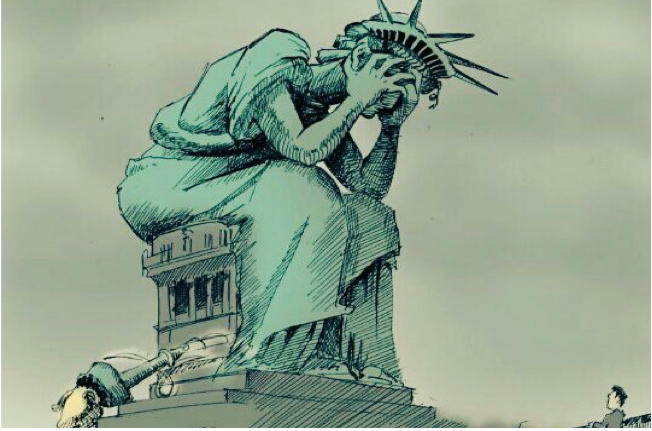
If you don’t want to get shot, tased, pepper-sprayed, struck with a baton or thrown to the ground, just do what I tell you. Don’t argue with me, don’t call me names, don’t tell me that I can’t stop you, don’t say I’m a racist pig, don’t threaten that you’ll sue me and take away my badge. Don’t scream at me that you pay my salary, and don’t even think of aggressively walking towards me.”—Officer with the Los Angeles Police Department

Americans aren’t dying at the hands of police because of racism.

For that matter, George Floyd didn’t die because he was black and the cop who killed him is white.

Floyd, who died after a Minneapolis police officer knelt on his neck for more than nine minutes, died because America is being overrun with militarized cops—vigilantes with a badge—who have almost absolute discretion to decide who is a threat, what constitutes resistance, and how harshly they can deal with the citizens they were appointed to “serve and protect.”

These warrior cops may get paid by the citizenry, but they don’t work for us and they certainly aren’t operating within the limits of the U.S. Constitution. As retired Philadelphia police captain Ray Lewis warns, “The system is corrupt. Police really are oppressing not only the black community, but also the whites. They’re an oppressive organization now controlled by the one percent of corporate America. Corporate America is using police forces as their mercenaries.”

Now, not all cops are guns for hire, trained to act as judge, jury and executioner in their interactions with the populace.

However, the unfortunate reality we must come to terms with is that the good cops—the ones who take seriously their oath of office to serve and protect their fellow citizens, uphold the Constitution, and maintain the peace—are increasingly being outnumbered by those who believe the lives (and rights) of police should be valued more than citizens.

It doesn’t matter where you live—big city or small town—it’s the same scenario being played out over and over again in which government agents, hyped up on their own authority and the power of their uniform, ride roughshod over the rights of the citizenry.

Indeed, if you ask police and their enablers what Americans should do to stay alive during encounters with law enforcement, they will tell you to comply, cooperate, obey, not resist, not argue, not make threatening gestures or statements, avoid sudden movements, and submit to a search of their person and belongings during encounters with the police.

In other words, it doesn’t matter if you’re in the right, it doesn’t matter if a cop is in the wrong, it doesn’t matter if you’re being treated with less than the respect you deserve: if you want to emerge from a police encounter with your life and body intact, then you’d better comply, submit, obey orders, respect authority and generally do whatever a cop tells you to do.

In this way, the old police motto to “protect and serve” has become “comply or die.”

This is the unfortunate, misguided, perverse message that has been beaten, shot, tasered and slammed into our collective consciousness over the past few decades, and it has taken root.

This is how we have gone from a nation of laws—where the least among us had just as much right to be treated with dignity and respect as the next person (in principle, at least)—to a nation of law enforcers (revenue collectors with weapons) who treat “we the people” like suspects and criminals.

As a result, Americans as young as 4 years old are being leg shackledhandcuffedtasered and held at gun point for not being quiet, not being orderly and just being childlike—i.e., not being compliant enough.

Americans as old as 95 are being beaten, shot and killed for questioning an order, hesitating in the face of a directive, and mistaking a policeman crashing through their door for a criminal breaking into their home—i.e., not being submissive enough.

And Americans of every age and skin color are continuing to die at the hands of a government that sees itself as judge, jury and executioner over a populace that have been pre-judged and found guilty, stripped of their rights, and left to suffer at the hands of government agents trained to respond with the utmost degree of violence.

At a time when growing numbers of unarmed people have been shot and killed for just standing a certain way, or moving a certain way, or holding something—anything—that police could misinterpret to be a gun, or igniting some trigger-centric fear in a police officer’s mind that has nothing to do with an actual threat to their safety, even the most benign encounters with police can have fatal consequences.

The problem, as one reporter rightly concluded, is “not that life has gotten that much more dangerous, it’s that authorities have chosen to respond to even innocent situations as if they were in a warzone.”

Warrior cops—trained in the worst case scenario and thus ready to shoot first and ask questions later—are definitely not making us or themselves any safer.

Worse, militarized police increasingly pose a risk to anyone undergoing a mental health crisis or with special needs whose disabilities may not be immediately apparent or require more finesse than the typical freeze-or-I’ll-shoot tactics employed by America’s police forces. Indeed, disabled individuals make up a third to half of all people killed by law enforcement officers. (People of color are three times more likely to be killed by police than their white counterparts.)

If you’re black and disabled, you’re even more vulnerable.

Specifically, what we’re dealing with today is a skewed shoot-to-kill mindset in which police, trained to view themselves as warriors or soldiers in a war, whether against drugs, or terror, or crime, must “get” the bad guys—i.e., anyone who is a potential target—before the bad guys get them.

This nationwide epidemic of court-sanctioned police violence carried out with impunity against individuals posing little or no real threat has all but guaranteed that unarmed Americans will keep dying at the hands of militarized police.

Consider just some of the scenarios in which unarmed Americans have been shot and killed by police:

Killed for taking public transit. Oscar Grant, traveling home on a train packed with New Year’s Eve revelers, was pulled off the train while police investigated reports of fighting, shoved against a wall, punched in the head, kneed in the face, then shot and killed by police while lying face down on a train platform.

Killed for standing in a “shooting stance.” In California, police opened fire on and killed a mentally challenged—unarmed—black man within minutes of arriving on the scene, allegedly because he removed a vape smoking device from his pocket and took a “shooting stance.”

Killed for holding a cell phone. Police in Arizona shot a man who was running away from U.S. Marshals after he refused to drop an object that turned out to be a cellphone.

Killed for displaying air fresheners from a rearview mirror. Daunte Wright was shot and killed during a traffic stop over an expired registration and a state law prohibiting motorists from hanging air fresheners and other items from their rearview mirrors. Police claimed to have mistakenly used a gun instead of a Taser.

Killed for behaving oddly and holding a baseball bat. Responding to a domestic disturbance call, Chicago police shot and killed 19-year-old college student Quintonio LeGrier who had reportedly been experiencing mental health problems and was carrying a baseball bat around the apartment where he and his father lived.

Killed for opening the front door. Bettie Jones, who lived on the floor below LeGrier, was also fatally shot—this time, accidentally—when she attempted to open the front door for police.

Killed for being a child in a car pursued by police. Jeremy David Mardis, six years old and autistic, died after being shot multiple times by Louisiana police in the head and torso. Police opened fire on the car—driven by Jeremy’s father, Chris Few, who was also shot—and then allegedly lied, claiming that they were attempting to deliver an outstanding warrant, that Few resisted arrest, that he shot at police (no gun was found), and that he tried to ram his car into a police cruiser. Body camera footage refuted the police’s claims.

Killed for approaching police with a metal spoon. In Alabama, police shot and killed a 50-year-old man who reportedly charged a police officer while holding “a large metal spoon in a threatening manner.”

Killed for holding a tree branch. Georgia police shot and killed a 47-year-old man wearing only shorts and tennis shoes who, when first encountered, was sitting in the woods against a tree, only to start running towards police holding a stick in an “aggressive manner.

Killed for crawling around naked. Atlanta police shot and killed an unarmed man who was reported to have been “acting deranged, knocking on doors, crawling around on the ground naked.” Police fired two shots at the man after he reportedly starting running towards them.

Killed for hunching over. Responding to a domestic trouble call, multiple officers with the Baltimore County police forced their way inside a home where they proceeded to open fire on an unarmed 41-year-old man who was hunched over in a defensive posture. The man was killed in front of his two young daughters and their mother.

Killed because a police officer accidentally pulled out his gun instead of his taser. An Oklahoma man suspected of trying to sell an illegal handgun was shot and killed after a 73-year-old reserve deputy inadvertently fired his gun instead of his taser. “Oh! I shot him! I’m sorry!” the deputy cried out.

Killed for wearing dark pants and a basketball jersey. Donnell Thompson, a mentally disabled 27-year-old described as gentle and shy, was shot and killed after police—searching for a carjacking suspect reportedly wearing similar clothing—encountered him lying motionless in a neighborhood yard. Police “only” opened fire with an M4 rifle after Thompson first failed to respond to their flash bang grenades and then started running after being hit by foam bullets.

Killed for telling police you lawfully own a firearm. Philando Castile was shot and killed during a routine traffic stop allegedly over a broken tail light. As he was reaching for his license and registration, Castile explained to police that he had a  conceal-and-carry permit. That’s all it took for police to shoot Castile four times in the presence of his girlfriend and her 4-year-old daughter.

Killed for leaving anywhere at all when a police officer pulls up. Deravis Caine Rogers was killed after starting to drive away from an apartment complex right around the same time as a police officer pulled up. Despite the fact that the police officer had no reason to believe Rogers was a threat or was suspected of any illegal activity, the officer fired into Rogers’ passenger side window.

Killed for driving while deaf. In North Carolina, a state trooper shot and killed 29-year-old Daniel K. Harris—who was deaf—after Harris initially failed to pull over during a traffic stop.

Killed for shopping at Walmart. John Crawford III was shot and killed by police responding to reports of an armed man in an Ohio Walmart. Crawford, shopping and talking on his phone, had been holding an unpackaged pellet gun that had been sitting on a store shelf.

Killed for being homeless. Los Angeles police shot an unarmed homeless man after he failed to stop riding his bicycle and then proceeded to run from police.

Killed for brandishing a shoehorn. John Wrana, a 95-year-old World War II veteran, lived in an assisted living center, used a walker to get around, and was shot and killed by police who mistook the shoehorn in his hand for a 2-foot-long machete and fired multiple beanbag rounds from a shotgun at close range.

Killed for playing in a park. Tamir Rice was shot and killed in an Ohio park when a police officer mistook the 12-year-old’s toy airsoft pistol for a real gun.

Killed for having your car break down on the road. Terence Crutcher, unarmed and black, was shot and killed by Oklahoma police after his car broke down on the side of the road. Crutcher was shot in the back while walking towards his car with his hands up.

Killed for being in your own apartment. Botham Jean was shot and killed when a police officer entered Jean’s unlocked apartment, mistaking it for her own and mistaking Jean for a burglar.

Killed for staying up late. Atatiana Jefferson, up late playing video games with her 8-year-old nephew, was shot and killed after neighbors who were concerned about that the lights were on in the house asked police to do a wellness check.

Killed for holding a garden hose. California police were ordered to pay $6.5 million after they opened fire on a man holding a garden hose, believing it to be a gun. Douglas Zerby was shot 12 times and pronounced dead on the scene.

This is what constitutes “law and order” in the American police state.

Making matters worse, when these officers, who have long since ceased to be peace officers, violate their oaths by bullying, beating, tasering, shooting and killing their employers—the taxpayers to whom they owe their allegiance—they are rarely given more than a slap on the hands before resuming their patrols.

This lawlessness on the part of law enforcement, an unmistakable characteristic of a police state, is made possible in large part by police unions which routinely oppose civilian review boards and resist the placement of names and badge numbers on officer uniforms; police agencies that abide by the Blue Code of Silence, the quiet understanding among police that they should not implicate their colleagues for their crimes and misconduct; prosecutors who treat police offenses with greater leniency than civilian offenses; courts that sanction police wrongdoing in the name of security; and legislatures that enhance the power, reach and arsenal of the police, and a citizenry that fails to hold its government accountable to the rule of law.

Indeed, not only are cops protected from most charges of wrongdoing—whether it’s shooting unarmed citizens (including children and old people), raping and abusing young women, falsifying police reports, trafficking drugs, or soliciting sex with minors—but even on the rare occasions when they are fired for misconduct, it’s only a matter of time before they get re-hired again.

Much of the “credit” for shielding these rogue cops goes to influential police unions and laws providing for qualified immunity, police contracts that “provide a shield of protection to officers accused of misdeeds and erect barriers to residents complaining of abuse,” state and federal laws that allow police to walk away without paying a dime for their wrongdoing, and rampant cronyism among government bureaucrats.

It’s happening all across the country.

This is how perverse justice in America has become.

If you’re starting to feel somewhat overwhelmed, intimidated and fearful for your life and your property, you should be, because as I point out in my book Battlefield America: The War on the American People, the only truly compliant, submissive and obedient citizen in a police state is a dead one.

WC: 2568

ABOUT JOHN W. WHITEHEAD

Constitutional attorney and author John W. Whitehead is founder and president The Rutherford Institute. His books Battlefield America: The War on the American People and A Government of Wolves: The Emerging American Police State are available at www.amazon.com. He can be contacted at johnw@rutherford.org. Nisha Whitehead is the Executive Director of The Rutherford Institute. Information about The Rutherford Institute is available at www.rutherford.org.

Publication Guidelines / Reprint Permission

John W. Whitehead’s weekly commentaries are available for publication to newspapers and web publications at no charge. Please contact staff@rutherford.org to obtain reprint permission.
“We are fast approaching the stage of the ultimate inversion: the stage where the government is free to do anything it pleases, while the citizens may act only by permission; which is the stage of the darkest periods of human history, the stage of rule by brute force.” — Ayn Rand

Rule by brute force.

That’s about as good a description as you’ll find for the sorry state of our nation.

SWAT teams crashing through doors. Militarized police shooting unarmed citizens. Traffic cops tasering old men and pregnant women for not complying fast enough with an order. Resource officers shackling children for acting like children. Homeowners finding their homes under siege by police out to confiscate lawfully-owned guns. Drivers having their cash seized under the pretext that they might have done something wrong.

The list of abuses being perpetrated against the American people by their government is growing rapidly.

We are approaching critical mass.

The groundwork has been laid for a new kind of government where it won’t matter if you’re innocent or guilty, whether you’re a threat to the nation, or even if you’re a citizen. What will matter is what the government—or whoever happens to be calling the shots at the time—thinks. And if the powers-that-be think you’re a threat to the nation and should be locked up, then you’ll be locked up with no access to the protections our Constitution provides.

In effect, you will disappear.

Our freedoms are already being made to disappear.

We have seen this come to pass under past presidents with their use of executive orders, decrees, memorandums, proclamations, national security directives and legislative signing statements.

President Biden’s long list of executive orders, executive actions, proclamations and directives is just more of the same: rule by fiat.

Now the Biden Administration is setting its sights on gun control.

Mark my words: gun control legislation, especially in the form of red flag gun laws, which allow the police to remove guns from people “suspected” of being threats, will become yet another means by which to subvert the Constitution and sabotage the rights of the people.

These laws, growing in popularity as a legislative means by which to seize guns from individuals viewed as a danger to themselves or others, are yet another Trojan Horse, a stealth maneuver by the police state to gain greater power over an unsuspecting and largely gullible populace.

Nineteen states and Washington DC have red flag laws on their books.

That number is growing.

As The Washington Post reports, these laws “allow a family member, roommate, beau, law enforcement officer or any type of medical professional to file a petition [with a court] asking that a person’s home be temporarily cleared of firearms. It doesn’t require a mental-health diagnosis or an arrest.

In the midst of what feels like an epidemic of mass shootings (the statistics suggest otherwise), these gun confiscation laws—extreme risk protection order (ERPO) laws—may appease the fears of those who believe that fewer guns in the hands of the general populace will make our society safer.

Of course, it doesn’t always work that way.

Anything—knives, vehicles, planes, pressure cookers—can become a weapon when wielded with deadly intentions.

With these red flag gun laws, the stated intention is to disarm individuals who are potential threats… to “stop dangerous people before they act.”

While in theory it appears perfectly reasonable to want to disarm individuals who are clearly suicidal and/or pose an “immediate danger” to themselves or others, where the problem arises is when you put the power to determine who is a potential danger in the hands of government agencies, the courts and the police.

We’ve been down this road before.

Remember, this is the same government that uses the words “anti-government,” “extremist” and “terrorist” interchangeably.

This is the same government whose agents are spinning a sticky spider-web of threat assessments, behavioral sensing warnings, flagged “words,” and “suspicious” activity reports using automated eyes and ears, social media, behavior sensing software, and citizen spies to identify potential threats.

This is the same government that keeps re-upping the National Defense Authorization Act (NDAA), which allows the military to detain American citizens with no access to friends, family or the courts if the government believes them to be a threat.

This is the same government that has a growing list—shared with fusion centers and law enforcement agencies—of ideologies, behaviors, affiliations and other characteristics that could flag someone as suspicious and result in their being labeled potential enemies of the state.

For instance, if you believe in and exercise your rights under the Constitution (namely, your right to speak freely, worship freely, associate with like-minded individuals who share your political views, criticize the government, own a weapon, demand a warrant before being questioned or searched, or any other activity viewed as potentially anti-government, racist, bigoted, anarchic or sovereign), you could be at the top of the government’s terrorism watch list.

Moreover, as a New York Times editorial warns, you may be an anti-government extremist (a.k.a. domestic terrorist) in the eyes of the police if you are afraid that the government is plotting to confiscate your firearms, if you believe the economy is about to collapse and the government will soon declare martial law, or if you display an unusual number of political and/or ideological bumper stickers on your car.

Let that sink in a moment.

Now consider the ramifications of giving police that kind of authority: to preemptively raid homes in order to neutralize a potential threat.

It’s a powder keg waiting for a lit match.

Under these red flag laws, what happened to Duncan Lemp—who was gunned down in his bedroom during an early morning, no-knock SWAT team raid on his family’s home—could very well happen to more people.

At 4:30 a.m. on March 12, 2020, in the midst of a COVID-19 pandemic that had most of the country under a partial lockdown and sheltering at home, a masked SWAT team—deployed to execute a “high risk” search warrant for unauthorized firearms—stormed the suburban house where 21-year-old Duncan, a software engineer and Second Amendment advocate, lived with his parents and 19-year-old brother.

The entire household, including Lemp and his girlfriend, was reportedly asleep when the SWAT team directed flash bang grenades and gunfire through Lemp’s bedroom window.

Lemp was killed and his girlfriend injured.

No one in the house that morning, including Lemp, had a criminal record.

No one in the house that morning, including Lemp, was considered an “imminent threat” to law enforcement or the public, at least not according to the search warrant.

So what was so urgent that militarized police felt compelled to employ battlefield tactics in the pre-dawn hours of a day when most people are asleep in bed, not to mention stuck at home as part of a nationwide lockdown?

According to police, they were tipped off that Lemp was in possession of “firearms.”

Thus, rather than approaching the house by the front door at a reasonable hour in order to investigate this complaint—which is what the Fourth Amendment requires—police instead strapped on their guns, loaded up their flash bang grenades and acted like battle-crazed warriors.

This is the blowback from all that military weaponry flowing to domestic police departments.

This is what happens when you use SWAT teams to carry out routine search warrants.

This is what happens when you adopt red flag gun laws, which Maryland did in 2018, painting anyone who might be in possession of a gun—legal or otherwise—as a threat that must be neutralized.

Therein lies the danger of these red flag laws, specifically, and pre-crime laws such as these generally where the burden of proof is reversed and you are guilty before you are given any chance to prove you are innocent.

Red flag gun laws merely push us that much closer towards a suspect society where everyone is potentially guilty of some crime or another and must be preemptively rendered harmless.

Where many Americans go wrong is in naively assuming that you have to be doing something illegal or harmful in order to be flagged and targeted for some form of intervention or detention.

In fact, U.S. police agencies have been working to identify and manage potential extremist “threats,” violent or otherwise, before they can become actual threats for some time now.

All you need to do these days to end up on a government watch list or be subjected to heightened scrutiny is use certain trigger words (like cloud, pork and pirates), surf the internet, communicate using a cell phone, limp or stutterdrive a car, stay at a hotel, attend a political rally, express yourself on social mediaappear mentally ill, serve in the militarydisagree with a law enforcement officialcall in sick to work, purchase materials at a hardware store, take flying or boating lessons, appear suspicious, appear confused or nervous, fidget or whistle or smell bad, be seen in public waving a toy gun or anything remotely resembling a gun (such as a water nozzle or a remote control or a walking cane), stare at a police officer, question government authority, appear to be pro-gun or pro-freedom, or generally live in the United States.

Be warned: once you get on such a government watch list—whether it’s a terrorist watch list, a mental health watch list, a dissident watch list, or a red flag gun watch list—there’s no clear-cut way to get off, whether or not you should actually be on there.

You will be tracked wherever you go.

You will be flagged as a potential threat and dealt with accordingly.

This is pre-crime on an ideological scale and it’s been a long time coming.

The government has been building its pre-crime, surveillance network in concert with fusion centers (of which there are 78 nationwide, with partners in the private sector and globally), data collection agencies, behavioral scientists, corporations, social media, and community organizers and by relying on cutting-edge technology for surveillance, facial recognition, predictive policing, biometrics, and behavioral epigenetics (in which life experiences alter one’s genetic makeup).

To that noxious mix, add in a proposal introduced under the Trump Administration and being considered by Biden for a new government agency HARPA (a healthcare counterpart to the Pentagon’s research and development arm DARPA) that will take the lead in identifying and targeting “signs” of mental illness or violent inclinations among the populace by using artificial intelligence to collect data from Apple Watches, Fitbits, Amazon Echo and Google Home.

It’s the American police state’s take on the dystopian terrors foreshadowed by George Orwell, Aldous Huxley and Phillip K. Dick all rolled up into one oppressive pre-crime and pre-thought crime package.

If you’re not scared yet, you should be.

Connect the dots.

Start with the powers amassed by the government under the USA Patriot Act, note the government’s ever-broadening definition of what it considers to be an “extremist,” then add in the government’s detention powers under NDAA, the National Security Agency’s far-reaching surveillance networks, and fusion centers that collect and share surveillance data between local, state and federal police agencies.

To that, add tens of thousands of armed, surveillance drones that will soon blanket American skies, facial recognition technology that will identify and track you wherever you go and whatever you do. And then to complete the picture, toss in the real-time crime centers being deployed in cities across the country, which will be attempting to “predict” crimes and identify criminals before they happen based on widespread surveillance, complex mathematical algorithms and prognostication programs.

Hopefully you’re starting to understand how easy we’ve made it for the government to identify, label, target, defuse and detain anyone it views as a potential threat for a variety of reasons that run the gamut from mental illness to having a military background to challenging its authority to just being on the government’s list of persona non grata. Finally, add in the local police agencies and SWAT teams that are being “gifted” military-grade weaponry and equipment designed for the battlefield and trained in the tactics of war.

It all adds up to a terrifying package of brute force coupled with invasive technology and totalitarian tactics.

This brings me back to those red flag gun laws.

In the short term, these gun confiscation laws may serve to temporarily delay or discourage those wishing to inflict violence on others, but it will not resolve whatever madness or hate or instability therein that causes someone to pull a trigger or launch a bomb or unleash violence on another.

Indeed, those same individuals sick enough to walk into an elementary school or a movie theater and open fire using a gun can and do wreak just as much havoc with homemade bombs made out of pressure cookers and a handful of knives.

Nor will these laws save us from government-instigated and directed violence at the hands of the militarized police state or the blowback from the war-drenched, violence-imbued, profit-driven military industrial complex, both of which remain largely overlooked and underestimated pieces of the discussion on gun violence in America.

As I make clear in my book Battlefield America: The War on the American People, in the long term, all these gun confiscation laws will do is ensure that when the police state finally cracks down, “we the people” are defenseless in the face of the government’s arsenal of weapons.

No matter how well-meaning the politicians make these encroachments on our rights appear, in the right (or wrong) hands, benevolent plans can easily be put to malevolent purposes. In this way, even the most well-intentioned government law or program can be—and has been—perverted, corrupted and used to advance illegitimate purposes once profit and power are added to the equation.

The war on terror, the war on drugs, the war on illegal immigration, asset forfeiture schemes, road safety schemes, school safety schemes, eminent domain: all of these programs started out as legitimate responses to pressing concerns and have since become weapons of compliance and control in the police state’s hands.

Red flag laws and gun control legislation are no less a threat to our freedoms.

Source: https://bit.ly/2OIpk0Q

ABOUT JOHN W. WHITEHEAD

Constitutional attorney and author John W. Whitehead is founder and president The Rutherford Institute. His books Battlefield America: The War on the American People and A Government of Wolves: The Emerging American Police State are available at www.amazon.com. He can be contacted at johnw@rutherford.org. Nisha Whitehead is the Executive Director of The Rutherford Institute. Information about The Rutherford Institute is available at www.rutherford.org.

Publication Guidelines / Reprint Permission

John W. Whitehead’s weekly commentaries are available for publication to newspapers and web publications at no charge. Please contact staff@rutherford.org to obtain reprint permission.
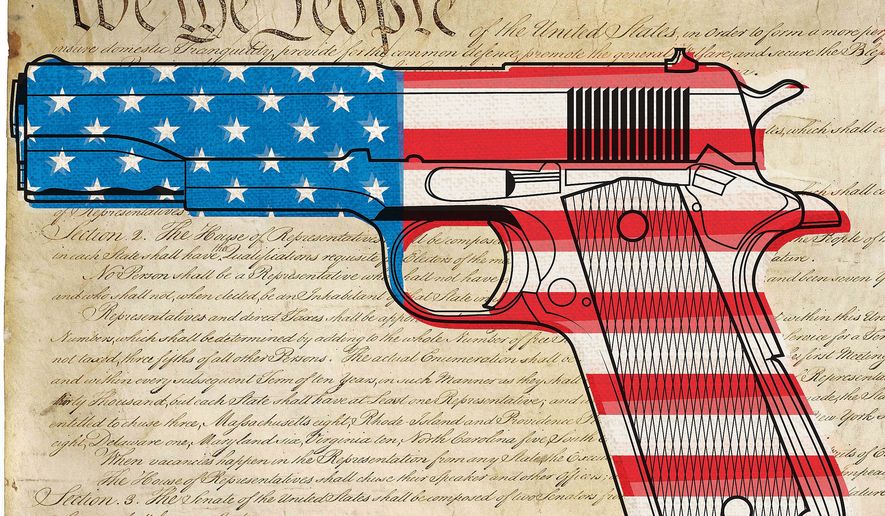
“The remedy is worse than the disease.”—Francis Bacon

One way or another, the majority of Americans will survive COVID-19.

It remains to be seen, however, whether our freedoms will survive the tyranny of the government’s heavy-handed response to the COVID-19 pandemic.

Indeed, now that the government has gotten a taste for flexing its police state powers by way of a bevy of lockdowns, mandates, restrictions, contact tracing programs, heightened surveillance, censorship, overcriminalization, etc., we may all be long-haulers, suffering under the weight of long-term COVID-19 afflictions.

Instead of dealing with the headaches, fatigue and neurological aftereffects of the virus, however, “we the people” may well find ourselves burdened with a Nanny State inclined to use its draconian pandemic powers to protect us from ourselves.

Therein lies the danger of the government’s growing addiction to power.

What started out a year ago as an apparent effort to prevent a novel coronavirus from sickening the nation (and the world) has become yet another means by which world governments (including our own) can expand their powers, abuse their authority, and further oppress their constituents.

Until recently, the police state had been more circumspect in its power grabs, but this latest state of emergency has brought the beast out of the shadows.

It’s a given that you can always count on the government to take advantage of a crisis, legitimate or manufactured. Emboldened by the citizenry’s inattention and willingness to tolerate its abuses, the government has weaponized one national crisis after another in order to expand its powers.

The war on terror, the war on drugs, the war on illegal immigration, asset forfeiture schemes, road safety schemes, school safety schemes, eminent domain: all of these programs started out as legitimate responses to pressing concerns and have since become weapons of compliance and control in the police state’s hands.

It doesn’t even matter what the nature of the crisis might be—civil unrest, the national emergencies, “unforeseen economic collapse, loss of functioning political and legal order, purposeful domestic resistance or insurgency, pervasive public health emergencies, and catastrophic natural and human disasters”—as long as it allows the government to justify all manner of government tyranny in the name of so-called national security.

This coronavirus pandemic has been no exception.

Not only have the federal and state governments unraveled the constitutional fabric of the nation with lockdown mandates that sent the economy into a tailspin and wrought havoc with our liberties, but they have almost persuaded the citizenry to depend on the government for financial handouts, medical intervention, protection and sustenance.

This past year under lockdown was a lesson in many things, but most of all, it was a lesson in how to indoctrinate a populace to love and obey Big Brother.

What started off as an experiment in social distancing in order to flatten the curve of this virus, and not overwhelm the nation’s hospitals or expose the most vulnerable to unavoidable loss of life scenarios quickly became strongly worded suggestions for citizens to voluntarily stay at home and strong-armed house arrest orders with penalties in place for non-compliance.

Every day brought a drastic new set of restrictions by government bodies (most have been delivered by way of executive orders) at the local, state and federal level that were eager to flex their muscles for the so-called “good” of the populace.

There was talk of mass testing for COVID-19 antibodies, screening checkpoints, mass surveillance in order to carry out contact tracing, immunity passports to allow those who have recovered from the virus to move around more freely, snitch tip lines for reporting “rule breakers” to the authorities, and heavy fines and jail time for those who dare to venture out without a mask, congregate in worship without the government’s blessing, or re-open their businesses without the government’s say-so.

To some, these may seem like small, necessary steps in the war against the COVID-19 virus, but they’re only necessary to the Deep State in its efforts to further undermine the Constitution, extend its control over the populace, and feed its insatiable appetite for ever-greater powers.

After all, whatever dangerous practices you allow the government to carry out now—whether it’s in the name of national security or protecting America’s borders or making America healthy again—rest assured, these same practices can and will be used against you when the government decides to set its sights on you.

The war on drugs turned out to be a war on the American people, waged with SWAT teams and militarized police. The war on terror turned out to be a war on the American people, waged with warrantless surveillance and indefinite detention. The war on immigration turned out to be a war on the American people, waged with roving government agents demanding “papers, please.”

This war on COVID-19 could usher in yet another war on the American people, waged with all of the surveillance weaponry at the government’s disposal: thermal imaging cameras, drones, contact tracing, biometric databases, etc.

Unless we find some way to rein in the government’s power grabs, the fall-out will be epic.

Everything I have warned about for years—government overreach, invasive surveillance, martial law, abuse of powers, militarized police, weaponized technology used to track and control the citizenry, and so on—has coalesced into this present moment.

The government’s shameless exploitation of past national emergencies for its own nefarious purposes pales in comparison to what is presently unfolding.

It’s downright Machiavellian.

Deploying the same strategy it used with 9/11 to acquire greater powers under the USA Patriot Act, the police state—a.k.a. the shadow government, a.k.a. the Deep State—has been anticipating this moment for years, quietly assembling a wish list of lockdown powers that could be trotted out and approved at a moment’s notice.

It should surprise no one, then, that the Trump Administration asked Congress to allow it to suspend parts of the Constitution whenever it deems it necessary during this coronavirus pandemic and “other” emergencies. It’s that “other” emergencies part that should particularly give you pause, if not spur you to immediate action (by action, I mean a loud and vocal, apolitical, nonpartisan outcry and sustained, apolitical, nonpartisan resistance).

In fact, the Department of Justice (DOJ) started to quietly trot out and test a long laundry list of terrifying powers that override the Constitution.

We’re talking about lockdown powers (at both the federal and state level): the ability to suspend the Constitution, indefinitely detain American citizens, bypass the courts, quarantine whole communities or segments of the population, override the First Amendment by outlawing religious gatherings and assemblies of more than a few people, shut down entire industries and manipulate the economy, muzzle dissidents, “stop and seize any plane, train or automobile to stymie the spread of contagious disease,” reshape financial markets, create a digital currency (and thus further restrict the use of cash), determine who should live or die.

These are powers the police state would desperately like to make permanent.

Don’t make the mistake of assuming that anything will change for the better under the Biden administration. That’s not how totalitarian regimes operate.

Bear in mind, however, that the powers the government officially asked Congress to recognize and authorize barely scratch the surface of the far-reaching powers the government has already unilaterally claimed for itself.

Unofficially, the police state has been riding roughshod over the rule of law for years now without any pretense of being reined in or restricted in its power grabs by Congress, the courts or the citizenry.

As David C. Unger, observes in The Emergency State: America’s Pursuit of Absolute Security at All Costs:

“For seven decades we have been yielding our most basic liberties to a secretive, unaccountable emergency state – a vast but increasingly misdirected complex of national security institutions, reflexes, and beliefs that so define our present world that we forget that there was ever a different America. … Life, liberty, and the pursuit of happiness have given way to permanent crisis management: to policing the planet and fighting preventative wars of ideological containment, usually on terrain chosen by, and favorable to, our enemies. Limited government and constitutional accountability have been shouldered aside by the kind of imperial presidency our constitutional system was explicitly designed to prevent.”

This rise of an “emergency state” that justifies all manner of government tyranny in the name of so-called national security is all happening according to schedule.

The civil unrest, the national emergencies, “unforeseen economic collapse, loss of functioning political and legal order, purposeful domestic resistance or insurgency, pervasive public health emergencies, and catastrophic natural and human disasters,” the government’s reliance on the armed forces to solve domestic political and social problems, the implicit declaration of martial law packaged as a well-meaning and overriding concern for the nation’s security: the powers-that-be have been planning and preparing for such a crisis for years now, not just with active shooter drills and lockdowns and checkpoints and heightened danger alerts, but with a sensory overload of militarized, battlefield images—in video games, in movies, on the news—that acclimate us to life in a totalitarian regime.

Whether or not this particular crisis is of the government’s own making is not the point: to those for whom power and profit are everything, the end always justifies the means.

The seeds of this present madness were sown several decades ago when George W. Bush stealthily issued two presidential directives that granted the president the power to unilaterally declare a national emergency, which is loosely defined as “any incident, regardless of location, that results in extraordinary levels of mass casualties, damage, or disruption severely affecting the U.S. population, infrastructure, environment, economy, or government functions.

Comprising the country’s Continuity of Government (COG) plan, these directives, which do not need congressional approval, provide a skeletal outline of the actions the president will take in the event of a “national emergency.”

Mind you, that national emergency can take any form, can be manipulated for any purpose, and can be used to justify any end goal—all on the say so of the president.

Just what sort of actions the president will take once he declares a national emergency can barely be discerned from the barebones directives. However, one thing is clear: in the event of a national emergency, the COG directives give unchecked executive, legislative and judicial power to the executive branch and its unelected minions.

The country would then be subjected to martial law by default, and the Constitution and the Bill of Rights would be suspended.

The emergency state is now out in the open for all to see.

Unfortunately, “we the people” refuse to see what’s before us.

This is how freedom dies.

We erect our own prison walls, and as our rights dwindle away, we forge our own chains of servitude to the police state.

Be warned, however: once you surrender your freedoms to the government—no matter how compelling the reason might be for doing so—you can never get them back.

No government willingly relinquishes power. If we continue down this road, there can be no surprise about what awaits us at the end.

That said, we still have rights. Technically, at least.

We should not voluntarily relinquish every shred of our humanity, our common sense, or our freedoms to a nanny state that thinks it can do a better job of keeping us safe.

The government may act as if its police state powers trump individual liberties during this COVID-19 pandemic, but for all intents and purposes, the Constitution—especially the battered, besieged Bill of Rights—still stands in theory, if not in practice.

The decisions we make right now—about freedom, commerce, free will, how we care for the least of these in our communities, what it means to provide individuals and businesses with a safety net, how far we allow the government to go in “protecting” us against this virus, etc.—will haunt us for a long time to come.

At times like these, when emotions are heightened, fear dominates, common sense is in short supply, liberty takes a backseat to public safety, and democratic societies approach the tipping point towards mob rule, there is a tendency to cast those who exercise their individual freedoms (to freely speak, associate, assemble, protest, pursue a living, engage in commerce, etc.) as foolishly reckless, criminally selfish, outright villains or so-called “extremists.”

Sometimes that is true, but not always.

There is always a balancing test between individual freedoms and the communal good.

What we must figure out is how to strike a balance that allows us to protect those who need protecting without leaving us chained and in bondage to the police state.

Blindly following the path of least resistance—acquiescing without question to whatever the government dictates—can only lead to more misery, suffering and the erection of a totalitarian regime in which there is no balance.

Whatever we give up willingly now—whether it’s basic human decency, the ability to manage our private affairs, the right to have a say in how the government navigates this crisis, or the few rights still left to us that haven’t been disemboweled in recent years by a power-hungry police state—we won’t get back so easily once this crisis is past.

As I make clear in my book Battlefield America: The War on the American People, the government never cedes power willingly. Neither should we.

A year ago, I warned that this was a test to see whether the Constitution—and our commitment to the principles enshrined in the Bill of Rights—can survive a national crisis and true state of emergency.

Nothing has changed on that front.

James Madison, the “father” of the U.S. Constitution and the Bill of Rights and the fourth president of the United States, once advised that we should “take alarm at the first experiment upon our liberties.”

These COVID-19 restrictions are far from the first experiment on our liberties. Yet if “we the people” continue to allow the government to trample our rights in the name of so-called national security, we can be assured that things will get worse, not better.

WC: 2354

ABOUT JOHN W. WHITEHEAD

Constitutional attorney and author John W. Whitehead is founder and president The Rutherford Institute. His books Battlefield America: The War on the American People and A Government of Wolves: The Emerging American Police State are available at www.amazon.com. He can be contacted at johnw@rutherford.org. Nisha Whitehead is the Executive Director of The Rutherford Institute. Information about The Rutherford Institute is available at www.rutherford.org.

Publication Guidelines / Reprint Permission

John W. Whitehead’s weekly commentaries are available for publication to newspapers and web publications at no charge. Please contact staff@rutherford.org to obtain reprint permission.
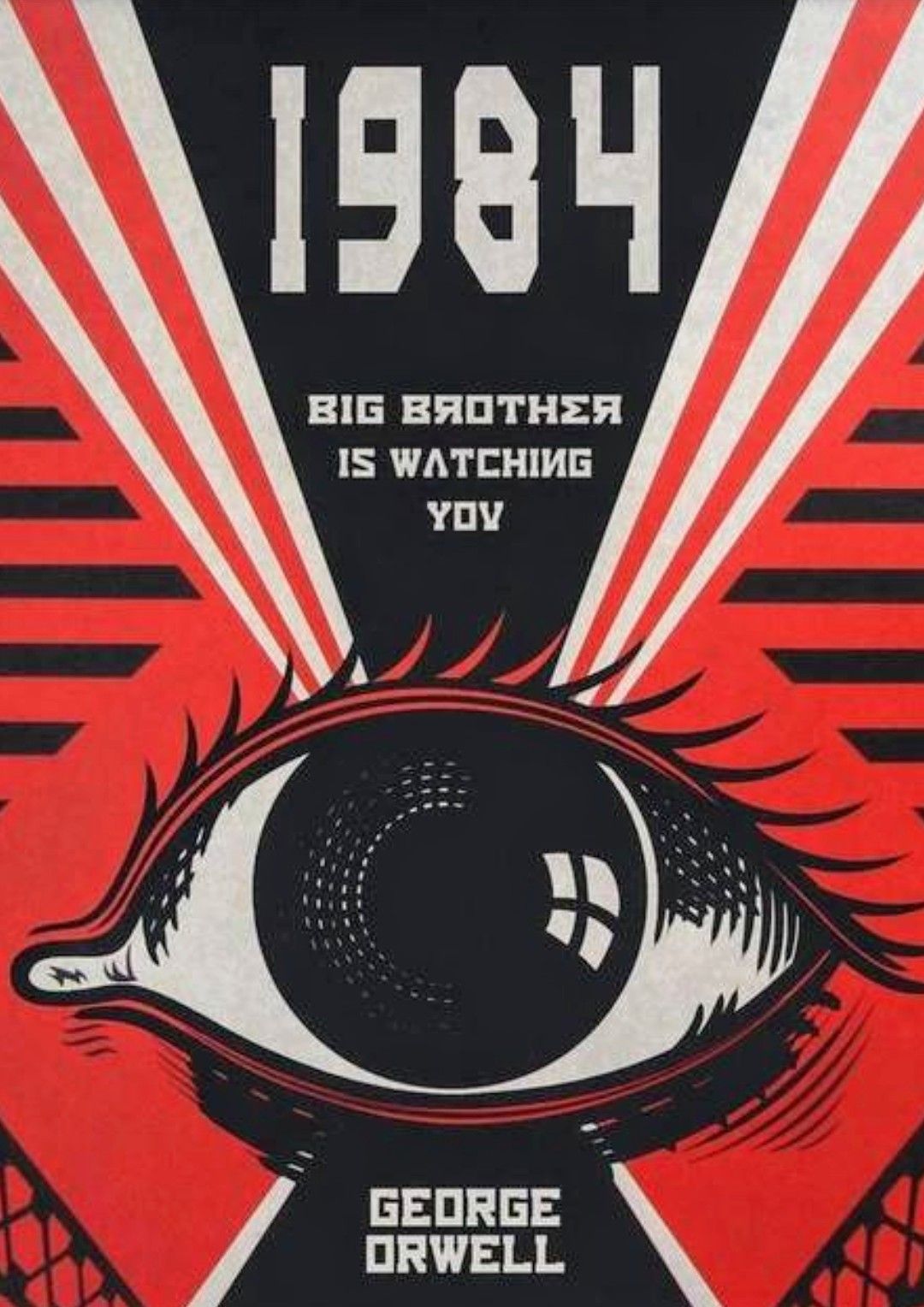
How ‘secure’ do our homes remain if police, armed with no warrant, can pound on doors at will and … forcibly enter?”—Supreme Court Justice Ruth Bader Ginsburg, the lone dissenter in Kentucky v. King

Americans are not safe in their homes.

Not anymore, at least.

This present menace comes from the government and its army of bureaucratized, corporatized, militarized mercenaries who are waging war on the last stronghold left to us as a free people: the sanctity of our homes.

The weapons of this particular war on our personal security and our freedoms include an abundance of laws that criminalize almost everything we do, a government that views our private property as its own, militarized police who have been brainwashed into believing that they operate above the law, courts that insulate police from charges of wrongdoing, legislatures that legitimize the government’s usurpations of our rights, and a populace that is so ignorant of their rights and distracted by partisan politics as to be utterly incapable of standing up to the government’s overreaches, incursions and power grabs.

This is how far the mighty have fallen.

Government agents—with or without a warrant, with or without probable cause that criminal activity is afoot, and with or without the consent of the homeowner—are now justified in mounting home invasions in order to pursue traffic violators, seize lawfully-owned weapons, carry out knock-and-talk “chats” with homeowners in the dead of night, “prevent” individuals from harming themselves, provide emergency aid, intervene in the face of imminent danger, serve as community caretakers, chase down individuals suspected of committing misdemeanor crimes, and anything else they can get away with.

This doesn’t even begin to touch on the many ways the government and its corporate partners-in-crime may be using surveillance technology—with or without the blessing of the courts—to invade one’s home: with wiretaps, thermal imaging, surveillance cameras, and other monitoring devices.

However, while the courts and legislatures have yet to fully address the implications of such virtual intrusions on our Fourth Amendment, there is no mistaking the physical intrusions by police into the privacy of one’s home: the toehold entry, the battering ram, the SWAT raid, the knock-and-talk conversation, etc.

Whether such intrusions, warranted or otherwise, are unconstitutional continues to be litigated, legislated and debated.

The spirit of the Constitution, drafted by men who chafed against the heavy-handed tyranny of an imperial ruler, would suggest that one’s home is a fortress, safe from almost every kind of intrusion. Unfortunately, a collective assault by the government’s cabal of legislators, litigators, judges and militarized police has all but succeeded in reducing that fortress—and the Fourth Amendment alongside it—to a crumbling pile of rubble.

Two cases before the U.S. Supreme Court this term, Caniglia v. Strom and Lange v. California, are particularly noteworthy.

In Caniglia v. Strompolice want to be able to carry out warrantless home invasions in order to seize lawfully-owned guns under the pretext of their so-called “community caretaking” duties. Under the “community caretaking” exception to the Fourth Amendment, police can conduct warrantless searches of vehicles relating to accident investigations and provide aid to “citizens who are ill or in distress.”

At a time when red flag gun laws are gaining traction as a legislative means by which to allow police to remove guns from people suspected of being threats, it wouldn’t take much to expand the Fourth Amendment’s “community caretaking” exception to allow police to enter a home without a warrant and seize lawfully-possessed firearms based on concerns that the guns might pose a danger.

What we do not need is yet another pretext by which government officials can violate the Fourth Amendment at will under the pretext of public health and safety.

In Lange v. Californiapolice want to be able to enter homes without warrants as long as they can claim to be in pursuit of someone they suspect may have committed a crime. Yet as Justice Neil Gorsuch points out, in an age in which everything has been criminalized, that leaves the door wide open for police to enter one’s home in pursuit of any and all misdemeanor crimes.

At issue in Lange is whether police can justify entering homes without a warrant under the “hot pursuit” exception to the Fourth Amendment.

The case arose after a California cop followed a driver, Arthur Lange, who was honking his horn while listening to music. The officer followed Lange, supposedly to cite him for violating a local noise ordinance, but didn’t actually activate the police cruiser’s emergency lights until Lange had already arrived home and entered his garage. Sticking his foot under the garage door just as it was about to close, the cop confronted Lange, smelled alcohol on his breath, ordered him to take a sobriety test, and then charged him with a DUI and a noise infraction.

Lange is just chock full of troubling indicators of a greater tyranny at work.

Overcriminalization: That you can now get pulled over and cited for honking your horn while driving and listening to music illustrates just how uptight and over-regulated life in the American police state has become.

Make-work policing: At a time when crime remains at an all-time low, it’s telling that a police officer has nothing better to do than follow a driver seemingly guilty of nothing more than enjoying loud music.

Warrantless entry: That foot in the door is a tactic that, while technically illegal, is used frequently by police attempting to finagle their way into a home and sidestep the Fourth Amendment’s warrant requirement.

The definition of reasonable: Although the Fourth Amendment prohibits warrantless and unreasonable searches and seizures of “persons, houses, papers, and effects,” where we run into real trouble is when the government starts dancing around what constitutes a “reasonable” search. Of course, that all depends on who gets to decide what is reasonable. There’s even a balancing test that weighs the intrusion on a person’s right to privacy against the government’s interests, which include public safety.

Too often, the scales weigh in the government’s favor.

End runs around the law: The courts, seemingly more concerned with marching in lockstep with the police state than upholding the rights of the people, have provided police with a long list of exceptions that have gutted the Fourth Amendment’s once-robust privacy protections.

Exceptions to the Fourth Amendment’s warrant requirement allow the police to carry out warrantless searches: if someone agrees to the search; in order to ferret out weapons or evidence during the course of an arrest; if police think someone is acting suspiciously and may be armed; during a brief investigatory stop; if a cop sees something connected to a crime in plain view; if police are in hot pursuit of a suspect who flees into a building; if they believe a vehicle has contraband; in an emergency where there may not be time to procure a warrant; and at national borders and in airports.

In other words, almost anything goes when it comes to all the ways in which the government can now invade your home and lay siege to your property.

Thus we tumble down that slippery slope which might have started out with a genuine concern for public safety and the well-being of the citizenry only to end up as a self-serving expansion of the government’s powers that makes a mockery of the Fourth Amendment while utterly disregarding the rights of “we the people.”

Frankly, it’s a wonder we have any property interests, let alone property rights, left to protect.

Think about it.

That house you live in, the car you drive, the small (or not so small) acreage of land that has been passed down through your family or that you scrimped and saved to acquire, whatever money you manage to keep in your bank account after the government and its cronies have taken their first and second and third cut…none of it is safe from the government’s greedy grasp.

At no point do you ever have any real ownership in anything other than the clothes on your back.

Everything else can be seized by the government under one pretext or another (civil asset forfeiture, unpaid taxes, eminent domain, public interest, etc.).

The American Dream has been reduced to a lease arrangement in which we are granted the privilege of endlessly paying out the nose for assets that are only ours so long as it suits the government’s purposes.

And when it doesn’t suit the government’s purposes? Watch out.

This is not a government that respects the rights of its citizenry or the law. Rather, this is a government that sells its citizens to the highest bidder and speaks to them in a language of force.

Under such a fascist regime, the Fifth Amendment to the U.S. Constitution, which declares that no person shall “be deprived of life, liberty, or property, without due process of law; nor shall private property be taken for public use, without just compensation,” has become yet another broken shield, incapable of rendering any protection against corporate greed while allowing the government to justify all manner of “takings” in the name of the public good.

What we are grappling with is a government that has forfeited its purpose for existing.

Philosophers dating back to John Locke have long asserted that the true purpose of government is to protect our rights, not just our collective rights as a people, but our individual rights, specifically our rights to life, liberty and property. As James Madison concluded in the Federalist Papers, “Government is instituted no less for the protection of the property than of the persons of individuals.”

What we have been saddled with is a government that has not only lost sight of its primary reason for being—to protect the people’s rights—but has also re-written the script and cast itself as an imperial overlord with all of the neo-feudal authority such a position entails.

Let me put it another way.

If the government can tell you what you can and cannot do within the privacy of your home, whether it relates to what you eat, what you smoke or whom you love, you no longer have any rights whatsoever within your home.

If government officials can fine and arrest you for growing vegetables in your front yard, gathering with friends to worship in your living room, installing solar panels on your roof, and raising chickens in your backyard, you’re no longer the owner of your property.

If school officials can punish your children for what they do or say while at home or in your care, your children are not your own—they are the property of the state.

If government agents can invade your home, break down your doors, kill your dog, damage your furnishings and terrorize your family, your property is no longer private and secure—it belongs to the government.

If police can forcefully draw your blood, strip search you, probe you intimately, or force you to submit to vaccinations or lose your so-called “privileges” to move about and interact freely with your fellow citizens, your body is no longer your own—it is the government’s to do with as it deems best.

Likewise, if the government can lockdown whole communities and by extension the nation, quarantine whole segments of the population, outlaw religious gatherings and assemblies of more than a few people, shut down entire industries and manipulate the economy, muzzle dissidents, and “stop and seize any plane, train or automobile to stymie the spread of contagious disease,” then you no longer have a property interest as master of your own life, either.

This is what a world without the Fourth Amendment looks like, where the lines between private and public property have been so blurred that private property is reduced to little more than something the government can use to control, manipulate and harass you to suit its own purposes, and you the homeowner and citizen have been reduced to little more than a tenant or serf in bondage to an inflexible landlord.

If we continue down this road, the analogy shifts from property owners to prisoners in a government-run prison with local and federal police acting as prison guards. In such an environment, you have no rights.

So what can we do, short of scrapping this whole experiment in self-government and starting over?

At a minimum, we need to rebuild the foundations of our freedoms.

What this will mean is adopting an apolitical, nonpartisan, zero tolerance attitude towards the government when it oversteps its bounds and infringes on our rights.

We need courts that prioritize the rights of the citizenry over the government’s insatiable hunger for power at all costs.

We need people in the government—representatives, bureaucrats, etc.—who honor the public service oath to uphold and defend the Constitution.

Most of all, we need to reclaim control over our runaway government and restore our freedoms.

After all, we are the government. As I make clear in my book Battlefield America: The War on the American People, “we the people” are supposed to be the ones calling the shots. As John Jay, the first Chief Justice of the United States, rightly observed: “No power on earth has a right to take our property from us without our consent.”

Source: https://bit.ly/384IzIp

ABOUT JOHN W. WHITEHEAD

Constitutional attorney and author John W. Whitehead is founder and president of The Rutherford Institute. His new book Battlefield America: The War on the American People  is available at www.amazon.com. Whitehead can be contacted at johnw@rutherford.org.

Publication Guidelines / Reprint Permission

John W. Whitehead’s weekly commentaries are available for publication to newspapers and web publications at no charge. Please contact staff@rutherford.org to obtain reprint permission.
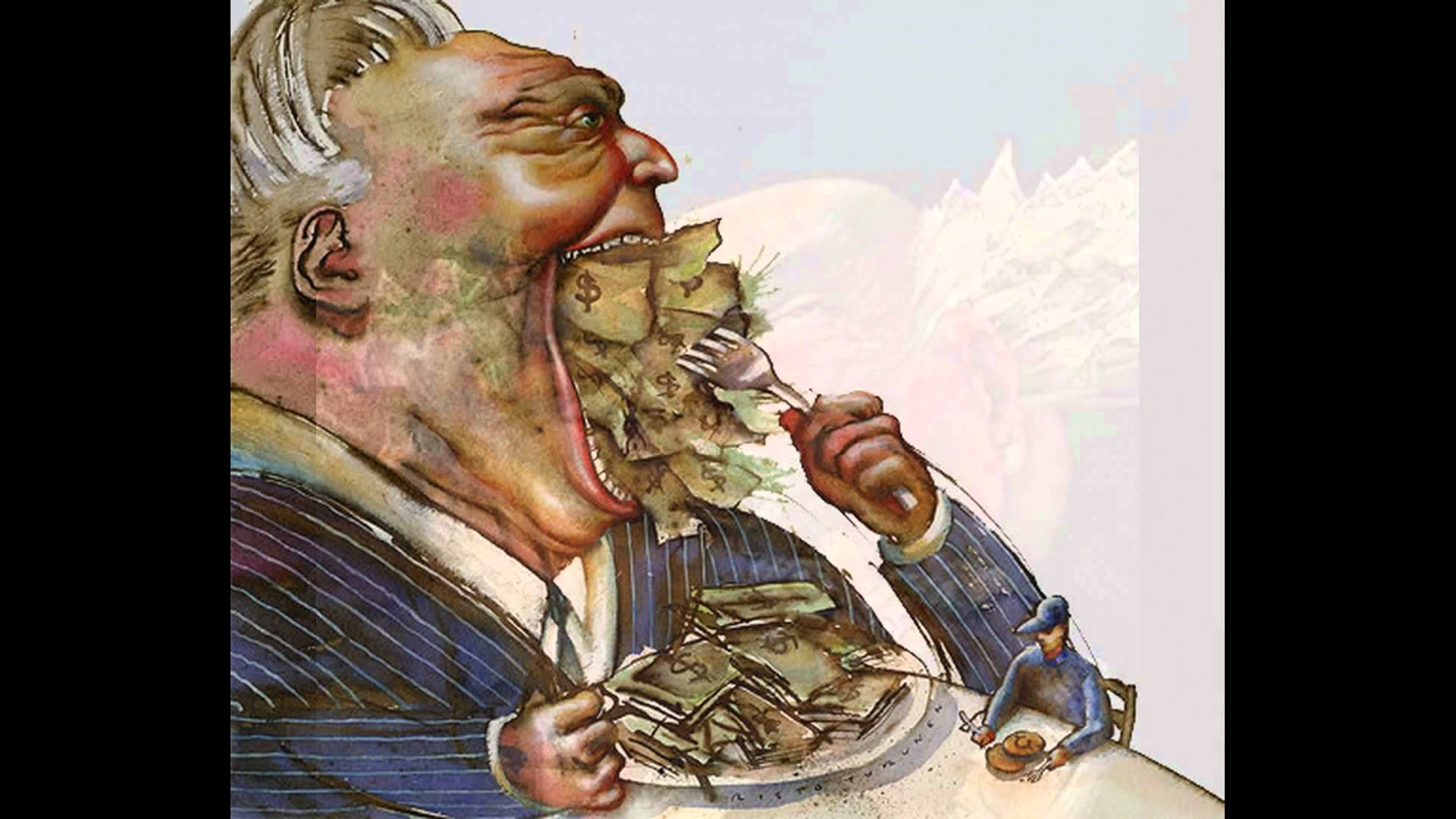
“This is an issue that all Democrats, Republicans, independents, Libertarians should be extremely concerned about, especially because we don’t have to guess about where this goes or how this ends. What characteristics are we looking for as we are building this profile of a potential extremist, what are we talking about? Religious extremists, are we talking about Christians, evangelical Christians, what is a religious extremist? Is it somebody who is pro-life? [The proposed legislation could create] a very dangerous undermining of our civil liberties, our freedoms in our Constitution, and a targeting of almost half of the country.”—Tulsi Gabbard, former Congresswoman

This is how it begins.

We are moving fast down that slippery slope to an authoritarian society in which the only opinions, ideas and speech expressed are the ones permitted by the government and its corporate cohorts.

In the wake of the Jan. 6 riots at the Capitol, “domestic terrorism” has become the new poster child for expanding the government’s powers at the expense of civil liberties.

Of course, “domestic terrorist” is just the latest bull’s eye phrase, to be used interchangeably with “anti-government,” “extremist” and “terrorist,” to describe anyone who might fall somewhere on a very broad spectrum of viewpoints that could be considered “dangerous.”

Watch and see: we are all about to become enemies of the state.

In a déjà vu mirroring of the legislative fall-out from 9/11, and the ensuing build-up of the security state, there is a growing demand in certain sectors for the government to be given expanded powers to root out “domestic” terrorism, the Constitution be damned.

If this is a test of Joe Biden’s worthiness to head up the American police state, he seems ready.

As part of his inaugural address, President Biden pledged to confront and defeat “a rise of political extremism, white supremacy, domestic terrorism.” Biden has also asked the Director of National Intelligence to work with the FBI and the Department of Homeland Security in carrying out a “comprehensive threat assessment” of domestic terrorism. And then to keep the parallels going, there is the proposed Domestic Terrorism Prevention Act of 2021, introduced after the Jan. 6 riots, which aims to equip the government with “the tools to identify, monitor and thwart” those who could become radicalized to violence.

Don’t blink or you’ll miss the sleight of hand.

This is the tricky part of the Deep State’s con game that keeps you focused on the shell game in front of you while your wallet is being picked clean by ruffians in your midst.

It follows the same pattern as every other convenient “crisis” used by the government as an excuse to expand its powers at the citizenry’s expense and at the expense of our freedoms.

As investigative journalist Glenn Greenwald warns:

“The last two weeks have ushered in a wave of new domestic police powers and rhetoric in the name of fighting ‘terrorism’ that are carbon copies of many of the worst excesses of the first War on Terror that began nearly twenty years ago. This New War on Terror—one that is domestic in name from the start and carries the explicit purpose of fighting ‘extremists’ and ‘domestic terrorists’ among American citizens on U.S. soil—presents the whole slew of historically familiar dangers when governments, exploiting media-generated fear and dangers, arm themselves with the power to control information, debate, opinion, activism and protests.”

Greenwald is referring to the USA Patriot Act, passed almost 20 years ago, which paved the way for the eradication of every vital safeguard against government overreach, corruption and abuse.

Free speech, the right to protest, the right to challenge government wrongdoing, due process, a presumption of innocence, the right to self-defense, accountability and transparency in government, privacy, press, sovereignty, assembly, bodily integrity, representative government: all of these and more have become casualties in the government’s war on the American people, a war that has grown more pronounced since Sept. 11, 2001.

Some members of Congress get it.

In a letter opposing expansion of national security powers, a handful congressional representatives urged their colleagues not to repeat the mistakes of the past:

“While many may find comfort in increased national security powers in the wake of this attack, we must emphasize that we have been here before and we have seen where that road leads. Our history is littered with examples of initiatives sold as being necessary to fight extremism that quickly devolve into tools used for the mass violation of the human and civil rights of the American people… To expand the government’s national security powers once again at the expense of the human and civil rights of the American people would only serve to further undermine our democracy, not protect it.”

Cue the Emergency State, the government’s Machiavellian version of crisis management that justifies all manner of government tyranny in the so-called name of national security.

This is the power grab hiding in plain sight, obscured by the political machinations of the self-righteous elite. This is how the government continues to exploit crises and use them as opportunities for power grabs under the guise of national security. Indeed, this is exactly how the government added red flag gun laws, precrime surveillance, fusion centers, threat assessments, mental health assessments, involuntary confinement to its arsenal of weaponized powers.

The objective is not to make America safe again. That has never been the government’s aim.

Greenwald explains:

“Why would such new terrorism laws be needed in a country that already imprisons more of its citizens than any other country in the world as the result of a very aggressive set of criminal laws? What acts should be criminalized by new ‘domestic terrorism’ laws that are not already deemed criminal? They never say, almost certainly because—just as was true of the first set of new War on Terror laws—their real aim is to criminalize that which should not be criminalized: speech, association, protests, opposition to the new ruling coalition.”

So you see, the issue is not whether Donald Trump or Roger Stone or MyPillow CEO Mike Lindell deserve to be banned from Twitter, even if they’re believed to be spouting misinformation, hateful ideas, or fomenting discontent.

Rather, we should be asking whether any corporation or government agency or entity representing a fusion of the two should have the power to muzzle, silence, censor, regulate, control and altogether eradicate so-called “dangerous” or “extremist” ideas.

This unilateral power to muzzle free speech represents a far greater danger than any so-called right- or left-wing extremist might pose.

The ramifications are so far-reaching as to render almost every American an extremist in word, deed, thought or by association.

Yet where many go wrong is in assuming that you have to be doing something illegal or challenging the government’s authority in order to be flagged as a suspicious character, labeled an enemy of the state and locked up like a dangerous criminal.

Eventually, all you will really need to do is use certain trigger words, surf the internet, communicate using a cell phone, drive a car, stay at a hotel, purchase materials at a hardware store, take flying or boating lessons, appear suspicious, question government authority, or generally live in the United States.

The groundwork has already been laid.

The trap is set.

All that is needed is the right bait.

With the help of automated eyes and ears, a growing arsenal of high-tech software, hardware and techniques, government propaganda urging Americans to turn into spies and snitches, as well as social media and behavior sensing software, government agents have been busily spinning a sticky spider-web of threat assessments, behavioral sensing warnings, flagged “words,” and “suspicious” activity reports aimed at snaring potential enemies of the state.

It’s the American police state’s take on the dystopian terrors foreshadowed by George Orwell, Aldous Huxley and Phillip K. Dick all rolled up into one oppressive pre-crime and pre-thought crime package.

What’s more, the technocrats who run the surveillance state don’t even have to break a sweat while monitoring what you say, what you read, what you write, where you go, how much you spend, whom you support, and with whom you communicate. Computers by way of AI (artificial intelligence) now do the tedious work of trolling social media, the internet, text messages and phone calls for potentially anti-government remarks, all of which is carefully recorded, documented, and stored to be used against you someday at a time and place of the government’s choosing.

For instance, police in major American cities have been using predictive policing technology that allows them to identify individuals—or groups of individuals—most likely to commit a crime in a given community. Those individuals are then put on notice that their movements and activities will be closely monitored and any criminal activity (by them or their associates) will result in harsh penalties. 

In other words, the burden of proof is reversed: you are guilty before you are given any chance to prove you are innocent.

Dig beneath the surface of this kind of surveillance/police state, however, and you will find that the real purpose of pre-crime is not safety but control.

Red flag gun laws merely push us that much closer towards a suspect society where everyone is potentially guilty of some crime or another and must be preemptively rendered harmless.

This is the same government that has a growing list—shared with fusion centers and law enforcement agencies—of ideologies, behaviors, affiliations and other characteristics that could flag someone as suspicious and result in their being labeled potential enemies of the state.

For instance, if you believe in and exercise your rights under the Constitution (namely, your right to speak freely, worship freely, associate with like-minded individuals who share your political views, criticize the government, own a weapon, demand a warrant before being questioned or searched, or any other activity viewed as potentially anti-government, racist, bigoted, anarchic or sovereign), you could be at the top of the government’s terrorism watch list.

Moreover, as a New York Times editorial warns, you may be an anti-government extremist (a.k.a. domestic terrorist) in the eyes of the police if you are afraid that the government is plotting to confiscate your firearms, if you believe the economy is about to collapse and the government will soon declare martial law, or if you display an unusual number of political and/or ideological bumper stickers on your car.

According to one FBI latest report, you might also be classified as a domestic terrorism threat if you espouse conspiracy theories, especially if you “attempt to explain events or circumstances as the result of a group of actors working in secret to benefit themselves at the expense of others” and are “usually at odds with official or prevailing explanations of events.”

Additionally, according to Michael C. McGarrity, the FBI’s assistant director of the counterterrorism division, the bureau now “classifies domestic terrorism threats into four main categories: racially motivated violent extremism, anti-government/anti-authority extremism, animal rights/environmental extremism, and abortion extremism.”

In other words, if you dare to subscribe to any views that are contrary to the government’s, you may well be suspected of being a domestic terrorist and treated accordingly.

Again, where many Americans go wrong is in naively assuming that you have to be doing something illegal or harmful in order to be flagged and targeted for some form of intervention or detention.

In fact, U.S. police agencies have been working to identify and manage potential extremist “threats,” violent or otherwise, before they can become actual threats for some time now.

In much the same way that the USA Patriot Act was used as a front to advance the surveillance state, allowing the government to establish a far-reaching domestic spying program that turned every American citizen into a criminal suspect, the government’s anti-extremism program renders otherwise lawful, nonviolent activities as potentially extremist.

In fact, all you need to do these days to end up on a government watch list or be subjected to heightened scrutiny is use certain trigger words (like cloud, pork and pirates), surf the internet, communicate using a cell phone, limp or stutterdrive a car, stay at a hotel, attend a political rally, express yourself on social mediaappear mentally ill, serve in the militarydisagree with a law enforcement officialcall in sick to work, purchase materials at a hardware store, take flying or boating lessons, appear suspicious, appear confused or nervous, fidget or whistle or smell bad, be seen in public waving a toy gun or anything remotely resembling a gun (such as a water nozzle or a remote control or a walking cane), stare at a police officer, question government authority, or appear to be pro-gun or pro-freedom.

Be warned: once you get on such a government watch list—whether it’s a terrorist watch list, a mental health watch list, a dissident watch list, or a red flag gun watch list—there’s no clear-cut way to get off, whether or not you should actually be on there.

You will be tracked wherever you go.

You will be flagged as a potential threat and dealt with accordingly.

This is pre-crime on an ideological scale and it’s been a long time coming.

The government has been building its pre-crime, surveillance network in concert with fusion centers (of which there are 78 nationwide, with partners in the corporate sector and globally), data collection agencies, behavioral scientists, corporations, social media, and community organizers and by relying on cutting-edge technology for surveillance, facial recognition, predictive policing, biometrics, and behavioral epigenetics (in which life experiences alter one’s genetic makeup).

If you’re not scared yet, you should be.

Connect the dots.

Start with the powers amassed by the government under the USA Patriot Act, note the government’s ever-broadening definition of what it considers to be an “extremist,” then add in the government’s detention powers under NDAA, the National Security Agency’s far-reaching surveillance networks, and fusion centers that collect and share surveillance data between local, state and federal police agencies.

To that, add tens of thousands of armed, surveillance drones and balloons that are beginning to blanket American skies, facial recognition technology that will identify and track you wherever you go and whatever you do. And then to complete the picture, toss in the real-time crime centers being deployed in cities across the country, which will be attempting to “predict” crimes and identify so-called criminals before they happen based on widespread surveillance, complex mathematical algorithms and prognostication programs.

Hopefully you’re starting to understand how easy we’ve made it for the government to identify, label, target, defuse and detain anyone it views as a potential threat for a variety of reasons that run the gamut from mental illness to having a military background to challenging its authority to just being on the government’s list of persona non grata.

There’s always a price to pay for standing up to the powers-that-be.

Yet as I make clear in my book Battlefield America: The War on the American People, you don’t even have to be a dissident to get flagged by the government for surveillance, censorship and detention.

All you really need to be is a citizen of the American police state.

Source: https://bit.ly/36fsBua

ABOUT JOHN W. WHITEHEAD

Constitutional attorney and author John W. Whitehead is founder and president of The Rutherford Institute. His new book Battlefield America: The War on the American People  is available at www.amazon.com. Whitehead can be contacted at johnw@rutherford.org.

Publication Guidelines / Reprint Permission

John W. Whitehead’s weekly commentaries are available for publication to newspapers and web publications at no charge. Please contact staff@rutherford.org to obtain reprint permission.