Posts Tagged ‘police state’

“If freedom of speech is taken away, then dumb and silent we may be led, like sheep to the slaughter.”—George Washington

What the police state wants is a silent, compliant, oblivious citizenry.

What the First Amendment affirms is an engaged citizenry that speaks truth to power using whatever peaceful means are available to us.

Speaking one’s truth doesn’t have to be the same for each person, and that truth doesn’t have to be palatable or pleasant or even factual.

We can be loud.

We can be obnoxious.

We can be politically incorrect.

We can be conspiratorial or mean or offensive.

We can be all these things because the First Amendment takes a broad, classically liberal approach to the free speech rights of the citizenry: in a nutshell, the government may not encroach or limit the citizenry’s right to freedom of religion, speech, press, assembly and protest.

This is why the First Amendment is so critical.

It gives the citizenry the right to speak freely, protest peacefully, expose government wrongdoing, and criticize the government without fear of retaliation, arrest or incarceration.

Nowhere in the First Amendment does it permit the government to limit speech in order to avoid causing offense, hurting someone’s feelings, safeguarding government secrets, protecting government officials, discouraging bullying, penalizing hateful ideas and actions, eliminating terrorism, combatting prejudice and intolerance, and the like.

When expressive activity crosses the line into violence, free speech protections end.

However, barring actual violence or true threats of violence, there is a vast difference between speech that is socially unpopular and speech that is illegal, and it’s an important distinction that depends on our commitment to safeguarding a robust First Amendment.

Increasingly, however, the courts and the government are doing away with that critical distinction, adopting the mindset that speech is only permissible if it does not offend, irritate, annoy, threaten someone’s peace of mind, or challenge the government’s stranglehold on power.

Take the case of Counterman v. Colorado which is before the U.S. Supreme Court.

Under the pretext of clamping down on online stalking, Colorado wants the power to be able to treat expressive activities on social media as threats without having to prove that the messages are both reasonably understood as threatening an illegal act and intended by the speaker as a threat.

While protecting people from stalking is certainly a valid concern and may be warranted in this particular case, the law does not require speech to be a “true threat” in order to be criminally punished. The Supreme Court has defined a “true threat” as “statements where the speaker means to communicate a serious expression of an intent to commit an act of unlawful violence to a particular individual or group of individuals.”

Indeed, Colorado’s stalking law is so broad that a person can be charged with stalking for repeatedly contacting, surveilling or communicating with an individual in such a way that a reasonable person would feel serious emotional distress.

In the absence of any substantive guidelines on what constitutes a true threat on social media, such laws could empower the government to misinterpret any speaker’s intent and meaning in order to criminalize legitimate political speech that is critical of government officials and representatives.

Case in point: in Oklahoma, a street preacher who expressed his moral outrage over public drag queen performances that occur in front of children and churches that endorse same-sex marriage was given a five-year restraining order and threatened with arrest after citing Bible verses on social media about God’s judgment of sin.

The Rutherford Institute has taken on the case, warning that the ramifications of it going unchallenged could render anyone who quotes the Bible a criminal if it makes a listener feel unsafe or threatened or judged.

This is what it means to criminalize free speech: it turns those who exercise their free speech rights into criminals.

This criminalization of free speech, which is exactly what the government’s prosecution of those who say the “wrong” thing using an electronic medium amounts to, was at the heart of Elonis v. United States, a case that wrestled with where the government can draw the line when it comes to expressive speech that is protected and permissible versus speech that could be interpreted as connoting a criminal intent.

The case arose after Anthony Elonis, an aspiring rap artist, used personal material from his life as source material and inspiration for rap lyrics which he then shared on Facebook.

For instance, shortly after Elonis’ wife left him and he was fired from his job, his lyrics included references to killing his ex-wife, shooting a classroom of kindergarten children, and blowing up an FBI agent who had opened an investigation into his postings.

Despite the fact that Elonis routinely accompanied his Facebook posts with disclaimers that his lyrics were fictitious, and that he was using such writings as an outlet for his frustrations, he was charged with making unlawful threats (although it was never proven that he intended to threaten anyone) and sentenced to 44 months in jail.

The question the U.S. Supreme Court was asked to decide in Elonis was whether his activity, in the absence of any overt intention of committing a crime, rose to the level of a “true threat” or whether it was protected First Amendment activity.

In an 8-1 decision that concerned itself more with “criminal-law principles concerning intent rather than the First Amendment’s protection of free speech,” the Court ruled that prosecutors had not proven that Elonis intended to harm anyone beyond the words he used and context.

That was back in 2015.

Despite the Supreme Court’s ruling in Elonis, Corporate America has taken the lead in policing expressive activity online, with social media giants such as Facebook, Twitter and YouTube using their formidable dominance in the field to censor, penalize and regulate speech and behavior online by suspending and/or banning users whose content violated the companies’ so-called community standards for obscenity, violence, hate speech, discrimination, conspiracy theories, etc.

The fallout is as one would expect.

The internet has become a forum for the government—and its corporate partners—to monitor, control and punish the populace for speech that may be controversial but is far from criminal.

Everything is now fair game for censorship if it can be construed as hateful, hurtful, bigoted or offensive provided that it runs counter to the established viewpoint.

In this way, the most controversial issues of our day—race, religion, sex, sexuality, politics, science, health, government corruption, police brutality, etc.—have become battlegrounds for those who claim to believe in freedom (of religion, speech, assembly, press, redress, privacy, bodily integrity, etc.) but only when it favors the views and positions they support.

In more and more cases, the government is declaring war on what should be protected political speech whenever it challenges the government’s power, reveals the government’s corruption, exposes the government’s lies, and encourages the citizenry to push back against the government’s many injustices.

Indeed, there is a long and growing list of the kinds of speech that the government considers dangerous enough to red flag and subject to censorship, surveillance, investigation and prosecution: hate speech, conspiratorial speech, treasonous speech, threatening speech, inflammatory speech, radical speech, anti-government speech, extremist speech, etc.

In recent years, the government has used the phrase “domestic terrorist” interchangeably with “anti-government,” “extremist” and “terrorist” to describe anyone who might fall somewhere on a very broad spectrum of viewpoints that could be considered “dangerous.”

As I make clear in my book Battlefield America: The War on the American People and in its fictional counterpart The Erik Blair Diaries, the ramifications are so far-reaching as to render almost every American an extremist in word, deed, thought or by association.

You see, the government doesn’t care if you or someone you know has a legitimate grievance. It doesn’t care if your criticisms are well-founded. And it certainly doesn’t care if you have a First Amendment right to speak truth to power.

It just wants you to shut up.

Yet no matter what one’s political persuasion might be, the right to disagree with and speak out against the government is the quintessential freedom. When exercised regularly and defended vigorously, these First Amendment rights serve as a bulwark against tyranny.

Source: https://bit.ly/3KWX1oK

ABOUT JOHN W. WHITEHEAD

Constitutional attorney and author John W. Whitehead is founder and president of The Rutherford Institute. His most recent books are the best-selling Battlefield America: The War on the American People, the award-winning A Government of Wolves: The Emerging American Police State, and a debut dystopian fiction novel, The Erik Blair Diaries. Whitehead can be contacted at staff@rutherford.org. Nisha Whitehead is the Executive Director of The Rutherford Institute. Information about The Rutherford Institute is available at www.rutherford.org.

Publication Guidelines / Reprint Permission

John W. Whitehead’s weekly commentaries are available for publication to newspapers and web publications at no charge. Please contact staff@rutherford.org to obtain reprint permission.
We’re not living the American dream.

We’re living a financial nightmare.

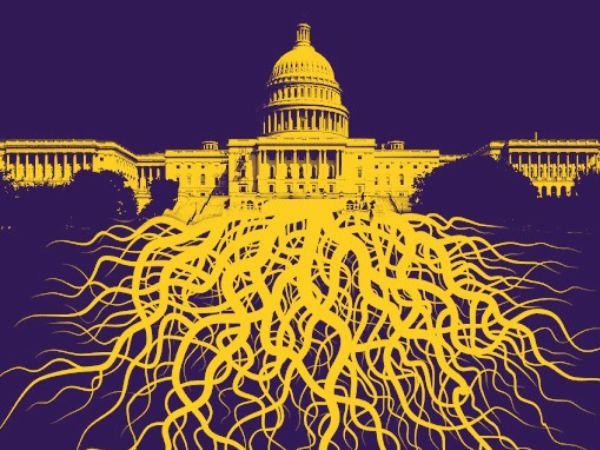
The U.S. government is funding its existence with a credit card.

The government—and that includes the current administration—is spending money it doesn’t have on programs it can’t afford, and “we the taxpayers” are the ones being forced to foot the bill for the government’s fiscal insanity.

According to the number crunchers with the Committee for a Responsible Federal Budget, the government is borrowing roughly $6 billion a day.

As the Editorial Board for the Washington Post warns:

“The nation has reached a hazardous moment where what it owes, as a percentage of the total size of the economy, is the highest since World War II. If nothing changes, the United States will soon be in an uncharted scenario that weakens its national security, imperils its ability to invest in the future, unfairly burdens generations to come, and will require cuts to critical programs such as Social Security and Medicare. It is not a future anyone wants.

Let’s talk numbers, shall we?

The national debt (the amount the federal government has borrowed over the years and must pay back) is $31 trillion and will grow another $19 trillion by 2033. That translates to roughly $246,000 per taxpayer or $94,000 for every single person in the country.

The bulk of that debt has been amassed over the past two decades, thanks in large part to the fiscal shenanigans of four presidents, 10 sessions of Congress and two wars.

It’s estimated that the amount this country owes is now 130% greater than its gross domestic product (all the products and services produced in one year by labor and property supplied by the citizens).

In other words, the government is spending more than it brings in.

The U.S. ranks as the 12th most indebted nation in the world, with much of that debt owed to the Federal Reserve, large investment funds and foreign governments, namely, Japan and China.

Interest payments on the national debt are estimated to top $395 billion this year, which is significantly more than the government spends on veterans’ benefits and services, and according to Pew Research Center, more than it will spend on elementary and secondary education, disaster relief, agriculture, science and space programs, foreign aid, and natural resources and environmental protection combined.

According to the Committee for a Reasonable Federal Budget, the interest we’ve paid on this borrowed money is “nearly twice what the federal government will spend on transportation infrastructure, over four times as much as it will spend on K-12 education, almost four times what it will spend on housing, and over eight times what it will spend on science, space, and technology.”

In ten years, those interest payments will exceed our entire military budget.

This is financial tyranny.

We’ve been sold a bill of goods by politicians promising to pay down the national debt, jumpstart the economy, rebuild our infrastructure, secure our borders, ensure our security, and make us all healthy, wealthy and happy.

None of that has come to pass, and yet we’re still being loaded down with debt not of our own making while the government remains unrepentant, unfazed and undeterred in its wanton spending.

Indeed, the national deficit (the difference between what the government spends and the revenue it takes in) remains at more than $1.5 trillion.

If Americans managed their personal finances the way the government mismanages the nation’s finances, we’d all be in debtors’ prison by now.

Despite the government propaganda being peddled by the politicians and news media, however, the government isn’t spending our tax dollars to make our lives better.

We’re being robbed blind so the governmental elite can get richer.

In the eyes of the government, “we the people, the voters, the consumers, and the taxpayers” are little more than pocketbooks waiting to be picked.

“We the people” have become the new, permanent underclass in America.

Consider: The government can seize your home and your car (which you’ve bought and paid for) over nonpayment of taxes. Government agents can freeze and seize your bank accounts and other valuables if they merely “suspect” wrongdoing. And the IRS insists on getting the first cut of your salary to pay for government programs over which you have no say.

We have no real say in how the government runs, or how our taxpayer funds are used, but we’re being forced to pay through the nose, anyhow.

We have no real say, but that doesn’t prevent the government from fleecing us at every turn and forcing us to pay for endless wars that do more to fund the military industrial complex than protect us, pork barrel projects that produce little to nothing, and a police state that serves only to imprison us within its walls.

If you have no choice, no voice, and no real options when it comes to the government’s claims on your property and your money, you’re not free.

It wasn’t always this way, of course.

Early Americans went to war over the inalienable rights described by philosopher John Locke as the natural rights of life, liberty and property.

It didn’t take long, however—a hundred years, in fact—before the American government was laying claim to the citizenry’s property by levying taxes to pay for the Civil War. As the New York Times reports, “Widespread resistance led to its repeal in 1872.”

Determined to claim some of the citizenry’s wealth for its own uses, the government reinstituted the income tax in 1894. Charles Pollock challenged the tax as unconstitutional, and the U.S. Supreme Court ruled in his favor. Pollock’s victory was relatively short-lived. Members of Congress—united in their determination to tax the American people’s income—worked together to adopt a constitutional amendment to overrule the Pollock decision.

On the eve of World War I, in 1913, Congress instituted a permanent income tax by way of the 16th Amendment to the Constitution and the Revenue Act of 1913. Under the Revenue Act, individuals with income exceeding $3,000 could be taxed starting at 1% up to 7% for incomes exceeding $500,000.

It’s all gone downhill from there.

Unsurprisingly, the government has used its tax powers to advance its own imperialistic agendas and the courts have repeatedly upheld the government’s power to penalize or jail those who refused to pay their taxes.

While we’re struggling to get by, and making tough decisions about how to spend what little money actually makes it into our pockets after the federal, state and local governments take their share (this doesn’t include the stealth taxes imposed through tolls, fines and other fiscal penalties), the government continues to do whatever it likes—levy taxes, rack up debt, spend outrageously and irresponsibly—with little thought for the plight of its citizens.

To top it all off, all of those wars the U.S. is so eager to fight abroad are being waged with borrowed funds. As The Atlantic reports, “U.S. leaders are essentially bankrolling the wars with debt, in the form of purchases of U.S. Treasury bonds by U.S.-based entities like pension funds and state and local governments, and by countries like China and Japan.”

Of course, we’re the ones who have to repay that borrowed debt.

For instance, American taxpayers have been forced to shell out more than $5.6 trillion since 9/11 for the military industrial complex’s costly, endless so-called “war on terrorism.” That translates to roughly $23,000 per taxpayer to wage wars abroad, occupy foreign countries, provide financial aid to foreign allies, and fill the pockets of defense contractors and grease the hands of corrupt foreign dignitaries.

Mind you, that’s only a portion of what the Pentagon spends on America’s military empire.

The United States also spends more on foreign aid than any other nation, with nearly $300 billion disbursed over a five-year period. More than 150 countries around the world receive U.S. taxpayer-funded assistance, with most of the funds going to the Middle East, Africa and Asia. That price tag keeps growing, too.

As Forbes reports, “U.S. foreign aid dwarfs the federal funds spent by 48 out of 50 state governments annually. Only the state governments of California and New York spent more federal funds than what the U.S. sent abroad each year to foreign countries.”

Most recently, the U.S. has allocated nearly $115 billion in emergency military and humanitarian aid for Ukraine since the start of the Russia invasion.

As Dwight D. Eisenhower warned in a 1953 speech, this is how the military industrial complex continues to get richer, while the American taxpayer is forced to pay for programs that do little to enhance our lives, ensure our happiness and well-being, or secure our freedoms.

This is no way of life.

Yet it’s not just the government’s endless wars that are bleeding us dry.

We’re also being forced to shell out money for surveillance systems to track our movements, money to further militarize our already militarized police, money to allow the government to raid our homes and bank accounts, money to fund schools where our kids learn nothing about freedom and everything about how to comply, and on and on.

There was a time in our history when our forebears said “enough is enough” and stopped paying their taxes to what they considered an illegitimate government. They stood their ground and refused to support a system that was slowly choking out any attempts at self-governance, and which refused to be held accountable for its crimes against the people. Their resistance sowed the seeds for the revolution that would follow.

Unfortunately, in the 200-plus years since we established our own government, we’ve let bankers, turncoats and number-crunching bureaucrats muddy the waters and pilfer the accounts to such an extent that we’re back where we started.

Once again, we’ve got a despotic regime with an imperial ruler doing as they please.

Once again, we’ve got a judicial system insisting we have no rights under a government which demands that the people march in lockstep with its dictates.

And once again, we’ve got to decide whether we’ll keep marching or break stride and make a turn toward freedom.

But what if we didn’t just pull out our pocketbooks and pony up to the federal government’s outrageous demands for more money?

What if we didn’t just dutifully line up to drop our hard-earned dollars into the collection bucket, no questions asked about how it will be spent?

What if, instead of quietly sending in our tax checks, hoping vainly for some meager return, we did a little calculating of our own and started deducting from our taxes those programs that we refuse to support?

As I make clear in my book Battlefield America: The War on the American People and in its fictional counterpart The Erik Blair Diaries, if we don’t have the right to decide what happens to our hard-earned cash, then we don’t have any rights at all.

Source: https://bit.ly/3GwhNtR

ABOUT JOHN W. WHITEHEAD

Constitutional attorney and author John W. Whitehead is founder and president of The Rutherford Institute. His most recent books are the best-selling Battlefield America: The War on the American People, the award-winning A Government of Wolves: The Emerging American Police State, and a debut dystopian fiction novel, The Erik Blair Diaries. Whitehead can be contacted at staff@rutherford.org. Nisha Whitehead is the Executive Director of The Rutherford Institute. Information about The Rutherford Institute is available at www.rutherford.org.

Publication Guidelines / Reprint Permission

John W. Whitehead’s weekly commentaries are available for publication to newspapers and web publications at no charge. Please contact staff@rutherford.org to obtain reprint permission.
“There is nothing more dangerous than a government of the many controlled by the few.”—Lawrence Lessig, Harvard law professor

It is easy to be distracted right now by the bread and circus politics that have dominated the news headlines lately, but don’t be distracted.

Don’t be fooled, not even a little.

We’re being subjected to the oldest con game in the books, the magician’s sleight of hand that keeps you focused on the shell game in front of you while your wallet is being picked clean by ruffians in your midst.

This is how tyranny rises and freedom falls.

What characterizes American government today is not so much dysfunctional politics as it is ruthlessly contrived governance carried out behind the entertaining, distracting and disingenuous curtain of political theater. And what political theater it is, diabolically Shakespearean at times, full of sound and fury, yet in the end, signifying nothing.

We are being ruled by a government of scoundrels, spies, thugs, thieves, gangsters, ruffians, rapists, extortionists, bounty hunters, battle-ready warriors and cold-blooded killers who communicate using a language of force and oppression.

The U.S. government now poses the greatest threat to our freedoms.

More than terrorism, more than domestic extremism, more than gun violence and organized crime, even more than the perceived threat posed by any single politician, the U.S. government remains a greater menace to the life, liberty and property of its citizens than any of the so-called dangers from which the government claims to protect us.

No matter who has occupied the White House in recent years, the Deep State has succeeded in keeping the citizenry divided and at each other’s throats.

After all, as long as we’re busy fighting each other, we’ll never manage to present a unified front against tyranny in any form.

Unfortunately, what we are facing is tyranny in every form.

The facts speak for themselves.

We’re being robbed blind by a government of thieves. Americans no longer have any real protection against government agents empowered to seize private property at will. For instance, police agencies under the guise of asset forfeiture laws are taking Americans’ personal property based on little more than a suspicion of criminal activity and keeping it for their own profit and gain. In one case, police seized more than $17,000 in cash from two sisters who were trying to start a dog breeding business. Despite finding no evidence of wrongdoing, police held onto the money for months. Homeowners are losing their homes over unpaid property taxes (as little as $2300 owed) that amount to a fraction of what they have invested in their homes. And then there’s the Drug Enforcement Agency, which has been searching train and airline passengers and pocketing their cash, without ever charging them with a crime.

We’re being taken advantage of by a government of scoundrels, idiots and cowards. Journalist H.L. Mencken calculated that “Congress consists of one-third, more or less, scoundrels; two-thirds, more or less, idiots; and three-thirds, more or less, poltroons.” By and large, Americans seem to agree. When you’ve got government representatives who spend a large chunk of their work hours fundraising, being feted by lobbyists, shuffling through a lucrative revolving door between public service and lobbying, and making themselves available to anyone with enough money to secure access to a congressional office, you’re in the clutches of a corrupt oligarchy. Mind you, these same elected officials rarely read the legislation they’re enacting, nor do they seem capable of enacting much legislation that actually helps the plight of the American citizen. More often than not, the legislation lands the citizenry in worse straits.

We’re being locked up by a government of greedy jailers. We have become a carceral state, spending three times more on our prisons than on our schools and imprisoning close to a quarter of the world’s prisoners, despite the fact that crime is at an all-time low and the U.S. makes up only 5% of the world’s population. The rise of overcriminalization and profit-driven private prisons provides even greater incentives for locking up American citizens for such non-violent “crimes” as having an overgrown lawn. As the Boston Review points out, “America’s contemporary system of policing, courts, imprisonment, and parole … makes money through asset forfeiture, lucrative public contracts from private service providers, and by directly extracting revenue and unpaid labor from populations of color and the poor. In states and municipalities throughout the country, the criminal justice system defrays costs by forcing prisoners and their families to pay for punishment. It also allows private service providers to charge outrageous fees for everyday needs such as telephone calls. As a result people facing even minor criminal charges can easily find themselves trapped in a self-perpetuating cycle of debt, criminalization, and incarceration.”

We’re being spied on by a government of Peeping Toms. The government, along with its corporate partners, is watching everything you do, reading everything you write, listening to everything you say, and monitoring everything you spend. Omnipresent surveillance is paving the way for government programs that profile citizens, document their behavior and attempt to predict what they might do in the future, whether it’s what they might buy, what politician they might support, or what kinds of crimes they might commit. The impact of this far-reaching surveillance, according to Psychology Today, is “reduced trust, increased conformity, and even diminished civic participation.” As technology analyst Jillian C. York concludes, “Mass surveillance without due process—whether undertaken by the government of Bahrain, Russia, the US, or anywhere in between—threatens to stifle and smother that dissent, leaving in its wake a populace cowed by fear.”

We’re being ravaged by a government of ruffians, rapists and killers. It’s not just the police shootings of unarmed citizens that are worrisome. It’s the SWAT team raids gone wrongmore than 80,000 annually—that are leaving innocent citizens wounded, children terrorized and family pets killed. It’s the roadside strip searches—in some cases, cavity searches of men and women alike carried out in full view of the public—in pursuit of drugs that are never found. It’s the potentially lethal—and unwarranted—use of so-called “nonlethal” weapons such as tasers on children for “mouthing off to a police officer. For trying to run from the principal’s office. For, at the age of 12, getting into a fight with another girl.”

We’re being forced to surrender our freedoms—and those of our children—to a government of extortionists, money launderers and professional pirates. The American people have repeatedly been sold a bill of goods about how the government needs more money, more expansive powers, and more secrecy (secret courts, secret budgets, secret military campaigns, secret surveillance) in order to keep us safe. Under the guise of fighting its wars on terror, drugs and now domestic extremism, the government has spent billions in taxpayer dollars on endless wars that have not ended terrorism but merely sown the seeds of blowback, surveillance programs that have caught few terrorists while subjecting all Americans to a surveillance society, and militarized police that have done little to decrease crime while turning communities into warzones. Not surprisingly, the primary ones to benefit from these government exercises in legal money laundering have been the corporations, lobbyists and politicians who inflict them on a trusting public.

We’re being held at gunpoint by a government of soldiers: a standing army. As if it weren’t enough that the American military empire stretches around the globe (and continues to leech much-needed resources from the American economy), the U.S. government is creating its own standing army of militarized police and teams of weaponized, federal bureaucrats. These civilian employees are being armed to the hilt with guns, ammunition and military-style equipment; authorized to make arrests; and trained in military tactics. Among the agencies being supplied with night-vision equipment, body armor, hollow-point bullets, shotguns, drones, assault rifles and LP gas cannons are the Smithsonian, U.S. Mint, Health and Human Services, IRS, FDA, Small Business Administration, Social Security Administration, National Oceanic and Atmospheric Administration, Education Department, Energy Department, Bureau of Engraving and Printing and an assortment of public universities. There are now reportedly more bureaucratic (non-military) government civilians armed with high-tech, deadly weapons than U.S. Marines. That doesn’t even begin to touch on the government’s arsenal, the transformation of local police into extensions of the military, and the speed with which the nation could be locked down under martial law depending on the circumstances.

Whatever else it may be—a danger, a menace, a threat—the U.S. government is certainly no friend to freedom.

To our detriment, the criminal class that Mark Twain mockingly referred to as Congress has since expanded to include every government agency that feeds off the carcass of our once-constitutional republic.

The government and its cohorts have conspired to ensure that the only real recourse the American people have to hold the government accountable or express their displeasure with the government is through voting, which is no real recourse at all.

Consider it: the penalties for civil disobedience, whistleblowing and rebellion are severe. If you refuse to pay taxes for government programs you believe to be immoral or illegal, you will go to jail. If you attempt to overthrow the government—or any agency thereof—because you believe it has overstepped its reach, you will go to jail. If you attempt to blow the whistle on government misconduct, you will go to jail. In some circumstances, if you even attempt to approach your elected representative to voice your discontent, you can be arrested and jailed.

You cannot have a republican form of government—nor a democratic one, for that matter—when the government views itself as superior to the citizenry, when it no longer operates for the benefit of the people, when the people are no longer able to peacefully reform their government, when government officials cease to act like public servants, when elected officials no longer represent the will of the people, when the government routinely violates the rights of the people and perpetrates more violence against the citizenry than the criminal class, when government spending is unaccountable and unaccounted for, when the judiciary act as courts of order rather than justice, and when the government is no longer bound by the laws of the Constitution.

We no longer have a government “of the people, by the people and for the people.”

Rather, what we have is a government of wolves.

For too long, the American people have obeyed the government’s dictates, no matter now unjust.

We have paid its taxes, penalties and fines, no matter how outrageous. We have tolerated its indignities, insults and abuses, no matter how egregious. We have turned a blind eye to its indiscretions and incompetence, no matter how imprudent. We have held our silence in the face of its lawlessness, licentiousness and corruption, no matter how illicit.

How long we will continue to suffer depends on how much we’re willing to give up for the sake of freedom.

For the moment, the American people seem content to sit back and watch the reality TV programming that passes for politics today. It’s the modern-day equivalent of bread and circuses, a carefully calibrated exercise in how to manipulate, polarize, propagandize and control a population.

As French philosopher Etienne de La Boétie observed half a millennium ago:

“Plays, farces, spectacles, gladiators, strange beasts, medals, pictures, and other such opiates, these were for ancient peoples the bait toward slavery, the price of their liberty, the instruments of tyranny. By these practices and enticements the ancient dictators so successfully lulled their subjects under the yoke, that the stupefied peoples, fascinated by the pastimes and vain pleasures flashed before their eyes, learned subservience as naively, but not so creditably, as little children learn to read by looking at bright picture books.”

The bait towards slavery. The price of liberty. The instruments of tyranny.

Yes, that sounds about right.

As I make clear in my book Battlefield America: The War on the American People and in its fictional counterpart The Erik Blair Diaries, “We the people” have learned only too well how to be slaves.

Source: https://bit.ly/3Z5UOvW

ABOUT JOHN W. WHITEHEAD

Constitutional attorney and author John W. Whitehead is founder and president of The Rutherford Institute. His most recent books are the best-selling Battlefield America: The War on the American People, the award-winning A Government of Wolves: The Emerging American Police State, and a debut dystopian fiction novel, The Erik Blair Diaries. Whitehead can be contacted at staff@rutherford.org. Nisha Whitehead is the Executive Director of The Rutherford Institute. Information about The Rutherford Institute is available at www.rutherford.org.

Publication Guidelines / Reprint Permission

John W. Whitehead’s weekly commentaries are available for publication to newspapers and web publications at no charge. Please contact staff@rutherford.org to obtain reprint permission.

“I know the capability that is there to make tyranny total in America, and we must see to it that this agency and all agencies that possess this technology operate within the law and under proper supervision, so that we never cross over that abyss. That is the abyss from which there is no return.”—Senator Frank Church on Meet The Press, 1975

If you give the government an inch, it will always take a mile.

This is how the slippery slope to all-out persecution starts.

Martin Niemöller’s warning about the widening net that ensnares us all, a warning issued in response to the threat posed by Nazi Germany’s fascist regime, still applies.

“First they came for the socialists, and I did not speak out—because I was not a socialist. Then they came for the trade unionists, and I did not speak out— because I was not a trade unionist. Then they came for the Jews, and I did not speak out—because I was not a Jew. Then they came for me—and there was no one left to speak for me.

This particular slippery slope has to do with the government’s use of geofence technology, which uses cell phone location data to identify people who are in a particular area at any given time.

First, police began using geofence warrants to carry out dragnet sweeps of individuals near a crime scene.

Then the FBI used geofence warrants to identify individuals who were in the vicinity of the Capitol on Jan. 6, 2021.

It wasn’t long before government officials in California used cell phone and geofence data to track the number and movements of churchgoers on church grounds during the COVID-19 lockdowns.

If we’ve already reached the point where people praying and gathering on church grounds merits this level of government scrutiny and sanctions, we’re not too far from free-falling into a total surveillance state.

Dragnet geofence surveillance sweeps can and eventually will be used to target as a suspect every person in any given place at any given time and sweep them up into a never-ending virtual line-up in the hopes of matching a criminal to every crime.

There really can be no overstating the danger.

The government’s efforts to round up those who took part in the Jan. 6 Capitol protests provided a glimpse of exactly how vulnerable we all are to the menace of a surveillance state that aspires to a God-like awareness of our lives.

Relying on selfies, social media posts, location data, geotagged photos, facial recognition, surveillance cameras and crowdsourcing, government agents compiled a massive data trove on anyone and everyone who may have been anywhere in the vicinity of the Capitol on January 6, 2021.

Included in that data roundup were individuals who may have had nothing to do with the protests but whose cell phone location data identified them as being in the wrong place at the wrong time.

You didn’t even have to be involved in the Capitol protests to qualify for a visit from the FBI: investigators reportedly tracked—and questioned—anyone whose cell phones connected to wi-fi or pinged cell phone towers near the Capitol.

One man, who had gone out for a walk with his daughters only to end up stranded near the Capitol crowds, actually had FBI agents show up at his door days later. Using Google Maps, agents were able to pinpoint exactly where they were standing and for how long.

The massive amount of surveillance data available to the government is staggering.

As investigative journalists Charlie Warzel and Stuart A. Thompson explain, “This [surveillance] data…provide[s] an intimate record of people whether they were visiting drug treatment centers, strip clubs, casinos, abortion clinics or places of worship.

In such a surveillance ecosystem, we’re all suspects and databits to be tracked, catalogued and targeted.

Forget about being innocent until proven guilty.

Although the Constitution requires the government to provide solid proof of criminal activity before it can deprive a citizen of life or liberty, the government has turned that fundamental assurance of due process on its head.

Now, thanks to the digital trails and digital footprints we all leave behind, you start off guilty and have to prove your innocence.

In an age of overcriminalization, when the average American unknowingly commits at least three crimes a day, there is no one who would be spared.

The ramifications of empowering the government to sidestep fundamental due process safeguards are so chilling and so far-reaching as to put a target on the back of anyone who happens to be in the same place where a crime takes place.

As Warzel and Thompson warn:

“To think that the information will be used against individuals only if they’ve broken the law is naïve; such data is collected and remains vulnerable to use and abuse whether people gather in support of an insurrection or they justly protest police violence… This collection will only grow more sophisticated… It gets easier by the day… it does not discriminate. It harvests from the phones of MAGA rioters, police officers, lawmakers and passers-by. There is no evidence, from the past or current day, that the power this data collection offers will be used only to good ends. There is no evidence that if we allow it to continue to happen, the country will be safer or fairer.”

Saint or sinner, it doesn’t matter because we’re all being swept up into a massive digital data dragnet that does not distinguish between those who are innocent of wrongdoing, suspects, or criminals.

Case in point: consider what happened to Calvary Chapel during COVID-19.

Government officials in Santa Clara County, Calif., issued a shelter-in-place order in March 2020, dictating whom residents could see, where they could go, what they could do, and under what circumstances.

County officials imposed even harsher restrictions on churches, accompanied by the threat of crippling fines for those that did not comply with the lockdown orders.

Then Santa Clara officials reportedly used geofence surveillance technology to monitor the concentrations of congregants at Calvary Chapel during the COVID-19 lockdowns in 2020 and 2021, using their findings to justify levying nearly $3 million in public health fines against the church for violating the county’s strict pandemic restrictions.

Despite the U.S. Supreme Court’s ruling that similar restrictions unconstitutionally singled out houses of worship for especially harsh treatment and “struck “at the very heart of the First Amendment’s guarantee of religious liberty,” county officials have sought to collect millions of dollars in fines levied against churches, including Calvary Chapel, for violating the county’s mandates.

At a minimum, the use of geofence surveillance to monitor church attendees constitutes an egregious violation of the churchgoers’ Fourth Amendment rights and an attempt to undermine protected First Amendment activities relating to the freedom of speech, the free exercise of religion, and the right of the people peaceably to assemble.

Still, the government’s use of geofence surveillance goes way beyond its impact on church members and anyone in the vicinity of the Jan. 6 protests.

The ramifications for all of us are far-reaching.

Mass surveillance has been shown to chill lawful First Amendment activities, and historically has been used to stifle dissent, persecute activists, and harass marginalized communities.

A study conducted by Roger Clarke, the famed Australian specialist in data surveillance and privacy, indicates that the costs resulting from the erosion of personal privacy are so significant that they essentially threaten the very foundation of a democratic society.

Some of the most serious harms include:

  • A prevailing climate of suspicion and adversarial relationships
  • Inequitable application of the law
  • Stultification of originality
  • Weakening of society’s moral fiber and cohesion
  • Repressive potential for a totalitarian government
  • Blacklisting
  • Ex-ante discrimination and guilt prediction
  • Inversion of the onus of proof.

In other words, the chilling effects of pervasive surveillance give rise to a constant, justifiable fear in even the most compliant, law-abiding citizen.

Of course, that’s the point.

The government wants us muzzled, complacent and compliant.

So far, it’s working.

Americans are increasingly self-censoring and marching in lockstep with the government’s (and corporate America’s) dictates, whether out of fear or indoctrination, or a combination.

In the meantime, the use of geofence warrants continues to be debated in the legislatures and challenged in the courts. For instance, while a California court found that a broad geofence search warrant violated the Fourth Amendment, a federal district judge for the District of Columbia upheld the use of geofence warrants by police in connection with the events of Jan. 6.

No matter how the courts rule, however, one thing is clear: these dragnet geofence searches are well on their way to becoming the eyes and ears of a police state that views each and every one of us as a potential suspect, terrorist and lawbreaker.

As I make clear in my book Battlefield America: The War on the American People and in its fictional counterpart The Erik Blair Diaries, this is how technologies purportedly adopted to rout out dangerous criminals in our midst are used to conquer a free people.

Source: https://bit.ly/3LqQHro

ABOUT JOHN W. WHITEHEAD

Constitutional attorney and author John W. Whitehead is founder and president of The Rutherford Institute. His most recent books are the best-selling Battlefield America: The War on the American People, the award-winning A Government of Wolves: The Emerging American Police State, and a debut dystopian fiction novel, The Erik Blair Diaries. Whitehead can be contacted at staff@rutherford.org. Nisha Whitehead is the Executive Director of The Rutherford Institute. Information about The Rutherford Institute is available at www.rutherford.org.

Publication Guidelines / Reprint Permission

John W. Whitehead’s weekly commentaries are available for publication to newspapers and web publications at no charge. Please contact staff@rutherford.org to obtain reprint permission.
“Experience teaches us to be most on our guard to protect liberty when the government’s purposes are beneficent.”—Supreme Court Justice Louis D. Brandeis

There was a time when the census was just a head count.

That is no longer the case.

The American Community Survey (ACS), sent to about 3.5 million homes every year, is the byproduct of a government that believes it has the right to know all of your personal business.

If you haven’t already received an ACS, it’s just a matter of time.

A far cry from the traditional census, which is limited to ascertaining the number of persons living in each dwelling, their ages and ethnicities, the ownership of the dwelling and telephone numbers, the ACS contains some of the most detailed and intrusive questions ever put forth in a census questionnaire.

At 28 pages (with an additional 16-page instruction packet), these questions concern matters that the government simply has no business knowing, including questions relating to respondents’ bathing habits, home utility costs, fertility, marital history, work commute, mortgage, and health insurance, among other highly personal and private matters.

For instance, the ACS asks how many persons live in your home, along with their names and detailed information about them such as their relationship to you, marital status, race and their physical, mental and emotional problems, etc. The survey also asks how many bedrooms and bathrooms you have in your house, along with the fuel used to heat your home, the cost of electricity, what type of mortgage you have and monthly mortgage payments, property taxes and so on.

And then the survey drills down even deeper.

The survey demands to know how many days you were sick last year, how many automobiles you own and the number of miles driven, whether you have trouble getting up the stairs, and what time you leave for work every morning, along with highly detailed inquiries about your financial affairs. And the survey demands that you violate the privacy of others by supplying the names and addresses of your friends, relatives and employer.

The questionnaire also demands that you give other information on the people in your home, such as their educational levels, how many years of school were completed, what languages they speak and when they last worked at a job, among other things.

Individuals who receive the ACS must complete it or be subject to monetary penalties.

Although no reports have surfaced of individuals actually being penalized for refusing to answer the survey, the potential fines that can be levied for refusing to participate in the ACS are staggering. For every question not answered, there is a $100 fine. And for every intentionally false response to a question, the fine is $500. Therefore, if a person representing a two-person household refused to fill out any questions or simply answered nonsensically, the total fines could range from upwards of $10,000 and $50,000 for noncompliance.

While some of the ACS’ questions may seem fairly routine, the real danger is in not knowing why the information is needed, how it will be used by the government or with whom it will be shared.

In an age when the government has significant technological resources at its disposal to not only carry out warrantless surveillance on American citizens but also to harvest and mine that data for its own dubious purposes, whether it be crime-mapping or profiling based on whatever criteria the government wants to use to target and segregate the populace, the potential for abuse is grave.

As such, the ACS qualifies as a government program whose purpose, while sold to the public as routine and benign, raises significant constitutional concerns.

The Rutherford Institute has received hundreds of inquiries from individuals who have received the ACS and are not comfortable sharing such private, intimate details with the government or are unsettled by the aggressive tactics utilized by Census Bureau agents seeking to compel responses to ACS questions.

The following Q&A is provided as a resource to those who want to better understand their rights in respect to the ACS.

Q:  What kind of questions are contained in the ACS?

A:  The ACS contains questions that go far beyond typical census questions about the number of individuals within the household and their age, race, and sex. The survey combines intrusive questions with highly detailed inquiries about your financial affairs. Furthermore, the questionnaire also demands that recipients provide information about their family and other  people in their home, such as their educational levels, how many years of school were completed, what languages they speak, when they last worked at a job, and when occupants of your home are away from the house.

Q:  How will this information be used?

A:  The Census Bureau states that information from this survey is used to assist a wide variety of entities, from federal, state and local governments to private corporations, nonprofit organizations, researchers and public advocacy groups. The Bureau lists 35 different categories of questions on its website and offers an explanation on how the information is to be used.  For 12 of those categories, the information is used to assist private corporations.  For another 22, the information is used to aid advocacy groups, and in nine of those cases, the Census Bureau states that the responses will be used by advocacy groups to “advocate for policies that benefit their groups,” including advocacy based on age, race, sex, and marital status. Thus, information obtained through the ACS is not simply used to inform government policy in a neutral manner, but is also being provided to private actors for the purpose of promoting corporate and/or political agendas.

One concern raised by the Brookings Institute is the use of ACS information by law enforcement for  “crime mapping,” a surveillance tool used to predict crime and preemptively target certain neighborhoods for policing. It is “most effective” when “analysts can see the relationship between various types of criminal incidents (e.g., homicides, drug dealing) and neighborhood characteristics (risk factors such as poverty, population density, and vacant housing), pinpoint where crimes are most likely to occur (hot spots), and focus police resources accordingly.” The Brookings Institute notes that because the ACS provides data every year, rather than every ten years, crime mapping is more effective and cheaper.

Q:  Are my responses kept confidential?

A:  While the Census Bureau claims that an individual’s information will be kept strictly confidential, it does require a recipient to put their name on the survey, ostensibly for the purpose of asking follow-up questions in the event of missing or incomplete answers. This means your answers could be linked to you even if it is forbidden by law to share your individual responses.

Q:  Am I required by law to fully complete the American Community Survey?

A:  Federal law makes it mandatory to answer all questions on the ACS. A refusal to answer any question on the ACS or giving an intentionally false answer is a federal offense. The Census Bureau also maintains that responding to the ACS is mandatory and that recipients are legally obligated to answer all questions.

Q:  Is there a penalty for refusing to answer American Community Survey questions?

A:  The law requiring answers to the ACS also provides that a person who fails to answer “shall be fined not more than $100.” The actual fine for a refusal to complete the ACS could be much greater because a failure to respond to certain ACS questions could be considered a separate offense subject to the $100 fine.

Q:  Has the government prosecuted persons for refusing to answer the American Community Survey?

A:  While The Rutherford Institute has been made aware of Census Bureau agents engaging in harassing tactics and threatening behavior, to date, we are unaware of the Census Bureau having levied any financial penalties for non-compliance with the ACS. However, a refusal to answer the survey violates the letter of the law and a prosecution might be brought if the government decides to adopt a policy to do so.

Q:  How does the Census Bureau typically ensure that people complete the survey?

A:  Those who do not answer the ACS risk repeated overtures—by mail, by phone and in person—from Census Bureau employees seeking to compel a response. Typically, the Census Bureau will telephone those who do not respond to the survey and may visit their homes to coerce the targets to respond.

The Census Bureau boasts a 97% response rate to the survey via these methods, but critics argue this constitutes harassment. One recipient who did complete the survey but whose answers were misplaced by the Census Bureau wrote about his experience. First, a Census Bureau employee left a note at his apartment asking him to contact her. When he did, the employee asked him to allow her into his home. When he refused, the employee “turned up twice unannounced at my apartment, demanding entry, and warning me of the fines I would face if I didn’t cooperate.” Only after he filed a complaint with the Census Bureau did the agency realize he had actually completed the survey, thus ending its attempts to enter his home.

Q:  Is this an unconstitutional invasion of privacy?

A:  There are significant and legitimate questions concerning the authority of the government to require, under threat of prosecution and penalty, that persons answer questions posed by the ACS. The ACS is not part of the enumeration required by Article I of the Constitution, and that constitutional provision only applies to a census for purposes of counting the number of people in each state. As noted, the ACS seeks much more information than the number of persons in a household.

In other contexts, the U.S. Supreme Court has ruled that citizens have no obligation to answer questions posed by the government and are free to refuse to do so. This same principle could apply to questions posed by ACS agents.  However, because the government has not brought a prosecution for a refusal to respond to the ACS, the question of a person’s right to refuse has not yet been decided by a court.

Q:  What are my options for objecting to the ACS survey as an intrusion on my Fourth Amendment rights?

A:  If you receive notice that you have been targeted to respond to the ACS and you desire to assert your right of privacy, you can voice those objections and your intent not to respond to the ACS by writing a letter to the Census Bureau. The Rutherford Institute has developed a form letter that you may use in standing up against the government’s attempt to force you to disclose personal information.

If you are contacted by Census Bureau employees, either by telephone or in person, demanding your response, you can assert your rights by politely, but firmly, informing the employee that you believe the ACS is an improper invasion of your privacy, that you do not intend to respond and that they should not attempt to contact you again. Be sure to document any interactions you have with Bureau representatives for your own files.

If you believe you are being unduly harassed by a Census Bureau employee, either by telephone or in person, it is in your best interest to carefully document the time, place and manner of the incidents and file a complaint with the U.S. Census Bureau.

Remember, nothing is ever as simple or as straightforward as the government claims.

As I make clear in my book Battlefield America: The War on the American People and in its fictional counterpart The Erik Blair Diaries, any attempt by the government to encroach upon the citizenry’s privacy rights or establish a system by which the populace can be targeted, tracked and singled out must be met with extreme caution.

While government agents can approach, speak to and even question citizens without violating the Fourth Amendment, Americans should jealously guard what Supreme Court Justice Louis Brandeis referred to as the constitutional “right to be let alone.”

Source: https://bit.ly/3Zs1Psd

ABOUT JOHN W. WHITEHEAD

Constitutional attorney and author John W. Whitehead is founder and president of The Rutherford Institute. His most recent books are the best-selling Battlefield America: The War on the American People, the award-winning A Government of Wolves: The Emerging American Police State, and a debut dystopian fiction novel, The Erik Blair Diaries. Whitehead can be contacted at staff@rutherford.org. Nisha Whitehead is the Executive Director of The Rutherford Institute. Information about The Rutherford Institute is available at www.rutherford.org.

Publication Guidelines / Reprint Permission

John W. Whitehead’s weekly commentaries are available for publication to newspapers and web publications at no charge. Please contact staff@rutherford.org to obtain reprint permission.
“If all that Americans want is security, they can go to prison. They’ll have enough to eat, a bed and a roof over their heads. But if an American wants to preserve his dignity and his equality as a human being, he must not bow his neck to any dictatorial government.”— President Dwight D. Eisenhower

The government wants us to bow down to its dictates.

It wants us to buy into the fantasy that we are living the dream, when in fact, we are trapped in an endless nightmare of servitude and oppression.

Indeed, with every passing day, life in the American Police State increasingly resembles life in the dystopian television series The Prisoner.

First broadcast 55 years ago in the U.S., The Prisonerdescribed as “James Bond meets George Orwell filtered through Franz Kafka”—confronted societal themes that are still relevant today: the rise of a police state, the loss of freedom, round-the-clock surveillance, the corruption of government, totalitarianism, weaponization, group think, mass marketing, and the tendency of human beings to meekly accept their lot in life as prisoners in a prison of their own making.

Perhaps the best visual debate ever on individuality and freedom, The Prisoner centers around a British secret agent who abruptly resigns only to find himself imprisoned in a virtual prison disguised as a seaside paradise with parks and green fields, recreational activities and even a butler.

While luxurious, the Village’s inhabitants have no true freedom, they cannot leave the Village, they are under constant surveillance, all of their movements tracked by militarized drones, and stripped of their individuality so that they are identified only by numbers.

“I am not a number. I am a free man,” is the mantra chanted in each episode of The Prisoner, which was largely written and directed by Patrick McGoohan, who also played the title role of Number Six, the imprisoned government agent.

Throughout the series, Number Six is subjected to interrogation tactics, torture, hallucinogenic drugs, identity theft, mind control, dream manipulation, and various forms of social indoctrination and physical coercion in order to “persuade” him to comply, give up, give in and subjugate himself to the will of the powers-that-be.

Number Six refuses to comply.

In every episode, Number Six resists the Village’s indoctrination methods, struggles to maintain his own identity, and attempts to escape his captors. “I will not make any deals with you,” he pointedly remarks to Number Two, the Village administrator a.k.a. prison warden. “I’ve resigned. I will not be pushed, filed, stamped, indexed, debriefed or numbered. My life is my own.”

Yet no matter how far Number Six manages to get in his efforts to escape, it’s never far enough.

Watched by surveillance cameras and other devices, Number Six’s attempts to escape are continuously thwarted by ominous white balloon-like spheres known as “rovers.”

Still, he refuses to give up.

“Unlike me,” he says to his fellow prisoners, “many of you have accepted the situation of your imprisonment, and will die here like rotten cabbages.”

Number Six’s escapes become a surreal exercise in futility, each episode an unfunny, unsettling Groundhog’s Day that builds to the same frustrating denouement: there is no escape.

As journalist Scott Thill concludes for Wired, “Rebellion always comes at a price. During the acclaimed run of The Prisoner, Number Six is tortured, battered and even body-snatched: In the episode ‘Do Not Forsake Me Oh My Darling,’ his mind is transplanted to another man’s body. Number Six repeatedly escapes The Village only to be returned to it in the end, trapped like an animal, overcome by a restless energy he cannot expend, and betrayed by nearly everyone around him.”

The series is a chilling lesson about how difficult it is to gain one’s freedom in a society in which prison walls are disguised within the seemingly benevolent trappings of technological and scientific progress, national security and the need to guard against terrorists, pandemics, civil unrest, etc.

As Thill noted, “The Prisoner was an allegory of the individual, aiming to find peace and freedom in a dystopia masquerading as a utopia.”

The Prisoner’s Village is also an apt allegory for the American Police State, which is rapidly transitioning into a full-fledged Surveillance State: it gives the illusion of freedom while functioning all the while like a prison: controlled, watchful, inflexible, punitive, deadly and inescapable.

The American Surveillance State, much like The Prisoner’s Village, is a metaphorical panopticon, a circular prison in which the inmates are monitored by a single watchman situated in a central tower. Because the inmates cannot see the watchman, they are unable to tell whether or not they are being watched at any given time and must proceed under the assumption that they are always being watched.

Eighteenth century social theorist Jeremy Bentham envisioned the panopticon prison to be a cheaper and more effective means of “obtaining power of mind over mind, in a quantity hitherto without example.”

Bentham’s panopticon, in which the prisoners are used as a source of cheap, menial labor, has become a model for the modern surveillance state in which the populace is constantly being watched, controlled and managed by the powers-that-be while funding its existence.

Nowhere to run and nowhere to hide: this is the mantra of the architects of the Surveillance State and their corporate collaborators.

Government eyes are watching you.

They see your every move: what you read, how much you spend, where you go, with whom you interact, when you wake up in the morning, what you’re watching on television and reading on the internet.

Every move you make is being monitored, mined for data, crunched, and tabulated in order to amass a profile of who you are, what makes you tick, and how best to control you when and if it becomes necessary to bring you in line.

When the government sees all and knows all and has an abundance of laws to render even the most seemingly upstanding citizen a criminal and lawbreaker, then the old adage that you’ve got nothing to worry about if you’ve got nothing to hide no longer applies.

Apart from the obvious dangers posed by a government that feels justified and empowered to spy on its people and use its ever-expanding arsenal of weapons and technology to monitor and control them, we’re approaching a time in which we will be forced to choose between bowing down in obedience to the dictates of the government—i.e., the law, or whatever a government official deems the law to be—and maintaining our individuality, integrity and independence.

When people talk about privacy, they mistakenly assume it protects only that which is hidden behind a wall or under one’s clothing. The courts have fostered this misunderstanding with their constantly shifting delineation of what constitutes an “expectation of privacy.” And technology has furthered muddied the waters.

However, privacy is so much more than what you do or say behind locked doors. It is a way of living one’s life firm in the belief that you are the master of your life, and barring any immediate danger to another person (which is far different from the carefully crafted threats to national security the government uses to justify its actions), it’s no one’s business what you read, what you say, where you go, whom you spend your time with, and how you spend your money.

Unfortunately, George Orwell’s 1984—where “you had to live—did live, from habit that became instinct—in the assumption that every sound you made was overheard, and, except in darkness, every movement scrutinized”—has now become our reality.

We now find ourselves in the unenviable position of being monitored, managed, corralled and controlled by technologies that answer to government and corporate rulers.

Consider that on any given day, the average American going about his daily business will be monitored, surveilled, spied on and tracked in more than 20 different ways, by both government and corporate eyes and ears.

A byproduct of this new age in which we live, whether you’re walking through a store, driving your car, checking email, or talking to friends and family on the phone, you can be sure that some government agency is listening in and tracking your behavior.

This doesn’t even begin to touch on the corporate trackers that monitor your purchases, web browsing, Facebook posts and other activities taking place in the cyber sphere.

Stingray devices mounted on police cars to warrantlessly track cell phones, Doppler radar devices that can detect human breathing and movement within in a home, license plate readers that can record up to 1800 license plates per minutesidewalk and “public space” cameras coupled with facial recognition and behavior-sensing technology that lay the groundwork for police “pre-crime” programspolice body cameras that turn police officers into roving surveillance cameras, the internet of things: all of these technologies (and more) add up to a society in which there’s little room for indiscretions, imperfections, or acts of independence—especially not when the government can listen in on your phone calls, read your emails, monitor your driving habits, track your movements, scrutinize your purchases and peer through the walls of your home.

As French philosopher Michel Foucault concluded in his 1975 book Discipline and Punish, “Visibility is a trap.”

This is the electronic concentration camp—the panopticon prison—the Village—in which we are now caged.

It is a prison from which there will be no escape. Certainly not if the government and its corporate allies have anything to say about it.

As Glenn Greenwald notes:

“The way things are supposed to work is that we’re supposed to know virtually everything about what [government officials] do: that’s why they’re called public servants. They’re supposed to know virtually nothing about what we do: that’s why we’re called private individuals. This dynamic – the hallmark of a healthy and free society – has been radically reversed. Now, they know everything about what we do, and are constantly building systems to know more. Meanwhile, we know less and less about what they do, as they build walls of secrecy behind which they function. That’s the imbalance that needs to come to an end. No democracy can be healthy and functional if the most consequential acts of those who wield political power are completely unknown to those to whom they are supposed to be accountable.”

None of this will change, no matter which party controls Congress or the White House, because despite all of the work being done to help us buy into the fantasy that things will change if we just elect the right candidate, we’ll still be prisoners of the Village.

So how do you escape? For starters, resist the urge to conform to a group mind and the tyranny of mob-think as controlled by the Deep State.

Think for yourself. Be an individual.

As McGoohan commented in 1968, “At this moment individuals are being drained of their personalities and being brainwashed into slaves… As long as people feel something, that’s the great thing. It’s when they are walking around not thinking and not feeling, that’s tough. When you get a mob like that, you can turn them into the sort of gang that Hitler had.”

You want to be free? Remove the blindfold that blinds you to the Deep State’s con game, stop doping yourself with government propaganda, and break free of the political chokehold that has got you marching in lockstep with tyrants and dictators.

As I make clear in my book Battlefield America: The War on the American People and in its fictional counterpart The Erik Blair Diaries, until you come to terms with the fact that the government is the problem (no matter which party dominates), you’ll never stop being prisoners.

Source: https://bit.ly/3XB5MZz

ABOUT JOHN W. WHITEHEAD

Constitutional attorney and author John W. Whitehead is founder and president of The Rutherford Institute. His most recent books are the best-selling Battlefield America: The War on the American People, the award-winning A Government of Wolves: The Emerging American Police State, and a debut dystopian fiction novel, The Erik Blair Diaries. Whitehead can be contacted at staff@rutherford.org. Nisha Whitehead is the Executive Director of The Rutherford Institute. Information about The Rutherford Institute is available at www.rutherford.org.

Publication Guidelines / Reprint Permission

John W. Whitehead’s weekly commentaries are available for publication to newspapers and web publications at no charge. Please contact staff@rutherford.org to obtain reprint permission.
How do you trust a government that continuously sidesteps the Constitution and undermines our rights? You can’t.

When you consider all the ways “we the people” are being bullied, beaten, bamboozled, targeted, tracked, repressed, robbed, impoverished, imprisoned and killed by the government, one can only conclude that you shouldn’t trust the government with your privacy, your property, your life, or your freedoms.

Consider for yourself.

Don’t trust the government with your privacy, digital or otherwise. In the two decades since 9/11, the military-security industrial complex has operated under a permanent state of emergency that, in turn, has given rise to a digital prison that grows more confining and inescapable by the day. Wall-to wall surveillance, monitored by AI software and fed to a growing network of fusion centers, render the twin concepts of privacy and anonymity almost void. By conspiring with corporations, the Department of Homeland Security “fueled a massive influx of money into surveillance and policing in our cities, under a banner of emergency response and counterterrorism.” For instance, all across the country, police are installing Flock Safety license plate readers as part of a public-private partnership program between police and the surveillance industry. These cameras, which upload data in real time to fusion crime centers, signal a turning point in the transition from a police state to a police-driven surveillance state.

Don’t trust the government with your property. In yet another effort to legitimize warrantless searches, police are employing “hit-and-hold” tactics in which police enter a home, carry out an initial sweep of the property, handcuff the occupants, then wait for official search warrants to be secured and applied retroactively. In the meantime, police have managed to bypass the Fourth Amendment. The rationale, to prevent possible destruction of evidence, is the same one used to deadly effect with no-knock raids. If government agents can invade your home, break down your doors, kill your dog, damage your furnishings and terrorize your family, your property is no longer private and secure—it belongs to the government. Hard-working Americans are having their bank accounts, homes, cars electronics and cash seized by police under the assumption that they have allegedly been associated with some criminal scheme.

Don’t trust the government with your finances. The U.S. government—and that includes the current administration—is spending money it doesn’t have on programs it can’t afford, and “we the taxpayers” are being forced to foot the bill for the government’s fiscal insanity. The national debt is $31.3 trillion and growing, and we’re paying more than $300 billion in interest every year on that public debt, yet there seems to be no end in sight when it comes to the government’s fiscal insanity. According to Forbes, Congress has raised, extended or revised the definition of the debt limit 78 times since 1960 in order to allow the government to essentially fund its existence with a credit card.

Don’t trust the government with your health. For all intents and purposes, “we the people” have become lab rats in the government’s secret experiments, which include MKULTRA and the U.S. military’s secret race-based testing of mustard gas on more than 60,000 enlisted men. Indeed, you don’t have to dig very deep or go very back in the nation’s history to uncover numerous cases in which the government deliberately conducted secret experiments on an unsuspecting populace—citizens and noncitizens alike—making healthy people sick by spraying them with chemicals, injecting them with infectious diseases and exposing them to airborne toxins. Unfortunately, the public has become so easily distracted by the political spectacle out of Washington, DC, that they are altogether oblivious to the grisly experiments, barbaric behavior and inhumane conditions that have become synonymous with the U.S. government, which has meted out untold horrors against humans and animals alike.

Don’t trust the government with your life: At a time when growing numbers of unarmed people have been shot and killed for just standing a certain way, or moving a certain way, or holding something—anything—that police could misinterpret to be a gun, or igniting some trigger-centric fear in a police officer’s mind that has nothing to do with an actual threat to their safety, even the most benign encounters with police can have fatal consequences. The number of Americans killed by police continues to grow, with the majority of those killed as a result of police encounters having been suspected of a non-violent offense or no crime at all, or during a traffic violation. According a report by Mapping Police Violence, police killed more people in 2022 than any other year within the past decade. In 98% of those killings, police were not charged with a crime.

Don’t trust the government with your freedoms. For years now, the government has been playing a cat-and-mouse game with the American people, letting us enjoy just enough freedom to think we are free but not enough to actually allow us to live as a free people. Freedom no longer means what it once did. This holds true whether you’re talking about the right to criticize the government in word or deed, the right to be free from government surveillance, the right to not have your person or your property subjected to warrantless searches by government agents, the right to due process, the right to be safe from militarized police invading your home, the right to be innocent until proven guilty and every other right that once reinforced the founders’ belief that this would be “a government of the people, by the people and for the people.” On paper, we may be technically free, but in reality, we are only as free as a government official may allow.

Whatever else it may be—a danger, a menace, a threat—the U.S. government is certainly not looking out for our best interests, nor is it in any way a friend to freedom.

Remember the purpose of a good government is to protect the lives and liberties of its people.

Unfortunately, what we have been saddled with is, in almost every regard, the exact opposite of an institution dedicated to protecting the lives and liberties of its people.

As I make clear in my book Battlefield America: The War on the American People and in its fictional counterpart The Erik Blair Diaries, “we the people” should have learned early on that a government that repeatedly lies, cheats, steals, spies, kills, maims, enslaves, breaks the laws, overreaches its authority, and abuses its power at almost every turn can’t be trusted.

Source: https://bit.ly/3W36IW2

ABOUT JOHN W. WHITEHEAD

Constitutional attorney and author John W. Whitehead is founder and president of The Rutherford Institute. His most recent books are the best-selling Battlefield America: The War on the American People, the award-winning A Government of Wolves: The Emerging American Police State, and a debut dystopian fiction novel, The Erik Blair Diaries. Whitehead can be contacted at staff@rutherford.org. Nisha Whitehead is the Executive Director of The Rutherford Institute. Information about The Rutherford Institute is available at www.rutherford.org.

Publication Guidelines / Reprint Permission

John W. Whitehead’s weekly commentaries are available for publication to newspapers and web publications at no charge. Please contact staff@rutherford.org to obtain reprint permission.
“There is no greater tyranny than that which is perpetrated under the shield of the law and in the name of justice.”—Montesquieu, Enlightenment philosopher

For those wondering what to expect from the government in 2023, it looks like we’re going to be in for more of the same in terms of the government’s brand of madness, mayhem, corruption and brutality.

Digital prisons. Unceasingly, the government and its corporate partners are pushing for a national digital ID system. Local police agencies have already been given access to facial recognition software and databases containing 20 billion images, the precursor to a digital ID. Eventually, a digital ID will be required to gain access to all aspects of life: government, work, travel, healthcare, financial services, shopping, etc. Before long, biometrics (iris scans, face print, voice, DNA, etc.), will become the de facto digital ID.

Precrime. Under the pretext of helping overwhelmed government agencies work more efficiently, AI predictive and surveillance technologies are being used to classify, segregate and flag the populace with little concern for privacy rights or due process. All of this sorting, sifting and calculating is being done swiftly, secretly and incessantly with the help of AI technology and a surveillance state that monitors your every move. AI predictive tools are being deployed in almost every area of life.

Mandatory quarantines. Building on precedents established during the COVID-19 pandemic, government agents may be empowered to indefinitely detain anyone they suspect of posing a medical risk to others without providing an explanation, subject them to medical tests without their consent, and carry out such detentions and quarantines without any kind of due process or judicial review.

Mental health assessments by non-medical personnel. As a result of a nationwide push to train a broad spectrum of so-called gatekeepers in mental health first-aid training, more Americans are going to run the risk of being reported by non-medical personnel and detained for having mental health issues.

Tracking chips for citizens. Momentum is building for corporations and the government alike to be able to track the populace, whether through the use of RFID chips embedded in a national ID card, microscopic chips embedded in one’s skin, or tags in retail products.

Military involvement domestically. The future, according to a Pentagon training video, will be militaristic, dystopian and far from friendly to freedom. Indeed, all signs point to the battlefield of the future being the American home front. Anticipating this, the government plans to have the military work in conjunction with local police to quell civil unrest domestically.

Government censorship of anything it classifies as disinformation. In the government’s ongoing assault on those who criticize the government—whether that criticism manifests itself in word, deed or thought—government and corporate censors claiming to protect us from dangerous, disinformation campaigns are, in fact, laying the groundwork now to preempt any “dangerous” ideas that might challenge the power elite’s stranglehold over our lives.

Threat assessments. The government has a growing list—shared with fusion centers and law enforcement agencies—of ideologies, behaviors, affiliations and other characteristics that could flag someone as suspicious and result in their being labeled potential enemies of the state. Before long, every household in America will be flagged as a threat and assigned a threat score. It’s just a matter of time before you find yourself wrongly accused, investigated and confronted by police based on a data-driven algorithm or risk assessment culled together by a computer program run by artificial intelligence.

War on cash. The government and its corporate partners are engaged in a concerted campaign to shift consumers towards a digital mode of commerce that can easily be monitored, tracked, tabulated, mined for data, hacked, hijacked and confiscated when convenient. This push for a digital currency dovetails with the government’s war on cash, which it has been subtly waging for some time now. In recent years, just the mere possession of significant amounts of cash could implicate you in suspicious activity and label you a criminal.

Expansive surveillance. AI surveillance harnesses the power of artificial intelligence and widespread surveillance technology to do what the police state lacks the manpower and resources to do efficiently or effectively: be everywhere, watch everyone and everything, monitor, identify, catalogue, cross-check, cross-reference, and collude. Everything that was once private is now up for grabs to the right buyer. With every new AI surveillance technology that is adopted and deployed without any regard for privacy, Fourth Amendment rights and due process, the rights of the citizenry are being marginalized, undermined and eviscerated.

Militarized police. Having transformed local law enforcement into extensions of the military, the Department of Homeland Security, the Justice Department and the FBI are moving into the next phase of the transformation, turning the nation’s police officers into techno-warriors, complete with iris scanners, body scanners, thermal imaging Doppler radar devices, facial recognition programs, license plate readers, cell phone extraction software, Stingray devices and so much more.

Police shootings of unarmed citizens. Owing in large part to the militarization of local law enforcement agencies, not a week goes by without more reports of hair-raising incidents by police imbued with a take-no-prisoners attitude and a battlefield approach to the communities in which they serve. Police brutality and the use of excessive force continues unabated.

False flags and terrorist attacks. Almost every tyranny being perpetrated by the U.S. government against the citizenry—purportedly to keep us safe and the nation secure—has come about as a result of some threat manufactured in one way or another by our own government. This has become the shadow government’s modus operandi regardless of which party is in power: the government creates a menace—knowing full well the ramifications such a danger might pose to the public—then without ever owning up to the part it played in unleashing that particular menace on an unsuspecting populace, it demands additional powers in order to protect “we the people” from the threat.

Endless wars to keep America’s military’s empire employed. The military and security industrial complexes that have advocated that the U.S. remain at war, year after year, are the very entities that will continue to profit the most from America’s expanding military empire abroad and here at home.

Erosions of private property. Private property means little at a time when SWAT teams and other government agents can invade your home, break down your doors, kill your dog, wound or kill you, damage your furnishings and terrorize your family. Likewise, if government officials can fine and arrest you for growing vegetables in your front yard, praying with friends in your living room, installing solar panels on your roof, and raising chickens in your backyard, you’re no longer the owner of your property.

Overcriminalization. The government has increasingly adopted the authoritarian notion that it knows best and therefore must control, regulate and dictate almost everything about the citizenry’s public, private and professional lives. Overregulation and overcriminalization have been pushed to such outrageous limits that federal and state governments now require on penalty of a fine that individuals apply for permission before they can grow exotic orchids, host elaborate dinner parties, gather friends in one’s home for Bible studies, give coffee to the homeless, let their kids manage a lemonade stand, keep chickens as pets, or braid someone’s hair.

Strip searches and the denigration of bodily integrity. Court rulings undermining the Fourth Amendment and justifying invasive strip searches have left us powerless against police empowered to forcefully draw our blood, forcibly take our DNA, strip search us, and probe us intimately. Individuals—men and women alike—continue to be subjected to what is essentially government-sanctioned rape by police in the course of “routine” traffic stops.

Censorship. First Amendment activities are being pummeled, punched, kicked, choked, chained and generally gagged all across the country. Free speech zones, bubble zones, trespass zones, anti-bullying legislation, zero tolerance policies, hate crime laws and a host of other legalistic maladies dreamed up by politicians and prosecutors have conspired to corrode our core freedoms. The reasons for such censorship vary widely from political correctness, safety concerns and bullying to national security and hate crimes but the end result remains the same: the complete eradication of what Benjamin Franklin referred to as the “principal pillar of a free government.”

Taxation Without Any Real Representation. As a Princeton University survey indicates, our elected officials, especially those in the nation’s capital, represent the interests of the rich and powerful rather than the average citizen. We are no longer a representative republic. With Big Business and Big Government having fused into a corporate state, the president and his state counterparts—the governors—have become little more than CEOs of the Corporate State, which day by day is assuming more government control over our lives. Never before have average Americans had so little say in the workings of their government and even less access to their so-called representatives.

Year after year, the government remains the greatest threat to our freedoms, and yet year after year, “we the people” allow ourselves to be suckered into believing that politics will fix what’s wrong with the country.

Indeed, as I make clear in my book Battlefield America: The War on the American People and in its fictional counterpart The Erik Blair Diaries, this is the very definition of insanity.

Source: https://bit.ly/3ItNINg

ABOUT JOHN W. WHITEHEAD

Constitutional attorney and author John W. Whitehead is founder and president of The Rutherford Institute. His most recent books are the best-selling Battlefield America: The War on the American People, the award-winning A Government of Wolves: The Emerging American Police State, and a debut dystopian fiction novel, The Erik Blair Diaries. Whitehead can be contacted at staff@rutherford.org. Nisha Whitehead is the Executive Director of The Rutherford Institute. Information about The Rutherford Institute is available at www.rutherford.org.

Publication Guidelines / Reprint Permission

John W. Whitehead’s weekly commentaries are available for publication to newspapers and web publications at no charge. Please contact staff@rutherford.org to obtain reprint permission.
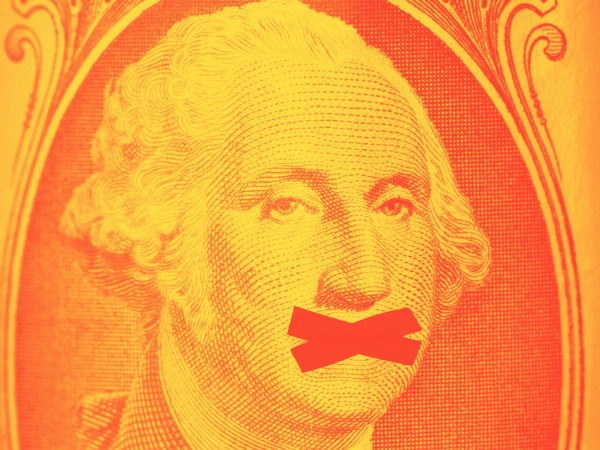
The danger signs were everywhere in 2022.

With every new law enacted by federal and state legislatures, every new ruling handed down by government courts, and every new military weapon, invasive tactic and egregious protocol employed by government agents, we were reminded that in the eyes of the government and its corporate accomplices, “we the people” possess no rights except for that which the Deep State grants on an as-needed basis.

Totalitarian paranoia spiked. What we have been saddled with is a government so power-hungry, paranoid and afraid of losing its stranglehold on power that it has conspired to wage war on anyone who dares to challenge its authority. In a Machiavellian attempt to expand its powers, the government unleashed all manner of dangers on an unsuspecting populace in order to justify its demands for additional powers to protect “we the people” from emerging threats, whether legitimate, manufactured or overblown.

The state of our nation suffered. The nation remained politically polarized, controlled by forces beyond the purview of the average American, and rapidly moving the nation away from its freedom foundation. The combined blowback from a contentious presidential election and the COVID-19 pandemic resulted in Americans being subjected to egregious civil liberties violations, invasive surveillance, martial law, lockdowns, political correctness, erosions of free speech, strip searches, police shootings of unarmed citizens, government spying, and the criminalization of lawful activities.

Thought crimes became a target for punishment. For years now, the government has used all of the weapons in its vast arsenal—surveillance, threat assessments, fusion centers, pre-crime programs, hate crime laws, militarized police, lockdowns, martial law, etc.—to target potential enemies of the state based on their ideologies, behaviors, affiliations and other characteristics that might be deemed suspicious or dangerous. In other words, if you dare to subscribe to any views that are contrary to the government’s, you may well be suspected of being a domestic terrorist and treated accordingly. In 2022, those who criticized the government—whether that criticism manifested itself in word, deed or thought—were flagged as dangerous alongside consumers and spreaders of “mis- dis- and mal-information.”

Speech was muzzled. Those who want to monitor, muzzle, catalogue and censor speech continued to push for social media monitoring, censorship of flagged content that could be construed as dangerous or hateful, and limitations on free speech activities, particularly online. Of course, it’s a slippery slope from censoring so-called illegitimate ideas to silencing truth. Eventually, as George Orwell predicted, telling the truth will become a revolutionary act. If the government can control speech, it can control thought and, in turn, it can control the minds of the citizenry.

Kill switches aimed to turn off more than just your car. Vehicle “kill switches” were sold to the public as a safety measure aimed at keeping drunk drivers off the roads, but they were a perfect metaphor for the government’s efforts to not only take control of our cars but also our freedoms and our lives. For too long, we have been captive passengers in a driverless car controlled by the government, losing more and more of our privacy and autonomy the further down the road we go.

Currency went digital. No matter how much money the government pulls in, it’s never enough, so the government came up with a new plan to make it even easier for its agents to seize Americans’ bank account. In an Executive Order issued in March 2022, President Biden called for the federal government to consider establishing a form of digital money. Digital currency will provide the government and its corporate partners with a mode of commerce that can easily be monitored, tracked, tabulated, mined for data, hacked, hijacked and confiscated when convenient.

The government spoke in a language of violence. Police violence killed three people a day. Warrior cops—trained in the worst-case scenario and thus ready to shoot first and ask questions later—did not make us or themselves any safer. Despite this, President Biden’s pledged to expand law enforcement and so-called crime prevention through a $30 billion “Fund the Police” program.

Cancel culture became more intolerant. Cancel culture—political correctness amped up on steroids, the self-righteousness of a narcissistic age, and a mass-marketed pseudo-morality that is little more than fascism disguised as tolerance—shifted us into an Age of Intolerance, policed by techno-censors, social media bullies, and government watchdogs. Everything has now become fair game for censorship if it can be construed as hateful, hurtful, bigoted or offensive provided that it runs counter to the established viewpoint.

Homes were invaded. Government agents routinely violated the Fourth Amendment at will under the pretext of public health and safety. This doesn’t even begin to touch on the many ways the government and its corporate partners-in-crime used surveillance technology to invade homes: with wiretaps, thermal imaging, surveillance cameras, and other monitoring devices.

Political theater kept the public distracted. Having devolved into a carefully calibrated exercise in how to manipulate, polarize, propagandize and control a population, the political scene provided ample diversions with its televised Jan. 6 committee hearings, the Russia-Ukraine crisis, the Ketanji Brown Jackson confirmation hearings, and more.

Bodily integrity was undermined. Caught in the crosshairs of a showdown between the rights of the individual and the so-called “emergency” state, concerns about COVID-19 mandates and bodily integrity remained part of a much larger debate over the ongoing power struggle between the citizenry and the government over our property “interest” in our bodies. This debate over bodily integrity covered broad territory, ranging from abortion and forced vaccinations to biometric surveillance and basic healthcare. Although the Supreme Court overturned its earlier rulings recognizing abortion as a constitutional right under the Fourteenth Amendment, it did nothing to resolve the larger problem that plagues us today: namely, that all along the spectrum of life—from the unborn child to the aged—the government continues to play fast and loose with the lives of the citizenry.

The government’s fiscal insanity reached new heights. The national debt (the amount the federal government has borrowed over the years and must pay back) hit $30 trillion. That translates to roughly $242,000 per taxpayer. It’s estimated that the amount this country owes is now 130% greater than its gross domestic product (all the products and services produced in one year by labor and property supplied by the citizens). That debt is also growing exponentially: it is expected to be twice the size of the U.S. economy by 2051.

Surveillance got creepier. On any given day, the average American going about his daily business was monitored, surveilled, spied on and tracked in more than 20 different ways, by both government and corporate eyes and ears. In such a surveillance ecosystem, we’re all suspects and databits to be tracked, catalogued and targeted. With every new AI surveillance technology that was adopted and deployed without any regard for privacy, Fourth Amendment rights and due process, the rights of the citizenry were marginalized, undermined and eviscerated.

Precrime became more fact than fiction. Under the pretext of helping overwhelmed government agencies work more efficiently, AI predictive and surveillance technologies were used to classify, segregate and flag the populace with little concern for privacy rights or due process. All of this sorting, sifting and calculating was done swiftly, secretly and incessantly with the help of AI technology and a surveillance state that monitors your every move. Where this becomes particularly dangerous is when the government takes preemptive steps to combat crime or abuse, or whatever the government has chosen to outlaw at any given time.

The government waged psychological warfare on the nation. The government made clear in word and deed that “we the people” are domestic enemies to be targeted, tracked, manipulated, micromanaged, surveilled, viewed as suspects, and treated as if our fundamental rights are mere privileges that can be easily discarded. Aided and abetted by technological advances and scientific experimentation, the government weaponized violence; surveillance, pre-crime and pre-thought campaigns; digital currencies, social media scores and censorship; desensitization campaigns; fear; genetics; and entertainment.

Gun confiscation laws put a target on the back of every American. Red flag gun laws (which authorize government officials to seize guns from individuals viewed as a danger to themselves or others) gained traction as a legislative means by which to allow police to remove guns from people suspected of being threats. Red flag gun laws merely push us that much closer towards a suspect society where everyone is potentially guilty of some crime or another and must be preemptively rendered harmless.

The burden of proof was reversed. Although the Constitution requires the government to provide solid proof of criminal activity before it can deprive a citizen of life or liberty, the government turned that fundamental assurance of due process on its head. Each and every one of us is now seen as a potential suspect, terrorist and lawbreaker in the eyes of the government. The groundwork has been laid for a new kind of government where it won’t matter if you’re innocent or guilty, whether you’re a threat to the nation, or even if you’re a citizen. What will matter is what the government—or whoever happens to be calling the shots at the time—thinks. And if the powers-that-be think you’re a threat to the nation and should be locked up, then you’ll be locked up with no access to the protections our Constitution provides.

The Supreme Court turned America into a Constitution-free zone. Although the Court’s rulings on qualified immunity for police who engage in official misconduct were largely overshadowed by its politically polarizing rulings on abortion, gun ownership and religion, they were no less devastating. The bottom line: there will be no consequences for cops who brutalize the citizenry and no justice for the victims of police brutality.

The FBI went rogue. The FBI’s laundry list of crimes against the American people ran the gamut from surveillance, disinformation, blackmail, entrapment, and intimidation tactics to harassment and indoctrination, governmental overreach, abuse, misconduct, trespassing, enabling criminal activity, and damaging private property, and that’s just based on what we know.

The government waged war on political freedom. In more and more cases, the government declared war on what should be protected political speech whenever it challenges the government’s power, reveals the government’s corruption, exposes the government’s lies, and encourages the citizenry to push back against the government’s many injustices.

The military industrial complex waged more wars. America’s part in the showdown between Russia and the Ukraine conveniently followed on the heels of a long line of other crises which have occurred like clockwork in order to keep Americans distracted, deluded, amused, and insulated from the government’s steady encroachments on our freedoms.

The Deep State went global. We’ve been inching closer to a new world order for the past several decades, but COVID-19, which saw governmental and corporate interests become even more closely intertwined, shifted this transformation into high gear. This new world order—a global world order—made up of international government agencies and corporations owes its existence in large part to the U.S. government’s deep-seated and, in many cases, top-secret alliances with foreign nations and global corporations. This powerful international cabal, let’s call it the Global Deep State, is just as real as the corporatized, militarized, industrialized American Deep State, and it poses just as great a threat to our rights as individuals under the U.S. Constitution, if not greater.

Authoritarian madness escalated. You didn’t have to be a conspiracy theorist or even anti-government to recognize the slippery slope that starts with well-meaning intentions for the greater good and ends with tyrannical abuses no one should tolerate. When any government is empowered to adopt a comply-or-suffer-the-consequences mindset that is enforced through mandates, lockdowns, penalties, detention centers, martial law, and an utter disregard for the rights of the individual, there should be reason for concern.

The takeaway: the more things changed, the more they stayed the same.

As I make clear in my book Battlefield America: The War on the American People and in its fictional counterpart The Erik Blair Diaries, if there is any means left to us for thwarting the government in its relentless march towards outright dictatorship, it rests—as it always has—at the local level, with “we the people.”

Unless we work together to push back against the government’s overreach, excesses and abuse, 2023 will be yet another terrible, horrible, no good, very bad year for freedom.

Source: https://bit.ly/3jrcC5D

ABOUT JOHN W. WHITEHEAD

Constitutional attorney and author John W. Whitehead is founder and president of The Rutherford Institute. His most recent books are the best-selling Battlefield America: The War on the American People, the award-winning A Government of Wolves: The Emerging American Police State, and a debut dystopian fiction novel, The Erik Blair Diaries. Whitehead can be contacted at staff@rutherford.org. Nisha Whitehead is the Executive Director of The Rutherford Institute. Information about The Rutherford Institute is available at www.rutherford.org.

Publication Guidelines / Reprint Permission

John W. Whitehead’s weekly commentaries are available for publication to newspapers and web publications at no charge. Please contact staff@rutherford.org to obtain reprint permission.
“When the song of the angels is stilled, when the star in the sky is gone, when the kings and princes are home, when the shepherds are back with their flocks, the work of Christmas begins: to find the lost, to heal the broken, to feed the hungry, to release the prisoner, to rebuild the nations, to bring peace among the people, to make music in the heart.”—Howard Thurman, theologian and civil rights activist

The Christmas story of a baby born in a manger is a familiar one.

The Roman Empire, a police state in its own right, had ordered that a census be conducted. Joseph and his pregnant wife Mary traveled to the little town of Bethlehem so that they could be counted. There being no room for the couple at any of the inns, they stayed in a stable (a barn), where Mary gave birth to a baby boy, Jesus. Warned that the government planned to kill the baby, Jesus’ family fled with him to Egypt until it was safe to return to their native land.

Yet what if Jesus had been born 2,000 years later.

What if, instead of being born into the Roman police state, Jesus had been born at this moment in time? What kind of reception would Jesus and his family be given? Would we recognize the Christ child’s humanity, let alone his divinity? Would we treat him any differently than he was treated by the Roman Empire? If his family were forced to flee violence in their native country and sought refuge and asylum within our borders, what sanctuary would we offer them?A singular number of churches across the country have asked those very questions in recent years, and their conclusions were depicted with unnerving accuracy by nativity scenes in which Jesus and his family are separated, segregated and caged in individual chain-link pens, topped by barbed wire fencing.

Those nativity scenes were a pointed attempt to remind the modern world that the narrative about the birth of Jesus is one that speaks on multiple fronts to a world that has allowed the life, teachings and crucifixion of Jesus to be drowned out by partisan politics, secularism, materialism and war, all driven by a manipulative shadow government called the Deep State.

The modern-day church has largely shied away from applying Jesus’ teachings to modern problems such as war, poverty, immigration, etc., but thankfully there have been individuals throughout history who ask themselves and the world: what would Jesus do.

What would Jesus—the baby born in Bethlehem who grew into an itinerant preacher and revolutionary activist, who not only died challenging the police state of his day (namely, the Roman Empire) but spent his adult life speaking truth to power, challenging the status quo of his day, and pushing back against the abuses of the Roman Empire—do about the injustices of our  modern age.

Dietrich Bonhoeffer asked himself what Jesus would have done about the horrors perpetrated by Hitler and his assassins. The answer: Bonhoeffer was executed by Hitler for attempting to undermine the tyranny at the heart of Nazi Germany.

Aleksandr Solzhenitsyn asked himself what Jesus would have done about the soul-destroying gulags and labor camps of the Soviet Union. The answer: Solzhenitsyn found his voice and used it to speak out about government oppression and brutality.

Martin Luther King Jr. asked himself what Jesus would have done about America’s warmongering. The answer: declaring “my conscience leaves me no other choice,” King risked widespread condemnation as well as his life when he publicly opposed the Vietnam War on moral and economic grounds.

Even now, despite the popularity of the phrase “What Would Jesus Do?” (WWJD) in Christian circles, there remains a disconnect in the modern church between the teachings of Christ and the suffering of what Jesus in Matthew 25 refers to as the “least of these.

Yet this is not a theological gray area: Jesus was unequivocal about his views on many things, not the least of which was charity, compassion, war, tyranny and love.

After all, Jesus—the revered preacher, teacher, radical and prophet—was born into a police state not unlike the growing menace of the American police state. When he grew up, he had powerful, profound things to say, things that would change how we view people, alter government policies and change the world. “Blessed are the merciful,” “Blessed are the peacemakers,” and “Love your enemies” are just a few examples of his most profound and revolutionary teachings.

When confronted by those in authority, Jesus did not shy away from speaking truth to power. Indeed, his teachings undermined the political and religious establishment of his day. It cost him his life. He was eventually crucified as a warning to others not to challenge the powers-that-be.

Can you imagine what Jesus’ life would have been like if, instead of being born into the Roman police state, he had been born and raised in the American police state.

Consider the following if you will.

Had Jesus been born in the era of the America police state, rather than traveling to Bethlehem for a census, Jesus’ parents would have been mailed a 28-page American Community Survey, a mandatory government questionnaire documenting their habits, household inhabitants, work schedule, how many toilets are in your home, etc. The penalty for not responding to this invasive survey can go as high as $5,000.

Instead of being born in a manger, Jesus might have been born at home. Rather than wise men and shepherds bringing gifts, however, the baby’s parents might have been forced to ward off visits from state social workers intent on prosecuting them for the home birth. One couple in Washington had all three of their children removed after social services objected to the two youngest being birthed in an unassisted home delivery.

Had Jesus been born in a hospital, his blood and DNA would have been taken without his parents’ knowledge or consent and entered into a government biobank. While most states require newborn screening, a growing number are holding onto that genetic material long-term for research, analysis and purposes yet to be disclosed.

Then again, had Jesus’ parents been undocumented immigrants, they and the newborn baby might have been shuffled to a profit-driven, private prison for illegals where they first would have been separated from each other, the children detained in make-shift cages, and the parents eventually turned into cheap, forced laborers for corporations such as Starbucks, Microsoft, Walmart, and Victoria’s Secret. There’s quite a lot of money to be made from imprisoning immigrants, especially when taxpayers are footing the bill.

From the time he was old enough to attend school, Jesus would have been drilled in lessons of compliance and obedience to government authorities, while learning little about his own rights. Had he been daring enough to speak out against injustice while still in school, he might have found himself tasered or beaten by a school resource officer, or at the very least suspended under a school zero tolerance policy that punishes minor infractions as harshly as more serious offenses.

Had Jesus disappeared for a few hours let alone days as a 12-year-old, his parents would have been handcuffed, arrested and jailed for parental negligence. Parents across the country have been arrested for far less “offenses” such as allowing their children to walk to the park unaccompanied and play in their front yard alone.

Rather than disappearing from the history books from his early teenaged years to adulthood, Jesus’ movements and personal data—including his biometrics—would have been documented, tracked, monitored and filed by governmental agencies and corporations such as Google and Microsoft. Incredibly, 95 percent of school districts share their student records with outside companies that are contracted to manage data, which they then use to market products to us.

From the moment Jesus made contact with an “extremist” such as John the Baptist, he would have been flagged for surveillance because of his association with a prominent activist, peaceful or otherwise. Since 9/11, the FBI has actively carried out surveillance and intelligence-gathering operations on a broad range of activist groups, from animal rights groups to poverty relief, anti-war groups and other such “extremist” organizations.

Jesus’ anti-government views would certainly have resulted in him being labeled a domestic extremist. Law enforcement agencies are being trained to recognize signs of anti-government extremism during interactions with potential extremists who share a “belief in the approaching collapse of government and the economy.

While traveling from community to community, Jesus might have been reported to government officials as “suspicious” under the Department of Homeland Security’s “See Something, Say Something” programs. Many states, including New York, are providing individuals with phone apps that allow them to take photos of suspicious activity and report them to their state Intelligence Center, where they are reviewed and forwarded to law-enforcement agencies.

Rather than being permitted to live as an itinerant preacher, Jesus might have found himself threatened with arrest for daring to live off the grid or sleeping outside. In fact, the number of cities that have resorted to criminalizing homelessness by enacting bans on camping, sleeping in vehicles, loitering and begging in public has doubled.

Viewed by the government as a dissident and a potential threat to its power, Jesus might have had government spies planted among his followers to monitor his activities, report on his movements, and entrap him into breaking the law. Such Judases today—called informants—often receive hefty paychecks from the government for their treachery.

Had Jesus used the internet to spread his radical message of peace and love, he might have found his blog posts infiltrated by government spies attempting to undermine his integrity, discredit him or plant incriminating information online about him. At the very least, he would have had his website hacked and his email monitored.

Had Jesus attempted to feed large crowds of people, he would have been threatened with arrest for violating various ordinances prohibiting the distribution of food without a permit. Florida officials arrested a 90-year-old man for feeding the homeless on a public beach.

Had Jesus spoken publicly about his 40 days in the desert and his conversations with the devil, he might have been labeled mentally ill and detained in a psych ward against his will for a mandatory involuntary psychiatric hold with no access to family or friends. One Virginia man was arrested, strip searched, handcuffed to a table, diagnosed as having “mental health issues,” and locked up for five days in a mental health facility against his will apparently because of his slurred speech and unsteady gait.

Without a doubt, had Jesus attempted to overturn tables in a Jewish temple and rage against the materialism of religious institutions, he would have been charged with a hate crime. More than 45 states and the federal government have hate crime laws on the books.

Had anyone reported Jesus to the police as being potentially dangerous, he might have found himself confronted—and killed—by police officers for whom any perceived act of non-compliance (a twitch, a question, a frown) can result in them shooting first and asking questions later.

Rather than having armed guards capture Jesus in a public place, government officials would have ordered that a SWAT team carry out a raid on Jesus and his followers, complete with flash-bang grenades and military equipment. There are upwards of 80,000 such SWAT team raids carried out every year, many on unsuspecting Americans who have no defense against such government invaders, even when such raids are done in error.

Instead of being detained by Roman guards, Jesus might have been made to “disappear” into a secret government detention center where he would have been interrogated, tortured and subjected to all manner of abuses. Chicago police have “disappeared” more than 7,000 people into a secret, off-the-books interrogation warehouse at Homan Square.

Charged with treason and labeled a domestic terrorist, Jesus might have been sentenced to a life-term in a private prison where he would have been forced to provide slave labor for corporations or put to death by way of the electric chair or a lethal mixture of drugs.

Indeed, as I make clear in my book Battlefield America: The War on the American People and in its fictional counterpart The Erik Blair Diaries, given the nature of government then and now, it is painfully evident that whether Jesus had been born in our modern age or his own, he still would have died at the hands of a police state.

Thus, as we draw near to Christmas with its celebration of miracles and promise of salvation, we would do well to remember that what happened in that manger on that starry night in Bethlehem is only the beginning of the story. That baby born in a police state grew up to be a man who did not turn away from the evils of his age but rather spoke out against it.

We must do no less.

Source: https://bit.ly/3HND57M

ABOUT JOHN W. WHITEHEAD

Constitutional attorney and author John W. Whitehead is founder and president of The Rutherford Institute. His most recent books are the best-selling Battlefield America: The War on the American People, the award-winning A Government of Wolves: The Emerging American Police State, and a debut dystopian fiction novel, The Erik Blair Diaries. Whitehead can be contacted at staff@rutherford.org. Nisha Whitehead is the Executive Director of The Rutherford Institute. Information about The Rutherford Institute is available at www.rutherford.org.

Publication Guidelines / Reprint Permission

John W. Whitehead’s weekly commentaries are available for publication to newspapers and web publications at no charge. Please contact staff@rutherford.org to obtain reprint permission.