“We’re all potential victims.”—Peter Christ, retired police officer
Sometimes ten seconds is all the warning you get.
Sometimes you don’t get a warning before all hell breaks loose.
Imagine it, if you will: It’s the middle of the night. Your neighborhood is in darkness. Your household is asleep. Suddenly, you’re awakened by a loud noise.
Barely ten seconds later, someone or an army of someones has crashed through your front door.
The intruders are in your home.
Your heart begins racing. Your stomach is tied in knots. The adrenaline is pumping through you.
You’re not just afraid. You’re terrified.
Desperate to protect yourself and your loved ones from whatever threat has invaded your home, you scramble to lay hold of something—anything—that you might use in self-defense. It might be a flashlight, a baseball bat, or that licensed and registered gun you thought you’d never need.
You brace for the confrontation.
Shadowy figures appear at the doorway, screaming orders, threatening violence, launching flash bang grenades.
Chaos reigns.
You stand frozen, your hands gripping whatever means of self-defense you could find.
Just that simple act—of standing frozen in fear and self-defense—is enough to spell your doom.
The assailants open fire, sending a hail of bullets in your direction.
In your final moments, you get a good look at your assassins: it’s the police.
Brace yourself, because this hair-raising, heart-pounding, jarring account of a SWAT team raid is what passes for court-sanctioned policing in America today, and it could happen to any one of us or our loved ones.
Nationwide, SWAT teams routinely invade homes, break down doors, kill family pets (they always shoot the dogs first), damage furnishings, terrorize families, and wound or kill those unlucky enough to be present during a raid.
No longer reserved exclusively for deadly situations, SWAT teams are now increasingly being deployed for relatively routine police matters such as serving a search warrant, with some SWAT teams being sent out as much as five times a day.
SWAT teams have been employed to address an astonishingly trivial array of so-called criminal activity or mere community nuisances: angry dogs, domestic disputes, improper paperwork filed by an orchid farmer, and misdemeanor marijuana possession, to give a brief sampling.
Police have also raided homes on the basis of mistaking the presence or scent of legal substances for drugs. Incredibly, these substances have included tomatoes, sunflowers, fish, elderberry bushes, kenaf plants, hibiscus, and ragweed. In some instances, SWAT teams are even employed, in full armament, to perform routine patrols.
These raids, which might be more aptly referred to as “knock-and-shoot” policing, have become a thinly veiled, court-sanctioned means of giving heavily armed police the green light to crash through doors in the middle of the night.
No-knock raids, a subset of the violent, terror-inducing raids carried out by police SWAT teams on unsuspecting households, differ in one significant respect: they are carried out without police even having to announce themselves.
Warning or not, to the unsuspecting homeowner woken from sleep by the sounds of a violent entry, there is no way of distinguishing between a home invasion by criminals as opposed to a police mob. In many instances, there is little real difference.
According to an in-depth investigative report by The Washington Post, “police carry out tens of thousands of no-knock raids every year nationwide.”
While the Fourth Amendment requires that police obtain a warrant based on probable cause before they can enter one’s home, search and seize one’s property, or violate one’s privacy, SWAT teams are granted “no-knock” warrants at high rates such that the warrants themselves are rendered practically meaningless.
In addition to the terror brought on by these raids, general incompetence, collateral damage (fatalities, property damage, etc.) and botched raids are also characteristic of these SWAT team raids.
In some cases, officers misread the address on the warrant. In others, they simply barge into the wrong house or even the wrong building. In another subset of cases, SWAT teams have conducted multiple, sequential raids on wrong addresses; executed search warrants despite the fact that the suspect is already in police custody; or conducted a search of a building where the suspect no longer resides.
That appeared to be the case in Ohio, when a botched SWAT team raid in pursuit of stolen guns at a home where the suspects no longer resided resulted in a 17-month-old baby with a heart defect and a breathing disorder ending up in the ICU with burns around the eyes, chest and neck. In that Jan. 10, 2024, incident, police waited all of six seconds after knocking on the door before using a battering ram to break in and simultaneously launch two flash-bang grenades into the home. The baby’s mother, having lived in the house for a week, barely had time to approach the door before she was grabbed at gunpoint, handcuffed and hustled outside. Only later did police allow her to enter the home to check on the baby, who had been hooked up to a ventilator near the window that police shattered before deploying the flash grenades.
Aiyana Jones is dead because of a SWAT raid gone awry. The 7-year-old was killed after a Detroit SWAT team—searching for a suspect—launched a flash-bang grenade into her family’s apartment, broke through the door and opened fire, hitting the little girl who was asleep on the living room couch. The cops weren’t even in the right apartment.
Exhibiting a similar lack of basic concern for public safety, a Georgia SWAT team launched a flash-bang grenade into the house in which Baby Bou Bou, his three sisters and his parents were staying. The grenade landed in the 2-year-old’s crib, burning a hole in his chest and leaving him with scarring that a lifetime of surgeries will not be able to easily undo.
The horror stories have become legion in which homeowners are injured or killed simply because they mistook a SWAT team raid by police for a home invasion by criminals.
That’s exactly what happened to a 16-year-old Alabama boy. Mistaking a pre-dawn SWAT team raid for a home invasion, the boy grabbed a gun to protect his family only to be gunned down by police attempting to execute a search warrant for drugs. The boy’s brother, not home at the time of the raid, was later arrested with 8 grams of marijuana.
Then there was Jose Guerena, the young ex-Marine who was killed after a SWAT team kicked open the door of his Arizona home during a drug raid and opened fire. According to news reports, Guerena, 26 years old and the father of two young children, grabbed a gun in response to the forced invasion but never fired. In fact, the safety was still on his gun when he was killed. Police officers were not as restrained. The young Iraqi war veteran was allegedly fired upon 71 times. Guerena had no prior criminal record, and the police found nothing illegal in his home.
All too often, botched SWAT team raids have resulted in one tragedy after another for those targeted with little consequences for law enforcement.
The problem, as one reporter rightly concluded, is “not that life has gotten that much more dangerous, it’s that authorities have chosen to respond to even innocent situations as if they were in a warzone.”
A study by a political scientist at Princeton University concludes that militarizing police and SWAT teams “provide no detectable benefits in terms of officer safety or violent crime reduction.” The study, the first systematic analysis on the use and consequences of militarized force, reveals that “police militarization neither reduces rates of violent crime nor changes the number of officers assaulted or killed.”
SWAT teams, designed to defuse dangerous situations such as those involving hostages, were never meant to be used for routine police work targeting nonviolent suspects, yet they have become intrinsic parts of federal and local law enforcement operations.
There are few communities without a SWAT team today.
In 1980, there were roughly 3,000 SWAT team-style raids in the US.
Incredibly, that number has since grown to more than 80,000 SWAT team raids per year, often for routine law enforcement tasks.
In the state of Maryland alone, 92 percent of 8200 SWAT missions were used to execute search or arrest warrants.
Police in both Baltimore and Dallas have used SWAT teams to bust up poker games.
A Connecticut SWAT team swarmed a bar suspected of serving alcohol to underage individuals.
In Arizona, a SWAT team was used to break up an alleged cockfighting ring.
An Atlanta SWAT team raided a music studio, allegedly out of a concern that it might have been involved in illegal music piracy.
And then there are the SWAT team raids arising from red flag gun laws, which gives police the authority to preemptively raid homes of people “suspected” of being threats who might be in possession of a gun, legal or otherwise.
With more states adding red flag gun laws to their books, what happened to Duncan Lemp—who was gunned down in his bedroom during an early morning, no-knock SWAT team raid on his family’s home—could very well happen to more people.
At 4:30 a.m. on March 12, 2020, in the midst of a COVID-19 pandemic that had most of the country under a partial lockdown and sheltering at home, a masked SWAT team—deployed to execute a “high risk” search warrant for unauthorized firearms—stormed the suburban house where 21-year-old Duncan lived with his parents and 19-year-old brother. The entire household, including Lemp and his girlfriend, was reportedly asleep when the SWAT team directed flash bang grenades and gunfire through Lemp’s bedroom window. Lemp was killed and his girlfriend injured.
No one in the house that morning, including Lemp, had a criminal record.
No one in the house that morning, including Lemp, was considered an “imminent threat” to law enforcement or the public, at least not according to the search warrant.
So, what was so urgent that militarized police felt compelled to employ battlefield tactics in the pre-dawn hours of a day when most people are asleep in bed, not to mention stuck at home as part of a nationwide lockdown?
According to police, they were tipped off that Lemp was in possession of “firearms.”
Thus, rather than approaching the house by the front door at a reasonable hour in order to investigate this complaint—which is what the Fourth Amendment requires—police instead strapped on their guns, loaded up their flash bang grenades and acted like battle-crazed warriors.
This is what happens when you use SWAT teams to carry out routine search warrants.
These incidents underscore a dangerous mindset in which the citizenry (often unarmed and defenseless) not only have less rights than militarized police, but also one in which the safety of the citizenry is treated as a lower priority than the safety of their police counterparts (who are armed to the hilt with an array of lethal and nonlethal weapons).
Yet it wasn’t always this way.
There was a time in America when a person’s home was a sanctuary, safe and secure from the threat of invasion by government agents, who were held at bay by the dictates of the Fourth Amendment, which protects American citizens from unreasonable searches and seizures.
The Fourth Amendment, in turn, was added to the U.S. Constitution by colonists still smarting from the abuses they had been forced to endure while under British rule, among these home invasions by the military under the guise of “writs of assistance.” These writs gave British soldiers blanket authority to raid homes, damage property and wreak havoc for any reason whatsoever, without any expectation of probable cause.
We have come full circle to a time before the American Revolution when government agents—with the blessing of the courts—could force their way into a citizen’s home, with seemingly little concern for lives lost and property damaged in the process.
If these aggressive, excessive police tactics have also become troublingly commonplace, it is in large part due to judges who largely rubberstamp the warrant requests based only on the word of police; police who have been known to lie or fabricate the facts in order to justify their claims of “reasonable suspicion” (as opposed to the higher standard of probable cause, which is required by the Constitution before any government official can search an individual or his property); and software that allows judges to remotely approve requests using computers, cellphones or tablets.
This sorry state of affairs is made even worse by the U.S. Supreme Court, which tends to shield police under the guise of qualified immunity. As Reuters concluded, “the Supreme Court has built qualified immunity into an often insurmountable police defense.”
Rubber-stamped, court-issued warrants for no-knock SWAT team raids have become the modern-day equivalent of colonial-era writs of assistance.
Given President Biden’s determination to expand law enforcement and so-called crime prevention at taxpayer expense, our privacy, property and security may be in even greater danger from government intrusion.
Be warned: as I make clear in my book Battlefield America: The War on the American People and in its fictional counterpart The Erik Blair Diaries, the American police state has become a powder keg waiting for a lit match.
Source: http://tinyurl.com/yurfnxub
ABOUT JOHN W. WHITEHEAD
Constitutional attorney and author John W. Whitehead is founder and president of The Rutherford Institute. His most recent books are the best-selling Battlefield America: The War on the American People, the award-winning A Government of Wolves: The Emerging American Police State, and a debut dystopian fiction novel, The Erik Blair Diaries. Whitehead can be contacted at staff@rutherford.org. Nisha Whitehead is the Executive Director of The Rutherford Institute. Information about The Rutherford Institute is available at www.rutherford.org.
Publication Guidelines / Reprint Permission
John W. Whitehead’s weekly commentaries are available for publication to newspapers and web publications at no charge.







2024 Is the New 1984: Big Brother and the Rise of the Security Industrial Complex
Posted: February 6, 2024 in CommentaryTags: Big Brother, civil liberties, Orwell, police state, surveillance
2024 is the new 1984.
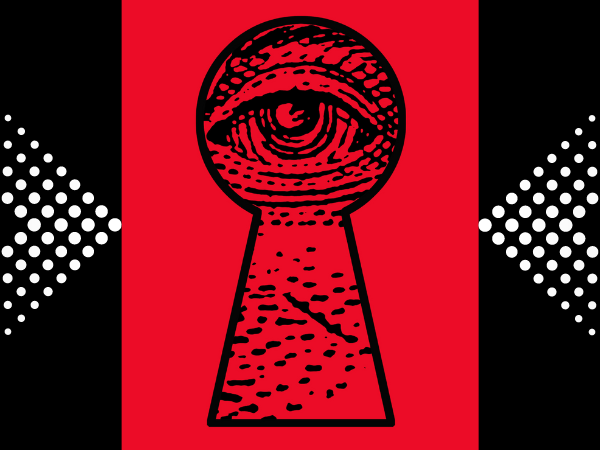
Forty years past the time that George Orwell envisioned the stomping boot of Big Brother, the police state is about to pass off the baton to the surveillance state.
Fueled by a melding of government and corporate power—the rise of the security industrial complex—this watershed moment sounds a death knell for our privacy rights.
An unofficial fourth branch of government, the Surveillance State came into being without any electoral mandate or constitutional referendum, and yet it possesses superpowers, above and beyond those of any other government agency save the military.
It operates beyond the reach of the president, Congress and the courts, and it marches in lockstep with the corporate elite who really call the shots in Washington, DC.
This is the new face of tyranny in America: all-knowing, all-seeing and all-powerful.
Tread cautiously.
Empowered by advances in surveillance technology and emboldened by rapidly expanding public-private partnerships between law enforcement, the Intelligence Community, and the private sector, the Surveillance State is making the fictional world of 1984, Orwell’s dystopian nightmare, our looming reality.
1984 portrays a global society of total control in which people are not allowed to have thoughts that in any way disagree with the corporate state. There is no personal freedom, and advanced technology has become the driving force behind a surveillance-driven society. Snitches and cameras are everywhere. People are subject to the Thought Police, who deal with anyone guilty of thought crimes. The government, or “Party,” is headed by Big Brother who appears on posters everywhere with the words: “Big Brother is watching you.”
Indeed, in our present age of ubiquitous surveillance, there are no private lives.
Everything is increasingly public.
What we are witnessing, in the so-called name of security and efficiency, is the creation of a new class system comprised of the watched (average Americans such as you and me) and the watchers (government bureaucrats, technicians and private corporations).
We now find ourselves in the unenviable position of being monitored, managed and controlled by our technology, which answers not to us but to our government and corporate rulers.
This is the fact-is-stranger-than-fiction lesson that is being pounded into us on a daily basis.
In this way, 1984, which depicted the ominous rise of ubiquitous technology, fascism and totalitarianism, has become an operation manual for the omnipresent, modern-day surveillance state.
There are roughly one billion surveillance cameras worldwide and that number continues to grow, thanks to their wholehearted adoption by governments (especially law enforcement and military agencies), businesses, and individual consumers.
Surveillance cameras mounted on utility poles, traffic lights, businesses, and homes. Ring doorbells. GPS devices. Dash cameras. Drones. Store security cameras. Geofencing and geotracking. FitBits. Alexa. Internet-connected devices.
Stingray devices, facial recognition technology, body cameras, automated license plate readers, gunshot detection, predictive policing software, AI-enhanced video analytics, real-time crime centers, fusion centers: all of these technologies and surveillance programs rely on public-private partnerships that together create a sticky spiderweb from which there is no escape.
With every new surveillance device we welcome into our lives, the government gains yet another toehold into our private worlds.
As the cost of these technologies becomes more affordable for the average consumer, an effort underwritten by the tech industry and encouraged by law enforcement agencies and local governing boards, which in turn benefit from access to surveillance they don’t need to include in their budgets, big cities, small towns, urban, suburban and rural communities alike are adding themselves to the surveillance state’s interconnected grid.
What this adds up to for government agencies (that is, FBI, NSA, DHS agents, etc., as well as local police) is a surveillance map that allows them to track someone’s movements over time and space, hopscotching from doorbell camera feeds and business security cameras to public cameras on utility poles, license plate readers, traffic cameras, drones, etc.
It has all but eliminated the notion of privacy enshrined in the Fourth Amendment and radically re-drawn the line of demarcation between our public and private selves.
The police state has become particularly adept at sidestepping the Fourth Amendment, empowered by advances in surveillance technology and emboldened by rapidly expanding public-private partnerships between law enforcement, the Intelligence Community, and the private sector.
Over the past 50-plus years, surveillance has brought about a series of revolutions in how governments govern and populations are policed to the detriment of us all. Cybersecurity expert Adam Scott Wandt has identified three such revolutions.
The first surveillance revolution came about as a result of government video cameras being installed in public areas. There were a reported 51 million surveillance cameras blanketing the United States in 2022. It’s estimated that Americans are caught on camera an average of 238 times every week (160 times per week while driving; 40 times per week at work; 24 times per week while out running errands and shopping; and 14 times per week through various other channels and activities). That doesn’t even touch on the coverage by surveillance drones, which remain a relatively covert part of police spying operations.
The second revolution occurred when law enforcement agencies started forging public-private partnerships with commercial establishments like banks and drug stores and parking lots in order to gain access to their live surveillance feeds. The use of automatic license plate readers (manufactured and distributed by the likes of Flock Safety), once deployed exclusively by police and now spreading to home owners associations and gated communities, extends the reach of the surveillance state that much further afield. It’s a win-win for police budgets and local legislatures when they can persuade businesses and residential communities to shoulder the costs of the equipment and share the footage, and they can conscript the citizenry to spy on each other through crowdsourced surveillance.
The third revolution was ushered in with the growing popularity of doorbell cameras such as Ring, Amazon’s video surveillance doorbell, and Google’s Nest Cam.
Amazon has been particularly aggressive in its pursuit of a relationship with police, enlisting them in its marketing efforts, and going so far as to hosting parties for police, providing free Ring doorbells and deep discounts, sharing “active camera” maps of Ring owners, allowing access to the Law Enforcement Neighborhood Portal, which enables police to directly contact owners for access to their footage, and coaching police on how to obtain footage without a warrant.
Ring currently partners with upwards of 2,161 law enforcement agencies and 455 fire departments, and that number grows exponentially every year. As Vice reports, “Ring has also heavily pursued city discount programs and private alliances with neighborhood watch groups. When cities provide free or discounted Ring cameras, they sometimes create camera registries, and police sometimes order people to aim Ring cameras at their neighbors, or only give cameras to people surveilled by neighborhood watches.”
In November 2022, San Francisco police gained access to the live footage of privately owned internet cameras as opposed to merely being able to access recorded footage. No longer do police even have to request permission of homeowners for such access: increasingly, corporations have given police access to footage as part of their so-called criminal investigations with or without court orders.
The fourth revolutionary shift may well be the use of facial recognition software and artificial intelligence-powered programs that can track people by their biometrics, clothing, behavior and car, thereby synthesizing the many strands of surveillance video footage into one cohesive narrative, which privacy advocates refer to as 360 degree surveillance.
While the guarantee of safety afforded by these surveillance nerve centers remains dubious, at best, there is no disguising their contribution in effecting a sea change towards outright authoritarianism.
For instance, as an in-depth investigative report by the Associated Press concludes, the very same mass surveillance technologies that were supposedly so necessary to fight the spread of COVID-19 are now being used to stifle dissent, persecute activists, harass marginalized communities, and link people’s health information to other surveillance and law enforcement tools.
As the AP reports, federal officials have also been looking into how to add “‘identifiable patient data,’ such as mental health, substance use and behavioral health information from group homes, shelters, jails, detox facilities and schools,” to its surveillance toolkit.
These cameras—and the public-private eyes peering at us through them—are re-engineering a society structured around the aesthetic of fear and, in the process, empowering “people to not just watch their neighborhood, but to organize as watchers,” creating not just digital neighborhood watches but digital gated communities.
Finally, there is a repressive, suppressive effect to surveillance that not only acts as a potentially small deterrent on crime but serves to monitor and chill lawful First Amendment activity.
As Matthew Feeney warns in the New York Times, “In the past, Communists, civil rights leaders, feminists, Quakers, folk singers, war protesters and others have been on the receiving end of law enforcement surveillance. No one knows who the next target will be.”
No one knows, but it’s a pretty good bet that the surveillance state will be keeping a close watch on anyone seen as a threat to the government’s chokehold on power.
After all, as I make clear in my book Battlefield America: The War on the American People and in its fictional counterpart The Erik Blair Diaries, the Surveillance State never sleeps.
Source: http://tinyurl.com/5y5h9bs2
ABOUT JOHN W. WHITEHEAD
Constitutional attorney and author John W. Whitehead is founder and president of The Rutherford Institute. His most recent books are the best-selling Battlefield America: The War on the American People, the award-winning A Government of Wolves: The Emerging American Police State, and a debut dystopian fiction novel, The Erik Blair Diaries. Whitehead can be contacted at staff@rutherford.org. Nisha Whitehead is the Executive Director of The Rutherford Institute. Information about The Rutherford Institute is available at www.rutherford.org.
Publication Guidelines / Reprint Permission
John W. Whitehead’s weekly commentaries are available for publication to newspapers and web publications at no charge.