


“The greatest tyrannies are always perpetuated in the name of the noblest causes.”—Thomas Paine
They said it was for safety.
They said it was for order.
They said it was for the good of the nation.
They always say it’s for something good… until it isn’t.
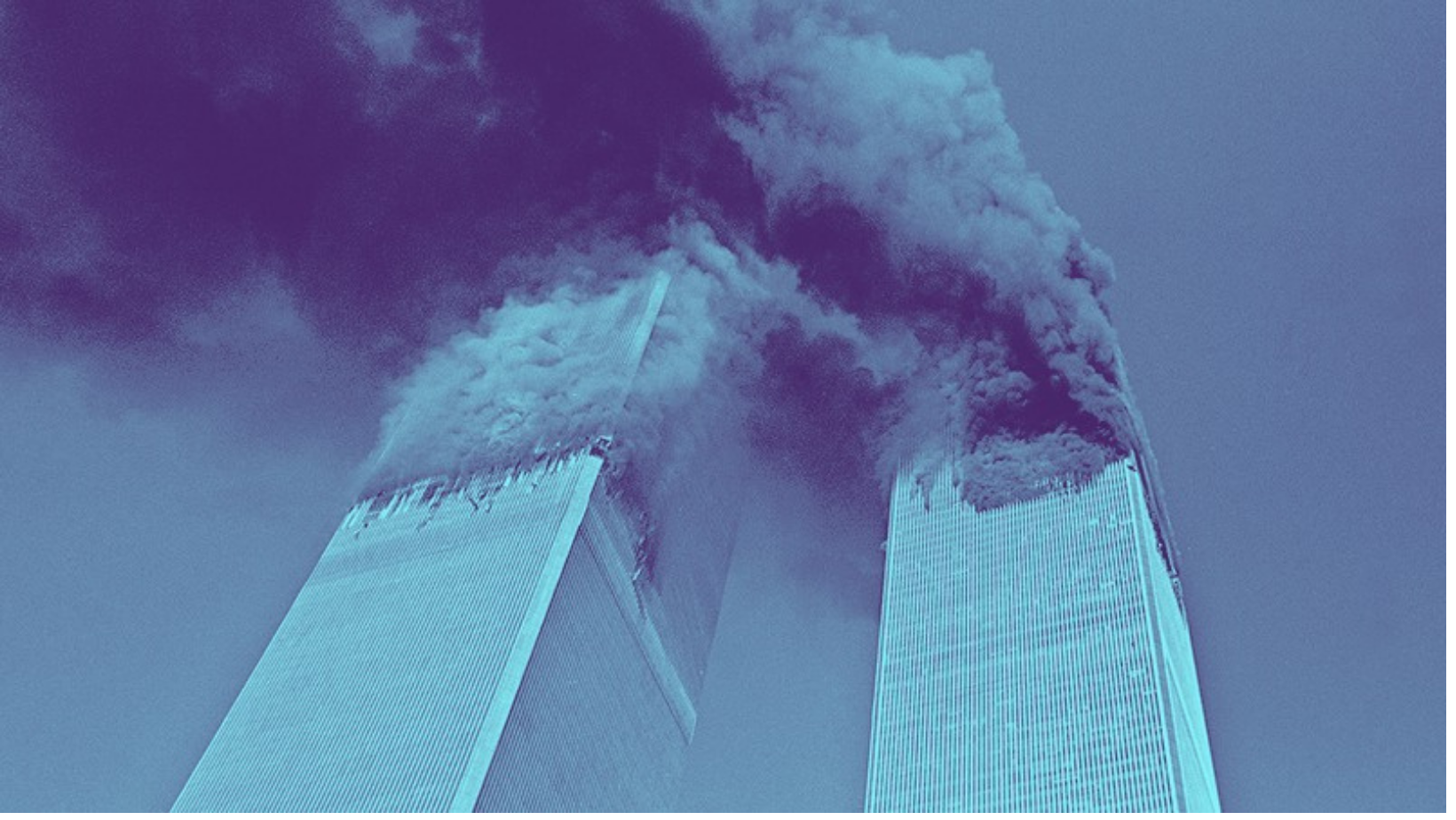
Nearly a quarter-century after 9/11, we are still living with the consequences of fear-driven government power grabs. What began as “temporary” measures for our security have hardened into a permanent architecture of control.
The bipartisan police-state architecture that began with 9/11 has been passed from president to president and party to party, each recycling the same justifications—safety, security, patriotism—to expand its powers at the expense of the citizenry.
So they locked down the country “for our safety.”
They expanded surveillance “for our security.”
They rounded up anyone who challenged the narrative “for the common good.”
They erased names, ideas, and histories “to prevent offense.”
They forced schools to teach only what was politically correct “for the children.”
They censored speech “for our protection.”
They targeted dissenters “to preserve peace.”
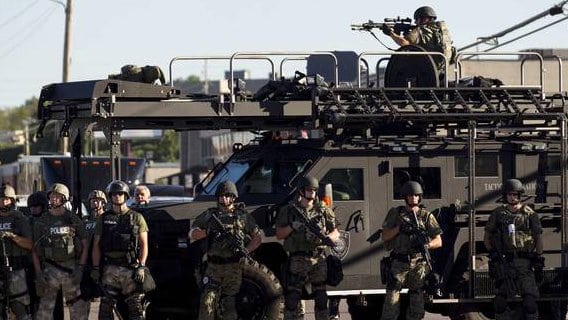
They militarized the streets and called it “law and order.”
These very abuses—once denounced when carried out by the Left—are now cheered, defended, and excused when carried out by the Right.
People who once spoke passionately about truth, freedom, and faith have now fallen silent in the face of injustice, or worse, convinced themselves that nothing is wrong. The very voices that should be warning against tyranny are instead excusing it or looking away.
This is the danger of double standards in politics: every tyranny is rationalized in the moment by its chorus of defenders.
But history teaches that what goes around comes around. If you justify it now, you’ll have no defense when the tables turn.
And yet, time and again, the lies we tell ourselves make it possible. The cult of personality. The blind loyalty to party. The belief that “our side” can’t be the villain.
It never ceases to amaze how far people will go to excuse the actions of their favorite tyrant, even when those actions are the very things they once swore to oppose.
The pattern of justifying tyranny is as old as power itself. Every abuse comes wrapped in the same excuse: we had to do it.
After 9/11, Americans were told the Patriot Act and mass surveillance were “necessary to prevent terrorism.” The result was a sprawling security state that tracks every phone call, every online search, every purchase. The justification was security. The cost was freedom.
Under Obama, drone warfare and the prosecution of whistleblowers were defended as “keeping America safe.” The president even claimed the power to assassinate U.S. citizens abroad without trial. The result was an unaccountable government acting as judge, jury and executioner. The justification was safety. The cost was due process.
During the COVID-19 pandemic, lockdowns and mandates were imposed in the name of “public health,” laying the groundwork for a Nanny State empowered to micromanage every aspect of our lives—where we go, what we buy, who we see. The result was government claiming control over every aspect of daily life. The justification was saving lives. The cost was the right to govern our bodies.
Under Trump, the script is familiar.
National Guard deployments in American cities are justified as “restoring order.” Sweeping surveillance is framed as “protecting communities.” Crackdowns on dissent are defended as “stopping criminals.” Mental health round-ups of the homeless are justified as “helping the vulnerable.” Militarized patrols on city streets are justified as “cleaning up the streets.” Turning ICE into a roving army of lawless thugs is justified as “protecting citizenship.” Censorship and efforts to sanitize American history are now being lauded by the same voices that railed against “cancel culture.”
That same logic has taken a deadly turn abroad. At Trump’s direction, the U.S. carried out a series of preemptive military strikes this year—against Iran’s nuclear sites, against the Houthis in Yemen, and most recently against what the administration claimed was a drug-trafficking boat off the coast of Venezuela. The White House has justified these deadly attacks—carried out without congressional approval or constitutional authorization—as part of the president’s unilateral war-making authority.
This, too, is part of the bipartisan police-state architecture built after 9/11, when presidents claimed open-ended authority to wage preemptive war without meaningful congressional oversight.
What began with Afghanistan and Iraq has metastasized into a global battlefield where any president can launch attacks—on Iran, on Yemen, on Venezuela—without accountability.
As always, the justification is order, safety, and patriotism. The cost is truth, justice and freedom.
Every time Trump expands his powers, the chorus is the same: It wouldn’t be necessary if Democrats had done their job. If you don’t break the law, you have nothing to fear. If you’re not doing anything wrong, why worry?
These are the oldest excuses for tyranny—and they never change. Only the partisanship does.
What makes Trump and those who came before him especially dangerous is not merely their willingness to wield power but the eagerness of their enablers to excuse and defend it at every turn.
History shows that bullies and strongmen can only rise when mobs rally to their side. A tyrant’s greatest weapon is not his fist, but the crowd that cheers him on, intimidates his critics, and convinces itself that might makes right.
The machinery of authoritarianism always needs a chorus of defenders, and today that chorus is louder, more organized, and more dismissive of constitutional limits than ever before.
We have been building to this moment for a long time. Even so, why do people accept tyranny so easily?
First, the cult of personality. When people invest blind faith in a leader, they will excuse anything he does. If he says surveillance is necessary, they believe it. If he says dissenters are enemies, they cheer their punishment. It is the psychology of the mob, cloaked in the loyalty of the true believer.
Second, fear as a political weapon. Every despot knows that frightened people will tolerate almost anything. Fear of terrorism. Fear of crime. Fear of disease. Fear of immigrants. Fear of collapse. Fear makes people beg for the chains that bind them.
Third, the “our side” fallacy. People imagine tyranny is only tyranny when the other side does it. When their side does it, they call it leadership. They call it patriotism. They call it protection. But the abuse doesn’t change when the party label does. Wrong is wrong.
Every new regime that seizes power promises it will use extraordinary authority only for good. And every regime—without exception—uses it to entrench itself at the expense of liberty.
Every generation tells itself the same lies to excuse the same abuses.
Consider the whiplash of partisan double standards:
- Conservatives who blasted the Obama administration for NSA spying now cheer Trump’s Palantir partnership and AI-driven surveillance that tracks Americans’ digital footprints.
- Democrats who embraced Biden’s use of emergency orders to advance their agenda have been quick to denounce Trump for ruling by executive order.
- Those who bristled at COVID mandates under Democrats now applaud Trump’s use of government force to impose his own version of “public safety.”
- Both sides flip-flop on free speech. Conservatives denounced censorship on college campuses but defend banning “dangerous” books and surveilling dissidents, while liberals oppose Trump’s attempt to whitewash history yet defend platforms censoring speech they deem “harmful” or “hateful.”
The double standard is breathtaking.
Tyranny doesn’t change depending on who carries it out. Yet partisans convince themselves it does. They say: It’s different this time. It’s necessary. It’s for us.
In truth, the only difference is who holds the whip.
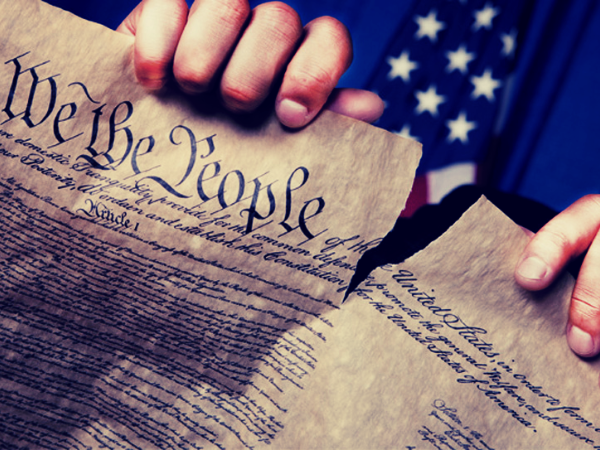
The Constitution was designed to restrain exactly this impulse. It does not say: “These rights apply only when the other party is in power.” It does not say: “The executive may rule by decree if he is popular.”
James Madison warned that “if men were angels, no government would be necessary.” But men are not angels. That is why the Constitution separates powers, guarantees due process, and protects speech and assembly—especially in times of crisis.
Every time one party tramples these limits, the other eventually inherits those same powers and uses them in turn. The Patriot Act, passed under Bush, was wielded aggressively under Obama, Trump, and Biden. The executive orders one president signs become the precedents for the next.
“What you excuse today,” history warns us, “will be used against you tomorrow.”
The descent into tyranny always begins with justifications.
The Roman Republic collapsed into empire because senators claimed Caesar needed extraordinary powers to restore order. The republic never recovered.
In 1930s Germany, emergency decrees were defended as temporary measures to stabilize society. They became the permanent architecture of dictatorship.
In post-9/11 America, warrantless surveillance and secret courts were sold as temporary protections. Nearly a quarter-century later, they remain fixtures of government power.
Tyranny is never announced as tyranny. It is always justified as safety, morality, and order. It is always explained away as temporary. And it is always defended by people who believe they are on the winning side.
And so here we are.
A president issues executive orders that erode the Bill of Rights. His supporters applaud. Another president expands surveillance or censorship. His supporters applaud.
Both sides denounce the abuses of their opponents yet sanction the same abuses when carried out by their own.
This is how liberty dies—not with a sudden coup, but with partisan politics valued more than principled freedom.
The police state thrives on this selective outrage. It does not matter which party is in power. The machinery of control grows. The Constitution withers. And the people are left squabbling over whose tyrant is better.
There is only one antidote: principle.
You cannot defend freedom by defending tyranny when your side is in power. You cannot preserve liberty by cheering for its destruction. You cannot expect constitutional limits to shield you tomorrow if you discard them today.
The warnings span centuries. The Founders foresaw the danger: James Madison cautioned against the “gradual and silent encroachments” of government. Thomas Jefferson warned that the natural tendency of power is to grow.
Justice Louis Brandeis later confirmed it from the vantage point of the modern state: “the greatest dangers to liberty lurk in insidious encroachments by men of zeal, well-meaning but without understanding.”
Those warnings went unheeded after 9/11, and we have been paying the price ever since. The bipartisan police-state architecture built in those years has only grown stronger, repurposed by each new administration.
Unless we find the courage to dismantle it, today’s justifications will become tomorrow’s permanent chains.
The lesson is clear: if you want liberty, you must defend it consistently—even when it restrains your own party, your own leader, your own side. Especially then.
What you excuse today will be used against you tomorrow.
As I make clear in my book Battlefield America: The War on the American People and in its fictional counterpart The Erik Blair Diaries, it does not matter whether the abuse comes draped in red or blue. It does not matter whether it is cheered by the Right or justified by the Left.
Tyranny, once excused, becomes entrenched.
Source: https://tinyurl.com/3htehha7
ABOUT JOHN W. WHITEHEAD
Constitutional attorney and author John W. Whitehead is founder and president of The Rutherford Institute. His most recent books are the best-selling Battlefield America: The War on the American People, the award-winning A Government of Wolves: The Emerging American Police State, and a debut dystopian fiction novel, The Erik Blair Diaries. Whitehead can be contacted at staff@rutherford.org. Nisha Whitehead is the Executive Director of The Rutherford Institute. Information about The Rutherford Institute is available at www.rutherford.org.
Publication Guidelines / Reprint Permission
John W. Whitehead’s weekly commentaries are available for publication to newspapers and web publications at no charge.
 Set against a backdrop of government surveillance, militarized police, SWAT team raids, asset forfeiture, eminent domain, overcriminalization, armed surveillance drones, whole body scanners, stop and frisk searches, roving VIPR raids and the like—all sanctioned by Congress, the White House, the courts and the like—a recitation of the Bill of Rights would understandably sound more like a eulogy to freedoms lost than an affirmation of rights we truly possess.
 The Fifth Amendment and the Sixth Amendment work in tandem. These amendments supposedly ensure that you are innocent until proven guilty, and government authorities cannot deprive you of your life, your liberty or your property without the right to an attorney and a fair trial before a civilian judge. However, in the new suspect society in which we live, where surveillance is the norm, these fundamental principles have been upended. Certainly, if the government can arbitrarily freeze, seize or lay claim to your property (money, land or possessions) under government asset forfeiture schemes, you have no true rights.
 As the National Review rightly asks, “
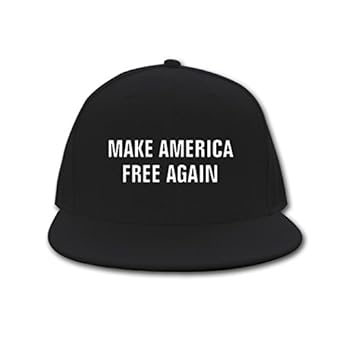 Our national priorities need to be re-prioritized. For instance, Donald Trump wants to make America great again. I, for one, would prefer to make America free again.
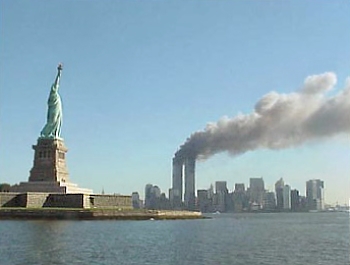 What remains to be seen is whether France, standing where the United States did 14 years ago, will follow in America’s footsteps as she grapples with the best way to shore up her defenses, where to draw the delicate line in balancing security with liberty, and what it means to secure justice for those whose lives were taken.
 Allowing the government to spy on the citizenry will not reduce acts of terrorism, but it will result in a watched, submissive, surveillance society. A byproduct of this post 9/11-age in which we live, whether you’re walking through a store, driving your car, checking email, or talking to friends and family on the phone, you can be sure that some government agency, whether the NSA or some other entity, is listening in and tracking your behavior. This doesn’t even begin to touch on the corporate trackers such as Google that monitor your purchases, web browsing, Facebook posts and other activities taking place in the cyber sphere. We are all becoming data collected in government files. The
  Do not turn your country into a battlefield, your citizens into enemy combatants, and your law enforcement officers into extensions of the military. A standing army—something that propelled the early colonists into revolution—strips the citizenry of any vestige of freedom. How can there be any semblance of freedom when there are tanks in the streets, military encampments in cities, Blackhawk helicopters and armed drones patrolling overhead? It was for this reason that those who established America vested control of the military in a civilian government, with a civilian commander-in-chief. They did not want a military government, ruled by force. Rather, they opted for a republic bound by the rule of law: the U.S. Constitution. Unfortunately, we in America now find ourselves struggling to retain some semblance of freedom in the face of police and law enforcement agencies that look and act like the military and have just as little regard for the Fourth Amendment, laws such as the NDAA that allow the military to arrest and indefinitely detain American citizens, and military drills that acclimate the American people to the sight of armored tanks in the streets, military encampments in cities, and combat aircraft patrolling overhead.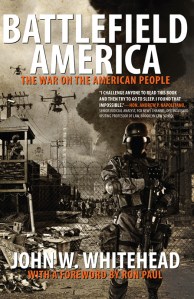
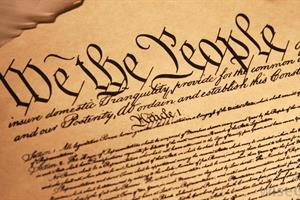 Ironically, the 14th anniversary of the 9/11 attacks occurs just days before the
  Yet despite the clear protections found in the First Amendment, the freedoms described therein are under constant assault. Increasingly, Americans are being arrested and charged with bogus “
 The Second Amendment was intended to guarantee “the right of the people to keep and bear arms.” Yet while gun ownership has been recognized by the U.S. Supreme Court as an individual citizen right, Americans remain
  The Fourth Amendment prohibits the government from conducting surveillance on you or touching you or invading you, unless they have some evidence that you’re up to something criminal. In other words, the Fourth Amendment ensures privacy and bodily integrity. Unfortunately, the Fourth Amendment has suffered the greatest damage in recent years and been all but eviscerated by an unwarranted expansion of police powers that include strip searches and even anal and vaginal searches of citizens, surveillance and intrusions justified in the name of fighting terrorism, as well as the outsourcing of otherwise illegal activities to
  The technological future appears to pose even greater threats to what’s left of our Fourth Amendment rights, with advances in biometric identification and microchip implants on the horizon making it that much easier for the government to track not only our movements and cyber activities but our very cellular beings. Barclays has already begun using a
  The Eighth Amendment is similar to the Sixth in that it is supposed to protect the rights of the accused and forbid the use of cruel and unusual punishment. However, the Supreme Court’s determination that what constitutes “cruel and unusual” should be dependent on the “evolving standards of decency that mark the progress of a maturing society” leaves us with little protection in the face of a society lacking in morals altogether. For example, a California appeals court is being asked to consider “whether
  The film V for Vendetta is a powerful commentary on how totalitarian governments such as our own exploit fear and use mass surveillance, censorship, terrorism, and militarized tactics to control, oppress and enslave.
 John W. Whitehead, Constitutional Attorney