“You have no right not to be vaccinated, you have no right not to wear a mask, you have no right to open up your business… And if you refuse to be vaccinated, the state has the power to literally take you to a doctor’s office and plunge a needle into your arm.”—Alan Dershowitz, Harvard law professor

You have no rights.

That’s the lesson the government wants us to learn from this COVID-19 business.

Well, the government is wrong.

For years now, the powers-that-be—those politicians and bureaucrats who think like tyrants and act like petty dictators regardless of what party they belong to—have attempted to brainwash us into believing that we have no right to think for ourselves, make decisions about our health, protect our homes and families and businesses, act in our best interests, demand accountability and transparency from government, or generally operate as if we are in control of our own lives.

We have every right, and you know why? Because we were born free.

As the Declaration of Independence states, we are endowed by our Creator with certain inalienable rights—to life, liberty, property and the pursuit of happiness—that no government can take away from us.

Unfortunately, that hasn’t stopped the government from constantly trying to usurp our freedoms at every turn. Indeed, the nature of government is such that it invariably oversteps its limits, abuses its authority, and flexes its totalitarian muscles.

Take this COVID-19 crisis, for example.

What started out as an apparent effort to prevent a novel coronavirus from sickening the nation (and the world) has become yet another means by which world governments (including our own) can expand their powers, abuse their authority, and further oppress their constituents.

Until now, the police state has been more circumspect in its power grabs, but this latest state of emergency has brought the beast out of the shadows.

We are on a slippery slope to outright despotism.

This road we are traveling is paved with lockdowns, SWAT team raids, mass surveillance and forced vaccinations. It is littered with the debris of our First and Fourth Amendment freedoms.

This is what we have to look forward to in the months and years to come unless we can find some way to regain control over our runaway government.

The government has made no secret of its plans.

Just follow the money trail, and you’ll get a sense of what’s in store: more militarized police, more SWAT team raids, more surveillance, more lockdowns, more strong-armed tactics aimed at suppressing dissent and forcing us to comply with the government’s dictates.

It’s chilling to think about, but it’s not surprising.

We’ve been warned.

Remember that Pentagon training video created by the Army for U.S. Special Operations Command? The one that anticipates the future domestic political and social problems the government is grooming its armed forces to solve through the use of martial law?

The chilling five-minute training video, obtained by The Intercept through a FOIA request and made available online, paints a dystopian picture of the future bedeviled by “criminal networks,” “substandard infrastructure,” “religious and ethnic tensions,” “impoverishment, slums,” “open landfills, over-burdened sewers,” a “growing mass of unemployed,” and an urban landscape in which the prosperous economic elite must be protected from the impoverishment of the have nots.

But here’s the kicker: what they’re really talking about is martial law, packaged as a well-meaning and overriding concern for the nation’s security.

This COVID-19 crisis is pushing us that much closer to that dystopian vision becoming a present-day reality.

For starters, let’s talk about the COVID-19 stormtroopers, SWAT team raids and ongoing flare-ups of police brutality.

With millions of dollars in stimulus funds being directed towards policing agencies across the country, the federal government plans to fight this COVID-19 virus with riot gear, gas masks, ballistic helmets, drones, and hi-tech surveillance technology.

Indeed, although crime rates have fallen dramatically in the midst of this global COVID-19 lockdown, there’s been no relief from the brutality and violence of the American police state.

While the majority of the country has been social distancing under varying degrees of lockdowns, it’s been business as usual for the nation’s SWAT teams and police trained to shoot first and ask questions later.

In Kentucky, plain-clothed cops in unmarked cars used a battering ram to break down Breonna Taylor’s door and carry out a no-knock raid on her home after midnight. Fearing a home invasion, the 26-year-old emergency medical technician and her boyfriend—who had been in bed at the time of the invasion—called 911 and prepared to defend themselves. Taylor’s boyfriend shot one of the intruders—later identified as police—in the leg. Police fired at least 20 shots into the apartment and a neighboring home, killing Taylor. The drug dealer who was the target of the late-night raid lived 10 miles away and had already been arrested prior to the raid on Taylor’s home.

In Illinois, police opened fire in a subway station, shooting a 33-year-old man who allegedly resisted their attempts to tackle and arrest him for violating a city ordinance by passing between two cars of a moving train. Ariel Roman, a short-order cook, claimed he was suffering from an anxiety attack when he was “harassed, chased, tackled, pepper-sprayed, tasered and shot twice” by police.

In Maryland, police dispatched on a nuisance call to break up a crowd of neighborhood kids( half of them teenagers, and the other half youngsters around 4 and 5 years old) gathered in an apartment complex parking lot opened fire on a 29-year-old man seen exiting his car with a gun. An eyewitness claimed “the officer pointed a flashlight and his gun at the group immediately and began chasing and shooting a minute or two after getting out of the patrol car.” Police reportedly shot the man after he threw down his gun and ran in the opposite direction.

In Virginia, more than 80 local, state, and federal police agents risked spreading COVID-19 to “a highly vulnerable population” when they raided a low income, public housing community in an effort to crack down on six individuals suspected of selling, on average, $20 to $100 worth of drugs.

In Texas, a SWAT team backed up with a military tank Armored Personnel Carrier raided Big Daddy Zane’s Bar whose owner and patrons were staging a peaceful First and Second Amendment protest of the governor’s shutdown orders.

Police have even been called out to shut down churches, schools and public parks and beaches that have been found “in violation” of various lockdown orders.

Now there’s talk of mobilizing the military to deliver forced vaccinations, mass surveillance in order to carry out contact tracing, and heavy fines and jail time for those who dare to venture out without a mask, congregate in worship without the government’s blessing, or re-open their  businesses without the government’s say-so.

There are rumblings that the Transportation Security Administration (TSA) will start thermal screenings to monitor passengers’ temperatures in coming weeks. This is in addition to the virtual strip searches that have become routine aspects of airport security.

Restaurants in parts of the country are being tasked with keeping daily logs of phone numbers, emails, and arrival times for everybody who participates in dine-services, with no mention of how long such records will be kept on file, with whom they will be shared, and under what circumstances.

With the help of Google and Nest cameras, hospitals are morphing into real-time surveillance centers with round-the-clock surveillance cameras monitoring traffic in patients’ rooms. Forget patient privacy, however. Google has a track record of sharing surveillance footage with police.

And then rounding out the power-grabs, the Senate just voted to give police access to web browsing data without a warrant, which would dramatically expand the government’s Patriot Act surveillance powers. The Senate also voted to give Attorney General William Barr the ability to look through the web browsing history of any American — including journalists, politicians, and political rivals — without a warrant, just by saying it is relevant to an investigation. If enacted, privacy experts warn  that the new provisions threaten to undermine the free press by potentially preventing the media from exposing abuses of power or acting as a watchdog against political leaders.

If we haven’t already crossed over, we’re skating dangerously close to that line that keeps us on the functioning side of a constitutional republic. It won’t take much to push us over that edge into a full-blown banana republic.

In many ways, this is just more of the same heavy-handed tactics we’ve been seeing in recent years but with one major difference: this COVID-19 state of emergency has invested government officials (and those who view their lives as more valuable than ours) with a sanctimonious, self-righteous, arrogant, Big Brother Knows Best approach to top-down governing, and the fall-out can be seen far and wide.

It’s an ugly, self-serving mindset that views the needs, lives and rights of “we the people” as insignificant when compared to those in power.

That’s how someone who should know better such as Alan Dershowitz, a former Harvard law professor, can suggest that a free people—born in freedom, endowed by their Creator with inalienable rights, and living in a country birthed out of a revolutionary struggle for individual liberty—have no rights to economic freedom, to bodily integrity, or to refuse to comply with a government order with which they disagree.

According to Dershowitz, who has become little more than a legal apologist for the power elite, “You have no right not to be vaccinated, you have no right not to wear a mask, you have no right to open up your business… And if you refuse to be vaccinated, the state has the power to literally take you to a doctor’s office and plunge a needle into your arm.”

Dershowitz is wrong: while the courts may increasingly defer to the government’s brand of Nanny State authoritarianism, we still have rights.

The government may try to abridge those rights, it may refuse to recognize them, it may even attempt to declare martial law and nullify them, but it cannot litigate, legislate or forcefully eradicate them out of existence.

Up to now, we’ve been largely passive participants in this experiment in self-governance. Our inaction and inattention has left us at the mercy of power-hungry politicians, corrupt corporations and brutal, government-funded militias.

Wake up, America.

As I  make clear in my book Battlefield America: The War on the American People, these ongoing violations of our rights—this attitude by the government that we have no rights—this tyrannical movement that is overtaking our constitutional republic and  gaining in momentum and power by the minute—this incessant auction block in which government officials appointed to represent our best interests keep selling us out to the highest bidder—all of these betrayals scream for a response.

To quote the great Rod Serling: “If we don’t listen to that scream—and if we don’t respond to it—we may well wind up sitting amidst our own rubble, looking for the truck that hit us—or the bomb that pulverized us. Get the license number of whatever it was that destroyed the dream. And I think we will find that the vehicle was registered in our own name.”

Source: https://bit.ly/2XekjgS

ABOUT JOHN W. WHITEHEAD

Constitutional attorney and author John W. Whitehead is founder and president of The Rutherford Institute. His new book Battlefield America: The War on the American People  is available at www.amazon.com. Whitehead can be contacted at johnw@rutherford.org.

Publication Guidelines / Reprint Permission

John W. Whitehead’s weekly commentaries are available for publication to newspapers and web publications at no charge. Please contact staff@rutherford.org to obtain reprint permission.
 

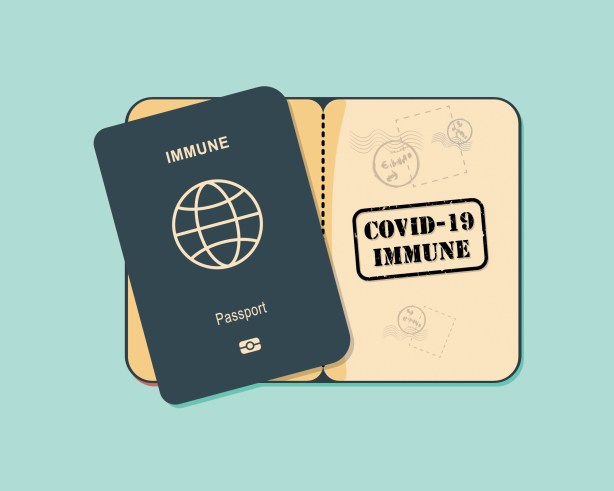
Concept of an immunity passport vector for people who have recovered from or are immune to COVID-19 coronavirus and can begin to travel and work again

The things we were worried would happen are happening.”—Angus Johnston, professor at the City University of New York

No one is safe.

No one is immune.

No one gets spared the anguish, fear and heartache of living under the shadow of an authoritarian police state.

That’s the message being broadcast 24/7 with every new piece of government propaganda, every new law that criminalizes otherwise lawful activity, every new policeman on the beat, every new surveillance camera casting a watchful eye, every sensationalist news story that titillates and distracts, every new prison or detention center built to house troublemakers and other undesirables, every new court ruling that gives government agents a green light to strip and steal and rape and ravage the citizenry, every school that opts to indoctrinate rather than educate, and every new justification for why Americans should comply with the government’s attempts to trample the Constitution underfoot.

Yes, COVID-19 has taken a significant toll on the nation emotionally, physically, and economically, but there are still greater dangers on the horizon.

As long as “we the people” continue to allow the government to trample our rights in the so-called name of national security, things will get worse, not better.

It’s already worse.

Now there’s talk of mass testing for COVID-19 antibodies, screening checkpoints, contact tracing, immunity passports to allow those who have recovered from the virus to move around more freely, and snitch tip lines for reporting “rule breakers” to the authorities.

If you can’t read the writing on the wall, you need to pay better attention.

These may seem like small, necessary steps in the war against the COVID-19 virus, but they’re only necessary to the police state in its efforts to further undermine the Constitution, extend its control over the populace, and feed its insatiable appetite for ever-greater powers.

Nothing is ever as simple as the government claims it is.

Whatever dangerous practices you allow the government to carry out now—whether it’s in the name of national security or protecting America’s borders or making America healthy again—rest assured, these same practices can and will be used against you when the government decides to set its sights on you.

The war on drugs turned out to be a war on the American people, waged with SWAT teams and militarized police.

The war on terror turned out to be a war on the American people, waged with warrantless surveillance and indefinite detention.

The war on immigration turned out to be a war on the American people, waged with roving government agents demanding “papers, please.”

This war on COVID-19 will be yet another war on the American people, waged with all of the surveillance weaponry at the government’s disposal: thermal imaging cameras, drones, contact tracing, biometric databases, etc.

So you see, when you talk about empowering government agents to screen the populace in order to control and prevent spread of this virus, what you’re really talking about is creating a society in which ID cards, round ups, checkpoints and detention centers become routine weapons used by the government to control and suppress the populace, no matter the threat.

This is also how you pave the way for a national identification system of epic proportions.

Imagine it: a national classification system that not only categorizes you according to your health status but also allows the government to sort you in a hundred other ways: by gender, orientation, wealth, medical condition, religious beliefs, political viewpoint, legal status, etc.

Are you starting to get the bigger picture yet?

This is just another wolf in sheep’s clothing, a “show me your papers” scheme disguised as a means of fighting a virus.

Don’t fall for it.

The ramifications of such a “show me your papers” society in which government officials are empowered to stop individuals, demand they identify themselves, and subject them to patdowns, warrantless screenings, searches, and interrogations are beyond chilling.

By allowing government agents to establish a litmus test for individuals to be able to exit a state of lockdown and engage in commerce, movement and any other right that corresponds to life in a supposedly free society, it lays the groundwork for a society in which you are required to identify yourself at any time to any government worker who demands it for any reason.

Such tactics quickly lead one down a slippery slope that ends with government agents empowered to force anyone and everyone to prove they are in compliance with every statute and regulation on the books.

It used to be that unless police had a reasonable suspicion that a person was guilty of wrongdoing, they had no legal authority to stop the person and require identification. In other words, “we the people” had the right to come and go as we please without the fear of being questioned by police or forced to identify ourselves.

Unfortunately, in this age of COVID-19, that unrestricted right to move about freely is being pitted against the government’s power to lock down communities at a moment’s notice. And in this tug-of-war between individual freedoms and government power, “we the people” have been on the losing end of the deal.

Curiously enough, these COVID-19 restrictions dovetail conveniently with a national timeline for states to comply with the Real ID Act, which imposes federal standards on identity documents such as state drivers’ licenses, a prelude to this national identification system.

Talk about a perfect storm for bringing about a national ID card, the ultimate human tracking device.

Granted, in the absence of a national ID card, which would make the police state’s task of monitoring, tracking and singling out individual suspects far simpler, “we the people” are already tracked in a myriad of ways: through our state driver’s licenses, Social Security numbers, bank accounts, purchases and electronic transactions; by way of our correspondence and communication devices—email, phone calls and mobile phones; through chips implanted in our vehicles, identification documents, even our clothing.

Add to this the fact that businesses, schools and other facilities are relying more and more on fingerprints and facial recognition to identify us. All the while, data companies such as Acxiom are capturing vast caches of personal information to help airports, retailers, police and other government authorities instantly determine whether someone is the person he or she claims to be.

This informational glut—used to great advantage by both the government and corporate sectors—has converged into a mandate for “an internal passport,” a.k.a., a national ID card that would store information as basic as a person’s name, birth date and place of birth, as well as private information, including a Social Security number, fingerprint, retinal scan and personal, criminal and financial records.

A federalized, computerized, cross-referenced, databased system of identification policed by government agents would be the final nail in the coffin for privacy (not to mention a logistical security nightmare that would leave Americans even more vulnerable to every hacker in the cybersphere).

Americans have always resisted adopting a national ID card for good reason: it gives the government and its agents the ultimate power to target, track and terrorize the populace according to the government’s own nefarious purposes.

National ID card systems have been used before, by other oppressive governments, in the name of national security, invariably with horrifying results.

For instance, in Germany, the Nazis required all Jews to carry special stamped ID cards for travel within the country. A prelude to the yellow Star of David badges, these stamped cards were instrumental in identifying Jews for deportation to death camps in Poland.

Author Raul Hilberg summarizes the impact that such a system had on the Jews:

The whole identification system, with its personal documents, specially assigned names, and conspicuous tagging in public, was a powerful weapon in the hands of the police. First, the system was an auxiliary device that facilitated the enforcement of residence and movement restrictions. Second, it was an independent control measure in that it enabled the police to pick up any Jew, anywhere, anytime. Third, and perhaps most important, identification had a paralyzing effect on its victims.

In South Africa during apartheid, pass books were used to regulate the movement of black citizens and segregate the population. The Pass Laws Act of 1952 stipulated where, when and for how long a black African could remain in certain areas. Any government employee could strike out entries, which cancelled the permission to remain in an area. A pass book that did not have a valid entry resulted in the arrest and imprisonment of the bearer.

Identity cards played a crucial role in the genocide of the Tutsis in the central African country of Rwanda. The assault, carried out by extremist Hutu militia groups, lasted around 100 days and resulted in close to a million deaths. While the ID cards were not a precondition to the genocide, they were a facilitating factor. Once the genocide began, the production of an identity card with the designation “Tutsi” spelled a death sentence at any roadblock.

Identity cards have also helped oppressive regimes carry out eliminationist policies such as mass expulsion, forced relocation and group denationalization. Through the use of identity cards, Ethiopian authorities were able to identify people with Eritrean affiliation during the mass expulsion of 1998. The Vietnamese government was able to locate ethnic Chinese more easily during their 1978-79 expulsion. The USSR used identity cards to force the relocation of ethnic Koreans (1937), Volga Germans (1941), Kamyks and Karachai (1943), Crimean Tartars, Meshkhetian Turks, Chechens, Ingush and Balkars (1944) and ethnic Greeks (1949). And ethnic Vietnamese were identified for group denationalization through identity cards in Cambodia in 1993, as were the Kurds in Syria in 1962.

And in the United States, post-9/11, more than 750 Muslim men were rounded up on the basis of their religion and ethnicity and detained for up to eight months. Their experiences echo those of 120,000 Japanese-Americans who were similarly detained 75 years ago following the attack on Pearl Harbor.

Despite a belated apology and monetary issuance by the U.S. government, the U.S. Supreme Court has yet to declare such a practice illegal. Moreover, laws such as the National Defense Authorization Act (NDAA) empower the government to arrest and detain indefinitely anyone they “suspect” of being an enemy of the state.

You see, you may be innocent of wrongdoing now, but when the standard for innocence is set by the government, no one is safe.

Everyone is a suspect.

And anyone can be a criminal when it’s the government determining what is a crime.

It’s no longer a matter of if, but when.

Remember, the police state does not discriminate.

At some point, it will not matter whether your skin is black or yellow or brown or white. It will not matter whether you’re an immigrant or a citizen. It will not matter whether you’re rich or poor. It won’t even matter whether you’re driving, flying or walking.

After all, government-issued bullets will kill you just as easily whether you’re a law-abiding citizen or a hardened criminal. Government jails will hold you just as easily whether you’ve obeyed every law or broken a dozen. And whether or not you’ve done anything wrong, government agents will treat you like a suspect simply because they have been trained to view and treat everyone like potential criminals.

Eventually, when the police state has turned that final screw and slammed that final door, all that will matter is whether some government agent—poorly trained, utterly ignorant and dismissive of the Constitution, way too hyped up on the power of their badges, and authorized to detain, search, interrogate, threaten and generally harass anyone they see fit—chooses to single you out for special treatment.

We’ve been having this same debate about the perils of government overreach for the past 50-plus years, and still we don’t seem to learn, or if we learn, we learn too late.

All of the excessive, abusive tactics employed by the government today—warrantless surveillance, stop and frisk searches, SWAT team raids, roadside strip searches, asset forfeiture schemes, private prisons, indefinite detention, militarized police, etc.—started out as a seemingly well-meaning plan to address some problem in society that needed a little extra help.

Be careful what you wish for: you will get more than you bargained for, especially when the government’s involved.

In the case of a national identification system, it might start off as a means of tracking COVID-19 cases in order to “safely” re-open the nation, but it will end up as a means of controlling the American people.

For those tempted to justify these draconian measures for whatever reason—for the sake of their health, the economy, or national security—remember, you can’t have it both ways.

You can’t live in a constitutional republic if you allow the government to act like a police state.

You can’t claim to value freedom if you allow the government to operate like a dictatorship.

You can’t expect to have your rights respected if you allow the government to treat whomever it pleases with disrespect and an utter disregard for the rule of law.

As I make clear in my book Battlefield America: The War on the American People, if you’re inclined to advance this double standard because you believe you have done nothing wrong and have nothing to hide, beware: there’s always a boomerang effect.

Source: https://bit.ly/2AnIxgW

ABOUT JOHN W. WHITEHEAD

Constitutional attorney and author John W. Whitehead is founder and president of The Rutherford Institute. His new book Battlefield America: The War on the American People  is available at www.amazon.com. Whitehead can be contacted at johnw@rutherford.org.

Publication Guidelines / Reprint Permission

John W. Whitehead’s weekly commentaries are available for publication to newspapers and web publications at no charge. Please contact staff@rutherford.org to obtain reprint permission.
 

“Those who created this country chose freedom. With all of its dangers. And do you know the riskiest part of that choice they made? They actually believed that we could be trusted to make up our own minds in the whirl of differing ideas. That we could be trusted to remain free, even when there were very, very seductive voices—taking advantage of our freedom of speech—who were trying to turn this country into the kind of place where the government could tell you what you can and cannot do.”—Nat Hentoff

We are fast becoming a nation—nay, a world—of book burners.

While on paper, we are technically free to speak—at least according to the U.S. Constitution—in reality, however, we are only as free to speak as the government and its corporate partners such as Facebook, Google or YouTube may allow.

That’s not a whole lot of freedom. Especially if you’re inclined to voice opinions that may be construed as conspiratorial or dangerous.

Take David Icke, for example.

Icke, a popular commentator and author often labeled a conspiracy theorist by his detractors, recently had his Facebook page and YouTube channel (owned by Google) deleted for violating site policies by “spreading coronavirus disinformation.”

The Centre for Countering Digital Hate, which has been vocal about calling for Icke’s de-platforming, is also pushing for the removal of all other sites and individuals who promote Icke’s content in an effort to supposedly “save lives.”

Translation: the CCDH evidently believes the public is too dumb to think for itself and must be protected from dangerous ideas.

This is the goosestepping Nanny State trying to protect us from ourselves.

In the long run, this “safety” control (the censorship and shadowbanning of anyone who challenges a mainstream narrative) will be far worse than merely allowing people to think for themselves.

Journalist Matt Taibbi gets its: “The people who want to add a censorship regime to a health crisis are more dangerous and more stupid by leaps and bounds than a president who tells people to inject disinfectant.”

Don’t fall for the propaganda.

These internet censors are not acting in our best interests to protect us from dangerous, disinformation campaigns about COVID-19, a virus whose source and behavior continue to elude medical officials. They’re laying the groundwork now, with Icke as an easy target, to preempt any “dangerous” ideas that might challenge the power elite’s stranglehold over our lives.

This is how freedom dies.

It doesn’t matter what disinformation Icke may or may not have been spreading about COVID-19. That’s not the issue.

As commentator Caitlin Johnstone recognizes, the censorship of David Icke by these internet media giants has nothing to do with Icke: “What matters is that we’re seeing a consistent and accelerating pattern of powerful plutocratic institutions collaborating with the US-centralized empire to control what ideas people around the world are permitted to share with each other, and it’s a very unsafe trajectory.”

Welcome to the age of technofascism.

Technofascism, clothed in tyrannical self-righteousness, is powered by technological behemoths (both corporate and governmental) working in tandem. As journalist Chet Bowers explains, “Technofascism’s level of efficiency and totalitarian potential can easily lead to repressive systems that will not tolerate dissent.”

The internet, hailed as a super-information highway, is increasingly becoming the police state’s secret weapon. This “policing of the mind: is exactly the danger author Jim Keith warned about when he predicted that “information and communication sources are gradually being linked together into a single computerized network, providing an opportunity for unheralded control of hat will be broadcast, what will be said, and ultimately what will be thought.”

It’s a slippery slope from censoring so-called illegitimate ideas to silencing truth.

Eventually, as George Orwell predicted, telling the truth will become a revolutionary act.

We’re almost at that point now.

What you are witnessing is the modern-day equivalent of book burning which involves doing away with dangerous ideas—legitimate or not—and the people who espouse them.

Today, the forces of political correctness, working in conjunction with corporate and government agencies, have managed to replace actual book burning with intellectual book burning.

Free speech for me but not for thee” is how my good friend and free speech purist Nat Hentoff used to sum up this double standard.

This is about much more than free speech, however. This is about repression and control.

With every passing day, we’re being moved further down the road towards a totalitarian society characterized by government censorship, violence, corruption, hypocrisy and intolerance, all packaged for our supposed benefit in the Orwellian doublespeak of national security, tolerance and so-called “government speech.”

The reasons for such censorship vary widely from political correctness, safety concerns and bullying to national security and hate crimes but the end result remains the same: the complete eradication of what Benjamin Franklin referred to as the “principal pillar of a free government.”

The upshot of all of this editing, parsing, banning and silencing is the emergence of a new language, what George Orwell referred to as Newspeak, which places the power to control language in the hands of the totalitarian state.

Under such a system, language becomes a weapon to change the way people think by changing the words they use.

The end result is control.

In totalitarian regimes—a.k.a. police states—where conformity and compliance are enforced at the end of a loaded gun, the government dictates what words can and cannot be used.

In countries where the police state hides behind a benevolent mask and disguises itself as tolerance, the citizens censor themselves, policing their words and thoughts to conform to the dictates of the mass mind lest they find themselves ostracized or placed under surveillance.

Even when the motives behind this rigidly calibrated reorientation of societal language appear well-intentioned—discouraging racism, condemning violence, denouncing discrimination and hatred—inevitably, the end result is the same: intolerance, indoctrination and infantilism.

It’s political correctness disguised as tolerance, civility and love, but what it really amounts to is the chilling of free speech and the demonizing of viewpoints that run counter to the cultural elite.

The police state could not ask for a better citizenry than one that carries out its own censorship, spying and policing: this is how you turn a nation of free people into extensions of the omniscient, omnipotent, omnipresent police state, and in the process turn a citizenry against each other.

Tread cautiously: Orwell’s 1984, which depicts the ominous rise of ubiquitous technology, fascism and totalitarianism, has become an operation manual for the omnipresent, modern-day surveillance state.

1984 portrays a global society of total control in which people are not allowed to have thoughts that in any way disagree with the corporate state. There is no personal freedom, and advanced technology has become the driving force behind a surveillance-driven society. Snitches and cameras are everywhere. People are subject to the Thought Police, who deal with anyone guilty of thought crimes. The government, or “Party,” is headed by Big Brother who appears on posters everywhere with the words: “Big Brother is watching you.”

We have arrived, way ahead of schedule, into the dystopian future dreamed up by not only Orwell but also such fiction writers as Aldous Huxley, Margaret Atwood and Philip K. Dick.

Much like Orwell’s Big Brother in 1984, the government and its corporate spies now watch our every move. Much like Huxley’s A Brave New World, we are churning out a society of watchers who “have their liberties taken away from them, but … rather enjoy it, because they [are] distracted from any desire to rebel by propaganda or brainwashing.” Much like Atwood’s The Handmaid’s Tale, the populace is now taught to “know their place and their duties, to understand that they have no real rights but will be protected up to a point if they conform, and to think so poorly of themselves that they will accept their assigned fate and not rebel or run away.”

And in keeping with Philip K. Dick’s darkly prophetic vision of a dystopian police state—which became the basis for Steven Spielberg’s futuristic thriller Minority Report—we are now trapped in a world in which the government is all-seeing, all-knowing and all-powerful, and if you dare to step out of line, dark-clad police SWAT teams and pre-crime units will crack a few skulls to bring the populace under control.

What once seemed futuristic no longer occupies the realm of science fiction.

Incredibly, as the various nascent technologies employed and shared by the government and corporations alike—facial recognition, iris scanners, massive databases, behavior prediction software, and so on—are incorporated into a complex, interwoven cyber network aimed at tracking our movements, predicting our thoughts and controlling our behavior, the dystopian visions of past writers is fast becoming our reality.

In fact, our world is characterized by widespread surveillance, behavior prediction technologies, data mining, fusion centers, driverless cars, voice-controlled homes, facial recognition systems, cybugs and drones, and predictive policing (pre-crime) aimed at capturing would-be criminals before they can do any damage. Surveillance cameras are everywhere. Government agents listen in on our telephone calls and read our emails. And privacy and bodily integrity have been utterly eviscerated.

We are increasingly ruled by multi-corporations wedded to the police state.

What many fail to realize is that the government is not operating alone. It cannot.

The government requires an accomplice.

Thus, the increasingly complex security needs of the massive federal government, especially in the areas of defense, surveillance and data management, have been met within the corporate sector, which has shown itself to be a powerful ally that both depends on and feeds the growth of governmental overreach.

In fact, Big Tech wedded to Big Government has become Big Brother, and we are now ruled by the Corporate Elite whose tentacles have spread worldwide.

The government now has at its disposal technological arsenals so sophisticated and invasive as to render any constitutional protections null and void. Spearheaded by the NSA, which has shown itself to care little to nothing for constitutional limits or privacy, the “security/industrial complex”—a marriage of government, military and corporate interests aimed at keeping Americans under constant surveillance—has come to dominate the government and our lives.

Money, power, control.

There is no shortage of motives fueling the convergence of mega-corporations and government. But who is paying the price?

“We the people,” of course. Not just we Americans, but people the world over.

We have entered into a global state of tyranny.

Where we stand now is at the juncture of OldSpeak (where words have meanings, and ideas can be dangerous) and Newspeak (where only that which is “safe” and “accepted” by the majority is permitted). The power elite has made their intentions clear: they will pursue and prosecute any and all words, thoughts and expressions that challenge their authority.

This is the final link in the police state chain.

Americans have been conditioned to accept routine incursions on their privacy rights. In fact, the addiction to screen devices—especially cell phones—has created a hive effect where the populace not only watched but is controlled by AI bots. However, at one time, the idea of a total surveillance state tracking one’s every move would have been abhorrent to most Americans. That all changed with the 9/11 attacks. As professor Jeffrey Rosen observes, “Before Sept. 11, the idea that Americans would voluntarily agree to live their lives under the gaze of a network of biometric surveillance cameras, peering at them in government buildings, shopping malls, subways and stadiums, would have seemed unthinkable, a dystopian fantasy of a society that had surrendered privacy and anonymity.”

Having been reduced to a cowering citizenry—mute in the face of elected officials who refuse to represent us, helpless in the face of police brutality, powerless in the face of militarized tactics and technology that treat us like enemy combatants on a battlefield, and naked in the face of government surveillance that sees and hears all—we have nowhere left to go.

We have, so to speak, gone from being a nation where privacy is king to one where nothing is safe from the prying eyes of government.

In search of so-called terrorists and extremists hiding amongst us—the proverbial “needle in a haystack,” as one official termed it—the Corporate State has taken to monitoring all aspects of our lives, from cell phone calls and emails to Internet activity and credit card transactions. This data is being fed through fusion centers across the country, which work with the Department of Homeland Security to make threat assessments on every citizen, including school children.

Wherever you go and whatever you do, you are now being watched, especially if you leave behind an electronic footprint.

When you use your cell phone, you leave a record of when the call was placed, who you called, how long it lasted and even where you were at the time. When you use your ATM card, you leave a record of where and when you used the card. There is even a video camera at most locations equipped with facial recognition software. When you use a cell phone or drive a car enabled with GPS, you can be tracked by satellite. Such information is shared with government agents, including local police. And all of this once-private information about your consumer habits, your whereabouts and your activities is now being fed to the U.S. government.

The government has nearly inexhaustible resources when it comes to tracking our movements, from electronic wiretapping devices, traffic cameras and biometrics to radio-frequency identification cards, satellites and Internet surveillance.

Speech recognition technology now makes it possible for the government to carry out massive eavesdropping by way of sophisticated computer systems. Phone calls can be monitored, the audio converted to text files and stored in computer databases indefinitely. And if any “threatening” words are detected—no matter how inane or silly—the record can be flagged and assigned to a government agent for further investigation. Federal and state governments, again working with private corporations, monitor your Internet content. Users are profiled and tracked in order to identify, target and even prosecute them.

In such a climate, everyone is a suspect. And you’re guilty until you can prove yourself innocent.

Here’s what a lot of people fail to understand, however: it’s not just what you say or do that is being monitored, but how you think that is being tracked and targeted.

We’ve already seen this play out on the state and federal level with hate crime legislation that cracks down on so-called “hateful” thoughts and expression, encourages self-censoring and reduces free debate on various subject matter.

Say hello to the new Thought Police.

Total Internet surveillance by the Corporate State, as omnipresent as God, is used by the government to predict and, more importantly, control the populace, and it’s not as far-fetched as you might think. For example, the NSA has designed an artificial intelligence system that can anticipate your every move. In a nutshell, the NSA feeds vast amounts of the information it collects to a computer system known as Aquaint (the acronym stands for Advanced QUestion Answering for INTelligence), which the computer then uses to detect patterns and predict behavior.

No information is sacred or spared.

Everything from cell phone recordings and logs, to emails, to text messages, to personal information posted on social networking sites, to credit card statements, to library circulation records, to credit card histories, etc., is collected by the NSA and shared freely with its agents.

Thus, what we are witnessing, in the so-called name of security and efficiency, is the creation of a new class system comprised of the watched (average Americans such as you and me) and the watchers (government bureaucrats, technicians and private corporations).

Clearly, the age of privacy is at an end.

So where does that leave us?

We now find ourselves in the unenviable position of being monitored, managed and controlled by our technology, which answers not to us but to our government and corporate rulers. This is the fact-is-stranger-than-fiction lesson that is being pounded into us on a daily basis.

It won’t be long before we find ourselves looking back on the past with longing, back to an age where we could speak to whom we wanted, buy what we wanted, think what we wanted without those thoughts, words and activities being tracked, processed and stored by corporate giants such as Google, sold to government agencies such as the NSA and CIA, and used against us by militarized police with their army of futuristic technologies.

To be an individual today, to not conform, to have even a shred of privacy, and to live beyond the reach of the government’s roaming eyes and technological spies, one must not only be a rebel but rebel.

Even when you rebel and take your stand, there is rarely a happy ending awaiting you. You are rendered an outlaw.

So how do you survive this global surveillance state?

As I make clear in my book Battlefield America: The War on the American People, we’re running out of options.

We’ll soon have to choose between self-indulgence (the bread-and-circus distractions offered up by the news media, politicians, sports conglomerates, entertainment industry, etc.) and self-preservation in the form of renewed vigilance about threats to our freedoms and active engagement in self-governance.

Yet as Aldous Huxley acknowledged in Brave New World Revisited: “Only the vigilant can maintain their liberties, and only those who are constantly and intelligently on the spot can hope to govern themselves effectively by democratic procedures. A society, most of whose members spend a great part of their time, not on the spot, not here and now and in their calculable future, but somewhere else, in the irrelevant other worlds of sport and soap opera, of mythology and metaphysical fantasy, will find it hard to resist the encroachments of those would manipulate and control it.”

Which brings me back to this technofascist tyranny being meted out on David Icke and all those like him who dare to voice ideas that diverge from what the government and its corporate controllers deem to be acceptable.

The problem as I see it is that we’ve allowed ourselves to be persuaded that we need someone else to think and speak for us. And we’ve allowed ourselves to become so timid in the face of offensive words and ideas that we’ve bought into the idea that we need the government to shield us from that which is ugly or upsetting or mean.

The result is a society in which we’ve stopped debating among ourselves, stopped thinking for ourselves, and stopped believing that we can fix our own problems and resolve our own differences.

In short, we have reduced ourselves to a largely silent, passive, polarized populace incapable of working through our own problems and reliant on the government to protect us from our fears.

In this way, we have become our worst enemy.

You want to reclaim some of the ground we’re fast losing to the techno-tyrants?

Start by thinking for yourself. If that means reading the “dangerous” ideas being floated out there by the David Ickes of the world—or the John Whiteheads for that matter—and then deciding for yourself what is true, so be it.

As Orwell concluded, “Freedom is the right to say two plus two make four.”

Source: https://bit.ly/2YzXO8f

ABOUT JOHN W. WHITEHEAD

Constitutional attorney and author John W. Whitehead is founder and president of The Rutherford Institute. His new book Battlefield America: The War on the American People  is available at www.amazon.com. Whitehead can be contacted at johnw@rutherford.org.

Publication Guidelines / Reprint Permission

John W. Whitehead’s weekly commentaries are available for publication to newspapers and web publications at no charge. Please contact staff@rutherford.org to obtain reprint permission.
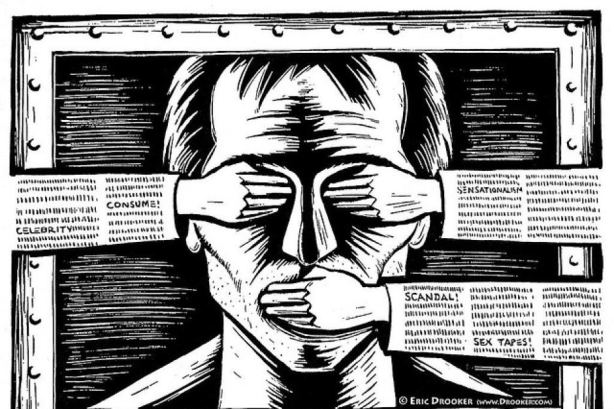
 

“If 2019 was the year of the street protest, of tear gas and rubber bullets, 2020 might be the year the street protest died, or perhaps fell into a deep sleep, and went online.”—Journalist Christopher Miller

Despite all appearances to the contrary, martial law has not been declared in America.

We still have rights.

Technically, at least.

The government may act as if its police state powers suppress individual liberties during this COVID-19 pandemic, but for all intents and purposes, the Constitution—especially the battered, besieged Bill of Rights—still stands in theory, if not in practice.

Indeed, while federal and state governments have adopted specific restrictive measures in an effort to lockdown the nation and decelerate the spread of the COVID-19 virus, the current public health situation has not resulted in the suspension of fundamental constitutional rights such as freedom of speech and the right of assembly.

Mind you, that’s not to say that the government has not tried its best to weaponize this crisis as it has weaponized so many other crises in order to expand its powers and silence its critics.

All over the country, government officials are using COVID-19 restrictions to muzzle protesters.

It doesn’t matter what the protest is about (church assemblies, the right to work, the timing for re-opening the country, discontent over police brutality, etc.): this is activity the First Amendment protects vociferously with only one qualification—that it be peaceful.

Yet even peaceful protesters mindful of the need to adhere to social distancing guidelines because of this COVID-19 are being muzzled, arrested and fined.

For example, a Maryland family was reportedly threatened with up to a year in jail and a $5000 fine if they dared to publicly protest the injustice of their son’s execution by a SWAT team.

If anyone had a legitimate reason to get out in the streets and protest, it’s the Lemp family, whose 21-year-old son Duncan was gunned down in his bedroom during an early morning, no-knock SWAT team raid on his family’s home.

Imagine it.

It was 4:30 a.m. on March 12, 2020, in the midst of a COVID-19 pandemic that has most of the country under a partial lockdown and sheltering at home, when this masked SWAT team—deployed to execute a “high risk” search warrant for unauthorized firearms—stormed the suburban house where 21-year-old Duncan, a software engineer and Second Amendment advocate, lived with his parents and 19-year-old brother.

The entire household, including Lemp and his girlfriend, was reportedly asleep when the SWAT team directed flash bang grenades and gunfire through Lemp’s bedroom window.

Lemp was killed and his girlfriend injured.

No one in the house that morning, including Lemp, had a criminal record.

No one in the house that morning, including Lemp, was considered an “imminent threat” to law enforcement or the public, at least not according to the search warrant.

Now what was so urgent that militarized police felt compelled to employ battlefield tactics in the pre-dawn hours of a day when most people are asleep in bed, not to mention stuck at home as part of a nationwide lockdown?

According to police, they were tipped off that Lemp was in possession of “firearms.”

So instead of approaching the house by the front door at a reasonable hour in order to investigate this complaint—which is what the Fourth Amendment requires—police instead strapped on their guns, loaded up their flash bang grenades and acted like battle-crazed warriors.

This is the blowback from all that military weaponry flowing to domestic police departments.

This is what happens when you use SWAT teams to carry out routine search warrants.

This is what happens when you adopt red flag gun laws, which Maryland did in 2018, painting anyone who might be in possession of a gun—legal or otherwise—as a threat that must be neutralized.

These red flag gun laws allow the police to remove guns from people merely suspected of being threats.

While in theory it appears perfectly reasonable to want to “stop dangerous people before they act,” where the problem arises is when you put the power to determine who is a potential danger in the hands of government agencies, the courts and the police.

Remember, this is the same government that uses the words “anti-government,” “extremist” and “terrorist” interchangeably.

This is the same government whose agents are spinning a sticky spider-web of threat assessments, behavioral sensing warnings, flagged “words,” and “suspicious” activity reports using automated eyes and ears, social media, behavior sensing software, and citizen spies to identify potential threats.

This is the same government that keeps re-upping the National Defense Authorization Act (NDAA), which allows the military to arrest and detain American citizens with no access to friends, family or the courts if the government believes them to be a threat.

This is the same government that has a growing list—shared with fusion centers and law enforcement agencies—of ideologies, behaviors, affiliations and other characteristics that could flag someone as suspicious and result in their being labeled potential enemies of the state.

Let that sink in a moment.

If you believe in and exercise your rights under the Constitution (namely, your right to speak freely, worship freely, associate with like-minded individuals who share your political views, criticize the government, own a weapon, demand a warrant before being questioned or searched, or any other activity viewed as potentially anti-government, racist, bigoted, anarchic or sovereign), you are most likely at the top of the government’s terrorism watch list.

Moreover, as a New York Times editorial warns, you may be an anti-government extremist (a.k.a. domestic terrorist) in the eyes of the police if you are afraid that the government is plotting to confiscate your firearms, if you believe the economy is about to collapse and the government will soon declare martial law, or if you display an unusual number of political and/or ideological bumper stickers on your car.

Needless to say, if you happen to be passionate about the Constitution and a vocal critic of government corruption, you’ve already been flagged in a government database somewhere.

Likely, Lemp was, too.

Now Lemp is dead and his family is devastated, outraged and desperate to make sense of what appears to be an insensible act of violence resulting in an inexcusable loss of life.

As usual in these kinds of shootings, government officials have not been forthcoming with details about the shooting: police have refused to meet with family members, the contents of the warrant supporting the raid have not been revealed, and bodycam footage of the raid has not been disclosed.

So in order to voice their objections to police violence and demand answers about the shooting, Lemp’s family and friends planned to conduct an outdoor public demonstration—adhering to social distancing guidelines—only to be threatened with arrest, a year in jail and a $5000 fine for violating Maryland’s stay at home orders.

Yet here’s the thing: we don’t have to be muzzled and remain silent about government corruption, violence and misconduct just because we’re wearing masks and social distancing.

That’s not the point of this whole COVID-19 exercise, or is it?

While there is a moral responsibility to not endanger other lives with our actions, that does not mean relinquishing all of our freedoms.

Be responsible in how you exercise your freedoms, but don’t allow yourselves to be muzzled or your individual freedoms to be undermined.

Understandably, no one wants to talk about individual freedoms when tens of thousands of people the world over are dying, and yet we must.

The decisions we make right now—about freedom, commerce, free will, how we care for the least of these in our communities, what it means to provide individuals and businesses with a safety net, how far we allow the government to go in “protecting” us against this virus, etc.—will haunt us for a long time to come.

At times like these, when emotions are heightened, fear dominates, common sense is in short supply, liberty takes a backseat to public safety, and democratic societies approach the tipping point towards mob rule, there is a tendency to cast those who exercise their individual freedoms (to freely speak, associate, assemble, protest, pursue a living, engage in commerce, etc.) as foolishly reckless, criminally selfish, or outright villains.

Sometimes that is true, but not always.

As I make clear in my book Battlefield America: The War on the American People, there is always a balancing test between individual freedoms and the communal good.

What we must figure out is how to strike a balance that allows us to protect those who need protecting without leaving us chained and in bondage to the police state.

We must find ways to mitigate against this contagion needlessly claiming any more lives and crippling any more communities, but let’s not lose our heads: blindly following the path of least resistance—acquiescing without question to whatever the government dictates—can only lead to more misery, suffering and the erection of a totalitarian regime in which there is no balance.

Source: https://bit.ly/3d0R1IV

ABOUT JOHN W. WHITEHEAD

Constitutional attorney and author John W. Whitehead is founder and president of The Rutherford Institute. His new book Battlefield America: The War on the American People  is available at www.amazon.com. Whitehead can be contacted at johnw@rutherford.org.

Publication Guidelines / Reprint Permission

John W. Whitehead’s weekly commentaries are available for publication to newspapers and web publications at no charge. Please contact staff@rutherford.org to obtain reprint permission.


“They were monsters with human faces, in crisp uniforms, marching in lockstep, so banal you don’t recognize them for what they are until it’s too late.” — Ransom Riggs, Miss Peregrine’s Home for Peculiar Children

I have never known any government to put the best interests of its people first, and this COVID-19 pandemic is no exception.

Now this isn’t intended to be a debate over whether COVID-19 is a legitimate health crisis or a manufactured threat. Such crises can—and are—manipulated by governments in order to expand their powers. As such, it is possible for the virus to be both a genuine menace to public health and a menace to freedom.

Yet we can’t afford to overlook the fact that governments the world over, including the U.S. government, have unleashed untold horrors upon the world in the name of global conquest, the acquisition of greater wealth, scientific experimentation, and technological advances, all packaged in the guise of the greater good.

While the U.S. government is currently looking into the possibility that the novel coronavirus spread from a Chinese laboratory rather than a market, the virus could just as easily have been created by the U.S. government or one of its allies.

After all, grisly experiments, barbaric behavior and inhumane conditions have become synonymous with the U.S. government, which has meted out untold horrors against humans and animals alike.

For instance, did you know that the U.S. government has been buying hundreds of dogs and cats from “Asian meat markets” as part of a gruesome experiment into food-borne illnesses?

The cannibalistic experiments involve killing cats and dogs purchased from Colombia, Brazil, Vietnam, China and Ethiopia, and then feeding the dead remains to laboratory kittens, bred in government laboratories for the express purpose of being infected with a disease and then killed.

It gets more gruesome.

The Department of Veterans Affairs has been removing parts of dogs’ brains to see how it affects their breathing; applying electrodes to dogs’ spinal cords (before and after severing them) to see how it impacts their cough reflexes; and implanting pacemakers in dogs’ hearts and then inducing them to have heart attacks (before draining their blood). All of the laboratory dogs are killed during the course of these experiments.

It’s not just animals that are being treated like lab rats by government agencies.

“We the people” have also become the police state’s guinea pigs: to be caged, branded, experimented upon without our knowledge or consent, and then conveniently discarded and left to suffer from the after-effects.

Back in 2017, FEMA “inadvertently” exposed nearly 10,000 firefighters, paramedics and other responders to a deadly form of ricin during simulated bioterrorism response sessions. In 2015, it was discovered that an Army lab had been “mistakenly” shipping deadly anthrax to labs and defense contractors for a decade.

While these particular incidents have been dismissed as “accidents,” you don’t have to dig very deep or go very back in the nation’s history to uncover numerous cases in which the government deliberately conducted secret experiments on an unsuspecting populace—citizens and noncitizens alike—making healthy people sick by spraying them with chemicals, injecting them with infectious diseases and exposing them to airborne toxins.

At the time, the government reasoned that it was legitimate to experiment on people who did not have full rights in society such as prisoners, mental patients, and poor blacks.

In Alabama, for example, 600 black men with syphilis were allowed to suffer without proper medical treatment in order to study the natural progression of untreated syphilis. In California, older prisoners had testicles from livestock and from recently executed convicts implanted in them to test their virility. In Connecticut, mental patients were injected with hepatitis.

In Maryland, sleeping prisoners had a pandemic flu virus sprayed up their noses. In Georgia, two dozen “volunteering” prison inmates had gonorrhea bacteria pumped directly into their urinary tracts through the penis. In Michigan, male patients at an insane asylum were exposed to the flu after first being injected with an experimental flu vaccine. In Minnesota, 11 public service employee “volunteers” were injected with malaria, then starved for five days.

In New York, dying patients had cancer cells introduced into their systems. In Ohio, over 100 inmates were injected with live cancer cells. Also in New York, prisoners at a reformatory prison were also split into two groups to determine how a deadly stomach virus was spread: the first group was made to swallow an unfiltered stool suspension, while the second group merely breathed in germs sprayed into the air. And in Staten Island, children with mental retardation were given hepatitis orally and by injection to see if they could then be cured.

As the Associated Press reports, “The late 1940s and 1950s saw huge growth in the U.S. pharmaceutical and health care industries, accompanied by a boom in prisoner experiments funded by both the government and corporations. By the 1960s, at least half the states allowed prisoners to be used as medical guinea pigs … because they were cheaper than chimpanzees.”

Moreover, “Some of these studies, mostly from the 1940s to the ’60s, apparently were never covered by news media. Others were reported at the time, but the focus was on the promise of enduring new cures, while glossing over how test subjects were treated.”

Media blackouts, propaganda, spin. Sound familiar?

How many government incursions into our freedoms have been blacked out, buried under “entertainment” news headlines, or spun in such a way as to suggest that anyone voicing a word of caution is paranoid or conspiratorial?

Unfortunately, these incidents are just the tip of the iceberg when it comes to the atrocities the government has inflicted on an unsuspecting populace in the name of secret experimentation.

For instance, there was the U.S. military’s secret race-based testing of mustard gas on more than 60,000 enlisted men. As NPR reports, “All of the World War II experiments with mustard gas were done in secret and weren’t recorded on the subjects’ official military records. Most do not have proof of what they went through. They received no follow-up health care or monitoring of any kind. And they were sworn to secrecy about the tests under threat of dishonorable discharge and military prison time, leaving some unable to receive adequate medical treatment for their injuries, because they couldn’t tell doctors what happened to them.”

And then there was the CIA’s MKULTRA program in which hundreds of unsuspecting American civilians and military personnel were dosed with LSD, some having the hallucinogenic drug slipped into their drinks at the beach, in city bars, at restaurants. As Time reports, “before the documentation and other facts of the program were made public, those who talked of it were frequently dismissed as being psychotic.”

Now one might argue that this is all ancient history and that the government today is different from the government of yesteryear, but has the U.S. government really changed?

Has the government become any more humane, any more respectful of the rights of the citizenry?

Has it become any more transparent or willing to abide by the rule of law? Has it become any more truthful about its activities? Has it become any more cognizant of its appointed role as a guardian of our rights?

Or has the government simply hunkered down and hidden its nefarious acts and dastardly experiments under layers of secrecy, legalism and obfuscations? Has it not become wilier, more slippery, more difficult to pin down?

Having mastered the Orwellian art of Doublespeak and followed the Huxleyan blueprint for distraction and diversion, are we not dealing with a government that is simply craftier and more conniving that it used to be?

Consider this: after revelations about the government’s experiments spanning the 20th century spawned outrage, the government began looking for human guinea pigs in other countries, where “clinical trials could be done more cheaply and with fewer rules.”

In Guatemala, prisoners and patients at a mental hospital were infected with syphilis, “apparently to test whether penicillin could prevent some sexually transmitted disease.” In Uganda, U.S.-funded doctors “failed to give the AIDS drug AZT to all the HIV-infected pregnant women in a study… even though it would have protected their newborns.” Meanwhile, in Nigeria, children with meningitis were used to test an antibiotic named Trovan. Eleven children died and many others were left disabled.

The more things change, the more they stay the same.

Case in point: back in 2016, it was announced that scientists working for the Department of Homeland Security would begin releasing various gases and particles on crowded subway platforms as part of an experiment aimed at testing bioterror airflow in New York subways.

The government insisted that the gases released into the subways by the DHS were nontoxic and did not pose a health risk. It’s in our best interests, they said, to understand how quickly a chemical or biological terrorist attack might spread. And look how cool the technology is—said the government cheerleaders—that scientists can use something called DNATrax to track the movement of microscopic substances in air and food. (Imagine the kinds of surveillance that could be carried out by the government using trackable airborne microscopic substances you breathe in or ingest.)

Mind you, this is the same government that in 1949 sprayed bacteria into the Pentagon’s air handling system, then the world’s largest office building. In 1950, special ops forces sprayed bacteria from Navy ships off the coast of Norfolk and San Francisco, in the latter case exposing all of the city’s 800,000 residents.

In 1953, government operatives staged “mock” anthrax attacks on St. Louis, Minneapolis, and Winnipeg using generators placed on top of cars. Local governments were reportedly told that “‘invisible smokescreen[s]’ were being deployed to mask the city on enemy radar.” Later experiments covered territory as wide-ranging as Ohio to Texas and Michigan to Kansas.

In 1965, the government’s experiments in bioterror took aim at Washington’s National Airport, followed by a 1966 experiment in which army scientists exposed a million subway NYC passengers to airborne bacteria that causes food poisoning.

And this is the same government that has taken every bit of technology sold to us as being in our best interests—GPS devices, surveillance, nonlethal weapons, etc.—and used it against us, to track, control and trap us.

So, no, I don’t think the government’s ethics have changed much over the years. It’s just taken its nefarious programs undercover.

The question remains: why is the government doing this? The answer is always the same: money, power and total domination.

It’s the same answer no matter which totalitarian regime is in power.

The mindset driving these programs has, appropriately, been likened to that of Nazi doctors experimenting on Jews. As the Holocaust Museum recounts, Nazi physicians “conducted painful and often deadly experiments on thousands of concentration camp prisoners without their consent.”

The Nazi’s unethical experiments ran the gamut from freezing experiments using prisoners to find an effective treatment for hypothermia, tests to determine the maximum altitude for parachuting out of a plane, injecting prisoners with malaria, typhus, tuberculosis, typhoid fever, yellow fever, and infectious hepatitis, exposing prisoners to phosgene and mustard gas, and mass sterilization experiments.

The horrors being meted out against the American people can be traced back, in a direct line, to the horrors meted out in Nazi laboratories. In fact, following the second World War, the U.S. government recruited many of Hitler’s employees, adopted his protocols, embraced his mindset about law and order and experimentation, and implemented his tactics in incremental steps.

Sounds far-fetched, you say? Read on. It’s all documented.

As historian Robert Gellately recounts, the Nazi police state was initially so admired for its efficiency and order by the world powers of the day that J. Edgar Hoover, then-head of the FBI, actually sent one of his right-hand men, Edmund Patrick Coffey, to Berlin in January 1938 at the invitation of Germany’s secret police, the Gestapo.

The FBI was so impressed with the Nazi regime that, according to the New York Times, in the decades after World War II, the FBI, along with other government agencies, aggressively recruited at least a thousand Nazis, including some of Hitler’s highest henchmen.

All told, thousands of Nazi collaborators—including the head of a Nazi concentration camp, among others—were given secret visas and brought to America by way of Project Paperclip. Subsequently, they were hired on as spies, informants and scientific advisers, and then camouflaged to ensure that their true identities and ties to Hitler’s holocaust machine would remain unknown. All the while, thousands of Jewish refugees were refused entry visas to the U.S. on the grounds that it could threaten national securi

Adding further insult to injury, American taxpayers have been paying to keep these ex-Nazis on the U.S. government’s payroll ever since. And in true Gestapo fashion, anyone who has dared to blow the whistle on the FBI’s illicit Nazi ties has found himself spied upon, intimidated, harassed and labeled a threat to national security.

As if the government’s covert, taxpayer-funded employment of Nazis after World War II wasn’t bad enough, U.S. government agencies—the FBI, CIA and the military—have since fully embraced many of the Nazi’s well-honed policing tactics, and have used them repeatedly against American citizens.

It’s certainly easy to denounce the full-frontal horrors carried out by the scientific and medical community within a despotic regime such as Nazi Germany, but what do you do when it’s your own government that claims to be a champion of human rights all the while allowing its agents to engage in the foulest, bases and most despicable acts of torture, abuse and experimentation?

When all is said and done, this is not a government that has our best interests at heart.

This is not a government that values us.

Perhaps the answer lies in The Third Man, Carol Reed’s influential 1949 film starring Joseph Cotten and Orson Welles. In the film, set in a post-WW II Vienna, rogue war profiteer Harry Lime has come to view human carnage with a callous indifference, unconcerned that the diluted penicillin he’s been trafficking underground has resulted in the tortured deaths of young children.

Challenged by his old friend Holly Martins to consider the consequences of his actions, Lime responds, “In these days, old man, nobody thinks in terms of human beings. Governments don’t, so why should we?

“Have you ever seen any of your victims?” asks Martins.

“Victims?” responds Limes, as he looks down from the top of a Ferris wheel onto a populace reduced to mere dots on the ground. “Look down there. Tell me. Would you really feel any pity if one of those dots stopped moving forever? If I offered you twenty thousand pounds for every dot that stopped, would you really, old man, tell me to keep my money, or would you calculate how many dots you could afford to spare? Free of income tax, old man. Free of income tax — the only way you can save money nowadays.”

As I make clear in my book Battlefield America: The War on the American People, this is how the U.S. government sees us, too, when it looks down upon us from its lofty perch.

To the powers-that-be, the rest of us are insignificant specks, faceless dots on the ground.

To the architects of the American police state, we are not worthy or vested with inherent rights. This is how the government can justify treating us like economic units to be bought and sold and traded, or caged rats to be experimented upon and discarded when we’ve outgrown our usefulness.

To those who call the shots in the halls of government, “we the people” are merely the means to an end.

“We the people”—who think, who reason, who take a stand, who resist, who demand to be treated with dignity and care, who believe in freedom and justice for all—have become obsolete, undervalued citizens of a totalitarian state that, in the words of Rod Serling, “has patterned itself after every dictator who has ever planted the ripping imprint of a boot on the pages of history since the beginning of time. It has refinements, technological advances, and a more sophisticated approach to the destruction of human freedom.”

In this sense, we are all Romney Wordsworth, the condemned man in Serling’s Twilight Zone episode “The Obsolete Man.”

The Obsolete Man” speaks to the dangers of a government that views people as expendable once they have outgrown their usefulness to the State. Yet—and here’s the kicker—this is where the government through its monstrous inhumanity also becomes obsolete. As Serling noted in his original script for “The Obsolete Man,” “Any state, any entity, any ideology which fails to recognize the worth, the dignity, the rights of Man…that state is obsolete.

How do you defeat a monster? You start by recognizing the monster for what it is.

Source: https://bit.ly/2RVHMla

ABOUT JOHN W. WHITEHEAD

Constitutional attorney and author John W. Whitehead is founder and president of The Rutherford Institute. His new book Battlefield America: The War on the American People  is available at www.amazon.com. Whitehead can be contacted at johnw@rutherford.org.

Publication Guidelines / Reprint Permission

John W. Whitehead’s weekly commentaries are available for publication to newspapers and web publications at no charge. Please contact staff@rutherford.org to obtain reprint permission.


“The fact is that the government, like a highwayman, says to a man: Your money, or your life. And many, if not most, taxes are paid under the compulsion of that threat. The government does not, indeed, waylay a man in a lonely place, spring upon him from the road side, and, holding a pistol to his head, proceed to rifle his pockets. But the robbery is none the less a robbery on that account; and it is far more dastardly and shameful.”—Lysander Spooner, American abolitionist and legal theorist

Cash may well become a casualty of the COVID-19 pandemic.

As these COVID-19 lockdowns drag out, more and more individuals and businesses are going cashless (for convenience and in a so-called effort to avoid spreading coronavirus germs), engaging in online commerce or using digital forms of currency (bank cards, digital wallets, etc.). As a result, physical cash is no longer king.

Yet there are other, more devious, reasons for this re-engineering of society away from physical cash: a cashless society—easily monitored, controlled, manipulated, weaponized and locked down—would play right into the hands of the government (and its corporate partners).

To this end, the government and its corporate partners-in-crime have been waging a subtle war on cash for some time now.

What is this war on cash?

It’s a concerted campaign to shift consumers towards a digital mode of commerce that can easily be monitored, tracked, tabulated, mined for data, hacked, hijacked and confiscated when convenient.

According to economist Steve Forbes, “The real reason for this war on cash—start with the big bills and then work your way down—is an ugly power grab by Big Government. People will have less privacy: Electronic commerce makes it easier for Big Brother to see what we’re doing, thereby making it simpler to bar activities it doesn’t like, such as purchasing salt, sugar, big bottles of soda and Big Macs.”

Much like the war on drugs and the war on terror, this so-called “war on cash” is being sold to the public as a means of fighting terrorists, drug dealers, tax evaders and now COVID-19 germs.

Digital currency provides the government and its corporate partners with the ultimate method to track, control you and punish you.

In recent years, just the mere possession of significant amounts of cash could implicate you in suspicious activity and label you a criminal. The rationale (by police) is that cash is the currency for illegal transactions given that it’s harder to track, can be used to pay illegal immigrants, and denies the government its share of the “take,” so doing away with paper money will help law enforcement fight crime and help the government realize more revenue.

Despite what we know about the government and its history of corruption, bumbling, fumbling and data breaches, not to mention how easily technology can be used against us, the campaign to do away with cash is really not a hard sell.

It’s not a hard sell, that is, if you know the right buttons to push, and the government has become a grand master in the art of getting the citizenry to do exactly what it wants. Remember, this is the same government that plans to use behavioral science tactics to “nudge” citizens to comply with the government’s public policy and program initiatives.

It’s also not a hard sell if you belong to the Digital Generation, that segment of the population for whom technology is second nature and “the first generation born into a world that has never not known digital life.”

And it’s certainly not a hard sell if you belong to the growing class of Americans who use their cell phones to pay bills, purchase goods, and transfer funds.

In much the same way that Americans have opted into government surveillance through the convenience of GPS devices and cell phones, digital cash—the means of paying with one’s debit card, credit card or cell phone—is becoming the de facto commerce of the American police state.

Not too long ago, it was estimated that smart phones would replace cash and credit cards altogether by 2020. Right on schedule, a growing number of businesses are adopting no-cash policies, including certain airlines, hotels, rental car companies, restaurants and retail stores. In Sweden, even the homeless and churches accept digital cash.

Making the case for “never, ever carrying cash” in lieu of a digital wallet, journalist Lisa Rabasca Roepe argues that cash is inconvenient, ATM access is costly, and it’s now possible to reimburse people using digital apps such as Venmo. Thus, there’s no longer a need for cash. “More and more retailers and grocery stores are embracing Apple Pay, Google Wallet, Samsung Pay, and Android Pay,” notes Roepe. “PayPal’s app is now accepted at many chain stores including Barnes & Noble, Foot Locker, Home Depot, and Office Depot. Walmart and CVS have both developed their own payment apps while their competitors Target and RiteAid are working on their own apps.”

It’s not just cash that is going digital, either.

A growing number of states are looking to adopt digital driver’s licenses that would reside on your mobile phone. These licenses would include all of the information contained on your printed license, along with a few “extras” such as real-time data downloaded directly from your state’s Department of Motor Vehicles.

Of course, reading between the lines, having a digital driver’s license will open you up to much the same jeopardy as digital cash: it will make it possible for the government to better track your movements, monitor your activities and communications and ultimately shut you down.

So what’s the deal here?

Despite all of the advantages that go along with living in a digital age—namely, convenience—it’s hard to imagine how a cashless world navigated by way of a digital wallet doesn’t signal the beginning of the end for what little privacy we have left and leave us vulnerable to the likes of government thieves and data hackers.

First, when I say privacy, I’m not just referring to the things that you don’t want people to know about, those little things you do behind closed doors that are neither illegal nor harmful but embarrassing or intimate. I am also referring to the things that are deeply personal and which no one need know about, certainly not the government and its constabulary of busybodies, nannies, Peeping Toms, jail wardens and petty bureaucrats.

Second, we’re already witnessing how easy it will be for government agents to manipulate digital wallets for their own gain. For example, civil asset forfeiture schemes are becoming even more profitable for police agencies thanks to ERAD (Electronic Recovery and Access to Data) devices supplied by the Department of Homeland Security that allow police to not only determine the balance of any magnetic-stripe card (i.e., debit, credit and gift cards) but also freeze and seize any funds on pre-paid money cards. In fact, the Eighth Circuit Court of Appeals ruled that it does not violate the Fourth Amendment for police to scan or swipe your credit card.

Third, as commentator Paul Craig Roberts observed, while Americans have been distracted by the government’s costly war on terror, “the financial system, working hand-in-hand with policymakers, has done more damage to Americans than terrorists could possibly inflict.” Ultimately, as Roberts—who served as Assistant Secretary of the Treasury for Economic Policy under Ronald Reagan—makes clear, the war on cash is about giving the government the ultimate control of the economy and complete access to the citizenry’s pocketbook.

Fourth, if there’s a will, there’s a way. So far, every technological convenience that has made our lives easier has also become our Achilles’ heel, opening us up to greater vulnerabilities from hackers and government agents alike. In recent years, the U.S. government has been repeatedly hacked. In 2015, the Office of Personnel Management had more than 20 million personnel files stolen, everything from Social Security numbers to birth dates and fingerprint records. In 2014, it was the White House, the State Department, the Post Office and other government agencies, along with a host of financial institutions, retailers and entertainment giants that had their files breached. And these are the people in charge of protecting our sensitive information?

Fifth, if there’s one entity that will not stop using cash for its own nefarious purposes, it’s the U.S. government. Cash is the currency used by the government to pay off its foreign “associates.” For instance, the Obama administration flew more than $400 million in cash to Iran, reportedly as part of a financial settlement with the country. Critics claim the money was ransom paid for the return of American hostages. And then there was the $12 billion in shrink-wrapped $100 bills that the U.S. flew to Iraq only to claim it had no record of what happened to the money. It just disappeared, we were told. So when government economists tell you that two-thirds of all $100 bills in circulation are overseas—more than half a trillion dollars’ worth—it’s a pretty good bet that the government played a significant part in their export.

Sixth, this drive to do away with cash is part of a larger global trend driven by international financial institutions and the United Nations that is transforming nations of all sizes, from the smallest nation to the biggest, most advanced economies.

Finally, short of returning to a pre-technological, Luddite age, there’s really no way to pull this horse back now that it’s left the gate. While doing so is near impossible, it would also mean doing without the many conveniences and advantages that are the better angels, if you will, of technology’s totalitarian tendencies: the internet, medical advances, etc.

To our detriment, we have virtually no control over who accesses our private information, how it is stored, or how it is used. Whether we ever had much control remains up for debate. However, in terms of our bargaining power over digital privacy rights, we have been reduced to a pitiful, unenviable position in which we can only hope and trust that those in power will treat our information with respect.

Clearly, as I make clear in my book Battlefield America: The War on the American Peoplewe have come full circle, back to a pre-revolutionary era of taxation without any real representation.

Source: https://bit.ly/2VpJWdL

ABOUT JOHN W. WHITEHEAD

Constitutional attorney and author John W. Whitehead is founder and president of The Rutherford Institute. His new book Battlefield America: The War on the American People  is available at www.amazon.com. Whitehead can be contacted at johnw@rutherford.org.

Publication Guidelines / Reprint Permission

John W. Whitehead’s weekly commentaries are available for publication to newspapers and web publications at no charge. Please contact staff@rutherford.org to obtain reprint permission.


“The church must be reminded that it is not the master or the servant of the state, but rather the conscience of the state. It must be the guide and the critic of the state, and never its tool. If the church does not recapture its prophetic zeal, it will become an irrelevant social club without moral or spiritual authority.”—Martin Luther King Jr. (A Knock at Midnight, June 11, 1967)

In every age, we find ourselves wrestling with the question of how Jesus Christ—the itinerant preacher and revolutionary activist who died challenging the police state of his time, namely, the Roman Empire—would respond to the moral questions of our day.

For instance, what would Jesus do in the midst of a coronavirus pandemic?

Would he disregard social distancing guidelines to visit and tend to the sick and dying? Would he take the assets belonging to those massive megachurches—the expensive real estate, the lucrative bank accounts—and put them to work where they can do the most good right now, tending to the sick, housing the homeless, and providing for the needy?

Would he advocate, as so many evangelical Christian leaders have done in recent years, for congregants to “submit to your leaders and those in authority,” which in the American police state translates to complying, conforming, submitting, obeying orders, deferring to authority and generally doing whatever a government official tells you to do? Or would he defy government shutdowns to hold church worship services as some have done?

It’s a quandary, all right: what would Jesus do?

Suddenly, that evangelical message of abject compliance to the government, no matter how immoral or unjust that government may seem, is running up against government mandates that test not only how far the religious community will go to exercise its religious freedoms but what that even means in a COVID-19 world.

As the world prepares to spend Holy Week and Easter Sunday in a state of near-isolation, varying degrees of lockdowns imposed by world governments to blunt the deadly impact of this novel coronavirus pandemic have all but ensured that there will be no massive Easter Egg hunts, no Easter parades, and no flower-bedecked church services this year.

We can debate and litigate and legislate whether churches have a lawful right to remain open during this pandemic and allow their congregants to worship in person, but surely Jesus would have us fight an altogether different battle.

Study the life and teachings of Jesus, and you may be surprised at how relevant he is to our modern age.

A radical nonconformist who challenged authority at every turn, Jesus spent his adult life speaking truth to power, challenging the status quo of his day, pushing back against the abuses of the Roman Empire, and providing a blueprint for standing up to tyranny that would be followed by those, religious and otherwise, who came after him.

Those living through this present age of militarized police, SWAT team raids, police shootings of unarmed citizens, roadside strip searches, invasive surveillance, and government lockdowns might feel as if these events are unprecedented, but the characteristics of a police state and its reasons for being are no different today than they were in Jesus’ lifetime: control, power and money.

Much like the American Empire today, the Roman Empire of Jesus’ day was characterized by secrecy, surveillance, a widespread police presence, a citizenry treated like suspects with little recourse against the police state, perpetual wars, a military empire, martial law, and political retribution against those who dared to challenge the power of the state.

A police state extends far beyond the actions of law enforcement.  In fact, a police state “is characterized by bureaucracy, secrecy, perpetual wars, a nation of suspects, militarization, surveillance, widespread police presence, and a citizenry with little recourse against police actions.”

Indeed, the police state in which Jesus lived and its striking similarities to modern-day America are beyond troubling.

Secrecy, surveillance and rule by the elite. As the chasm between the wealthy and poor grew wider in the Roman Empire, the ruling class and the wealthy class became synonymous, while the lower classes, increasingly deprived of their political freedoms, grew disinterested in the government and easily distracted by “bread and circuses.” Much like America today, with its lack of government transparency, overt domestic surveillance, and rule by the rich, the inner workings of the Roman Empire were shrouded in secrecy, while its leaders were constantly on the watch for any potential threats to its power. The resulting state-wide surveillance was primarily carried out by the military, which acted as investigators, enforcers, torturers, policemen, executioners and jailers. Today that role is fulfilled by the NSA, the FBI, the Department of Homeland Security and the increasingly militarized police forces across the country.

Widespread police presence. The Roman Empire used its military forces to maintain the “peace,” thereby establishing a police state that reached into all aspects of a citizen’s life. In this way, these military officers, used to address a broad range of routine problems and conflicts, enforced the will of the state. Today SWAT teams, comprised of local police and federal agents, are employed to carry out routine search warrants for minor crimes such as marijuana possession and credit card fraud.

Citizenry with little recourse against the police state. As the Roman Empire expanded, personal freedom and independence nearly vanished, as did any real sense of local governance and national consciousness. Similarly, in America today, citizens largely feel powerless, voiceless and unrepresented in the face of a power-hungry federal government. As states and localities are brought under direct control by federal agencies and regulations, a sense of learned helplessness grips the nation.

Perpetual wars and a military empire. Much like America today with its practice of policing the world, war and an over-arching militarist ethos provided the framework for the Roman Empire, which extended from the Italian peninsula to all over Southern, Western, and Eastern Europe, extending into North Africa and Western Asia as well. In addition to significant foreign threats, wars were waged against inchoate, unstructured and socially inferior foes.

Martial law. Eventually, Rome established a permanent military dictatorship that left the citizens at the mercy of an unreachable and oppressive totalitarian regime. In the absence of resources to establish civic police forces, the Romans relied increasingly on the military to intervene in all matters of conflict or upheaval in provinces, from small-scale scuffles to large-scale revolts. Not unlike police forces today, with their martial law training drills on American soil, militarized weapons and “shoot first, ask questions later” mindset, the Roman soldier had “the exercise of lethal force at his fingertips” with the potential of wreaking havoc on normal citizens’ lives.

A nation of suspects. Just as the American Empire looks upon its citizens as suspects to be tracked, surveilled and controlled, the Roman Empire looked upon all potential insubordinates, from the common thief to a full-fledged insurrectionist, as threats to its power. The insurrectionist was seen as directly challenging the Emperor.  A “bandit,” or revolutionist, was seen as capable of overturning the empire, was always considered guilty and deserving of the most savage penalties, including capital punishment. Bandits were usually punished publicly and cruelly as a means of deterring others from challenging the power of the state.  Jesus’ execution was one such public punishment.

Acts of civil disobedience by insurrectionists. Starting with his act of civil disobedience at the Jewish temple, the site of the administrative headquarters of the Sanhedrin, the supreme Jewish council, Jesus branded himself a political revolutionary. When Jesus “with the help of his disciples, blocks the entrance to the courtyard” and forbids “anyone carrying goods for sale or trade from entering the Temple,” he committed a blatantly criminal and seditious act, an act “that undoubtedly precipitated his arrest and execution.” Because the commercial events were sponsored by the religious hierarchy, which in turn was operated by consent of the Roman government, Jesus’ attack on the money chargers and traders can be seen as an attack on Rome itself, an unmistakable declaration of political and social independence from the Roman oppression.

Military-style arrests in the dead of night. Jesus’ arrest account testifies to the fact that the Romans perceived Him as a revolutionary. Eerily similar to today’s SWAT team raids, Jesus was arrested in the middle of the night, in secret, by a large, heavily armed fleet of soldiers.  Rather than merely asking for Jesus when they came to arrest him, his pursuers collaborated beforehand with Judas. Acting as a government informant, Judas concocted a kiss as a secret identification marker, hinting that a level of deception and trickery must be used to obtain this seemingly “dangerous revolutionist’s” cooperation.

Torture and capital punishment. In Jesus’ day, religious preachers, self-proclaimed prophets and nonviolent protesters were not summarily arrested and executed. Indeed, the high priests and Roman governors normally allowed a protest, particularly a small-scale one, to run its course. However, government authorities were quick to dispose of leaders and movements that appeared to threaten the Roman Empire. The charges leveled against Jesus—that he was a threat to the stability of the nation, opposed paying Roman taxes and claimed to be the rightful King—were purely political, not religious. To the Romans, any one of these charges was enough to merit death by crucifixion, which was usually reserved for slaves, non-Romans, radicals, revolutionaries and the worst criminals.

Jesus was presented to Pontius Pilate “as a disturber of the political peace,” a leader of a rebellion, a political threat, and most gravely—a claimant to kingship, a “king of the revolutionary type.” After Jesus is formally condemned by Pilate, he is sentenced to death by crucifixion, “the Roman means of executing criminals convicted of high treason.”  The purpose of crucifixion was not so much to kill the criminal, as it was an immensely public statement intended to visually warn all those who would challenge the power of the Roman Empire. Hence, it was reserved solely for the most extreme political crimes: treason, rebellion, sedition, and banditry. After being ruthlessly whipped and mocked, Jesus was nailed to a cross.

As Professor Mark Lewis Taylor observed:

The cross within Roman politics and culture was a marker of shame, of being a criminal. If you were put to the cross, you were marked as shameful, as criminal, but especially as subversive. And there were thousands of people put to the cross. The cross was actually positioned at many crossroads, and, as New Testament scholar Paula Fredricksen has reminded us, it served as kind of a public service announcement that said, “Act like this person did, and this is how you will end up.”

Jesus—the revolutionary, the political dissident, and the nonviolent activist—lived and died in a police state. Any reflection on Jesus’ life and death within a police state must take into account several factors: Jesus spoke out strongly against such things as empires, controlling people, state violence and power politics. Jesus challenged the political and religious belief systems of his day. And worldly powers feared Jesus, not because he challenged them for control of thrones or government but because he undercut their claims of supremacy, and he dared to speak truth to power in a time when doing so could—and often did—cost a person his life.

Unfortunately, the radical Jesus, the political dissident who took aim at injustice and oppression, has been largely forgotten today, replaced by a congenial, smiling Jesus trotted out for religious holidays but otherwise rendered mute when it comes to matters of war, power and politics.

Yet for those who truly study the life and teachings of Jesus, the resounding theme is one of outright resistance to war, materialism and empire.

Ultimately, as I point out in my book Battlefield America: The War on the American People, this is the contradiction that must be resolved if the radical Jesus—the one who stood up to the Roman Empire and was crucified as a warning to others not to challenge the powers-that-be—is to be an example for our modern age.

After all, there is so much suffering and injustice in the world, and so much good that can be done by those who truly aspire to follow Jesus Christ’s example.

We must decide whether we will follow the path of least resistance—willing to turn a blind eye to what Martin Luther King Jr. referred to as the “evils of segregation and the crippling effects of discrimination, to the moral degeneracy of religious bigotry and the corroding effects of narrow sectarianism, to economic conditions that deprive men of work and food, and to the insanities of militarism and the self-defeating effects of physical violence”—or whether we will be transformed nonconformists “dedicated to justice, peace, and brotherhood.”

As King explained in a powerful sermon delivered in 1954, “This command not to conform comes … [from] Jesus Christ, the world’s most dedicated nonconformist, whose ethical nonconformity still challenges the conscience of mankind.”

We need to recapture the gospel glow of the early Christians, who were nonconformists in the truest sense of the word and refused to shape their witness according to the mundane patterns of the world.  Willingly they sacrificed fame, fortune, and life itself in behalf of a cause they knew to be right.  Quantitatively small, they were qualitatively giants.  Their powerful gospel put an end to such barbaric evils as infanticide and bloody gladiatorial contests.  Finally, they captured the Roman Empire for Jesus Christ… The hope of a secure and livable world lies with disciplined nonconformists, who are dedicated to justice, peace, and brotherhood.  The trailblazers in human, academic, scientific, and religious freedom have always been nonconformists.  In any cause that concerns the progress of mankind, put your faith in the nonconformist!

…Honesty impels me to admit that transformed nonconformity, which is always costly and never altogether comfortable, may mean walking through the valley of the shadow of suffering, losing a job, or having a six-year-old daughter ask, “Daddy, why do you have to go to jail so much?”  But we are gravely mistaken to think that Christianity protects us from the pain and agony of mortal existence.  Christianity has always insisted that the cross we bear precedes the crown we wear.  To be a Christian, one must take up his cross, with all of its difficulties and agonizing and tragedy-packed content, and carry it until that very cross leaves its marks upon us and redeems us to that more excellent way that comes only through suffering.

In these days of worldwide confusion, there is a dire need for men and women who will courageously do battle for truth.  We must make a choice. Will we continue to march to the drumbeat of conformity and respectability, or will we, listening to the beat of a more distant drum, move to its echoing sounds?  Will we march only to the music of time, or will we, risking criticism and abuse, march to the soul saving music of eternity?

Source: https://bit.ly/2yCtO0B

ABOUT JOHN W. WHITEHEAD

Constitutional attorney and author John W. Whitehead is founder and president of The Rutherford Institute. His new book Battlefield America: The War on the American People  is available at www.amazon.com. Whitehead can be contacted at johnw@rutherford.org.

Publication Guidelines / Reprint Permission

John W. Whitehead’s weekly commentaries are available for publication to newspapers and web publications at no charge. Please contact staff@rutherford.org to obtain reprint permission.


“Everything can be taken from a man but one thing: the last of the human freedoms — to choose one’s attitude in any given set of circumstances, to choose one’s own way.”—Viktor Frankl

We still have choices.

Just because we’re fighting an unseen enemy in the form of a virus doesn’t mean we have to relinquish every shred of our humanity, our common sense, or our freedoms to a nanny state that thinks it can do a better job of keeping us safe.

Whatever we give up willingly now—whether it’s basic human decency, the ability to manage our private affairs, the right to have a say in how the government navigates this crisis, or the few rights still left to us that haven’t been disemboweled in recent years by a power-hungry police state—we won’t get back so easily once this crisis is past.

The government never cedes power willingly.

Neither should we.

Every day brings a drastic new set of restrictions by government bodies (most have been delivered by way of executive orders) at the local, state and federal level that are eager to flex their muscles for the so-called “good” of the populace.

This is where we run the risk of this whole fly-by-night operation going completely off the rails.

It’s one thing to attempt an experiment in social distancing in order to flatten the curve of this virus because we can’t afford to risk overwhelming the hospitals and exposing the most vulnerable in the nation to unavoidable loss of life scenarios. However, there’s a fine line between strongly worded suggestions for citizens to voluntarily stay at home and strong-armed house arrest orders with penalties in place for non-compliance.

More than three-quarters of all Americans have now been ordered to stay at home and that number is growing as more states fall in line.

Schools have cancelled physical classes, many for the remainder of the academic year.

Many of the states have banned gatherings of more than 10 people.

At least three states (Nevada, North Carolina, and Pennsylvania) have ordered non-essential businesses to close.

In Washington, DC, residents face 90 days in jail and a $5,000 fine if they leave their homes during the coronavirus outbreak. Residents of Maryland, Hawaii and Washington State also risk severe penalties of up to a year in prison and a $5,000 fine for violating the stay-at-home orders. Violators in Alaska could face jail time and up to $25,000 in fines.

Kentucky residents are prohibited from traveling outside the state, with a few exceptions.

New York City, the epicenter of the COVID-19 outbreak in the U.S., is offering its Rikers Island prisoners $6 an hour to help dig mass graves.

In San Francisco, cannabis dispensaries were included among the essential businesses allowed to keep operating during the city-wide lockdown.

New Jersey’s governor canceled gatherings of any number, including parties, weddings and religious ceremonies, and warned the restrictions could continue for weeks or months. One city actually threatened to prosecute residents who spread false information about the virus.

Oregon banned all nonessential social and recreational gatherings, regardless of size.

Rhode Island has given police the go-ahead to pull over anyone with New York license plates to record their contact information and order them to self-quarantine for 14 days.

South Carolina’s police have been empowered to break up any public gatherings of more than three people.

Of course, there are exceptions to all of these stay-at-home orders (in more than 30 states and counting), the longest of which runs until June 10. Essential workers (doctors, firefighters, police and grocery store workers) can go to work. Everyone else will have to fit themselves into a variety of exceptions in order to leave their homes: for grocery runs, doctor visits, to get exercise, to visit a family member, etc.

Throughout the country, more than 14,000 “Citizen-Soldiers” of the National Guard have been mobilized to support the states and the federal government in their fight against the coronavirus. While the Guard officials insist they have not been tasked with martial law, they are coordinating with the Pentagon, FEMA and the states/territories on COVID-19 response missions.

A quick civics lesson: Martial law is a raw exercise of executive power that can override the other branches of government and assume control over the functioning of a nation, state, or smaller area within a state. The power has been exercised by the president, as President Lincoln did soon after the start of the Civil War, and by governors, as was done in Idaho to quell a miner’s strike that broke out there in 1892.

In areas under martial law, all power rests with the military authority in charge. As British General Wellington wrote, “martial law” is not law at all, but martial rule; it abolishes all law and substitutes for it the will of the military commander. Military personnel are not bound by constitutional restrictions requiring a warrant, and may enter and search homes at without judicial authorization or oversight. Indeed, civil courts would no longer be functioning to hear citizen complaints or to enforce their constitutional rights.

Thus far, we have not breached the Constitution’s crisis point: martial law has yet to be overtly imposed (although an argument could be made to the contrary given the militarized nature of the American police state).

It’s just a matter of time before all hell breaks loose.

If this is not the defining point at which we cross over into all-out totalitarianism, then it is at a minimum a test to see how easily we will surrender.

Curiously enough, although Americans have been generally compliant with the government’s suggestions and orders with a few notable exceptions, there’s been a small groundswell of resistance within parts of the religious community over whether churches, synagogues and other religious institutions that hold worship services should be exempt from state-wide bans on mass gatherings. While many churches have resorted to drive-in services and live-streamed services for its congregants, others have refused to close their doors. One pastor of a 4,000-member church who stood his ground, claiming that the government’s orders violate his right to religious freedom, was arrested after holding multiple church services during which attendees were reportedly given hand sanitizer and made to keep a six-foot distance between family groups.

It’s an interesting test of the First Amendment’s freedom of assembly and religious freedom clauses versus the government’s compelling state interest in prohibiting mass gatherings in order to prevent the spread of the virus.

Generally, the government has to show a compelling state interest before it can override certain critical rights such as free speech, assembly, press, search and seizure, etc. Most of the time, it lacks that compelling state interest, but it still manages to violate those rights, setting itself up for legal battles further down the road.

These lockdown measures—on the right of the people to peaceably assemble, to travel, to engage in commerce, etc.—unquestionably restrict fundamental constitutional rights, which might pass muster for a short period of time, but can it be sustained for longer stretches legally?

That’s the challenge before us, of course, if these days and weeks potentially stretch into months-long quarantines.

For example, the First Amendment guarantees “the right of the people peaceably to assemble.”  While the freedom to travel has been specifically recognized only as in the context of interstate or international travel, the freedom of movement is implicit liberty given that government agents may not stop and question or search persons unless they have some legal justification.

As Supreme Court Justice William Douglas once wrote:

The right to travel is a part of the “liberty” of which the citizen cannot be deprived without the due process of law under the Fifth Amendment. . . .  Freedom of movement across frontiers in either direction, and inside frontiers as well, was a part of our heritage. Travel abroad, like travel within the country, may be necessary for a livelihood. It may be as close to the heart of the individual as the choice of what he eats, or wears, or reads. Freedom of movement is basic in our scheme of values.

As a rule, people are free to roam and loiter in public places and are not required to provide police with their identity or give an account of their purpose for exercising their freedom.

However, as with all constitutional rights, these freedoms, as the Courts have ruled, are not unqualified. Even content-based restrictions on speech are allowed under the First Amendment if the restriction is needed to serve a compelling government interest.

The Supreme Court long ago “distinctly recognized the authority of a state to enact quarantine laws and health laws of every description[.]” Such laws are an exercise of the state’s police power, and if there is a rational basis for believing they are needed to protect the public health, they will be deemed to serve a compelling government interest.

The point was made over 100 years ago in circumstances similar to today’s COVID-19 outbreak when a smallpox outbreak occurred in Cambridge, Mass., invoking a state law allowing localities to make vaccinations mandatory and enforceable by criminal penalties.  In upholding the law and local order against a claim that it violated the constitutional liberty to control one’s own body and health, the Supreme Court declared:

The possession and enjoyment of all rights are subject to such reasonable conditions as may be deemed by the governing authority of the country essential to the safety, health, peace, good order, and morals of the community. Even liberty itself, the greatest of all rights, is not unrestricted license to act according to one’s own will.

The Court went on to write that “[u]pon the principle of self-defense, of paramount necessity, a community has the right to protect itself against an epidemic of disease which threatens the safety of its members.”

Most states have enacted laws that recognize the need for prompt action in times of emergency, including epidemics, and have delegated the authority to and executive officer to take action to address that emergency.  For example, Tennessee law provides that the governor is given the power to issue orders that have the force and effect of law to address emergencies, which include disease outbreaks and epidemics. That state’s law similarly grants mayors or other local chief executive officers the power to issue orders and directives deemed necessary, including closing public facilities, in order to address civil emergencies.

Courts have ruled that they will defer to the decisions of an executive authority on the decision as to whether an emergency exists and whether the means employed to address the emergency are reasonable and legal, although there could be situations where a court would declare that the executive decision is arbitrary and unreasonable.

When governments act under their police power to control plagues and epidemics, those laws are valid even though they may restrict individuals in the exercise of constitutional rights.  As one legal scholar recently noted, the balance between individual rights and protection of the public “assumes that there will be times when there are truly compelling emergencies justifying severe measures. A global pandemic that spreads even among those who are asymptomatic and could exceed the capacity of the American health care system would appear to be just such a compelling situation.”

At the moment, the government believes it has a compelling interest—albeit a temporary one—in restricting gatherings, assemblies and movement in public in order to minimize the spread of this virus.

The key point is this: while we may tolerate these restrictions on our liberties in the short term, we should never fail to be on guard lest these one-time constraints become a slippery slope to a total lockdown mindset.

What we must guard against, more than ever before, is the tendency to become so accustomed to our prison walls—these lockdowns, authoritarian dictates, and police state tactics justified as necessary for national security—that we allow the government to keep having its way in all things, without any civic resistance or objections being raised.

Martin Niemoller learned that particular lesson the hard way.

A German military officer turned theologian, Niemoller was an early supporter of Hitler’s rise to power, having believed his promises to protect the church and not allow pogroms against the Jewish people. It didn’t take long for Hitler to break those promises, but by the time the German people realized they had been double-crossed, it was too late.

As Niemoller warned: “First they came for the Socialists, and I did not speak out—Because I was not a Socialist. Then they came for the Trade Unionists, and I did not speak out—Because I was not a Trade Unionist. Then they came for the Jews, and I did not speak out—Because I was not a Jew. Then they came for me—and there was no one left to speak for me.”

The lesson for those of us housebound and watching from a distance as the Fourth Reich emerges from the shadows is this: all freedoms hang together.

Niemoller’s warning for our modern age would probably go something like this: First the government went after the right to be free from unreasonable searches and seizures, and I did not object, because I had nothing to hide. Then they went after the right to not be spied upon, and I did not object, because I had done nothing wrong. Then they went after the right to criticize the government, and I still did not object, because I had nothing to criticize them for. Then they went after the right to speak—worship—and assemble freely, and I did not object, because I had nothing to say, no one to worship, and nowhere to congregate. By the time the government came to lock me up, there was no one left to set me free.

In other words, don’t be naïve: the government will use this crisis to expand its powers far beyond the reach of the Constitution. The Justice Department has already signaled its desire to suspend parts of the Constitution indefinitely.

That’s how it starts.

Travel too far down that slippery slope, and there will be no turning back.

Curiously enough, although Americans have not been inclined to agree on anything much lately, given the extreme polarization of the country politically, a recent survey indicates that “people of both parties seem rather okay with undermining core civil liberties in order to fight the pandemic.”

This way lies madness.

As I make clear in my book Battlefield America: The War on the American People, if you wait to speak out—stand up—and resist until the government’s lockdowns impact your freedoms personally, it could be too late.

What would be far worse, however, is handing over your freedoms voluntarily—without even a semblance of protest—to a government that cares little to nothing about your freedoms or your lives.

Source: https://bit.ly/3aBsR6R

ABOUT JOHN W. WHITEHEAD

Constitutional attorney and author John W. Whitehead is founder and president of The Rutherford Institute. His new book Battlefield America: The War on the American People  is available at www.amazon.com. Whitehead can be contacted at johnw@rutherford.org.

Publication Guidelines / Reprint Permission

John W. Whitehead’s weekly commentaries are available for publication to newspapers and web publications at no charge. Please contact staff@rutherford.org to obtain reprint permission.


“That was when they suspended the Constitution. They said it would be temporary. There wasn’t even any rioting in the streets. People stayed home at night, watching television, looking for some direction. There wasn’t even an enemy you could put your finger on.”― Margaret Atwood, The Handmaid’s Tale

You can always count on the government to take advantage of a crisis, legitimate or manufactured.

This coronavirus pandemic is no exception.

Not only are the federal and state governments unraveling the constitutional fabric of the nation with lockdown mandates that are sending the economy into a tailspin and wreaking havoc with our liberties, but they are also rendering the citizenry fully dependent on the government for financial handouts, medical intervention, protection and sustenance.

Unless we find some way to rein in the government’s power grabs, the fall-out will be epic.

Everything I have warned about for years—government overreach, invasive surveillance, martial law, abuse of powers, militarized police, weaponized technology used to track and control the citizenry, and so on—has coalesced into this present moment.

The government’s shameless exploitation of past national emergencies for its own nefarious purposes pales in comparison to what is presently unfolding.

It’s downright Machiavellian.

Deploying the same strategy it used with 9/11 to acquire greater powers under the USA Patriot Act, the police state—a.k.a. the shadow government, a.k.a. the Deep State—has been anticipating this moment for years, quietly assembling a wish list of lockdown powers that could be trotted out and approved at a moment’s notice.

It should surprise no one, then, that the Trump Administration has asked Congress to allow it to suspend parts of the Constitution whenever it deems it necessary during this coronavirus pandemic and “other” emergencies.

It’s that “other” emergencies part that should particularly give you pause, if not spur you to immediate action (by action, I mean a loud and vocal, apolitical, nonpartisan outcry and sustained, apolitical, nonpartisan resistance).

In fact, the Department of Justice (DOJ) has been quietly trotting out and testing a long laundry list of terrifying powers that override the Constitution.

We’re talking about lockdown powers (at both the federal and state level): the ability to suspend the Constitution, indefinitely detain American citizens, bypass the courts, quarantine whole communities or segments of the population, override the First Amendment by outlawing religious gatherings and assemblies of more than a few people, shut down entire industries and manipulate the economy, muzzle dissidents, “stop and seize any plane, train or automobile to stymie the spread of contagious disease,” reshape financial markets, create a digital currency (and thus further restrict the use of cash), determine who should live or die…

You’re getting the picture now, right?

These are powers the police state would desperately like to make permanent.

Specifically, the DOJ wants to be able to indefinitely detain American citizens without trial. The DOJ also wants to be able to pause court proceedings and suspend the statute of limitations on criminal and civil cases.

Both signify a clear violation of every right espoused in the Constitution, including habeas corpus.

Habeas corpus, a fundamental tenet of English common law that guards against arbitrary and lawless state action, does not appear anywhere in the Bill of Rights. Its importance was such that it was enshrined in the Constitution itself. And it is of such magnitude that all other rights, including those in the Bill of Rights, are dependent upon it. Without habeas corpus, the significance of all other rights crumbles.

The right of habeas corpus was important to the Framers of the Constitution because they knew from personal experience what it was like to be labeled enemy combatants, imprisoned indefinitely and not given the opportunity to appear before a neutral judge. Believing that such arbitrary imprisonment is “in all ages, the favorite and most formidable instrument of tyranny,” the Founders were all the more determined to protect Americans from such government abuses.

Translated as “you should have the body,” habeas corpus is a legal action, or writ, by which those imprisoned unlawfully can seek relief from their imprisonment. Derived from English common law, habeas corpus first appeared in the Magna Carta of 1215 and is the oldest human right in the history of English-speaking civilization. The doctrine of habeas corpus stems from the requirement that a government must either charge a person or let him go free.

While serving as President, Thomas Jefferson addressed the essential necessity of habeas corpus. In his first inaugural address on March 4, 1801, Jefferson said, “I know, indeed, that some honest men fear that a republican government cannot be strong; that this government is not strong enough.” But, said Jefferson, our nation was “the world’s best hope” and, because of our strong commitment to democracy, “the strongest government on earth.” Jefferson said that the sum of this basic belief was found in the “freedom of person under the protection of the habeas corpus; and trial by juries impartially selected. These principles form the bright constellation which has gone before us, and guided our steps through an age of revolution and reformation.”

Throughout the twentieth century, the importance of the right of habeas corpus has repeatedly been confirmed by the U.S. Supreme Court. Yet 200-plus years after America’s founders risked their lives to secure their freedoms, we find ourselves right back where we started, with a government determined to strip us of every vestige of our freedoms.

The DOJ’s latest request to Congress is merely a signal that the police state is ready to step out of the shadows, with the current national emergency being a convenient cover for their dastardly deeds.

Bear in mind, however, that these powers the Trump Administration, acting on orders from the police state, are officially asking Congress to recognize and authorize barely scratch the surface of the far-reaching powers the government has already unilaterally claimed for itself.

Unofficially, the police state has been riding roughshod over the rule of law for years now without any pretense of being reined in or restricted in its power grabs by Congress, the courts or the citizenry.

As David C. Unger, observes in The Emergency State: America’s Pursuit of Absolute Security at All Costs:

“For seven decades we have been yielding our most basic liberties to a secretive, unaccountable emergency state – a vast but increasingly misdirected complex of national security institutions, reflexes, and beliefs that so define our present world that we forget that there was ever a different America. … Life, liberty, and the pursuit of happiness have given way to permanent crisis management: to policing the planet and fighting preventative wars of ideological containment, usually on terrain chosen by, and favorable to, our enemies. Limited government and constitutional accountability have been shouldered aside by the kind of imperial presidency our constitutional system was explicitly designed to prevent.”

This rise of an “emergency state” that justifies all manner of government tyranny in the so-called name of national security is all happening according to schedule.

The civil unrest, the national emergencies, “unforeseen economic collapse, loss of functioning political and legal order, purposeful domestic resistance or insurgency, pervasive public health emergencies, and catastrophic natural and human disasters,” the government’s reliance on the armed forces to solve domestic political and social problems, the implicit declaration of martial law packaged as a well-meaning and overriding concern for the nation’s security: the powers-that-be have been planning and preparing for such a crisis for years now, not just with active shooter drills and lockdowns and checkpoints and heightened danger alerts, but with a sensory overload of militarized, battlefield images—in video games, in movies, on the news—that acclimate us to life in a police state.

Whether or not this particular crisis is of the government’s own making is not the point: to those for whom power and profit are everything, the end always justifies the means.

The seeds of this present madness were sown several decades ago when George W. Bush stealthily issued two presidential directives that granted the president the power to unilaterally declare a national emergency, which is loosely defined as “any incident, regardless of location, that results in extraordinary levels of mass casualties, damage, or disruption severely affecting the U.S. population, infrastructure, environment, economy, or government functions.

Comprising the country’s Continuity of Government (COG) plan, these directives (National Security Presidential Directive 51 and Homeland Security Presidential Directive 20), which do not need congressional approval, provide a skeletal outline of the actions the president will take in the event of a “national emergency.”

Mind you, that national emergency can take any form, can be manipulated for any purpose and can be used to justify any end goal—all on the say so of the president.

Just what sort of actions the president will take once he declares a national emergency can barely be discerned from the barebones directives. However, one thing is clear: in the event of a national emergency, the president will become a dictator because while the COG directives ensure the continuity of executive branch functions, they do not provide for repopulating or reconvening Congress or the Supreme Court.

Thus, a debilitating attack would give unchecked executive, legislative and judicial power to the executive branch and its unelected minions. The country would then be subjected to martial law by default, and the Constitution and the Bill of Rights would be suspended.

Originally devised as a plan for quickly restoring constitutional government, the COG concept arose during the Cold War. The fear was that a nuclear strike would paralyze the federal government.

These concerns continued into the 1980s.

Under President Ronald Reagan, an elaborate plan was created in which three teams consisting of a cabinet member, an executive chief of staff and military and intelligence officials would practice evacuating and directing a counter nuclear strike against the Soviet Union from a variety of high-tech, mobile command vehicles. If the president and vice president were both killed, one of these teams would take control, with the ranking cabinet official serving as president.

Among those Reagan handpicked to advise an inexperienced and potentially incompetent successor in a time of crisis were Congressman Dick Cheney and Donald Rumsfeld, then a business executive with G. D. Searle & Co. At least once a year during the 1980s, Cheney and Rumsfeld vanished on top-secret training missions, where each of the teams practiced evacuating and directing a counter nuclear strike against Russia.

This all changed after the attacks of September 11, 2001, when it became clear that the assumptions that drove COG planning during the Cold War no longer applied: there would be no warning against a so-called “terrorist” attack. Thus, instead of relying on part-time bureaucrats and evacuation schematics, the Bush administration permanently appointed executive officials, stationed outside the capital, to run a shadow government.

The U.S. military has reportedly already been given standby orders under COG for this present coronavirus pandemic.

The plans for the shadow government administered by those who run the Deep State are more elaborate than many realize. Massive underground bunkers the size of small cities are sprinkled throughout the country for the government elite to escape to in the event of a national emergency. Mount Weather, near Bluemont, Va., is one of a number of such facilities. Built into the side of a mountain, this bunker contains, among other things, a hospital, crematorium, dining and recreation areas, sleeping quarters, reservoirs of drinking and cooling water, an emergency power plant and a radio/television studio.

There is also an Office of the Presidency at Mount Weather, which regularly receives top-secret national security information from all the federal departments and agencies. This facility was largely unknown to everyone, including Congress, until it came to light in the mid-1970s. Military personnel connected to the bunker have refused to reveal any information about it, even before congressional committees. In fact, Congress has no oversight, budgetary or otherwise, on Mount Weather, and the specifics of the facility remain top-secret.

What is the bottom line here?

We are, for all intents and purposes, one crisis away from having a full-fledged authoritarian state emerge from the shadows, at which time democratic government will be dissolved and the country will be ruled by an unelected bureaucracy.

This is exactly the kind of mischief that Thomas Jefferson warned against when he cautioned, “In questions of power, then, let no more be heard of confidence in man, but bind him down from mischief by the chains of the Constitution.”

Power corrupts.

Absolute power corrupts absolutely.

Thus far, we have at least pretended that the government abides by the Constitution.

Those who wrote our Constitution sought to ensure our freedoms by creating a document that protects our God-given rights at all times, even when we are engaged in war, whether that is a so-called war on terrorism, a so-called war on drugs, a so-called war on illegal immigration, or a so-called war on disease.

The attempts by each successive presidential administration to rule by fiat merely plays into the hands of those who would distort the government’s system of checks and balances and its constitutional separation of powers beyond all recognition.

Remember, these powers do not expire at the end of a president’s term. They remain on the books, just waiting to be used or abused by the next political demagogue.

So, too, every action taken by Trump and his predecessors to weaken the system of checks and balances, sidestep the rule of law, and expand the power of the executive branch of government has made us that much more vulnerable to those who would abuse those powers in the future.

Although the Constitution invests the President with very specific, limited powers, in recent years, American presidents (Trump, Obama, Bush, Clinton, etc.) have claimed the power to completely and almost unilaterally alter the landscape of this country for good or for ill.

The Trump Administration’s willingness to circumvent the Constitution by leaning heavily on the president’s so-called emergency powers constitutes a gross perversion of what limited power the Constitution affords the executive branch.

The powers amassed by each successive president through the negligence of Congress and the courts—powers which add up to a toolbox of terror for an imperial ruler—empower whomever occupies the Oval Office to act as a dictator, above the law and beyond any real accountability.

As law professor William P. Marshall explains, “every extraordinary use of power by one President expands the availability of executive branch power for use by future Presidents.” Moreover, it doesn’t even matter whether other presidents have chosen not to take advantage of any particular power, because “it is a President’s action in using power, rather than forsaking its use, that has the precedential significance.”

In other words, each successive president continues to add to his office’s list of extraordinary orders and directives, expanding the reach and power of the presidency and granting him- or herself near dictatorial powers.

This abuse of presidential powers has been going on for so long that it has become the norm, the Constitution be damned.

We no longer have a system of checks and balances.

“The system of checks and balances that the Framers envisioned now lacks effective checks and is no longer in balance,” concludes Marshall. “The implications of this are serious. The Framers designed a system of separation of powers to combat government excess and abuse and to curb incompetence. They also believed that, in the absence of an effective separation-of-powers structure, such ills would inevitably follow. Unfortunately, however, power once taken is not easily surrendered.”

All of the imperial powers amassed by Barack Obama and George W. Bush and now Trump—to kill American citizens without due process, to detain suspects (including American citizens) indefinitely, to strip Americans of their citizenship rights, to carry out mass surveillance on Americans without probable cause, to wage wars without congressional authorization, to suspend laws during wartime, to disregard laws with which he might disagree, to conduct secret wars and convene secret courts, to sanction torture, to sidestep the legislatures and courts with executive orders and signing statements, to direct the military to operate beyond the reach of the law, to establish a standing army on American soil, to operate a shadow government, to declare national emergencies for any manipulated reason, and to act as a dictator and a tyrant, above the law and beyond any real accountability—have become a permanent part of the president’s toolbox of terror.

These presidential powers—acquired through the use of executive orders, decrees, memorandums, proclamations, national security directives and legislative signing statements and which can be activated by any sitting president—enable past, president and future presidents to operate above the law and beyond the reach of the Constitution.

Think on this: the presidential election is right around the corner.

Suddenly, the improbable possibility of any incumbent president attempting to extend the police state’s stranglehold on power by using current events to justify postponing or doing away with an election—forfeiting the people’s rights to govern altogether—and establishing a totalitarian regime seems less far-fetched than it did even a few years ago.

The emergency state is now out in the open for all to see. Unfortunately, “we the people” refuse to see what’s before us. Most Americans, fearful and easily controlled, would sooner rouse themselves to fight for that last roll of toilet paper than they would their own freedoms.

This is how freedom dies.

We erect our own prison walls, and as our rights dwindle away, we forge our own chains of servitude to the police state.

Be warned, however: once you surrender your freedoms to the government—no matter how compelling the reason might be for doing so—you can never get them back.

As I make clear in my book Battlefield America: The War on the American People, no government willingly relinquishes power.

If we continue down this road, there can be no surprise about what awaits us at the end.

The America metamorphosing before our eyes is almost unrecognizable from the country I grew up in, and that’s not just tragic—it’s downright terrifying.

Source: https://bit.ly/39invfc

ABOUT JOHN W. WHITEHEAD

Constitutional attorney and author John W. Whitehead is founder and president of The Rutherford Institute. His new book Battlefield America: The War on the American People  is available at www.amazon.com. Whitehead can be contacted at johnw@rutherford.org.

Publication Guidelines / Reprint Permission

John W. Whitehead’s weekly commentaries are available for publication to newspapers and web publications at no charge. Please contact staff@rutherford.org to obtain reprint permission.


“Fear is a primitive impulse, brainless as hunger, and because the aim of horror fiction is the production of the deepest kinds of fears, the genre tends to reinforce some remarkably uncivilized ideas about self-protection. In the current crop of zombie stories, the prevailing value for the beleaguered survivors is a sort of siege mentality, a vigilance so constant and unremitting that it’s indistinguishable from the purest paranoia.”— Terrence Rafferty, New York Times

What do zombies have to do with the U.S. government’s plans for dealing with a coronavirus outbreak?

Read on, and I’ll tell you.

The zombie narrative was popularized by the hit television series The Walking Dead, in which a small group of Americans attempt to survive in a zombie-ridden, post-apocalyptic world where they’re not only fighting off flesh-eating ghouls but cannibalistic humans.

For a while there, zombies could be found lurking around every corner: wreaking havoc at gun shows, battling corsets in movies such as Pride and Prejudice and Zombies, and running for their lives in 5K charity races.

Understandably, zombie fiction plays to our fears and paranoia, while allowing us to “envision how we and our own would thrive if everything went to hell and we lost all our societal supports.” Yet as journalist Syreeta McFadden points out, while dystopian stories used to reflect our anxieties, now they reflect our reality, mirroring how we as a nation view the world around us, how we as citizens view each other, and most of all how our government views us.

Indeed, the U.S. government has spent a lot of time and energy in recent years using zombies as the models for a variety of crisis scenarios not too dissimilar from what we are currently experiencing.

For instance, back in 2015, the Centers for Disease Control and Prevention put together a zombie apocalypse preparation kit “that details everything you would need to have on hand in the event the living dead showed up at your front door.” The CDC, in conjunction with the Dept. of Defense, even used zombies to put government agents through their paces in mock military drills.

Fear the Walking Dead—AMC’s spinoff of its popular Walking Dead series—drove this point home by dialing back the clock to when the zombie outbreak first appears and setting viewers down in the midst of societal unrest not unlike our own experiences of recent years (“a bunch of weird incidents, police protests, riots, and … rapid social entropy”). Then, as Forbes reports, “the military showed up and we fast-forwarded into an ad hoc police state with no glimpse at what was happening in the world around our main cast of hapless survivors.”

Forbes found Fear’s quick shift into a police state to be far-fetched, but anyone who has been paying attention in recent years knows that the groundwork was laid long ago for the government—i.e., the military—to intervene and lock down the nation in the event of a national disaster.

We’re seeing this play out now as the coronavirus contagion spreads.

What we have yet to experience (although it may only be a matter of time) is that the government through the imposition of martial law could pose a greater threat to our safety (and our freedoms) than any virus.

As the Atlantic noted about Fear the Walking Dead: “The villains aren’t the zombies, who rarely appear, but the U.S. military, who sweep into an L.A. suburb to quarantine the survivors. Zombies are, after all, a recognizable threat—but Fear plumbs drama and horror from the betrayal by institutions designed to keep people safe.”

Indeed, zombie fiction perfectly embodies the government’s paranoia about the citizenry as potential threats that need to be monitored, tracked, surveilled, sequestered, deterred, vanquished and rendered impotent.

Why else would the government feel the need to monitor our communications, track our movements, criminalize our every action, treat us like suspects, and strip us of any means of defense while equipping its own personnel with an amazing arsenal of weapons?

For years now, the government has been carrying out military training drills with zombies as the enemy. In 2011, the DOD created a 31-page instruction manual for how to protect America from a terrorist attack carried out by zombie forces. In 2012, the CDC released a guide for surviving a zombie plague. That was followed by training drills for members of the military, police officers and first responders.

As journalist Andrea Peyser reports:

Coinciding with Halloween 2012, a five-day national conference was put on by the HALO Corp. in San Diego for more than 1,000 first responders, military personnel and law enforcement types. It included workshops produced by a Hollywood-affiliated firm in…overcoming a zombie invasion. Actors were made up to look like flesh-chomping monsters. The Department of Homeland Security even paid the $1,000 entry fees for an unknown number of participants…

“Zombie disaster” drills were held in October 2012 and ’13 at California’s Sutter Roseville Medical Center. The exercises allowed medical center staff “to test response to a deadly infectious disease, a mass-casualty event, terrorism event and security procedures”…

[In October 2014], REI outdoor-gear stores in Soho and around the country are to hold free classes in zombie preparedness, which the stores have been providing for about three years.

The zombie exercises appeared to be kitschy and fun—government agents running around trying to put down a zombie rebellion—but what if the zombies in the exercises were us, the citizenry, viewed by those in power as mindless, voracious, zombie hordes?

Consider this: the government started playing around with the idea of using zombies as stand-ins for enemy combatants in its training drills right around the time the Army War College issued its 2008 report, warning that an economic crisis in the U.S. could lead to massive civil unrest that would require the military to intervene and restore order.

That same year, it was revealed that the government had amassed more than 8 million names of Americans considered a threat to national security, to be used “by the military in the event of a national catastrophe, a suspension of the Constitution or the imposition of martial law.” The program’s name, Main Core, refers to the fact that it contains “copies of the ‘main core’ or essence of each item of intelligence information on Americans produced by the FBI and the other agencies of the U.S. intelligence community.”

Also in 2008, the Pentagon launched the Minerva Initiative, a $75 million military-driven research project focused on studying social behavior in order to determine how best to cope with mass civil disobedience or uprisings. The Minerva Initiative has funded projects such as “Who Does Not Become a Terrorist, and Why?” which “conflates peaceful activists with ‘supporters of political violence’ who are different from terrorists only in that they do not embark on ‘armed militancy’ themselves.”

In 2009, the Dept. of Homeland Security issued its reports on Rightwing and Leftwing Extremism, in which the terms “extremist” and “terrorist” were used interchangeably to describe citizens they perceived to be disgruntled or anti-government.

Meanwhile, a government campaign was underway to spy on Americans’ mail, email and cell phone communications. News reports indicate that the U.S. Postal Service has handled more than 150,000 requests by federal and state law enforcement agencies to monitor Americans’ mail, in addition to photographing every piece of mail sent through the postal system.

Fast forward a few years more and local police were being transformed into extensions of the military, taught to view members of their community as suspects, trained to shoot first and ask questions later, and equipped with all of the technology and weaponry of a soldier on a battlefield.

The Obama administration then hired a domestic terrorism czar whose job is to focus on anti-government American “extremists” who have been designated a greater threat to America than ISIS or al Qaeda. As part of the government’s so-called war on right-wing extremism, the Obama administration agreed to partner with the United Nations to take part in its Strong Cities Network program, which is training local police agencies across America in how to identify, fight and prevent extremism.

Nothing has changed for the better under the Trump Administration.

Those who believe in and exercise their rights under the Constitution (namely, the right to speak freely, worship freely, associate with like-minded individuals who share their political views, criticize the government, own a weapon, demand a warrant before being questioned or searched, or any other activity viewed as potentially anti-government, racist, bigoted, anarchic or sovereign), continue to be promoted to the top of the government’s terrorism watch list.

“We the people” or, more appropriately, “we the zombies” are the enemy in the eyes of the government. This coronavirus merely ups the ante.

So when presented with the Defense Department’s battle plan for defeating an army of the walking dead, you might find yourself tempted to giggle over the fact that a taxpayer-funded government bureaucrat actually took the time to research and write about vegetarian zombies, evil magic zombies, chicken zombies, space zombies, bio-engineered weaponized zombies, radiation zombies, symbiant-induced zombies, and pathogenic zombies.

However, in an age of extreme government paranoia, this is no laughing matter.

The DOD’s strategy for dealing with a zombie uprising, outlined in “CONOP 8888,” is for all intents and purposes a training manual for the government in how to put down a citizen uprising or at least an uprising of individuals “infected” with a dangerous disease or dangerous ideas about freedom.

Rest assured that the tactics and difficulties outlined in the “fictional training scenario” are all too real, beginning with martial law.

As the DOD training manual states: “zombies [stand-ins for “we the people”] are horribly dangerous to all human life and zombie infections have the potential to seriously undermine national security and economic activities that sustain our way of life. Therefore having a population that is not composed of zombies or at risk from their malign influence is vital to U.S. and Allied national interests.”

So how does the military plan to put down a zombie (a.k.a. citizen) uprising?

The strategy manual outlines five phases necessary for a counter-offensive: shape, deter, seize initiative, dominate, stabilize and restore civil authority. Here are a few details:

Phase 0 (Shape): Conduct general zombie awareness training. Monitor increased threats (i.e., surveillance). Carry out military drills. Synchronize contingency plans between federal and state agencies. Anticipate and prepare for a breakdown in law and order.

Phase 1 (Deter): Recognize that zombies cannot be deterred or reasoned with. Carry out training drills to discourage other countries from developing or deploying attack zombies and publicly reinforce the government’s ability to combat a zombie threat. Initiate intelligence sharing between federal and state agencies. Assist the Dept. of Homeland Security in identifying or discouraging immigrants from areas where zombie-related diseases originate.

Phase 2 (Seize initiative): Recall all military personal to their duty stations. Fortify all military outposts. Deploy air and ground forces for at least 35 days. Carry out confidence-building measures with nuclear-armed peers such as Russia and China to ensure they do not misinterpret the government’s zombie countermeasures as preparations for war. Establish quarantine zones. Distribute explosion-resistant protective equipment. Place the military on red alert. Begin limited scale military operations to combat zombie threats. Carry out combat operations against zombie populations within the United States that were “previously” U.S. citizens.

Phase 3 (Dominate): Lock down all military bases for 30 days. Shelter all essential government personnel for at least 40 days. Equip all government agents with military protective gear. Issue orders for military to kill all non-human life on sight. Initiate bomber and missile strikes against targeted sources of zombie infection, including the infrastructure. Burn all zombie corpses. Deploy military to lock down the beaches and waterways.

Phase 4 (Stabilize): Send out recon teams to check for remaining threats and survey the status of basic services (water, power, sewage infrastructure, air, and lines of communication). Execute a counter-zombie ISR plan to ID holdout pockets of zombie resistance. Use all military resources to target any remaining regions of zombie holdouts and influence. Continue all actions from the Dominate phase.

Phase 5 (Restore civil authority): Deploy military personnel to assist any surviving civil authorities in disaster zones. Reconstitute combat capabilities at various military bases. Prepare to redeploy military forces to attack surviving zombie holdouts. Restore basic services in disaster areas.

Notice the similarities?

Surveillance. Military drills. Awareness training. Militarized police forces. Martial law.

As I point out in my book, Battlefield America: The War on the American People, if there is any lesson to be learned, it is simply this: whether the threat to national security comes in the form of imaginary zombies, actual terrorists, American citizens infected with the coronavirus, or disgruntled American citizens infected with dangerous ideas about freedom, the government’s response to such threats remains the same: detect, deter and annihilate.

Source: https://bit.ly/2IOD4Ra

ABOUT JOHN W. WHITEHEAD

Constitutional attorney and author John W. Whitehead is founder and president of The Rutherford Institute. His new book Battlefield America: The War on the American People  is available at www.amazon.com. Whitehead can be contacted at johnw@rutherford.org.

Publication Guidelines / Reprint Permission

John W. Whitehead’s weekly commentaries are available for publication to newspapers and web publications at no charge. Please contact staff@rutherford.org to obtain reprint permission.