Archive for the ‘Uncategorized’ Category

“The whole aim of practical politics is to keep the populace alarmed (and hence clamorous to be led to safety) by an endless series of hobgoblins, most of them imaginary.”—H.L. Mencken

First came 9/11, which the government used to transform itself into a police state.

Then the COVID-19 pandemic hit, which the police state used to test out its lockdown powers.

In light of the government’s tendency to exploit crises (legitimate or manufactured) and capitalize on the nation’s heightened emotions, confusion and fear as a means of extending the reach of the police state, one has to wonder what so-called crisis it will declare next.

It’s a simple enough formula: first, you create fear, then you capitalize on it by seizing power.

Frankly, it doesn’t even matter what the nature of the next national emergency might be (terrorism, civil unrest, economic collapse, a health scare, or the environment) as long as it allows the government to lockdown the nation and justify all manner of tyranny in the so-called name of national security.

Cue the Emergency State.

Terrorist attacks, mass shootings, “unforeseen economic collapse, loss of functioning political and legal order, purposeful domestic resistance or insurgency, pervasive public health emergencies, and catastrophic natural and human disasters”: the government has been anticipating and preparing for such crises for years now.

As David C. Unger writes for the New York Times: “Life, liberty, and the pursuit of happiness have given way to permanent crisis management: to policing the planet and fighting preventative wars of ideological containment, usually on terrain chosen by, and favorable to, our enemies. Limited government and constitutional accountability have been shouldered aside by the kind of imperial presidency our constitutional system was explicitly designed to prevent.”

Here’s what we know: given the rate at which the government keeps devising new ways to establish itself as the “solution” to all of our worldly problems at taxpayer expense, each subsequent crisis ushers in ever larger expansions of government power and less individual liberty.

This is the slippery slope to outright tyranny.

You see, once the government acquires (and uses) authoritarian powers—to spy on its citizens, to carry out surveillance, to transform its police forces into extensions of the military, to seize taxpayer funds, to wage endless wars, to censor and silence dissidents, to identify potential troublemakers, to detain citizens without due process—it does not voluntarily relinquish them.

The lesson for the ages is this: once any government is allowed to overreach and expand its powers, it’s almost impossible to put the genie back in the bottle. As Harvard constitutional law professor Laurence Tribe recognizes, “The dictatorial hunger for power is insatiable.

Indeed, the history of the United States is a testament to the old adage that liberty decreases as government (and government bureaucracy) grows. To put it another way, as government expands, liberty contracts.

In this way, every crisis since the nation’s early beginnings has become a make-work opportunity for the government.

Each crisis has also been a test to see how far “we the people” would allow the government to sidestep the Constitution in the so-called name of national security; a test to see how well we have assimilated the government’s lessons in compliance, fear and police state tactics; a test to see how quickly we’ll march in lockstep with the government’s dictates, no questions asked; and a test to see how little resistance we offer up to the government’s power grabs when made in the name of national security.

Most critically of all, it has been a test to see whether the Constitution—and our commitment to the principles enshrined in the Bill of Rights—could survive a national crisis and true state of emergency.

Unfortunately, we’ve been failing this particular test for a long time now.

Indeed, the powers-that-be have been pushing our buttons and herding us along like so much cattle since World War II, at least, starting with the Japanese attacks on Pearl Harbor, which not only propelled the U.S. into World War II but also unified the American people in their opposition to a common enemy.

That fear of attack by foreign threats, conveniently torqued by the growing military industrial complex, in turn gave rise to the Cold War era’s “Red Scare.” Promulgated through government propaganda, paranoia and manipulation, anti-Communist sentiments boiled over into a mass hysteria that viewed anyone and everyone as suspect: your friends, the next-door neighbor, even your family members could be a Communist subversive.

This hysteria, which culminated in hearings before the House Un-American Activities Committee, where hundreds of Americans were called before Congress to testify about their so-called Communist affiliations and intimidated into making false confessions, also paved the way for the rise of an all-knowing, all-seeing governmental surveillance state.

By the time 9/11 rolled around, all George W. Bush had to do was claim the country was being invaded by terrorists, and the government used the USA Patriot Act to claim greater powers to spy, search, detain and arrest American citizens in order to keep America safe.

By way of the National Defense Authorization Act, Barack Obama continued Bush’s trend of undermining the Constitution, going so far as to give the military the power to strip Americans of their constitutional rights, label them extremists, and detain them indefinitely without trialall in the name of keeping America safe.

Despite the fact that the breadth of the military’s power to detain American citizens violates not only U.S. law and the Constitution but also international laws, the government has refused to relinquish its detention powers made possible by the NDAA.

Then Donald Trump took office, claiming the country was being invaded by dangerous immigrants and insisting that the only way to keep America safe was to expand the reach of the border police, empower the military to “assist” with border control, and essentially turn the country into a Constitution-free zone.

That so-called immigration crisis then morphed into multiple crises (domestic extremism, the COVID-19 pandemic, race wars, civil unrest, etc.) that the government has been eager to use in order to expand its powers.

Joe Biden, in turn, has made every effort to expand the reach of the militarized police state, pledging to hire 87,000 more IRS agents and 100,000 police officers. Read between the lines and you’ll find that Biden has all but declared war on the American people.

What the next crisis will be is anyone’s guess, but you can be sure that there will be a next crisis.

So, what should you expect if the government decides to declare another state of emergency and institutes a nationwide lockdown?

You should expect more of the same, only worse.

More compliance, less resistance.

More fear-mongering, mind-control tactics and less tolerance for those who question the government’s propaganda-driven narratives.

Most of all, as I point out in my book Battlefield America: The War on the American People and in its fictional counterpart The Erik Blair Diaries, you should expect more tyranny and less freedom.

There’s every reason to worry about what comes next.

Certainly, the government’s past track record and its long-anticipated plans for instituting martial law (using armed forces to solve domestic political and social problems) in response to a future crisis are cause enough to worry about the government’s handling of the next “crisis.”

Mark my words: if and when another nationwide lockdown finally hits—if and when we are forced to shelter in place— if and when militarized police are patrolling the streets— if and when security checkpoints have been established— if and when the media’s ability to broadcast the news has been curtailed by government censors—if and when public systems of communication (phone lines, internet, text messaging, etc.) have been restricted—if and when those FEMA camps the government has been surreptitiously building finally get used as detention centers for American citizens—if and when military “snatch and grab” teams are deployed on local, state, and federal levels as part of the activated Continuity of Government plans to isolate anyone suspected of being a threat to national security—and if and when martial law is enacted with little real outcry or resistance from the public—then we will truly understand the extent to which the government has fully succeeded in acclimating us to a state of affairs in which the government has all the power and “we the people” have none. 

Source: https://bit.ly/3x3ViHU

ABOUT JOHN W. WHITEHEAD

Constitutional attorney and author John W. Whitehead is founder and president of The Rutherford Institute. His most recent books are the best-selling Battlefield America: The War on the American People, the award-winning A Government of Wolves: The Emerging American Police State, and a debut dystopian fiction novel, The Erik Blair Diaries. Whitehead can be contacted at staff@rutherford.org. Nisha Whitehead is the Executive Director of The Rutherford Institute. Information about The Rutherford Institute is available at www.rutherford.org.

Publication Guidelines / Reprint Permission

John W. Whitehead’s weekly commentaries are available for publication to newspapers and web publications at no charge. Please contact staff@rutherford.org to obtain reprint permission.

“The most dangerous man to any government is the man who is able to think things out for himself, without regard to the prevailing superstitions and taboos. Almost inevitably he comes to the conclusion that the government he lives under is dishonest, insane and intolerable.”—H. L. Mencken

The American kleptocracy (a government ruled by thieves) continues to suck the American people down a rabbit hole into a parallel universe in which the Constitution is meaningless, the government is all-powerful, and the citizenry is powerless to defend itself against government agents who steal, spy, lie, plunder, kill, abuse and generally inflict mayhem and sow madness on everyone and everything in their sphere.

Think about it.

Almost every tyranny being perpetrated by the U.S. government against the citizenry—purportedly to keep us safe and the nation secure—has come about as a result of some threat manufactured in one way or another by our own government.

Cyberwarfare. Terrorism. Bio-chemical attacks. The nuclear arms race. Surveillance. The drug wars. Domestic extremism. The COVID-19 pandemic.

In almost every instance, the U.S. government (often spearheaded by the FBI) has in its typical Machiavellian fashion sown the seeds of terror domestically and internationally in order to expand its own totalitarian powers.

Who is the biggest black market buyer and stockpiler of cyberweapons (weaponized malware that can be used to hack into computer systems, spy on citizens, and destabilize vast computer networks)? The U.S. government.

Who is the largest weapons manufacturer and exporter in the world, such that they are literally arming the world? The U.S. government.

Which country has a history of secretly testing out dangerous weapons and technologies on its own citizens? The U.S. government.

Which country has conducted secret experiments on an unsuspecting populace—citizens and noncitizens alike—making healthy people sick by spraying them with chemicals, injecting them with infectious diseases and exposing them to airborne toxins? The U.S. government.

What country has a pattern and practice of entrapment that involves targeting vulnerable individuals, feeding them with the propaganda, know-how and weapons intended to turn them into terrorists, and then arresting them as part of an elaborately orchestrated counterterrorism sting? The U.S. government.

Are you getting the picture yet?

The U.S. government isn’t protecting us from terrorism.

The U.S. government is creating the terror. It is, in fact, the source of the terror.

Consider that this very same government has taken every bit of technology sold to us as being in our best interests—GPS devices, surveillance, nonlethal weapons, etc.—and used it against us, to track, control and trap us.

So why is the government doing this? Money, power and total domination.

We’re not dealing with a government that exists to serve its people, protect their liberties and ensure their happiness. Rather, these are the diabolical machinations of a make-works program carried out on an epic scale whose only purpose is to keep the powers-that-be permanently (and profitably) employed.

Case in point: the FBI.

The government’s henchmen have become the embodiment of how power, once acquired, can be so easily corrupted and abused. Indeed, far from being tough on crime, FBI agents are also among the nation’s most notorious lawbreakers.

Whether the FBI is planting undercover agents in churches, synagogues and mosques; issuing fake emergency letters to gain access to Americans’ phone records; using intimidation tactics to silence Americans who are critical of the government, or persuading impressionable individuals to plot acts of terror and then entrapping them, the overall impression of the nation’s secret police force is that of a well-dressed thug, flexing its muscles and doing the boss’ dirty work.

It’s a diabolical plot with far-reaching consequences for every segment of the population, no matter what one’s political leanings.

As Rozina Ali writes for The New York Times Magazine, “The government’s approach to counterterrorism erodes constitutional protections for everyone, by blurring the lines between speech and action and by broadening the scope of who is classified as a threat.”

This is not an agency that appears to understand, let alone respect, the limits of the Constitution.

For instance, the FBI has been secretly carrying out an entrapment scheme in which it used a front company, ANOM, to sell purportedly hack-proof phones to organized crime syndicates and then used those phones to spy on them as they planned illegal drug shipments, plotted robberies and put out contracts for killings using those boobytrapped phones.

All told, the FBI intercepted 27 million messages over the course of 18 months.

What this means is that the FBI was also illegally spying on individuals using those encrypted phones who may not have been involved in any criminal activity whatsoever.

Even reading a newspaper article is now enough to get you flagged for surveillance by the FBI. The agency served a subpoena on USA Today / Gannett to provide the internet addresses and mobile phone information for everyone who read a news story online on a particular day and time about the deadly shooting of FBI agents.

This is the danger of allowing the government to carry out widespread surveillance, sting and entrapment operations using dubious tactics that sidestep the rule of law: “we the people” become suspects and potential criminals, while government agents, empowered to fight crime using all means at their disposal, become indistinguishable from the corrupt forces they seek to vanquish.  

To go after terrorists, they become terrorists. To go after drug smugglers, they become drug smugglers. To go after thieves, they become thieves.

It’s hard to say whether we’re dealing with a kleptocracy (a government ruled by thieves), a kakistocracy (a government run by unprincipled career politicians, corporations and thieves that panders to the worst vices in our nature and has little regard for the rights of American citizens), or if we’ve gone straight to an idiocracy

This certainly isn’t a constitutional republic, however.

Some days, it feels like the government is running its own crime syndicate complete with mob rule and mafia-style justice.

In addition to creating certain crimes in order to then “solve” them, the FBI—the government’s law enforcement agency—also gives certain informants permission to break the law, “including everything from buying and selling illegal drugs to bribing government officials and plotting robberies,” in exchange for their cooperation on other fronts.

USA Today estimates that government agents have authorized criminals to engage in as many as 15 crimes a day (5600 crimes a year). Some of these informants are getting paid astronomical sums: one particularly unsavory fellow, later arrested for attempting to run over a police officer, was actually paid $85,000 for his help laying the trap for an entrapment scheme.

In addition to procedural misconduct, trespassing, enabling criminal activity, and damaging private property, the FBI’s laundry list of crimes against the American people includes surveillance, disinformation, blackmail, entrapment, intimidation tactics, and harassment.

For example, the Associated Press lodged a complaint with the Dept. of Justice after learning that FBI agents created a fake AP news story and emailed it, along with a clickable link, to a bomb threat suspect in order to implant tracking technology onto his computer and identify his location. Lambasting the agency, AP attorney Karen Kaiser railed, “The FBI may have intended this false story as a trap for only one person. However, the individual could easily have reposted this story to social networks, distributing to thousands of people, under our name, what was essentially a piece of government disinformation.”

Then again, to those familiar with COINTELPRO, an FBI program created to “disrupt, misdirect, discredit, and neutralize” groups and individuals the government considers politically objectionable, it should come as no surprise that the agency has mastered the art of government disinformation.

The FBI has been particularly criticized in the wake of the 9/11 terrorist attacks for targeting vulnerable individuals and not only luring them into fake terror plots but actually equipping them with the organization, money, weapons and motivation to carry out the plots—entrapment—and then jailing them for their so-called terrorist plotting. This is what the FBI characterizes as “forward leaning—preventative—prosecutions.”

Another fallout from 9/11, National Security Letters, one of the many illicit powers authorized by the USA Patriot Act, allows the FBI to secretly demand that banks, phone companies, and other businesses provide them with customer information and not disclose the demands. An internal audit of the agency found that the FBI practice of issuing tens of thousands of NSLs every year for sensitive information such as phone and financial records, often in non-emergency cases, is riddled with widespread violations.

The FBI’s surveillance capabilities, on a par with the National Security Agency, boast a nasty collection of spy tools ranging from Stingray devices that can track the location of cell phones to Triggerfish devices which allow agents to eavesdrop on phone calls. 

In one case, the FBI actually managed to remotely reprogram a “suspect’s” wireless internet card so that it would send “real-time cell-site location data to Verizon, which forwarded the data to the FBI.”

The FBI has also repeatedly sought to expand its invasive hacking powers to allow agents to hack into any computer, anywhere in the world.

Indeed, for years now, the U.S. government has been creating what one intelligence insider referred to as a cyber-army capable of offensive attacks. As part of this cyberweapons programs, government agencies such as the NSA have been stockpiling all kinds of nasty malware, viruses and hacking tools that can “steal financial account passwords, turn an iPhone into a listening device, or, in the case of Stuxnet, sabotage a nuclear facility.”

In fact, the NSA was responsible for the threat posed by the “WannaCry” or “Wanna Decryptor” malware worm which—as a result of hackers accessing the government’s arsenal—hijacked more than 57,000 computers and crippled health care, communications infrastructure, logistics, and government entities in more than 70 countries.

Mind you, the government was repeatedly warned about the dangers of using criminal tactics to wage its own cyberwars. It was warned about the consequences of blowback should its cyberweapons get into the wrong hands.

The government chose to ignore the warnings.

That’s exactly how the 9/11 attacks unfolded.

First, the government helped to create the menace that was al-Qaida and then, when bin Laden had left the nation reeling in shock (despite countless warnings that fell on tone-deaf ears), it demanded—and was given—immense new powers in the form of the USA Patriot Act in order to fight the very danger it had created.

This has become the shadow government’s modus operandi regardless of which party controls the White House: the government creates a menace—knowing full well the ramifications such a danger might pose to the public—then without ever owning up to the part it played in unleashing that particular menace on an unsuspecting populace, it demands additional powers in order to protect “we the people” from the threat.

Yet the powers-that-be don’t really want us to feel safe.

They want us cowering and afraid and willing to relinquish every last one of our freedoms in exchange for their phantom promises of security.

As a result, it’s the American people who pay the price for the government’s insatiable greed and quest for power.

Suffice it to say that when and if a true history of the United States is ever written, it will not only track the rise of the American police state but it will also chart the decline of freedom in America: how a nation that once abided by the rule of law and held the government accountable for its actions has steadily devolved into a police state where justice is one-sided, a corporate elite runs the show, representative government is a mockery, police are extensions of the military, surveillance is rampant, privacy is extinct, and the law is little more than a tool for the government to browbeat the people into compliance.

Somewhere over the course of the past 240-plus years, democracy has given way to kleptocracy, and representative government has been rejected in favor of rule by career politicians, corporations and thieves—individuals and entities with little regard for the rights of American citizens.

This dissolution of that sacred covenant between the citizenry and the government—establishing “we the people” as the masters and the government as the servant—didn’t happen overnight. It didn’t happen because of one particular incident or one particular president. It is a process, one that began long ago and continues in the present day, aided and abetted by politicians who have mastered the polarizing art of how to “divide and conquer.”

As I point out in my book Battlefield America: The War on the American People and in its fictional counterpart The Erik Blair Diaries, our freedoms have become casualties in an all-out war on the American people.

Source: https://bit.ly/3x25LUr

ABOUT JOHN W. WHITEHEAD

Constitutional attorney and author John W. Whitehead is founder and president of The Rutherford Institute. His most recent books are the best-selling Battlefield America: The War on the American People, the award-winning A Government of Wolves: The Emerging American Police State, and a debut dystopian fiction novel, The Erik Blair Diaries. Whitehead can be contacted at staff@rutherford.org. Nisha Whitehead is the Executive Director of The Rutherford Institute. Information about The Rutherford Institute is available at www.rutherford.org.

Publication Guidelines / Reprint Permission

John W. Whitehead’s weekly commentaries are available for publication to newspapers and web publications at no charge. Please contact staff@rutherford.org to obtain reprint permission.
“We want no Gestapo or Secret Police. FBI is tending in that direction.”—Harry Truman

With every passing day, the United States government borrows yet another leaf from Nazi Germany’s playbook: Secret police. Secret courts. Secret government agencies. Surveillance. Censorship. Intimidation. Harassment. Torture. Brutality. Widespread corruption. Entrapment. Indoctrination. Indefinite detention.

These are not tactics used by constitutional republics, where the rule of law and the rights of the citizenry reign supreme. Rather, they are the hallmarks of authoritarian regimes, where secret police control the populace through intimidation, fear and official lawlessness on the part of government agents.

That authoritarian danger is now posed by the FBI, whose love affair with totalitarianism began long ago. Indeed, according to the New York Times, the U.S. government so admired the Nazi regime that following the second World War, it secretly and aggressively recruited at least a thousand Nazis, including some of Hitler’s highest henchmen as part of Operation Paperclip. American taxpayers have been paying to keep these ex-Nazis on the U.S. government’s payroll ever since.

If the government’s covert, taxpayer-funded employment of Nazis after World War II weren’t bad enough, U.S. government agencies—the FBI, CIA and the military—adopted many of the Third Reich’s well-honed policing tactics, and have used them against American citizens.

Indeed, the FBI’s laundry list of crimes against the American people includes surveillance, disinformation, blackmail, entrapment, intimidation tactics, harassment and indoctrination, governmental overreach, abuse, misconduct, trespassing, enabling criminal activity, and damaging private property, and that’s just based on what we know.

Compare the FBI’s far-reaching powers to surveil, detain, interrogate, investigate, prosecute, punish, police and generally act as a law unto themselves—powers that have grown since 9/11, transforming the FBI into a mammoth federal policing and surveillance agency that largely operates as a power unto itself, beyond the reach of established laws, court rulings and legislative mandates—to its Nazi counterparts, the Gestapo—and then try to convince yourself that the United States is not a totalitarian police state.

Just like the Gestapo, the FBI has vast resources, vast investigatory powers, and vast discretion to determine who is an enemy of the state.

Today, the FBI employs more than 35,000 individuals and operates more than 56 field offices in major cities across the U.S., as well as 400 resident agencies in smaller towns, and more than 50 international offices. In addition to their “data campus,” which houses more than 96 million sets of fingerprints from across the United States and elsewhere, the FBI has also built a vast repository of “profiles of tens of thousands of Americans and legal residents who are not accused of any crime. What they have done is appear to be acting suspiciously to a town sheriff, a traffic cop or even a neighbor.” The FBI’s burgeoning databases on Americans are not only being added to and used by local police agencies, but are also being made available to employers for real-time background checks.

All of this is made possible by the agency’s nearly unlimited resources (President Biden’s budget projections allocate $10.8 billion for the FBI), the government’s vast arsenal of technology, the interconnectedness of government intelligence agencies, and information sharing through fusion centers—data collecting intelligence agencies spread throughout the country that constantly monitor communications (including those of American citizens), everything from internet activity and web searches to text messages, phone calls and emails.

Much like the Gestapo spied on mail and phone calls, FBI agents have carte blanche access to the citizenry’s most personal information.

Working through the U.S. Post Office, the FBI has access to every piece of mail that passes through the postal system: more than 160 billion pieces are scanned and recorded annually. Moreover, the agency’s National Security Letters, one of the many illicit powers authorized by the USA Patriot Act, allows the FBI to secretly demand that banks, phone companies, and other businesses provide them with customer information and not disclose those demands to the customer. An internal audit of the agency found that the FBI practice of issuing tens of thousands of NSLs every year for sensitive information such as phone and financial records, often in non-emergency cases, is riddled with widespread constitutional violations.

Much like the Gestapo’s sophisticated surveillance programs, the FBI’s spying capabilities can delve into Americans’ most intimate details (and allow local police to do so, as well).

In addition to technology (which is shared with police agencies) that allows them to listen in on phone calls, read emails and text messages, and monitor web activities, the FBI’s surveillance boasts an invasive collection of spy tools ranging from Stingray devices that can track the location of cell phones to Triggerfish devices which allow agents to eavesdrop on phone calls.  In one case, the FBI actually managed to remotely reprogram a “suspect’s” wireless internet card so that it would send “real-time cell-site location data to Verizon, which forwarded the data to the FBI.” Law enforcement agencies are also using social media tracking software to monitor Facebook, Twitter and Instagram posts. Moreover, secret FBI rules also allow agents to spy on journalists without significant judicial oversight.

Much like the Gestapo’s ability to profile based on race and religion, and its assumption of guilt by association, the FBI’s approach to pre-crime allows it to profile Americans based on a broad range of characteristics including race and religion.

The agency’s biometric database has grown to massive proportions, the largest in the world, encompassing everything from fingerprints, palm, face and iris scans to DNA, and is being increasingly shared between federal, state and local law enforcement agencies in an effort to target potential criminals long before they ever commit a crime. This is what’s known as pre-crime. Yet it’s not just your actions that will get you in trouble. In many cases, it’s also who you know—even minimally—and where your sympathies lie that could land you on a government watch list. Moreover, as the Intercept reports, despite anti-profiling prohibitions, the bureau “claims considerable latitude to use race, ethnicity, nationality, and religion in deciding which people and communities to investigate.”

Much like the Gestapo’s power to render anyone an enemy of the state, the FBI has the power to label anyone a domestic terrorist.

As part of the government’s so-called ongoing war on terror, the nation’s de facto secret police force has begun using the terms “anti-government,” “extremist” and “terrorist” interchangeably. Moreover, the government continues to add to its growing list of characteristics that can be used to identify an individual (especially anyone who disagrees with the government) as a potential domestic terrorist. For instance, you might be a domestic terrorist in the eyes of the FBI (and its network of snitches) if you:

  • express libertarian philosophies (statements, bumper stickers)
  • exhibit Second Amendment-oriented views (NRA or gun club membership)
  • read survivalist literature, including apocalyptic fictional books
  • show signs of self-sufficiency (stockpiling food, ammo, hand tools, medical supplies)
  • fear an economic collapse
  • buy gold and barter items
  • subscribe to religious views concerning the book of Revelation
  • voice fears about Big Brother or big government
  • expound about constitutional rights and civil liberties
  • believe in a New World Order conspiracy

Much like the Gestapo infiltrated communities in order to spy on the German citizenry, the FBI routinely infiltrates political and religious groups, as well as businesses.

As Cora Currier writes for the Intercept: “Using loopholes it has kept secret for years, the FBI can in certain circumstances bypass its own rules in order to send undercover agents or informants into political and religious organizations, as well as schools, clubs, and businesses…” The FBI has even been paying Geek Squad technicians at Best Buy to spy on customers’ computers without a warrant.

Just as the Gestapo united and militarized Germany’s police forces into a national police force, America’s police forces have largely been federalized and turned into a national police force.

In addition to government programs that provide the nation’s police forces with military equipment and training, the FBI also operates a National Academy that trains thousands of police chiefs every year and indoctrinates them into an agency mindset that advocates the use of surveillance technology and information sharing between local, state, federal, and international agencies.

Just as the Gestapo’s secret files on political leaders were used to intimidate and coerce, the FBI’s files on anyone suspected of “anti-government” sentiment have been similarly abused.

As countless documents make clear, the FBI has no qualms about using its extensive powers in order to blackmail politicians, spy on celebrities and high-ranking government officials, and intimidate and attempt to discredit dissidents of all stripes. For example, not only did the FBI follow Martin Luther King Jr. and bug his phones and hotel rooms, but agents also sent him anonymous letters urging him to commit suicide and pressured a Massachusetts college into dropping King as its commencement speaker.

Just as the Gestapo carried out entrapment operations, the FBI has become a master in the art of entrapment.

In the wake of the 9/11 terrorist attacks the FBI has not only targeted vulnerable individuals but has also lured or blackmailed them into fake terror plots while actually equipping them with the organization, money, weapons and motivation to carry out the plots—entrapment—and then jailing or deporting them for their so-called terrorist plotting.

This is what the FBI characterizes as “forward leaning—preventative—prosecutions.” In addition to creating certain crimes in order to then “solve” them, the FBI also gives certain informants permission to break the law, “including everything from buying and selling illegal drugs to bribing government officials and plotting robberies,” in exchange for their cooperation on other fronts.

USA Today estimates that FBI agents have authorized criminals to engage in as many as 15 crimes a day. Some of these informants are getting paid astronomical sums: one particularly unsavory fellow, later arrested for attempting to run over a police officer, was actually paid $85,000 for his help laying the trap for an entrapment scheme.

When and if a true history of the FBI is ever written, it will not only track the rise of the American police state but it will also chart the decline of freedom in America, in much the same way that the empowerment of Germany’s secret police tracked with the rise of the Nazi regime.

How did the Gestapo become the terror of the Third Reich?

It did so by creating a sophisticated surveillance and law enforcement system that relied for its success on the cooperation of the military, the police, the intelligence community, neighborhood watchdogs, government workers for the post office and railroads, ordinary civil servants, and a nation of snitches inclined to report “rumors, deviant behavior, or even just loose talk.”

In other words, ordinary citizens working with government agents helped create the monster that became Nazi Germany. Writing for the New York Times, Barry Ewen paints a particularly chilling portrait of how an entire nation becomes complicit in its own downfall by looking the other way:

In what may be his most provocative statement, [author Eric A.] Johnson says that ‘‘most Germans may not even have realized until very late in the war, if ever, that they were living in a vile dictatorship.’’ This is not to say that they were unaware of the Holocaust; Johnson demonstrates that millions of Germans must have known at least some of the truth. But, he concludes, ‘‘a tacit Faustian bargain was struck between the regime and the citizenry.’’ The government looked the other way when petty crimes were being committed. Ordinary Germans looked the other way when Jews were being rounded up and murdered; they abetted one of the greatest crimes of the 20th century not through active collaboration but through passivity, denial and indifference.

Much like the German people, “we the people” have become passive, polarized, gullible, easily manipulated, and lacking in critical thinking skills.  Distracted by entertainment spectacles, politics and screen devices, we too are complicit, silent partners in creating a police state similar to the terror practiced by former regimes.

Had the government tried to ram such a state of affairs down our throats suddenly, it might have had a rebellion on its hands. Instead, the American people have been given the boiling frog treatment, immersed in water that slowly is heated up—degree by degree—so that they’ve fail to notice that they’re being trapped and cooked and killed.

“We the people” are in hot water now.

The Constitution doesn’t stand a chance against a federalized, globalized standing army of government henchmen protected by legislative, judicial and executive branches that are all on the same side, no matter what political views they subscribe to: suffice it to say, they are not on our side or the side of freedom.

From Presidents Clinton to Bush, then Obama to Trump and now Biden, it’s as if we’ve been caught in a time loop, forced to re-live the same thing over and over again: the same assaults on our freedoms, the same disregard for the rule of law, the same subservience to the Deep State, and the same corrupt, self-serving government that exists only to amass power, enrich its shareholders and ensure its continued domination.

Can the Fourth Reich happen here?

As I point out in my book Battlefield America: The War on the American People and in its fictional counterpart The Erik Blair Diaries, it’s already happening right under our noses.

Source: https://bit.ly/3pCCfjK

ABOUT JOHN & NISHA WHITEHEAD

Constitutional attorney and author John W. Whitehead is founder and president of The Rutherford Institute. His most recent books are the best-selling Battlefield America: The War on the American People, the award-winning A Government of Wolves: The Emerging American Police State, and a debut dystopian fiction novel, The Erik Blair Diaries. Whitehead can be contacted at staff@rutherford.org. Nisha Whitehead is the Executive Director of The Rutherford Institute. Information about The Rutherford Institute is available at www.rutherford.org.

Publication Guidelines / Reprint Permission

John W. Whitehead’s weekly commentaries are available for publication to newspapers and web publications at no charge. Please contact staff@rutherford.org to obtain reprint permission.
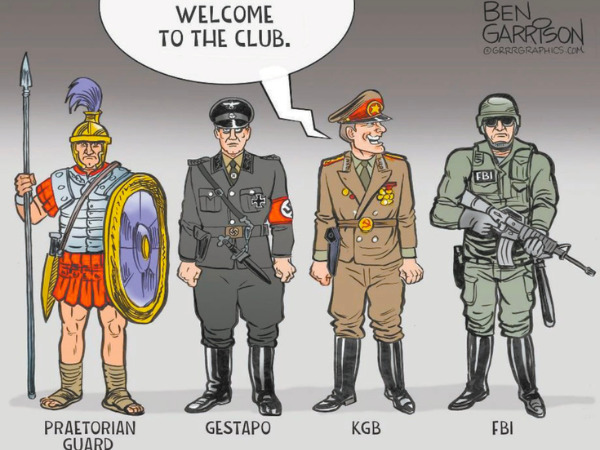
“A standing military force, with an overgrown Executive will not long be safe companions to liberty.”—James Madison

The IRS has stockpiled 4,500 guns and five million rounds of ammunition in recent years, including 621 shotguns, 539 long-barrel rifles and 15 submachine guns.

The Veterans Administration (VA) purchased 11 million rounds of ammunition (equivalent to 2,800 rounds for each of their officers), along with camouflage uniforms, riot helmets and shields, specialized image enhancement devices and tactical lighting.

The Department of Health and Human Services (HHS) acquired 4 million rounds of ammunition, in addition to 1,300 guns, including five submachine guns and 189 automatic firearms for its Office of Inspector General.

According to an in-depth report on “The Militarization of the U.S. Executive Agencies,” the Social Security Administration secured 800,000 rounds of ammunition for their special agents, as well as armor and guns.

The Environmental Protection Agency (EPA) owns 600 guns. And the Smithsonian now employs 620-armed “special agents.”

This is how it begins.

We have what the founders feared most: a “standing” or permanent army on American soil.

This de facto standing army is made up of weaponized, militarized, civilian forces which look like, dress like, and act like the military; are armed with guns, ammunition and military-style equipment; are authorized to make arrests; and are trained in military tactics.

Mind you, this de facto standing army of bureaucratic, administrative, non-military, paper-pushing, non-traditional law enforcement agencies may look and act like the military, but they are not the military.

Rather, they are foot soldiers of the police state’s standing army, and they are growing in number at an alarming rate.

According to the Wall Street Journal, the number of federal agents armed with guns, ammunition and military-style equipment, authorized to make arrests, and trained in military tactics has nearly tripled over the past several decades.

There are now more bureaucratic (non-military) government agents armed with weapons than U.S. Marines. As Adam Andrzejewski writes for Forbes, “the federal government has become one never-ending gun show.”

While Americans have to jump through an increasing number of hoops in order to own a gun, federal agencies have been placing orders for hundreds of millions of rounds of hollow point bullets and military gear. Among the agencies being supplied with night-vision equipment, body armor, hollow-point bullets, shotguns, drones, assault rifles and LP gas cannons are the Smithsonian, U.S. Mint, Health and Human Services, IRS, FDA, Small Business Administration, Social Security Administration, National Oceanic and Atmospheric Administration, Education Department, Energy Department, Bureau of Engraving and Printing and an assortment of public universities.

Add in the Biden Administration’s plans to grow the nation’s police forces by 100,000 more cops and swell the ranks of the IRS by 87,000 new employees (some of whom will have arrest-and-firearm authority) and you’ve got a nation in the throes of martial law.

The militarization of America’s police forces in recent decades has merely sped up the timeline by which the nation is transformed into an authoritarian regime.

What began with the militarization of the police in the 1980s during the government’s war on drugs has snowballed into a full-fledged integration of military weaponry, technology and tactics into police protocol. To our detriment, local police—clad in jackboots, helmets and shields and wielding batons, pepper-spray, stun guns, and assault rifles—have increasingly come to resemble occupying forces in our communities.

As Andrew Becker and G.W. Schulz report, more than $34 billion in federal government grants made available to local police agencies in the wake of 9/11 “ha[ve] fueled a rapid, broad transformation of police operations… across the country. More than ever before, police rely on quasi-military tactics and equipment… [P]olice departments around the U.S. have transformed into small army-like forces.”

This standing army has been imposed on the American people in clear violation of the spirit—if not the letter of the law—of the Posse Comitatus Act, which restricts the government’s ability to use the U.S. military as a police force.

A standing army—something that propelled the early colonists into revolution—strips the American people of any vestige of freedom.

It was for this reason that those who established America vested control of the military in a civilian government, with a civilian commander-in-chief. They did not want a military government, ruled by force.

Rather, they opted for a republic bound by the rule of law: the U.S. Constitution.

Unfortunately, with the Constitution under constant attack, the military’s power, influence and authority have grown dramatically. Even the Posse Comitatus Act, which makes it a crime for the government to use the military to carry out arrests, searches, seizure of evidence and other activities normally handled by a civilian police force, has been greatly weakened by exemptions allowing troops to deploy domestically and arrest civilians in the wake of alleged terrorist acts.

The increasing militarization of the police, the use of sophisticated weaponry against Americans and the government’s increasing tendency to employ military personnel domestically have all but eviscerated historic prohibitions such as the Posse Comitatus Act.

Indeed, there are a growing number of exceptions to which Posse Comitatus does not apply. These exceptions serve to further acclimate the nation to the sight and sounds of military personnel on American soil and the imposition of martial law.

Now we find ourselves struggling to retain some semblance of freedom in the face of administrative, police and law enforcement agencies that look and act like the military with little to no regard for the Fourth Amendment, laws such as the NDAA that allow the military to arrest and indefinitely detain American citizens, and military drills that acclimate the American people to the sight of armored tanks in the streets, military encampments in cities, and combat aircraft patrolling overhead.

The menace of a national police force—a.k.a. a standing army—vested with the power to completely disregard the Constitution, cannot be overstated, nor can its danger be ignored.

Historically, the establishment of a national police force accelerates a nation’s transformation into a police state, serving as the fundamental and final building block for every totalitarian regime that has ever wreaked havoc on humanity.

Then again, for all intents and perhaps, the American police state is already governed by martial law: Battlefield tactics. Militarized police. Riot and camouflage gear. Armored vehicles. Mass arrests. Pepper spray. Tear gas. Batons. Strip searches. Drones. Less-than-lethal weapons unleashed with deadly force. Rubber bullets. Water cannons. Concussion grenades. Intimidation tactics. Brute force. Laws conveniently discarded when it suits the government’s purpose.

This is what martial law looks like, when a government disregards constitutional freedoms and imposes its will through military force, only this is martial law without any government body having to declare it.

The ease with which Americans are prepared to welcome boots on the ground, regional lockdowns, routine invasions of their privacy, and the dismantling of every constitutional right intended to serve as a bulwark against government abuses is beyond unnerving.

We are sliding fast down a slippery slope to a Constitution-free America.

This quasi-state of martial law has been helped along by government policies and court rulings that have made it easier for the police to shoot unarmed citizens, for law enforcement agencies to seize cash and other valuable private property under the guise of asset forfeiture, for military weapons and tactics to be deployed on American soil, for government agencies to carry out round-the-clock surveillance, for legislatures to render otherwise lawful activities as extremist if they appear to be anti-government, for profit-driven private prisons to lock up greater numbers of Americans, for homes to be raided and searched under the pretext of national security, for American citizens to be labeled terrorists and stripped of their rights merely on the say-so of a government bureaucrat, and for pre-crime tactics to be adopted nationwide that strip Americans of the right to be assumed innocent until proven guilty and creates a suspect society in which we are all guilty until proven otherwise.

All of these assaults on the constitutional framework of the nation have been sold to the public as necessary for national security.

Time and again, the public has fallen for the ploy hook, line and sinker

We’re being reeled in, folks, and you know what happens when we get to the end of that line?

As I make clear in my book Battlefield America: The War on the American People and in its fictional counterpart The Erik Blair Diaries, we’ll be cleaned, gutted and strung up.

Source: https://bit.ly/3QAWkTE

ABOUT JOHN W. WHITEHEAD

Constitutional attorney and author John W. Whitehead is founder and president of The Rutherford Institute. His most recent books are the best-selling Battlefield America: The War on the American People, the award-winning A Government of Wolves: The Emerging American Police State, and a debut dystopian fiction novel, The Erik Blair Diaries. Whitehead can be contacted at staff@rutherford.org. Nisha Whitehead is the Executive Director of The Rutherford Institute. Information about The Rutherford Institute is available at www.rutherford.org.

Publication Guidelines / Reprint Permission

John W. Whitehead’s weekly commentaries are available for publication to newspapers and web publications at no charge. Please contact staff@rutherford.org to obtain reprint permission.
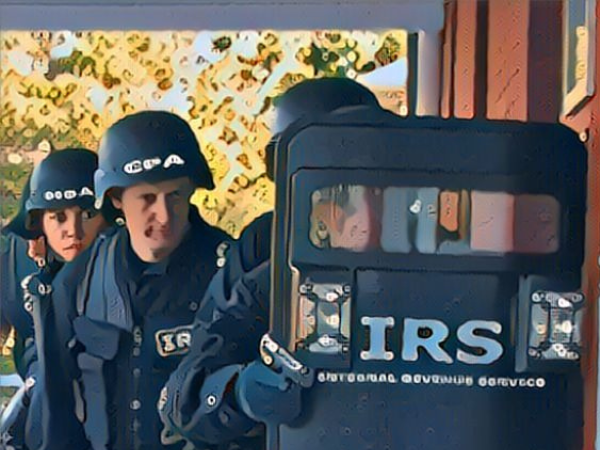
“Once a government is committed to the principle of silencing the voice of opposition, it has only one way to go, and that is down the path of increasingly repressive measures, until it becomes a source of terror to all its citizens and creates a country where everyone lives in fear.” — President Harry S. Truman

Militarized police. Riot squads. Camouflage gear. Black uniforms. Armored vehicles. Mass arrests. Pepper spray. Tear gas. Batons. Strip searches. Surveillance cameras. Kevlar vests. Drones. Lethal weapons. Less-than-lethal weapons unleashed with deadly force. Rubber bullets. Water cannons. Stun grenades. Arrests of journalists. Crowd control tactics. Intimidation tactics. Brutality. Lockdowns.

This is not the language of freedom. This is not even the language of law and order.

This is the language of force.

This is how the government at all levels—federal, state and local—now responds to those who speak out against government corruption, misconduct and abuse.

These overreaching, heavy-handed lessons in how to rule by force have become standard operating procedure for a government that communicates with its citizenry primarily through the language of brutality, intimidation and fear.

We didn’t know it then, but what happened five years ago in Charlottesville, Va., was a foretaste of what was to come.

At the time, Charlottesville was at the center of a growing struggle over how to reconcile the right to think and speak freely, especially about controversial ideas, with the push to sanitize the environment of anything—words and images—that might cause offense. That fear of offense prompted the Charlottesville City Council to get rid of a statue of Confederate General Robert E. Lee that had graced one of its public parks for 82 years.

In attempting to err on the side of political correctness by placating one group while muzzling critics of the city’s actions, Charlottesville attracted the unwanted attention of the Ku Klux Klan, neo-Nazis and the alt-Right, all of whom descended on the little college town with the intention of exercising their First Amendment right to be disagreeable, to assemble, and to protest.

That’s when everything went haywire.

When put to the test, Charlottesville did not handle things well at all.

On August 12, 2017, government officials took what should have been a legitimate exercise in constitutional principles (free speech, assembly and protest) and turned it into a lesson in authoritarianism by manipulating warring factions and engineering events in such a way as to foment unrest, lockdown the city, and justify further power grabs.

On the day of scheduled protests, police deliberately engineered a situation in which two opposing camps of protesters would confront each other, tensions would bubble over, and things would turn just violent enough to justify allowing the government to shut everything down.

Despite the fact that 1,000 first responders (including 300 state police troopers and members of the National Guard)—many of whom had been preparing for the downtown rally for months—had been called on to work the event, and police in riot gear surrounded Emancipation Park on three sides, police failed to do their jobs.

In fact, as the Washington Post reports, police “seemed to watch as groups beat each other with sticks and bludgeoned one another with shields… At one point, police appeared to retreat and then watch the beatings before eventually moving in to end the free-for-all, make arrests and tend to the injured.”

Police Stood By As Mayhem Mounted in Charlottesville,” reported ProPublica.

Incredibly, when the first signs of open violence broke out, the police chief allegedly instructed his staff to “let them fight, it will make it easier to declare an unlawful assembly.”

In this way, police who were supposed to uphold the law and prevent violence failed to do either.

Indeed, a 220-page post-mortem of the protests and the Charlottesville government’s response by former U.S. attorney Timothy J. Heaphy concluded that “the City of Charlottesville protected neither free expression nor public safety.”

In other words, the government failed to uphold its constitutional mandates.

The police failed to carry out their duties as peace officers.

And the citizens found themselves unable to trust either the police or the government to do its job in respecting their rights and ensuring their safety.

This is not much different from what is happening on the present-day national scene.

Indeed, there’s a pattern emerging if you pay close enough attention.

Civil discontent leads to civil unrest, which leads to protests and counterprotests. Tensions rise, violence escalates, police stand down, and federal armies move in. Meanwhile, despite the protests and the outrage, the government’s abuses continue unabated.

It’s all part of an elaborate setup by the architects of the police state. The government wants a reason to crack down and lock down and bring in its biggest guns.

They want us divided. They want us to turn on one another.

They want us powerless in the face of their artillery and armed forces.

They want us silent, servile and compliant.

They certainly do not want us to remember that we have rights, let alone attempting to exercise those rights peaceably and lawfully, whether it’s protesting politically correct efforts to whitewash the past, challenging COVID-19 mandates, questioning election outcomes, or listening to alternate viewpoints—even conspiratorial ones—in order to form our own opinions about the true nature of government.  

And they definitely do not want us to engage in First Amendment activities that challenge the government’s power, reveal the government’s corruption, expose the government’s lies, and encourage the citizenry to push back against the government’s many injustices.

Why else do you think Wikileaks founder Julian Assange continues to molder in jail for daring to blow the whistle about the U.S. government’s war crimes, while government officials who rape, plunder and kill walk away with little more than a slap on the wrist?

This is how it begins.

We are moving fast down that slippery slope to an authoritarian society in which the only opinions, ideas and speech expressed are the ones permitted by the government and its corporate cohorts.

In the wake of the Jan. 6 riots at the Capitol, “domestic terrorism” has become the new poster child for expanding the government’s powers at the expense of civil liberties.

Of course, “domestic terrorist” is just the latest bull’s eye phrase, to be used interchangeably with “anti-government,” “extremist” and “terrorist,” to describe anyone who might fall somewhere on a very broad spectrum of viewpoints that could be considered “dangerous.”

This unilateral power to muzzle free speech represents a far greater danger than any so-called right- or left-wing extremist might pose. The ramifications are so far-reaching as to render almost every American an extremist in word, deed, thought or by association.

Watch and see: we are all about to become enemies of the state.

As I make clear in my book Battlefield America: The War on the American People and in its fictional counterpart The Erik Blair Diaries, anytime you have a government that operates in the shadows, speaks in a language of force, and rules by fiat, you’d better beware.

So what’s the answer?

For starters, we need to remember that we’ve all got rights, and we need to exercise them.

Most of all, we need to protect the rights of the people to speak truth to power, whatever that truth might be. Either “we the people” believe in free speech or we don’t.

Fifty years ago, Supreme Court Justice William O. Douglas asked:

“Since when have we Americans been expected to bow submissively to authority and speak with awe and reverence to those who represent us? The constitutional theory is that we the people are the sovereigns, the state and federal officials only our agents. We who have the final word can speak softly or angrily. We can seek to challenge and annoy, as we need not stay docile and quiet… [A]t the constitutional level, speech need not be a sedative; it can be disruptive… [A] function of free speech under our system of government is to invite dispute. It may indeed best serve its high purpose when it induces a condition of unrest, creates dissatisfaction with conditions as they are, or even stirs people to anger.”

In other words, the Constitution does not require Americans to be servile or even civil to government officials. Neither does the Constitution require obedience (although it does insist on nonviolence).

Somehow, the government keeps overlooking this important element in the equation.

Source: https://bit.ly/3QvFmp1

ABOUT JOHN W. WHITEHEAD

Constitutional attorney and author John W. Whitehead is founder and president of The Rutherford Institute. His most recent books are the best-selling Battlefield America: The War on the American People, the award-winning A Government of Wolves: The Emerging American Police State, and a debut dystopian fiction novel, The Erik Blair Diaries. Whitehead can be contacted at staff@rutherford.org. Nisha Whitehead is the Executive Director of The Rutherford Institute. Information about The Rutherford Institute is available at www.rutherford.org.

Publication Guidelines / Reprint Permission

John W. Whitehead’s weekly commentaries are available for publication to newspapers and web publications at no charge. Please contact staff@rutherford.org to obtain reprint permission.

“Every day in communities across the United States, children and adolescents spend the majority of their waking hours in schools that have increasingly come to resemble places of detention more than places of learning.”—Investigative journalist Annette Fuentes

This is what it means to go back-to-school in America today.

Instead of making the schools safer, government officials are making them more authoritarian.

Instead of raising up a generation of civic-minded citizens with critical thinking skills, government officials are churning out compliant drones who know little to nothing about their history or their freedoms.

And instead of being taught the three R’s of education (reading, writing and arithmetic), young people are being drilled in the three I’s of life in the American police state: indoctrination, intimidation and intolerance.

From the moment a child enters one of the nation’s 98,000 public schools to the moment he or she graduates, they will be exposed to a steady diet of:

  • draconian zero tolerance policies that criminalize childish behavior,
  • overreaching anti-bullying statutes that criminalize speech,
  • school resource officers (police) tasked with disciplining and/or arresting so-called “disorderly” students,
  • standardized testing that emphasizes rote answers over critical thinking,
  • politically correct mindsets that teach young people to censor themselves and those around them,
  • and extensive biometric and surveillance systems that, coupled with the rest, acclimate young people to a world in which they have no freedom of thought, speech or movement.

Roped into the government’s profit-driven campaign to keep the nation “safe” from drugs, disease, and weapons, the schools have transformed themselves into quasi-prisons, complete with surveillance cameras, metal detectors, police patrols, zero tolerance policies, lock downs, drug sniffing dogs, strip searches and active shooter drills.

Young people in America are now first in line to be searched, surveilled, spied on, threatened, tied up, locked down, treated like criminals for non-criminal behavior, tasered and in some cases shot.

Students are not only punished for minor transgressions such as playing cops and robbers on the playground, bringing LEGOs to school, or having a food fight, but the punishments have become far more severe, shifting from detention and visits to the principal’s office into misdemeanor tickets, juvenile court, handcuffs, tasers and even prison terms.

Students have been suspended under school zero tolerance policies for bringing to school “look alike substances” such as oreganobreath mints, birth control pills and powdered sugar.

Look-alike weapons (toy guns—even Lego-sized ones, hand-drawn pictures of guns, pencils twirled in a “threatening” manner, imaginary bows and arrows, fingers positioned like guns) can also land a student in hot water, in some cases getting them expelled from school or charged with a crime.

Not even good deeds go unpunished.

One 13-year-old was given detention for exposing the school to “liability” by sharing his lunch with a hungry friend. A third grader was suspended for shaving her head in sympathy for a friend who had lost her hair to chemotherapy. And then there was the high school senior who was suspended for saying “bless you” after a fellow classmate sneezed.

Having police in the schools only adds to the danger.

Thanks to a combination of media hype, political pandering and financial incentives, the use of armed police officers (a.k.a. school resource officers) to patrol school hallways has risen dramatically in the years since the Columbine school shooting.

Indeed, the growing presence of police in the nation’s schools is resulting in greater police “involvement in routine discipline matters that principals and parents used to address without involvement from law enforcement officers.”

Funded by the U.S. Department of Justice, these school resource officers have become de facto wardens in elementary, middle and high schools, doling out their own brand of justice to the so-called “criminals” in their midst with the help of tasers, pepper spray, batons and brute force.

In the absence of school-appropriate guidelines, police are more and more “stepping in to deal with minor rulebreaking: sagging pants, disrespectful comments, brief physical skirmishes. What previously might have resulted in a detention or a visit to the principal’s office was replaced with excruciating pain and temporary blindness, often followed by a trip to the courthouse.”

Not even the younger, elementary school-aged kids are being spared these “hardening” tactics.

On any given day when school is in session, kids who “act up” in class are pinned facedown on the floor, locked in dark closets, tied up with straps, bungee cords and duct tape, handcuffed, leg shackled, tasered or otherwise restrained, immobilized or placed in solitary confinement in order to bring them under “control.”

In almost every case, these undeniably harsh methods are used to punish kids—some as young as 4 and 5 years old—for simply failing to follow directions or throwing tantrums.

Very rarely do the kids pose any credible danger to themselves or others.

Unbelievably, these tactics are all legal, at least when employed by school officials or school resource officers in the nation’s public schools.

This is what happens when you introduce police and police tactics into the schools.

Paradoxically, by the time you add in the lockdowns and active shooter drills, instead of making the schools safer, school officials have succeeded in creating an environment in which children are so traumatized that they suffer from post-traumatic stress disorder, nightmares, anxiety, mistrust of adults in authority, as well as feelings of anger, depression, humiliation, despair and delusion.

For example, a middle school in Washington State went on lockdown after a student brought a toy gun to class. A Boston high school went into lockdown for four hours after a bullet was discovered in a classroom. A North Carolina elementary school locked down and called in police after a fifth grader reported seeing an unfamiliar man in the school (it turned out to be a parent).

Police officers at a Florida middle school carried out an active shooter drill in an effort to educate students about how to respond in the event of an actual shooting crisis. Two armed officers, guns loaded and drawn, burst into classrooms, terrorizing the students and placing the school into lockdown mode.

These police state tactics have not made the schools any safer.

The fallout has been what you’d expect, with the nation’s young people treated like hardened criminals: handcuffed, arrested, tasered, tackled and taught the painful lesson that the Constitution (especially the Fourth Amendment) doesn’t mean much in the American police state.

So what’s the answer, not only for the here-and-now—the children growing up in these quasi-prisons—but for the future of this country?

How do you convince a child who has been routinely handcuffed, shackled, tied down, locked up, and immobilized by government officials—all before he reaches the age of adulthood—that he has any rights at all, let alone the right to challenge wrongdoing, resist oppression and defend himself against injustice?

Most of all, how do you persuade a fellow American that the government works for him when, for most of his young life, he has been incarcerated in an institution that teaches young people to be obedient and compliant citizens who don’t talk back, don’t question and don’t challenge authority?

As we’ve seen with other issues, any significant reforms will have to start locally and trickle upwards.

For starters, parents need to be vocal, visible and organized and demand that school officials 1) adopt a policy of positive reinforcement in dealing with behavior issues; 2) minimize the presence in the schools of police officers and cease involving them in student discipline; and 3) insist that all behavioral issues be addressed first and foremost with a child’s parents, before any other disciplinary tactics are attempted.

As I make clear in my book Battlefield America: The War on the American People and in its fictional counterpart The Erik Blair Diaries, if we want to raise up a generation of freedom fighters who will actually operate with justice, fairness, accountability and equality towards each other and their government, we must start by running the schools like freedom forums.

Source: https://bit.ly/3BBCCSQ

ABOUT JOHN W. WHITEHEAD

Constitutional attorney and author John W. Whitehead is founder and president of The Rutherford Institute. His most recent books are the best-selling Battlefield America: The War on the American People, the award-winning A Government of Wolves: The Emerging American Police State, and a debut dystopian fiction novel, The Erik Blair Diaries. Whitehead can be contacted at staff@rutherford.org. Nisha Whitehead is the Executive Director of The Rutherford Institute. Information about The Rutherford Institute is available at www.rutherford.org.

Publication Guidelines / Reprint Permission

John W. Whitehead’s weekly commentaries are available for publication to newspapers and web publications at no charge. Please contact staff@rutherford.org to obtain reprint permission.
“Solving unsolved crimes is a noble objective, but it occupies a lower place in the American pantheon of noble objectives than the protection of our people from suspicionless law-enforcement searches… Make no mistake about it…your DNA can be taken and entered into a national DNA database if you are ever arrested, rightly or wrongly, and for whatever reason… Perhaps the construction of such a genetic panopticon is wise. But I doubt that the proud men who wrote the charter of our liberties would have been so eager to open their mouths for royal inspection.”—Justice Antonin Scalia dissenting in Maryland v. King

Be warned: the DNA detectives are on the prowl.

Whatever skeletons may be lurking on your family tree or in your closet, whatever crimes you may have committed, whatever associations you may have with those on the government’s most wanted lists: the police state is determined to ferret them out.

In an age of overcriminalization, round-the-clock surveillance, and a police state eager to flex its muscles in a show of power, we are all guilty of some transgression or other.

No longer can we consider ourselves innocent until proven guilty.

Now we are all suspects in a DNA lineup waiting to be matched up with a crime.

Suspect State, meet the Genetic Panopticon.

DNA technology in the hands of government officials will complete our transition to a Surveillance State in which prison walls are disguised within the seemingly benevolent trappings of technological and scientific progress, national security and the need to guard against terrorists, pandemics, civil unrest, etc.

By accessing your DNA, the government will soon know everything else about you that they don’t already know: your family chart, your ancestry, what you look like, your health history, your inclination to follow orders or chart your own course, etc.

It’s getting harder to hide, even if you think you’ve got nothing to hide.

Armed with unprecedented access to DNA databases amassed by the FBI and ancestry website, as well as hospital newborn screening programs, police are using forensic genealogy, which allows police to match up an unknown suspect’s crime scene DNA with that of any family members in a genealogy database, to solve cold cases that have remained unsolved for decades.

By submitting your DNA to a genealogical database such as Ancestry and 23andMe, you’re giving the police access to the genetic makeup, relationships and health profiles of every relative—past, present and future—in your family, whether or not they ever agreed to be part of such a database.

It no longer even matters if you’re among the tens of millions of people who have added their DNA to ancestry databases. As Brian Resnick reports, public DNA databases have grown so massive that they can be used to find you even if you’ve never shared your own DNA.

That simple transaction—a spit sample or a cheek swab in exchange for getting to learn everything about one’s ancestral makeup, where one came from, and who is part of one’s extended family—is the price of entry into the Suspect State for all of us.

After all, a DNA print reveals everything about “who we are, where we come from, and who we will be.” It can also be used to predict the physical appearance of potential suspects.

It’s what police like to refer to a “modern fingerprint.”

Whereas fingerprint technology created a watershed moment for police in their ability to “crack” a case, DNA technology is now being hailed by law enforcement agencies as the magic bullet in crime solving, especially when it helps them crack cold cases of serial murders and rapists.

After all, who wouldn’t want to get psychopaths and serial rapists off the streets and safely behind bars, right?

At least, that’s the argument being used by law enforcement to support their unrestricted access to these genealogy databases, and they’ve got the success stories to prove it.

For instance, a 68-year-old Pennsylvania man was arrested and charged with the brutal rape and murder of a young woman almost 50 years earlier. Relying on genealogical research suggesting that the killer had ancestors who hailed from a small town in Italy, investigators narrowed their findings down to one man whose DNA, obtained from a discarded coffee cup, matched the killer’s.

In another cold case investigation, a 76-year-old man was arrested for two decades-old murders after his DNA was collected from a breathalyzer during an unrelated traffic stop.

Yet it’s not just psychopaths and serial rapists who are getting caught up in the investigative dragnet. In the police state’s pursuit of criminals, anyone who comes up as a possible DNA match—including distant family members—suddenly becomes part of a circle of suspects that must be tracked, investigated and ruled out.

Victims of past crimes are also getting added to the government’s growing DNA database of potential suspects. For instance, San Francisco police used a rape victim’s DNA, which was on file from a 2016 sexual assault, to arrest the woman for allegedly being involved in a property crime that took place in 2021.

In this way, “guilt by association” has taken on new connotations in a technological age in which one is just a DNA sample away from being considered a person of interest in a police investigation. As Jessica Cussins warns in Psychology Today, “The fundamental fight—that data from potentially innocent people should not be used to connect them to unrelated crimes—has been lost.”

Until recently, the government was required to at least observe some basic restrictions on when, where and how it could access someone’s DNA. That was turned on its head by various U.S. Supreme Court rulings that heralded the loss of privacy on a cellular level.

For instance, the U.S. Supreme Court ruled in Maryland v. King that taking DNA samples from a suspect doesn’t violate the Fourth Amendment. The Court’s subsequent decision to let stand the Maryland Court of Appeals’ ruling in Raynor v. Maryland, which essentially determined that individuals do not have a right to privacy when it comes to their DNA, made Americans even more vulnerable to the government accessing, analyzing and storing their DNA without their knowledge or permission.

It’s all been downhill since then.

Indeed, the government has been relentless in its efforts to get hold of our DNA, either through mandatory programs carried out in connection with law enforcement and corporate America, by warrantlessly accessing our familial DNA shared with genealogical services such as Ancestry and 23andMe, or through the collection of our “shed” or “touch” DNA.

Get ready, folks, because the government has embarked on a diabolical campaign to create a nation of suspects predicated on a massive national DNA database.

This has been helped along by Congress (which adopted legislation allowing police to collect and test DNA immediately following arrests), President Trump (who signed the Rapid DNA Act into law), the courts (which have ruled that police can routinely take DNA samples from people who are arrested but not yet convicted of a crime), and local police agencies (which are chomping at the bit to acquire this new crime-fighting gadget).

For example, Rapid DNA machines—portable, about the size of a desktop printer, highly unregulated, far from fool-proof, and so fast that they can produce DNA profiles in less than two hours—allow police to go on fishing expeditions for any hint of possible misconduct using DNA samples.

Journalist Heather Murphy explains: “As police agencies build out their local DNA databases, they are collecting DNA not only from people who have been charged with major crimes but also, increasingly, from people who are merely deemed suspicious, permanently linking their genetic identities to criminal databases.”

All 50 states now maintain their own DNA government databases, although the protocols for collection differ from state to state. Increasingly, many of the data from local databanks are being uploaded to CODIS, the FBI’s massive DNA database, which has become a de facto way to identify and track the American people from birth to death.

Even hospitals have gotten in on the game by taking and storing newborn babies’ DNA, often without their parents’ knowledge or consent. It’s part of the government’s mandatory genetic screening of newborns. In many states, the DNA is stored indefinitely. There’s already a move underway to carry out whole genome sequencing on newborns, ostensibly to help diagnose rare diseases earlier and improve health later in life, which constitutes an ethical minefield all by itself.

What this means for those being born today is inclusion in a government database that contains intimate information about who they are, their ancestry, and what awaits them in the future, including their inclinations to be followers, leaders or troublemakers.

Just recently, in fact, police in New Jersey accessed the DNA from a nine-year-old blood sample of a newborn baby in order to identify the child’s father as a suspect in a decades-old sexual assault.

The ramifications of this kind of DNA profiling are far-reaching.

At a minimum, these DNA databases do away with any semblance of privacy or anonymity.

The lucrative possibilities for hackers and commercial entities looking to profit off one’s biological record are endless. It’s estimated that the global human identification market is projected to reach $6.5 billion by 2032.

These genetic databases and genomic technology also make us that much more vulnerable to creeps and cyberstalkersgenetic profiling, and those who would weaponize the technology against us.

Unfortunately, the debate over genetic privacy—and when one’s DNA becomes a public commodity outside the protection of the Fourth Amendment’s prohibition on warrantless searches and seizures—continues to lag far behind the government and Corporate America’s encroachments on our rights.

Moreover, while much of the public debate, legislative efforts and legal challenges in recent years have focused on the protocols surrounding when police can legally collect a suspect’s DNA (with or without a search warrant and whether upon arrest or conviction), the question of how to handle “shed” or “touch” DNA has largely slipped through without much debate or opposition.

As scientist Leslie A. Pray notes:

We all shed DNA, leaving traces of our identity practically everywhere we go… In fact, the garbage you leave for curbside pickup is a potential gold mine of this sort of material. All of this shed or so-called abandoned DNA is free for the taking by local police investigators hoping to crack unsolvable cases… shed DNA is also free for inclusion in a secret universal DNA databank.

What this means is that if you have the misfortune to leave your DNA traces anywhere a crime has been committed, you’ve already got a file somewhere in some state or federal database—albeit it may be a file without a name. As Heather Murphy warns in the New York Times: “The science-fiction future, in which police can swiftly identify robbers and murderers from discarded soda cans and cigarette butts, has arrived…  Genetic fingerprinting is set to become as routine as the old-fashioned kind.

As the dissenting opinion to the Maryland Court of Appeals’ shed DNA ruling in Raynor rightly warned, “A person can no longer vote, participate in a jury, or obtain a driver’s license, without opening up his genetic material for state collection and codification.” Indeed, by refusing to hear the Raynor case, the U.S. Supreme Court gave its tacit approval for government agents to collect shed DNA, likening it to a person’s fingerprints or the color of their hair, eyes or skin.

It’s just a matter of time before government agents will know everywhere we’ve been and how long we were at each place by following our shed DNA. After all, scientists can already track salmon across hundreds of square miles of streams and rivers using DNA.

Today, helped along by robotics and automation, DNA processing, analysis and reporting takes far less time and can bring forth all manner of information, right down to a person’s eye color and relatives. Incredibly, one company specializes in creating “mug shots” for police based on DNA samples from unknown “suspects” which are then compared to individuals with similar genetic profiles.

Of course, none of these technologies are infallible.

DNA evidence can be wrong, either through human error, tampering, or even outright fabrication, and it happens more often than we are told.

What this amounts to is a scenario in which we have little to no defense against charges of wrongdoing, especially when “convicted” by technology, and even less protection against the government sweeping up our DNA in much the same way it sweeps up our phone calls, emails and text messages.

As I make clear in my book Battlefield America: The War on the American People and in its fictional counterpart The Erik Blair Diaries, it’s only a matter of time before the police state’s pursuit of criminals from the past expands into genetic profiling and a preemptive hunt for criminals of the future.

Source: https://bit.ly/3z4WZF2

ABOUT JOHN W. WHITEHEAD

Constitutional attorney and author John W. Whitehead is founder and president of The Rutherford Institute. His most recent books are the best-selling Battlefield America: The War on the American People, the award-winning A Government of Wolves: The Emerging American Police State, and a debut dystopian fiction novel, The Erik Blair Diaries. Whitehead can be contacted at staff@rutherford.org. Nisha Whitehead is the Executive Director of The Rutherford Institute. Information about The Rutherford Institute is available at www.rutherford.org.

Publication Guidelines / Reprint Permission

John W. Whitehead’s weekly commentaries are available for publication to newspapers and web publications at no charge. Please contact staff@rutherford.org to obtain reprint permission.
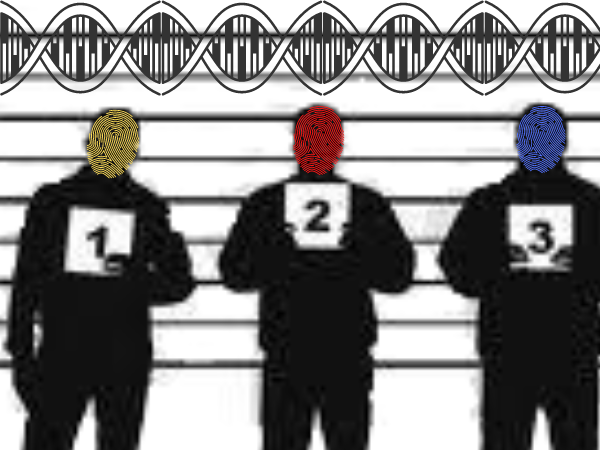
“There are no private lives. This a most important aspect of modern life. One of the biggest transformations we have seen in our society is the diminution of the sphere of the private. We must reasonably now all regard the fact that there are no secrets and nothing is private. Everything is public.” ― Philip K. Dick

Nothing is private.

We teeter on the cusp of a cultural, technological and societal revolution the likes of which have never been seen before.

While the political Left and Right continue to make abortion the face of the debate over the right to privacy in America, the government and its corporate partners, aided by rapidly advancing technology, are reshaping the world into one in which there is no privacy at all.

Nothing that was once private is protected.

We have not even begun to register the fallout from the tsunami bearing down upon us in the form of AI (artificial intelligence) surveillance, and yet it is already re-orienting our world into one in which freedom is almost unrecognizable.

AI surveillance harnesses the power of artificial intelligence and widespread surveillance technology to do what the police state lacks the manpower and resources to do efficiently or effectively: be everywhere, watch everyone and everything, monitor, identify, catalogue, cross-check, cross-reference, and collude.

Everything that was once private is now up for grabs to the right buyer.

Governments and corporations alike have heedlessly adopted AI surveillance technologies without any care or concern for their long-term impact on the rights of the citizenry.

As a special report by the Carnegie Endowment for International Peace warns, “A growing number of states are deploying advanced AI surveillance tools to monitor, track, and surveil citizens to accomplish a range of policy objectives—some lawful, others that violate human rights, and many of which fall into a murky middle ground.”

Indeed, with every new AI surveillance technology that is adopted and deployed without any regard for privacy, Fourth Amendment rights and due process, the rights of the citizenry are being marginalized, undermined and eviscerated.

Cue the rise of digital authoritarianism.

Digital authoritarianism, as the Center for Strategic and International Studies cautions, involves the use of information technology to surveil, repress, and manipulate the populace, endangering human rights and civil liberties, and co-opting and corrupting the foundational principles of democratic and open societies, “including freedom of movement, the right to speak freely and express political dissent, and the right to personal privacy, online and off.”

The seeds of digital authoritarianism were planted in the wake of the 9/11 attacks, with the passage of the USA Patriot Act. A massive 342-page wish list of expanded powers for the FBI and CIA, the Patriot Act justified broader domestic surveillance, the logic being that if government agents knew more about each American, they could distinguish the terrorists from law-abiding citizens.

It sounded the death knell for the freedoms enshrined in the Bill of Rights, especially the Fourth Amendment, and normalized the government’s mass surveillance powers.

Writing for the New York Times, Jeffrey Rosen observed that “before Sept. 11, the idea that Americans would voluntarily agree to live their lives under the gaze of a network of biometric surveillance cameras, peering at them in government buildings, shopping malls, subways and stadiums, would have seemed unthinkable, a dystopian fantasy of a society that had surrendered privacy and anonymity.”

Who could have predicted that 50 years after George Orwell typed the final words to his dystopian novel 1984, “He loved Big Brother,” we would come to love Big Brother.

Yet that is exactly what has come to pass.

After 9/11, Rosen found that “people were happy to give up privacy without experiencing a corresponding increase in security. More concerned about feeling safe than actually being safe, they demanded the construction of vast technological architectures of surveillance even though the most empirical studies suggested that the proliferation of surveillance cameras had ‘no effect on violent crime’ or terrorism.”

In the decades following 9/11, a massive security-industrial complex arose that was fixated on militarization, surveillance, and repression.

Surveillance is the key.

We’re being watched everywhere we go. Speed cameras. Red light cameras. Police body cameras. Cameras on public transportation. Cameras in stores. Cameras on public utility poles. Cameras in cars. Cameras in hospitals and schools. Cameras in airports.

We’re being recorded at least 50 times a day.

It’s estimated that there are upwards of 85 million surveillance cameras in the U.S. alone, second only to China.

On any given day, the average American going about his daily business is monitored, surveilled, spied on and tracked in more than 20 different ways by both government and corporate eyes and ears.

Beware of what you say, what you read, what you write, where you go, and with whom you communicate, because it will all be recorded, stored and used against you eventually, at a time and place of the government’s choosing.

Yet it’s not just what we say, where we go and what we buy that is being tracked.

We’re being surveilled right down to our genes, thanks to a potent combination of hardware, software and data collection that scans our biometrics—our faces, irises, voices, genetics, microbiomes, scent, gait, heartbeat, breathing, behaviors—runs them through computer programs that can break the data down into unique “identifiers,” and then offers them up to the government and its corporate allies for their respective uses.

As one AI surveillance advocate proclaimed, “Surveillance is no longer only a watchful eye, but a predictive one as well.” For instance, Emotion AI, an emerging technology that is gaining in popularity, uses facial recognition technology “to analyze expressions based on a person’s faceprint to detect their internal emotions or feelings, motivations and attitudes.” China claims its AI surveillance can already read facial expressions and brain waves in order to determine the extent to which members of the public are grateful, obedient and willing to comply with the Communist Party.

This is the slippery slope that leads to the thought police.

The technology is already being used “by border guards to detect threats at border checkpoints, as an aid for detection and diagnosis of patients for mood disorders, to monitor classrooms for boredom or disruption, and to monitor human behavior during video calls.”

For all intents and purposes, we now have a fourth branch of government: the surveillance state.

This fourth branch came into being without any electoral mandate or constitutional referendum, and yet it possesses superpowers, above and beyond those of any other government agency save the military. It is all-knowing, all-seeing and all-powerful. It operates beyond the reach of the president, Congress and the courts, and it marches in lockstep with the corporate elite who really call the shots in Washington, DC.

The government’s “technotyranny” surveillance apparatus has become so entrenched and entangled with its police state apparatus that it’s hard to know anymore where law enforcement ends and surveillance begins.

The short answer: they have become one and the same entity. The police state has passed the baton to the surveillance state, which has shifted into high gear with the help of artificial intelligence technologies. The COVID-19 pandemic helped to further centralize digital power in the hands of the government at the expense of the citizenry’s privacy rights.

“From cameras that identify the faces of passersby to algorithms that keep tabs on public sentiment online, artificial intelligence (AI)-powered tools are opening new frontiers in state surveillance around the world.” So begins the Carnegie Endowment’s report on AI surveillance note. “Law enforcement, national security, criminal justice, and border management organizations in every region are relying on these technologies—which use statistical pattern recognition, machine learning, and big data analytics—to monitor citizens.”

In the hands of tyrants and benevolent dictators alike, AI surveillance is the ultimate means of repression and control, especially through the use of smart city/safe city platforms, facial recognition systems, and predictive policing. These technologies are also being used by violent extremist groups, as well as sex, child, drug, and arms traffickers for their own nefarious purposes.

China, the role model for our dystopian future, has been a major force in deploying AI surveillance on its own citizens, especially by way of its social credit systems, which it employs to identify, track and segregate its “good” citizens from the “bad.”

Social media credit scores assigned to Chinese individuals and businesses categorize them on whether or not they are worthy of being part of society. A real-name system—which requires people to use government-issued ID cards to buy mobile sims, obtain social media accounts, take a train, board a plane, or even buy groceries—coupled with social media credit scores ensures that those blacklisted as “unworthy” are banned from accessing financial markets, buying real estate or travelling by air or train. Among the activities that can get you labeled unworthy are taking reserved seats on trains or causing trouble in hospitals.

In much the same way that Chinese products have infiltrated almost every market worldwide and altered consumer dynamics, China is now exporting its “authoritarian tech” to governments worldwide ostensibly in an effort to spread its brand of totalitarianism worldwide. In fact, both China and the United States have led the way in supplying the rest of the world with AI surveillance, sometimes at a subsidized rate.

This is how totalitarianism conquers the world.

While countries with authoritarian regimes have been eager to adopt AI surveillance, as the Carnegie Endowment’s research makes clear, liberal democracies are also “aggressively using AI tools to police borders, apprehend potential criminals, monitor citizens for bad behavior, and pull out suspected terrorists from crowds.”

Moreover, it’s easy to see how the China model for internet control has been integrated into the American police state’s efforts to flush out so-called anti-government, domestic extremists.

According to journalist Adrian Shahbaz’s in-depth report, there are nine elements to the Chinese model of digital authoritarianism when it comes to censoring speech and targeting activists: 1) dissidents suffer from persistent cyber attacks and phishing; 2) social media, websites, and messaging apps are blocked; 3) posts that criticize government officials are removed; 4) mobile and internet access are revoked as punishment for activism; 5) paid commentators drown out government criticism; 6) new laws tighten regulations on online media; 7) citizens’ behavior monitored via AI and surveillance tools; 9) individuals regularly arrested for posts critical of the government; and 9) online activists are made to disappear.

You don’t even have to be a critic of the government to get snared in the web of digital censorship and AI surveillance.

The danger posed by the surveillance state applies equally to all of us: lawbreaker and law-abider alike.

When the government sees all and knows all and has an abundance of laws to render even the most seemingly upstanding citizen a criminal and lawbreaker, then the old adage that you’ve got nothing to worry about if you’ve got nothing to hide no longer applies.

As Orwell wrote in 1984, “You had to live—did live, from habit that became instinct—in the assumption that every sound you made was overheard, and, except in darkness, every movement scrutinized.”

In an age of too many laws, too many prisons, too many government spies, and too many corporations eager to make a fast buck at the expense of the American taxpayer, we are all guilty of some transgression or other.

No one is spared.

As Elise Thomas writes for Wired: “New surveillance tech means you’ll never be anonymous again.”

It won’t be long before we find ourselves looking back on the past with longing, back to an age where we could speak to whomever we wanted, buy whatever we wanted, think whatever we wanted, go wherever we wanted, feel whatever we wanted without those thoughts, words and activities being tracked, processed and stored by corporate giants, sold to government agencies, and used against us by militarized police with their army of futuristic technologies.

Tread cautiously: as I make clear in my book Battlefield America: The War on the American People and in its fictional counterpart The Erik Blair Diaries1984 has become an operation manual for the omnipresent, modern-day AI surveillance state.

Without constitutional protections in place to guard against encroachments on our rights when power, AI technology and militaristic governance converge, it won’t be long before Philip K. Dick’s rules for survival become our governing reality: “If, as it seems, we are in the process of becoming a totalitarian society in which the state apparatus is all-powerful, the ethics most important for the survival of the true, free, human individual would be: cheat, lie, evade, fake it, be elsewhere, forge documents, build improved electronic gadgets in your garage that’ll outwit the gadgets used by the authorities.”

Source: https://bit.ly/3PGkWcK

ABOUT JOHN W. WHITEHEAD

Constitutional attorney and author John W. Whitehead is founder and president of The Rutherford Institute. His most recent books are the best-selling Battlefield America: The War on the American People, the award-winning A Government of Wolves: The Emerging American Police State, and a debut dystopian fiction novel, The Erik Blair Diaries. Whitehead can be contacted at staff@rutherford.org. Nisha Whitehead is the Executive Director of The Rutherford Institute. Information about The Rutherford Institute is available at www.rutherford.org.

Publication Guidelines / Reprint Permission

John W. Whitehead’s weekly commentaries are available for publication to newspapers and web publications at no charge. Please contact staff@rutherford.org to obtain reprint permission.
“That was when they suspended the Constitution. They said it would be temporary. There wasn’t even any rioting in the streets. People stayed home at night, watching television, looking for some direction. There wasn’t even an enemy you could put your finger on.”—Margaret Atwood, The Handmaid’s Tale

We are witnessing the gradual dismantling of every constitutional principle that serves as a bulwark against government tyranny, overreach and abuse.

As usual, the latest assault comes from the U.S. Supreme Court.

In a 6-3 ruling in Vega v. Tekoh, the Supreme Court took aim at the Miranda warnings, which require that police inform suspects that they have a right against self-incrimination when in police custody: namely, that they have a right to remain silent, to have an attorney present, and that anything they say and do can and will be used against them in a court of law.

Although the Supreme Court stopped short of overturning its 1966 ruling in Miranda v. Arizona, the conservative majority declared that individuals cannot hold police accountable for violating their Fifth Amendment right to remain silent.

By shielding police from lawsuits arising from their failure to Mirandize suspects, the Supreme Court has sent a message to police that they no longer have to respect a suspect’s right to remain silent.

In other words, concludes legal analyst Nick Sibilla, “the Supreme Court has effectively created a new legal immunity for cops accused of infringing on the Fifth Amendment’s protection against self-incrimination.”

Why is this important?

In totality, the rights enshrined in the Fifth Amendment speak to the Founders’ determination to protect the rights of the individual against a government with a natural inclination towards corruption, tyranny and thuggery.

The Founders were especially concerned with balancing the scales of justice in such a way that the innocent and the accused were not railroaded and browbeaten by government agents into coerced confessions, false convictions, or sham trials.  

Indeed, so determined were the Founders to safeguard the rights of the innocent, even if it meant allowing a guilty person to go free, that Benjamin Franklin insisted, “It is better a hundred guilty persons should escape than one innocent person should suffer.”

Two hundred-plus years later, the Supreme Court (aided and abetted by the police state, Congress and Corporate America) has flipped that longstanding presumption of innocence on its head.

In our present suspect society, “we the people” are all presumed guilty until proven innocent.

With the Vega ruling, we have even fewer defenses for warding off government chicanery, abuse, threats and entrapment.

To be clear, the Supreme Court is not saying that we don’t have the right to remain silent when in police custody. It’s merely saying that we can’t sue the police for violating that right.

It’s a subtle difference but a significant one that could well encourage police to engage in the very sort of egregious misconduct at the heart of the Vega case: in which a police officer investigating a sexual assault isolated a suspect in a small, windowless room; refused him access to a lawyer or work colleagues; accused him of molesting a female patient; threatened him with violence; implied that he and his family would be deported; and terrorized him into signing a false confession dictated by the cop.

Although Terence Tekoh was eventually tried and acquitted, the Supreme Court refused to hold police accountable for browbeating an innocent man into making a false confession.

The Vega ruling threatens to turn the clocks back to a time when police resorted to physical brutality (beating, hanging, whipping) and mental torture in order to obtain confessions from suspects without ever informing them of their Fifth Amendment rights.

This was exactly the kind of misconduct that the Warren Court sought to discourage with its 5-4 ruling in Miranda v. Arizona.

As the Court concluded in Miranda almost 60 years ago:

The prosecution may not use statements, whether exculpatory or inculpatory, stemming from custodial interrogation of the defendant unless it demonstrates the use of procedural safeguards effective to secure the privilege against self-incrimination. By custodial interrogation, we mean questioning initiated by law enforcement officers after a person has been taken into custody or otherwise deprived of his freedom of action in any significant way. As for the procedural safeguards to be employed, unless other fully effective means are devised to inform accused persons of their right of silence and to assure a continuous opportunity to exercise it, the following measures are required. Prior to any questioning, the person must be warned that he has a right to remain silent, that any statement he does make may be used as evidence against him, and that he has a right to the presence of an attorney, either retained or appointed. The defendant may waive effectuation of these rights, provided the waiver is made voluntarily, knowingly and intelligently. If, however, he indicates in any manner and at any stage of the process that he wishes to consult with an attorney before speaking, there can be no questioning. Likewise, if the individual is alone and indicates in any manner that he does not wish to be interrogated, the police may not question him. The mere fact that he may have answered some questions or volunteered some statements on his own does not deprive him of the right to refrain from answering any further inquiries until he has consulted with an attorney and thereafter consents to be questioned.

The end result as one analyst notes: “Miranda v. Arizona, in creating the ‘Miranda Rights’ we take for granted today, reconciled the increasing police powers of the state with the basic rights of individuals.”

By largely doing away with Miranda, the Supreme Court has made its present position clear: anything goes if you’re a cop in the American police state.

Indeed, pay close to attention to the Court’s rulings lately, and the broader picture that emerges is of a judiciary that is playing fast and loose with the rule of law, picking and choose which rights to uphold and which can be discarded, in order to expand the power of the police state at the expense of the people’s rights.

If left unchecked, this constitutionally illiterate ruling will open the door to a new era of police abuses.

By shielding police from charges of grave misconduct while throwing the book at Americans for violating any of a rapidly expanding assortment of so-called crimes, the government has created a world in which there are two sets of laws: one set for the government and its gun-toting agents, and another set for you and me.

If you’re a cop in the American police state, you can already break the law in a myriad of ways without suffering any major, long-term consequences.

Indeed, not only are cops protected from most charges of wrongdoing—whether it’s shooting unarmed citizens (including children and old people), raping and abusing young women, falsifying police reports, trafficking drugs, or soliciting sex with minors—but even on the rare occasions when they are fired for misconduct, it’s only a matter of time before they get re-hired again.

For instance, police officer Jackie Neal was accused of putting his hands inside a woman’s panties, lifting up her shirt and feeling her breasts during a routine traffic stop. He remained on the police force. A year later, Neal was accused of digitally penetrating another woman. Still, he wasn’t fired or disciplined.

A few years after that, Neal—then serving as supervisor of the department’s youth program—was suspended for three days for having sex with a teenage girl participating in the program. As Reuters reports, “Neal never lost a dime in pay or a day off patrol: The union contract allowed him to serve the suspension using vacation days.”

Later that same year, Neal was arrested on charges that he handcuffed a woman in the rear seat of his police vehicle and then raped her. He was eventually fined $5,000 and sentenced to 14 months in prison, with five months off for “work and education.” The taxpayers of San Antonio got saddled with $500,000 to settle the case.

Now here’s the kicker: when the local city council attempted to amend the police union contract to create greater accountability for police misconduct, the police unions flexed their muscles and engaged in such a heated propaganda campaign that the city backed down.

This is how perverse justice in America has become, and it’s happening all across the country.

Incredibly, while our own constitutional protections against government abuses continue to be dismantled, a growing number of states are adopting Law Enforcement Officers’ Bill of Rights (LEOBoR)—written by police unions—which provides police officers accused of a crime with special due process rights and privileges not afforded to the average citizen.

In other words, the LEOBoR protects police officers from being treated as we are treated during criminal investigations: questioned unmercifully for hours on end, harassed, harangued, browbeaten, denied food, water and bathroom breaks, subjected to hostile interrogations, and left in the dark about our accusers and any charges and evidence against us.

These LEOBoRs epitomize everything that is wrong with America today.

Now every so often, police officers engaged in wrongdoing are actually charged for abusing their authority and using excessive force against American citizens. Occasionally, those officers are even sentenced for their crimes against the citizenry.

Yet in just about every case, it’s still the American taxpayer who foots the bill.

The ones who rarely ever feel the pinch are the officers accused or convicted of wrongdoing, “even if they are disciplined or terminated by their department, criminally prosecuted, or even imprisoned.”  

In fact, police officers are more likely to be struck by lightning than be held financially accountable for their actions.

No matter which way you spin it, “we the people” are always on the losing end of the deal.

With the Supreme Court’s ruling in Vega v. Tekoh, the scales of justice have shifted out of balance even more.

Brace yourselves: as I make clear in my book Battlefield America: The War on the American People and in its fictional counterpart The Erik Blair Diaries, things are about to get downright ugly.

Source: https://bit.ly/3yzh0TZ

ABOUT JOHN W. WHITEHEAD

Constitutional attorney and author John W. Whitehead is founder and president of The Rutherford Institute. His most recent books are the best-selling Battlefield America: The War on the American People, the award-winning A Government of Wolves: The Emerging American Police State, and a debut dystopian fiction novel, The Erik Blair Diaries. Whitehead can be contacted at staff@rutherford.org. Nisha Whitehead is the Executive Director of The Rutherford Institute. Information about The Rutherford Institute is available at www.rutherford.org.

Publication Guidelines / Reprint Permission

John W. Whitehead’s weekly commentaries are available for publication to newspapers and web publications at no charge. Please contact staff@rutherford.org to obtain reprint permission.
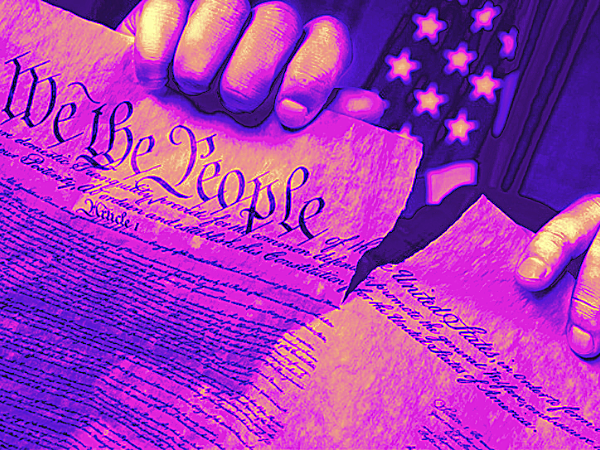
No one should get used to their rights. Predicting with certainty which ones, if any, will go, or when, is impossible.”—Mary R. Ziegler, legal historian

The Supreme Court has spoken: there will be no consequences for cops who brutalize the citizenry and no justice for the victims of police brutality.

Although the Court’s 2021-22 rulings on qualified immunity for police who engage in official misconduct were largely overshadowed by its politically polarizing rulings on abortion, gun ownership and religion, they were no less devastating.

The doctrine of qualified immunity was intended to insulate government officials from frivolous lawsuits, but the real purpose of qualified immunity is to ensure that government officials are not held accountable for official misconduct.

In Egbert v. Boule, the Court gave total immunity to Border Patrol agents who beat up a bed-and-breakfast owner, in the process carving out a massive exception to the Fourth Amendment for border police (and by extension, other federal police) who unconstitutionally use excessive force. As journalist Ian Millhiser concludes, “Egbert v. Boule is a severe blow to the proposition that law enforcement must obey the Constitution.”

In Cope v. Cogdill, the Court let stand a Fifth Circuit ruling that granted qualified immunity to jail officials who watched a suicidal inmate strangle himself without intervening or calling for help. Likewise, in Ramirez v. Guadarrama, the Court let stand a lower court ruling granting qualified immunity to police officers who fired their tasers at a suicidal man who had doused himself in gasoline, causing the man to burst into flames.

Both Cope and Ramirez move the goal posts for the kind of misconduct that merits qualified immunity, suggesting that even sheer incompetence is excusable when it involves a cop.

It’s a chilling reminder that in the American police state, ‘we the people’ are at the mercy of law enforcement officers who have almost absolute discretion to decide who is a threat, what constitutes resistance, and how harshly they can deal with the citizens they were appointed to ‘serve and protect.”

This is how unarmed Americans keep dying at the hands of militarized police.

Under the guise of qualified immunity, there have been no consequences for police who destroyed a private home by bombarding it with tear gas grenades during a SWAT team raid gone awry, or for the cop who mistakenly shot a 10-year-old boy after aiming for and missing the non-threatening family dog, or for the arresting officer who sicced a police dog on a suspect who had already surrendered.

Qualified immunity is how the police state stays in power.

Although the U.S. Supreme Court recognized in Harlow v. Fitzgerald (1982) that suing government officials for monetary damages is “the only realistic avenue” of holding them accountable for abusing their offices and violating the Constitution, it has ostensibly given the police and other government agents a green light to shoot first and ask questions later, as well as to probe, poke, pinch, taser, search, seize, strip and generally manhandle anyone they see fit in almost any circumstance, all with the general blessing of the courts.

Whether it’s police officers breaking through people’s front doors and shooting them dead in their homes or strip searching motorists on the side of the road, these instances of abuse are continually validated by a judicial system that kowtows to virtually every police demand, no matter how unjust, no matter how in opposition to the Constitution.

Make no mistake about it: this is what constitutes “law and order” in the American police state.

These are the hallmarks of a police state: where police officers, no longer mere servants of the people entrusted with keeping the peace, are part of an elite ruling class dependent on keeping the masses corralled, under control, and treated like suspects and enemies rather than citizens.

Unfortunately, we’ve been traveling this dangerous road for a long time now.

A review of critical court rulings over the past several decades, including rulings affirming qualified immunity protections for government agents by the U.S. Supreme Court, reveals a startling and steady trend towards pro-police state rulings by an institution concerned more with establishing order, protecting the ruling class, and insulating government agents from charges of wrongdoing than with upholding the rights enshrined in the Constitution.

Indeed, as Reuters reports, qualified immunity “has become a nearly failsafe tool to let police brutality go unpunished and deny victims their constitutional rights.” Worse, as Reuters concluded, “the Supreme Court has built qualified immunity into an often insurmountable police defense by intervening in cases mostly to favor the police.”

For instance, police can claim qualified immunity for warrantless searches. In Anderson v. Creighton, the Supreme Court ruled that FBI and state law enforcement agents were entitled to qualified immunity protections after they were sued for raiding a private home without a warrant and holding family members at gunpoint, all in a search for a suspected bank robber who was not in the house.

Police can claim qualified immunity for using excessive force against protesters. In Saucier v. Katz, the Court ruled in favor of federal law enforcement agents who forcefully tackled a protester as he attempted to unfurl a banner at Vice President Gore’s political rally. The Court reasoned that the officers acted reasonably given the urgency of protecting the vice president.

Police can claim qualified immunity for shooting a fleeing suspect in the back. In Brosseau v. Haugen, the Court dismissed a lawsuit against a police officer who shot Kenneth Haugen in the back as he entered his car in order to flee from police. The Court ruled that in light of existing case law, the cop’s conduct fell in the “hazy border between excessive and acceptable force” and so she did not violate clearly established law.

Police can claim qualified immunity for shooting a mentally impaired person. In City of San Francisco v. Sheehan, the Court ruled in favor of police who repeatedly shot Teresa Sheehan during the course of a mental health welfare check. The Court ruled that it was not unreasonable for police to pepper spray and shoot Sheehan multiple times after entering her room without a warrant and encountering her holding a knife.

Police officers can use lethal force in car chases without fear of lawsuits. In Plumhoff v. Rickard, the U.S. Supreme Court declared that police officers who used deadly force to terminate a car chase were immune from a lawsuit. The officers were accused of needlessly resorting to deadly force by shooting multiple times at a man and his passenger in a stopped car, killing both individuals.

Police can stop, arrest and search citizens without reasonable suspicion or probable cause. In a 5-3 ruling in Utah v. Strieff, the U.S. Supreme Court effectively gave police the go-ahead to embark on a fishing expedition of one’s person and property, rendering Americans completely vulnerable to the whims of any cop on the beat.

Police officers can stop cars based on “anonymous” tips or for “suspicious” behavior such as having a reclined car seat or driving too carefully. In a 5-4 ruling in Navarette v. California, the U.S. Supreme Court declared that police officers, under the guise of “reasonable suspicion,” can stop cars and question drivers based solely on anonymous tips, no matter how dubious, and whether or not they themselves witnessed any troubling behavior. Then in State v. Howard, the Kansas Supreme Court declared that motorists who recline their car seats are guilty of suspicious behavior and can be subject to warrantless searches by police. That ruling, coupled with other court rulings upholding warrantless searches and seizures by police renders one’s car a Constitution-free zone.

Americans have no protection against mandatory breathalyzer tests at a police checkpoint, although mandatory blood draws violate the Fourth Amendment (Birchfield v. North Dakota). Police can also conduct sobriety and “information-seeking” checkpoints (Illinois v. Lidster and Mich. Dep’t of State Police v. Sitz).

Police can forcibly take your DNA, whether or not you’ve been convicted of a crime. In Maryland v. King, a divided U.S. Supreme Court determined that a person arrested for a crime who is supposed to be presumed innocent until proven guilty must submit to forcible extraction of their DNA. Once again the Court sided with the guardians of the police state over the defenders of individual liberty in determining that DNA samples may be extracted from people arrested for “serious” offenses. The end result of the ruling paves the way for a nationwide dragnet of suspects targeted via DNA sampling.

Police can use the “fear for my life” rationale as an excuse for shooting unarmed individuals. Upon arriving on the scene of a nighttime traffic accident, an Alabama police officer shot a driver exiting his car, mistakenly believing the wallet in his hand to be a gun. A report by the Justice Department found that half of the unarmed people shot by one police department over a seven-year span were “shot because the officer saw something (like a cellphone) or some action (like a person pulling at the waist of their pants) and misidentified it as a threat.”

Police have free reign to use drug-sniffing dogs as “search warrants on leashes.” In Florida v. Harris, a unanimous U.S. Supreme Court determined that police officers may use highly unreliable drug-sniffing dogs to conduct warrantless searches of cars during routine traffic stops. The ruling turns man’s best friend into an extension of the police state, provided the use of a K-9 unit takes place within a reasonable amount of time (Rodriguez v. United States).

Not only are police largely protected by qualified immunity, but police dogs are also off the hook for wrongdoing. The Fourth Circuit Court of Appeals ruled in favor of a police officer who allowed a police dog to maul a homeless man innocent of any wrongdoing.

Police can subject Americans to strip searches, no matter the “offense.” A divided U.S. Supreme Court actually prioritized making life easier for overworked jail officials over the basic right of Americans to be free from debasing strip searches. In its 5-4 ruling in Florence v. Burlington, the Court declared that any person who is arrested and processed at a jail house, regardless of the severity of his or her offense (i.e., they can be guilty of nothing more than a minor traffic offense), can be subjected to a strip search by police or jail officials, which involves exposing the genitals and the buttocks. This “license to probe” is now being extended to roadside stops, as police officers throughout the country have begun performing roadside strip searches—some involving anal and vaginal probes—without any evidence of wrongdoing and without a warrant.

Police can break into homes without a warrant, even if it’s the wrong home. In an 8-1 ruling in Kentucky v. King, the U.S. Supreme Court placed their trust in the discretion of police officers, rather than in the dictates of the Constitution, when they gave police greater leeway to break into homes or apartments without a warrant. Despite the fact that the police in question ended up pursuing the wrong suspect, invaded the wrong apartment and violated just about every tenet that stands between us and a police state, the Court sanctioned the warrantless raid, leaving Americans with little real protection in the face of all manner of abuses by police.

Police can use knock-and-talk tactics as a means of sidestepping the Fourth Amendment. Aggressive “knock and talk” practices have become thinly veiled, warrantless exercises by which citizens are coerced and intimidated into “talking” with heavily armed police who “knock” on their doors in the middle of the night. Andrew Scott didn’t even get a chance to say no to such a heavy-handed request before he was gunned down by police who pounded aggressively on the wrong door at 1:30 a.m., failed to identify themselves as police, and then repeatedly shot and killed the man when he answered the door while holding a gun in self-defense.

Police can carry out no-knock raids if they believe announcing themselves would be dangerous. Police can perform a “no-knock” raid as long as they have a reasonable suspicion that knocking and announcing their presence, under the particular circumstances, would be dangerous or futile or give occupants a chance to destroy evidence of a crime (Richards v. Wisconsin). Legal ownership of a firearm is also enough to justify a no-knock raid by police (Quinn v. Texas). For instance, a Texas man had his home subject to a no-knock, SWAT-team style forceful entry and raid based solely on the suspicion that there were legally-owned firearms in his household. The homeowner was actually shot by police through his closed bedroom door.

Police can recklessly open fire on anyone that might be “armed.” Philando Castile was shot and killed during a routine traffic stop allegedly over a broken taillight merely for telling police he had a conceal-and-carry permit. That’s all it took for police to shoot Castile four times in the presence of his girlfriend and her 4-year-old daughter. A unanimous Supreme Court declared in County of Los Angeles vs. Mendez that police should not be held liable for recklessly firing 15 times into a shack where a homeless couple had been sleeping because the grabbed his BB gun in defense, fearing they were being attacked.

Police can destroy a home during a SWAT raid, even if the owner gives their consent to enter and search it. In West v. Winfield, the Supreme Court provided cover to police after they smashed the windows of Shaniz West’s home, punched holes in her walls and ceilings, and bombed the house with so much tear gas that it was uninhabitable for two months. All of this despite the fact that the suspect they were pursuing was not in the house and West, the homeowner, agreed to allow police to search the home to confirm that.

Police can suffocate someone, deliberately or inadvertently, in the process of subduing them. “I can’t breathe” has become a rallying cry following the deaths of Eric Garner and George Floyd, both of whom died after being placed in a chokehold by police. Dozens more have died in similar circumstances at the hands of police who have faced little repercussions for these deaths.

Clearly, as I make clear in my book Battlefield America: The War on the American People and in its fictional counterpart The Erik Blair Diaries, the system is rigged.

Because the system is rigged, because the government is corrupt, and because the U.S. Supreme Court has consistently chosen to protect the police at the expense of the people, we are dealing with a nationwide epidemic of court-sanctioned police violence carried out with impunity against individuals posing little or no real threat.

This is how “we the people” keep losing.

Source: https://bit.ly/3NMzEgX

ABOUT JOHN W. WHITEHEAD

Constitutional attorney and author John W. Whitehead is founder and president of The Rutherford Institute. His most recent books are the best-selling Battlefield America: The War on the American People, the award-winning A Government of Wolves: The Emerging American Police State, and a debut dystopian fiction novel, The Erik Blair Diaries. Whitehead can be contacted at staff@rutherford.org. Nisha Whitehead is the Executive Director of The Rutherford Institute. Information about The Rutherford Institute is available at www.rutherford.org.

Publication Guidelines / Reprint Permission

John W. Whitehead’s weekly commentaries are available for publication to newspapers and web publications at no charge. Please contact staff@rutherford.org to obtain reprint permission.