Archive for December, 2024

“Everyday the future looks a little bit darker.” ― Alan Moore, Watchmen

We have become a nation adrift in a sea of government overreach, abuse and corruption.

The following is a sobering account of the challenges we faced in 2024, which were marked by the government’s never-ending power grabs and relentless assaults on our civil liberties.

2024 saw a continued rise in government overreach and abuse of power. The militarization of police forces continued unabated, with local departments increasingly resembling extensions of the military. Schools, meant to be places of learning and growth, became more prison-like with the implementation of “safety” measures that criminalize minor infractions and create an environment of fear. The right to private property was further eroded, with the government increasingly empowered to seize assets under various pretexts. The plight of the homeless worsened, with cities criminalizing homelessness and implementing policies designed to make their lives even more difficult. Military veterans, once hailed as heroes, were increasingly treated with suspicion and subjected to surveillance.

On almost every front this year, the government overreached and abused its powers.

With every new law enacted by federal and state legislatures, every new ruling handed down by government courts, and every new military weapon, invasive tactic and egregious protocol employed by government agents, we were reminded that in the eyes of the government and its corporate accomplices, “we the people” possess no rights except for that which the Deep State grants on an as-needed basis.

Surveillance eroded what little privacy we have left. The Surveillance State grew even more pervasive. Facial recognition technology expanded into new areas of our lives, with vast amounts of our biometric data collected, often without our knowledge or consent, eroding our anonymity and enabling unprecedented tracking of our movements. Data breaches continued to expose the vulnerability of our personal information.

Free speech continued to be under attack. Protest laws, free speech zones, and other restrictions made it more difficult for citizens to exercise their First Amendment rights. Social media companies, often in collusion with the government, engaged in censorship of viewpoints they deemed unacceptable. This online censorship creates an echo chamber and limits the free flow of information.

The influence of the Deep State and the military-industrial complex continued to grow. Endless wars abroad drained the nation’s resources while doing little to make Americans safer. The military-industrial complex’s grip on almost every aspect of American life tightened.

The government failed to protect our lives, liberty and happiness. The predators of the police state wreaked havoc on our freedoms, our communities, and our lives. The government didn’t listen to the citizenry, refused to abide by the Constitution, and treated the citizenry as a source of funding and little else. Police officers shot unarmed citizens and their household pets. Government agents—including local police—were armed to the teeth and encouraged to act like soldiers on a battlefield. Bloated government agencies were allowed to fleece taxpayers. Government technicians spied on our emails and phone calls. And government contractors made a killing by waging endless wars abroad.

The president became more imperial. Although the Constitution invests the President with very specific, limited powers, in recent years, American presidents have claimed the power to completely and almost unilaterally alter the landscape of this country for good or for ill. The powers amassed by each successive president through the negligence of Congress and the courts—powers which add up to a toolbox of terror for an imperial ruler—empower whoever occupies the Oval Office to act as a dictator, above the law and beyond any real accountability. The presidency itself has become an imperial one with permanent powers.

The cost of endless wars drove the nation deeper into debt. Policing the globe and waging endless wars abroad hasn’t made America—or the rest of the world—any safer, but it has made the military industrial complex rich at taxpayer expense.

The courts failed to uphold justice. Time and time again, the Supreme Court failed to right the wrongs being meted out by the American police state. A review of critical court rulings over the past decade or so, including some ominous ones by the U.S. Supreme Court, reveals a startling and steady trend towards pro-police state rulings by an institution concerned more with establishing order and protecting the ruling class and government agents than with upholding the rights enshrined in the Constitution.

Mass shootings claimed more lives. Mass shootings have taken place at churches, in nightclubs, on college campuses, on military bases, in elementary schools, in government offices, and at concerts. In almost every instance, you can connect the dots back to the military-industrial complex, which continues to dominate, dictate and shape almost every aspect of our lives.

The rich got richer, and the poor went to jail. Not content to expand the police state’s power to search, strip, seize, raid, steal from, arrest and jail Americans for any infraction, no matter how insignificant, the courts continued their practice of jailing individuals who are unable to pay the hefty fines imposed by the American police state. These debtors’ prisons play right into the hands of those who make a profit by jailing Americans.  This is no longer a government “of the people, by the people, for the people.” It is fast becoming a government “of the rich, by the elite, for the corporations,” and its rise to power is predicated on shackling the American taxpayer to a debtors’ prison guarded by a phalanx of politicians, bureaucrats and militarized police with no hope of parole and no chance for escape.

Police became even more militarized and weaponized. Despite concerns about the government’s steady transformation of local police into a standing military army, local police agencies continued to acquire weaponry, training and equipment suited for the battlefield. There are now reportedly more bureaucratic (non-military) government civilians armed with high-tech, deadly weapons than U.S. Marines.

Schools turned into prisons. So-called school “safety” policies, which run the gamut from zero tolerance policies that punish all infractions harshly to surveillance cameras, metal detectors, random searches, drug-sniffing dogs, school-wide lockdowns, active-shooter drills and militarized police officers, turned schools into prisons and young people into prisoners.

The government waged a renewed war on private property. The battle to protect our private property has become the final constitutional frontier, the last holdout against our freedoms being usurped. We no longer have any real property rights. That house you live in, the car you drive, the small (or not so small) acreage of land that has been passed down through your family or that you scrimped and saved to acquire, whatever money you manage to keep in your bank account after the government and its cronies have taken their first and second and third cut…none of it is safe from the government’s greedy grasp. At no point do you ever have any real ownership in anything other than the clothes on your back. Everything else can be seized by the government under one pretext or another (civil asset forfeiture, unpaid taxes, eminent domain, public interest, etc.).

The plight of the nation’s homeless worsened. In communities across the country, legislators adopted a variety of methods (parking meters, zoning regulations, tickets, and even robots) to discourage the homeless from squatting, loitering and panhandling. One of the most common—and least discussed—practices: homeless relocation programs that bus the homeless outside city limits.

The government waged war on military veterans. The government has done a pitiful job of respecting the freedoms of military veterans and caring for their needs once out of uniform. The plight of veterans today is America’s badge of shame, with large numbers of veterans impoverished, unemployed, traumatized mentally and physically, struggling with depression, suicide, and marital stress, homeless, subjected to sub-par treatment at clinics and hospitals, left to molder while their paperwork piles up within Veterans Administration offices, and increasingly treated like criminals— targeted for surveillance, censorship, threatened with incarceration or involuntary commitment, labeled as extremists and/or mentally ill, and stripped of their Second Amendment rights—for daring to speak out against government misconduct.

In sum, 2024 was a disheartening year for those who cherish freedom.

Yet no matter who sits in the White House, politics won’t fix a system that is broken beyond repair.

As I make clear in my book Battlefield America: The War on the American People and in its fictional counterpart The Erik Blair Diaries, we are at our most vulnerable right now: the gravest threat facing us as a nation in 2025 is not extremism but despotism, exercised by a ruling class whose only allegiance is to power and money.

Source: https://tinyurl.com/5b7a84ud

ABOUT JOHN W. WHITEHEAD

Constitutional attorney and author John W. Whitehead is founder and president of The Rutherford Institute. His most recent books are the best-selling Battlefield America: The War on the American People, the award-winning A Government of Wolves: The Emerging American Police State, and a debut dystopian fiction novel, The Erik Blair Diaries. Whitehead can be contacted at staff@rutherford.org. Nisha Whitehead is the Executive Director of The Rutherford Institute. Information about The Rutherford Institute is available at www.rutherford.org.

Publication Guidelines / Reprint Permission

John W. Whitehead’s weekly commentaries are available for publication to newspapers and web publications at no charge. 

“When the song of the angels is stilled, when the star in the sky is gone, when the kings and princes are home, when the shepherds are back with their flocks, the work of Christmas begins: to find the lost, to heal the broken, to feed the hungry, to release the prisoner, to rebuild the nations, to bring peace among the people, to make music in the heart.”—Howard Thurman, theologian and civil rights activist

The Christmas story of a baby born in a manger is a familiar one.

The Roman Empire, a police state in its own right, had ordered that a census be conducted. Joseph and his pregnant wife Mary traveled to the little town of Bethlehem so that they could be counted. There being no room for the couple at any of the inns, they stayed in a stable (a barn), where Mary gave birth to a baby boy, Jesus. Warned that the government planned to kill the baby, Jesus’ family fled with him to Egypt until it was safe to return to their native land.

Yet what if Jesus had been born 2,000 years later?

What if, instead of being born into the Roman police state, Jesus had been born at this moment in time? What kind of reception would Jesus and his family be given? Would we recognize the Christ child’s humanity, let alone his divinity? Would we treat him any differently than he was treated by the Roman Empire? If his family were forced to flee violence in their native country and sought refuge and asylum within our borders, what sanctuary would we offer them?

A singular number of churches across the country have asked those very questions in recent years, and their conclusions were depicted with unnerving accuracy by nativity scenes in which Jesus and his family are separated, segregated and caged in individual chain-link pens, topped by barbed wire fencing.

Those nativity scenes were a pointed attempt to remind the modern world that the narrative about the birth of Jesus is one that speaks on multiple fronts to a world that has allowed the life, teachings and crucifixion of Jesus to be drowned out by partisan politics, secularism, materialism and war, all driven by a manipulative shadow government called the Deep State.

The modern-day church has largely shied away from applying Jesus’ teachings to modern problems such as war, poverty, immigration, etc., but thankfully there have been individuals throughout history who ask themselves and the world: what would Jesus do?

What would Jesus—the baby born in Bethlehem who grew into an itinerant preacher and revolutionary activist, who not only died challenging the police state of his day (namely, the Roman Empire) but spent his adult life speaking truth to power, challenging the status quo of his day, and pushing back against the abuses of the Roman Empire—do about the injustices of our  modern age?

Dietrich Bonhoeffer asked himself what Jesus would have done about the horrors perpetrated by Hitler and his assassins. The answer: Bonhoeffer was executed by Hitler for attempting to undermine the tyranny at the heart of Nazi Germany.

Aleksandr Solzhenitsyn asked himself what Jesus would have done about the soul-destroying gulags and labor camps of the Soviet Union. The answer: Solzhenitsyn found his voice and used it to speak out about government oppression and brutality.

Martin Luther King Jr. asked himself what Jesus would have done about America’s warmongering. The answer: declaring “my conscience leaves me no other choice,” King risked widespread condemnation as well as his life when he publicly opposed the Vietnam War on moral and economic grounds.

Even now, despite the popularity of the phrase “What Would Jesus Do?” (WWJD) in Christian circles, there remains a disconnect in the modern church between the teachings of Christ and the suffering of what Jesus in Matthew 25 refers to as the “least of these.”

Yet this is not a theological gray area: Jesus was unequivocal about his views on many things, not the least of which was charity, compassion, war, tyranny and love.

After all, Jesus—the revered preacher, teacher, radical and prophet—was born into a police state not unlike the growing menace of the American police state. When he grew up, he had powerful, profound things to say, things that would change how we view people, alter government policies and change the world. “Blessed are the merciful,” “Blessed are the peacemakers,” and “Love your enemies” are just a few examples of his most profound and revolutionary teachings.

When confronted by those in authority, Jesus did not shy away from speaking truth to power. Indeed, his teachings undermined the political and religious establishment of his day. It cost him his life. He was eventually crucified as a warning to others not to challenge the powers-that-be.

Can you imagine what Jesus’ life would have been like if, instead of being born into the Roman police state, he had been born and raised in the American police state?

Consider the following if you will.

Had Jesus been born in the era of the America police state, rather than traveling to Bethlehem for a census, Jesus’ parents would have been mailed a 28-page American Community Survey, a mandatory government questionnaire documenting their habits, household inhabitants, work schedule, how many toilets are in your home, etc. The penalty for not responding to this invasive survey can go as high as $5,000.

Instead of being born in a manger, Jesus might have been born at home. Rather than wise men and shepherds bringing gifts, however, the baby’s parents might have been forced to ward off visits from state social workers intent on prosecuting them for the home birth. One couple in Washington had all three of their children removed after social services objected to the two youngest being birthed in an unassisted home delivery.

Had Jesus been born in a hospital, his blood and DNA would have been taken without his parents’ knowledge or consent and entered into a government biobank. While most states require newborn screening, a growing number are holding onto that genetic material long-term for research, analysis and purposes yet to be disclosed.

Then again, had Jesus’ parents been undocumented immigrants, they and the newborn baby might have been shuffled to a profit-driven, private prison for illegals where they first would have been separated from each other, the children detained in make-shift cages, and the parents eventually turned into cheap, forced laborers for corporations such as Starbucks, Microsoft, Walmart, and Victoria’s Secret. There’s quite a lot of money to be made from imprisoning immigrants, especially when taxpayers are footing the bill.

From the time he was old enough to attend school, Jesus would have been drilled in lessons of compliance and obedience to government authorities, while learning little about his own rights. Had he been daring enough to speak out against injustice while still in school, he might have found himself tasered or beaten by a school resource officer, or at the very least suspended under a school zero tolerance policy that punishes minor infractions as harshly as more serious offenses.

Had Jesus disappeared for a few hours let alone days as a 12-year-old, his parents would have been handcuffed, arrested and jailed for parental negligence. Parents across the country have been arrested for far less “offenses” such as allowing their children to walk to the park unaccompanied and play in their front yard alone.

Rather than disappearing from the history books from his early teenaged years to adulthood, Jesus’ movements and personal data—including his biometrics—would have been documented, tracked, monitored and filed by governmental agencies and corporations such as Google and Microsoft. Incredibly, 95 percent of school districts share their student records with outside companies that are contracted to manage data, which they then use to market products to us.

From the moment Jesus made contact with an “extremist” such as John the Baptist, he would have been flagged for surveillance because of his association with a prominent activist, peaceful or otherwise. Since 9/11, the FBI has actively carried out surveillance and intelligence-gathering operations on a broad range of activist groups, from animal rights groups to poverty relief, anti-war groups and other such “extremist” organizations.

Jesus’ anti-government views would certainly have resulted in him being labeled a domestic extremist. Law enforcement agencies are being trained to recognize signs of anti-government extremism during interactions with potential extremists who share a “belief in the approaching collapse of government and the economy.”

While traveling from community to community, Jesus might have been reported to government officials as “suspicious” under the Department of Homeland Security’s “See Something, Say Something” programs. Many states, including New York, are providing individuals with phone apps that allow them to take photos of suspicious activity and report them to their state Intelligence Center, where they are reviewed and forwarded to law-enforcement agencies.

Rather than being permitted to live as an itinerant preacher, Jesus might have found himself threatened with arrest for daring to live off the grid or sleeping outside. In fact, the number of cities that have resorted to criminalizing homelessness by enacting bans on camping, sleeping in vehicles, loitering and begging in public has doubled.

Viewed by the government as a dissident and a potential threat to its power, Jesus might have had government spies planted among his followers to monitor his activities, report on his movements, and entrap him into breaking the law. Such Judases today—called informants—often receive hefty paychecks from the government for their treachery.

Had Jesus used the internet to spread his radical message of peace and love, he might have found his blog posts infiltrated by government spies attempting to undermine his integrity, discredit him or plant incriminating information online about him. At the very least, he would have had his website hacked and his email monitored.

Had Jesus attempted to feed large crowds of people, he would have been threatened with arrest for violating various ordinances prohibiting the distribution of food without a permit. Florida officials arrested a 90-year-old man for feeding the homeless on a public beach.

Had Jesus spoken publicly about his 40 days in the desert and his conversations with the devil, he might have been labeled mentally ill and detained in a psych ward against his will for a mandatory involuntary psychiatric hold with no access to family or friends. One Virginia man was arrested, strip searched, handcuffed to a table, diagnosed as having “mental health issues,” and locked up for five days in a mental health facility against his will apparently because of his slurred speech and unsteady gait.

Without a doubt, had Jesus attempted to overturn tables in a Jewish temple and rage against the materialism of religious institutions, he would have been charged with a hate crime. More than 45 states and the federal government have hate crime laws on the books.

Had anyone reported Jesus to the police as being potentially dangerous, he might have found himself confronted—and killed—by police officers for whom any perceived act of non-compliance (a twitch, a question, a frown) can result in them shooting first and asking questions later.

Rather than having armed guards capture Jesus in a public place, government officials would have ordered that a SWAT team carry out a raid on Jesus and his followers, complete with flash-bang grenades and military equipment. There are upwards of 80,000 such SWAT team raids carried out every year, many on unsuspecting Americans who have no defense against such government invaders, even when such raids are done in error.

Instead of being detained by Roman guards, Jesus might have been made to “disappear” into a secret government detention center where he would have been interrogated, tortured and subjected to all manner of abuses. Chicago police have “disappeared” more than 7,000 people into a secret, off-the-books interrogation warehouse at Homan Square.

Charged with treason and labeled a domestic terrorist, Jesus might have been sentenced to a life-term in a private prison where he would have been forced to provide slave labor for corporations or put to death by way of the electric chair or a lethal mixture of drugs.

Indeed, as I make clear in my book Battlefield America: The War on the American People and in its fictional counterpart The Erik Blair Diaries, given the nature of government then and now, it is painfully evident that whether Jesus had been born in our modern age or his own, he still would have died at the hands of a police state.

Thus, as we draw near to Christmas with its celebration of miracles and promise of salvation, we would do well to remember that what happened in that manger on that starry night in Bethlehem is only the beginning of the story. That baby born in a police state grew up to be a man who did not turn away from the evils of his age but rather spoke out against it.

We must do no less.

Source: https://tinyurl.com/6fucv454

ABOUT JOHN W. WHITEHEAD

Constitutional attorney and author John W. Whitehead is founder and president of The Rutherford Institute. His most recent books are the best-selling Battlefield America: The War on the American People, the award-winning A Government of Wolves: The Emerging American Police State, and a debut dystopian fiction novel, The Erik Blair Diaries. Whitehead can be contacted at staff@rutherford.org. Nisha Whitehead is the Executive Director of The Rutherford Institute. Information about The Rutherford Institute is available at www.rutherford.org.

Publication Guidelines / Reprint Permission

John W. Whitehead’s weekly commentaries are available for publication to newspapers and web publications at no charge. 

“There are always risks in challenging excessive police power, but the risks of not challenging it are more dangerous, even fatal.”—Hunter S. Thompson, Kingdom of Fear

The American police state has become America’s new crime boss.

Thirty years after then-President Bill Clinton signed the Violent Crime Control and Law Enforcement Act into law, its legacy of mass incarceration, police militarization, and over-criminalization continues to haunt us.

It has become the gift that America can’t seem to return.

We are now suffering the blowback from the triple threats of the Crime Bill: police militarization, a warrior mindset that has police viewing the rest of the citizenry as enemy combatants, and law enforcement training that teaches cops to shoot first and ask questions later.

Too often, that “triple threat” also manifests itself in deadly traffic stops, the use of excessive force against unarmed individuals, and welfare checks turned fatal.

The Crime Bill fueled the rise of the police state by pouring funding into law enforcement agencies, particularly for military-grade weaponry and the expansion of police forces. It also laid the groundwork for mass incarceration by incentivizing the construction of more prisons and enacting harsh “three strikes” laws that mandated lengthy sentences for repeat offenders.

Most critically, the Crime Bill led to the explosive growth of SWAT teams across the country.

It’s estimated that more than 80,000 SWAT raids are carried out every year. That translates to over 200 every single day in the U.S.

Among the tens of thousands of raids that leave in their wake the wreckage of lives, homes and trust in the nation’s so-called peacekeepers, some are so egregious as to cut through the apathy and desensitization that has settled over the nation regarding police violence.

Breonna Taylor was killed when plainclothes police executed a no-knock warrant of her home late at night.  Officers used a battering ram to enter the home. Taylor’s boyfriend, believing it was a home invasion, fired a warning shot. Officers responded with a barrage of gunfire, killing Taylor.  

Such tragedies are not isolated incidents.

They are the direct result of a system built on policies like the 1994 Crime Bill.

The unfortunate reality we must come to terms with is that America is overrun with militarized cops—vigilantes with a badge—who have almost absolute discretion to decide who is a threat, what constitutes resistance, and how harshly they can deal with the citizens they were appointed to “serve and protect.”

It doesn’t matter where you live—big city or small town—it’s the same scenario being played out over and over again in which government agents, hyped up on their own authority and the power of their uniform, ride roughshod over the rights of the citizenry.

These warrior cops, who have been trained to act as judge, jury and executioner in their interactions with the public and believe the lives (and rights) of police should be valued more than citizens, are increasingly outnumbering the good cops, who take seriously their oath of office to serve and protect their fellow citizens, uphold the Constitution, and maintain the peace.

Indeed, if you ask police and their enablers what Americans should do to stay alive during encounters with law enforcement, they will tell you to comply, no matter what.

In other words, it doesn’t matter if you’re in the right, it doesn’t matter if a cop is in the wrong. If you want to emerge from a police encounter with your life and body intact, then you’d better do whatever a cop tells you to do.

In this way, the old police motto to “protect and serve” has become “comply or die.”

This is the unfortunate, misguided, perverse message that has been beaten, shot, tasered and slammed into our collective consciousness over the past few decades, and it has taken root.

This is how we have gone from a nation of laws—where the least among us had just as much right to be treated with dignity and respect as the next person (in principle, at least)—to a nation of law enforcers (revenue collectors with weapons) who treat “we the people” like suspects and criminals.

As a result, Americans as young as 4 years old are being leg shackledhandcuffedtasered and held at gun point for not being quiet, not being orderly and just being childlike—i.e., not being compliant enough.

Americans as old as 95 are being beaten, shot and killed for questioning an order, hesitating in the face of a directive, and mistaking a policeman crashing through their door for a criminal breaking into their home—i.e., not being submissive enough.

And Americans of every age and skin color are continuing to die at the hands of a government that sees itself as judge, jury and executioner over a populace that have been pre-judged and found guilty, stripped of their rights, and left to suffer at the hands of government agents trained to respond with the utmost degree of violence.

At a time when growing numbers of unarmed people have been shot and killed for just standing a certain way, or moving a certain way, or holding something—anything—that police could misinterpret to be a gun, or igniting some trigger-centric fear in a police officer’s mind that has nothing to do with an actual threat to their safety, even the most benign encounters with police can have fatal consequences.

The problem, as one reporter rightly concluded, is “not that life has gotten that much more dangerous, it’s that authorities have chosen to respond to even innocent situations as if they were in a warzone.”

Warrior cops—trained in the worst-case scenario and thus ready to shoot first and ask questions later—are definitely not making us or themselves any safer.

Worse, militarized police increasingly pose a risk to anyone undergoing a mental health crisis or with special needs whose disabilities may not be immediately apparent or require more finesse than the typical freeze-or-I’ll-shoot tactics employed by America’s police forces.

Indeed, disabled individuals make up a third to half of all people killed by law enforcement officers. (People of color are three times more likely to be killed by police than their white counterparts.)

If you’re black and disabled, you’re even more vulnerable.

Specifically, what we’re dealing with today is a skewed shoot-to-kill mindset in which police, trained to view themselves as warriors or soldiers in a war, whether against drugs, or terror, or crime, must “get” the bad guys—i.e., anyone who is a potential target—before the bad guys get them.

This nationwide epidemic of court-sanctioned police violence carried out with impunity against individuals posing little or no real threat has all but guaranteed that unarmed Americans will keep dying at the hands of militarized police.

Making matters worse, when these officers, who have long since ceased to be peace officers, violate their oaths by bullying, beating, tasering, shooting and killing their employers—the taxpayers to whom they owe their allegiance—they are rarely given more than a slap on the hands before resuming their patrols.

This lawlessness on the part of law enforcement, an unmistakable characteristic of a police state, is made possible in large part by police unions which routinely oppose civilian review boards and resist the placement of names and badge numbers on officer uniforms; police agencies that abide by the Blue Code of Silence, the quiet understanding among police that they should not implicate their colleagues for their crimes and misconduct; prosecutors who treat police offenses with greater leniency than civilian offenses; courts that sanction police wrongdoing in the name of security; and legislatures that enhance the power, reach and arsenal of the police, and a citizenry that fails to hold its government accountable to the rule of law.

Indeed, not only are cops protected from most charges of wrongdoing—whether it’s shooting unarmed citizens (including children and old people), raping and abusing young women, falsifying police reports, trafficking drugs, or soliciting sex with minors—but even on the rare occasions when they are fired for misconduct, it’s only a matter of time before they get re-hired again.

Much of the “credit” for shielding these rogue cops goes to influential police unions and laws providing for qualified immunity, police contracts that “provide a shield of protection to officers accused of misdeeds and erect barriers to residents complaining of abuse,” state and federal laws that allow police to walk away without paying a dime for their wrongdoing, and rampant cronyism among government bureaucrats.

It’s happening all across the country.

This is no longer a debate over good cops and bad cops.

It’s a power struggle between police officers who rank their personal safety above everyone else’s and police officers who understand that their jobs are to serve and protect; between police trained to shoot to kill and police trained to resolve situations peacefully; most of all, it’s between police who believe the law is on their side and police who know that they will be held to account for their actions under the same law as everyone else.

Unfortunately, more and more police are being trained to view themselves as distinct from the citizenry, to view their authority as superior to the citizenry, and to view their lives as more precious than those of their citizen counterparts.

Instead of being taught to see themselves as mediators and peacemakers whose lethal weapons are to be used as a last resort, they are being drilled into acting like gunmen with killer instincts who shoot to kill rather than merely incapacitate.

In Barnes v. Felix, a case before the U.S. Supreme Court, the justices have been asked to do away with the “moment-of-threat doctrine,” which encourages police to act recklessly with impunity, unnecessarily escalating the level of danger in situations involving relatively minor crimes and then responding to the perceived danger with deadly force.

Like the Ghost of Christmas Past, the 1994 Crime Bill haunts us with its legacy of injustice. Its Ghost of Christmas Present shows us the ongoing struggles with police brutality and mass incarceration. And its Ghost of Christmas Future warns us of a society where over-policing and surveillance become the norm.

So how do we counter the triple threats posed by the Crime Bill?

Despite the outcry from those on the left, the answer is not to de-fund the police, although it wouldn’t hurt to loosen the military industrial complex’s chokehold on America.

What we really need to do is de-fang the police: de-militarize (reduce the reliance on military-grade equipment and tactics), de-weaponize, and focus on de-escalation tactics (prioritizing communication and conflict resolution skills over the use of force), a shift in mindset (moving away from the “warrior” mentality towards a guardian or community policing model), and better accountability.

As with all things, change must start locally, in your hometown.

Remember, a police state does not come about overnight. It starts small, perhaps with a revenue-generating red light camera at an intersection. When that is implemented without opposition, perhaps next will be surveillance cameras on public streets. License plate readers on police cruisers. More police officers on the beat. Free military equipment from the federal government. Free speech zones and zero tolerance policies and curfews. SWAT team raids. Drones flying overhead.

No matter how it starts, however, as I make clear in my book Battlefield America: The War on the American People and in its fictional counterpart The Erik Blair Diaries, it always ends the same.

Source: https://tinyurl.com/2fbe2n7m

ABOUT JOHN W. WHITEHEAD

Constitutional attorney and author John W. Whitehead is founder and president of The Rutherford Institute. His most recent books are the best-selling Battlefield America: The War on the American People, the award-winning A Government of Wolves: The Emerging American Police State, and a debut dystopian fiction novel, The Erik Blair Diaries. Whitehead can be contacted at staff@rutherford.org. Nisha Whitehead is the Executive Director of The Rutherford Institute. Information about The Rutherford Institute is available at www.rutherford.org.

Publication Guidelines / Reprint Permission

John W. Whitehead’s weekly commentaries are available for publication to newspapers and web publications at no charge. Please contact staff@rutherford.org to obtain reprint permission.
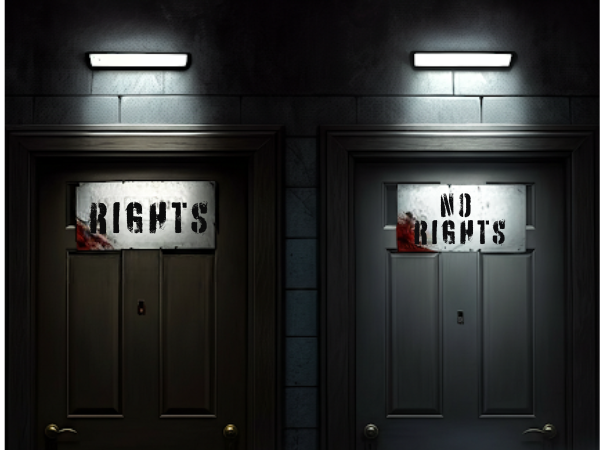
“Rights aren’t rights if someone can take them away. They’re privileges. That’s all we’ve ever had in this country is a ‘Bill of Temporary Privileges.’ And if you read the news, even badly, you know that the list gets shorter and shorter.”—George Carlin

Disguising its power grabs in the self-righteous fervor of national security, the Deep State has mastered the art of the bait-and-switch.

It works like this: first, the government foments fear about some crisis or threat to national security, then they capitalize on it by seizing greater power and using those powers against the American people.

We’ve seen this play out over and over again.

The government used its so-called War on Terror to transform itself into a police state.

Then the police state used its War on COVID-19 to claim lockdown powers.

All indications are that the government’s promised War on Illegal Immigration will be yet another sleight of hand that allows the powers-that-be to engage in greater power grabs while weakening the Constitution.

Therein lies the danger of the government’s growing addiction to power.

Whatever dangerous practices you allow the government to carry out now—whether it’s in the name of national security or protecting America’s borders or making America healthy again—inevitably, these same practices can and will be used against you when the government decides to set its sights on you.

The slippery slope that starts with illegal immigration has all the makings of a thinly veiled plot to empower the government to become the arbiter of who is deserving of rights and who isn’t.

That quickly, we could find ourselves navigating a world in which the rights enshrined in the Constitution for all persons living in the United States are transformed into privileges enjoyed only by those whom the government chooses to recognize as legitimate.

By persuading the public that non-citizens, particularly illegal immigrants, do not enjoy the same inalienable rights as law-abiding citizens (a fact refuted by the Constitution and every credible legal scholar in the country), the Deep State is leading us down a road in which all rights are transitory.

This is how you establish a hierarchy of rights, contingent on whether you belong to a favored political class.

Be warned.

At such a time as the government is emboldened to flip that switch and appoint itself the ultimate authority on which protected class of individuals gets to enjoy the rights enshrined within the Constitution, the dividing line will not be between legal citizens and illegal immigrants.

It will not even be between Republicans and Democrats.

Rather, the purpose of that line of demarcation will be to distinguish the compliant, obedient, subservient vassal of the American police state (the so-called Loyalists) from everyone else.

We’re almost at that point now.

This is how tyranny rises and freedom falls.

Here are some of the inherent dangers in allowing the government to become the arbiter of who is deserving of rights:

It leads to the erosion of universal rights. The Bill of Rights was designed to protect the fundamental rights of all persons within the United States, regardless of their citizenship status, race, religion, or any other factor. When the government starts making distinctions about who is entitled to these rights, it undermines the universality that makes them so powerful. This creates a slippery slope where rights become privileges, subject to the whims of those in power.

It gives rise to authoritarianism. History is replete with examples of governments that consolidated power by first stripping away the rights of marginalized groups. Once the principle of universal rights is breached, it becomes easier to target other groups deemed “undesirable” or “unworthy.” This paves the way for authoritarianism, where the government dictates who enjoys freedom and who does not.

It creates a two-tiered society. A hierarchy of rights inevitably leads to a two-tiered society, where some individuals enjoy full protection under the law while others are relegated to second-class status. This fosters resentment, division, and social unrest. It also creates a vulnerable population that can be easily exploited and abused.

It undermines the rule of law. The rule of law is a fundamental principle of a just society. It means that everyone is subject to the same laws and that no one is above the law. When the government selectively applies the law based on arbitrary criteria, it undermines the rule of law and erodes trust in the legal system.

It chills free speech and dissent, i.e., the right to criticize the government. When people fear that their rights are contingent on their political views or social status, they are less likely to speak out against injustice or challenge the government. This chilling effect on dissent stifles free speech and creates a climate of fear and conformity.

It contributes to the loss of moral authority. A nation that claims to champion liberty and justice for all loses its moral authority when it denies those principles to certain groups within its borders. This undermines its standing in the world and diminishes its ability to promote human rights abroad.

Remember, the erosion of inalienable rights often starts subtly, with the government chipping away at the edges of those rights for specific groups.

The pattern is subtle at first, with government officials exploiting fear and prejudice in order to target groups that are already marginalized or perceived as “outsiders.” Incrementally, the net is cast wider and wider, so that by the time the injustice is widespread enough to inspire outrage in the greater populace, it’s too late to resist.

Historic examples abound of how the government has manufactured a blatantly unjust hierarchy of rights in order to diminish certain segments of society. These run the gamut from slavery and the persecution of Native Americans to the Japanese internment camps and segregation.

More recently, we’ve seen this tactic deployed in order to justify policies that run afoul of the Constitution, ranging from immigration policies and mass surveillance programs to SWAT team raids, voting rights, and the erosion of due process.

Clearly, Martin Niemöller’s warning about the widening net that ensnares us all, a warning issued in response to the threat posed by Nazi Germany’s fascist regime, still applies.

“First they came for the socialists, and I did not speak out—because I was not a socialist. Then they came for the trade unionists, and I did not speak out— because I was not a trade unionist. Then they came for the Jews, and I did not speak out—because I was not a Jew. Then they came for me—and there was no one left to speak for me.

This is how the slippery slope to all-out persecution starts.

It doesn’t help that growing numbers of American citizens barely know their rights. Consider that only 5% of the U.S. adults surveyed could correctly name all five rights in the First Amendment, 20% could not correctly name any, and less than one in 10 Americans know they have a right to petition the government.

Such civic illiteracy lays the groundwork for all manner of tyrannies to follow. After all, how can you defend your rights if you don’t know what those rights are?

Then again, civic illiteracy among government officials, who are entrusted with upholding and protecting the Constitution, doesn’t appear to be much better.

It was ten years ago on December 15, National Bill of Rights Day, that the U.S. Supreme Court in its 8-1 ruling in Heien v. State of North Carolina gave police in America one more ready excuse to routinely violate the laws of the land, this time under the guise of ignorance.

The Heien case, which started with an improper traffic stop based on a police officer’s ignorance of the law and ended with an unlawful search, seizure and arrest, was supposed to ensure that ignorance of the law did not become a ready excuse for government officials to routinely violate the law.

It failed to do so.

In failing to enforce the Constitution, the Court gave police the go-ahead to justify a laundry list of misconduct, from police shootings of unarmed citizens to SWAT team raids, roadside strip searches, and the tasering of vulnerable individuals with paltry excuses such as “they looked suspicious” and “she wouldn’t obey our orders.”

Ignorance of the law has become an all-too-convenient cover for all manner of abuses by government officials who should know better.

I’m not sure which is worse: government officials who know nothing about the laws they have sworn to uphold, support and defend, or a constitutionally illiterate citizenry so clueless about their rights that they don’t even know when those rights are being violated.

This much I do know, however: for anyone to advocate terminating or suspending the Constitution is tantamount to a declaration of war against the founding principles of our representative government and the rule of law.

If there is one point on which there should be no political parsing, no legal jockeying, and no disagreement, it is this.

Then again, as I make clear in my book Battlefield America: The War on the American People and in its fictional counterpart The Erik Blair Diaries, one could well make the case that the Constitution has already been terminated after years on life support, given the extent to which the safeguards enshrined in the Bill of Rights—adopted 233 years ago as a means of protecting the people against government overreach and abuse—have been steadily chipped away at, undermined, eroded, whittled down, and generally discarded with the support of Congress, the White House, and the courts.

History provides chilling examples of how quickly rights can vanish, even in a nation such as ours founded on the principles of freedom. As George Carlin astutely observed:

“If you think you do have rights, next time you’re at the computer, get on the internet, go to Wikipedia. When you get to Wikipedia, in the search field for Wikipedia, I want you to type in ‘Japanese Americans 1942’ and you’ll find out all about your precious … rights. In 1942, there were 110,000 Japanese American citizens in good standing, law-abiding people, who were thrown into internment camps simply because their parents were born in the wrong country. That’s all they did wrong. They had no right to a lawyer, no right to a fair trial, no right to a jury of their peers, no right to due process of any kind. The only right they had: ‘right this way’ into the internment camps. Just when these American citizens needed their rights the most, their government took them away. And rights aren’t rights if someone can take them away.”

Remember you were warned, folks.

At the point that rights become privileges, then the Constitution and the government’s adherence to the rule of law will become optional.

Source: https://tinyurl.com/y75szpkr

ABOUT JOHN W. WHITEHEAD

Constitutional attorney and author John W. Whitehead is founder and president of The Rutherford Institute. His most recent books are the best-selling Battlefield America: The War on the American People, the award-winning A Government of Wolves: The Emerging American Police State, and a debut dystopian fiction novel, The Erik Blair Diaries. Whitehead can be contacted at staff@rutherford.org. Nisha Whitehead is the Executive Director of The Rutherford Institute. Information about The Rutherford Institute is available at www.rutherford.org.

Publication Guidelines / Reprint Permission

John W. Whitehead’s weekly commentaries are available for publication to newspapers and web publications at no charge. 
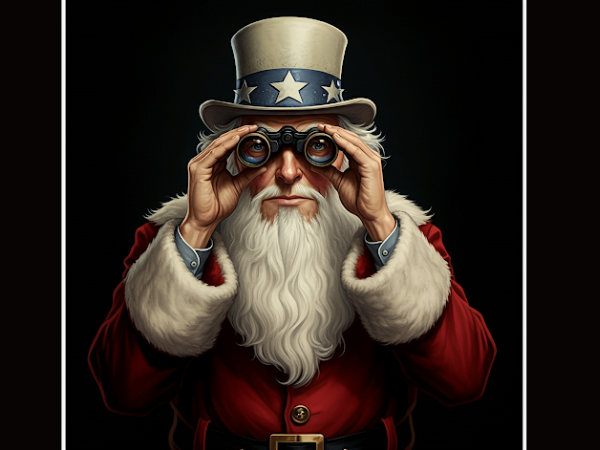
“He sees you when you’re sleeping
He knows when you’re awake
He knows when you’ve been bad or good
So be good for goodness’ sake!”
—“Santa Claus Is Coming to Town”

You’d better watch out—you’d better not pout—you’d better not cry—‘cos I’m telling you why: this Christmas, it’s the Surveillance State that’s making a list and checking it twice, and it won’t matter whether you’ve been bad or good.

You’ll be on this list whether you like it or not.

Mass surveillance is the Deep State’s version of a “gift” that keeps on giving…back to the Deep State.

Geofencing dragnets. Fusion centers. Smart devices. Behavioral threat assessments. Terror watch lists. Facial recognition. Snitch tip lines. Biometric scanners. Pre-crime. DNA databases. Data mining. Precognitive technology. Drones. Contact tracing apps. License plate readers. Social media vettingSurveillance towers.

What these add up to is a world in which, on any given day, the average person is now monitored, surveilled, spied on and tracked in more than 20 different ways by both government and corporate eyes and ears.

Big Tech wedded to Big Government has become Big Brother.

Every second of every day, the American people are being spied on by a vast network of digital Peeping Toms, electronic eavesdroppers and robotic snoops.

This creepy new era of government/corporate spying—in which we’re being listened to, watched, tracked, followed, mapped, bought, sold and targeted—has been made possible by a global army of techno-tyrants, fusion centers and Peeping Toms.

Consider just a small sampling of the tools being used to track our movements, monitor our spending, and sniff out all the ways in which our thoughts, actions and social circles might land us on the government’s naughty list, whether or not you’ve done anything wrong.

Tracking you based on your phone and movements: Cell phones have become de facto snitches, offering up a steady stream of digital location data on users’ movements and travels. For instance, the FBI was able to use geofence data to identify more than 5,000 mobile devices (and their owners) in a 4-acre area around the Capitol on January 6. This latest surveillance tactic could land you in jail for being in the “wrong place and time.” Police are also using cell-site simulators to carry out mass surveillance of protests without the need for a warrant. Moreover, federal agents can now employ a number of hacking methods in order to gain access to your computer activities and “see” whatever you’re seeing on your monitor. Malicious hacking software can also be used to remotely activate cameras and microphones, offering another means of glimpsing into the personal business of a target.

Tracking you based on your DNA. DNA technology in the hands of government officials completes our transition to a Surveillance State. If you have the misfortune to leave your DNA traces anywhere a crime has been committed, you’ve already got a file somewhere in some state or federal database—albeit it may be a file without a name. By accessing your DNA, the government will soon know everything else about you that they don’t already know: your family chart, your ancestry, what you look like, your health history, your inclination to follow orders or chart your own course, etc. After all, a DNA print reveals everything about “who we are, where we come from, and who we will be.” It can also be used to predict the physical appearance of potential suspects. It’s only a matter of time before the police state’s pursuit of criminals expands into genetic profiling and a preemptive hunt for criminals of the future.

Tracking you based on your face: Facial recognition software aims to create a society in which every individual who steps out into public is tracked and recorded as they go about their daily business. Coupled with surveillance cameras that blanket the country, facial recognition technology allows the government and its corporate partners to identify and track someone’s movements in real-time. One particularly controversial software program created by Clearview AI has been used by police, the FBI and the Department of Homeland Security to collect photos on social media sites for inclusion in a massive facial recognition database. Similarly, biometric software, which relies on one’s unique identifiers (fingerprints, irises, voice prints), is becoming the standard for navigating security lines, as well as bypassing digital locks and gaining access to phones, computers, office buildings, etc. In fact, greater numbers of travelers are opting into programs that rely on their biometrics in order to avoid long waits at airport security. Scientists are also developing lasers that can identify and surveil individuals based on their heartbeats, scent and microbiome.

Tracking you based on your behavior: Rapid advances in behavioral surveillance are not only making it possible for individuals to be monitored and tracked based on their patterns of movement or behavior, including gait recognition (the way one walks), but have given rise to whole industries that revolve around predicting one’s behavior based on data and surveillance patterns and are also shaping the behaviors of whole populations. One smart “anti-riot” surveillance system purports to predict mass riots and unauthorized public events by using artificial intelligence to analyze social media, news sources, surveillance video feeds and public transportation data.

Tracking you based on your spending and consumer activities: With every smartphone we buy, every GPS device we install, every X/Twitter, Facebook, and Google account we open, every frequent buyer card we use for purchases—whether at the grocer’s, the yogurt shop, the airlines or the department store—and every credit and debit card we use to pay for our transactions, we’re helping Corporate America build a dossier for its government counterparts on who we know, what we think, how we spend our money, and how we spend our time. Consumer surveillance, by which your activities and data in the physical and online realms are tracked and shared with advertisers, has become big business, a $300 billion industry that routinely harvests your data for profit. Corporations such as Target have not only been tracking and assessing the behavior of their customers, particularly their purchasing patterns, for years, but the retailer has also funded major surveillance in cities across the country and developed behavioral surveillance algorithms that can determine whether someone’s mannerisms might fit the profile of a thief.

Tracking you based on your public activities: Private corporations in conjunction with police agencies throughout the country have created a web of surveillance that encompasses all major cities in order to monitor large groups of people seamlessly, as in the case of protests and rallies. They are also engaging in extensive online surveillance, looking for any hints of “large public events, social unrest, gang communications, and criminally predicated individuals.” Defense contractors have been at the forefront of this lucrative market. Fusion centers, $330 million-a-year, information-sharing hubs for federal, state and law enforcement agencies, monitor and report such “suspicious” behavior as people buying pallets of bottled water, photographing government buildings, and applying for a pilot’s license as “suspicious activity.”

Tracking you based on your social media activities: Every move you make, especially on social media, is monitored, mined for data, crunched, and tabulated in order to form a picture of who you are, what makes you tick, and how best to control you when and if it becomes necessary to bring you in line. As The Intercept reported, the FBI, CIA, NSA and other government agencies are increasingly investing in and relying on corporate surveillance technologies that can mine constitutionally protected speech on social media platforms such as Facebook, Twitter and Instagram in order to identify potential extremists and predict who might engage in future acts of anti-government behavior. This obsession with social media as a form of surveillance will have some frightening consequences in coming years. As Helen A.S. Popkin, writing for NBC News, observed, “We may very well face a future where algorithms bust people en masse for referencing illegal ‘Game of Thrones’ downloads… the new software has the potential to roll, Terminator-style, targeting every social media user with a shameful confession or questionable sense of humor.”

Tracking you based on your social network: Not content to merely spy on individuals through their online activity, government agencies are now using surveillance technology to track one’s social network, the people you might connect with by phone, text message, email or through social message, in order to ferret out possible criminals. An FBI document obtained by Rolling Stone speaks to the ease with which agents are able to access address book data from Facebook’s WhatsApp and Apple’s iMessage services from the accounts of targeted individuals and individuals not under investigation who might have a targeted individual within their network. What this creates is a “guilt by association” society in which we are all as guilty as the most culpable person in our address book.

Tracking you based on your car: License plate readers are mass surveillance tools that can photograph over 1,800 license tag numbers per minute, take a picture of every passing license tag number and store the tag number and the date, time, and location of the picture in a searchable database, then share the data with law enforcement, fusion centers and private companies to track the movements of persons in their cars. With tens of thousands of these license plate readers now in operation throughout the country, affixed to overpasses, cop cars and throughout business sectors and residential neighborhoods, it allows police to track vehicles and run the plates through law enforcement databases for abducted children, stolen cars, missing people and wanted fugitives. Of course, the technology is not infallible: there have been numerous incidents in which police have mistakenly relied on license plate data to capture out suspects only to end up detaining innocent people at gunpoint.

Tracking you based on your mail: Just about every branch of the government—from the Postal Service to the Treasury Department and every agency in between—now has its own surveillance sector, authorized to spy on the American people. For instance, the U.S. Postal Service, which has been photographing the exterior of every piece of paper mail for the past 20 years, is also spying on Americans’ texts, emails and social media posts. Headed up by the Postal Service’s law enforcement division, the Internet Covert Operations Program (iCOP) is reportedly using facial recognition technology, combined with fake online identities, to ferret out potential troublemakers with “inflammatory” posts. The agency claims the online surveillance, which falls outside its conventional job scope of processing and delivering paper mail, is necessary to help postal workers avoid “potentially volatile situations.”

Now the government wants us to believe that we have nothing to fear from these mass spying programs as long as we’ve done nothing wrong.

Don’t believe it.

The government’s definition of a “bad” guy is extraordinarily broad, and it results in the warrantless surveillance of innocent, law-abiding Americans on a staggering scale.

As I make clear in my book Battlefield America: The War on the American People and in its fictional counterpart The Erik Blair Diaries, surveillance, digital stalking and the data mining of the American people—weapons of compliance and control in the government’s hands—haven’t made America any safer. And they certainly aren’t helping to preserve our freedoms.

Indeed, America will never be safe as long as the U.S. government is allowed to shred the Constitution.

Source: https://tinyurl.com/yfhkyk6k

ABOUT JOHN W. WHITEHEAD

Constitutional attorney and author John W. Whitehead is founder and president of The Rutherford Institute. His most recent books are the best-selling Battlefield America: The War on the American People, the award-winning A Government of Wolves: The Emerging American Police State, and a debut dystopian fiction novel, The Erik Blair Diaries. Whitehead can be contacted at staff@rutherford.org. Nisha Whitehead is the Executive Director of The Rutherford Institute. Information about The Rutherford Institute is available at www.rutherford.org.

Publication Guidelines / Reprint Permission

John W. Whitehead’s weekly commentaries are available for publication to newspapers and web publications at no charge. Please contact staff@rutherford.org to obtain reprint permission.