Archive for February, 2024

“Once a government is committed to the principle of silencing the voice of opposition, it has only one way to go, and that is down the path of increasingly repressive measures, until it becomes a source of terror to all its citizens and creates a country where everyone lives in fear. We must, therefore, be on our guard against extremists who urge us to adopt police state measures. Such persons advocate breaking down the guarantees of the Bill of Rights in order to get at the communists. They forget that if the Bill of Rights were to be broken down, all groups, even the most conservative, would be in danger from the arbitrary power of government.”—Harry S. Truman, Special Message to the Congress on the Internal Security of the United States (August 8, 1950)

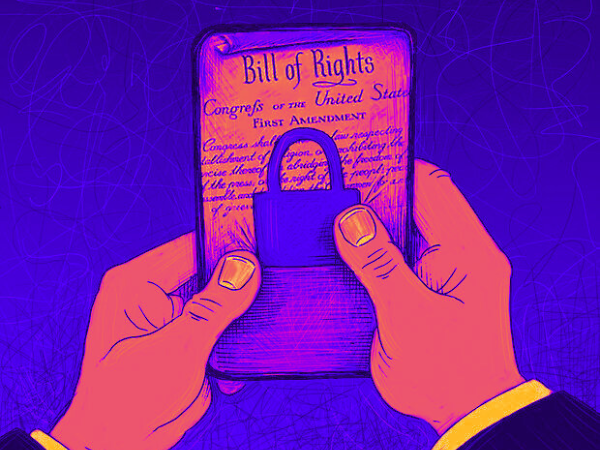
Nothing good can come from allowing the government to sidestep the Constitution.

Unfortunately, the government has become an expert at disregarding constitutional roadblocks intended to protect the rights of the citizenry.

When these end-runs don’t suffice, the government hides behind the covert, clandestine, classified language of national security; or obfuscates, complicates, stymies, and bamboozles; or creates manufactured diversions to keep the citizenry in the dark; or works through private third parties not traditionally bound by the Constitution.

This last tactic is increasingly how the government gets away with butchering our freedoms, by having its corporate partners serve as a front for its nefarious deeds.

This is how the police state has managed to carry out an illegal secret dragnet surveillance program on the American people over the course of multiple presidential administrations.

Relying on a set of privacy loopholes, the White House (under Presidents Obama, Trump and now Biden) has been sidestepping the Fourth Amendment by paying AT&T to allow federal, state, and local law enforcement to access—without a warrant—the phone records of Americans who are not suspected of a crime.

The government used a similar playbook to get around the First Amendment, packaged as an effort to control the spread of speculative or false information in the name of national security.

As the House Judiciary Select Subcommittee on Weaponization of the Federal Government revealed, the Biden administration worked in tandem with social media companies to censor content related to COVID-19, including humorous jokes, credible information and so-called disinformation.

Likening the government’s heavy-handed attempts to pressure social media companies to suppress content critical of COVID vaccines or the election to “an almost dystopian scenario,” Judge Terry Doughty warned that “the United States Government seems to have assumed a role similar to an Orwellian ‘Ministry of Truth.’

Restricting access to social media has become a popular means of internet censorship.

Dare to voice politically incorrect views in anything louder than a whisper on social media and you might find yourself suspended on Twitter, shut out of Facebook, and banned across various social media platforms. This authoritarian intolerance masquerading as tolerance, civility and love is what comedian George Carlin referred to as “fascism pretending to be manners.”

Social media censorship runs the gamut from content blocking, throttling, and filtering to lockouts, shutdowns, shadow banning and de-platforming.

In fact, these tactics are at the heart of several critical cases before the U.S. Supreme Court over who gets to control, regulate or remove what content is shared on the internet: the individual, corporate censors or the government.

Yet what those who typically champion the right of corporations to be free from government meddling get wrong about these cases is that there can be no free speech when corporations such as Facebook, Google or YouTube become a front for—or extensions of—government censors.

This is the very definition of technocensorship.

On paper—under the First Amendment, at least—we are technically free to speak.

In reality, however, we are now only as free to speak as a government official—or corporate entities such as Facebook, Google or YouTube—may allow.

Clothed in tyrannical self-righteousness, technocensorship is powered by technological behemoths (both corporate and governmental) working in tandem to achieve a common goal: to muzzle, silence and altogether eradicate any speech that runs afoul of the government’s own approved narrative.

This is political correctness taken to its most chilling and oppressive extreme.

This authoritarian impulse to censor and silence “dangerous” speech masquerading as tolerance, civility and a concern for safety (what comedian George Carlin referred to as “fascism pretending to be manners”) is the end result of a politically correct culture that has become radicalized, institutionalized and tyrannical.

You see, the government is not protecting us from “dangerous” disinformation campaigns. It is laying the groundwork to insulate us from “dangerous” ideas that might cause us to think for ourselves and, in so doing, challenge the power elite’s stranglehold over our lives.

Thus far, the tech giants have been able to sidestep the First Amendment by virtue of their non-governmental status, but it’s a dubious distinction at best when they are marching in lockstep with the government’s dictates.

As Philip Hamburger and Jenin Younes write for The Wall Street Journal: “The First Amendment prohibits the government from ‘abridging the freedom of speech.’ Supreme Court doctrine makes clear that government can’t constitutionally evade the amendment by working through private companies.”

It remains to be seen whether the Supreme Court can see itself clear to recognizing that censorship by social media companies acting at the behest of the government runs afoul of the First Amendment.

Bottom line: either we believe in free speech or we don’t.

The answer to the political, legal and moral challenges of our day should always be more speech, not less.

Any individual or group—prominent or not—who is censored, silenced and made to disappear from Facebook, Twitter, YouTube and Instagram for voicing ideas that are deemed politically incorrect, hateful, dangerous or conspiratorial should be cause for alarm across the entire political spectrum.

To ignore the long-term ramifications of such censorship is dangerously naïve, because whatever powers the government and its corporate operatives are allowed to claim now will eventually be used against the populace at large.

These social shunning tactics borrow heavily from the mind control tactics used by authoritarian cults as a means of controlling its members. As Dr. Steven Hassan writes in Psychology Today: “By ordering members to be cut off, they can no longer participate. Information and sharing of thoughts, feelings, and experiences are stifled. Thought-stopping and use of loaded terms keep a person constrained into a black-and-white, all-or-nothing world. This controls members through fear and guilt.”

This mind control can take many forms, but the end result is an enslaved, compliant populace incapable of challenging tyranny.

As Rod Serling, creator of The Twilight Zone, once observed, “We’re developing a new citizenry, one that will be very selective about cereals and automobiles, but won’t be able to think.”

The problem is that we’ve allowed ourselves to be persuaded that we need someone else to think and speak for us, and we’ve bought into the idea that we need the government and its corporate partners to shield us from that which is ugly or upsetting or mean. The result is a society in which we’ve stopped debating among ourselves, stopped thinking for ourselves, and stopped believing that we can fix our own problems and resolve our own differences.

In short, we have reduced ourselves to a largely silent, passive, polarized populace incapable of working through our own problems and reliant on the government to protect us from our fears.

As Nat Hentoff, that inveterate champion of the First Amendment, once observed, “The quintessential difference between a free nation, as we profess to be, and a totalitarian state, is that here everyone, including a foe of democracy, has the right to speak his mind.”

What this means is championing the free speech rights of those with whom we might disagree.

That’s why James Madison, the author of the Bill of Rights, fought for a First Amendment that protected the “minority” against the majority, ensuring that even in the face of overwhelming pressure, a minority of one—even one who espouses distasteful viewpoints—would still have the right to speak freely, pray freely, assemble freely, challenge the government freely, and broadcast his views in the press freely. He understood that freedom for those in the unpopular minority constitutes the ultimate tolerance in a free society.

The government has no tolerance for freedom or free speech of any kind that challenges its chokehold on power.

At some point or another, depending on how the government and its corporate allies define what constitutes “disinformation,” “hate” or “extremism, “we the people” might all be considered guilty of some thought crime or speech transgression or other.

Yet as I make clear in my book Battlefield America: The War on the American People and in its fictional counterpart The Erik Blair Diaries, it’s a slippery slope from censoring so-called illegitimate ideas to silencing truth.

Eventually, as George Orwell predicted, telling the truth will become a revolutionary act.

Ultimately, the government’s war on free speech—and that’s exactly what it is—is a war that is driven by a government fearful of its people.

As President John F. Kennedy observed, “[A] nation that is afraid to let its people judge the truth and falsehood in an open market is a nation that is afraid of its people.”

Source: http://tinyurl.com/24ejau2y

ABOUT JOHN W. WHITEHEAD

Constitutional attorney and author John W. Whitehead is founder and president of The Rutherford Institute. His most recent books are the best-selling Battlefield America: The War on the American People, the award-winning A Government of Wolves: The Emerging American Police State, and a debut dystopian fiction novel, The Erik Blair Diaries. Whitehead can be contacted at staff@rutherford.org. Nisha Whitehead is the Executive Director of The Rutherford Institute. Information about The Rutherford Institute is available at www.rutherford.org.

Publication Guidelines / Reprint Permission

John W. Whitehead’s weekly commentaries are available for publication to newspapers and web publications at no charge.
“The remedy is worse than the disease.”—Francis Bacon

The government never cedes power willingly.

Neither should we.

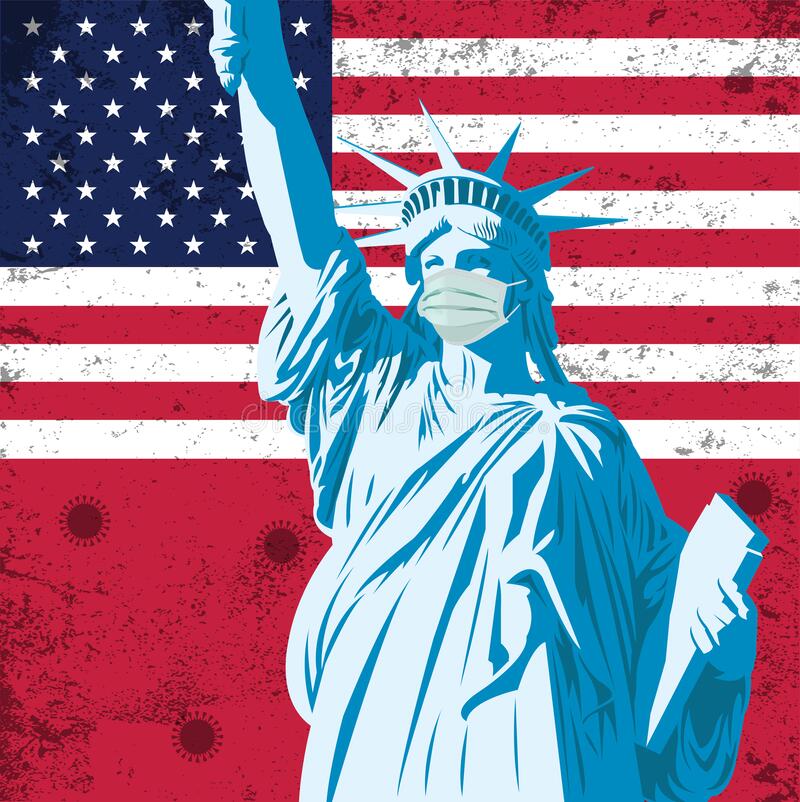
If the COVID-19 debacle taught us one thing it is that, as Justice Neil Gorsuch acknowledged, “Rule by indefinite emergency edict risks leaving all of us with a shell of a democracy and civil liberties just as hollow.”

Unfortunately, we still haven’t learned.

We’re still allowing ourselves to be fully distracted by circus politics and a constant barrage of bad news screaming for attention.

Three years after the onset of the COVID-19 pandemic, which gave world governments (including our own) a convenient excuse for expanding their powers, abusing their authority, and further oppressing their constituents, there’s something being concocted in the dens of power.

The danger of martial law persists.

Any government so willing to weaponize one national crisis after another in order to expand its powers and justify all manner of government tyranny in the so-called name of national security will not hesitate to override the Constitution and lockdown the nation again.

You’d better get ready, because that so-called crisis could be anything: civil unrest, national emergencies, “unforeseen economic collapse, loss of functioning political and legal order, purposeful domestic resistance or insurgency, pervasive public health emergencies, and catastrophic natural and human disasters.”

COVID-19 was a test to see how quickly the populace would march in lockstep with the government’s dictates, no questions asked, and how little resistance the citizenry would offer up to the government’s power grabs when made in the name of national security.

“We the people” failed that test spectacularly.

Characterized by Supreme Court Justice Neil Gorsuch as “the greatest intrusions on civil liberties in the peacetime history of this country,” the government’s COVID-19 response to the COVID-19 pandemic constituted a massively intrusive, coercive and authoritarian assault on the right of individual sovereignty over one’s life, self and private property.

In a statement attached to the Supreme Court’s ruling in Arizona v. Mayorkas, a case that challenged whether the government could continue to use it pandemic powers even after declaring the public health emergency over, Gorsuch provided a catalog of the many ways in which the government used COVID-19 to massively overreach its authority and suppress civil liberties:

Executive officials across the country issued emergency decrees on a breathtaking scale. Governors and local leaders imposed lockdown orders forcing people to remain in their homes. They shuttered businesses and schools, public and private. They closed churches even as they allowed casinos and other favored businesses to carry on. They threatened violators not just with civil penalties but with criminal sanctions too. They surveilled church parking lots, recorded license plates, and issued notices warning that attendance at even outdoor services satisfying all state social-distancing and hygiene requirements could amount to criminal conduct. They divided cities and neighborhoods into color-coded zones, forced individuals to fight for their freedoms in court on emergency timetables, and then changed their color-coded schemes when defeat in court seemed imminent.”

Truly, the government’s (federal and state) handling of the COVID-19 pandemic delivered a knockout blow to our civil liberties, empowering the police state to flex its powers by way of a bevy of lockdowns, mandates, restrictions, contact tracing programs, heightened surveillance, censorship, overcriminalization, etc.

What started off as an experiment in social distancing in order to flatten the curve of an unknown virus (and not overwhelm the nation’s hospitals or expose the most vulnerable to unavoidable loss of life scenarios) quickly became strongly worded suggestions for citizens to voluntarily stay at home and strong-armed house arrest orders with penalties in place for non-compliance.

Every day brought a drastic new set of restrictions by government bodies (most have been delivered by way of executive orders) at the local, state and federal level that were eager to flex their muscles for the so-called “good” of the populace.

There was talk of mass testing for COVID-19 antibodies, screening checkpoints, mass surveillance in order to carry out contact tracing, immunity passports to allow those who have recovered from the virus to move around more freely, snitch tip lines for reporting “rule breakers” to the authorities, and heavy fines and jail time for those who dared to venture out without a mask, congregate in worship without the government’s blessing, or re-open their businesses without the government’s say-so.

It was even suggested that government officials should mandate mass vaccinations and “ensure that people without proof of vaccination would not be allowed, well, anywhere.”

Those tactics were already being used abroad.

In Italy, the unvaccinated were banned from restaurants, bars and public transportation, and faced suspensions from work and monthly fines. Similarly, France banned the unvaccinated from most public venues.

In Austria, anyone who had not complied with the vaccine mandate faced fines up to $4100. Police were to be authorized to carry out routine checks and demand proof of vaccination, with penalties of as much as $685 for failure to do so.

In China, which adopted a zero tolerance, “zero COVID” strategy, whole cities—some with populations in the tens of millions—were forced into home lockdowns for weeks on end, resulting in mass shortages of food and household supplies. Reports surfaced of residents “trading cigarettes for cabbage, dishwashing liquid for apples and sanitary pads for a small pile of vegetables. One resident traded a Nintendo Switch console for a packet of instant noodles and two steamed buns.”

For those unfortunate enough to contract COVID-19, China constructed “quarantine camps” throughout the country: massive complexes boasting thousands of small, metal boxes containing little more than a bed and a toilet. Detainees—including children, pregnant women and the elderly— were reportedly ordered to leave their homes in the middle of the night, transported to the quarantine camps in buses and held in isolation.

If this last scenario sounds chillingly familiar, it should.

Eighty years ago, another authoritarian regime established more than 44,000 quarantine camps for those perceived as “enemies of the state”: racially inferior, politically unacceptable or simply noncompliant.

While the majority of those imprisoned in the Nazi concentration camps, forced labor camps, incarceration sites and ghettos were Jews, there were also Polish nationals, gypsies, Russians, political dissidents, resistance fighters, Jehovah’s Witnesses, and homosexuals.

Culturally, we have become so fixated on the mass murders of Jewish prisoners by the Nazis that we overlook the fact that the purpose of these concentration camps were initially intended to “incarcerate and intimidate the leaders of political, social, and cultural movements that the Nazis perceived to be a threat to the survival of the regime.”

How do you get from there to here, from Auschwitz concentration camps to COVID quarantine centers?

You don’t have to be a conspiracy theorist to connect the dots.

You just have to recognize the truth in the warning: power corrupts, and absolute power corrupts absolutely.

This is about what happens when good, generally decent people—distracted by manufactured crises, polarizing politics, and fighting that divides the populace into warring “us vs. them” camps—fail to take note of the looming danger that threatens to wipe freedom from the map and place us all in chains.

It’s about what happens when any government is empowered to adopt a comply-or-suffer-the-consequences mindset that is enforced through mandates, lockdowns, penalties, detention centers, martial law, and a disregard for the rights of the individual.

This is the slippery slope: a government empowered to restrict movements, limit individual liberty, and isolate “undesirables” to prevent the spread of a disease is a government that has the power to lockdown a country, label whole segments of the population a danger to national security, and force those undesirables—a.k.a. extremists, dissidents, troublemakers, etc.—into isolation so they don’t contaminate the rest of the populace.

The slippery slope begins with propaganda campaigns about the public good being more important than individual liberty, and it ends with lockdowns and concentration camps.

As I make clear in my book Battlefield America: The War on the American People and in its fictional counterpart The Erik Blair Diaries, the danger signs are everywhere.

COVID-19 was merely one crisis in a long series of crises that the government has shamelessly exploited in order to justify its power grabs and acclimate the citizenry to a state of martial law disguised as emergency powers.

Everything I have warned about for years—government overreach, invasive surveillance, martial law, abuse of powers, militarized police, weaponized technology used to track and control the citizenry, and so on—has become part of the government’s arsenal of terrifying lockdown powers should the need arise.

What we should be bracing for is: what comes next?

Source: http://tinyurl.com/3n4f8cz2

ABOUT JOHN W. WHITEHEAD

Constitutional attorney and author John W. Whitehead is founder and president of The Rutherford Institute. His most recent books are the best-selling Battlefield America: The War on the American People, the award-winning A Government of Wolves: The Emerging American Police State, and a debut dystopian fiction novel, The Erik Blair Diaries. Whitehead can be contacted at staff@rutherford.org. Nisha Whitehead is the Executive Director of The Rutherford Institute. Information about The Rutherford Institute is available at www.rutherford.org.

Publication Guidelines / Reprint Permission

John W. Whitehead’s weekly commentaries are available for publication to newspapers and web publications at no charge. 
“The madmen are in power.”— Philip K. Dick, The Man in the High Castle

The debate over U.S. foreign aid is a distraction.

That’s not to say that the amount of taxpayer money flowing to foreign countries in the form of military and economic assistance is insignificant. Even at less than 1% of the federal budget, the United States still spends more on foreign aid than any other nation.

The latest foreign aid spending bill includes $95 billion for Ukraine, Israel and Taiwan.

Since World War II, the U.S. has given more foreign aid to Israel than any other country ($318 billion), with the bulk of those funds designated for Israel’s military efforts.

Even so, more than 150 countries around the world receive U.S. taxpayer-funded assistance.

As Forbes reports, “U.S. foreign aid dwarfs the federal funds spent by 48 out of 50 state governments annually. Only the state governments of California and New York spent more federal funds than what the U.S. sent abroad each year to foreign countries.”

Whether or not that some of that foreign aid is used for legitimate purposes, the global welfare system itself is riddled with corruption and waste. As Adam Andrzejewski rightly asks, “Do taxpayers instinctively know that they are funding choir directors in Turkmenistan, filmmakers in Peru, aid for poultry farmers Tanzania, and sex education workshops for prostitutes in Ethiopia?”

The problem is not so much that taxpayers are unaware of how their hard-earned dollars are being spent. Rather, “we the people” continue to be told that we have no say in the matter.

We have no real say in how the government runs, or how our taxpayer funds are used, but that doesn’t prevent the government from fleecing us at every turn and forcing us to pay for endless wars that do more to fund the military industrial complex than protect us, pork barrel projects that produce little to nothing, and a police state that serves only to imprison us within its walls.

This financial tyranny persists whether it’s a Democrat or Republican at the helm.

At a time when the government is spending money it doesn’t have on programs it can’t afford, the national debt continues to grow, our infrastructure continues to deteriorate, and our borders continue to be breached.

What is going on?

The “government of the people, by the people, for the people” has been overtaken by a shadow government—a corporatized, militarized, entrenched global bureaucracy—that is fully operational and running the country.

This powerful international cabal made up of international government agencies and corporations—let’s call it the Global Deep State—is just as real as the corporatized, militarized, industrialized American Deep State, and it poses just as great a threat to our rights as individuals under the U.S. Constitution, if not greater.

Clearly, we have entered into a new world order: fascism on a global scale.

It remains unclear whether the American Deep State (“a national-security apparatus that holds sway even over the elected leaders notionally in charge of it”) answers to the Global Deep State, or whether the Global Deep State merely empowers the American Deep State. However, there is no denying the extent to which they are intricately and symbiotically enmeshed and interlocked.

Consider the extent to which our lives and liberties are impacted by this international convergence of governmental and profit-driven corporate interests in the surveillance state, the military industrial complex, the private prison industry, the intelligence sector, the security sector, the technology sector, the telecommunications sector, the transportation sector, and in recent years, the pharmaceutical-health sector.

All of these sectors are dominated by mega-corporations operating on a global scale and working through government channels to increase their profit margins. The profit-driven policies of these global corporate giants influence everything from legislative policies to economics to environmental issues to medical care.

Global Disease

The COVID-19 pandemic propelled us into a whole new global frontier in which those hoping to navigate this interconnected and highly technological world of contact tracing, vaccine passports and digital passes find themselves grappling with issues that touch on deep-seated moral, political, religious and personal questions for which there may be no clear-cut answers.

Our ability to access, engage and move about in the world has now become dependent on which camp we fall into: those who have been vaccinated against whatever the powers-that-be deem to be the latest Disease X versus those who have not.

This is what M.I.T. professor Ramesh Raskar refers to as the new “currency for health,” an apt moniker given the potentially lucrative role that Big Business (Big Pharma and Big Tech, especially) will play in establishing this pay-to-play marketplace. The airline industry has been working on a Travel Pass. IBM is developing a Digital Health Pass. And the U.S. government has been all-too-happy to allow the corporate sector to take the lead.

“It is the latest status symbol. Flash it at the people, and you can get access to concerts, sports arenas or long-forbidden restaurant tables. Some day, it may even help you cross a border without having to quarantine,” writes Heather Murphy for the New York Times. “The new platinum card of the Covid age is the vaccine certificate.”

Global Surveillance

Spearheaded by the National Security Agency, which has shown itself to care little for constitutional limits or privacy, the surveillance state has come to dominate our government and our lives.

Yet the government does not operate alone. It cannot. It requires an accomplice. Thus, the increasingly complex security needs of our massive federal government, especially in the areas of defense, surveillance and data management, have been met within the corporate sector, which has shown itself to be a powerful ally that both depends on and feeds the growth of governmental bureaucracy.

Take AT&T, for instance. Through its vast telecommunications network that crisscrosses the globe, AT&T provides the U.S. government with the complex infrastructure it needs for its mass surveillance programs. According to The Intercept:

“The NSA considers AT&T to be one of its most trusted partners and has lauded the company’s ‘extreme willingness to help.’ It is a collaboration that dates back decades. Little known, however, is that its scope is not restricted to AT&T’s customers. According to the NSA’s documents, it values AT&T not only because it ‘has access to information that transits the nation,’ but also because it maintains unique relationships with other phone and internet providers. The NSA exploits these relationships for surveillance purposes, commandeering AT&T’s massive infrastructure and using it as a platform to covertly tap into communications processed by other companies.”

Now magnify what the U.S. government is doing through AT&T on a global scale, and you have the “14 Eyes Program,” also referred to as the “SIGINT Seniors.” This global spy agency is made up of members from around the world (United States, United Kingdom, Australia, Canada, New Zealand, Denmark, France, Netherlands, Norway, Germany, Belgium, Italy, Sweden, Spain, Israel, Singapore, South Korea, Japan, India and all British Overseas Territories).

Surveillance is just the tip of the iceberg when it comes to these global alliances, however.

Global War Profiteering

War has become a huge money-making venture, and America, with its vast military empire and its incestuous relationship with a host of international defense contractors, is one of its biggest buyers and sellers.

The American military-industrial complex has erected an empire unsurpassed in history in its breadth and scope, one dedicated to conducting perpetual warfare throughout the earth. For example, while erecting a security surveillance state in the U.S., the military-industrial complex has perpetuated a worldwide military empire with American troops stationed in 177 countries (over 70% of the countries worldwide).

Although the federal government obscures so much about its defense spending that accurate figures are difficult to procure, we do know that since 2001, the U.S. government has spent more than $1.8 trillion in the wars in Afghanistan and Iraq (that’s $8.3 million per hour). That doesn’t include wars and military exercises waged around the globe, which are expected to push the total bill upwards of $12 trillion by 2053.

The illicit merger of the global armaments industry and the Pentagon that President Dwight D. Eisenhower warned us against more than 50 years ago has come to represent perhaps the greatest threat to the nation’s fragile infrastructure today. America’s expanding military empire is bleeding the country dry at a rate of more than $15 billion a month (or $20 million an hour)—and that’s just what the government spends on foreign wars. That does not include the cost of maintaining and staffing the 1000-plus U.S. military bases spread around the globe.

Incredibly, although the U.S. constitutes only 5% of the world’s population, America boasts almost 50% of the world’s total military expenditure,  spending more on the military than the next 19 biggest spending nations combined. In fact, the Pentagon spends more on war than all 50 states combined spend on health, education, welfare, and safety. There’s a good reason why “bloated,” “corrupt” and “inefficient” are among the words most commonly applied to the government, especially the Department of Defense and its contractors. Price gouging has become an accepted form of corruption within the American military empire.

It’s not just the American economy that is being gouged, unfortunately.

Driven by a greedy defense sector, the American homeland has been transformed into a battlefield with militarized police and weapons better suited to a war zone. President Biden, marching in lockstep with his predecessors, has continued to expand America’s military empire abroad and domestically in a clear bid to pander to the powerful money interests (military, corporate and security) that run the Deep State and hold the government in its clutches.

Global Policing

Glance at pictures of international police forces and you will have a hard time distinguishing between American police and those belonging to other nations. There’s a reason they all look alike, garbed in the militarized, weaponized uniform of a standing army.

There’s a reason why they act alike, too, and speak a common language of force: they belong to a global police force.

For example, Israel—one of America’s closest international allies and one of the primary yearly recipients of more than $3 billion in U.S. foreign military aid—has been at the forefront of a little-publicized exchange program aimed at training American police to act as occupying forces in their communities. As The Intercept sums it up, American police are “essentially taking lessons from agencies that enforce military rule rather than civil law.”

This idea of global policing is reinforced by the Strong Cities Network program, which trains local police agencies across America in how to identify, fight and prevent extremism, as well as address intolerance within their communities, using all of the resources at their disposal. The cities included in the global network include New York City, Atlanta, Denver, Minneapolis, Paris, London, Montreal, Beirut and Oslo.

The objective is to prevent violent extremism by targeting its source: racism, bigotry, hatred, intolerance, etc. In other words, police—acting as extensions of the United Nations—will identify, monitor and deter individuals who exhibit, express or engage in anything that could be construed as extremist.

Of course, the concern with the government’s anti-extremism program is that it will, in many cases, be utilized to render otherwise lawful, nonviolent activities as potentially extremist.

Keep in mind that the government agencies involved in ferreting out American “extremists” will carry out their objectives—to identify and deter potential extremists—in concert with fusion centers (of which there are 78 nationwide, with partners in the private sector and globally), data collection agencies, behavioral scientists, corporations, social media, and community organizers and by relying on cutting-edge technology for surveillance, facial recognition, predictive policing, biometrics, and behavioral epigenetics (in which life experiences alter one’s genetic makeup).

This is pre-crime on an ideological scale and it’s been a long time coming.

Are you starting to get the picture now?

The government and its global partners have struck a deal that puts the American people on the losing end of the bargain.

On almost every front, whether it’s the war on drugs, or the sale of weapons, or regulating immigration, or establishing prisons, or advancing technology, or fighting a pandemic, if there is a profit to be made and power to be amassed, our freedoms are being eroded while the Global Deep State becomes more entrenched.

We’ve been losing our freedoms so incrementally for so long—sold to us in the name of national security and global peace, maintained by way of martial law disguised as law and order, and enforced by a standing army of militarized police and a political elite determined to maintain their powers at all costs—that it’s hard to pinpoint exactly when it all started going downhill, but we’re certainly on that downward slope now, and things are moving fast.

Given the dramatic expansion, globalization and merger of governmental and corporate powers, we’re not going to recognize this country 20 years from now.

As I make clear in my book Battlefield America: The War on the American People and in its fictional counterpart The Erik Blair Diaries, the U.S. government will not save us from the chains of the Global Deep State. It’s too busy selling us to the highest bidder.

Source: http://tinyurl.com/mr2u4ew5

ABOUT JOHN W. WHITEHEAD

Constitutional attorney and author John W. Whitehead is founder and president of The Rutherford Institute. His most recent books are the best-selling Battlefield America: The War on the American People, the award-winning A Government of Wolves: The Emerging American Police State, and a debut dystopian fiction novel, The Erik Blair Diaries. Whitehead can be contacted at staff@rutherford.org. Nisha Whitehead is the Executive Director of The Rutherford Institute. Information about The Rutherford Institute is available at www.rutherford.org.

Publication Guidelines / Reprint Permission

John W. Whitehead’s weekly commentaries are available for publication to newspapers and web publications at no charge. 
“Big Brother is Watching You.”―George Orwell, 1984

2024 is the new 1984.

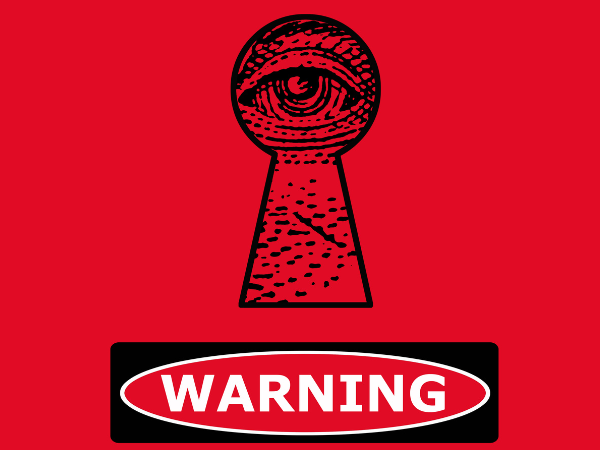
Forty years past the time that George Orwell envisioned the stomping boot of Big Brother, the police state is about to pass off the baton to the surveillance state.

Fueled by a melding of government and corporate power—the rise of the security industrial complex—this watershed moment sounds a death knell for our privacy rights.

An unofficial fourth branch of government, the Surveillance State came into being without any electoral mandate or constitutional referendum, and yet it possesses superpowers, above and beyond those of any other government agency save the military.

It operates beyond the reach of the president, Congress and the courts, and it marches in lockstep with the corporate elite who really call the shots in Washington, DC.

This is the new face of tyranny in America: all-knowing, all-seeing and all-powerful.

Tread cautiously.

Empowered by advances in surveillance technology and emboldened by rapidly expanding public-private partnerships between law enforcement, the Intelligence Community, and the private sector, the Surveillance State is making the fictional world of 1984, Orwell’s dystopian nightmare, our looming reality.

1984 portrays a global society of total control in which people are not allowed to have thoughts that in any way disagree with the corporate state. There is no personal freedom, and advanced technology has become the driving force behind a surveillance-driven society. Snitches and cameras are everywhere. People are subject to the Thought Police, who deal with anyone guilty of thought crimes. The government, or “Party,” is headed by Big Brother who appears on posters everywhere with the words: “Big Brother is watching you.”

Indeed, in our present age of ubiquitous surveillance, there are no private lives.

Everything is increasingly public.

What we are witnessing, in the so-called name of security and efficiency, is the creation of a new class system comprised of the watched (average Americans such as you and me) and the watchers (government bureaucrats, technicians and private corporations).

We now find ourselves in the unenviable position of being monitored, managed and controlled by our technology, which answers not to us but to our government and corporate rulers.

This is the fact-is-stranger-than-fiction lesson that is being pounded into us on a daily basis.

In this way, 1984, which depicted the ominous rise of ubiquitous technology, fascism and totalitarianism, has become an operation manual for the omnipresent, modern-day surveillance state.

There are roughly one billion surveillance cameras worldwide and that number continues to grow, thanks to their wholehearted adoption by governments (especially law enforcement and military agencies), businesses, and individual consumers.

Surveillance cameras mounted on utility poles, traffic lights, businesses, and homes. Ring doorbells. GPS devices. Dash cameras. Drones. Store security cameras. Geofencing and geotracking. FitBits. Alexa. Internet-connected devices. 

Stingray devices, facial recognition technology, body cameras, automated license plate readers, gunshot detection, predictive policing software, AI-enhanced video analytics, real-time crime centers, fusion centers: all of these technologies and surveillance programs rely on public-private partnerships that together create a sticky spiderweb from which there is no escape.

With every new surveillance device we welcome into our lives, the government gains yet another toehold into our private worlds.

As the cost of these technologies becomes more affordable for the average consumer, an effort underwritten by the tech industry and encouraged by law enforcement agencies and local governing boards, which in turn benefit from access to surveillance they don’t need to include in their budgets, big cities, small towns, urban, suburban and rural communities alike are adding themselves to the surveillance state’s interconnected grid.

What this adds up to for government agencies (that is, FBI, NSA, DHS agents, etc., as well as local police) is a surveillance map that allows them to track someone’s movements over time and space, hopscotching from doorbell camera feeds and business security cameras to public cameras on utility poles, license plate readers, traffic cameras, drones, etc.

It has all but eliminated the notion of privacy enshrined in the  Fourth Amendment and radically re-drawn the line of demarcation between our public and private selves.

The police state has become particularly adept at sidestepping the Fourth Amendment, empowered by advances in surveillance technology and emboldened by rapidly expanding public-private partnerships between law enforcement, the Intelligence Community, and the private sector.

Over the past 50-plus years, surveillance has brought about a series of revolutions in how governments govern and populations are policed to the detriment of us all. Cybersecurity expert Adam Scott Wandt has identified three such revolutions.

The first surveillance revolution came about as a result of government video cameras being installed in public areas. There were a reported 51 million surveillance cameras blanketing the United States in 2022. It’s estimated that Americans are caught on camera an average of 238 times every week (160 times per week while driving; 40 times per week at work; 24 times per week while out running errands and shopping; and 14 times per week through various other channels and activities). That doesn’t even touch on the coverage by surveillance drones, which remain a relatively covert part of police spying operations.

The second revolution occurred when law enforcement agencies started forging public-private partnerships with commercial establishments like banks and drug stores and parking lots in order to gain access to their live surveillance feeds. The use of automatic license plate readers (manufactured and distributed by the likes of Flock Safety), once deployed exclusively by police and now spreading to home owners associations and gated communities, extends the reach of the surveillance state that much further afield. It’s a win-win for police budgets and local legislatures when they can persuade businesses and residential communities to shoulder the costs of the equipment and share the footage, and they can conscript the citizenry to spy on each other through crowdsourced surveillance.

The third revolution was ushered in with the growing popularity of doorbell cameras such as Ring, Amazon’s video surveillance doorbell, and Google’s Nest Cam.

Amazon has been particularly aggressive in its pursuit of a relationship with police, enlisting them in its marketing efforts, and going so far as to hosting parties for police, providing free Ring doorbells and deep discounts, sharing “active camera” maps of Ring owners, allowing access to the Law Enforcement Neighborhood Portal, which enables police to directly contact owners for access to their footage, and coaching police on how to obtain footage without a warrant.

Ring currently partners with upwards of 2,161 law enforcement agencies and 455 fire departments, and that number grows exponentially every year. As Vice reports, “Ring has also heavily pursued city discount programs and private alliances with neighborhood watch groups. When cities provide free or discounted Ring cameras, they sometimes create camera registries, and police sometimes order people to aim Ring cameras at their neighbors, or only give cameras to people surveilled by neighborhood watches.”

In November 2022, San Francisco police gained access to the live footage of privately owned internet cameras as opposed to merely being able to access recorded footage. No longer do police even have to request permission of homeowners for such access: increasingly, corporations have given police access to footage as part of their so-called criminal investigations with or without court orders.

The fourth revolutionary shift may well be the use of facial recognition software and artificial intelligence-powered programs that can track people by their biometrics, clothing, behavior and car, thereby synthesizing the many strands of surveillance video footage into one cohesive narrative, which privacy advocates refer to as 360 degree surveillance.

While the guarantee of safety afforded by these surveillance nerve centers remains dubious, at best, there is no disguising their contribution in effecting a sea change towards outright authoritarianism.

For instance, as an in-depth investigative report by the Associated Press concludes, the very same mass surveillance technologies that were supposedly so necessary to fight the spread of COVID-19 are now being used to stifle dissent, persecute activists, harass marginalized communities, and link people’s health information to other surveillance and law enforcement tools.

As the AP reports, federal officials have also been looking into how to add “‘identifiable patient data,’ such as mental health, substance use and behavioral health information from group homes, shelters, jails, detox facilities and schools,” to its surveillance toolkit.

These cameras—and the public-private eyes peering at us through them—are re-engineering a society structured around the aesthetic of fear and, in the process, empowering “people to not just watch their neighborhood, but to organize as watchers,” creating not just digital neighborhood watches but digital gated communities.

Finally, there is a repressive, suppressive effect to surveillance that not only acts as a potentially small deterrent on crime but serves to monitor and chill lawful First Amendment activity.

As Matthew Feeney warns in the New York Times, “In the past, Communists, civil rights leaders, feminists, Quakers, folk singers, war protesters and others have been on the receiving end of law enforcement surveillance. No one knows who the next target will be.

No one knows, but it’s a pretty good bet that the surveillance state will be keeping a close watch on anyone seen as a threat to the government’s chokehold on power.

After all, as I make clear in my book Battlefield America: The War on the American People and in its fictional counterpart The Erik Blair Diaries, the Surveillance State never sleeps.

Source: http://tinyurl.com/5y5h9bs2

ABOUT JOHN W. WHITEHEAD

Constitutional attorney and author John W. Whitehead is founder and president of The Rutherford Institute. His most recent books are the best-selling Battlefield America: The War on the American People, the award-winning A Government of Wolves: The Emerging American Police State, and a debut dystopian fiction novel, The Erik Blair Diaries. Whitehead can be contacted at staff@rutherford.org. Nisha Whitehead is the Executive Director of The Rutherford Institute. Information about The Rutherford Institute is available at www.rutherford.org.

Publication Guidelines / Reprint Permission

John W. Whitehead’s weekly commentaries are available for publication to newspapers and web publications at no charge.

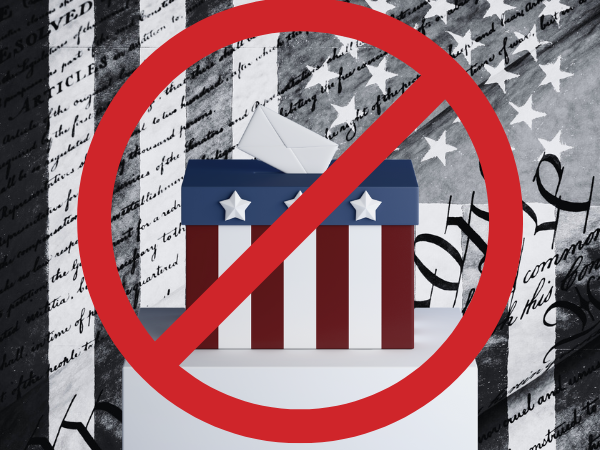
WASHINGTON, D.C. — The U.S. Supreme Court has given government officials the green light to obstruct citizens from voting at polling places based on the content of speech displayed on their clothing.

By refusing to hear an appeal in Ostrewich v. Hudspeth, the U.S. Supreme Court has laid the groundwork for citizens to be prevented from voting merely by wearing something expressive on their clothing that might relate to an item on a ballot. In a joint amicus brief with Justice and Freedom Fund and World Faith Foundation, The Rutherford Institute warned against electioneering laws that give government officials too much discretion to engage in viewpoint discrimination of voters. Conceivably, just the act of wearing a MAGA hat, a Taylor Swift t-shirt, or other apparel that could be perceived by a poll worker as sending a political message could get one criminally prosecuted or prevented from voting in some states.

“These polling place laws can be so vague as to prohibit citizens from voting merely for wearing clothing with images of Martin Luther King Jr. or John Lennon that could be considered ‘relating to’ an item on the ballot” said constitutional attorney John W. Whitehead, president of The Rutherford Institute and author of Battlefield America: The War on the American People. “Yet political speech, especially speech critical of the government, is a constitutional virtue, not a harm. These bans on the passive act of displaying speech, political or otherwise, at a polling place are an affront to the right to political free speech protected by the First Amendment.”

Free expression at polling places has become a contentious issue in recent years, with controversies over “ballot selfies,” the wearing of political apparel to polling places, and even apparel that does not explicitly reference candidates, ballot issues, or politics. For example, when Linda McMahon, the wife of World Wrestling Entertainment chairman Vince McMahon, ran for the U.S. Senate, there were questions over whether voters in Connecticut could be turned away for wearing WWE merchandise. In Georgia, a man was ordered to remove his NRA hat while going to vote. In Texas, it is a criminal misdemeanor for a person to merely wear a badge, insignia, emblem, or other similar communicative device “relating to” a candidate, measure, or political party appearing on the ballot, or to the conduct of the election, within the polling place or within 100 feet of any outside door through which a voter may enter.

In 2018, Jillian Ostrewich, the wife of a firefighter, was prevented from voting while wearing a shirt that contained a union logo and the words “Houston Fire Fighters” because the ballot contained a proposition to guarantee Houston’s firefighters pay parity with the city’s police officers. In order to vote, Ostrewich had to turn her shirt inside-out. Ostrewich subsequently filed suit, alleging that she was unconstitutionally censored and that Texas’s electioneering laws chilled her right to free speech. However, the Fifth Circuit Court of Appeals found the laws to be constitutional. Although the Supreme Court ruled in 2018 to strike down as unconstitutionally vague a Minnesota law that banned political speech on any badge, button, shirt, or hat worn at election polling stations, the Court refused to hear the appeal in Ostrewich, letting that ruling stand and thus allowing for such laws with a slightly narrower scope than Minnesota’s to continue to be enforced.

Attorneys Deborah J. Dewart and James L. Hirsen of the Justice and Freedom Fund helped advance the amici arguments in the Ostrewich v. Hudspeth brief.

The Rutherford Institute, a nonprofit civil liberties organization, provides legal assistance at no charge to individuals whose constitutional rights have been threatened or violated and educates the public on a wide spectrum of issues affecting their freedoms.

Source: http://tinyurl.com/55u6fxk9