Archive for August, 2023

“Once a government is committed to the principle of silencing the voice of opposition, it has only one way to go, and that is down the path of increasingly repressive measures, until it becomes a source of terror to all its citizens and creates a country where everyone lives in fear.” — President Harry S. Truman

Ever since Martin Luther King Jr. delivered his groundbreaking “I Have a Dream” speech during the March on Washington for Jobs and Freedom on Aug. 28, 1963, the Deep State has been hard at work turning King’s dream into a living nightmare.

The end result of the government’s efforts over the past 60 years is a country where nothing ever really changes, and everyone lives in fear.

Race wars are still being stoked by both the Right and the Left; the military-industrial complex is still waging profit-driven wars at taxpayer expense; the oligarchy is still calling the shots in the seats of government power; and the government is still weaponizing surveillance in order to muzzle anti-government sentiment, harass activists, and terrorize Americans into compliance.

This last point is particularly disturbing.

Starting in the 1950s, the government relied on COINTELPRO, its domestic intelligence program, to neutralize domestic political dissidents. Those targeted by the FBI under COINTELPRO for its intimidation, surveillance and smear campaigns included: Martin Luther King Jr., Malcom X, the Black Panther Party, John Lennon, Billie Holiday, Emma Goldman, Aretha Franklin, Charlie Chaplin, Ernest Hemingway, Felix Frankfurter, and hundreds more.

In more recent decades, the powers-that-be have expanded their reach to target anyone who opposes the police state, regardless of their political leanings.

Advances in technology have enabled the government to deploy a veritable arsenal of surveillance weapons in order to “expose, disrupt, misdirect, discredit, or otherwise neutralize” perceived threats to the government’s power.

Surveillance cameras mounted on utility poles, traffic lights, businesses, and homes. License plate readers. Ring doorbells. GPS devices. Dash cameras. Drones. Store security cameras. Geofencing and geotracking. FitBits. Alexa. Internet-connected devices. Geofencing dragnets. Fusion centers. Smart devices. Behavioral threat assessments. Terror watch lists. Facial recognition. Snitch tip lines. Biometric scanners. Pre-crime. DNA databases. Data mining. Precognitive technology. Contact tracing apps.

What these add up to is a world in which, on any given day, the average person is now monitored, surveilled, spied on and tracked in more than 20 different ways by both government and corporate eyes and ears.

Consider just a small sampling of the ways in which the government is weaponizing its 360 degree surveillance technologies to flag you as a threat to national security, whether or not you’ve done anything wrong.

Flagging you as a danger based on your feelings. Customs and Border Protection is reportedly using an artificial intelligence surveillance program that can detect “sentiment and emotion” in social media posts in order to identify travelers who may be “a threat to public safety, national security, or lawful trade and travel.”

Flagging you as a danger based on your phone and movements. Cell phones have become de facto snitches, offering up a steady stream of digital location data on users’ movements and travels. For instance, the FBI was able to use geofence data to identify more than 5,000 mobile devices (and their owners) in a 4-acre area around the Capitol on January 6. This latest surveillance tactic could land you in jail for being in the “wrong place and time.” Police are also using cell-site simulators to carry out mass surveillance of protests without the need for a warrant. Moreover, federal agents can now employ a number of hacking methods in order to gain access to your computer activities and “see” whatever you’re seeing on your monitor. Malicious hacking software can also be used to remotely activate cameras and microphones, offering another means of glimpsing into the personal business of a target.

Flagging you as a danger based on your DNA. DNA technology in the hands of government officials completes our transition to a Surveillance State. If you have the misfortune to leave your DNA traces anywhere a crime has been committed, you’ve already got a file somewhere in some state or federal database—albeit it may be a file without a name. By accessing your DNA, the government will soon know everything else about you that they don’t already know: your family chart, your ancestry, what you look like, your health history, your inclination to follow orders or chart your own course, etc. After all, a DNA print reveals everything about “who we are, where we come from, and who we will be.” It can also be used to predict the physical appearance of potential suspects. It’s only a matter of time before the police state’s pursuit of criminals expands into genetic profiling and a preemptive hunt for criminals of the future.

Flagging you as a danger based on your face. Facial recognition software aims to create a society in which every individual who steps out into public is tracked and recorded as they go about their daily business. Coupled with surveillance cameras that blanket the country, facial recognition technology allows the government and its corporate partners to identify and track someone’s movements in real-time. One particularly controversial software program created by Clearview AI has been used by police, the FBI and the Department of Homeland Security to collect photos on social media sites for inclusion in a massive facial recognition database. Similarly, biometric software, which relies on one’s unique identifiers (fingerprints, irises, voice prints), is becoming the standard for navigating security lines, as well as bypassing digital locks and gaining access to phones, computers, office buildings, etc. In fact, greater numbers of travelers are opting into programs that rely on their biometrics in order to avoid long waits at airport security. Scientists are also developing lasers that can identify and surveil individuals based on their heartbeats, scent and microbiome.

Flagging you as a danger based on your behavior. Rapid advances in behavioral surveillance are not only making it possible for individuals to be monitored and tracked based on their patterns of movement or behavior, including gait recognition (the way one walks), but have given rise to whole industries that revolve around predicting one’s behavior based on data and surveillance patterns and are also shaping the behaviors of whole populations. One smart “anti-riot” surveillance system purports to predict mass riots and unauthorized public events by using artificial intelligence to analyze social media, news sources, surveillance video feeds and public transportation data.

Flagging you as a danger based on your spending and consumer activities. With every smartphone we buy, every GPS device we install, every Twitter, Facebook, and Google account we open, every frequent buyer card we use for purchases—whether at the grocer’s, the yogurt shop, the airlines or the department store—and every credit and debit card we use to pay for our transactions, we’re helping Corporate America build a dossier for its government counterparts on who we know, what we think, how we spend our money, and how we spend our time. Consumer surveillance, by which your activities and data in the physical and online realms are tracked and shared with advertisers, has become a $300 billion industry that routinely harvests your data for profit. Corporations such as Target have not only been tracking and assessing the behavior of their customers, particularly their purchasing patterns, for years, but the retailer has also funded major surveillance in cities across the country and developed behavioral surveillance algorithms that can determine whether someone’s mannerisms might fit the profile of a thief.

Flagging you as a danger based on your public activities. Private corporations in conjunction with police agencies throughout the country have created a web of surveillance that encompasses all major cities in order to monitor large groups of people seamlessly, as in the case of protests and rallies. They are also engaging in extensive online surveillance, looking for any hints of “large public events, social unrest, gang communications, and criminally predicated individuals.” Defense contractors have been at the forefront of this lucrative market. Fusion centers, $330 million-a-year, information-sharing hubs for federal, state and law enforcement agencies, monitor and report such “suspicious” behavior as people buying pallets of bottled water, photographing government buildings, and applying for a pilot’s license as “suspicious activity.”

Flagging you as a danger based on your social media activities. Every move you make, especially on social media, is monitored, mined for data, crunched, and tabulated in order to form a picture of who you are, what makes you tick, and how best to control you when and if it becomes necessary to bring you in line. As The Intercept reported, the FBI, CIA, NSA and other government agencies are increasingly investing in and relying on corporate surveillance technologies that can mine constitutionally protected speech on social media platforms such as Facebook, Twitter and Instagram in order to identify potential extremists and predict who might engage in future acts of anti-government behavior. This obsession with social media as a form of surveillance will have some frightening consequences in coming years. As Helen A.S. Popkin, writing for NBC News, observed, “We may very well face a future where algorithms bust people en masse for referencing illegal ‘Game of Thrones’ downloads… the new software has the potential to roll, Terminator-style, targeting every social media user with a shameful confession or questionable sense of humor.”

Flagging you as a danger based on your social network. Not content to merely spy on individuals through their online activity, government agencies are now using surveillance technology to track one’s social network, the people you might connect with by phone, text message, email or through social message, in order to ferret out possible criminals. An FBI document obtained by Rolling Stone speaks to the ease with which agents are able to access address book data from Facebook’s WhatsApp and Apple’s iMessage services from the accounts of targeted individuals and individuals not under investigation who might have a targeted individual within their network. What this creates is a “guilt by association” society in which we are all as guilty as the most culpable person in our address book.

Flagging you as a danger based on your car. License plate readers are mass surveillance tools that can photograph over 1,800 license tag numbers per minute, take a picture of every passing license tag number and store the tag number and the date, time, and location of the picture in a searchable database, then share the data with law enforcement, fusion centers and private companies to track the movements of persons in their cars. With tens of thousands of these license plate readers now in operation throughout the country, affixed to overpasses, cop cars and throughout business sectors and residential neighborhoods, it allows police to track vehicles and run the plates through law enforcement databases for abducted children, stolen cars, missing people and wanted fugitives. Of course, the technology is not infallible: there have been numerous incidents in which police have mistakenly relied on license plate data to capture out suspects only to end up detaining innocent people at gunpoint.

Flagging you as a danger based on your political views. The Church Committee, the Senate task force charged with investigating COINTELPRO abuses in 1975, concluded that the government had carried out “secret surveillance of citizens on the basis of their political beliefs, even when those beliefs posed no threat of violence or illegal acts on behalf of a hostile foreign power.” The report continued: “Groups and individuals have been harassed and disrupted because of their political views and their lifestyles… Intelligence agencies have served the political and personal objectives of presidents and other high officials.” Nothing has changed since then.

Flagging you as a danger based on your correspondence. Just about every branch of the government—from the Postal Service to the Treasury Department and every agency in between—now has its own surveillance sector, authorized to spy on the American people. For instance, the U.S. Postal Service, which has been photographing the exterior of every piece of paper mail for the past 20 years, is also spying on Americans’ texts, emails and social media posts. Headed up by the Postal Service’s law enforcement division, the Internet Covert Operations Program (iCOP) is reportedly using facial recognition technology, combined with fake online identities, to ferret out potential troublemakers with “inflammatory” posts. The agency claims the online surveillance, which falls outside its conventional job scope of processing and delivering paper mail, is necessary to help postal workers avoid “potentially volatile situations.”

Now the government wants us to believe that we have nothing to fear from these mass spying programs as long as we’ve done nothing wrong.

Don’t believe it.

As Matthew Feeney warns in the New York Times, “In the past, Communists, civil rights leaders, feminists, Quakers, folk singers, war protesters and others have been on the receiving end of law enforcement surveillance. No one knows who the next target will be.

The government’s definition of a “bad” guy is extraordinarily broad, and it results in the warrantless surveillance of innocent, law-abiding Americans on a staggering scale.

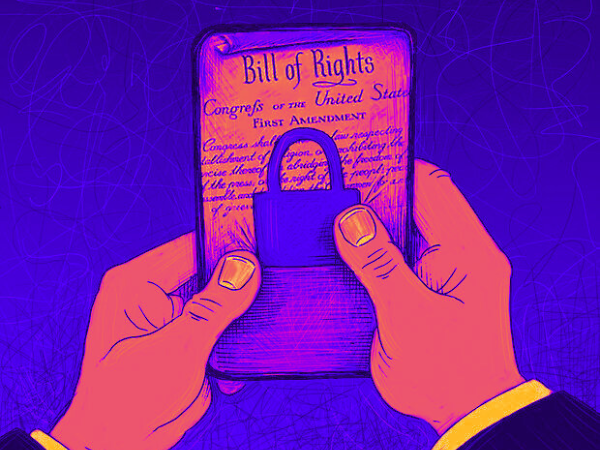
Moreover, there is a repressive, suppressive effect to surveillance that not only acts as a potentially small deterrent on crime but serves to monitor and chill lawful First Amendment activity, and that is the whole point.

Weaponized surveillance is re-engineering a society structured around the aesthetic of fear.

As I make clear in my book Battlefield America: The War on the American People and in its fictional counterpart The Erik Blair Diaries, the police state wants us silent, servile and compliant.

They definitely do not want us to engage in First Amendment activities that challenge the government’s power, reveal the government’s corruption, expose the government’s lies, and encourage the citizenry to push back against the government’s many injustices.

And they certainly do not want us to remember that we have rights, let alone attempting to exercise those rights peaceably and lawfully, whether it’s protesting police brutality and racism, challenging COVID-19 mandates, questioning election outcomes, or listening to alternate viewpoints—even conspiratorial ones—in order to form our own opinions about the true nature of government. 

Source: https://tinyurl.com/5n8839tw

ABOUT JOHN W. WHITEHEAD

Constitutional attorney and author John W. Whitehead is founder and president of The Rutherford Institute. His most recent books are the best-selling Battlefield America: The War on the American People, the award-winning A Government of Wolves: The Emerging American Police State, and a debut dystopian fiction novel, The Erik Blair Diaries. Whitehead can be contacted at staff@rutherford.org. Nisha Whitehead is the Executive Director of The Rutherford Institute. Information about The Rutherford Institute is available at www.rutherford.org.

Publication Guidelines / Reprint Permission

John W. Whitehead’s weekly commentaries are available for publication to newspapers and web publications at no charge. Please contact staff@rutherford.org to obtain reprint permission.
“Make no mistake about it…your DNA can be taken and entered into a national DNA database if you are ever arrested, rightly or wrongly, and for whatever reason… I doubt that the proud men who wrote the charter of our liberties would have been so eager to open their mouths for royal inspection.”—Justice Antonin Scalia dissenting in Maryland v. King

Be warned: the DNA detectives are on the prowl.

Whatever skeletons may be lurking on your family tree or in your closet, whatever crimes you may have committed, whatever associations you may have with those on the government’s most wanted lists: the police state is determined to ferret them out.

In an age of overcriminalization, round-the-clock surveillance, and a police state eager to flex its muscles in a show of power, we are all guilty of some transgression or other.

No longer can we consider ourselves innocent until proven guilty.

Now we are all suspects in a DNA lineup waiting to be matched up with a crime.

Suspect State, meet the Genetic Panopticon.

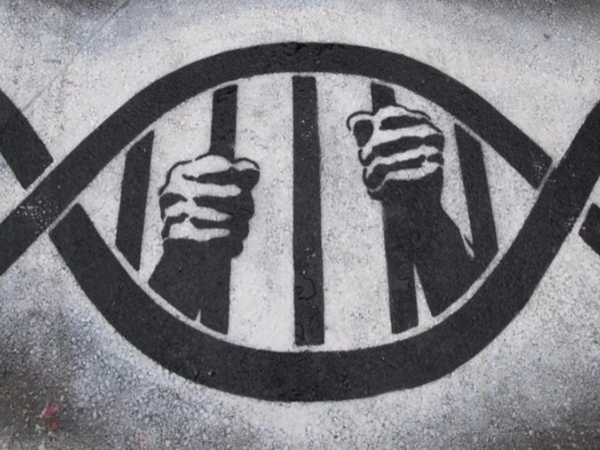
DNA technology in the hands of government officials will complete our transition to a Surveillance State in which prison walls are disguised within the seemingly benevolent trappings of technological and scientific progress, national security and the need to guard against terrorists, pandemics, civil unrest, etc.

By accessing your DNA, the government will soon know everything else about you that they don’t already know: your family chart, your ancestry, what you look like, your health history, your inclination to follow orders or chart your own course, etc.

It’s getting harder to hide, even if you think you’ve got nothing to hide.

Armed with unprecedented access to DNA databases amassed by the FBI and ancestry website, as well as hospital newborn screening programs, police are using forensic genealogy, which allows police to match up an unknown suspect’s crime scene DNA with that of any family members in a genealogy database, to solve cold cases that have remained unsolved for decades.

As reported by The Intercept, forensic genetic genealogists are “combing through the genetic information of hundreds of thousands of innocent people in search of a perpetrator.”

By submitting your DNA to a genealogical database such as Ancestry and 23andMe, you’re giving the police access to the genetic makeup, relationships and health profiles of every relative—past, present and future—in your family, whether or not you or they ever agreed to be part of such a database.

Indeed, relying on a loophole in a commercial database called GEDmatch, genetic genealogists are able to sidestep privacy rules that allow people to opt out of sharing their genetic information with police. The end result? Police are now able to identify and target those very individuals who explicitly asked to keep their DNA results private.

In this way, merely choosing to exercise your right to privacy makes you a suspect and puts you in the police state’s crosshairs.

It no longer even matters if you’re among the tens of millions of people who have added their DNA to ancestry databases. As Brian Resnick reports, public DNA databases have grown so massive that they can be used to find you even if you’ve never shared your own DNA.

That simple transaction—a spit sample or a cheek swab in exchange for getting to learn everything about one’s ancestral makeup, where one came from, and who is part of one’s extended family—is the price of entry into the Suspect State for all of us.

After all, a DNA print reveals everything about “who we are, where we come from, and who we will be.” It can also be used to predict the physical appearance of potential suspects.

It’s what police like to refer to a “modern fingerprint.”

Whereas fingerprint technology created a watershed moment for police in their ability to “crack” a case, DNA technology is now being hailed by law enforcement agencies as the magic bullet in crime solving, especially when it helps them crack cold cases of serial murders and rapists.

After all, who wouldn’t want to get psychopaths and serial rapists off the streets and safely behind bars, right?

At least, that’s the argument being used by law enforcement to support their unrestricted access to these genealogy databases, and they’ve got the success stories to prove it.

For instance, a 68-year-old Pennsylvania man was arrested and charged with the brutal rape and murder of a young woman almost 50 years earlier. Relying on genealogical research suggesting that the killer had ancestors who hailed from a small town in Italy, investigators narrowed their findings down to one man whose DNA, obtained from a discarded coffee cup, matched the killer’s.

In another cold case investigation, a 76-year-old man was arrested for two decades-old murders after his DNA was collected from a breathalyzer during an unrelated traffic stop.

Yet it’s not just psychopaths and serial rapists who are getting caught up in the investigative dragnet. In the police state’s pursuit of criminals, anyone who comes up as a possible DNA match—including distant family members—suddenly becomes part of a circle of suspects that must be tracked, investigated and ruled out.

In this way, “guilt by association” has taken on new connotations in a technological age in which one is just a DNA sample away from being considered a person of interest in a police investigation. As Jessica Cussins warns in Psychology Today, “The fundamental fight—that data from potentially innocent people should not be used to connect them to unrelated crimes—has been lost.”

Until recently, the government was required to at least observe some basic restrictions on when, where and how it could access someone’s DNA. That was turned on its head by various U.S. Supreme Court rulings that heralded the loss of privacy on a cellular level.

For instance, the U.S. Supreme Court ruled in Maryland v. King that taking DNA samples from a suspect doesn’t violate the Fourth Amendment. The Court’s subsequent decision to let stand the Maryland Court of Appeals’ ruling in Raynor v. Maryland, which essentially determined that individuals do not have a right to privacy when it comes to their DNA, made Americans even more vulnerable to the government accessing, analyzing and storing their DNA without their knowledge or permission.

It’s all been downhill since then.

Indeed, the government has been relentless in its efforts to get hold of our DNA, either through mandatory programs carried out in connection with law enforcement and corporate America, by warrantlessly accessing our familial DNA shared with genealogical services such as Ancestry and 23andMe, or through the collection of our “shed” or “touch” DNA.

Get ready, folks, because the government has embarked on a diabolical campaign to create a nation of suspects predicated on a massive national DNA database.

This has been helped along by Congress (which adopted legislation allowing police to collect and test DNA immediately following arrests), President Trump (who signed the Rapid DNA Act into law), the courts (which have ruled that police can routinely take DNA samples from people who are arrested but not yet convicted of a crime), and local police agencies (which are chomping at the bit to acquire this new crime-fighting gadget).

For example, Rapid DNA machines—portable, about the size of a desktop printer, highly unregulated, far from fool-proof, and so fast that they can produce DNA profiles in less than two hours—allow police to go on fishing expeditions for any hint of possible misconduct using DNA samples.

Journalist Heather Murphy explains: “As police agencies build out their local DNA databases, they are collecting DNA not only from people who have been charged with major crimes but also, increasingly, from people who are merely deemed suspicious, permanently linking their genetic identities to criminal databases.”

All 50 states now maintain their own DNA government databases, although the protocols for collection differ from state to state. Increasingly, many of the data from local databanks are being uploaded to CODIS, the FBI’s massive DNA database, which has become a de facto way to identify and track the American people from birth to death.

Even hospitals have gotten in on the game by taking and storing newborn babies’ DNA, often without their parents’ knowledge or consent. It’s part of the government’s mandatory genetic screening of newborns. In many states, the DNA is stored indefinitely. There’s already a move underway to carry out whole genome sequencing on newborns, ostensibly to help diagnose rare diseases earlier and improve health later in life, which constitutes an ethical minefield all by itself.

What this means for those being born today is inclusion in a government database that contains intimate information about who they are, their ancestry, and what awaits them in the future, including their inclinations to be followers, leaders or troublemakers.

For example, police in New Jersey accessed the DNA from a nine-year-old blood sample of a newborn baby in order to identify the child’s father as a suspect in a decades-old sexual assault.

The ramifications of this kind of DNA profiling are far-reaching.

At a minimum, these DNA databases do away with any semblance of privacy or anonymity.

These genetic databases and genomic technology also make us that much more vulnerable to creeps and cyberstalkersgenetic profiling, and those who would weaponize the technology against us.

Unfortunately, the debate over genetic privacy—and when one’s DNA becomes a public commodity outside the protection of the Fourth Amendment’s prohibition on warrantless searches and seizures—continues to lag far behind the government and Corporate America’s encroachments on our rights.

Moreover, while much of the public debate, legislative efforts and legal challenges in recent years have focused on the protocols surrounding when police can legally collect a suspect’s DNA (with or without a search warrant and whether upon arrest or conviction), the question of how to handle “shed” or “touch” DNA has largely slipped through without much debate or opposition.

As scientist Leslie A. Pray notes:

We all shed DNA, leaving traces of our identity practically everywhere we go… In fact, the garbage you leave for curbside pickup is a potential gold mine of this sort of material. All of this shed or so-called abandoned DNA is free for the taking by local police investigators hoping to crack unsolvable cases… shed DNA is also free for inclusion in a secret universal DNA databank.

What this means is that if you have the misfortune to leave your DNA traces anywhere a crime has been committed, you’ve already got a file somewhere in some state or federal database—albeit it may be a file without a name.

As the dissenting opinion to the Maryland Court of Appeals’ shed DNA ruling in Raynor rightly warned, “A person can no longer vote, participate in a jury, or obtain a driver’s license, without opening up his genetic material for state collection and codification.”

It’s just a matter of time before government agents will know everywhere we’ve been and how long we were at each place by following our shed DNA. After all, scientists can already track salmon across hundreds of square miles of streams and rivers using DNA.

Today, helped along by robotics and automation, DNA processing, analysis and reporting takes far less time and can bring forth all manner of information, right down to a person’s eye color and relatives. Incredibly, one company specializes in creating “mug shots” for police based on DNA samples from unknown “suspects” which are then compared to individuals with similar genetic profiles.

Of course, none of these technologies are infallible.

DNA evidence can be wrong, either through human error, tampering, or even outright fabrication, and it happens more often than we are told.

What this amounts to is a scenario in which we have little to no defense against charges of wrongdoing, especially when “convicted” by technology, and even less protection against the government sweeping up our DNA in much the same way it sweeps up our phone calls, emails and text messages.

As I make clear in my book Battlefield America: The War on the American People and in its fictional counterpart The Erik Blair Diaries, it’s only a matter of time before the police state’s pursuit of criminals from the past expands into genetic profiling and a preemptive hunt for criminals of the future.

Source: https://tinyurl.com/yss7tf97

ABOUT JOHN W. WHITEHEAD

Constitutional attorney and author John W. Whitehead is founder and president of The Rutherford Institute. His most recent books are the best-selling Battlefield America: The War on the American People, the award-winning A Government of Wolves: The Emerging American Police State, and a debut dystopian fiction novel, The Erik Blair Diaries. Whitehead can be contacted at staff@rutherford.org. Nisha Whitehead is the Executive Director of The Rutherford Institute. Information about The Rutherford Institute is available at www.rutherford.org.

Publication Guidelines / Reprint Permission

John W. Whitehead’s weekly commentaries are available for publication to newspapers and web publications at no charge. Please contact staff@rutherford.org to obtain reprint permission.

“When players are piled on top of each other after a mad scramble for a loose ball, it’s a free-for-all. There are no rules. Anything goes. That’s because there’s nobody in the pile to monitor what’s going on.”—Mike Thomas, sports editor

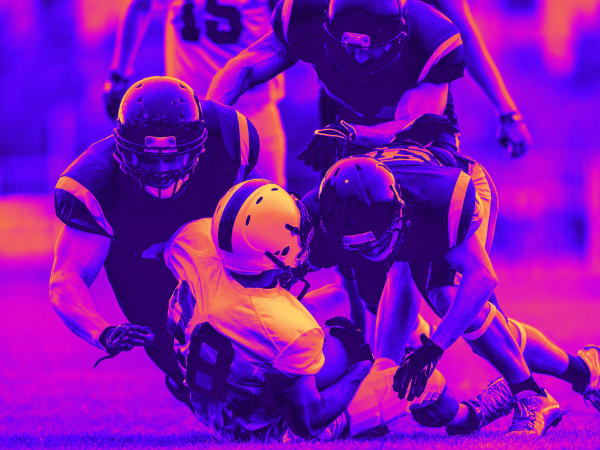
What is playing out before our eyes right now should be familiar to any fan of football: it’s called the pile on, a brutal, frenzied, desperate play to seize control and gain power while crushing the opposition.

In this particular analogy, “we the people” are trapped at the bottom of that pile, buried under a mountain of bread-and-circus distractions, economic worries, environmental disasters, power plays, power grabs, police raidsindictments and circus politics.

The Maui wildfires. The Trump indictments. Hunter Biden’s legal troubles. The looming 2024 presidential election. The Ukraine-Russia conflict.

In the midst of this pile on of woes, worries and semi-manufactured crises falling with sledgehammer-like frequency, monopolizing the media narrative and eclipsing all other news, it’s difficult to stay focused on what’s really going on, and yet something is brewing.

Pay attention.

Caught up in the partisan boxing match that is politics today, it’s easy to lose sight of what’s real.

The indictments against Trump, the investigation of Hunter Biden, and the chatter of the political classes aren’t real; they are more sound and fury, signifying nothing in the end.

As Aldous Huxley observed in Brave New World Revisited:

“Non-stop distractions of the most fascinating nature are deliberately used as instruments of policy, for the purpose of preventing people from paying too much attention to the realities of the social and political situation… Only the vigilant can maintain their liberties, and only those who are constantly and intelligently on the spot can hope to govern themselves effectively by democratic procedures.”

So what is real?

What’s real is the $5,000 fine and five-year jail sentence that could be levied against anyone found driving an illegal immigrant in their car in the state of Florida.

What’s real are the hi-tech policing tools such as robotic dogs equipped with all manner of weaponry and surveillance technology that are rewriting the ground rules when it comes to privacy and security.

What’s real is the North Carolina pastor who was fined $60,000 for ministering to the homeless on church property without a permit.

What’s real is the revelation that Boston officials created and sent police a watch list of the mayor’s most vocal critics, not unlike the government’s own growing databases for anti-government dissidents.

What’s real is what happened in Marion, Kansas, on Fri., Aug. 11, 2023, when police raided the office of the Marion County Record, blowing past the constitutional safeguards intended to safeguard the freedom of the press.

Are you starting to get the picture yet?

The manufactured media spectacles, piled on one after another, have a very real purpose, which is to distract us from the government’s constant encroachments on our freedoms.

In the larger scheme of things, these individual incidents—the police raid of a small-town newspaper, a state ban on who gets to be inside your car, an outrageous fine for feeding the destitute, a politician’s use of an enemies list to silence critics—might easily go unremarked, yet they are all part of the police state’s tendency to pile on: pile on the distractions, pile on the retribution, pile on the show of force in order to completely eviscerate anything that even remotely resembles opposition.

The police state has embarked on a ruthless, take-no-prisoners, all-out assault on anyone who even questions its authority, let alone challenges its chokehold on power.

“We the people”—the proverbial nails to the police state’s heavy-handed tactics—will be hammered into compliance, intimidated into subservience, and terrorized into silence.

It doesn’t matter which party dominates in Congress or the White House: all of us are in danger from these fear-inducing, mind-altering, soul-destroying, smash-your-face-in tactics.

In this way, anarchy is being loosed upon the nation.

Day after day, the government’s crimes against the citizenry grow more egregious, more treacherous and more tragic. And day after day, the prison walls holding the American people captive become ever more inescapable.

The upcoming election and its aftermath will undoubtedly keep the citizenry divided and at each other’s throats, so busy fighting each other that they never manage to present a unified front against tyranny in any form.

Yet the winner has already been decided.

As American satirist H.L. Mencken predicted almost a century ago:

“All the odds are on the man who is, intrinsically, the most devious and mediocre — the man who can most adeptly disperse the notion that his mind is a virtual vacuum. The Presidency tends, year by year, to go to such men. As democracy is perfected, the office of president represents, more and more closely, the inner soul of the people. On some great and glorious day the plain folks of the land will reach their heart’s desire at last and the White House will be adorned by a downright moron.”

In other words, as I make clear in my book Battlefield America: The War on the American People and in its fictional counterpart The Erik Blair Diaries, nothing will change.

You cannot have a republican form of government—nor a democratic one, for that matter—when the government views itself as superior to the citizenry, when it no longer operates for the benefit of the people, when the people are no longer able to peacefully reform their government, when government officials cease to act like public servants, when elected officials no longer represent the will of the people, when the government routinely violates the rights of the people and perpetrates more violence against the citizenry than the criminal class, when government spending is unaccountable and unaccounted for, when the judiciary act as courts of order rather than justice, and when the government is no longer bound by the laws of the Constitution.

Source: https://tinyurl.com/3admbra7

ABOUT JOHN W. WHITEHEAD

Constitutional attorney and author John W. Whitehead is founder and president of The Rutherford Institute. His most recent books are the best-selling Battlefield America: The War on the American People, the award-winning A Government of Wolves: The Emerging American Police State, and a debut dystopian fiction novel, The Erik Blair Diaries. Whitehead can be contacted at staff@rutherford.org. Nisha Whitehead is the Executive Director of The Rutherford Institute. Information about The Rutherford Institute is available at www.rutherford.org.

Publication Guidelines / Reprint Permission

John W. Whitehead’s weekly commentaries are available for publication to newspapers and web publications at no charge. Please contact staff@rutherford.org to obtain reprint permission.
“Every day in communities across the United States, children and adolescents spend the majority of their waking hours in schools that have increasingly come to resemble places of detention more than places of learning.”—Investigative journalist Annette Fuentes

This is what it means to go back-to-school in America today.

Instead of being taught the three R’s of education (reading, writing and arithmetic), young people are being drilled in the three I’s of life in the American police state: indoctrination, intimidation and intolerance.

Indeed, while young people today are learning first-hand what it means to be at the epicenter of politically charged culture wars, test scores indicate that students are not learning how to succeed in social studies, math and reading.

Instead of raising up a generation of civic-minded citizens with critical thinking skills, government officials are churning out compliant drones who know little to nothing about their history or their freedoms.

Under the direction of government officials focused on making the schools more authoritarian (sold to parents as a bid to make the schools safer), young people in America are now first in line to be searched, surveilled, spied on, threatened, tied up, locked down, treated like criminals for non-criminal behavior, tasered and in some cases shot.

From the moment a child enters one of the nation’s 98,000 public schools to the moment he or she graduates, they will be exposed to a steady diet of:

  • draconian zero tolerance policies that criminalize childish behavior,
  • overreaching anti-bullying statutes that criminalize speech,
  • school resource officers (police) tasked with disciplining and/or arresting so-called “disorderly” students,
  • standardized testing that emphasizes rote answers over critical thinking,
  • politically correct mindsets that teach young people to censor themselves and those around them,
  • and extensive biometric and surveillance systems that, coupled with the rest, acclimate young people to a world in which they have no freedom of thought, speech or movement.

This is how you groom young people to march in lockstep with a police state.

As Deborah Cadbury writes for The Washington Post, “Authoritarian rulers have long tried to assert control over the classroom as part of their totalitarian governments.”

In Nazi Germany, the schools became indoctrination centers, breeding grounds for intolerance and compliance.

In the American police state, the schools have become increasingly hostile to those who dare to question or challenge the status quo.

America’s young people have become casualties of a post-9/11 mindset that has transformed the country into a locked-down, militarized, crisis-fueled mockery of a representative government.

Roped into the government’s profit-driven campaign to keep the nation “safe” from drugs, disease, and weapons, America’s schools have transformed themselves into quasi-prisons, complete with surveillance cameras, metal detectors, police patrols, zero tolerance policies, lock downs, drug sniffing dogs, strip searches and active shooter drills.

Students are not only punished for minor transgressions such as playing cops and robbers on the playground, bringing LEGOs to school, or having a food fight, but the punishments have become far more severe, shifting from detention and visits to the principal’s office into misdemeanor tickets, juvenile court, handcuffs, tasers and even prison terms.

Students have been suspended under school zero tolerance policies for bringing to school “look alike substances” such as oreganobreath mints, birth control pills and powdered sugar.

Look-alike weapons (toy guns—even Lego-sized ones, hand-drawn pictures of guns, pencils twirled in a “threatening” manner, imaginary bows and arrows, fingers positioned like guns) can also land a student in hot water, in some cases getting them expelled from school or charged with a crime.

Not even good deeds go unpunished.

One 13-year-old was given detention for exposing the school to “liability” by sharing his lunch with a hungry friend. A third grader was suspended for shaving her head in sympathy for a friend who had lost her hair to chemotherapy. And then there was the high school senior who was suspended for saying “bless you” after a fellow classmate sneezed.

Having police in the schools only adds to the danger.

Thanks to a combination of media hype, political pandering and financial incentives, the use of armed police officers (a.k.a. school resource officers) to patrol school hallways has risen dramatically in the years since the Columbine school shooting.

Indeed, the growing presence of police in the nation’s schools is resulting in greater police “involvement in routine discipline matters that principals and parents used to address without involvement from law enforcement officers.”

Funded by the U.S. Department of Justice, these school resource officers have become de facto wardens in elementary, middle and high schools, doling out their own brand of justice to the so-called “criminals” in their midst with the help of tasers, pepper spray, batons and brute force.

In the absence of school-appropriate guidelines, police are more and more “stepping in to deal with minor rulebreaking: sagging pants, disrespectful comments, brief physical skirmishes. What previously might have resulted in a detention or a visit to the principal’s office was replaced with excruciating pain and temporary blindness, often followed by a trip to the courthouse.”

Not even the younger, elementary school-aged kids are being spared these “hardening” tactics.

On any given day when school is in session, kids who “act up” in class are pinned facedown on the floor, locked in dark closets, tied up with straps, bungee cords and duct tape, handcuffed, leg shackled, tasered or otherwise restrained, immobilized or placed in solitary confinement in order to bring them under “control.”

In almost every case, these undeniably harsh methods are used to punish kids—some as young as 4 and 5 years old—for simply failing to follow directions or throwing tantrums.

Very rarely do the kids pose any credible danger to themselves or others.

Unbelievably, these tactics are all legal, at least when employed by school officials or school resource officers in the nation’s public schools.

This is what happens when you introduce police and police tactics into the schools.

Paradoxically, by the time you add in the lockdowns and active shooter drills, instead of making the schools safer, school officials have succeeded in creating an environment in which children are so traumatized that they suffer from post-traumatic stress disorder, nightmares, anxiety, mistrust of adults in authority, as well as feelings of anger, depression, humiliation, despair and delusion.

For example, a middle school in Washington State went on lockdown after a student brought a toy gun to class. A Boston high school went into lockdown for four hours after a bullet was discovered in a classroom. A North Carolina elementary school locked down and called in police after a fifth grader reported seeing an unfamiliar man in the school (it turned out to be a parent).

Police officers at a Florida middle school carried out an active shooter drill in an effort to educate students about how to respond in the event of an actual shooting crisis. Two armed officers, guns loaded and drawn, burst into classrooms, terrorizing the students and placing the school into lockdown mode.

These police state tactics have not made the schools any safer.

The fallout has been what you’d expect, with the nation’s young people treated like hardened criminals: handcuffed, arrested, tasered, tackled and taught the painful lesson that the Constitution (especially the Fourth Amendment) doesn’t mean much in the American police state.

So what’s the answer, not only for the here-and-now—the children growing up in these quasi-prisons—but for the future of this country?

How do you convince a child who has been routinely handcuffed, shackled, tied down, locked up, and immobilized by government officials—all before he reaches the age of adulthood—that he has any rights at all, let alone the right to challenge wrongdoing, resist oppression and defend himself against injustice?

Most of all, how do you persuade a fellow American that the government works for him when, for most of his young life, he has been incarcerated in an institution that teaches young people to be obedient and compliant citizens who don’t talk back, don’t question and don’t challenge authority?

As we’ve seen with other issues, any significant reforms will have to start locally and trickle upwards.

As I make clear in my book Battlefield America: The War on the American People and in its fictional counterpart The Erik Blair Diaries, if we want to raise up a generation of freedom fighters who will actually operate with justice, fairness, accountability and equality towards each other and their government, we must start by running the schools like freedom forums.

Source: https://tinyurl.com/53drrr4v

ABOUT JOHN W. WHITEHEAD

Constitutional attorney and author John W. Whitehead is founder and president of The Rutherford Institute. His most recent books are the best-selling Battlefield America: The War on the American People, the award-winning A Government of Wolves: The Emerging American Police State, and a debut dystopian fiction novel, The Erik Blair Diaries. Whitehead can be contacted at staff@rutherford.org. Nisha Whitehead is the Executive Director of The Rutherford Institute. Information about The Rutherford Institute is available at www.rutherford.org.

Publication Guidelines / Reprint Permission

John W. Whitehead’s weekly commentaries are available for publication to newspapers and web publications at no charge. Please contact staff@rutherford.org to obtain reprint permission.
“There is more than one way to burn a book. And the world is full of people running about with lit matches.”—Ray Bradbury

What we are witnessing is the modern-day equivalent of book burning which involves doing away with dangerous ideas—legitimate or not—and the people who espouse them.Seventy years after Ray Bradbury’s novel Fahrenheit 451 depicted a fictional world in which books are burned in order to suppress dissenting ideas, while televised entertainment is used to anesthetize the populace and render them easily pacified, distracted and controlled, we find ourselves navigating an eerily similar reality.

Welcome to the age of technocensorship.

On paper—under the First Amendment, at least—we are technically free to speak.

In reality, however, we are now only as free to speak as a government official—or corporate entities such as Facebook, Google or YouTube—may allow.

Case in point: internal documents released by the House Judiciary Select Subcommittee on Weaponization of the Federal Government confirmed what we have long suspected: that the government has been working in tandem with social media companies to censor speech.

By “censor,” we’re referring to concerted efforts by the government to muzzle, silence and altogether eradicate any speech that runs afoul of the government’s own approved narrative.

This is political correctness taken to its most chilling and oppressive extreme.

The revelations that Facebook worked in concert with the Biden administration to censor content related to COVID-19, including humorous jokes, credible information and so-called disinformation, followed on the heels of a ruling by a federal court in Louisiana that prohibits executive branch officials from communicating with social media companies about controversial content in their online forums.

Likening the government’s heavy-handed attempts to pressure social media companies to suppress content critical of COVID vaccines or the election to “an almost dystopian scenario,” Judge Terry Doughty warned that “the United States Government seems to have assumed a role similar to an Orwellian ‘Ministry of Truth.’

This is the very definition of technofascism.

Clothed in tyrannical self-righteousness, technofascism is powered by technological behemoths (both corporate and governmental) working in tandem to achieve a common goal.

The government is not protecting us from “dangerous” disinformation campaigns. It is laying the groundwork to insulate us from “dangerous” ideas that might cause us to think for ourselves and, in so doing, challenge the power elite’s stranglehold over our lives.

Thus far, the tech giants have been able to sidestep the First Amendment by virtue of their non-governmental status, but it’s a dubious distinction at best when they are marching in lockstep with the government’s dictates.

As Philip Hamburger and Jenin Younes write for The Wall Street Journal: “The First Amendment prohibits the government from ‘abridging the freedom of speech.’ Supreme Court doctrine makes clear that government can’t constitutionally evade the amendment by working through private companies.”

Nothing good can come from allowing the government to sidestep the Constitution.

The steady, pervasive censorship creep that is being inflicted on us by corporate tech giants with the blessing of the powers-that-be threatens to bring about a restructuring of reality straight out of Orwell’s 1984, where the Ministry of Truth polices speech and ensures that facts conform to whatever version of reality the government propagandists embrace.

Orwell intended 1984 as a warning. Instead, it is being used as a dystopian instruction manual for socially engineering a populace that is compliant, conformist and obedient to Big Brother.

This is the slippery slope that leads to the end of free speech as we once knew it.

In a world increasingly automated and filtered through the lens of artificial intelligence, we are finding ourselves at the mercy of inflexible algorithms that dictate the boundaries of our liberties.

Once artificial intelligence becomes a fully integrated part of the government bureaucracy, there will be little recourse: we will all be subject to the intransigent judgments of techno-rulers.

This is how it starts.

First, the censors went after so-called extremists spouting so-called “hate speech.”

Then they went after so-called extremists spouting so-called “disinformation” about stolen elections, the Holocaust, and Hunter Biden.

By the time so-called extremists found themselves in the crosshairs for spouting so-called “misinformation” about the COVID-19 pandemic and vaccines, the censors had developed a system and strategy for silencing the nonconformists.

Eventually, depending on how the government and its corporate allies define what constitutes “extremism, “we the people” might all be considered guilty of some thought crime or other.

Whatever we tolerate now—whatever we turn a blind eye to—whatever we rationalize when it is inflicted on others, whether in the name of securing racial justice or defending democracy or combatting fascism, will eventually come back to imprison us, one and all.

Watch and learn.

We should all be alarmed when any individual or group—prominent or not—is censored, silenced and made to disappear from Facebook, Twitter, YouTube and Instagram for voicing ideas that are deemed politically incorrect, hateful, dangerous or conspiratorial.

Given what we know about the government’s tendency to define its own reality and attach its own labels to behavior and speech that challenges its authority, this should be cause for alarm across the entire political spectrum.

Here’s the point: you don’t have to like or agree with anyone who has been muzzled or made to disappear online because of their views, but to ignore the long-term ramifications of such censorship is dangerously naïve, because whatever powers you allow the government and its corporate operatives to claim now will eventually be used against you by tyrants of your own making.

As Glenn Greenwald writes for The Intercept:

The glaring fallacy that always lies at the heart of pro-censorship sentiments is the gullible, delusional belief that censorship powers will be deployed only to suppress views one dislikes, but never one’s own views… Facebook is not some benevolent, kind, compassionate parent or a subversive, radical actor who is going to police our discourse in order to protect the weak and marginalized or serve as a noble check on mischief by the powerful. They are almost always going to do exactly the opposite: protect the powerful from those who seek to undermine elite institutions and reject their orthodoxies. Tech giants, like all corporations, are required by law to have one overriding objective: maximizing shareholder value. They are always going to use their power to appease those they perceive wield the greatest political and economic power.

Be warned: it’s a slippery slope from censoring so-called illegitimate ideas to silencing truth.

Eventually, as George Orwell predicted, telling the truth will become a revolutionary act.

If the government can control speech, it can control thought and, in turn, it can control the minds of the citizenry.

It’s happening already.

With every passing day, we’re being moved further down the road towards a totalitarian society characterized by government censorship, violence, corruption, hypocrisy and intolerance, all packaged for our supposed benefit in the Orwellian doublespeak of national security, tolerance and so-called “government speech.”

Little by little, Americans are being conditioned to accept routine incursions on their freedoms.

This is how oppression becomes systemic, what is referred to as creeping normality, or a death by a thousand cuts.

It’s a concept invoked by Pulitzer Prize-winning scientist Jared Diamond to describe how major changes, if implemented slowly in small stages over time, can be accepted as normal without the shock and resistance that might greet a sudden upheaval.

Diamond’s concerns related to Easter Island’s now-vanished civilization and the societal decline and environmental degradation that contributed to it, but it’s a powerful analogy for the steady erosion of our freedoms and decline of our country right under our noses.

As Diamond explains, “In just a few centuries, the people of Easter Island wiped out their forest, drove their plants and animals to extinction, and saw their complex society spiral into chaos and cannibalism… Why didn’t they look around, realize what they were doing, and stop before it was too late? What were they thinking when they cut down the last palm tree?”

His answer: “I suspect that the disaster happened not with a bang but with a whimper.”

Much like America’s own colonists, Easter Island’s early colonists discovered a new world—“a pristine paradise”—teeming with life. Yet almost 2000 years after its first settlers arrived, Easter Island was reduced to a barren graveyard by a populace so focused on their immediate needs that they failed to preserve paradise for future generations.

The same could be said of the America today: it, too, is being reduced to a barren graveyard by a populace so focused on their immediate needs that they are failing to preserve freedom for future generations.

In Easter Island’s case, as Diamond speculates:

The forest…vanished slowly, over decades. Perhaps war interrupted the moving teams; perhaps by the time the carvers had finished their work, the last rope snapped. In the meantime, any islander who tried to warn about the dangers of progressive deforestation would have been overridden by vested interests of carvers, bureaucrats, and chiefs, whose jobs depended on continued deforestation… The changes in forest cover from year to year would have been hard to detect… Only older people, recollecting their childhoods decades earlier, could have recognized a difference. Gradually trees became fewer, smaller, and less important. By the time the last fruit-bearing adult palm tree was cut, palms had long since ceased to be of economic significance. That left only smaller and smaller palm saplings to clear each year, along with other bushes and treelets. No one would have noticed the felling of the last small palm.

Sound painfully familiar yet?

We’ve already torn down the rich forest of liberties established by our founders. It has vanished slowly, over the decades. The erosion of our freedoms has happened so incrementally, no one seems to have noticed. Only the older generations, remembering what true freedom was like, recognize the difference. Gradually, the freedoms enjoyed by the citizenry have become fewer, smaller and less important. By the time the last freedom falls, no one will know the difference.

This is how tyranny rises and freedom falls: with a thousand cuts, each one justified or ignored or shrugged over as inconsequential enough by itself to bother, but they add up.

Each cut, each attempt to undermine our freedoms, each loss of some critical right—to think freely, to assemble, to speak without fear of being shamed or censored, to raise our children as we see fit, to worship or not worship as our conscience dictates, to eat what we want and love who we want, to live as we want—they add up to an immeasurable failure on the part of each and every one of us to stop the descent down that slippery slope.

As I make clear in my book Battlefield America: The War on the American People and in its fictional counterpart The Erik Blair Diaries, we are on that downward slope now.

Source: https://tinyurl.com/3hvbehax

ABOUT JOHN W. WHITEHEAD

Constitutional attorney and author John W. Whitehead is founder and president of The Rutherford Institute. His most recent books are the best-selling Battlefield America: The War on the American People, the award-winning A Government of Wolves: The Emerging American Police State, and a debut dystopian fiction novel, The Erik Blair Diaries. Whitehead can be contacted at staff@rutherford.org. Nisha Whitehead is the Executive Director of The Rutherford Institute. Information about The Rutherford Institute is available at www.rutherford.org.

Publication Guidelines / Reprint Permission

John W. Whitehead’s weekly commentaries are available for publication to newspapers and web publications at no charge. Please contact staff@rutherford.org to obtain reprint permission.